Overview

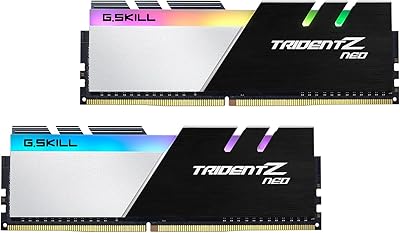
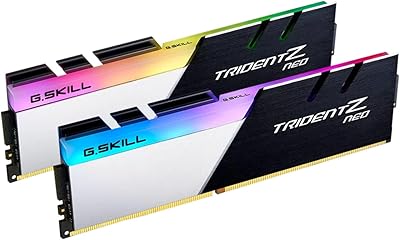
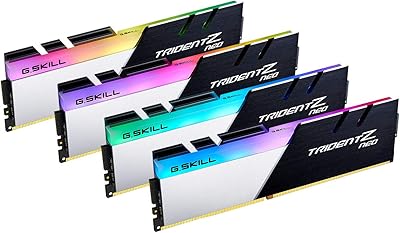
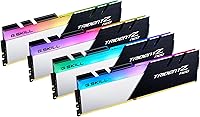
The G.SKILL Trident Z Neo 32GB DDR4 RAM Kit has earned a quiet but firm reputation among desktop builders who take their memory choices seriously. It sits comfortably in the enthusiast tier — not the cheapest option on the shelf, but far from frivolous. The four-stick configuration fills every slot on most consumer boards, and the RGB heatspreader design is genuinely striking inside a windowed case. With a strong sales rank and hundreds of satisfied buyers backing it up, this isn't a sleeper pick — it's a proven choice that keeps showing up in recommended build lists across the PC enthusiast community.
Features & Benefits

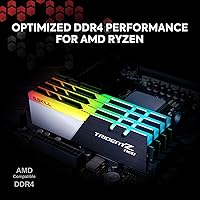
Running at DDR4-3600 CL18 timings, this DDR4 memory kit hits a sweet spot that Ryzen CPUs in particular respond well to — faster memory reduces the latency gap between CPU cores and the Infinity Fabric, which translates to snappier application launches and better frame pacing in games. Enabling XMP in your BIOS takes about thirty seconds and gets you to rated speeds without touching a single manual timing. Operating at just 1.35V, it runs cooler than older high-performance kits, reducing thermal stress on neighboring components. The 4x8GB layout unlocks quad-channel bandwidth on supported boards, and G.SKILL's online QVL tool makes motherboard compatibility easy to verify before you buy.

Best For

This Trident Z Neo kit makes the most sense for AMD Ryzen 5000 and 3000 series builds, where memory frequency has a direct, measurable effect on CPU throughput. That said, it's fully XMP-compatible with Intel platforms too — just verify your specific motherboard supports XMP 2.0 before assuming full speed. Gamers at 1080p or 1440p will notice the difference in a CPU-bound setup, and content creators juggling large project files benefit from the full 32GB headroom. If you're upgrading from 16GB and want a matched quad-kit that installs cleanly and runs without drama, this DDR4 memory kit is a reliable place to land.

User Feedback

With a 4.7-star average across nearly 300 ratings, the consensus around the Neo quad-kit is overwhelmingly positive. Buyers consistently highlight out-of-box stability and how painlessly XMP kicks in — most report booting to rated speed on the first try. The RGB implementation draws genuine praise, not just as eye candy but as a well-built feature that holds up over time. Where complaints do surface, they tend to involve cooler clearance — the tall heatspreader can conflict with larger air coolers — or users who mixed this kit with other modules and hit instability. That last point matters: this is a matched set, and it should stay that way.

Pros

  • XMP setup takes under a minute — just enable it in BIOS and you're at rated speeds instantly.
  • DDR4-3600 at CL18 hits a well-known sweet spot for Ryzen CPU performance, not just a marketing number.
  • Running at 1.35V keeps heat output low, which is good news for airflow-constrained cases.
  • The quad-channel 4x8GB layout maximizes memory bandwidth on boards that support it.
  • G.SKILL's QVL tool makes it easy to confirm compatibility before purchasing — no guesswork.
  • RGB lighting is well-implemented and syncs with major motherboard ecosystems without fuss.
  • Backed by hundreds of real-world buyers with a 4.7-star average — this DDR4 memory kit has a track record.
  • Works on both AMD and Intel platforms with XMP, making it a versatile pick across build types.
  • Matched kit design means the sticks are tested together — stability out of the box is the norm, not the exception.

Cons

  • The tall heatspreader can physically block the first slot when using large tower air coolers.
  • Four-slot requirement means this kit is useless in a two-slot mini-ITX build.
  • No ECC support makes it a non-starter for anyone building a small workstation that needs error correction.
  • Buyers who accidentally mix this kit with other modules risk instability — this is a matched set, full stop.
  • At this speed tier, the premium over a basic DDR4-3200 kit may not be justifiable for light or office workloads.
  • If XMP is not manually enabled in BIOS, the sticks default to slower JEDEC speeds — easy to miss for first-time builders.
  • RGB lighting, while attractive, adds to the heatspreader height and is irrelevant cost for users with opaque cases.

Ratings

The scores below reflect an AI-driven analysis of verified global buyer reviews for the G.SKILL Trident Z Neo 32GB DDR4 RAM Kit, with spam, bot-submitted, and incentivized feedback actively filtered out before scoring. Each category was evaluated against real installation experiences, long-term stability reports, and platform-specific feedback from Ryzen and Intel builders alike. Both the genuine strengths and the recurring frustrations are transparently represented in every score.

Performance at Rated Speed
93%
Buyers running Ryzen 5000 builds consistently report that enabling XMP at DDR4-3600 produces tangible improvements — tighter frame pacing in CPU-sensitive games and faster project renders in creative workloads. The CL18 timings at this frequency land in a well-established performance sweet spot that enthusiasts recognize immediately.
A small but vocal group of users found that certain AMD B450 boards struggled to sustain full DDR4-3600 stability under prolonged loads, requiring manual timing adjustments. On those edge-case boards, the real-world performance gap versus the rated spec was noticeable enough to be frustrating.
XMP Setup Experience
91%
The vast majority of buyers describe the XMP setup process as refreshingly straightforward — enable one setting in BIOS and the system boots to rated speed on the first try. First-time builders in particular praised not having to touch individual timing values to get full performance.
A recurring pain point surfaces when users forget to enable XMP entirely, leaving the kit running at default JEDEC speeds and wondering why performance feels underwhelming. A handful of Intel platform users reported that XMP didn't hold at 3600 and required dropping to 3200 for stable operation.
System Stability
89%
Long-term reliability is a consistent theme in buyer feedback — users running this DDR4 memory kit for 12 to 24 months report zero crashes, no memory errors under stress testing, and stable behavior through multiple OS reinstalls. G.SKILL's matched-kit approach clearly pays dividends here.
Nearly all documented instability cases trace back to users mixing this kit with modules from a different batch or brand, which the product explicitly warns against. A small number of reports cite instability tied to aggressive secondary timing profiles on X570 boards, though these are outliers rather than a pattern.
Compatibility Range
84%
The kit validates cleanly across a wide range of AMD X570, B550, and X470 motherboards, and G.SKILL's QVL tool gives buyers a reliable way to confirm compatibility before purchasing. Intel Z490 and Z590 users also report solid results, making this a genuinely cross-platform option.
Some B450 motherboard owners hit a ceiling — older VRM designs and less refined memory controllers mean DDR4-3600 isn't always achievable without dropping to a lower XMP tier. Mini-ITX board users have occasionally reported slot compatibility quirks that required swapping module positions to achieve stability.
RGB Aesthetics
88%
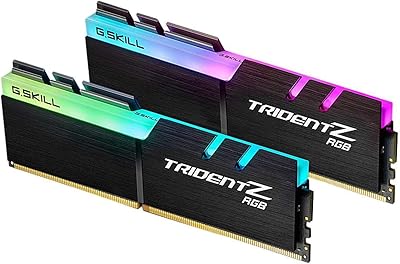
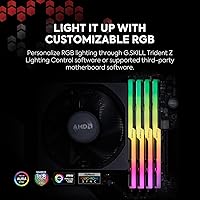
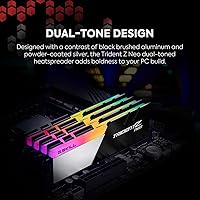
The Trident Z Neo's lighting is widely praised as one of the cleaner RGB implementations in the DDR4 segment — the diffuser produces smooth, even illumination without harsh hotspots, and sync with Asus Aura, MSI Mystic Light, and Gigabyte Fusion works reliably for most users. Builders with windowed cases repeatedly call it a visual highlight of their finished rigs.
Users running cases without a side panel window understandably find the RGB irrelevant, and a few noted that the lighting adds to heatspreader height without benefiting thermals. Occasional reports of one stick falling out of sync with the others after a BIOS update suggest the RGB ecosystem integration isn't entirely bulletproof.
CPU Cooler Clearance
62%
38%
For builders using all-in-one liquid coolers or low-profile air coolers, clearance is never an issue — the heatspreader height is typical for an RGB kit of this class, and most mid-tower AIO setups have no conflict whatsoever. Buyers with standard coolers consistently report a clean, interference-free install.
This is one of the kit's most frequently cited physical limitations. Users running tall tower coolers like the Noctua NH-D15, be quiet! Dark Rock Pro, or Deepcool Assassin series have reported that the heatspreader directly contacts or blocks the lower fan on the cooler when installed in slot one. It's a real consideration that should be checked before purchasing.
Value for Money
81%
19%
Buyers who did their research before purchasing generally feel the pricing is well-justified for a matched quad-kit with strong platform compatibility, a lifetime warranty, and a reputation for delivering what it promises. Content creators and gamers who upgraded from slower 16GB kits describe the improvement as immediately noticeable.
Buyers who primarily do light office work or casual gaming acknowledged they could have gotten adequate performance from a cheaper DDR4-3200 kit. The RGB premium is baked into the price whether you want it or not, which is a mild frustration for builders with opaque cases.
Installation Experience
87%
Physical installation is smooth — the modules seat firmly, the latches click cleanly, and the kit's retail packaging includes all four sticks in a well-organized tray that makes handling easy. Most buyers report a clean first POST without any troubleshooting required.
A few users encountered systems that wouldn't POST initially due to incorrect slot population order — most motherboards require specific DIMM slots to be populated first in quad-channel configs, which isn't always obvious from the manual. This is a board-level issue rather than a G.SKILL defect, but it does create friction for newer builders.
Thermal Performance
86%
Operating at 1.35V keeps the modules running noticeably cooler than older high-voltage kits, and buyers in small or airflow-constrained cases appreciated that the sticks never became a thermal concern even during extended gaming sessions or memory-intensive rendering workloads.
The heatspreader, while visually striking, is more decorative than functional in terms of heat dissipation — users running memory stress tests for extended periods noted the spreaders get warm to the touch, though not hot enough to cause throttling or instability under normal consumer workloads.
Build & Heatspreader Quality
85%
The physical construction feels substantial — the aluminum heatspreader has no flex or rattling, and the RGB diffuser strip is cleanly integrated without visible seams or cheap-feeling plastic. Buyers handling these sticks for the first time consistently describe them as premium-feeling compared to basic heatsink-free modules.
A small number of buyers noted minor cosmetic inconsistencies in the RGB diffuser finish between sticks in the same kit, which is noticeable when the modules are lit and viewed side by side. It's a minor quality control issue, but for aesthetics-focused builders it can be mildly disappointing.
Software & Ecosystem
74%
26%
G.SKILL's Trident Z Lighting Control software gives users a standalone option for RGB management without being locked into a motherboard vendor's ecosystem. Buyers who prefer keeping all RGB control in one app — separate from Aura or Mystic Light — appreciated having a dedicated tool available.
The lighting control software has received mixed feedback for reliability, with some users reporting that it occasionally loses sync with the modules after a system restart or Windows update. Those relying on motherboard-native RGB apps have a smoother experience overall, suggesting the standalone software still has room to mature.
Long-Term Reliability
91%
G.SKILL's lifetime warranty and the brand's long track record in the enthusiast space give buyers genuine confidence in the Neo quad-kit's durability. Multi-year ownership reports are predominantly positive, with very few instances of module failure under normal use conditions.
Warranty service accessibility varies by region — buyers outside North America and Europe have noted that RMA processes can be slower or require shipping internationally. This is worth factoring in for buyers in markets where G.SKILL's service network is thinner.
Packaging & Presentation
78%
22%
The retail blister packaging is clean and purpose-built — the four sticks are individually secured, protected during shipping, and easy to remove without tools. For a kit at this tier, the unboxing experience feels appropriately premium without being wasteful.
There are no accessories, instruction cards, or cables included in the box, which is fine for experienced builders but leaves newer users without any tactile guidance. A printed slot installation guide would be a small but meaningful addition for first-time quad-channel setups.

Suitable for:

The G.SKILL Trident Z Neo 32GB DDR4 RAM Kit is purpose-built for desktop enthusiasts who want meaningful performance without having to babysit their BIOS. It's an especially strong fit for AMD Ryzen 3000 and 5000 series builders, where the memory controller is tightly coupled to the CPU's internal fabric — running at DDR4-3600 can produce noticeably better frame pacing in games and snappier performance in creative applications compared to slower kits. Gamers pushing high refresh rate displays at 1080p or 1440p will get the most out of it in CPU-limited scenarios, while video editors, 3D artists, and streamers benefit from having a full 32GB of headroom to work with. Builders who care about aesthetics — whether they're running a glass-panel case with RGB sync or just want the rig to look sharp — will appreciate that this kit doesn't make you choose between looks and performance. It also suits users who aren't overclocking experts: XMP enables rated speeds in a single BIOS toggle, which is about as painless as memory setup gets.
Not suitable for:

The G.SKILL Trident Z Neo 32GB DDR4 RAM Kit is not the right call for every builder, and it's worth being clear about where it falls short. Users running large air coolers with wide heatsinks — think Noctua NH-D15 or similar tower coolers — may find that the tall RGB heatspreader conflicts with the cooler's fan or bottom fin stack, particularly in the first DIMM slot. This kit is also not designed for server or workstation environments that require ECC memory for error correction; it's strictly a consumer U-DIMM solution. If your board only has two memory slots, you'll want a 2x16GB kit instead — the 4x8GB layout only makes sense on a four-slot board, and populating all slots can sometimes push marginal memory controllers harder. Budget-focused builders who don't need DDR4-3600 speeds or RGB lighting can find adequate performance at lower price points, and this kit may be more than necessary for office tasks, light browsing, or low-demand gaming at slower frame rates.
Specifications

  • Brand: Manufactured by G.SKILL, a well-regarded Taiwanese memory specialist known for enthusiast-grade DRAM products.
  • Series: Part of the Trident Z Neo lineup, designed specifically to complement AMD Ryzen platforms while remaining Intel XMP-compatible.
  • Model Number: The exact model identifier is F4-3600C18Q-32GTZN, useful for verifying compatibility on G.SKILL's QVL database.
  • Total Capacity: Ships as a 32GB kit composed of four individual 8GB U-DIMM modules sold and tested as a matched set.
  • Memory Type: DDR4 U-DIMM with a 288-pin interface, the standard format for consumer desktop motherboards.
  • Speed Rating: Rated for DDR4-3600, equivalent to 3600 MT/s, when operating under the included XMP overclock profile.
  • Latency Timings: Primary timings are CL18-22-22-42, representing a reasonable balance between raw speed and latency at the DDR4-3600 frequency.
  • Operating Voltage: Runs at 1.35V under XMP, which is lower than many older high-performance kits and helps reduce heat output during sustained loads.
  • JEDEC Profile: Includes a standard JEDEC default profile, so the kit will POST and run at safe speeds even without XMP enabled in BIOS.
  • XMP Support: Carries an Intel XMP 2.0 overclock profile, enabling automatic speed configuration through a single BIOS setting on compatible boards.
  • ECC Support: Non-ECC memory; error-correcting code is not supported, making this unsuitable for server or mission-critical workstation applications.
  • RGB Lighting: Features G.SKILL's Trident Z Neo RGB lighting across the heatspreader, compatible with major motherboard RGB sync ecosystems.
  • Platform: Compatible with AMD AM4 and Intel LGA platforms; buyers should verify specific motherboard support using G.SKILL's online RAM Configurator.
  • Form Factor: Standard U-DIMM desktop form factor; not compatible with laptop SO-DIMM slots or server RDIMM configurations.
  • Package Dimensions: Retail packaging measures approximately 6.3 × 5.43 × 0.94 inches, containing all four modules in a single blister pack.
  • Kit Weight: The complete packaged kit weighs 12 ounces, reflecting the four full-size heatspreader-equipped modules.
  • Availability Date: This product was first made available in August 2019 and has since accumulated a substantial verified buyer review base.
  • Warranty: G.SKILL provides a limited lifetime warranty on Trident Z Neo memory kits, subject to standard terms and conditions on their website.

Related Reviews

G.SKILL Trident Z Neo 16GB DDR4 RAM
88%
93%
XMP Compatibility
91%
Platform Performance
94%
Stability & Reliability
89%
Thermal Performance
86%
Build & Heatspreader Quality
More
G.SKILL Trident Z Neo 32GB DDR4 RAM
80%
83%
Platform Compatibility
91%
Out-of-Box Performance
88%
Build Quality
79%
Thermal Management
84%
RGB Aesthetics
More
G.SKILL Trident Z Neo 64GB DDR4 RAM
83%
93%
XMP Reliability
91%
Stability & Reliability
82%
Platform Compatibility
89%
Performance at Rated Speed
78%
Value for Capacity
More
G.SKILL Trident Z Neo DDR4 128GB (4x32GB) 3200MT/s RAM
87%
91%
Performance in Gaming
93%
Multitasking & Workload Handling
88%
Overclocking Ease
90%
Build Quality & Durability
84%
Value for Money
More
G.SKILL Trident Z Royal 64GB DDR4 RAM
84%
93%
Overall Stability
89%
XMP Setup Experience
91%
Build Quality
88%
Aesthetic Design
84%
Performance at Rated Speed
More
G.SKILL AEGIS 16GB DDR4 3200MHz Desktop RAM
78%
91%
Value for Money
88%
Installation Ease
83%
Gaming Performance
86%
System Stability
79%
Motherboard Compatibility
More
G.SKILL AEGIS 32GB DDR4-3000 Desktop RAM Kit
81%
88%
Value for Money
91%
Installation Ease
87%
Stability & Reliability
83%
XMP Performance
84%
Dual-Channel Bandwidth
More
G.SKILL Ripjaws DDR4 32GB SO-DIMM Laptop RAM
85%
91%
Installation Experience
88%
Compatibility Range
86%
Dual-Channel Performance
93%
Long-Term Reliability
84%
Value for Money
More
G.SKILL Trident Z RGB 16GB DDR4 RAM
83%
91%
Performance at Rated Speed
88%
Installation & Setup
93%
Stability & Reliability
74%
AMD Platform Compatibility
86%
RGB Lighting Quality
More
G.SKILL Ripjaws V 32GB (2x16GB) DDR4-3200
85%
94%
Overall System Stability
96%
Pro Audio & Workstation Utility
92%
Multitasking Performance
88%
Value for Money
61%
Physical Clearance & Fit
More

FAQ

Yes — you need to enable XMP in your BIOS after first boot. The sticks will default to a slower JEDEC speed until you do. It's a single toggle, usually found under the memory or overclocking section of your BIOS, and takes about thirty seconds to set up.

It works on both. The G.SKILL Trident Z Neo 32GB DDR4 RAM Kit carries an Intel XMP 2.0 profile, so Intel platform users can enable rated speeds the same way AMD users do. That said, G.SKILL originally designed the Trident Z Neo aesthetic around Ryzen builds, and AMD systems tend to benefit more from DDR4-3600 specifically due to how the Infinity Fabric is tuned.
It depends on your specific cooler and board layout. The heatspreader is on the taller side, which can conflict with large air coolers like the Noctua NH-D15 if their fans or fin stacks extend over the first DIMM slot. Check your cooler's clearance spec against the module height — G.SKILL lists the physical dimensions on their product page — before assuming it'll fit without interference.

That's not recommended. This is a matched set, meaning the four sticks were tested together to run stably as a group. Adding a different kit — even from the same brand — introduces timing and voltage variables that can cause instability or prevent the system from POSTing at XMP speeds. If you need more than 32GB, it's better to start fresh with a higher-capacity matched kit.

G.SKILL maintains a QVL (Qualified Vendor List) on their website, and they also offer a RAM Configurator tool where you can enter your motherboard model and get a list of validated memory kits. It takes two minutes and removes a lot of guesswork before you buy.

Most likely, yes. The Trident Z Neo RGB is designed to sync with Asus Aura Sync, MSI Mystic Light, Gigabyte RGB Fusion, and ASRock Polychrome Sync. You may need to install your motherboard's lighting app to control it, or use G.SKILL's own Trident Z Lighting Control software if you prefer managing it independently.

Yes, the kit will still work. Without XMP, it will run at the default JEDEC speed, which is typically DDR4-2133 or DDR4-2400 depending on the board. You won't see any instability, but you'll also be leaving a significant chunk of the performance on the table. Just enable XMP and you're good.

For pure gaming at typical resolutions, 16GB is still sufficient in most titles. But 32GB gives you real breathing room — you can game, run Discord, stream, have a browser with tabs open, and not worry about running tight on memory. For content creators, video editors, or anyone doing Photoshop work alongside gaming, 32GB starts to feel less like a luxury and more like a baseline.

Technically the sticks would physically fit, but this DDR4 memory kit is sold and validated as a four-module set — using just two of them isn't officially supported and could produce unstable results, especially at XMP speeds. If your board only has two slots, you'd be better served by a matched 2x16GB kit designed for that configuration.

The kit ships with the four memory modules in a retail blister pack — no installation tools or bundled software in the box. RGB control is handled through your motherboard's existing lighting app or through G.SKILL's downloadable Trident Z Lighting Control utility, which is available free from their website.