Overview

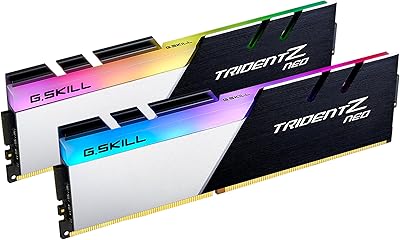
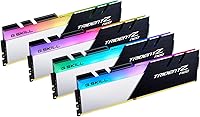
The G.SKILL Trident Z Neo 128GB DDR4 RAM is a high-capacity quad-channel kit built for users who genuinely push their systems hard. Launched in April 2020, it arrived at a time when AMD Ryzen platforms were maturing rapidly, and G.SKILL positioned the Trident Z Neo line specifically around that ecosystem. Four 32GB modules give you a fully loaded memory configuration with serious headroom — the kind that makes sense when your workload actually demands it. This isn't a kit for casual users. It sits firmly in the premium tier, and the price reflects that. If you need 128GB, this 128GB DDR4 kit is one of the more refined ways to get there on a desktop platform.

Features & Benefits

Running at 3200MT/s with CL16-18-18-38 timings, this G.SKILL memory kit hits a practical sweet spot between raw speed and latency. For memory-intensive tasks — think large Premiere Pro timelines or heavy Blender scenes — tighter timings at this frequency translate to noticeably snappier data throughput compared to looser CL18 or CL22 alternatives. The 1.35V operating voltage is a small but meaningful detail for workstation builders running systems around the clock, since lower voltage means less heat and marginally reduced power draw. The kit ships with both a JEDEC default profile and an XMP 2.0 profile, so you can run it conservatively out of the box or enable the rated speed with a single BIOS toggle. Non-ECC and desktop-only, it isn't designed for server use.

Best For

The Trident Z Neo quad-channel set is genuinely built for a specific type of user, and being honest about that matters. Video editors working in DaVinci Resolve with high-resolution footage, 3D artists managing complex Blender or Cinema 4D scenes, and anyone running multiple virtual machines simultaneously will feel the difference that 128GB of headroom provides. Streamers who also record, encode, and browse while gaming may also benefit, though they should honestly consider whether a 64GB kit covers their needs first. Where this configuration really justifies itself is in workstation builds where expanding memory post-purchase is awkward — particularly on boards with limited DIMM slots. Both AMD Ryzen and Intel desktop platforms are fully supported.

User Feedback

With a 4.8-star average across roughly 60 ratings, buyer sentiment for this 128GB DDR4 kit skews positive — though that is a relatively small sample size, so the rating is best read as directional rather than definitive. Users frequently praise XMP profile stability on both Ryzen and Intel builds, with several noting the modules posted at rated speeds without any manual tuning. A few buyers flagged the importance of checking G.SKILL's motherboard QVL before purchasing, which is genuinely practical advice. On the critical side, some noted the per-kit pricing feels steep for workloads that don't actually saturate 128GB, and a handful mentioned limited RGB software integration outside specific ecosystems. Installation itself drew very little complaint.

Pros

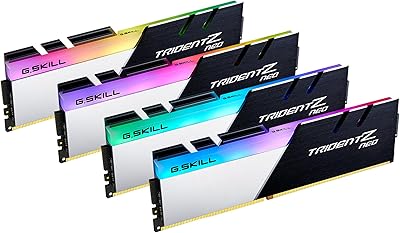
  • A matched 4x32GB kit means you fully populate quad-channel slots in one purchase with no compatibility guesswork.
  • CL16-18-18-38 timings at 3200MT/s is a strong balance for bandwidth-sensitive creative workloads.
  • The 1.35V operating voltage runs cooler and draws less power than standard 1.5V DDR4 kits.
  • XMP 2.0 support means one BIOS toggle gets you to rated speeds without manual tuning.
  • JEDEC default profile ensures the kit boots and runs safely even before XMP is enabled.
  • Works on both AMD Ryzen and Intel desktop platforms, so it isn't locked to a single ecosystem.
  • G.SKILL's module binning process makes this a matched set — modules are validated to run together reliably.
  • Dual-zone RGB per module integrates well with Ryzen-focused builds using compatible RGB software.
  • A 4.8-star buyer rating, while from a modest sample, reflects consistent satisfaction from technically demanding users.
  • Buying 128GB upfront future-proofs workstation builds where adding RAM later is physically or logistically inconvenient.

Cons

  • 128GB is overkill for the vast majority of users, making the high cost impossible to justify for lighter workloads.
  • The review pool of roughly 60 ratings is too small to draw firm conclusions about long-term reliability.
  • Non-ECC means it isn't appropriate for applications where memory error correction is a hard requirement.
  • Mixing this kit with other memory modules risks instability — you must commit fully to using it as a set.
  • Motherboard QVL compatibility isn't guaranteed; buyers must manually verify their board supports this exact kit.
  • RGB software integration can be limited or inconsistent outside of specific AMD Ryzen ecosystem tools.
  • DDR4 at 3200MT/s, while still capable, looks less future-proof as DDR5 platforms become increasingly mainstream.
  • The premium pricing means any compatibility issue or buyer error is a costly mistake to reverse.

Ratings

The G.SKILL Trident Z Neo 128GB DDR4 RAM has been evaluated by our AI rating system after analyzing verified global buyer reviews, with spam, bot activity, and incentivized feedback actively filtered out. Scores reflect the honest spread of user experience — covering what this kit genuinely excels at and where real buyers have run into friction. Both the strengths and the legitimate pain points are represented transparently across every category below.

Memory Stability
93%
Buyers running demanding Ryzen workstation builds consistently report that the kit posts at XMP speeds on the first try and stays rock-solid under sustained loads — hours of Blender rendering, extended VM sessions, and overnight encodes without a single crash. That kind of reliability under continuous pressure is exactly what this audience needs.
A small number of users noted that achieving full stability required manually tightening secondary timings beyond the XMP defaults, particularly on certain X570 boards. It is rare, but not unheard of, and troubleshooting it requires BIOS familiarity that not every buyer has.
XMP Profile Accuracy
91%
The XMP 2.0 profile reliably delivers the rated 3200MT/s with CL16-18-18-38 timings after a single BIOS toggle, which is exactly what busy professionals want — no manual tuning, no spreadsheet diving. Users upgrading from looser-timed kits noticed tangible improvements in memory-bandwidth-sensitive applications like DaVinci Resolve.
On a handful of Intel platforms, users reported the XMP profile triggered initial boot loops before settling, which can be alarming even if it self-resolves. The JEDEC fallback works fine, but hitting the rated XMP speed occasionally required a second BIOS intervention on non-QVL boards.
Compatibility Range
78%
22%
The kit covers both AMD Ryzen and Intel desktop ecosystems, giving it broader appeal than its Ryzen-centric branding implies. Users on mainstream X570, B550, and Z490 boards who checked the QVL beforehand reported smooth compatibility with no surprises.
The QVL verification step is genuinely necessary and not just a formality — several buyers skipped it and encountered instability on boards that were not validated for 32GB per-slot operation at 3200MT/s. The compatibility ceiling is real, and the burden of checking falls entirely on the buyer before purchase.
Value for Money
67%
33%
For workloads that actually saturate 128GB — large-scale virtualization, cinematic 3D production, or complex simulation pipelines — buyers feel the capacity justifies the premium outlay. Purchasing a fully populated quad-channel set in one go also saves time and eliminates the compatibility risk of mixing kits later.
For anyone whose workload doesn't consistently push past 64GB, this G.SKILL memory kit is a hard spend to justify. The premium pricing is steep, and the return on investment only materializes for a narrow slice of users — most buyers looking at this for gaming or general creative work will find the value proposition unconvincing.
Real-World Performance
88%
Users running memory-intensive pipelines — exporting 4K timelines, loading large asset libraries, running simultaneous VM instances — report that upgrading to 128GB at CL16 meaningfully reduced wait times and allowed workflows that previously required closing applications to coexist comfortably. The practical headroom is substantial.
Outside of workloads that genuinely stress memory capacity, day-to-day performance gains over a well-tuned 64GB kit are difficult to perceive. A few users admitted post-purchase that their actual usage rarely scratched 80GB, making the extra capacity feel more aspirational than functional.
Installation Experience
89%
Most buyers found physical installation straightforward — the modules seat firmly, the heatspreaders clear standard CPU coolers on common ATX boards, and the JEDEC profile means the system boots safely before XMP is even configured. First-time builders reported feeling confident through the process.
Tall heatspreaders on the Trident Z Neo modules can conflict with oversized CPU cooler brackets on tightly packed boards, particularly mid-range AMD coolers with wide mounting hardware. Buyers with compact or non-standard cooler setups should verify clearance before committing.
Thermal Management
86%
The 1.35V operating voltage keeps thermals genuinely low even during prolonged stress workloads, and the aluminum heatspreaders do their job without requiring active cooling. Users running always-on workstation builds appreciated not having to worry about memory temperatures during 24-hour rendering sessions.
In cases with poor lateral airflow, the inner modules in a fully populated quad-slot configuration can run slightly warmer than the outer ones. It rarely becomes a functional problem, but builders in thermally constrained enclosures should account for it when planning case airflow.
RGB Implementation
74%
26%
The dual-zone RGB lighting per module looks clean and well-diffused in person, and users with Asus Aura Sync or MSI Mystic Light setups generally got synchronization working without significant effort. The visual result inside a windowed Ryzen build is polished and consistent.
RGB software integration is inconsistent across ecosystems — some users on ASRock or Gigabyte boards reported partial sync failures or color accuracy issues that required driver workarounds. For buyers who don't prioritize RGB, it adds no functional value and can occasionally become a minor software management headache.
Kit Consistency
92%
G.SKILL's module binning process for matched sets is well-regarded, and buyers consistently note that all four sticks behave identically in terms of latency, voltage response, and thermal output. This kind of consistency matters enormously when running all four slots populated simultaneously.
The matched-kit design means you are locked into the full four-module configuration — there is no practical way to partially upgrade or replace a single stick without risking a mismatch. Buyers should factor in the cost of a full kit replacement if a single module fails outside of warranty coverage.
Workstation Suitability
91%
This 128GB DDR4 kit shines specifically in workstation contexts where memory capacity is a genuine bottleneck — VM-heavy development environments, large Unreal Engine projects, and multi-application production pipelines all benefit from having this much headroom available without swap file intervention.
The non-ECC nature of the kit excludes it from use cases where memory error correction is a hard requirement, such as financial modeling environments or mission-critical data processing. Workstation users in those fields need to look at registered ECC solutions regardless of how capable this kit is otherwise.
Future-Proofing
61%
39%
Buying a fully populated 128GB DDR4 configuration in 2024 still holds practical value for AM4 and LGA1700 platform users who want to maximize their current system without a full platform upgrade. The capacity ceiling on these platforms is fully met by this kit.
DDR5 is now the standard on current-generation AMD AM5 and Intel platforms, which means DDR4 investment at this price tier carries a meaningful obsolescence risk. Buyers building a new system today should weigh whether remaining on a DDR4 platform long enough to justify this kit makes strategic sense for them.
Build Quality
87%
The Trident Z Neo heatspreaders feel solid and well-machined — no sharp edges, no flex in the PCB, and the RGB diffuser strip is integrated cleanly rather than looking like an afterthought. Users who have handled multiple RAM brands consistently rate the physical construction of this kit above average.
At this price tier, the build quality meets expectations but doesn't dramatically exceed them. A few users noted minor cosmetic inconsistencies in the heatspreader finish across modules within the same kit, which is unlikely to affect performance but can be noticeable in a visually oriented build.
Documentation & Support
72%
28%
G.SKILL provides a memory configurator and detailed QVL on their website, which buyers who used it found genuinely helpful for pre-purchase compatibility checks. The brand's reputation for standing behind warranty claims was cited positively by users who had previous experience with their customer support.
The included documentation in the box is minimal, and users who needed troubleshooting guidance for XMP instability or BIOS configuration issues had to rely on third-party forums rather than official resources. For less experienced builders, the gap in first-party guidance is a real friction point.

Suitable for:

The G.SKILL Trident Z Neo 128GB DDR4 RAM is purpose-built for users whose daily workloads genuinely exhaust lower memory configurations. Video editors cutting 4K or 8K footage in DaVinci Resolve, 3D artists managing scene-heavy Blender projects, and engineers running simulation software will find that 128GB removes the bottleneck of constantly swapping assets in and out of memory. Virtualization power users spinning up multiple VMs simultaneously get the most tangible benefit — raw capacity is simply irreplaceable in that context. The Trident Z Neo quad-channel set also suits enthusiast workstation builders on both AMD Ryzen and Intel platforms who want to fully populate their DIMM slots once and not revisit the decision for years. If your work involves memory-hungry pipelines and you find yourself hitting swap space or closing applications to free headroom, this kit solves that problem cleanly.

Not suitable for:

The G.SKILL Trident Z Neo 128GB DDR4 RAM is a hard sell for anyone whose use case doesn't consistently pressure 32GB or 64GB of installed RAM. Mainstream gamers, casual content creators, and general home or office users will see essentially zero performance difference compared to a well-spec'd 32GB kit at a fraction of the cost — the memory simply sits idle. Laptop users and small-form-factor builders are excluded entirely since this is a desktop U-DIMM configuration only. Those running server or workstation platforms that require ECC memory for data integrity should also look elsewhere, as this kit is non-ECC by design. Budget-conscious buyers should be aware that the premium tier pricing here isn't justified by speed or timings alone — it's justified by capacity, and only workloads that actually use that capacity will see a return on the investment.

Specifications

  • Total Capacity: The kit provides 128GB of total memory across four matched 32GB modules.
  • Memory Type: Modules use DDR4 U-DIMM technology in a non-ECC, unbuffered configuration suited for desktop workstations.
  • Speed Rating: The kit is rated for DDR4-3200, operating at 3200MT/s under the XMP 2.0 profile.
  • Latency Timings: Primary timings are CL16-18-18-38, representing a tight configuration for this speed class.
  • Operating Voltage: Modules run at 1.35V under XMP, lower than the 1.5V common in older DDR4 kits.
  • Pin Configuration: Each module uses a 288-pin interface, standard for all modern desktop DDR4 motherboards.
  • Form Factor: Full-size Desktop DIMM format; not compatible with laptops, NUCs, or SO-DIMM slots.
  • Profile Support: Includes both a JEDEC default profile for safe out-of-box operation and an Intel XMP 2.0 overclock profile.
  • ECC Support: These modules do not support Error-Correcting Code (ECC), making them unsuitable for server or ECC-required workstation platforms.
  • Platform Support: Compatible with AMD Ryzen desktop platforms and Intel desktop platforms that support XMP 2.0.
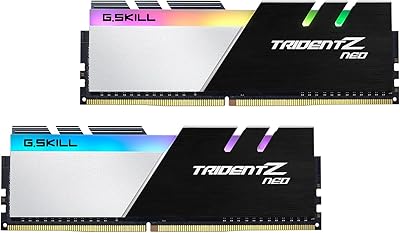
  • RGB Lighting: Each module features dual-zone RGB lighting along the heatspreader, compatible with major RGB sync software ecosystems.
  • Kit Configuration: Sold exclusively as a matched quad-channel set; modules are binned and validated by G.SKILL to run together.
  • Model Number: The official G.SKILL model identifier for this kit is F4-3200C16Q-128GTZN.
  • Package Dimensions: The retail package measures 6.1 x 5.3 x 1.1 inches, accommodating all four modules together.
  • Kit Weight: The full four-module kit weighs 12.3 ounces as packaged.
  • Series: Part of the Trident Z Neo family, G.SKILL's line specifically tuned and marketed for AMD Ryzen platform builds.
  • Release Date: This kit first became available in April 2020, targeting the then-emerging Ryzen 3000 and 5000 platform ecosystem.

Related Reviews
G.SKILL Trident Z Neo 64GB DDR4 RAM
83%
93%
XMP Reliability
91%
Stability & Reliability
82%
Platform Compatibility
89%
Performance at Rated Speed
78%
Value for Capacity
More
G.SKILL Trident Z Neo 16GB DDR4 RAM
88%
93%
XMP Compatibility
91%
Platform Performance
94%
Stability & Reliability
89%
Thermal Performance
86%
Build & Heatspreader Quality
More
G.SKILL Trident Z Neo 32GB DDR4 RAM Kit
84%
93%
Performance at Rated Speed
91%
XMP Setup Experience
89%
System Stability
84%
Compatibility Range
88%
RGB Aesthetics
More
G.SKILL Trident Z Neo 32GB DDR4 RAM
80%
83%
Platform Compatibility
91%
Out-of-Box Performance
88%
Build Quality
79%
Thermal Management
84%
RGB Aesthetics
More
G.SKILL Trident Z RGB 16GB DDR4 RAM
83%
91%
Performance at Rated Speed
88%
Installation & Setup
93%
Stability & Reliability
74%
AMD Platform Compatibility
86%
RGB Lighting Quality
More
G.SKILL Trident Z Royal 64GB DDR4 RAM
84%
93%
Overall Stability
89%
XMP Setup Experience
91%
Build Quality
88%
Aesthetic Design
84%
Performance at Rated Speed
More
G.SKILL Trident Z RGB 64GB DDR4 RAM
83%
88%
Real-World Performance
74%
Platform Compatibility
86%
Setup & Installation
83%
Value for Money
92%
Long-Term Reliability
More
G.SKILL AEGIS 16GB DDR4 Desktop RAM
76%
89%
Value for Money
94%
Installation Ease
91%
System Stability
78%
Performance for Everyday Use
63%
Gaming Performance
More
G.SKILL AEGIS 16GB DDR4 3200MHz Desktop RAM
78%
91%
Value for Money
88%
Installation Ease
83%
Gaming Performance
86%
System Stability
79%
Motherboard Compatibility
More
G.SKILL Ripjaws DDR4 32GB SO-DIMM Laptop RAM
85%
91%
Installation Experience
88%
Compatibility Range
86%
Dual-Channel Performance
93%
Long-Term Reliability
84%
Value for Money
More

FAQ

Yes, one BIOS step is required. When you first boot with the kit installed, it will default to a safe JEDEC speed — typically around 2133MT/s. To get the rated 3200MT/s with the CL16 timings, you need to enter your BIOS and enable the XMP 2.0 profile. It is usually a single toggle labeled XMP, EXPO, or DOCP depending on your board, and it takes about 30 seconds to do.

Despite the Ryzen-focused branding, this G.SKILL memory kit works on Intel desktop platforms as well. The XMP 2.0 profile is an Intel specification, so any Intel motherboard that supports XMP will pick up the 3200MT/s profile without issue. The Trident Z Neo name is more of a marketing and aesthetic alignment with Ryzen builds than a hard technical restriction.

G.SKILL strongly advises against mixing memory kits, and for good reason. Modules from different kits — even from the same brand and same speed rating — may use different silicon dies or subtimings, which can cause instability, boot failures, or random crashes. If you need more than 128GB, look for a board with more DIMM slots and buy additional matched kits only.

The best way is to check G.SKILL's own QVL (Qualified Vendor List) on their website, or cross-reference your motherboard manufacturer's memory support page. Not all motherboards that accept DDR4 can run 32GB modules per slot at rated speeds — some boards top out at 16GB per slot. Checking the QVL before purchasing is genuinely worth the five minutes it takes.

Honestly, no — not for gaming alone. Even the most demanding modern games rarely push beyond 16GB to 32GB of system RAM, so the extra capacity would sit completely unused. Where the G.SKILL Trident Z Neo 128GB DDR4 RAM earns its value is in workloads like video production, 3D rendering, and virtualization, where memory capacity directly affects how much work you can run without hitting limits.

The Trident Z Neo quad-channel set is designed to integrate with major RGB ecosystems including Asus Aura Sync, MSI Mystic Light, and ASRock Polychrome Sync. That said, software compatibility can vary between motherboard generations and driver versions, so it is worth checking G.SKILL's compatibility notes for your specific board if synchronized lighting is important to your build.

Technically you can physically replace one stick, but sourcing an exact match from the same production batch is difficult and not guaranteed to behave identically with the remaining three. G.SKILL and most memory manufacturers recommend running matched sets. Your best course of action if a module fails within the warranty period is to contact G.SKILL support and request a full kit replacement through their warranty process.

Standard mid-tower airflow is more than adequate for this kit. The heatspreaders manage heat passively, and the 1.35V operating voltage means the modules run relatively cool even under heavy workloads. You only need to think about additional airflow if your case has particularly poor circulation or if you plan to manually overclock beyond the XMP profile.

On Ryzen 5000 platforms, this 128GB DDR4 kit has a solid reputation for stable XMP operation, which aligns with user feedback praising easy setup. Ryzen 7000 series (AM5) uses DDR5 exclusively, so this kit is incompatible with that generation entirely. For AM4 boards paired with Ryzen 5000 CPUs, verifying your specific motherboard against G.SKILL's QVL is still the safest approach before purchasing.

G.SKILL backs their Trident Z Neo products with a limited lifetime warranty, which covers manufacturing defects under normal use conditions. It does not cover damage from improper installation, overvolting beyond specifications, or use in configurations incompatible with the module's design. To make a warranty claim, you would need to go through G.SKILL's support process directly, so keep your purchase receipt as proof of purchase.