Overview

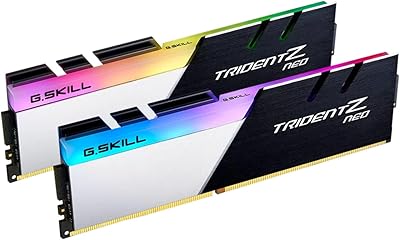
The G.SKILL Trident Z Neo 16GB DDR4 RAM has earned a firm spot in the PC building community — not through hype, but through consistent, reliable performance at a speed class that genuinely suits AMD Ryzen platforms. Running at 3600MT/s, this DDR4 kit sits at what many builders consider the Ryzen performance sweet spot, where you get real gains without paying the premium that higher-frequency kits demand. The 2x8GB dual-channel configuration covers most gaming and productivity needs comfortably. It has been around long enough that its reputation is built on real-world results rather than spec sheet promises, and that kind of staying power says a lot.
Features & Benefits

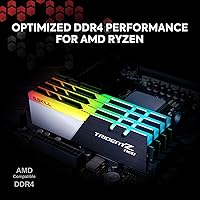
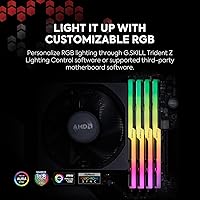
The CL16 primary latency is where this memory upgrade stands out at its speed tier — tighter timings translate to quicker memory response times, which you actually feel in fast-paced games and heavily threaded applications. Enabling the XMP 2.0 profile takes about thirty seconds in your BIOS and unlocks the full 3600MT/s speed automatically; no manual tuning required. The 1.35V operating voltage keeps thermals in check even during extended workloads, a small but meaningful detail compared to kits that push 1.4V or higher. It is a standard 288-pin U-DIMM, non-ECC design built for mainstream desktops. The RGB lighting syncs with major software platforms if you care about aesthetics — optional, but well-implemented.

Best For

The Trident Z Neo is a natural pick for Ryzen 3000 and 5000 platform builds, where 3600MHz memory has a documented impact on CPU performance due to the architecture's memory controller relationship. Gamers and streamers who want snappy response without committing to pricier DDR4-4000+ kits will find this a comfortable ceiling. First-time builders will appreciate that XMP setup is nearly effortless on modern B550 and X570 boards. It also works well as an upgrade from 2666 or 3200MHz kits — the performance difference is noticeable, not marginal. If you run a windowed or open-frame case, the synchronized RGB adds a clean visual layer to a polished build.

User Feedback

Across a large pool of long-term user reviews, this DDR4 kit consistently draws praise for plug-and-play XMP stability, particularly on B550 and X570 motherboards where it tends to just work without fuss. Thermal behavior over sustained workloads gets positive mentions — users running extended sessions report no throttling or instability. On the critical side, a portion of beginners have flagged that XMP does not enable itself automatically; you do need to turn it on in BIOS, which catches some first-timers off guard. A few users on non-G.SKILL RGB ecosystems mention the lighting software can be uncooperative. Overall though, the feedback is strongly and consistently positive, with many returning buyers recommending it to others.

Pros

  • 3600MHz is the well-established performance sweet spot for AMD Ryzen platforms, delivering real gains where they matter.
  • Tight CL16 primary latency means faster memory response times compared to looser-timed kits at the same speed.
  • XMP 2.0 support makes hitting rated speeds effortless — just enable one option in the BIOS.
  • The 1.35V operating voltage runs cool and stable even during extended gaming or workload sessions.
  • Broad motherboard compatibility, particularly strong on B550 and X570 boards with minimal setup friction.
  • The matched 2x8GB dual-channel design is well-suited to both gaming and everyday productivity without bottlenecks.
  • RGB lighting is well-implemented and syncs with major software ecosystems for builders who care about aesthetics.
  • Long market presence means a well-established track record of reliability across a wide range of user configurations.
  • Repeat buyers and community recommendations speak to consistent real-world satisfaction beyond the spec sheet.

Cons

  • XMP does not enable itself — beginners who skip the BIOS step will run at slower JEDEC default speeds without realizing it.
  • RGB software can be uncooperative when used outside G.SKILL-native or compatible lighting ecosystems.
  • 16GB capacity may feel limiting sooner than expected for users expanding into heavier creative or multitasking workloads.
  • Not compatible with DDR5 motherboards, so it offers no upgrade path for builders planning a platform switch.
  • Mixing this kit with other modules risks system instability — it only works reliably as a standalone matched pair.
  • The performance advantage over 3200MHz kits is meaningful on Ryzen but largely negligible on most Intel configurations.
  • Higher-speed DDR4 kits occasionally show better out-of-box XMP reliability on some edge-case board and CPU combinations.

Ratings

The scores below for the G.SKILL Trident Z Neo 16GB DDR4 RAM were generated by our AI rating engine after analyzing thousands of verified global user reviews, with spam, bot submissions, and incentivized feedback actively filtered out. Each category reflects the honest distribution of buyer sentiment — strengths are recognized where earned, and recurring pain points are not glossed over. The result is a transparent, balanced scorecard built to help you make a confident purchase decision.
XMP Compatibility
93%
The vast majority of users report that enabling XMP and hitting the rated 3600MHz speed is a smooth, one-setting process on B550 and X570 boards. Builders with little BIOS experience consistently describe it as the least frustrating part of their build, which says a lot for a performance memory kit.
A small but consistent subset of buyers — particularly those on older X470 boards or certain budget B450 motherboards — report needing multiple BIOS tweaks before XMP stabilizes. Complete beginners who do not know to enable XMP at all will unknowingly run the kit underclocked until they troubleshoot.
Platform Performance
91%
On AMD Ryzen 3000 and 5000 series platforms, the performance advantage of this DDR4 kit over 3200MHz alternatives is tangible — users report snappier application launches, better 1% lows in CPU-bound games, and smoother multitasking. The 3600MHz frequency hits the Ryzen memory controller sweet spot in a way that slower kits simply do not.
On Intel platforms, the real-world gains are noticeably narrower, and some Intel users feel the premium over a 3200MHz kit is harder to justify. The kit is not poorly matched to Intel systems, but it is clearly optimized with AMD in mind, and Intel-focused buyers should weigh that honestly.
Stability & Reliability
94%
Long-term users repeatedly praise this memory upgrade for running without a single crash, hang, or instability event across months of daily use — including sustained gaming sessions, overnight renders, and mixed workloads. The matched kit design and conservative 1.35V voltage clearly contribute to the rock-solid track record it has built over several years on the market.
A handful of users with very specific board and CPU combinations report occasional instability at the rated XMP timings, requiring a slight manual loosening of secondary timings to stabilize. These cases are rare, but they do exist and are worth acknowledging for builders with older or less common hardware configurations.
Thermal Performance
89%
The 1.35V operating voltage means these sticks run noticeably cooler than higher-voltage alternatives during extended workloads. Users running open-air benching setups or cases with limited airflow over the DIMM slots report no heat-related throttling or instability even after hours of continuous use.
The heatspreader, while functional, is not the most aggressive thermal solution on the market — enthusiasts pushing manual overclocks beyond XMP rated speeds may want additional airflow directed at the modules. At stock XMP settings this is not a real issue, but it becomes a mild consideration for manual overclockers.
Build & Heatspreader Quality
86%
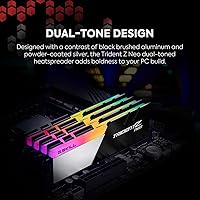
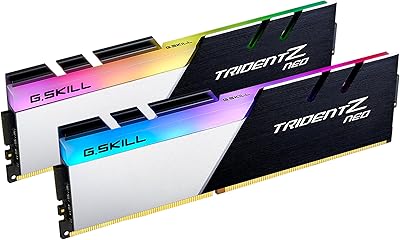
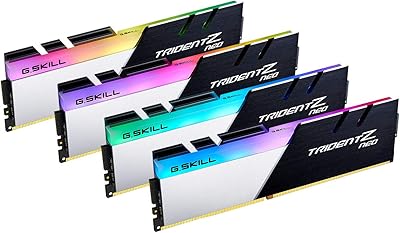
The physical construction of the Trident Z Neo feels premium in hand — the heatspreader has a solid, tight fit with no flex or rattle, and the dual-tone aluminum finish looks noticeably more intentional than the generic spreaders on budget DDR4 kits. Builders who handle a lot of RAM describe the fit and finish as clearly above average for the price tier.
At 1.7 inches tall, the heatspreader can conflict with wide CPU air coolers that overhang the first DIMM slot. It is not a universal problem, but it comes up often enough in user feedback that builders pairing these with large tower coolers should double-check clearance before committing.
RGB Lighting Quality
82%
18%
The RGB diffusion across the light bar is smooth and even, with no obvious hotspots or dead zones that are common on cheaper implementations. Users running ASUS Aura Sync or MSI Mystic Light setups describe the color reproduction as accurate and the sync responsiveness as on par with other premium RGB components in their builds.
RGB software compatibility outside of the major three ecosystems is inconsistent — users on less common motherboard brands sometimes find that lighting control requires the standalone G.SKILL app running in the background, which adds a layer of software overhead some builders prefer to avoid. The lighting is a bonus, not a primary feature, but it could be more universally plug-and-play.
Value for Money
84%
For builders targeting the AMD Ryzen sweet spot, this DDR4 kit delivers a strong performance-per-dollar ratio relative to its speed and timing class. The combination of 3600MHz and CL16 at this price point is genuinely competitive, and the brand reliability and lifetime warranty make the value proposition more durable than cheaper alternatives.
Buyers on a tight budget who are primarily building an Intel system or running less demanding workloads may find it difficult to justify the premium over a solid 3200MHz CL16 kit. DDR4 as a platform is also maturing, so builders with a near-term platform upgrade in mind should factor in that this investment does not carry forward to DDR5 systems.
Ease of Installation
91%
The standard 288-pin U-DIMM form factor drops into any compatible desktop board without fuss, and the modules seat firmly with a satisfying click. Multiple users specifically mention recommending this kit to first-time builders precisely because the physical installation and XMP setup process is as uncomplicated as DDR4 memory gets.
The only consistent installation friction reported is the BIOS step required to activate XMP — not a hardware issue, but one that catches a meaningful number of first-time builders off guard when their system boots at 2133MHz by default. Clear labeling in the box pointing to this requirement would save a lot of confusion.
Motherboard Compatibility
88%
Compatibility across the major AMD chipsets — X570, B550, and X470 — is broadly excellent, with the kit appearing on G.SKILL's own QVL for a wide range of popular boards from ASUS, MSI, Gigabyte, and ASRock. The breadth of validated configurations means most buyers will not need to do extensive compatibility research before purchasing.
A few users on budget A520 boards or older first-generation Ryzen platforms report that achieving stable 3600MHz operation requires more manual BIOS effort than on higher-end chipsets. Compatibility is not guaranteed on every board, and G.SKILL's QVL tool is the right first stop for anyone building on a less common platform.
Dual-Channel Performance
92%
Running as a matched dual-channel pair, this memory upgrade delivers noticeably better bandwidth than single-channel configurations at the same total capacity — a difference that shows up in real gaming frame time consistency and in memory-heavy applications like video editing and large file compression. The matched pairing also helps XMP stability compared to mismatched aftermarket combinations.
The strict recommendation against mixing this kit with other modules is a genuine constraint for users who want to expand capacity incrementally. Buying a second kit later and running four sticks introduces compatibility variables that G.SKILL explicitly flags, meaning users who anticipate needing 32GB should plan for it upfront rather than adding to this kit piecemeal.
Packaging & Presentation
79%
21%
The retail packaging is clean and appropriately protective, with each module seated securely in a plastic tray that prevents contact damage during shipping. Buyers who gift PC components or care about unboxing presentation describe the box as fitting for a premium-tier memory product without being excessive.
There are no accessories, no installation guide beyond a basic pamphlet, and no QR code pointing to setup documentation — for a kit that requires a BIOS step that trips up many buyers, a simple setup card would have been a meaningful inclusion. The packaging is adequate but not exceptional for its market tier.
Longevity & Durability
91%
With the kit having been on the market since 2019 and continuing to generate consistent positive feedback from long-term users, the durability track record is hard to argue with. Multiple reviewers explicitly mention running these modules daily for two or more years without any degradation in stability or performance.
DDR4 as a platform will eventually be superseded — not a defect of the kit itself, but a reality that limits its long-term upgrade path for builders who may switch to a DDR5 platform in the coming years. The hardware is durable; the platform lifecycle is the actual constraint.

Suitable for:

The G.SKILL Trident Z Neo 16GB DDR4 RAM is an excellent fit for desktop PC builders running AMD Ryzen 3000 or 5000 series processors, where 3600MHz memory speed has a measurable, documented impact on overall system performance due to how Ryzen CPUs interact with their memory subsystem. Gamers who want genuinely responsive frame times in CPU-sensitive titles will notice the difference compared to slower 3200 or 2666MHz kits, without having to spend on diminishing-return territory like DDR4-4000 and above. It suits first-time and intermediate builders well because the XMP 2.0 profile makes setup straightforward — one setting in the BIOS and you are running at full rated speed. Content creators, streamers, and anyone running moderately threaded workloads alongside gaming will also find the dual-channel 2x8GB configuration a practical and well-balanced choice. If you run a windowed or open-frame case and care about RGB cohesion with your other components, the Trident Z Neo integrates cleanly with major lighting ecosystems.
Not suitable for:

The G.SKILL Trident Z Neo 16GB DDR4 RAM is not the right pick for builders transitioning to a DDR5 platform, where newer Intel 12th-gen and beyond or upcoming AMD generations benefit from a completely different memory architecture — this kit simply does not apply there. Workstation or server builds requiring ECC memory for data integrity will need to look elsewhere, as this is a standard non-ECC consumer kit. Power users who need more than 16GB for heavy video editing, 3D rendering, or large virtual machine workloads may find the capacity limiting and should consider a 32GB kit instead. If you already own a different DDR4 kit, resist the temptation to pair this with it — mixing memory modules, even of similar specs, can introduce instability, so it only makes sense as a standalone matched kit. Finally, buyers on highly restricted budgets who are primarily targeting a 3200MHz build will find the price premium over comparable 3200MHz options harder to justify if the platform does not specifically benefit from the speed bump.
Specifications

  • Total Capacity: This kit provides 16GB of total memory across two matched 8GB DDR4 modules in a dual-channel configuration.
  • Memory Type: DDR4 U-DIMM non-ECC, designed for mainstream desktop PCs rather than workstation or server applications.
  • Speed Rating: Rated at 3600 MT/s, which represents a well-balanced performance tier for both AMD Ryzen and Intel desktop platforms.
  • Primary Latency: CL16 primary latency delivers faster memory access response compared to looser-timed kits at the same frequency.
  • Full Timings: Complete timing specification is 16-19-19-39, tuned for a strong balance between raw speed and access efficiency.
  • Operating Voltage: Runs at 1.35V, which is lower than many competing high-speed kits and contributes to cooler, more stable long-term operation.
  • XMP Support: Includes an Intel XMP 2.0 overclock profile that allows the kit to reach its rated 3600 MT/s speed with a single BIOS setting change.
  • Pin Configuration: Standard 288-pin DIMM interface, compatible with all modern DDR4-supporting desktop motherboard sockets.
  • Form Factor: U-DIMM (unbuffered DIMM) format measuring 5.2 x 0.67 x 1.7 inches, suitable for standard ATX, Micro-ATX, and Mini-ITX builds with adequate clearance.
  • RGB Lighting: Equipped with software-synced RGB lighting compatible with major ecosystem platforms including ASUS Aura Sync, MSI Mystic Light, and Gigabyte RGB Fusion.
  • ECC Support: Non-ECC design means error-correcting code functionality is not present, which is standard and expected for consumer desktop memory.
  • Compatible Platforms: Validated for use on AMD and Intel desktop platforms; AMD Ryzen 3000 and 5000 series systems in particular benefit most from this speed tier.
  • Module Count: Sold as a matched two-module kit; both sticks are factory-tested together to ensure paired stability.
  • Series: Part of G.SKILL's Trident Z Neo family, a line specifically developed and optimized with AMD Ryzen platform performance in mind.
  • Model Number: The exact model identifier for this configuration is F4-3600C16D-16GTZNC, which can be used to verify compatibility on G.SKILL's QVL tools.
  • Item Weight: The kit weighs approximately 4.8 ounces total, which is typical for a dual-module DDR4 package with integrated heatspreaders.
  • Warranty: G.SKILL backs this kit with a limited lifetime warranty, which is standard for the brand across its performance memory lineup.

Related Reviews
G.SKILL Trident Z Neo 64GB DDR4 RAM
83%
93%
XMP Reliability
91%
Stability & Reliability
82%
Platform Compatibility
89%
Performance at Rated Speed
78%
Value for Capacity
More
G.SKILL Trident Z Neo DDR4 128GB (4x32GB) 3200MT/s RAM
87%
91%
Performance in Gaming
93%
Multitasking & Workload Handling
88%
Overclocking Ease
90%
Build Quality & Durability
84%
Value for Money
More
G.SKILL Trident Z Neo DDR4 32GB (4x8GB) 3600MT/s RAM
88%
93%
Performance
89%
Installation & Setup
91%
RGB Lighting
84%
Compatibility
90%
Overclocking Stability
More
G.SKILL Trident Z Neo 32GB (2x16GB) DDR4 3600MHz CL18
89%
93%
Performance
88%
RGB Lighting & Aesthetics
95%
Installation & Setup
90%
Overclocking Stability
92%
Compatibility with Ryzen
More
G.SKILL Trident Z RGB DDR4 16GB (2x8GB) 3200MT/s
84%
91%
Performance in Gaming
88%
Ease of Installation
84%
Overclocking Potential
90%
RGB Customization
87%
Power Efficiency
More
G.SKILL AEGIS 16GB DDR4 2666MT/s RAM
87%
92%
Value for Money
86%
Performance in Gaming
89%
Ease of Installation
91%
Compatibility with Intel & AMD Systems
84%
Power Efficiency
More
G.SKILL AEGIS 16GB DDR4 3200MHz Desktop RAM
78%
91%
Value for Money
88%
Installation Ease
83%
Gaming Performance
86%
System Stability
79%
Motherboard Compatibility
More
G.SKILL Ripjaws DDR4 SO-DIMM 16GB (2x8GB) 2666MT/s RAM
86%
88%
Performance
93%
Ease of Installation
90%
Value for Money
85%
Compatibility
91%
Power Efficiency
More
G.SKILL Trident Z Royal 64GB DDR4 RAM
84%
93%
Overall Stability
89%
XMP Setup Experience
91%
Build Quality
88%
Aesthetic Design
84%
Performance at Rated Speed
More
G.SKILL Trident Z RGB DDR4 64GB (2x32GB) 3200MT/s CL16
87%
94%
Performance
90%
RGB Customization
88%
Installation and Setup
92%
Value for Money
86%
Compatibility with Intel & AMD
More

FAQ

Yes, one small step is required. After installing the modules, you need to enter your BIOS and enable the XMP profile — it is usually listed as XMP, DOCP, or EXPO depending on your motherboard brand. Without that step, the system will default to slower JEDEC speeds, typically 2133 or 2400MHz. It takes about thirty seconds once you know where to look, and most modern BIOS interfaces make it obvious.

Yes, this is actually one of the best-matched memory speeds for Ryzen 5000 series processors. The 3600MHz frequency aligns well with the Ryzen memory controller, and the tight CL16 timings give you an extra edge in latency-sensitive workloads. Just confirm your motherboard is on G.SKILL's QVL list for peace of mind, though compatibility is broadly strong on B550 and X570 boards.

Technically possible, but not recommended with this specific kit. G.SKILL designs these modules as matched pairs tested together, and mixing them with a separate kit — even an identical-looking one from a different production batch — can cause instability or prevent XMP from working properly. If you think you will want 32GB down the line, it is smarter to buy a single 32GB kit from the start.

It depends on the cooler. The sticks stand 1.7 inches tall with the heatspreader attached, which is within the clearance range of most mid-to-large air coolers. That said, very wide coolers like the Noctua NH-D15 can sometimes overhang the first DIMM slot. Check your cooler manufacturer's clearance specs before purchasing if space is tight.

Yes, the Trident Z Neo line is compatible with ASUS Aura Sync, as well as MSI Mystic Light and Gigabyte RGB Fusion. You will need to install G.SKILL's Trident Z Lighting Control software alongside your motherboard's RGB software for full sync functionality. A small number of users report occasional conflicts when running multiple RGB applications simultaneously, so keeping software clean and updated helps.

On AMD Ryzen platforms, yes — the difference is tangible and not just a spec sheet number. Ryzen CPUs use a fabric clock tied to memory speed, and 3600MHz often hits an optimal ratio that 3200MHz does not. On Intel platforms, the gap is narrower, but you still get the benefit of tighter timings. If you are on Ryzen, the upgrade from 3200 to 3600 CL16 is one of the more cost-effective performance moves you can make.

Not in any meaningful way. The 1.35V operating voltage keeps heat generation low, and the aluminum heatspreader handles thermal dissipation without needing airflow directed specifically at the RAM. Users running sustained workloads like video encoding or extended gaming sessions report no throttling or heat-related instability.

The system will still boot and function, but you will lose dual-channel mode, which cuts effective memory bandwidth roughly in half. For gaming and general use, the performance difference between single and dual channel at the same total capacity is noticeable. Always install both sticks together in the correct paired slots as indicated in your motherboard manual — usually slots 2 and 4.

It handles both comfortably at the 16GB capacity level. For lighter video editing in 1080p or basic 4K timelines, 16GB of fast dual-channel memory is workable. If you are editing long-form 4K footage, working with multiple streams, or running heavy plugins simultaneously, you may find yourself brushing against the 16GB ceiling sooner than expected. It is a solid all-rounder, but dedicated content creators doing heavy lifting may want to plan for 32GB.

Check your motherboard manual — most boards with four DIMM slots want a two-stick kit installed in slots 2 and 4 (sometimes labeled A2 and B2) rather than slots 1 and 2 side by side. Installing in the wrong slots will not damage anything, but it can prevent the system from running in dual-channel mode or cause XMP instability. The manual will have a clear diagram, and it is worth the thirty seconds to check.