Overview

The G.SKILL Trident Z RGB 16GB DDR4 RAM has been a staple in gaming and enthusiast PC builds since its debut in early 2017 — and it has held that ground surprisingly well. Running as a matched 2x8GB dual-channel kit at 3200MT/s, it sits comfortably in the performance tier without pushing into luxury pricing. It currently holds a top-25 ranking in Computer Memory on Amazon, backed by over 17,000 buyer ratings — a rare level of sustained validation for any memory product. Compatible with both Intel and AMD desktop platforms via XMP, it covers a wide range of builds. That said, knowing exactly what this kit offers — and where it stops — matters before buying.
Features & Benefits

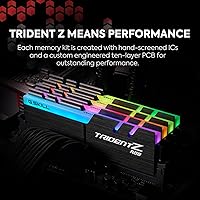
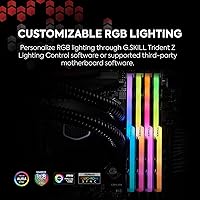
The most practical advantage of this Trident Z RGB kit is how straightforward it is to get running at full speed. Enable XMP in your BIOS and the kit jumps to 3200MT/s with CL16-18-18-38 timings — no manual tweaking required. The 1.35V operating voltage runs cooler than standard DDR4, which matters in tighter cases or builds where airflow is limited. Running in dual-channel mode across two slots means noticeably better memory bandwidth compared to a single stick — a real difference in CPU-heavy tasks. The aluminum heat spreader handles thermals without fuss, and the addressable RGB strip integrates cleanly with ASUS Aura Sync, MSI Mystic Light, and Gigabyte RGB Fusion.

Best For

This RGB memory kit makes the most sense for mid-to-high-end desktop builders — specifically those on Intel or AMD platforms who want dependable XMP performance without chasing the absolute bleeding edge. It is a strong pick for anyone upgrading from 8GB, where the jump to 16GB in dual-channel genuinely changes how multitasking and game loading feel day to day. Streamers and light video editors will find the stable throughput sufficient for their workflows. It is not the right fit for laptop users, workstation builds requiring ECC memory, or anyone whose immediate needs already exceed 16GB total capacity.

User Feedback

With over 17,000 ratings at 4.8 stars, the G.SKILL DDR4 kit carries one of the more credible feedback records in its category — that kind of volume is hard to dismiss. Most buyers highlight easy XMP activation and rock-solid long-term stability as the consistent wins. On the downside, a portion of AMD AM4 users report needing to confirm motherboard compatibility before hitting rated speeds — checking G.SKILL’s QVL list beforehand is genuinely worthwhile. A handful of buyers also encountered instability after mixing this kit with unmatched modules; sticking to the matched pair as sold is standard practice, not a quirk. Long-term durability reports are largely positive, with many owners citing years of trouble-free daily use.

Pros

  • XMP activation is genuinely one-step — enable it in the BIOS and the kit runs at full rated speed immediately.
  • The 1.35V operating voltage runs cooler than typical DDR4, reducing thermal stress in compact or warm cases.
  • Dual-channel 2x8GB setup delivers real-world bandwidth improvements over a single 16GB stick.
  • A 4.8-star average across more than 17,000 ratings is an unusually trustworthy signal for a memory product.
  • RGB lighting integrates cleanly with all major motherboard sync ecosystems without fuss.
  • Long-term stability reports are consistently strong, with many owners using this Trident Z RGB kit for years without issues.
  • Works across both Intel and AMD desktop platforms, making it a flexible choice for mixed households or future builds.
  • The aluminum heat spreader keeps thermals in check during sustained workloads without requiring active cooling.
  • JEDEC fallback profile means the kit will boot reliably on any compatible board even before XMP is enabled.
  • Sustained top-25 bestseller ranking in Computer Memory reflects broad, ongoing buyer confidence.

Cons

  • Compatibility at rated speeds on some AMD AM4 boards is not guaranteed — always check the G.SKILL QVL before buying.
  • Mixing this kit with modules from a different set routinely causes instability; the matched pair must be kept intact.
  • 16GB total capacity may feel limiting within a couple of years for users in heavier multitasking or creative workloads.
  • DDR4 is a previous-generation standard — buyers on DDR5 platforms will find this kit incompatible.
  • No ECC support makes it unsuitable for professional or data-sensitive workstation environments.
  • The tall heat spreader profile can conflict with large tower CPU coolers in tighter motherboard layouts.
  • Achieving the advertised speed requires XMP support on the motherboard — budget or entry-level boards may not cooperate.
  • Expanding beyond 16GB later requires replacing the entire kit rather than simply adding a matching stick.

Ratings

The scores below reflect an AI-driven analysis of verified global buyer reviews for the G.SKILL Trident Z RGB 16GB DDR4 RAM, with spam, bot-generated, and incentivized feedback actively filtered out before scoring. Ratings are drawn from thousands of real-world experiences across a wide range of desktop builds, platforms, and use cases. Both the genuine strengths and recurring frustrations are factored in transparently — nothing is glossed over.

Performance at Rated Speed
91%
When XMP is enabled, buyers consistently report that this Trident Z RGB kit performs exactly as advertised — 3200MT/s with tight CL16 timings that translate to snappy system responsiveness in gaming and everyday multitasking. Users upgrading from slower 2400MT/s kits frequently describe the difference as immediately noticeable.
A handful of users on certain AMD AM4 boards found that reaching the full rated speed required a BIOS update or manual tweaking. Without XMP enabled, the kit defaults to a much slower speed, and some buyers missed this step entirely and assumed the product was underperforming.
Installation & Setup
88%
The setup process is widely praised as one of the easiest among enthusiast-tier DDR4 kits. Most users simply installed the modules, toggled XMP in the BIOS, and were running at full speed within minutes — no manual timing input or voltage adjustment needed.
A small segment of buyers, particularly first-time builders, were caught off guard by the requirement to enable XMP manually. The kit does not automatically run at rated speed, and the BIOS step is not prominently communicated on the packaging.
Stability & Reliability
93%
Long-term stability is one of this kit's most consistently praised traits. A significant portion of reviewers report years of daily use — including demanding gaming sessions and sustained workloads — without a single crash, blue screen, or unexplained instability attributable to the memory.
A small number of users experienced instability after mixing this kit with modules from a different set, which is a user error rather than a product defect, but it still accounts for a visible cluster of negative reviews that skews perception slightly.
AMD Platform Compatibility
74%
26%
The kit works on AMD Ryzen platforms and is validated for a wide range of AM4 motherboards on G.SKILL's QVL list. Many Ryzen users report hitting 3200MT/s without issue after a simple BIOS XMP toggle, especially on mid-range and high-end boards from ASUS, MSI, and Gigabyte.
Compatibility is not universal across the AMD ecosystem. Some users on budget AM4 boards or older BIOS versions found that 3200MT/s was unstable and had to drop to 2933 or 3000MT/s. This is a known DDR4 and Ryzen quirk, but it still catches buyers by surprise.
RGB Lighting Quality
86%
The RGB lighting strip is consistently described as bright, even, and visually clean. Buyers who use ASUS Aura Sync, MSI Mystic Light, or Gigabyte Fusion report smooth software integration with no significant sync delays or color drift between the two sticks.
Users without a supported RGB ecosystem find the lighting less flexible — G.SKILL's own Trident Z Lighting Control software works, but it is considered less polished than the major motherboard vendor tools. A few reviewers also noted the RGB bar is not individually addressable at a granular per-LED level.
Value for Money
83%
Buyers broadly agree that the combination of performance, aesthetics, and brand reliability at this price point is hard to beat in the DDR4 category. For anyone building or upgrading a gaming rig, the cost-per-gigabyte alongside the XMP performance profile makes it a logical pick.
Some buyers feel the RGB premium is baked into the price, and those who have no interest in lighting aesthetics noted they could source non-RGB DDR4 kits at equivalent speeds for less. As DDR4 matures, alternatives have also narrowed the value gap.
Build & Physical Quality
89%
The aluminum heat spreader feels solid and well-fitted, and the overall build of each module communicates quality without being overbuilt. Buyers who have handled multiple RAM brands frequently call out the Trident Z line as among the better-feeling DDR4 kits on the market.
The taller profile caused physical clearance conflicts for a measurable number of users running large tower CPU coolers. This is not a defect, but it is a real-world inconvenience that requires planning — especially for builders using coolers with base overhangs near the first DIMM slot.
Thermal Performance
87%
The 1.35V operating voltage keeps heat output noticeably lower than higher-voltage DDR4 kits, and the aluminum heat spreader manages thermals effectively during sustained workloads. Users in warm cases with limited airflow appreciated that the modules never became a heat source.
In very confined mini-ITX builds with poor airflow, some users noted the modules ran warmer than expected. The heat spreader helps, but it is passive-only — there is no active cooling, so extreme ambient temperatures in tight enclosures can push temps higher.
Dual-Channel Bandwidth
90%
Running as a matched 2x8GB dual-channel pair, this RGB memory kit delivers meaningfully better memory bandwidth than a single-stick setup. Users who upgraded from a lone 16GB stick report improvements in CPU-bound gaming scenarios, particularly in titles that are sensitive to memory latency.
The benefit of dual-channel is most apparent in specific workloads and CPU-integrated graphics scenarios. Buyers expecting dramatic frame rate increases in GPU-limited gaming may be underwhelmed — the gains are real but contextual.
Software & Ecosystem Integration
78%
22%
Integration with the major RGB motherboard ecosystems is generally smooth and reliable. Most buyers using supported boards from ASUS, MSI, or Gigabyte were able to sync lighting and control the kit from within their existing motherboard software without adding another application.
G.SKILL's standalone Trident Z Lighting Control app, while functional, lacks the polish and feature depth of the motherboard vendor tools. Users on less common or older boards sometimes struggled to get full RGB sync working without troubleshooting forum threads.
Packaging & Delivery Condition
81%
19%
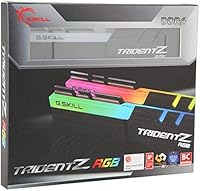
Buyers generally report that the kit arrives well-protected in a rigid plastic clam shell that keeps the modules secure during shipping. The presentation is clean and appropriate for a mid-to-high-tier product, and most users note both sticks arrived without visible damage or defects.
A small but consistent subset of reviews mentions arriving modules with bent or misaligned pins, which is likely a shipping handling issue rather than a manufacturing defect. The packaging could benefit from additional anti-static and impact protection for long-distance shipments.
Longevity
92%
Among DDR4 kits with a substantial review history, this Trident Z RGB kit stands out for the volume of owners who report multi-year trouble-free use. It is not uncommon to see three- and four-year ownership reports in the review base with zero failures or degradation in performance.
Being a 2017-era product, some buyers who purchased early units wonder about lifespan ceiling as the kit ages. While there is no evidence of widespread failure, DDR4 as a platform is in its twilight and any long-term investment consideration should weigh that context.
Capacity Adequacy
72%
28%
For the majority of current gaming builds and light productivity workloads, 16GB remains a functional and comfortable ceiling. Most buyers report no memory bottlenecks in popular titles and moderate multitasking scenarios like streaming while gaming.
Power users, content creators, and anyone running memory-hungry applications like virtual machines, DaVinci Resolve, or large browser session stacks will find 16GB limiting sooner than they would like. Upgrading capacity later means replacing the entire matched kit, not just adding to it.
Expandability
53%
47%
The kit occupies two DIMM slots, leaving two free slots on most ATX and Micro-ATX boards for potential future expansion — in theory giving builders a path to 32GB by adding another matched kit alongside it.
G.SKILL strongly advises against mixing kits, and in practice running four sticks on many platforms reduces the maximum stable frequency. Buyers who anticipate needing more than 16GB are better served by purchasing a 32GB kit from the start rather than planning to expand this pair later.

Suitable for:

The G.SKILL Trident Z RGB 16GB DDR4 RAM is a strong fit for desktop PC builders and gamers who want reliable, well-validated performance without venturing into exotic pricing territory. If you are on an Intel or AMD platform and your motherboard supports XMP, getting this kit running at its rated 3200MT/s speed is about as straightforward as memory installation gets. It is especially well-suited to anyone upgrading from a single 8GB stick or an older 8GB kit — the move to 16GB in a true dual-channel configuration produces a noticeable difference in multitasking, game load times, and general system responsiveness. Streamers and light content creators who need steady memory bandwidth for encoding or editing workflows will find it more than capable. The integrated RGB lighting is a practical bonus for builders who care about aesthetics, since it syncs with ASUS Aura, MSI Mystic Light, and Gigabyte Fusion without needing third-party software workarounds.
Not suitable for:

The G.SKILL Trident Z RGB 16GB DDR4 RAM is a desktop-only kit, so laptop users or those building around a small form factor platform using SO-DIMM slots should look elsewhere entirely. If your workload demands ECC memory for data integrity — such as professional workstations, servers, or certain content production environments — this non-ECC kit is not engineered for that use case. Buyers who already know they need 32GB or more upfront will find 16GB limiting fairly quickly, and expanding later means purchasing an entirely new matched kit rather than simply adding to this one. On certain AMD AM4 motherboards, reaching the full 3200MT/s rated speed requires a BIOS compatibility check against G.SKILL’s QVL list — it is not a guaranteed plug-and-play experience on every board. DDR4 is also a mature, previous-generation standard, so anyone building on a newer platform that natively supports DDR5 should confirm they actually have a DDR4 socket before purchasing.
Specifications

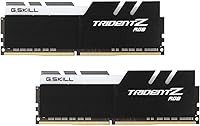
  • Total Capacity: This kit provides 16GB of total memory across two matched 8GB DDR4 modules.
  • Memory Type: Non-ECC DDR4 U-DIMM designed for consumer desktop motherboards, not for servers or workstations.
  • Speed Rating: Rated at 3200MT/s under the Intel XMP overclock profile for supported motherboards.
  • Latency Timings: Primary timings are CL16-18-18-38, representing a solid balance of speed and responsiveness for gaming and general use.
  • Operating Voltage: Runs at 1.35V under XMP, which is lower than the 1.5V common in older DDR4 kits and helps reduce heat output.
  • Form Factor: Standard 288-pin DIMM configuration compatible with full-size ATX, Micro-ATX, and Mini-ITX desktop motherboards that have full-size DIMM slots.
  • BIOS Profiles: Includes both a JEDEC default profile for out-of-box compatibility and an Intel XMP profile for rated-speed operation.
  • Platform Support: Compatible with Intel and AMD desktop platforms; AMD users should verify board compatibility via the G.SKILL QVL tool.
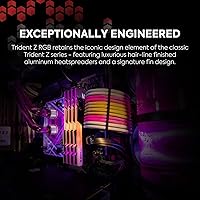
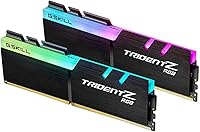
  • RGB Lighting: Features an addressable RGB light bar along the top of the heat spreader, compatible with ASUS Aura Sync, MSI Mystic Light, and Gigabyte RGB Fusion.
  • Heat Spreader: Aluminum heat spreader runs the full length of each module to assist with thermal dissipation during sustained workloads.
  • Module Dimensions: Each module measures 5.31 x 0.31 x 1.73 inches, with a taller profile due to the heat spreader and RGB bar.
  • Module Weight: Each individual module weighs approximately 4.9 oz, which is typical for a full-height DDR4 stick with a heat spreader.
  • Kit Configuration: Sold exclusively as a matched dual-channel pair; modules are tested and validated to run together as a set.
  • ECC Support: Non-ECC only — this kit does not support error-correcting code memory functions required by certain professional workstations.
  • Release Date: First made available in February 2017, making it one of the longer-standing DDR4 kits still actively sold and supported.
  • Bestseller Rank: Holds a top-25 position in the Computer Memory category on Amazon, based on sustained sales volume.
  • User Rating: Carries a 4.8-out-of-5-star average rating from over 17,000 verified buyer reviews.
  • Manufacturer: Designed and produced by G.Skill International Enterprise Co., Ltd., a Taiwan-based memory and storage specialist.

Related Reviews
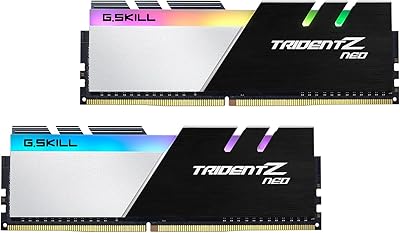
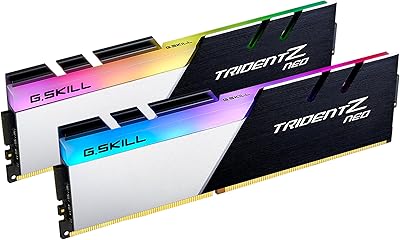
G.SKILL Trident Z Neo 16GB DDR4 RAM
88%
93%
XMP Compatibility
91%
Platform Performance
94%
Stability & Reliability
89%
Thermal Performance
86%
Build & Heatspreader Quality
More
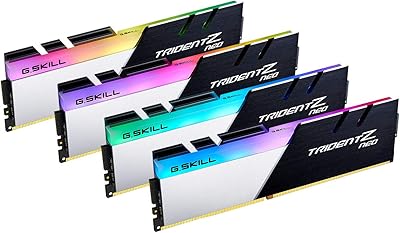
G.SKILL Trident Z Neo 64GB DDR4 RAM
83%
93%
XMP Reliability
91%
Stability & Reliability
82%
Platform Compatibility
89%
Performance at Rated Speed
78%
Value for Capacity
More
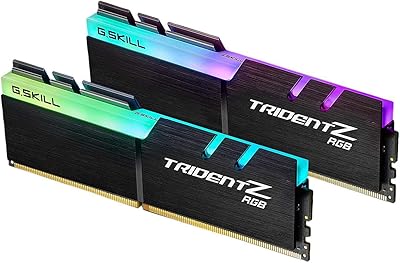
G.SKILL Trident Z Neo 32GB DDR4 RAM Kit
84%
93%
Performance at Rated Speed
91%
XMP Setup Experience
89%
System Stability
84%
Compatibility Range
88%
RGB Aesthetics
More
G.SKILL Trident Z Neo DDR4 128GB (4x32GB) 3200MT/s RAM
87%
91%
Performance in Gaming
93%
Multitasking & Workload Handling
88%
Overclocking Ease
90%
Build Quality & Durability
84%
Value for Money
More
G.SKILL Trident Z RGB 64GB DDR4 RAM
83%
88%
Real-World Performance
74%
Platform Compatibility
86%
Setup & Installation
83%
Value for Money
92%
Long-Term Reliability
More
G.SKILL AEGIS 16GB DDR4 3200MHz Desktop RAM
78%
91%
Value for Money
88%
Installation Ease
83%
Gaming Performance
86%
System Stability
79%
Motherboard Compatibility
More
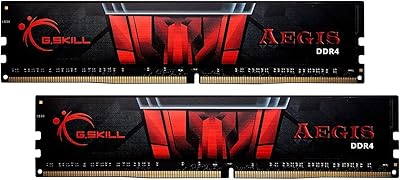
G.SKILL AEGIS 16GB DDR4 Desktop RAM
76%
89%
Value for Money
94%
Installation Ease
91%
System Stability
78%
Performance for Everyday Use
63%
Gaming Performance
More
G.SKILL Ripjaws DDR4 SO-DIMM 16GB Laptop RAM
82%
92%
Installation Ease
89%
Stability & Reliability
86%
Value for Money
77%
Compatibility
74%
Real-World Performance
More
G.SKILL Trident Z Neo 32GB DDR4 RAM
80%
83%
Platform Compatibility
91%
Out-of-Box Performance
88%
Build Quality
79%
Thermal Management
84%
RGB Aesthetics
More
G.SKILL Trident Z Royal 64GB DDR4 RAM
84%
93%
Overall Stability
89%
XMP Setup Experience
91%
Build Quality
88%
Aesthetic Design
84%
Performance at Rated Speed
More

FAQ

You need to enable XMP in your motherboard BIOS to hit the rated 3200MT/s speed. By default, DDR4 memory boots at a lower JEDEC speed — usually 2133 or 2400MT/s — regardless of what the kit is rated for. Enabling XMP takes about 30 seconds in the BIOS and requires no manual timing adjustments. If your board does not support XMP, the kit will still work, just at the lower default speed.

Yes, it works on AMD Ryzen platforms, but AMD compatibility with DDR4 at 3200MT/s can vary depending on your specific motherboard. Not every AM4 board will run this kit at full rated speed without a BIOS update or some configuration. The safest move is to check G.SKILL’s online QVL tool, which lists validated motherboard and CPU combinations for each kit.

Not recommended. Memory kits are sold and tested as matched sets, and adding a different kit — even from the same G.SKILL product line — can cause instability. If you need 32GB down the road, the right approach is to replace this pair entirely with a validated 32GB matched kit rather than mixing and matching.

It might, depending on your cooler. The heat spreader and RGB bar give each module a taller-than-average profile. Large tower coolers with wide bases that hang over the first DIMM slot are the most common culprits. Check your cooler’s clearance spec against the module height of 1.73 inches, and consult your motherboard’s manual for slot priority if you need to offset the modules.

The modules will light up with a default rainbow pattern without any software at all. To sync the lighting with your motherboard’s ecosystem — such as ASUS Aura Sync, MSI Mystic Light, or Gigabyte RGB Fusion — you will need the relevant motherboard software installed. G.SKILL also offers its own Trident Z Lighting Control software if you prefer managing it independently.

The system will still boot and run normally, just at a lower default speed — typically 2133MT/s or 2400MT/s depending on your board. You are not getting the performance you paid for, but nothing will break. It is one of the more common oversights in new builds, so it is worth double-checking your BIOS after installing any XMP-rated kit.

For light to moderate video editing and streaming, yes, this RGB memory kit handles those workloads comfortably. If you are regularly working with high-resolution footage, running multiple applications simultaneously, or using RAM-hungry tools like DaVinci Resolve with heavy projects, 16GB may become a bottleneck sooner than you would like. In that case, a 32GB kit would be a more future-proof starting point.

The most reliable way is to look up your motherboard model on G.SKILL’s official QVL (qualified vendor list) or use the RAM Configurator tool on their website. Your motherboard manufacturer’s memory support list is another useful cross-reference. Both resources are free and take only a minute to check.

Yes, some warmth is completely normal during sustained workloads. The aluminum heat spreader is doing its job by drawing heat away from the chips. Under typical gaming or desktop use, the modules should never get hot enough to be a concern. If you are noticing unusually high temps, check that your case has adequate airflow rather than attributing it to the kit itself.

G.SKILL backs the Trident Z RGB line with a limited lifetime warranty covering defects in materials and workmanship under normal use. The warranty does not cover damage from overvolting, improper installation, or physical mishandling. If you ever have an issue, G.SKILL’s support and RMA process is generally considered responsive based on community feedback.

Where to Buy