Overview

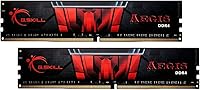
The G.SKILL AEGIS 16GB DDR4 3200MHz Desktop RAM is exactly what it looks like: a no-nonsense memory kit built for builders who prioritize reliability over flashy aesthetics. Running in a dual-channel 2x8GB configuration, it gives your system the bandwidth headroom that single-stick setups simply cannot match — a real difference in gaming frame pacing and general multitasking. G.SKILL has built a solid reputation in the PC enthusiast community over many years, and this AEGIS memory kit sits comfortably in that tradition. It supports XMP 2.0, so hitting rated speeds on a compatible motherboard is refreshingly straightforward. Just do not expect RGB lighting or premium heat spreaders — this RAM upgrade is about substance, not show.
Features & Benefits

Running at DDR4-3200 with CL16-18-18-38 timings, this G.SKILL DDR4 kit hits a sweet spot between frequency and latency that translates to smooth performance across games, creative applications, and everyday multitasking. At just 1.35V, it runs cooler and draws less power than standard 1.5V kits — a small but genuinely useful advantage in tighter cases or warmer environments. The 288-pin U-DIMM form factor means it drops into virtually any modern desktop motherboard without issue. Out of the box, it runs at JEDEC-standard speeds, so it will work even if you never open BIOS. That said, enabling XMP in BIOS is the only way to unlock its full 3200MHz potential — a step worth taking.

Best For

This AEGIS memory kit is a natural fit for budget-conscious desktop builders who want honest performance without overpaying for marketing extras. If you are currently running a single 8GB stick, moving to this dual-channel setup will produce a noticeable improvement in how your system handles parallel workloads. AMD Ryzen users will especially appreciate the speed, since Ryzen CPUs tie their Infinity Fabric clock directly to memory frequency — faster RAM genuinely matters on that platform. Intel builders will find the XMP profile equally useful. And for anyone tackling their first PC build, this RAM upgrade is a low-risk choice from a brand that has earned consistent trust across the enthusiast community.

User Feedback

Carrying a 4.6-out-of-5 rating across several hundred buyers, this RAM upgrade earns its score through straightforward dependability. Most praise focuses on painless installation and stable long-term operation — the two things that matter most once a build is up and running. One recurring complaint is worth calling out: some buyers forget to enable XMP in BIOS after install and then report unexpectedly slow speeds, which is entirely avoidable. Compatibility feedback is broadly positive across B550, X570, and Z490 boards. The main criticism comes from users who mixed this kit with non-matching sticks and hit instability — a scenario G.SKILL explicitly warns against. Long-term reliability reports are encouraging, with many owners citing months of trouble-free use.

Pros

  • Dual-channel configuration delivers noticeably better bandwidth than any single-stick alternative at this capacity.
  • DDR4-3200 speed hits a practical sweet spot that benefits both gaming and productivity workloads.
  • Low 1.35V operation keeps heat output down, which matters in compact or poorly ventilated cases.
  • XMP 2.0 support makes reaching rated speeds on compatible motherboards a simple BIOS toggle.
  • JEDEC default profile means the system boots and runs safely even before XMP is enabled.
  • G.SKILL has a long track record of producing reliable consumer memory with consistent quality control.
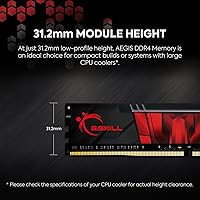
  • The low-profile design fits cleanly in cases with large CPU coolers where taller heat spreaders would cause clearance issues.
  • Strong long-term reliability reports from users who have run this RAM upgrade for many months without issues.
  • Broad compatibility across popular Intel and AMD desktop platforms reduces the risk of motherboard conflicts.
  • Competitive value relative to the performance tier it occupies makes it easy to recommend for budget builds.

Cons

  • No RGB lighting makes this G.SKILL DDR4 kit a poor choice for builders who care about interior aesthetics.
  • Mixing with non-matching sticks from other kits frequently causes instability — the matched-kit requirement is a hard constraint.
  • Users who skip the XMP enablement step in BIOS will unknowingly run at slower JEDEC speeds and blame the hardware.
  • CL16 timings, while reasonable, trail behind premium kits that offer tighter latency at similar frequencies.
  • No ECC support rules this RAM upgrade out for workstations, NAS builds, or any application requiring memory error correction.
  • The plain heat spreader design offers limited thermal headroom if you want to manually push beyond rated XMP speeds.
  • Capacity is fixed at 16GB total — users planning to scale beyond that will need to replace the kit rather than expand it.
  • No official support or validation for laptop or small-form-factor SODIMM slots; strictly a full-size desktop product.

Ratings

Our AI rating system analyzed verified global buyer reviews for the G.SKILL AEGIS 16GB DDR4 3200MHz Desktop RAM, actively filtering out incentivized, duplicate, and bot-generated feedback to surface what real desktop builders actually experienced. Scores reflect a transparent synthesis of both consistent praise and recurring frustrations — nothing is glossed over. Where this AEGIS memory kit earns high marks, the data is clear; where buyers ran into friction, that is reflected equally.

Value for Money
91%
Buyers consistently describe this G.SKILL DDR4 kit as one of the most cost-efficient ways to get a dual-channel 3200MHz setup into a mid-range desktop build. The price-to-performance ratio is frequently praised in the context of first builds and budget gaming rigs where every dollar matters.
A small segment of buyers felt the value proposition weakens slightly if you already own a cheaper 2666MHz kit — the real-world gaming gains from stepping up to 3200MHz can be modest depending on the platform and workload.
Installation Ease
88%
Most users report a completely uneventful install — sticks click in firmly, the system posts on the first try, and the JEDEC default profile means nothing additional is required to get up and running. First-time builders especially appreciated not needing to configure anything just to boot.
The experience sours for a meaningful minority who install the kit, never enable XMP, and then wonder why their RAM is running at 2133MHz. The kit itself is blameless here, but the gap between out-of-box speed and rated speed creates avoidable confusion for less experienced builders.
Gaming Performance
83%
Users running AMD Ryzen systems notice tangible frame-rate and frametiming improvements over slower DDR4 kits, particularly in open-world and CPU-bound titles. On Intel platforms, the performance uplift is more subtle but still appreciated in competitive multiplayer scenarios where consistent frame delivery matters.
Buyers expecting dramatic gains over a 2933MHz or 3000MHz kit may come away underwhelmed — the step up is incremental rather than transformative in most gaming workloads, and CL16 timings leave some headroom on the table compared to tighter premium alternatives.
System Stability
86%
Long-term owners consistently report months of stable daily operation with no crashes, blue screens, or memory errors when the kit is used as intended — in matched-pair configuration on a compatible board with XMP enabled. The reputation for set-and-forget reliability is well supported by the feedback data.
The stability picture falls apart quickly when buyers mix this RAM upgrade with non-matching sticks from other kits or manufacturers. Several users reported persistent boot loops and random crashes traced directly back to mixed configurations — an issue that is user-driven but nonetheless shows up in the feedback regularly.
Motherboard Compatibility
79%
21%
Compatibility is broadly positive across popular Intel Z490, B560, and AMD B550 and X570 boards. Buyers using mainstream motherboards from ASUS, MSI, and Gigabyte rarely report any compatibility friction when installing this G.SKILL DDR4 kit in the recommended paired slots.
A subset of buyers on budget B450 and older H310 boards encountered XMP instability at the rated 3200MHz, requiring them to either drop to 2933MHz or update their BIOS before achieving stability. Compatibility at the XMP speed is not universal across all supported platforms.
Thermal Performance
77%
23%
Running at 1.35V, this RAM upgrade generates noticeably less heat than higher-voltage alternatives, which buyers in compact or warm mid-tower builds specifically called out as a practical benefit. Under sustained workloads like rendering or extended gaming sessions, temperatures remain well within safe limits.
The slim heat spreader offers limited thermal mass for anyone pushing beyond the rated XMP profile with manual overclocking. Users who attempted to tighten timings or push frequency further than 3200MHz reported instability that pointed to the spreader's modest cooling capacity as a limiting factor.
Build & Construction Quality
74%
26%
The aluminum heat spreader is solid and does not rattle or flex, and buyers report that the PCB feels dense and well-made for the price tier. The low-profile form factor is a practical advantage in tighter builds where larger heatsinks physically block taller memory modules.
This is clearly a functional rather than premium construction. The matte finish on the heat spreader picks up fingerprints easily during handling, and the overall visual impression is decidedly budget — which is fine if aesthetics are not your priority, but worth knowing before purchase.
Aesthetics & Design
49%
51%
For builders with fully enclosed cases or those who simply do not care about interior appearance, the clean and unobtrusive look is completely inoffensive. The slim profile at least avoids the garish overstyling that some budget RGB sticks lean into.
There is no RGB, no premium shroud, and no visual interest whatsoever — buyers who wanted their build to look good through a windowed panel were consistently disappointed. In a market where even budget kits often include basic lighting, the AEGIS series makes a clear trade-off that not everyone appreciates.
XMP Profile Reliability
81%
19%
When paired with a compatible motherboard and with XMP properly enabled, the kit consistently runs at its rated 3200MHz CL16 without requiring any additional voltage tweaking or timing adjustments. Buyers on validated boards describe it as a reliable one-and-done configuration.
On boards where XMP support is inconsistent or BIOS implementation is poor, buyers occasionally found the kit defaulting back to JEDEC speeds after BIOS updates. This is partly a motherboard firmware issue, but it contributes to frustration for users who assume XMP will remain persistently enabled.
Packaging & Delivery Condition
82%
18%
The sticks arrive in a standard plastic clamshell tray that protects the modules adequately during shipping. Buyers rarely report damage on arrival, and the anti-static packaging is appropriate for the product type.
The packaging is purely functional — there is no documentation beyond minimal print on the insert, and some buyers noted that the clamshell can be tricky to open without tools. Not a meaningful concern, but worth flagging for buyers who appreciate a more polished unboxing experience.
Longevity & Durability
87%
Buyers who have used this RAM upgrade for over a year report no degradation in performance or stability, which aligns with the general durability profile of DDR4 consumer memory. G.SKILL's lifetime warranty also gives long-term owners meaningful peace of mind.
Because this is a non-ECC kit without error correction, there is no built-in mechanism to detect silent memory errors if degradation does eventually occur. For consumer desktop use this is rarely a practical concern, but it is a genuine limitation compared to ECC workstation memory.
Documentation & Setup Guidance
53%
47%
G.SKILL provides an online QVL lookup tool and RAM Configurator that experienced buyers find genuinely useful for validating motherboard compatibility before purchasing. The brand's community presence also means that setup questions are usually answered quickly in enthusiast forums.
The included documentation inside the box is minimal to the point of being unhelpful — there is no printed guide explaining XMP enablement or dual-channel slot configuration, which is the exact information first-time builders need most. The gap between what is in the box and what a new builder needs to know is significant.
Multitasking & Productivity
78%
22%
Users running home-office workloads — browser tabs, office applications, video calls, and light creative work simultaneously — report that 16GB in dual-channel handles daily multitasking without any noticeable slowdown or forced application throttling.
Heavy content creators running large Premiere Pro projects, extensive Blender scenes, or multiple virtual machines will find 16GB constraining regardless of speed. The kit is well-suited to moderate workloads, but it is not positioned for memory-intensive professional use cases.
Brand Reputation & Trust
89%
G.SKILL has built consistent credibility in the enthusiast PC community over many years, and buyers across all experience levels frequently cite the brand name itself as a reason for choosing this kit over lesser-known alternatives at a similar price point. That trust is reflected in the high confidence scores in long-term ownership reviews.
G.SKILL does not operate widely through retail storefronts, which means buyers who encounter an issue sometimes find the warranty claim process more involved than expected. Customer support responsiveness is occasionally flagged as slower than ideal in negative feedback.

Suitable for:

The G.SKILL AEGIS 16GB DDR4 3200MHz Desktop RAM is an ideal pick for desktop builders who want dependable performance without spending extra on features they will never use. It suits first-time PC builders particularly well, since the JEDEC default profile means the kit runs safely out of the box, and enabling XMP later is a one-time BIOS toggle rather than a complicated tuning exercise. AMD Ryzen users will get meaningful real-world gains here, since Ryzen architectures tie memory speed directly to internal fabric clocks — faster RAM is not just a spec number on that platform. Intel builders planning a mid-range gaming rig or a capable home-office machine will find this kit slots in cleanly with XMP support across most mainstream boards. Anyone upgrading from a single 8GB stick will notice the jump to dual-channel immediately, especially in games and heavily multitasked workloads.
Not suitable for:

Buyers who want their build to look as good as it performs should look elsewhere — this AEGIS memory kit ships with no RGB lighting and a minimal heat spreader, so it will not add any visual flair to a windowed case. Workstation users who require error-correcting memory for data-sensitive applications need to know that the G.SKILL AEGIS 16GB DDR4 3200MHz Desktop RAM is a non-ECC consumer kit, making it a poor fit for professional computing environments where memory integrity is critical. If you are already running a 32GB or higher capacity system and want to add sticks, this kit is not the answer — G.SKILL explicitly warns against mixing it with non-matching modules, and ignoring that guidance is a reliable path to instability. Power users chasing the lowest possible latency at high frequencies will also find that tighter-timed premium kits offer a measurable edge in benchmarks, even if the practical difference in daily use is modest.
Specifications

  • Total Capacity: This kit provides 16GB of total memory across two matched 8GB DDR4 modules.
  • Memory Type: Uses DDR4 SDRAM, the standard double-data-rate generation for mainstream desktop platforms released after 2014.
  • Rated Speed: Operates at 3200 MT/s (DDR4-3200) when the XMP 2.0 profile is enabled in the motherboard BIOS.
  • Latency Timings: Runs at CL16-18-18-38 primary timings, representing a reasonable balance between frequency and access latency for a value-tier kit.
  • Operating Voltage: Draws 1.35V during operation, which is lower than the older DDR3 standard and contributes to reduced heat output in sustained workloads.
  • Form Factor: Designed as a 288-pin U-DIMM module, compatible with standard full-size desktop motherboard memory slots.
  • Default Profile: Ships with a JEDEC default profile active, so the kit functions at safe base speeds immediately upon installation without any BIOS configuration.
  • Overclock Profile: Includes an Intel XMP 2.0 profile that enables the rated 3200MHz speed on supporting Intel and AMD motherboards with a single BIOS setting.
  • ECC Support: Non-ECC memory with no error-correcting capability, designed exclusively for consumer desktop use rather than workstation or server environments.
  • Channel Config: Sold as a matched dual-channel kit, intended to be installed together in the correct paired slots for optimal memory bandwidth.
  • Platform Support: Validated for use on both Intel and AMD desktop platforms; refer to G.SKILL's QVL tool on their website for specific motherboard compatibility.
  • Module Dimensions: Each stick measures approximately 5.9 x 0.6 inches (length x width), with a low-profile height suitable for builds with large CPU coolers.
  • Kit Weight: The complete two-module kit weighs approximately 2.24 ounces, consistent with standard bare-heatspreader DDR4 modules.
  • Heat Spreader: Fitted with a slim aluminum heat spreader in a muted finish — functional for thermal dissipation but without RGB lighting or decorative elements.
  • Series: Part of G.SKILL's AEGIS lineup, which targets value-oriented builders who prioritize stable performance over premium aesthetics.
  • Model Number: Official model identifier is F4-3200C16D-16GIS, which encodes the speed, timings, configuration, and capacity in G.SKILL's standard naming convention.
  • Mixing Policy: G.SKILL explicitly does not support mixing this kit with other memory modules, as doing so risks timing conflicts and system instability.
  • Intended Use: Designed for desktop PC gaming, home-office productivity, and general consumer computing workloads on compatible Intel and AMD platforms.

Related Reviews
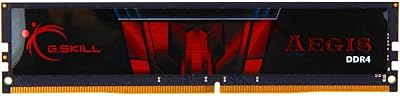
G.SKILL AEGIS 16GB DDR4 2666MT/s RAM
87%
92%
Value for Money
86%
Performance in Gaming
89%
Ease of Installation
91%
Compatibility with Intel & AMD Systems
84%
Power Efficiency
More
Crucial 16GB DDR4 3200MHz Desktop RAM
87%
88%
Performance in Gaming
94%
Ease of Installation
85%
Multitasking Capability
92%
Compatibility with Intel & AMD Systems
91%
Reliability & Durability
More
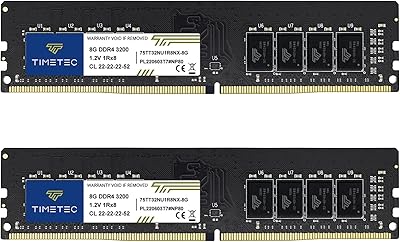
Timetec 16GB (2x8GB) DDR4 3200MHz Desktop RAM
85%
88%
Performance
91%
Ease of Installation
92%
Value for Money
85%
Compatibility
89%
Energy Efficiency
More
G.SKILL AEGIS DDR4 32GB (2x16GB) 3000MT/s CL16 RAM
87%
89%
Performance for Gaming
93%
Ease of Installation
77%
Overclocking Stability
92%
Value for Money
90%
Compatibility with Intel/AMD Systems
More
G.SKILL Ripjaws DDR4 SO-DIMM 16GB (2x8GB) 2666MT/s RAM
86%
88%
Performance
93%
Ease of Installation
90%
Value for Money
85%
Compatibility
91%
Power Efficiency
More
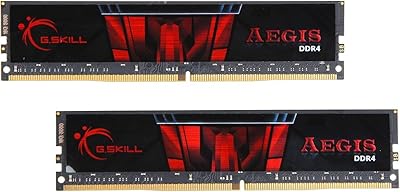
G.SKILL Trident Z Neo 16GB DDR4 RAM
88%
93%
XMP Compatibility
91%
Platform Performance
94%
Stability & Reliability
89%
Thermal Performance
86%
Build & Heatspreader Quality
More
DATO 16GB DDR4 RAM 3200MHz
87%
89%
Performance in Gaming
88%
Multitasking Efficiency
80%
Thermal Management
91%
Installation Ease
85%
Power Efficiency
More
Transcend 16GB DDR4 3200MHz Laptop RAM
87%
92%
Performance Boost
88%
Compatibility
90%
Ease of Installation
85%
Energy Efficiency
89%
Build Quality
More
LIYI DDR4 16GB (2x8GB) 3200MHz RAM
82%
88%
Performance
94%
Ease of Installation
78%
Compatibility
91%
Value for Money
85%
System Responsiveness
More
Samsung 16GB DDR4 3200MHz SODIMM RAM
87%
92%
Performance Improvement
94%
Ease of Installation
88%
Compatibility
90%
Multitasking Speed
85%
Build Quality
More

FAQ

Yes, and this is the step most people miss. The kit will run at a safe JEDEC default speed right out of the box, but to actually hit the rated 3200MHz you need to enter your BIOS, find the memory settings, and enable the XMP profile. It is usually a single toggle, and it takes about two minutes. If you skip this, your system will quietly run at a slower speed without any warning.

Yes, this G.SKILL DDR4 kit is compatible with AMD desktop platforms, and Ryzen systems in particular tend to respond well to 3200MHz memory. Ryzen CPUs tie their internal Infinity Fabric clock to memory speed, so running faster RAM has a more tangible effect on overall system responsiveness compared to Intel platforms. Just make sure to check G.SKILL's QVL list for your specific motherboard model.

Technically yes, but G.SKILL strongly advises against mixing this kit with other memory modules — even other G.SKILL sticks from a different batch or speed tier. Mismatched memory can cause boot failures, random crashes, or force the system to drop to slower speeds to maintain stability. If you think you will need more than 16GB down the line, it is smarter to buy a 32GB kit from the start rather than adding to this one.

For the majority of games, yes — 16GB in dual channel remains a comfortable baseline that handles modern titles, background apps, and a browser running simultaneously without much strain. A small number of newer open-world games and simulation titles are starting to push past that threshold, so if you play the most demanding titles at max settings you might notice occasional slowdowns. For mid-range gaming and everyday use, though, this amount of RAM is still a solid and practical choice.

Most motherboards label their slots A1, A2, B1, and B2. For dual-channel operation, you typically want to install both sticks in the A2 and B2 slots — the ones that are not directly adjacent to each other. Your motherboard manual will have a diagram showing the recommended configuration, and it is worth a quick check before you snap the sticks in. Running them in the wrong slots will not damage anything, but it may prevent dual-channel mode from activating.

No. The AEGIS memory kit ships with a plain aluminum heat spreader and no lighting whatsoever. If a lit-up build is important to you, you will need to look at G.SKILL's Trident Z RGB or similar lines. On the flip side, the low-profile design is genuinely useful in systems where a large CPU cooler sits close to the memory slots — RGB sticks with tall shrouds sometimes physically cannot fit in those setups.

The best way is to use G.SKILL's online RAM Configurator or QVL lookup tool on their official website. You enter your motherboard model and it shows which G.SKILL kits have been tested and validated for that board. General compatibility is broad since it is a standard 288-pin DDR4 U-DIMM, but specific XMP stability at 3200MHz can vary by motherboard and BIOS version, so checking the list saves potential headaches.

Yes, it will. The G.SKILL AEGIS 16GB DDR4 3200MHz Desktop RAM includes a JEDEC default profile, which means it will boot and run without any BIOS changes at all. It will just operate at a lower standard speed — typically 2133MHz or 2400MHz depending on your platform — until you manually enable XMP. Think of XMP as the switch that unlocks the speed you actually paid for.

It depends on your workload. For running virtual machines or data processing tasks, this RAM upgrade will handle moderate workloads just fine in terms of speed. However, it is non-ECC memory, meaning it does not detect or correct memory errors. If data integrity is critical to your work — such as in financial, scientific, or server applications — you should look for an ECC-compatible memory kit and a motherboard that supports it.

G.SKILL backs its AEGIS series with a limited lifetime warranty, which is standard for their consumer memory lineup. In practice, DDR4 memory is one of the more durable components in a desktop build — it has no moving parts and generates relatively little heat at 1.35V. Users who have run this kit for a year or more consistently report stable operation with no degradation, which aligns with what you would expect from a reputable memory brand.

Where to Buy