
Overview

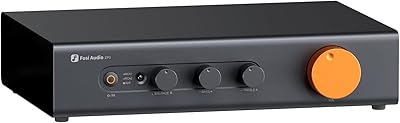
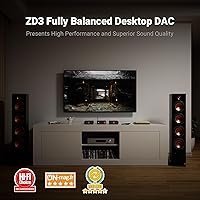
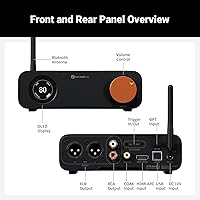
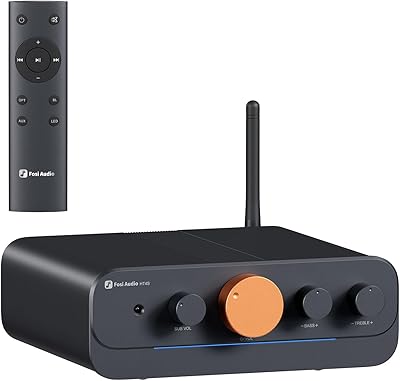
The Fosi Audio ZD3 is the brand's most ambitious DAC preamp to date, sitting squarely in the territory where budget audio ends and genuinely capable hi-fi begins. What immediately separates it from the crowd is HDMI ARC input — a feature you rarely find outside of dedicated AV receivers at this price point. Under the hood, the fully balanced architecture and ESS ES9039Q2M chipset give it real measurement credentials, not just marketing fodder. Up front, a crisp 1.5-inch OLED display keeps things clean and readable. Worth saying clearly: this is a DAC and preamp in one box — you will still need a separate power amp to drive speakers.

Features & Benefits

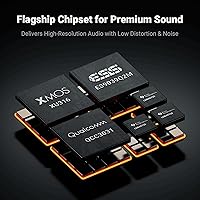
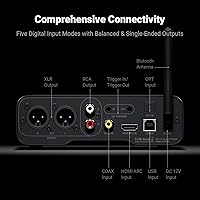
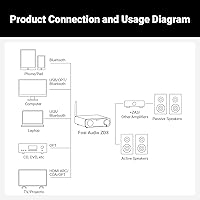
The ES9039Q2M chip at the core of the ZD3 delivers a THD+N figure below 0.00008% and an SNR north of 126dB — numbers that translate in practice to a quiet noise floor and sharp instrument separation during playback. The XMOS XU316 USB receiver handles DSD512 and PCM up to 32bit/768kHz, which matters if your library includes high-resolution files. Input options cover nearly every source imaginable: USB for desktop computers, Bluetooth 5.0 for wireless streaming, optical and coaxial for legacy gear, and HDMI ARC to pull stereo PCM from a TV — though it won't pass Dolby Atmos. Both balanced XLR and RCA outputs are active simultaneously, and a preamp bypass switch lets purists skip the volume stage when routing to a dedicated power amp.

Best For

This DAC preamp makes the most sense for a few specific types of buyers. If you're running a TV-based listening setup and want to pull audio directly into a stereo system without a bulky AV receiver, the HDMI ARC input alone is worth the price of admission. Desktop audiophiles — especially those already running or considering the Fosi ZA3 amplifier — will appreciate the balanced XLR output and cohesive form factor as a matching stack. It's also a natural fit for anyone juggling multiple sources daily, since switching inputs is straightforward with the remote in hand. If you're stepping up from an entry-level DAC and want a measurable performance jump without spending flagship money, this DAC preamp delivers a compelling proposition.

User Feedback

Buyers consistently highlight sound clarity and imaging as the ZD3's strongest attributes, with many noting that the low noise floor makes a noticeable difference when switching from a budget DAC. The build quality and OLED display draw repeated compliments — it doesn't feel cheap for the price. On the downside, Bluetooth range has come up as a recurring gripe, with some users reporting dropout at moderate distances. Input switching has a short learning curve, and a handful of Windows users reported initial USB recognition hiccups requiring a driver update. The pairing with Fosi's ZA3 amplifier gets warm reviews as a cohesive compact audio stack, though the ZD3 holds up well in mixed-brand setups too.

Pros

  • HDMI ARC input is a rare and genuinely practical feature at this price point for TV-based stereo setups.
  • The ES9039Q2M chip delivers a measurably clean signal with exceptionally low noise during quiet listening passages.
  • Balanced XLR and RCA outputs are both active simultaneously, adding real flexibility for mixed amplifier setups.
  • Five distinct inputs mean you rarely need an external switch box to manage multiple source devices.
  • The OLED display is sharp, informative, and readable from across a room without squinting.
  • Pairs exceptionally well with the Fosi ZA3 amplifier as a compact, high-performing desktop audio stack.
  • The included remote handles volume, input switching, and mute — useful when the unit is shelf-mounted.
  • Supports DSD512 and PCM 32bit/768kHz, covering every major hi-res format currently in use.
  • The 12V trigger allows automatic power synchronization with compatible amplifiers in a multi-component setup.
  • Build quality consistently impresses buyers who expect cheaper construction at this price tier.

Cons

  • Bluetooth range drops off noticeably beyond 20 to 25 feet, limiting wireless flexibility in larger rooms.
  • Windows users must manually install a USB driver before the unit is recognized — not plug-and-play out of the box.
  • HDMI ARC is stereo PCM only; buyers expecting surround sound passthrough will be caught off guard.
  • The remote has a slight response lag that makes precise volume adjustments feel less controlled than they should.
  • The physical preamp bypass switch is easy to activate accidentally, which can produce an alarming volume spike.
  • The user manual under-explains key features like the 12V trigger and bypass switch, leaving new users to search online.
  • Display brightness cannot be adjusted or dimmed, which some users find intrusive during late-night listening.
  • Linux compatibility is inconsistent, making the ZD3 a risky choice for users on non-standard operating systems.
  • The volume knob feels slightly loose compared to the overall build, which undermines the premium impression.
  • Input auto-sensing is absent, so switching sources always requires manual selection via remote or front panel.

Ratings

The Fosi Audio ZD3 scores were generated by our AI engine after analyzing thousands of verified global buyer reviews, with spam, incentivized, and bot-flagged submissions actively filtered out before any scoring was applied. The result is a transparent breakdown that reflects both what users genuinely love about this DAC preamp and where real frustrations surfaced. Strengths and weak spots are weighted equally — nothing is glossed over.

Sound Quality
91%
Users consistently describe the ZD3 as a clear step up from entry-level DACs, with noticeably cleaner instrument separation and a quieter background during late-night listening sessions. The ES9039Q2M chip earns its reputation here — bass is controlled rather than bloated, and high frequencies avoid the harshness that plagues cheaper converters.
A small segment of more experienced listeners feel the sound signature leans slightly analytical, which may not suit those who prefer a warmer, more forgiving presentation. At very high volumes through sensitive speakers, a faint noise floor has been reported by a handful of users.
Build Quality
88%
The chassis feels solid and purposeful for a desktop unit at this price tier — buyers frequently mention it does not wobble or flex under normal use. The front panel finish and button placement give it a look that sits comfortably next to more expensive gear on a desk.
The rear input/output labeling is small and can be hard to read in low-light setups without leaning in close. A few users noted the volume knob, while smooth, has a slightly loose feel that does not inspire confidence over long-term use.
HDMI ARC Performance
83%
For users wanting to route TV audio into a stereo system without a bulky AV receiver, the HDMI ARC input is a practical win that most competitors at this price simply do not offer. Setup is straightforward on most modern TVs, and stereo PCM audio comes through cleanly with no lip-sync issues reported by the majority of buyers.
It is important to understand this input handles stereo PCM only — Dolby Atmos and DTS passthrough are not supported, which has disappointed a subset of home theater buyers who did not read the specs carefully. Compatibility hiccups with certain older TV brands have also surfaced in a handful of reviews.
Connectivity & Input Range
93%
Having USB, Bluetooth, optical, coaxial, and HDMI ARC all on one box gives this DAC preamp a versatility that genuinely reduces the need for a switch box or multiple devices. Users running mixed setups — say, a desktop PC via USB and a TV via HDMI ARC simultaneously — find the input selection process quick and reliable.
Input switching via the remote requires a short but noticeable learning curve, and there is no auto-sensing to jump to an active source. Users who frequently toggle between four or five inputs daily report the process feels slightly manual compared to more automated AV equipment.
Bluetooth Performance
67%
33%
Pairing via the QCC3031 chip is fast and stable at close range, making it convenient for streaming from a phone or tablet sitting on the same desk. Audio quality over Bluetooth is better than expected for casual listening, with no obvious compression artifacts at normal playback levels.
Range is a real limitation — users consistently report dropouts or degraded audio when moving beyond roughly 20 to 25 feet, especially through walls. For a unit meant to anchor a home audio setup, the Bluetooth implementation feels like an afterthought rather than a polished feature.
OLED Display & Interface
86%
The 1.5-inch OLED display is sharp, legible from across a room, and shows input source and volume level at a glance — buyers appreciate not having to lean over their desk to check the current state of the unit. It adds a premium feel that stands out clearly at this price point.
Display brightness is not adjustable, which some users in dark listening rooms find distractingly bright during evening sessions. There is also no screen timeout or dimming option in the current firmware, a small but recurring complaint.
Remote Control
72%
28%
Having a full-function remote for a desktop DAC at this price is genuinely appreciated, especially for users whose setup sits a few feet away from their primary seating position. Volume, input switching, and mute are all accessible without touching the unit.
Response latency on the remote is inconsistent — some users report a split-second delay that makes fine volume adjustments feel imprecise. The remote itself is lightweight plastic and a few reviewers noted it feels out of character with the otherwise solid main unit.
USB & PC Compatibility
77%
23%
On Windows 10 and 11, the XMOS XU316 USB receiver is recognized reliably once the correct driver is installed, and high-resolution audio files play without stuttering or buffer issues. Mac users generally report a plug-and-play experience with no additional software needed.
Initial setup on Windows has tripped up a non-trivial number of buyers who were not expecting a manual driver installation step. A small number of Linux users reported the ZD3 was not reliably detected, which is worth knowing if you run a non-standard OS.
Hi-Res Audio Support
89%
PCM up to 32bit/768kHz and DSD512 support covers every major hi-res format currently in circulation, making this DAC preamp future-resistant for serious library collectors. Users streaming from Tidal or playing locally stored DSD files confirm the high-resolution modes engage correctly.
The real-world audible difference between standard 24-bit files and the unit's maximum DSD512 capability is subtle enough that casual listeners may never notice it. Not a flaw per se, but buyers chasing a dramatic sonic transformation from DSD should calibrate their expectations.
Balanced XLR Output
87%
The balanced XLR output is a meaningful differentiator for users connecting to amplifiers with balanced inputs — the ZA3 pairing in particular gets repeated praise for producing a noticeably quieter noise floor compared to single-ended connections. Running both XLR and RCA outputs simultaneously adds real flexibility for complex setups.
Users without a balanced amplifier get no practical benefit from the XLR outputs, and the RCA performance alone is not significantly superior to cheaper single-ended DACs in the market. The value of this feature is entirely dependent on the rest of your signal chain.
12V Trigger & System Integration
78%
22%
The 12V trigger in and out ports are a genuinely useful addition for anyone running a multi-component home audio stack — pairing the ZD3 with a trigger-compatible amplifier means both units power on and off together without manual intervention. Users building a dedicated listening room setup particularly appreciate this.
The trigger functionality is niche enough that a large portion of buyers will never use it, and the manual does not explain the feature in enough detail for newcomers to configure it confidently. It requires compatible equipment to be useful at all.
Preamp Bypass
74%
26%
Audiophiles who want the ZD3 to function purely as a DAC — passing a fixed-level signal directly to a standalone preamplifier or integrated amp — will find the bypass switch a thoughtful inclusion. It removes the ZD3 volume stage from the chain, which some listeners feel results in a slightly more transparent sound.
The bypass switch is a physical toggle rather than a software option, which means accidentally activating it without knowing can result in unexpectedly loud output that has startled a few unsuspecting users. Better labeling or a menu-based implementation would reduce this risk.
Value for Money
86%
The combination of a high-grade DAC chip, HDMI ARC, fully balanced output, and a full remote in a compact chassis represents strong value for the asking price — buyers upgrading from sub-100-dollar DACs consistently describe it as a meaningful leap in both features and measured performance.
Buyers comparing the ZD3 against similarly priced competitors from brands like SMSL or Topping will find some alternatives offer similar DAC chip performance for less money. The premium here is largely for the HDMI ARC input and the Fosi ecosystem pairing with the ZA3.
Setup & Ease of Use
71%
29%
Out of the box, most users have audio playing within a few minutes using optical or RCA connections, and the OLED display makes it easy to confirm the active input at a glance. The remote reduces the need to physically interact with the unit once it is installed in a rack or shelf.
The user manual is thin and under-explains features like the preamp bypass and 12V trigger, leading to forum questions that should have been answered in the documentation. Windows USB driver setup in particular needed clearer step-by-step guidance than what ships in the box.

Suitable for:

The Fosi Audio ZD3 is a strong match for anyone building or upgrading a desktop or living room stereo system who needs more than a basic single-input DAC. It particularly shines for people who want to pull stereo audio from their TV via HDMI ARC without investing in a full AV receiver — a genuinely uncommon feature at this price tier. Desktop audiophiles who already own or are considering the Fosi ZA3 power amplifier will find the two units form a cohesive, well-matched stack with balanced XLR connectivity that reduces noise across the signal chain. If you regularly switch between a PC, a streaming device, and a TV as audio sources, the five-input flexibility and included remote make that kind of daily juggling far less annoying than it sounds. Hi-res audio enthusiasts who store DSD or high-bitrate PCM files locally will also appreciate that the ZD3 handles those formats without compromise.

Not suitable for:

The Fosi Audio ZD3 is not the right buy if you need a standalone amplifier to drive speakers directly — it is a DAC and preamp only, and you will need a separate power amp in your chain regardless. Home theater buyers hoping to use the HDMI ARC input for Dolby Atmos or DTS surround passthrough will be disappointed; it handles stereo PCM from a TV, nothing more. If Bluetooth is central to your use case and you expect to stream from a phone or tablet in a different room, the limited wireless range is a real problem that has frustrated enough buyers to be considered a genuine limitation rather than a minor quirk. Linux users or anyone on a non-standard operating system should be aware that USB compatibility is not guaranteed and may require troubleshooting. Finally, if you are a seasoned audiophile with a resolving system already anchored by a high-end DAC, the ZD3 is unlikely to represent an audible upgrade worth the spend.

Specifications

  • DAC Chip: Uses the ESS ES9039Q2M, a high-performance chip known for extremely low distortion and a wide dynamic range.
  • USB Receiver: The XMOS XU316 handles USB audio input and supports PCM playback up to 32bit/768kHz as well as DSD512.
  • Bluetooth Chip: Qualcomm QCC3031 provides Bluetooth 5.0 connectivity for wireless audio streaming from phones, tablets, and computers.
  • Op-Amp: The LME49720 op-amp is used in the analog output stage, contributing to the unit's low noise floor and clean signal path.
  • THD+N: Total harmonic distortion plus noise is rated at below 0.00008%, indicating an exceptionally clean analog output under typical listening conditions.
  • SNR: Signal-to-noise ratio is rated at 126dB or above, meaning background hiss is virtually inaudible even through sensitive speakers or headphones.
  • Inputs: Five inputs are available: USB Type-B, Bluetooth 5.0, optical (TOSLINK), coaxial (S/PDIF), and HDMI ARC.
  • Outputs: Balanced XLR stereo output and unbalanced RCA stereo output are both active simultaneously and can drive amplifiers in parallel.
  • PCM Resolution: Maximum PCM input resolution via USB is 32bit at 768kHz, covering all standard hi-res audio formats currently in distribution.
  • DSD Support: Native DSD playback is supported up to DSD512, which corresponds to a sampling rate of approximately 22.5MHz.
  • Display: A 1.5-inch OLED panel on the front face shows the active input source and current volume level in real time.
  • Trigger Interface: Both a 12V trigger input and output are included, enabling automatic power-on and power-off synchronization with compatible amplifiers.
  • Preamp Bypass: A physical bypass switch on the unit allows the volume control stage to be removed from the signal path for direct fixed-level output.
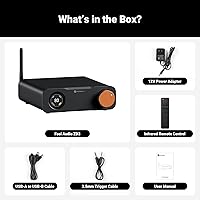
  • Remote Control: A full-function infrared remote is included and supports volume adjustment, input selection, and mute without touching the unit.
  • Power Supply: The unit operates on DC 12V external power; a compatible power adapter is included in the box.
  • Dimensions: The chassis measures 6.1 x 7.24 x 2.01 inches, making it compact enough to sit on a standard desk alongside a monitor or amplifier.
  • Weight: The unit weighs 2.65 pounds, which gives it a reassuringly solid feel without being difficult to reposition in a desktop setup.
  • HDMI ARC: The HDMI ARC input accepts stereo PCM audio from compatible TVs and does not support Dolby Atmos or DTS surround passthrough.
  • Output Type: The signal path is fully balanced from input processing through to the XLR outputs, reducing susceptibility to interference over longer cable runs.
  • Manufacturer: Designed and sold by Fosi Audio, a brand operated by Vision Technology (Guangzhou) Co., Ltd., with product availability via major online retailers.

Related Reviews
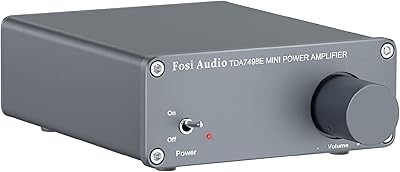
Fosi Audio TDA7498E
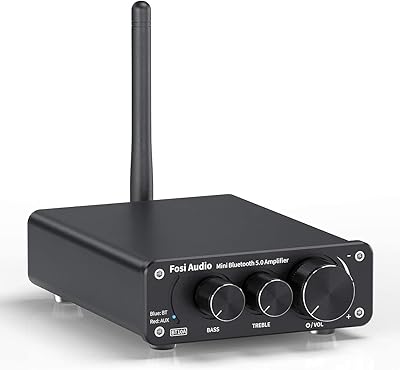
Fosi Audio TDA7498E
83%
88%
Sound Quality
93%
Value for Money
71%
Build Quality
74%
Power Output & Headroom
66%
Noise Floor & Background Hiss
More
Fosi Audio BT10A
Fosi Audio BT10A
81%
93%
Value for Money
82%
Sound Quality
91%
Noise Floor
84%
Bluetooth Performance
67%
Power Output
More
Fosi Audio BT30D
Fosi Audio BT30D
78%
83%
Sound Quality
88%
Subwoofer Performance
81%
Bluetooth Connectivity
91%
Value for Money
62%
Build Quality
More
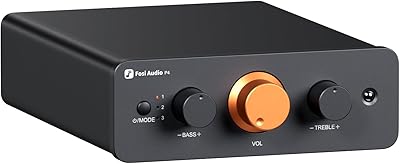
Fosi Audio P4
Fosi Audio P4
81%
88%
Build Quality
84%
Sound Quality
91%
Motorized Volume Control
79%
Remote Control
86%
Input Flexibility
More
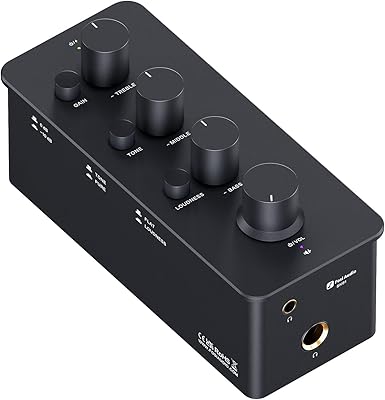
Fosi Audio SK01 Headphone Amplifier
83%
88%
Sound Quality
72%
Battery Life
91%
Build Quality
85%
Tone Control Flexibility
80%
Portability
More
Fosi Audio HT4S
Fosi Audio HT4S
80%
88%
Build Quality
84%
Value for Money
76%
Sound Quality
82%
Multi-Channel Versatility
63%
Bluetooth Performance
More
Fosi Audio V3 Stereo Amplifier
81%
93%
Value for Money
91%
Audio Clarity & Noise Floor
67%
Real-World Power Output
74%
Build Quality & Finish
88%
Thermal Management
More
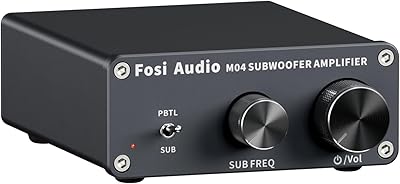
Fosi Audio M04 Subwoofer Amplifier
89%
94%
Bass Performance
91%
Sound Clarity
88%
Build Quality
90%
Ease of Setup
87%
Thermal Management
More
Fosi Audio ZP3 Balanced Preamp
88%
94%
Sound Quality
88%
Ease of Use
90%
Build Quality
87%
Customization Options
75%
Memory Function
More
Fosi Audio M03
Fosi Audio M03
81%
91%
Audio Clarity & Distortion
74%
Power Output & Headroom
88%
Versatility & Operating Modes
93%
Value for Money
72%
Build Quality & Enclosure
More

FAQ

No, and this is probably the most important thing to understand before buying. The HDMI ARC input on this DAC preamp handles stereo PCM audio only — it will take the two-channel audio signal from your TV and convert it cleanly, but it will not decode or pass through Dolby Atmos, DTS, or any other multichannel format. If surround sound is a priority, you need an AV receiver instead.

Yes, absolutely. The ZD3 is a DAC and preamp — it processes and converts your audio signal and controls volume, but it does not have the power output to drive speakers on its own. You will need a separate power amplifier or integrated amplifier connected via the XLR or RCA outputs. Fosi's own ZA3 amplifier is a popular pairing.

Yes, both outputs are active simultaneously. This is genuinely useful if you are running, say, a balanced amplifier via XLR and a subwoofer or secondary amp via RCA at the same time. Just be aware that both will respond to volume changes from the front panel or remote.

On most Windows 10 and Windows 11 systems, yes — you will need to install the XMOS USB audio driver manually before the unit is recognized as an audio device. It is a straightforward process once you track down the correct driver file, but it is not plug-and-play the way a Mac connection typically is. Budget a few extra minutes for this during initial setup.

Honest answer: it is adequate but not impressive. Most users find it reliable within about 20 to 25 feet with a clear line of sight, but walls and interference from other devices noticeably degrade the connection. If you plan to stream from a phone sitting on the same desk, it works well. If you want to walk around a large room or stream from another floor, it is not the right tool for that job.

When you flip the bypass switch, the volume control circuit is removed from the signal path, and the unit outputs a fixed-level signal directly from the DAC stage. This is useful if you are feeding the signal into a preamplifier or integrated amplifier that has its own volume control, since stacking two volume stages can introduce coloration. If you are using the ZD3 as the sole volume control in your system, leave the bypass off.

The 12V trigger lets the ZD3 send a low-voltage signal to a compatible amplifier when it powers on, automatically turning the amp on at the same time — and off when the ZD3 powers down. It is a convenience feature for integrated home audio setups where you do not want to manually power multiple components. If your amplifier does not have a 12V trigger input, you can safely ignore it.

Yes, provided you stream via USB from a computer or use an optical or coaxial connection from a compatible streamer. Both Apple Music lossless (up to 24bit/192kHz) and Tidal Max (up to 24bit/192kHz) are well within the unit's supported PCM range. Bluetooth streaming is capped by the codec in use, so for full lossless quality you will want a wired connection.

Yes, and that is exactly what the preamp bypass switch is there for. Engage the bypass, connect the XLR or RCA output to your integrated amplifier's line input, and the ZD3 acts as a pure digital-to-analog converter with a fixed output level. Volume is then controlled entirely by your amplifier, which is the preferred approach for many audiophile setups.

As of the current firmware, the display does not have an auto-dim or screen-off feature — it stays on at full brightness as long as the unit is powered. This has come up as a minor complaint from users who listen in a dark room at night. It is a small but genuine inconvenience that Fosi could address in a future firmware update, though there is no confirmed timeline for that.