


Overview

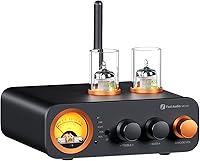
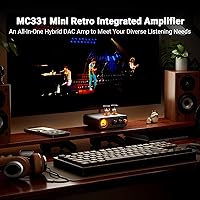
The Fosi Audio MC331 arrived in late 2024 as a genuinely compact all-in-one solution for desktop listeners who want tube audio without building a rack of separate components. Fosi Audio has built a reputation for affordable desktop gear that punches above its weight, and this tube amp continues that pattern. It integrates a DAC, preamp, headphone amp, and power amp into a chassis small enough to sit beside a keyboard. The physical footprint is honestly surprising for everything packed inside. Think of it as an entry point into tubes — designed not for seasoned audiophiles, but for curious listeners ready to step past a basic solid-state setup.

Features & Benefits

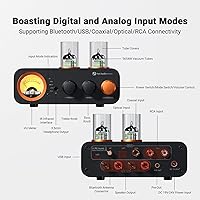
The pair of 5725W vacuum tubes handles what tubes do best — softening transients and adding a warm, rounded quality to the midrange that solid-state amps rarely match at this price. Input coverage is genuinely broad: Bluetooth for phone streaming, USB and optical for computers and TVs, coaxial for disc players, and RCA for analog sources. A built-in DAC means connecting a laptop directly requires no extra hardware. Power output is high enough to drive most bookshelf speakers with confidence, even those with modest sensitivity ratings. The remote control handles bass and treble adjustments from across the room — a small practical detail that makes a real difference in daily use.

Best For

This desktop integrated amp is a natural fit for listeners trying to consolidate a messy stack into one clean unit. If you run a turntable with its own phono preamp alongside a laptop and a phone, the MC331 handles all three without any additional hardware. First-time tube buyers get a low-risk way to explore the tube sound — and since the tubes are user-replaceable, rolling in aftermarket options later is always possible. The 3.5mm headphone output means late-night listening and daytime speaker sessions can both run through the same box. Anyone already invested in a serious high-end system will likely find this too modest, but for everyone stepping up from a basic setup, it fits well.

User Feedback

Buyers consistently highlight the warm sound character and the visual theater of the VU meter needles — the analog movement adds something a spec sheet cannot quantify. Build quality draws praise relative to the price. On the downside, Bluetooth range is reported as modest, and the stock tubes are generally considered a baseline rather than a finished choice, with many buyers swapping them out within weeks. Input switching gets occasional complaints about sluggish response. Speaker pairing tends to go smoothly with standard 8Ω bookshelves; lower-impedance loads produce more variable results. Overall buyer satisfaction skews positive, though community discussions tend to frame this as a capable starter piece rather than a long-term reference component.

Pros

  • Replaces a DAC, preamp, and amplifier stack with a single compact unit under six inches wide.
  • Tube warmth noticeably softens harsh digital edges, making long listening sessions more comfortable.
  • Five input types cover virtually every source a desktop listener is likely to own.
  • The VU meter and glowing tubes create a genuinely attractive desktop centerpiece.
  • Remote-controlled bass and treble adjustment works well from across a small room.
  • Tubes are user-replaceable, giving buyers a clear upgrade path without buying a new unit.
  • Drives standard 8Ω bookshelf speakers with confident, room-filling volume.
  • Built-in DAC means no extra hardware needed when connecting a computer via USB or optical.
  • Headphone output and speaker terminals on the same box suits mixed-use listening habits.
  • Compact footprint leaves desk real estate free without sacrificing functionality.

Cons

  • Stock tubes are widely considered a starting point only — most buyers replace them within the first few weeks.
  • Bluetooth range is short and lacks high-quality codec support, limiting wireless audio performance.
  • Input switching has a noticeable delay and an audible pop between sources.
  • Remote response is sluggish and occasionally fails to register on the first press.
  • High-impedance headphones and sensitive in-ears expose the limitations of the headphone stage.
  • Some units ship with slightly mismatched VU meter calibration between the two needles.
  • The included manual provides little guidance on tube care, burn-in, or safe replacement for newcomers.
  • Knobs and input selectors feel less precise than the solid chassis suggests they should.
  • Lower-sensitivity or lower-impedance speakers can push the amp outside its comfort zone.
  • Once tube replacement costs are factored in, the initial value proposition becomes less clear-cut.

Ratings

The Fosi Audio MC331 scores below are generated by AI after analyzing verified buyer reviews from multiple global markets, with spam, bot activity, and incentivized feedback actively filtered out. This desktop integrated amp draws a wide range of opinions — from enthusiastic first-time tube converts to more measured takes from experienced listeners — and both the strengths and the friction points are reflected honestly in each category score.

Sound Character
83%
Most buyers describe the sound as noticeably warmer and more forgiving than solid-state amps at a comparable price. Vocals and acoustic instruments benefit most, with a soft rounding of harsh digital edges that makes long listening sessions more comfortable. Many users coming from basic PC speakers or entry-level stereo setups found the tonal shift genuinely surprising.
Listeners with more critical ears note the warmth tips into slight muddiness at higher volumes, and detail retrieval in the upper treble is not on par with cleaner solid-state designs. The tube coloration, while appealing to many, is not neutral — those who prefer an accurate, flat sound profile may find it too colored.
Build Quality
77%
23%
The chassis feels substantially more solid than buyers expect for the price tier. Metal panels, a stable freestanding base, and the weight of the unit all contribute to a perception of quality that reads as a tier above typical budget desktop gear. The VU meters feel well-integrated rather than tacked on.
A few buyers flag that the knobs and input selector feel slightly loose over time, and the tube sockets show minimal play when tubes are inserted. At this price it is understandable, but buyers used to Japanese or European mid-range gear will notice the difference in fit and finish immediately.
Feature Set
91%
Covering Bluetooth, USB, optical, coaxial, and RCA in a unit this compact is genuinely uncommon. The built-in DAC means desktop computer users can skip an external converter entirely, and the pre-out gives flexibility for future system expansion. Having a headphone output and speaker terminals on the same box removes a real barrier for mixed-use listeners.
The Bluetooth implementation is functional but basic — no aptX or LDAC support has been confirmed, which limits wireless audio quality for those streaming high-resolution files. The RCA input works well for analog sources, but there is no phono stage built in, so turntable users without a standalone preamp are out of luck.
Value for Money
88%
For the asking price, getting a tube amp, DAC, preamp, headphone amp, VU meters, and a remote in a single compact unit represents strong value. Buyers repeatedly note that assembling equivalent functionality from separate components would cost considerably more, even at entry-level. This is consistently the most praised aspect across review platforms.
The stock tubes are widely considered the weak link and most buyers end up spending additional money on aftermarket replacements within the first month. Once you factor in a decent tube swap, the total cost climbs noticeably, which somewhat erodes the initial value proposition for budget-conscious buyers.
VU Meter & Aesthetics
89%
The analog VU meter needles draw consistent praise and are frequently cited as the reason buyers chose this unit over visually plain alternatives. The warm glow of the tubes alongside the needle movement creates a desktop centerpiece effect that photos do not fully capture. For aesthetics-driven buyers, this alone justifies the purchase.
A small number of users report one VU meter needle reads slightly higher than the other out of the box, suggesting unit-to-unit calibration variance. It does not affect audio performance, but for buyers drawn specifically to the visual presentation it is a frustrating quality control miss.
Bluetooth Performance
62%
38%
Wireless pairing is straightforward and stable for typical desktop and near-field use. Streaming from a phone or tablet sitting within a few meters works reliably for casual background listening. Most users running it at a desk with a phone nearby report no dropout issues during normal sessions.
Range is the most repeated complaint — walls and moderate distances cause dropouts that more capable Bluetooth implementations handle without issue. Without high-quality codec support, the wireless audio quality falls short of what the DAC stage is capable of when fed a wired digital signal, making Bluetooth the clearly weakest input option.
Amplifier Power
84%
The output is more than sufficient to drive typical 8Ω bookshelf speakers to loud, room-filling levels without any audible strain or distortion at normal listening volumes. Buyers pairing it with popular compact bookshelves report a clean, confident presentation at mid-volume that removes any concern about underpowering.
Driving lower-sensitivity or lower-impedance speakers closer to 4Ω produces more variable results, with some users reporting the sound thins out or loses composure under demanding loads. This is not a unit designed to push difficult speaker loads, and buyers should temper expectations if their speakers are rated below average efficiency.
Remote Control
71%
29%
Having bass and treble control from across the room is a genuine quality-of-life addition that competing units at this price often skip entirely. The remote makes living-room placement practical without needing to leave your listening position for basic tone adjustments. Most users find the range adequate for small to medium rooms.
Response time is reported as sluggish by a notable portion of buyers, requiring deliberate button presses rather than quick taps. The remote itself feels lightweight and plasticky, which is a minor but noticeable contrast to the more premium feel of the main unit. A few users experienced intermittent non-response that required re-pairing.
Input Switching
68%
32%
Having five distinct input types accessible from both the front panel and the remote gives this amp genuine flexibility for multi-source setups. Buyers who regularly switch between a computer, a CD player, and a phone appreciate not needing a separate switcher. The input labels are clear and easy to navigate.
Several buyers note a slight delay and audible pop when switching between inputs, which is not unusual in this product category but still annoying in daily use. Input switching via remote occasionally fails to register on the first press, which is a recurring theme in user complaints tied to the overall remote reliability issues.
Headphone Output
73%
27%
The 3.5mm headphone output performs well for casual late-night listening and handles mid-sensitivity headphones without obvious distortion or noise floor issues. Buyers using it with common over-ear headphones in the 32 to 150Ω range report a satisfying, warm presentation consistent with the tube character of the main signal path.
High-impedance headphones above 250Ω show clear volume limitations, and very sensitive in-ear monitors reveal a low but present background hiss. The headphone stage is adequate for its intended casual use case but is not positioned to satisfy dedicated headphone enthusiasts who prioritize dead-silent backgrounds and strong dynamic headroom.
DAC Quality
78%
22%
The built-in DAC handles USB and optical input cleanly enough that most desktop listeners will have no reason to add an external converter. Buyers streaming from a laptop via USB report a clean, stable connection with no dropouts, and the digital inputs consistently outperform the Bluetooth option in perceived audio quality.
Dedicated DAC enthusiasts note that the built-in converter lacks the resolution and low-noise floor of standalone units even at modest price points. For a buyer already owning a quality external DAC, using the analog RCA input bypasses the onboard converter entirely, which can yield cleaner results depending on the source.
Setup & Usability
87%
Getting up and running takes minutes rather than hours. Inputs are clearly labeled, the remote is immediately functional out of the box, and there is no software, firmware, or app dependency. For buyers who find multi-component audio systems intimidating, the single-box simplicity is a meaningful practical advantage.
The manual is brief and lacks detail on optimal tube burn-in procedures or advice on tube rolling for beginners. First-time tube amp buyers may feel under-informed about how to care for and eventually replace the tubes, which is a missed opportunity given that tube maintenance is a realistic part of ownership.
Tube Replaceability
81%
19%
User-replaceable tubes are a genuine long-term value add that many buyers grow to appreciate after the stock tubes have been evaluated. The 5725W tube type is widely available and affordable, meaning aftermarket upgrades are accessible without specialist sourcing. Several buyers report meaningful sound improvements after a simple tube swap.
The stock tubes that ship with the unit draw consistent criticism as a baseline-only starting point, and experienced users almost universally recommend replacing them early. This creates a minor irritation: the amp is sold partly on its tube character, yet realizing its full potential requires additional spending that is not acknowledged upfront.

Suitable for:

The Fosi Audio MC331 is a strong fit for desktop listeners who are ready to move past a basic setup but do not want to manage a stack of separate components. If your current system is a laptop or phone plugged into a simple speaker pair and you want a meaningful upgrade without a steep learning curve, this desktop integrated amp delivers that in a single box. It works especially well for people who value the visual character of their desk setup as much as the sound — the glowing tubes and moving VU needles are a genuine draw, not just a gimmick. Vinyl listeners who already own a turntable with a built-in phono preamp will find the analog RCA input slots in cleanly. Bluetooth streamers who also need a reliable wired USB or optical connection for a computer will appreciate having both without any external adapters. First-time tube amp buyers who want to explore what the tube sound is actually about, without committing serious money, will find this a reasonable and reversible entry point.

Not suitable for:

Buyers who prioritize audio neutrality and technical accuracy over warmth and character should look elsewhere — the tube coloration in this desktop integrated amp is intentional and consistent, and it will not suit listeners who want a flat, honest reference sound. Experienced audiophiles already running separates with quality components will find the MC331 a step backward in resolution and noise floor performance, regardless of how tidy the packaging is. Anyone planning to drive demanding, low-sensitivity speakers or complex impedance loads should factor in that this amp is optimized for typical bookshelf pairings, not difficult loads. Dedicated headphone users who rely on high-impedance cans or very sensitive in-ear monitors will likely hit the limits of the headphone stage quickly. If wireless audio is your primary use case and you care about streaming quality, the Bluetooth implementation here is basic enough to frustrate — it is a convenience feature rather than a strong input option. Finally, buyers who want to buy once and never think about maintenance should know that tube amps, even approachable ones like this, eventually require tube replacement and light upkeep.

Specifications

  • Brand: Manufactured by Shenzhen Foresight Technology Co., Ltd. and sold under the Fosi Audio brand.
  • Model: The unit is designated the MC331, a compact integrated amplifier within Fosi Audio's desktop HiFi lineup.
  • Dimensions: The chassis measures 5.94″ long by 5.31″ wide by 1.97″ tall, making it genuinely small for a tube-equipped integrated amp.
  • Weight: The complete unit weighs 4 pounds, which is light enough to reposition easily but substantial enough to stay stable on a desk.
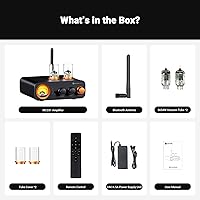
  • Tube Type: Two 5725W vacuum tubes are fitted as standard and are user-replaceable without tools or specialist knowledge.
  • Power Output: Maximum rated output is 105W per channel into a 4Ω load, with real-world usable power well suited to typical bookshelf speakers.
  • Inputs: Five input types are supported: Bluetooth wireless, USB digital, optical (TOSLINK), coaxial digital, and stereo RCA analog.
  • Outputs: Output options include a pair of speaker binding posts, a 3.5mm headphone jack, and a stereo RCA pre-out for connecting to an external amplifier or powered subwoofer.
  • Built-in DAC: An onboard digital-to-analog converter processes USB, optical, and coaxial digital signals without requiring an external DAC unit.
  • Bluetooth: Bluetooth wireless streaming is supported for cable-free playback from phones, tablets, and laptops within close range.
  • VU Meter: Two analog VU meters with backlit needle displays are integrated into the front panel to show output signal level in real time.
  • Remote Control: A remote control is included and supports volume adjustment plus independent bass and treble control from a distance.
  • Tone Controls: Bass and treble can be adjusted either via the front panel or remotely, allowing basic tonal shaping without external equalizers.
  • Headphone Stage: The 3.5mm headphone output is designed for casual use with standard consumer headphones in the 32 to 150Ω impedance range.
  • Voltage: The unit operates on 110V AC and is intended for use in North American and compatible markets without a voltage converter.
  • Mounting Type: The MC331 is a freestanding desktop unit and is not designed for rack mounting or wall installation.
  • Phono Stage: No built-in phono preamplifier is included, so turntable users must connect through a separate phono preamp before the RCA input.
  • Pre-Out: The dedicated stereo RCA pre-out allows the MC331 to function as a preamplifier feeding a separate power amplifier or active subwoofer.

Related Reviews
Fosi Audio TDA7498E
Fosi Audio TDA7498E
83%
88%
Sound Quality
93%
Value for Money
71%
Build Quality
74%
Power Output & Headroom
66%
Noise Floor & Background Hiss
More
Fosi Audio BT10A
Fosi Audio BT10A
81%
93%
Value for Money
82%
Sound Quality
91%
Noise Floor
84%
Bluetooth Performance
67%
Power Output
More
Fosi Audio BT30D
Fosi Audio BT30D
78%
83%
Sound Quality
88%
Subwoofer Performance
81%
Bluetooth Connectivity
91%
Value for Money
62%
Build Quality
More
Fosi Audio SK01 Headphone Amplifier
83%
88%
Sound Quality
72%
Battery Life
91%
Build Quality
85%
Tone Control Flexibility
80%
Portability
More
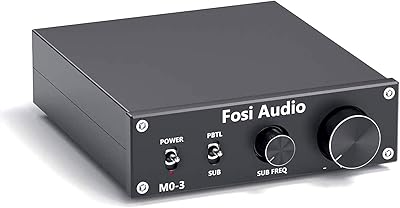
Fosi Audio M03
Fosi Audio M03
81%
91%
Audio Clarity & Distortion
74%
Power Output & Headroom
88%
Versatility & Operating Modes
93%
Value for Money
72%
Build Quality & Enclosure
More
Fosi Audio HT4S
Fosi Audio HT4S
80%
88%
Build Quality
84%
Value for Money
76%
Sound Quality
82%
Multi-Channel Versatility
63%
Bluetooth Performance
More
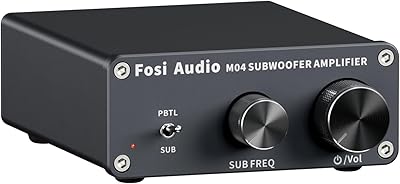
Fosi Audio M04 Subwoofer Amplifier
89%
94%
Bass Performance
91%
Sound Clarity
88%
Build Quality
90%
Ease of Setup
87%
Thermal Management
More
Fosi Audio P4
Fosi Audio P4
81%
88%
Build Quality
84%
Sound Quality
91%
Motorized Volume Control
79%
Remote Control
86%
Input Flexibility
More
Fosi Audio V3 Stereo Amplifier
81%
93%
Value for Money
91%
Audio Clarity & Noise Floor
67%
Real-World Power Output
74%
Build Quality & Finish
88%
Thermal Management
More
Fosi Audio ZP3 Balanced Preamp
88%
94%
Sound Quality
88%
Ease of Use
90%
Build Quality
87%
Customization Options
75%
Memory Function
More

FAQ

No, the built-in DAC handles that for you. Just connect your laptop via USB or optical and the amp converts the digital signal internally. You only need an external DAC if you specifically want a higher-spec converter than the onboard one provides.

Only if your turntable has a built-in phono preamp, which many modern entry-level turntables do. If your deck has a standard phono-level output with no built-in preamp, you will need a separate phono stage between the turntable and the RCA input on this desktop integrated amp.

It is straightforward. The 5725W tubes simply pull out from their sockets and replacements push back in — no soldering, no bias adjustment, no tools required. The tube type is widely available and affordable, so sourcing replacements is not a concern.

For casual background music and convenience streaming it works fine, but it is the weakest input on the unit. There is no high-resolution codec support confirmed, so if sound quality from wireless sources matters to you, connecting via USB or optical will give you noticeably better results.

Standard 8Ω bookshelf speakers in the 85dB sensitivity range and above are the sweet spot. The Fosi Audio MC331 handles these confidently at normal to loud listening levels. Lower-impedance or low-sensitivity speakers can be driven but may not perform at their best, so check your speaker specs before pairing.

Not ideally. The headphone stage is sized for everyday consumer headphones in the 32 to 150Ω range. High-impedance headphones above 250Ω will likely feel underpowered, and very sensitive in-ear monitors may pick up a faint background hiss. For casual headphone use it is perfectly adequate, but dedicated headphone enthusiasts will want a proper headphone amp.

Yes, the dedicated pre-out on the rear allows you to run a line-level signal to a separate power amp or active subwoofer. This makes the unit useful as a source hub and tone control stage even if you want more speaker power downstream.

Most buyers say yes. The stock tubes are functional but are widely considered a baseline. Many users report improved clarity, reduced harshness, and better overall texture after swapping in a quality aftermarket pair. It is a low-cost upgrade that tends to be worth doing after the first few weeks of ownership.

For typical desktop or small-room bookshelf setups it gets louder than most people need before any strain is audible. The power rating is generous for the form factor. Where it starts to show limits is in larger rooms with less efficient speakers, or when asked to push low-impedance loads at high volume levels for extended periods.

It works acceptably in small to medium rooms under normal conditions, but response time is on the slower side and you may need a deliberate press rather than a quick tap. A small number of buyers report intermittent non-response, particularly when batteries are not fresh. It is a convenience feature rather than a precision tool.