Fujifilm X-H2S Mirrorless Camera


Overview
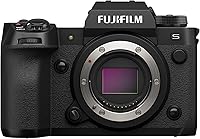
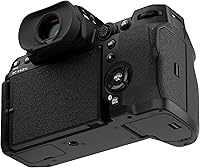
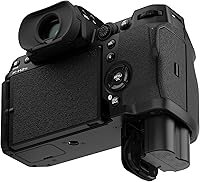
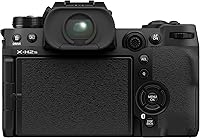
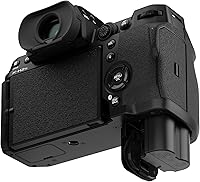
The Fujifilm X-H2S Mirrorless Camera represents the most capable APS-C body the company has built, aimed squarely at working professionals and serious hybrid shooters who need both speed and reliability. Compared to the X-T4, the jump feels substantial — faster processing, far more intelligent autofocus, and video capabilities that were previously out of reach at this sensor size. It carries a price that puts it firmly in professional territory, so this is not a casual purchase. The body itself is weather-sealed magnesium alloy, with a deep and confident grip and dual card slots that reflect its clear intention as a primary workhorse, not a weekend backup.
Features & Benefits
At the heart of the X-H2S is a stacked BSI sensor — and the architecture genuinely matters. Unlike a conventional back-illuminated design, placing the circuitry on a separate layer dramatically reduces rolling shutter during fast action and lets the camera sustain 40 frames per second with the electronic shutter. The AI-powered subject detection locks onto birds, vehicles, and athletes with a consistency that takes real pressure off the photographer in unpredictable situations. For video work, internal Apple ProRes recording to CFexpress and 4K at 120fps make this mirrorless camera a credible alternative to dedicated cinema rigs. Seven stops of in-body stabilization rounds out an impressively complete package.
Best For
The X-H2S earns its asking price most convincingly for wildlife and sports photographers — the combination of 425 phase-detection points, deep buffer, and reliable subject-tracking makes a real difference when chasing fast-moving subjects with no second chances. Hybrid filmmakers who shoot both stills and video professionally will appreciate not having to carry two systems. Photojournalists and event shooters will value the rugged weather sealing when conditions turn hostile. Content creators who need long recording runs will find the 90-minute continuous video capability genuinely useful. If you are upgrading from an older X Series body, the performance gap is wide enough to make the investment feel worthwhile.
User Feedback
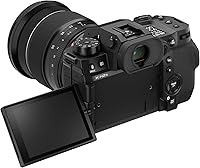
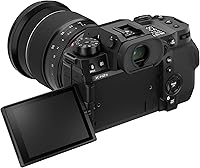
Owners are largely positive, with autofocus on moving subjects drawing particular praise — bird photographers and sports shooters frequently describe it as one of the most dependable performers in the APS-C class. Battery life during video recording also earns consistent approval. That said, the feedback is not uniformly glowing. Photographers migrating from Sony or Canon often mention that Fujifilm's menu structure takes meaningful time to learn. The body-only price, which does not include the CFexpress Type B cards the camera needs to fully perform, adds up quickly. A handful of hybrid shooters have noted that a fully articulating screen would suit their workflow better than the tilting design. Build quality, however, is rarely questioned.
Pros
- AI subject detection tracks birds, athletes, and vehicles with exceptional reliability in real shooting conditions.
- Internal Apple ProRes recording to CFexpress makes professional video post-production significantly more straightforward.
- Seven stops of in-body stabilization enables confident handheld shooting in low light or at longer focal lengths.
- The 40fps electronic shutter with an effectively unlimited buffer means you rarely miss a critical moment.
- Up to 90 minutes of continuous internal video recording is genuinely practical for event and documentary work.
- 14 stops of dynamic range gives RAW files impressive latitude in high-contrast scenes during editing.
- The weather-sealed magnesium alloy body feels built to last through years of professional use outdoors.
- Dual card slots — CFexpress Type B and UHS-II SD — provide flexible backup and overflow recording options.
- 4K at 120fps opens up high-quality slow-motion footage that was not accessible in previous X Series bodies.
- F-Log2 and external ProRes RAW output over HDMI give colorists maximum flexibility in post-production workflows.
Cons
- CFexpress Type B cards required for peak performance are expensive and add meaningful cost beyond the body price.
- The menu system has a steep learning curve for photographers new to the Fujifilm ecosystem.
- The tilting screen does not articulate fully, which creates awkward angles for solo video creators and low-angle shooting.
- At this price point, the APS-C sensor size may be a harder justification against full-frame alternatives for some buyers.
- The body alone ships without a lens, and quality XF glass needed to match the sensor adds substantially to total spend.
- Continuous autofocus in very low-light video scenarios can still hunt occasionally, particularly with non-stabilized lenses.
- The size and weight, while appropriate for a pro body, make it less appealing as a discreet everyday carry camera.
- Users reporting first impressions often note the grip, while deep and confident, makes the body feel bulky in smaller bags.
Ratings
The scores below for the Fujifilm X-H2S Mirrorless Camera were generated by our AI system after analyzing verified owner reviews from global markets, with spam, bot activity, and incentivized submissions actively filtered out. Each category reflects real-world experiences reported by working photographers, hybrid filmmakers, and serious enthusiasts — not marketing claims. Both the standout strengths and the genuine frustrations are weighted transparently into every score.
Autofocus Performance
Video Capability
Build Quality
Image Quality
Burst & Buffer
In-Body Stabilization
Battery Life
Menu System & Usability
Value for Money
Autofocus Subject Detection
Ergonomics & Handling
Display & Screen
Connectivity & Workflow
Low-Light Performance
Lens Ecosystem Compatibility
Suitable for:
The Fujifilm X-H2S Mirrorless Camera is purpose-built for photographers and filmmakers who need a single body to handle demanding professional work across both stills and video. Wildlife and sports photographers will find the AI-driven subject detection and 40fps burst rate genuinely transformative when tracking unpredictable subjects — birds in flight, athletes mid-stride, or vehicles at speed. Hybrid shooters who produce both photo and video content professionally will appreciate having internal ProRes recording, 4K slow motion, and a robust stills buffer under one roof without reaching for a second system. Photojournalists and documentary shooters working in challenging outdoor conditions will value the weather-sealed magnesium body, which inspires real confidence in rain or dusty environments. Existing Fujifilm users coming from the X-T4 or older X Series bodies will feel the performance gap immediately, making this a logical and well-supported upgrade path.
Not suitable for:
The Fujifilm X-H2S Mirrorless Camera is a hard sell for anyone who shoots casually, is budget-conscious, or is just starting out in photography. The body-only price is steep, and that figure does not account for CFexpress Type B cards — fast, expensive media that the camera needs to unlock its best performance — or compatible lenses, which add considerably to the total outlay. Photographers who shoot primarily in studio conditions and have no need for high-speed burst rates or advanced subject tracking will find they are paying for capabilities they will rarely use. Videographers whose entire workflow depends on a fully articulating screen — common in solo vlogging or low-angle documentary work — may find the tilting display limiting in practice. Newcomers to the Fujifilm system should also be prepared for a menu structure that takes real time to learn, particularly if they are migrating from Sony or Canon bodies where muscle memory has already developed.
Specifications
- Sensor: The camera uses a 26.1MP X-Trans CMOS 5 HS stacked back-illuminated sensor, which places circuitry on a separate layer from the pixels to improve readout speed and low-light performance.
- Processor: Fujifilm's X-Processor 5 handles image and video data processing, delivering autofocus performance approximately three times faster than the preceding X-Processor 4 found in the X-T4.
- Autofocus System: The phase-detection autofocus system uses 425 points and an AI-driven subject detection engine capable of identifying birds, animals, vehicles, cyclists, and people including faces partially obscured by glasses or face coverings.
- Burst Rate: Continuous shooting reaches up to 40fps with the electronic shutter and up to 15fps with the mechanical shutter, with an effectively unlimited buffer when using a compatible high-speed memory card.
- Video Resolutions: Internal video recording is supported at up to 6.2K/30P in Open Gate 3:2 format, 4K/120P for high-frame-rate slow motion, and Full HD at up to 240P.
- Internal Recording: The camera records 10-bit 4:2:2 Apple ProRes footage internally to CFexpress Type B cards, eliminating the need for an external recorder for ProRes acquisition.
- Dynamic Range: The X-Trans 5 sensor delivers up to 14 stops of dynamic range, providing substantial latitude for highlight and shadow recovery during post-production.
- Stabilization: The in-body image stabilization system offers up to 7 stops of shake reduction, making handheld shooting viable in low-light conditions or when using longer focal lengths.
- Card Slots: Two card slots are included: Slot 1 accepts CFexpress Type B cards, while Slot 2 supports SD, SDHC, and SDXC cards up to UHS-II speed class.
- Battery Life: A single battery charge supports up to 90 minutes of continuous internal video recording, which is competitive for a mirrorless body in this class.
- Display: A 3-inch tilting touchscreen LCD with capacitive touch input is built into the rear of the body, supporting touch-to-focus and menu navigation.
- Connectivity: The camera includes a full-size HDMI Type A port, two USB 3.0 ports, Bluetooth, and Wi-Fi for wireless file transfer and remote control via smartphone.
- External Output: F-Log and F-Log2 footage can be output via HDMI to external recorders in Apple ProRes RAW (requiring Atomos Ninja V+) or Blackmagic RAW (requiring Blackmagic Video Assist).
- Build Material: The body is constructed from magnesium alloy with comprehensive weather sealing, designed to resist dust and moisture during outdoor professional use.
- Shooting Modes: Supported exposure modes include Aperture Priority, Shutter Priority, Program, Manual, and Bulb, covering the full range of professional shooting scenarios.
- Image Formats: Still images can be saved as JPEG, RAW, TIFF, or HEIF, with RAW files recorded at 14-bit depth for maximum post-processing flexibility.
- Metering: Center-weighted metering is available alongside multi and spot modes, with white balance presets covering auto, daylight, shade, fluorescent, incandescent, and underwater conditions.
- Lens Mount: The camera uses Fujifilm's X Mount, compatible with the full range of XF and XC lenses as well as third-party X-mount optics.
- Warranty: Fujifilm provides a one-year manufacturer warranty covering defects in materials and workmanship from the date of original purchase.
- Self-Timer: A built-in self-timer offers 2-second and 10-second delay options for hands-free or remote shooting scenarios.
Related Reviews
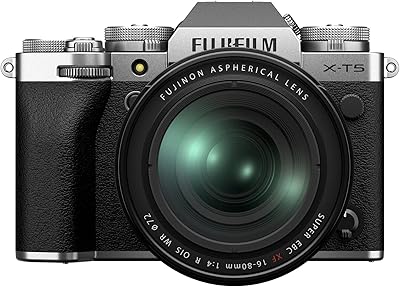
Fujifilm X-T5 XF16-80mm Mirrorless Camera Kit
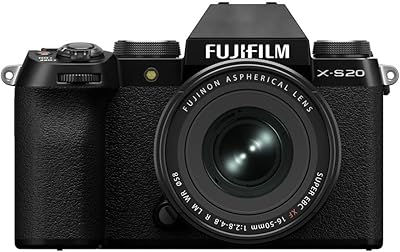
Fujifilm X-S20 XF16-50mm Mirrorless Camera Kit
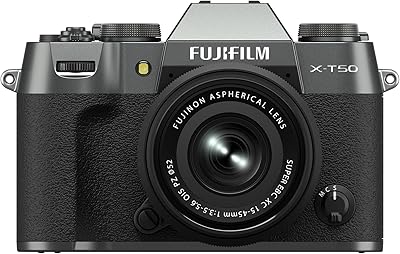
Fujifilm X-T50 Mirrorless Camera 15-45mm Kit
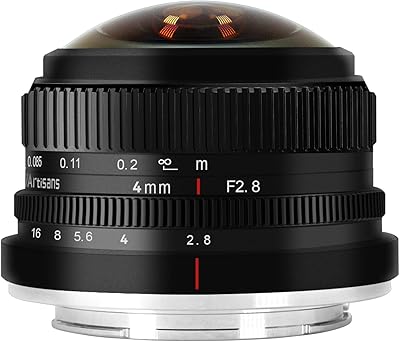
7Artisans 4mm F2.8 Fisheye Lens
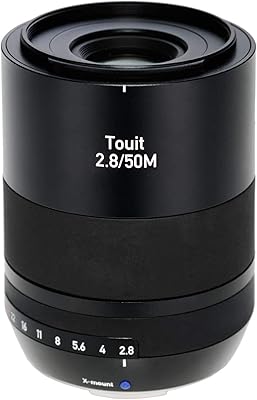
ZEISS Touit 50mm f/2.8 Macro Lens
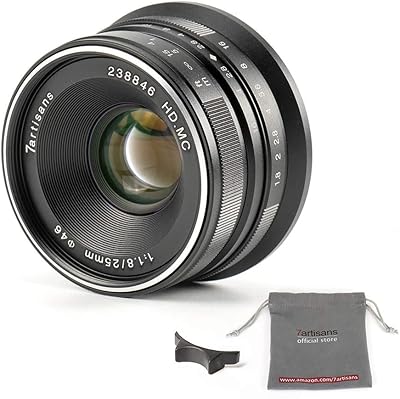
7artisans 25mm F1.8 Manual Prime Lens
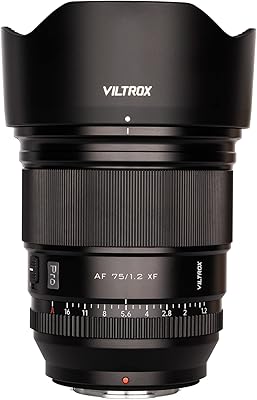
Viltrox 75mm F1.2 PRO Fujifilm X-Mount Lens
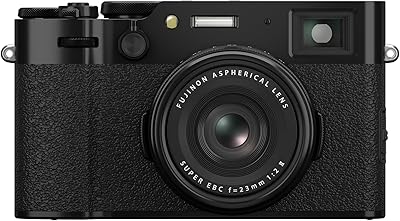
Fujifilm X100VI
Nikon Z50 II Mirrorless Camera