Overview

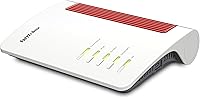
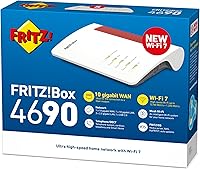
The AVM FRITZ!Box 4690 Wi-Fi 7 Mesh Router is not an impulse buy — it is a deliberate choice for households that have outgrown mid-range networking hardware. AVM is a German manufacturer with decades of experience building routers deeply trusted across Europe, and this device reflects that heritage. Worth noting upfront: this is the German version, meaning the interface defaults to German and English support is not guaranteed — something international buyers should confirm before purchasing. Sitting at a flagship price point, it competes with the best routers on the market. What sets it apart is how much it packs into one box: router, DECT base, mesh node, and smart home controller, all without requiring additional hardware.

Features & Benefits

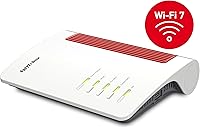
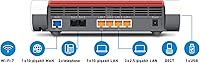
The headline spec is Wi-Fi 7 on the 5 GHz band, where 4x4 MIMO delivers up to 5,760 Mbit/s — fast enough that multiple 4K streams, large cloud backups, and online gaming can run in parallel without anyone noticing degradation. The FRITZ!Box 4690 also arrives with a 10 Gbps WAN port, which means it can actually keep pace with next-generation XGS-PON fiber lines that most routers still cannot handle at full speed. Three 2.5 Gbps LAN ports handle wired gear — NAS drives, gaming rigs, smart TVs — without the traditional Gigabit bottleneck. The FRITZ!OS software rounds out the package with VPN, WPA3 security, a proper firewall, smart home controls, and USB 3.0 for a shared network drive or printer.

Best For

This FRITZ!Box router makes the most sense for households that have already upgraded to a 2.5 Gbps or 10 Gbps fiber connection and are tired of ISP-provided combo boxes that bottleneck the line. It is also a natural fit for anyone deep in the FRITZ! ecosystem — if you already run FRITZ! repeaters or powerline adapters, adding this as the primary router brings your entire mesh up to Wi-Fi 7. Home office users will appreciate the built-in VPN and robust firewall, especially those handling sensitive work traffic daily. And while DECT phone integration may sound dated, plenty of households still rely on cordless phones — consolidating that hardware into the router is a practical, real-world benefit.

User Feedback

With 76 ratings and a 4.4-star average — gathered since its April 2025 launch — early impressions of AVM's Wi-Fi 7 flagship are encouraging, though the review pool is still small. Buyers consistently praise the real-world throughput and how cleanly the mesh handoff works across multiple FRITZ! devices. The depth of FRITZ!OS is another recurring compliment; reviewers with experience on competing platforms note it offers significantly more control. On the flip side, the German-language interface frustrates buyers outside Germany who were not expecting it. A smaller group questions the value for setups that do not require DECT or multi-gigabit wired ports. Both are fair points worth weighing carefully against your actual needs.

Pros

  • One of the very few consumer routers capable of handling XGS-PON fiber at full 10 Gbps without any bottleneck.
  • Three 2.5 Gbps LAN ports let wired devices like gaming PCs and NAS drives run at real multi-gigabit speeds simultaneously.
  • Wi-Fi 7 with 4x4 MIMO on 5 GHz handles multiple 4K streams, video calls, and large transfers running in parallel without noticeable slowdown.
  • Built-in DECT base supports up to 6 cordless handsets, eliminating the need for a separate phone base station entirely.
  • FRITZ!OS delivers a genuinely deep feature set: VPN, WPA3 encryption, a proper firewall, smart home controls, and USB 3.0 storage sharing.
  • Existing FRITZ! ecosystem users can upgrade their entire mesh network to Wi-Fi 7 without replacing repeaters or powerline adapters.
  • Early buyers report strong real-world throughput figures that hold up under heavy household loads, not just in lab conditions.
  • Works across cable, DSL, and fiber connections, making it a long-term investment even if your ISP or connection type changes.
  • Compact and relatively lightweight at under 2 pounds, despite consolidating router, DECT base, mesh node, and smart home hub in one unit.

Cons

  • This is a German-version device — the UI defaults to German, and English language support is explicitly not guaranteed for international buyers.
  • The premium price is hard to justify if your connection is standard gigabit or if you have no use for DECT or smart home features.
  • With only 76 ratings since its April 2025 launch, the long-term reliability picture is still incomplete compared to more established models.
  • FRITZ!OS has a steep learning curve; users without prior AVM experience may find the interface less intuitive than app-driven competitors.
  • Dual-band only — no dedicated 6 GHz band means it misses one of Wi-Fi 7's biggest potential advantages over tri-band alternatives.
  • International buyers should verify regional support availability before purchasing, as after-sales service may be Germany-centric.
  • Smart home control features are tied to the FRITZ! ecosystem, limiting compatibility with broader platforms like Matter or Google Home.
  • The white and red design is distinctive but polarizing — it may not blend into minimalist home setups the way more neutral routers do.

Ratings

The AVM FRITZ!Box 4690 Wi-Fi 7 Mesh Router has been evaluated by our AI system through analysis of verified global user reviews, with automated filtering applied to remove incentivized, bot-generated, and duplicate submissions. Scores reflect a genuine cross-section of real buyer experiences — from power users who push the hardware to its limits to first-time FRITZ! owners navigating the learning curve. Both standout strengths and legitimate frustrations are represented transparently in every category below.

Wireless Performance
91%
Users running simultaneous 4K streams, large cloud backups, and online gaming sessions report noticeably lower latency and fewer dropped connections compared to their previous Wi-Fi 6 routers. The 4x4 MIMO configuration on 5 GHz handles congested multi-device households well, with early adopters in dense apartment buildings specifically calling out improved signal stability under load.
The dual-band configuration means there is no dedicated 6 GHz band, which is a real limitation for buyers expecting the full tri-band Wi-Fi 7 experience found in some competing flagships. In very large homes with many simultaneous clients, this absence can become a noticeable ceiling on total available airtime capacity.
Wired Connectivity
94%
The 10 Gbps WAN port is genuinely exceptional for a consumer device — it is the primary reason many XGS-PON fiber subscribers specifically seek out this router. The three 2.5 Gbps LAN ports mean a NAS drive, a gaming PC, and a smart TV can all operate at real multi-gigabit speeds simultaneously without competing for bandwidth.
With only three 2.5 Gbps LAN ports plus one 10 Gbps LAN port, larger setups with many wired devices will likely need an unmanaged switch to avoid running out of ports quickly. There is no second 10 Gbps LAN port, which some prosumer buyers expected at this price level.
Setup & Configuration
62%
38%
For buyers within Germany or those comfortable with German, the FRITZ!OS initial setup process is well-structured and guided, walking through connection type detection, Wi-Fi configuration, and phone setup in logical steps. The web interface at fritz.box is responsive and comprehensive once you orient yourself to the overall layout.
International buyers consistently flag the German-language default interface as a significant friction point, with some reporting that switching to English is only partially possible on this version. For users arriving from consumer routers with polished English-first mobile apps, the learning curve here feels steep and the experience considerably less forgiving.
Software & Firmware
88%
FRITZ!OS is consistently praised by experienced users as one of the most feature-complete router operating systems in the consumer space — VPN, detailed traffic monitoring, parental controls, guest networks, and smart home management are all accessible from a single interface. Regular firmware updates from AVM have a strong reputation for reliability across the broader FRITZ! product line.
The depth of FRITZ!OS is genuinely a double-edged situation — first-time router owners or buyers expecting a simple app-based experience will find the feature density more disorienting than empowering. Some settings are buried several levels deep, and the terminology assumes a reasonable baseline of networking knowledge to navigate confidently.
Value for Money
67%
33%
For households that actively use the 10 Gbps fiber capability, the DECT base, and FRITZ!OS's VPN and smart home features, the all-in-one value proposition is real — this device replaces what would otherwise be three or four separate pieces of hardware. FRITZ! ecosystem users upgrading from an older model gain Wi-Fi 7 without replacing any existing repeaters.
Buyers who only need fast wireless and standard gigabit wired ports will find the premium price hard to justify when capable Wi-Fi 7 routers exist at significantly lower cost. The DECT and smart home features add to the price tag whether you use them or not, making this a poor match for minimalist setups.
Mesh Performance
86%
Users running multiple FRITZ! repeaters report that device handoff between nodes is clean and largely invisible during normal use — walking between rooms during a video call does not produce the reconnection stutter that cheaper mesh systems regularly cause. Centralized FRITZ!OS mesh management makes adding or reconfiguring nodes a straightforward process.
The mesh functionality is tightly bound to the FRITZ! ecosystem, which is a genuine limitation if you own quality mesh hardware from other brands. Mixing non-AVM nodes into the network means losing the intelligent handoff and unified management that justify a proper mesh setup in the first place.
Security Features
92%
WPA3 encryption across both bands, a genuinely configurable built-in firewall, and native VPN support — covering both WireGuard and IPSec-based connections — put this FRITZ!Box router in a different league from most consumer networking hardware on security depth. Home office users handling sensitive work data report real confidence from the granular traffic and access controls available through FRITZ!OS.
The firewall and VPN configuration, while powerful, assume a level of networking familiarity that average home users may not have — misconfiguring these settings is a realistic risk for buyers who just want to click through a basic wizard. There is also no built-in threat intelligence feed or subscription-based security service like those offered by several competing platforms.
DECT & Telephony
89%
Being able to retire a standalone DECT base station and connect cordless handsets directly to the router is a practical household simplification that reviewers with existing phone setups consistently appreciate. Support for up to 6 handsets plus answering machine functionality covers the needs of most multi-person homes without any additional hardware investment.
DECT telephony support is only meaningful if your internet provider supports VoIP, which is not universal — buyers on providers that have not completed the transition away from analog lines may find this feature unusable in its intended form. The smart integration of phone logs and call routing in FRITZ!OS is also accessible only in German on this version.
Build Quality
83%
The flat, horizontal form factor feels solid and purposeful, and the physical build holds up to AVM's German engineering reputation — it does not feel like a cost-cut product despite the relatively modest external footprint. The white and red finish is distinctive enough that it sits comfortably on a shelf or entertainment unit without looking out of place.
The unit runs notably warm during sustained heavy traffic, which some users find slightly concerning over long periods even if it has not led to widely reported stability issues. There are no external antennas, which may give some buyers the visual impression of lesser wireless capability than physically larger competing flagships.
Smart Home Integration
71%
29%
For households already using FRITZ!DECT smart plugs, radiator controls, or light switches, having the management interface built directly into the router is a genuine convenience — no separate hub or third-party app is needed. The integration is stable and responsive within the FRITZ! ecosystem, with energy monitoring data accessible from the same FRITZ!OS interface used for the rest of the network.
Compatibility is strictly limited to AVM's own FRITZ!DECT accessories, making it of little use for the majority of smart home setups that rely on Matter, Zigbee, Google Home, or Apple HomeKit. This is not a universal smart home hub — it is more accurately a useful add-on for committed AVM households only.
Ease of Use
58%
42%
Users who invest time learning FRITZ!OS — or who arrive from a previous FRITZ! device — consistently report that day-to-day management becomes second nature relatively quickly. The web interface at fritz.box is fast-loading and logically organized for those already familiar with the product philosophy, and the MyFRITZ! app handles routine monitoring without requiring the full web interface.
For new buyers outside Germany, the combined challenge of a German default interface and a feature-dense OS creates a notably rough first-time experience compared to competitors offering guided mobile app setup. Community forums can help, but relying on third-party guides just to configure language settings is a friction point that directly depresses the ease-of-use score.
Range & Coverage
84%
For a flat, low-profile device without external antennas, the FRITZ!Box 4690 delivers impressive coverage that consistently surprises reviewers expecting weaker signal penetration. Medium to large apartments and two-story homes report solid throughput at distance on the 5 GHz band, with the 2.4 GHz band providing reliable fallback coverage through walls and across floors.
Very large homes — particularly those with thick masonry walls or multi-floor layouts — will need supplementary FRITZ! mesh nodes to maintain strong coverage throughout, as the router alone has physical limits like any single access point. The absence of a 6 GHz band also means high-throughput coverage is more range-limited than on a tri-band Wi-Fi 7 competitor.
Regional Support
64%
36%
Within Germany and Austria, AVM's customer support and warranty service are well-regarded, with a dedicated support team and a responsive firmware update cadence that has earned long-term loyalty from European users. The active FRITZ! community forum provides an additional layer of technically detailed help even for complex configuration questions.
Outside of German-speaking markets, official support is limited, and warranty claims or replacement processes can be significantly slower or more complicated for international buyers. This is a German-version device sold globally, and that mismatch means buyers outside Germany are effectively relying on community goodwill rather than structured manufacturer support channels.

Suitable for:

The AVM FRITZ!Box 4690 Wi-Fi 7 Mesh Router is built for households that have genuinely outgrown standard gigabit infrastructure — specifically those with a 2.5 Gbps or 10 Gbps XGS-PON fiber line who are tired of ISP-supplied hardware capping their connection before it even reaches a device. Power users running a home office alongside heavy media streaming, large file transfers, or self-hosted NAS storage will find the combination of multi-gigabit wired ports and a robust VPN and firewall setup genuinely useful rather than speculative. It also makes strong practical sense for anyone already running FRITZ! repeaters or powerline adapters, since adding this as the central node instantly upgrades the entire mesh to Wi-Fi 7 without replacing every device. Households that still rely on DECT cordless phones will appreciate being able to retire a separate base station entirely. Tech-savvy buyers comfortable working through a German-language interface — or willing to use community guides to navigate FRITZ!OS — will unlock a level of network control that most consumer routers simply do not offer.

Not suitable for:

Buyers looking for a straightforward plug-and-play router upgrade should look elsewhere — the FRITZ!Box 4690 is a German-version device, which means the interface defaults to German, and English-language support is not guaranteed, a friction point that has already frustrated a portion of early international buyers. If your home internet connection tops out at standard gigabit speeds, the 10 Gbps ports and Wi-Fi 7 headroom are features you will pay for but never meaningfully use. Casual users who just want reliable whole-home coverage without digging into network settings will find the depth of FRITZ!OS more overwhelming than empowering. Anyone without existing FRITZ! mesh hardware will not immediately see the full value of the ecosystem integration, and those who have no use for DECT telephony or smart home controls are essentially paying a premium for features they will ignore. At this price point, buyers who only need solid Wi-Fi performance and a clean app-based interface will find more practical options from competing flagship routers.

Specifications

  • Wi-Fi Standard: Supports Wi-Fi 7 (802.11be) and Wi-Fi 6 (802.11ax), along with legacy standards 802.11ac, 802.11n, and 802.11g for full backward compatibility.
  • Frequency Bands: Dual-band design operates across both the 2.4 GHz and 5 GHz spectrums simultaneously for flexible device distribution.
  • 5 GHz Throughput: The 5 GHz band leverages Wi-Fi 7 with 4x4 MIMO to reach a maximum theoretical speed of 5,760 Mbit/s.
  • 2.4 GHz Throughput: The 2.4 GHz band operates under Wi-Fi 6 and delivers up to 1,200 Mbit/s, suited for longer-range or lower-bandwidth devices.
  • Combined Speed: Total combined wireless throughput across both bands reaches up to 6,960 Mbit/s under ideal conditions.
  • WAN Port: Includes one 10 Gigabit Ethernet WAN port capable of connecting directly to XGS-PON fiber modems at full line speed.
  • LAN Ports: Provides one 10 Gbps LAN port and three 2.5 Gbps LAN ports for high-throughput connections to wired devices.
  • DECT Base: Integrated DECT base station supports registration of up to 6 cordless handsets, answering machines, and analog phones or fax machines.
  • USB Port: One USB 3.0 port enables shared network storage and network-attached printer access for all devices on the local network.
  • Security: Equipped with WPA3 wireless encryption, a built-in hardware firewall, and integrated VPN support for secure remote access.
  • Mesh Support: Supports WLAN Mesh via FRITZ!OS, enabling automatic device roaming handoff across paired FRITZ! nodes without a separate mesh controller.
  • Smart Home: Built-in smart home management allows direct control of compatible FRITZ!DECT lighting, power outlets, and radiator thermostats through FRITZ!OS.
  • Connection Types: Compatible with cable, DSL, and fiber optic internet connections, including high-speed XGS-PON fiber services.
  • Dimensions: The unit measures 12.05 x 9.37 x 2.72 inches, offering a flat, low-profile footprint well-suited to shelf placement.
  • Weight: Weighs 1.81 pounds, making repositioning or wall-adjacent placement straightforward during initial setup.
  • Firmware: Runs FRITZ!OS, AVM's proprietary operating system featuring a web-based management interface with regular firmware update support.
  • Color: Finished in AVM's signature white and red colorway, consistent with the broader FRITZ! product line aesthetic.

Related Reviews
AVM FRITZ!Box 7360 DSL Router
75%
89%
Connection Stability
83%
Build Quality
62%
Wireless Range
71%
Setup Experience
58%
Wi-Fi Speed Performance
More
TP-Link Archer BE400
80%
88%
Wireless Performance
91%
Setup & Ease of Use
78%
Coverage & Range
87%
Wired Port Performance
83%
Multi-Device Handling
More
Ubiquiti UDR7 Dream Router Wi-Fi 7
77%
94%
Ecosystem Integration
83%
Wi-Fi Performance
61%
Hardware Port Selection
58%
Setup Experience
72%
Value for Money
More
TP-Link Archer GE800
80%
91%
Wireless Performance
94%
Wired Connectivity
88%
Gaming Latency & Prioritization
83%
Build Quality & Design
69%
RGB Lighting
More
TP-Link Archer GE650 Wi-Fi 7 Gaming Router
79%
91%
Wireless Performance
93%
Gaming-Specific Features
89%
Wired Connectivity
86%
Setup & Ease of Use
71%
Software & App Experience
More
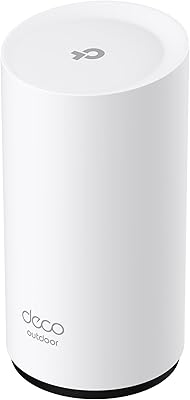
TP-Link Deco BE25-Outdoor Wi-Fi 7 Mesh Extender
84%
88%
Outdoor Signal Strength
84%
Build Quality & Durability
91%
Setup & Installation
93%
PoE+ Implementation
76%
Wi-Fi 7 Performance
More
Wyze Mesh Router Pro Wi-Fi 6E Router
73%
91%
Setup & Ease of Use
78%
Wi-Fi Speed & Throughput
72%
Coverage & Range
66%
Connection Stability
69%
6 GHz Band Performance
More
TP-Link BE3600 Wi-Fi 7 Travel Router TL-WR3602BE
85%
88%
Performance & Speed
94%
Portability & Size
85%
Wi-Fi Range & Connectivity
92%
Security Features
90%
Ease of Use & Setup
More
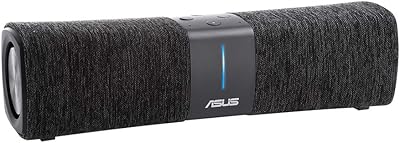
ASUS Lyra Voice Mesh Router Smart Speaker
65%
58%
Wi-Fi Coverage & Range
67%
Wi-Fi Speed & Throughput
44%
Smart Speaker Audio Quality
76%
Alexa Integration & Voice Control
82%
Setup & Installation Ease
More
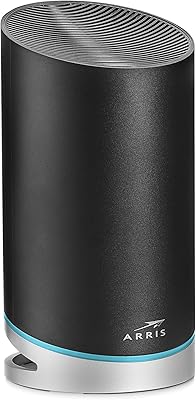
ARRIS SURFboard mAX W30 Wi-Fi 6 Router
71%
78%
Wi-Fi Speed & Throughput
74%
Coverage & Range
76%
Mesh Performance
53%
App Experience
82%
Parental Controls
More

FAQ

The AVM FRITZ!Box 4690 Wi-Fi 7 Mesh Router is sold as the German version, so FRITZ!OS defaults to German. While portions of the interface can sometimes be switched to English through community-documented settings, official English-language support is not guaranteed by AVM for this variant. If you are purchasing outside Germany, it is worth confirming language availability before buying.

Yes, and it is genuinely one of the only consumer routers built to do so. The FRITZ!Box 4690 has a dedicated 10 Gbps WAN port that connects directly to an XGS-PON fiber modem, so there is no hardware bottleneck even on the fastest residential fiber plans currently available. Most competing routers top out at 2.5 Gbps on the WAN side.

Absolutely. The FRITZ!Box 4690 acts as the central mesh node for any FRITZ! repeaters or powerline adapters you already own, using FRITZ!OS's built-in WLAN Mesh system. Your existing devices do not need to be replaced — they continue operating normally, and the whole network benefits from the faster backbone and improved management that the new router brings.

Not necessarily, but it does affect how much of the hardware you will actually use. Even on a standard gigabit internet connection, the multi-gigabit LAN ports deliver genuine value for local network tasks — large NAS transfers, home server streaming, or wiring a gaming PC — at speeds a standard gigabit router cannot match. That said, buyers on slower connections will not unlock the full potential of the 10 Gbps WAN port.

The integrated DECT base lets you register up to 6 compatible cordless handsets directly to the router, just as you would with a standalone base station. It supports VoIP telephony over your internet connection, so a traditional copper phone line is not required if your provider offers a VoIP service. Answering machine functionality is also available for supported handsets.

The native WLAN Mesh system is specific to the FRITZ! ecosystem and delivers its full capabilities only with other AVM devices. Non-FRITZ! clients can still connect to the router as a standard Wi-Fi access point, but you will not get the automatic roaming handoff or unified FRITZ!OS management that makes the mesh feature genuinely useful.

Yes. FRITZ!OS includes built-in VPN support, with both WireGuard and the older IPSec-based FRITZ!VPN available depending on firmware version. This is a practical option for remote workers or anyone who wants encrypted access to home network resources without subscribing to a third-party service or adding dedicated VPN hardware.

Yes, this FRITZ!Box router is fully backward compatible with Wi-Fi 5 (802.11ac), Wi-Fi 4 (802.11n), and even older 802.11g devices. Each device simply connects at the fastest speed its own hardware supports. Wi-Fi 7 clients will benefit most, but nothing on your existing network gets left behind.

AVM provides the MyFRITZ! app for iOS and Android, which covers remote access, connected device monitoring, and basic management tasks. The complete depth of configuration lives in the FRITZ!OS web interface rather than the app, but for routine checks and remote access it works well. Keep in mind the app, like the router interface, is primarily German-oriented for this variant.

The smart home features are built around AVM's own FRITZ!DECT accessories, which include smart plugs, radiator valve controllers, and light switches. Native integration with broader platforms such as Matter, Apple HomeKit, or Google Home is not built in, so if your existing smart home setup relies on those ecosystems, the onboard smart home controls will have limited practical use without additional bridging hardware or software.