
Overview

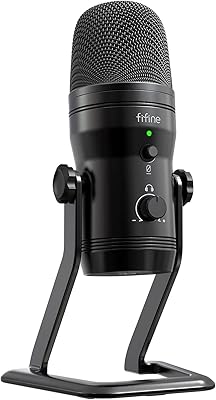
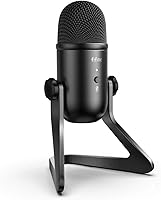
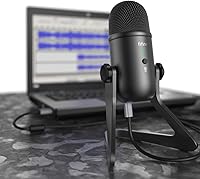
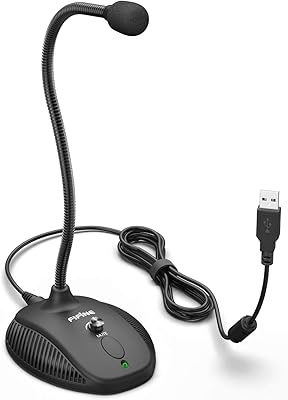
The FIFINE K678 sits in that sweet spot where budget pricing meets genuinely usable audio quality — a USB condenser mic that launched in 2020 and has quietly built a loyal following among creators just getting started. Plug it into a Windows or Mac machine and it works immediately, no driver installs, no software setup. The all-metal body feels more solid than you'd expect at this price, and the included die-cast zinc stand means you're ready to record straight out of the box. For anyone who finds entry-level options too limiting but isn't ready to spend on a professional rig, this desktop microphone hits a practical middle ground under $40.

Features & Benefits

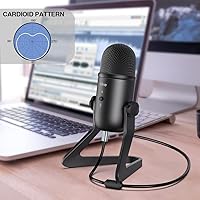
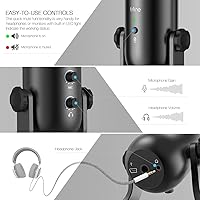
The cardioid pickup pattern is the first thing worth understanding — it captures your voice cleanly from the front while naturally rejecting noise from the sides and behind you. That matters when you're in a less-than-ideal room. The 3.5mm headphone jack lets you monitor your own voice in real time with zero latency, which is something a lot of mics at this price skip entirely. Turning the gain knob to find the right input level takes seconds and keeps you out of software menus. The mute button lights up when active, so you always know whether you're live. A 75dB signal-to-noise ratio keeps the audio reasonably clean, though it won't rival a $150 mic.

Best For

This USB mic makes most sense for PC and Mac users — worth flagging upfront that it won't work with Xbox consoles, smartphones, or iPads. Within that audience, it's a natural fit for streamers and gamers who have outgrown their headset mic but aren't ready to invest in a full audio setup. Remote workers who spend hours on Zoom calls will appreciate the cleaner pickup compared to a built-in laptop mic. Beginner podcasters doing solo, voice-only episodes will find it more than capable. YouTube voiceovers and gaming commentary are two other uses where it consistently performs well. If you need mobile or console compatibility, look elsewhere — this desktop microphone is purpose-built for desktop.

User Feedback

With close to 5,600 ratings and a 4.6-star average, the K678 has earned genuine trust from a wide range of buyers. Most of the positive comments center on how natural voices sound during calls and recordings — people are genuinely surprised by the quality relative to the price. The gain knob, however, draws the most consistent criticism: turn it past the halfway point and a faint hiss creeps in, which is noticeable in quiet recordings. The included stand works fine for casual use, but heavier microphone arms or boom setups are often recommended by reviewers who want more flexibility. On balance, buyers treating this as a starter mic tend to walk away satisfied; those expecting studio-level performance are more likely to feel let down.

Pros

  • Plug-and-play USB setup works instantly on Windows and Mac — no drivers, no software, no frustration.
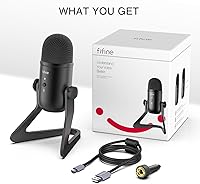
  • The FIFINE K678 includes a stand, cable, and screw adapter, so you are genuinely ready to record straight out of the box.
  • Physical mute button with a clear LED indicator means you always know whether you are live during calls or streams.
  • Real-time zero-latency headphone monitoring lets you hear your own voice exactly as the mic captures it.
  • The all-metal body feels far more durable and premium than the price tag suggests.
  • Cardioid pickup pattern does a solid job rejecting background noise from behind and to the sides.
  • A 6.56ft detachable cable gives flexible desk placement without feeling tethered to your computer.
  • The on-mic gain knob lets you dial in input sensitivity mid-session without touching any software settings.
  • Strong long-term buyer satisfaction — close to 5,600 ratings averaging 4.6 stars reflects consistent real-world performance.
  • Represents a meaningful and immediate audio upgrade over any built-in laptop or webcam microphone.

Cons

  • The gain knob introduces noticeable hiss when pushed past the midpoint — a real problem for quiet recordings.
  • No compatibility with Xbox consoles, smartphones, or iPads, which many buyers discover too late.
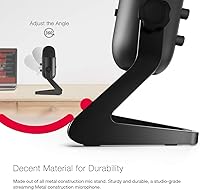
  • The included stand has no height or angle adjustment, limiting how you can position the mic.
  • Stand base is narrow and can shift on cluttered desks or non-flat surfaces during sessions.
  • Low-end frequency response rolls off earlier than expected, making deeper voices sound slightly thin.
  • Headphone output volume is weak with high-impedance headphones and lacks a dedicated volume knob.
  • In acoustically untreated rooms, the mic picks up noticeably more room echo than buyers anticipate.
  • The USB cable is not braided and tends to kink with regular coiling.
  • No companion software or app means zero control over EQ, compression, or monitoring mix.
  • A handful of long-term users report the USB connector can loosen after repeated plugging and unplugging.

Ratings

The FIFINE K678 has been evaluated by our AI system after analyzing thousands of verified global purchases, actively filtering out incentivized, repeated, and bot-flagged submissions to surface what real buyers actually experience. Across more than a dozen performance categories, the scores below reflect both the genuine strengths that keep this desktop microphone consistently ranked in the top tier of its price class and the recurring pain points that honest buyers deserve to know before committing.

Audio Clarity
78%
22%
For everyday voice work — Zoom calls, game commentary, beginner podcast episodes — most users find the cardioid pickup delivers a noticeably cleaner, warmer sound than any built-in laptop or headset mic. Voices come through with enough presence to sound confident and clear in recordings.
Compared to microphones in the $80–$150 range, the audio lacks the fine detail and depth that more serious recording sessions demand. Sibilance can occasionally sound harsh, and the mic tends to pick up more room ambience than buyers in untreated spaces expect.
Value for Money
91%
At under $40 with a stand, cable, and screw adapter included, it is genuinely hard to fault the package. Buyers routinely describe it as the most they have gotten for this price in the USB mic category, especially given the physical controls that pricier competitors sometimes omit.
A small segment of buyers who compared it directly to slightly higher-priced rivals felt the gap in audio performance was wider than the gap in price, suggesting the value proposition weakens for anyone willing to stretch their budget by $20–$30.
Build Quality
83%
The all-metal mic body feels solid and weighty in hand — nothing about it suggests a cheap plastic toy, which is a real differentiator at this price point. The die-cast zinc stand adds to the impression of durability, and most long-term users report no degradation in the hardware over months of daily use.
The stand's base can feel slightly narrow when used on cluttered desks, and a few buyers noted minor wobble when accidentally nudging the setup. The mute button, while functional, has a slightly hollow click that some users associate with lower-grade components.
Ease of Setup
96%
Plug it in, and it works — that is genuinely the entire process on both Windows and macOS. No driver downloads, no software installation, no configuration menus to navigate. For users who just want to start recording or join a call in under a minute, it is hard to beat.
The plug-and-play simplicity is a double-edged feature for power users who want deeper control over EQ, compression, or polar pattern switching. Those coming from software-controlled microphones may find the hardware-only approach limiting over time.
Gain Control
67%
33%
Having a physical gain knob on the mic body is a practical advantage — adjusting input sensitivity mid-session without touching a computer is genuinely useful, especially during live streams where background noise levels fluctuate unexpectedly.
This is the most consistently criticized feature in user feedback. Turning the knob past roughly the midpoint introduces an audible hiss that becomes distracting in quieter recordings. Users in louder environments may never notice it, but podcasters or ASMR creators will find it a real limitation.
Headphone Monitoring
82%
18%
The 3.5mm headphone jack provides real-time, zero-latency monitoring that lets you hear exactly what the mic is capturing while you talk. For streamers and podcasters checking their own audio levels live, this removes a common frustration found on cheaper USB mics that skip the feature entirely.
The headphone output volume is adequate but not powerful — users with high-impedance headphones or those used to a dedicated audio interface may find the signal noticeably weaker than they prefer. There is no independent headphone volume knob separate from the gain control.
Mute Button & LED Indicator
88%
The mute button is one of the features buyers mention most positively, and for good reason — being able to kill your mic with a single tap during a call or stream is just practical. The LED indicator removes all guesswork about whether you are live, which matters more than it sounds during long work-from-home days.
The button requires a deliberate press rather than a light tap, which can feel slightly stiff during rapid back-and-forth conversations. A handful of users also noted the LED is not visible from extreme angles, making it less useful when the mic is positioned to the side of a monitor.
Background Noise Rejection
71%
29%
The cardioid polar pattern does a reasonable job of focusing on the speaker and pushing away noise from behind and to the sides. In a fairly quiet home office or bedroom setup, most users find ambient noise stays acceptably low in the final recording without additional software processing.
In acoustically live spaces — hard floors, bare walls, or rooms with significant echo — the mic picks up considerably more room noise than buyers anticipate. It is not a substitute for acoustic treatment, and users who expected aggressive noise cancellation based on the product description are often disappointed.
Cable Quality
79%
21%
The 6.56ft detachable USB cable is genuinely generous in length and gives flexible placement options whether the mic sits on a desk or on a short stand near a tower PC. The dual magnetic rings are a thoughtful addition that reduces the low-frequency interference some users experienced with earlier FIFINE models.
The cable is not braided and can develop kinks with regular coiling and uncoiling. A few buyers reported intermittent connection issues after extended use, suggesting the connector end may loosen with frequent plugging and unplugging cycles.
Stand Stability
63%
37%
For casual use on a clean desktop, the included stand keeps the mic upright and at a reasonable height without any additional accessories. It handles the mic's weight without sagging and works well for users who just want a simple, stationary setup.
This is a consistent sore point in user reviews. The stand offers no height or angle adjustment, and on keyboards or uneven surfaces it tends to shift. Users who record for extended periods or want flexible mic positioning almost universally recommend upgrading to a third-party boom arm.
Compatibility
58%
42%
On Windows and macOS it works without a hitch — recognized instantly as a standard USB audio device, compatible with every major recording, streaming, and conferencing application tested by users across hundreds of reviews.
The lack of Xbox, smartphone, and iPad compatibility is a genuine dealbreaker for a meaningful portion of potential buyers who discover it too late. Console gamers and mobile creators need to look elsewhere, and the product listing does not always make this limitation prominent enough before purchase.
Frequency Response
74%
26%
The mic handles the vocal range competently, with a slight presence boost in the upper midrange that helps voices cut through in streams and video content. For spoken word at this price point, the frequency response is more than adequate and noticeably better than webcam or laptop microphones.
Low-end response rolls off earlier than more expensive condensers, which can make deeper voices sound slightly thin. The mic also lacks the extended high-frequency detail that makes recordings sound truly polished, which becomes apparent when comparing recordings side by side with mid-range alternatives.
Portability
85%
At 2.2 pounds with a compact footprint, it is easy to pack into a bag for travel or move between rooms without any real hassle. The detachable cable and solid construction make it a practical option for users who record in multiple locations rather than a fixed studio corner.
The stand, while lightweight, adds bulk and is slightly awkward to transport without a dedicated case. There is no carrying pouch or protective bag included, so the metal body is exposed to scratches during transit unless users source their own protection.
Overall User Satisfaction
87%
With close to 5,600 ratings averaging 4.6 stars, the pattern across verified reviews is clear: buyers who understood what they were buying — an affordable starter mic for voice work on PC or Mac — overwhelmingly feel it delivered on that promise and often exceeded their expectations.
The minority of dissatisfied buyers almost always fall into two groups: those who expected professional studio output at a consumer price, and those who discovered the Xbox and mobile incompatibility after purchase. Managing expectations before buying would resolve most of the negative feedback.

Suitable for:

The FIFINE K678 is the kind of mic that makes the most sense for people who are done with their headset's built-in microphone but are not yet ready to invest in a full audio setup. Streamers and gamers on PC or Mac who want noticeably cleaner voice pickup during sessions will find the jump in quality immediately obvious. Remote workers and students who spend hours on Zoom, Teams, or Google Meet calls will appreciate having a dedicated mic that makes their voice sound present and clear without any technical configuration. Beginner podcasters recording solo, voice-focused episodes at home can absolutely get usable results from this desktop microphone, especially in a relatively quiet room. YouTubers doing voiceover work or commentary tracks will find the cardioid pattern does a solid job of keeping the focus on their voice rather than the room around them. If your recording budget is tight and your use case is conversational rather than studio-grade, this USB mic covers the bases better than most competitors at the same price.

Not suitable for:

If your primary platform is Xbox, or you plan to use a microphone with a smartphone or iPad, the FIFINE K678 is simply not compatible — that is a hard stop before anything else is considered. Musicians recording instruments, voice actors chasing broadcast-quality audio, or podcasters producing highly produced content will quickly hit the ceiling of what this mic can deliver, particularly in treated recording environments where the limitations of the 75dB SNR and frequency response become more apparent by comparison. Users who prefer software-controlled microphones with app-based EQ, polar pattern switching, or RGB customization will also find the hardware-only approach frustratingly basic. The included stand, while functional, is not adjustable and does not suit anyone who needs boom arm flexibility or wants to position the mic close to their mouth for richer low-end response. Anyone expecting the gain knob to behave cleanly at high settings will run into audible hiss, making this desktop microphone a poor fit for ASMR creators or anyone recording in near-silence.

Specifications

  • Brand & Model: Manufactured by FIFINE under the model designation K678.
  • Microphone Type: Condenser microphone with a cardioid (unidirectional) polar pickup pattern.
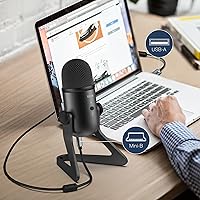
  • Connectivity: USB plug-and-play connection compatible with Windows and macOS; no drivers required.
  • Headphone Output: 3.5mm headphone jack provides real-time, zero-latency monitoring of the microphone signal.
  • Signal-to-Noise Ratio: Rated at 75dB, delivering reasonably clean audio reproduction for voice-focused applications.
  • Cable Length: Includes a 6.56ft (2m) detachable USB cable with dual magnetic rings to reduce electromagnetic interference.
  • Body Material: Microphone capsule housing is constructed from all-metal material for durability and longevity.
  • Stand Material: Desktop stand is built from die-cast zinc, providing a stable and solid base for stationary use.
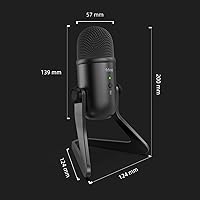
  • Dimensions: Overall unit dimensions (with stand) measure 5.91 x 5.91 x 6.69 inches.
  • Weight: Complete unit weighs 2.2 pounds including the desktop stand.
  • OS Compatibility: Fully compatible with Windows and macOS operating systems via standard USB audio class drivers.
  • Incompatibilities: Not compatible with Xbox consoles, Android or iOS smartphones, or Apple iPads.
  • Controls: Features three physical controls: a mic gain knob, a one-touch mute button, and an LED status indicator.
  • Power Source: Powered entirely via USB bus power; no external power supply or batteries required.
  • Number of Channels: Single-channel (mono) audio output, standard for vocal and speech recording applications.
  • Package Contents: Box includes the microphone, adjustable desktop stand, 6.56ft USB cable, 5/8-inch to 3/8-inch screw adapter, and a printed user manual.
  • Thread Adapter: Includes a 5/8-inch male to 3/8-inch female mic thread adapter for compatibility with standard boom arms and third-party mounts.
  • First Available: Product was first listed for sale on March 14, 2020, and has maintained continuous availability since launch.

Related Reviews
Fifine K054
Fifine K054
79%
93%
Value for Money
78%
Audio Clarity for Voice
96%
Ease of Setup
81%
Build Quality
88%
Mute Button & LED Indicator
More
Fifine N6 4-Channel Headphone Amplifier
77%
88%
Audio Signal Clarity
93%
Individual Volume Control
76%
Build Quality
91%
Value for Money
84%
Ease of Setup
More
FIFINE AmpliGame A8
FIFINE AmpliGame A8
78%
78%
Sound Clarity
67%
Noise Rejection
61%
Build Quality
94%
Ease of Setup
86%
On-Mic Controls
More
FIFINE K683A
FIFINE K683A
80%
83%
Audio Clarity
67%
Background Noise Rejection
84%
Build Quality
93%
Ease of Setup
88%
On-Body Controls
More
FIFINE AmpliGame A20
77%
91%
Value for Money
78%
Audio Clarity
54%
Bass Performance
88%
RGB Lighting
93%
Ease of Setup
More
FIFINE X3 Wireless Bluetooth Headphones
82%
88%
Value for Money
94%
Battery Life
77%
Noise Cancellation
84%
Comfort & Fit
89%
Portability
More
FIFINE K690
FIFINE K690
82%
84%
Audio Clarity
88%
Pickup Pattern Versatility
81%
Build Quality
93%
Ease of Setup
79%
Headphone Monitoring
More
FIFINE AmpliGame AM6
76%
83%
Voice Clarity
67%
Noise Cancellation
88%
Game/Chat Balance Control
91%
Ease of Setup
61%
Build Quality
More
AmpliGame V3
AmpliGame V3
76%
91%
Setup & Ease of Use
78%
Capture Quality
67%
HDMI Passthrough
86%
Port Selection & Connectivity
88%
Software Compatibility
More

FAQ

It works immediately without any software installation. Plug the USB cable into your Windows or Mac computer and the operating system recognizes it as a standard audio device within seconds. You can open your recording app, video call software, or streaming tool and select it as your input right away.

It does not work with Xbox consoles under any circumstances — that incompatibility is confirmed and non-negotiable. PlayStation 4 and 5 are listed as compatible, however, so console users on Sony hardware should be fine. If Xbox is your primary platform, you will need to look at a different microphone entirely.

No — this desktop microphone is not compatible with smartphones or iPads. It requires a standard USB-A or USB-C port and a host operating system like Windows or macOS to function properly. Mobile users will need a mic specifically designed for mobile connectivity.

Unfortunately, this is a known limitation of the mic at this price point. The gain knob introduces audible background hiss when pushed past roughly the halfway mark. The practical fix is to keep the physical gain set to a low or mid-level and then boost your input volume through your operating system's sound settings or your recording software instead. Most users find this workaround effective for everyday voice use.

The 3.5mm headphone output is specifically for monitoring what the microphone is capturing in real time, with zero latency between input and playback. It is not a general-purpose audio output and will only play back the mic signal, not your computer's audio. If you want to hear both your voice and system audio, you would need to mix those sources in your software or use a dedicated audio interface.

The included stand is perfectly adequate for casual use on a flat desk — it holds the mic steadily and positions it at a workable height. That said, it offers no height or angle adjustment, which frustrates users who want to place the mic closer to their mouth or position it off to the side. If you plan to record regularly or want more flexible placement, investing in a basic boom arm with a 3/8-inch thread is genuinely worth it, and the included screw adapter makes that swap straightforward.

The LED on the mute button glows when the mic is muted, which works well when the mic is directly in front of you. If your setup puts the mic to the side or at an angle, the LED can be harder to read. A simple workaround is to check your recording or streaming software's input level meter — if the bars are flat while you are speaking, the mic is muted.

The cardioid polar pattern helps by rejecting sound from behind and to the sides of the mic, so it performs better than an omnidirectional mic in a typical home environment. That said, it is not a noise-cancelling microphone in the active processing sense — it is a passive design. Mechanical keyboard users sitting close to the mic will likely pick up some clatter. Keeping the gain low and positioning the mic a comfortable distance from your mouth tends to help minimize unwanted background pickup.

Yes, with the included screw adapter. The package comes with a 5/8-inch male to 3/8-inch female thread adapter, which covers the two most common thread sizes used on desktop boom arms and floor stands. Most affordable third-party boom arms available online will be immediately compatible once you attach the adapter.

The difference is significant and immediately noticeable to anyone on the receiving end of your calls or recordings. Built-in laptop microphones are typically omnidirectional and positioned far from the speaker, which means they capture a lot of room noise and make voices sound distant and thin. This USB mic places a dedicated condenser capsule close to your mouth, uses a focused pickup pattern, and gives you physical control over the input level — all of which combine to produce a warmer, cleaner, and more professional-sounding voice in any application.