Overview

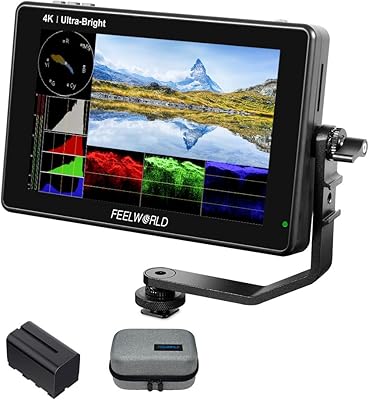
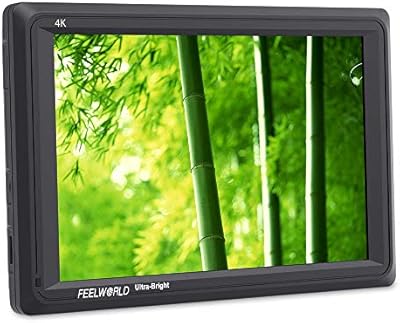
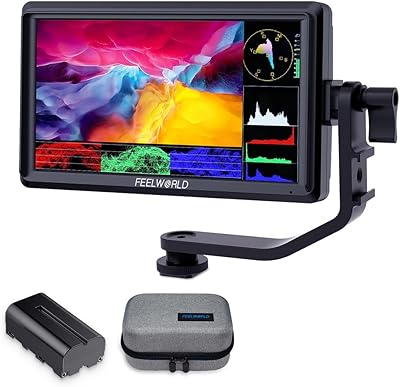
The FEELWORLD T7 Plus 7-Inch Camera Monitor has carved out a steady reputation in the mid-range field monitor space since its release in late 2017 — and it's not hard to see why it keeps placing near the top of the Video Monitors category. Built around a 7-inch IPS panel with a 1920x1200 resolution and a 16:10 aspect ratio, it gives you noticeably more vertical real estate than most standard 16:9 monitors competing at this price. The aluminum housing, just 18mm thin and under 320g, feels genuinely premium for what it costs. Add 4K HDMI passthrough and custom 3D LUT support, and this on-camera monitor punches well above its weight class.
Features & Benefits

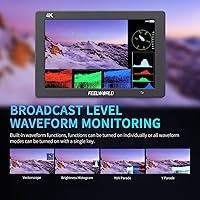
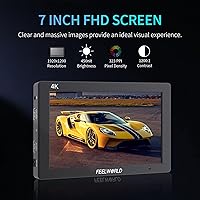
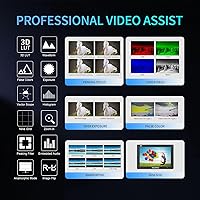
The 1920x1200 IPS display runs at 450 cd/m² brightness with a 1200:1 contrast ratio — in practical terms, you can actually trust what you're seeing when pulling focus or checking exposure on a busy set. The 4K HDMI loop-out lets you pass a signal through to a director monitor or client-facing screen without degrading image quality. Waveform monitoring and custom 3D LUT imports let you preview a grade in-camera before footage ever reaches post. The flexible battery system supports F970, LP-E6, and D28S/D54 plates, covering most Sony and Canon shooters out of the box. At just 320g and 18mm thin, this field monitor rides a rig without feeling like a brick.

Best For

This on-camera monitor is a strong fit for solo videographers and small crews shooting weddings, documentaries, or fast-paced run-and-gun work — situations where you need reliable monitoring without hauling a separate DIT station. If you're on Sony mirrorless or Canon Cinema bodies, the battery plate compatibility means you can likely power the T7 Plus from cells you already carry. The HDMI loop-out makes it practical for two-person setups where a director or client needs their own feed. And if you're upgrading from a basic HDMI monitor, the waveform and 3D LUT preview capabilities offer a meaningful step up in how much color work you can handle right on set.

User Feedback

Most buyers come away impressed with the build quality for the price — the metal body feels more substantial than anything plastic in this range, and screen sharpness consistently draws positive comments. Battery plate flexibility is a recurring highlight, particularly among Sony shooters who can swap cells without adapters. Where people push back is on the glossy screen surface, which throws reflections in outdoor sunlight and limits usefulness on bright-day exteriors without the sunshade. The sunshade itself gets mixed reactions — functional but not especially robust. A handful of users mention a learning curve loading custom 3D LUTs, and a few note the buttons feel slightly stiff with extended use.

Pros

  • The aluminum build feels genuinely premium and survives the bumps of regular location work far better than plastic-body rivals.
  • A 1920x1200 IPS panel with a 16:10 aspect ratio gives you noticeably sharper, more detailed monitoring than most competitors in this tier.
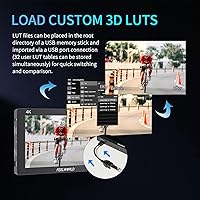
  • Custom 3D LUT import lets solo shooters preview a corrected image on set, cutting down on post-production surprises.
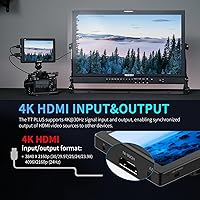
  • The 4K HDMI loop-out enables a director or client feed without a splitter — genuinely useful for small two-person crews.
  • At 320g and 18mm thin, this field monitor balances well on a gimbal or shoulder rig without throwing off your setup.
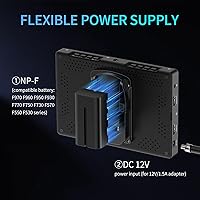
  • Battery compatibility with F970, LP-E6, and D28S/D54 plates means most Sony and Canon shooters can power it from cells they already own.
  • Waveform monitoring helps nail exposure accurately, even when shooting in log profiles where the camera LCD is unreliable.
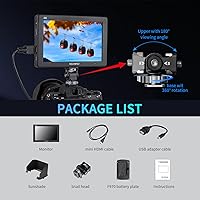
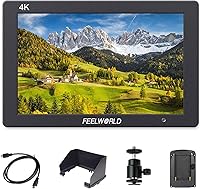
  • The included F970 battery plate, sunshade, hot shoe mount, and HDMI cable get you operational faster than monitors that ship with nothing.
  • Long-term owners consistently report that the display and core functionality hold up well after years of regular use.

Cons

  • The glossy screen surface causes significant reflections in outdoor sunlight, making it unreliable for bright-day exterior shoots.
  • No battery is included in the box, which catches buyers off guard despite being clearly noted in the product listing.
  • The LUT import process is unintuitive and requires correct file formatting — a frustrating experience for first-time users expecting plug-and-play.
  • The sunshade feels flimsy for its job; the plastic tabs that clip it in place attract complaints about fragility with repeated use.
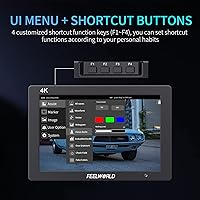
  • The menu system has not kept pace with competitors and requires more button presses than necessary to access advanced monitoring features.
  • Button tactile response is mediocre, and label printing on heavily used units wears off over time.
  • The 4K signal passthrough is capped at 30Hz, which is a real limitation for shooters working in higher frame rate 4K workflows.
  • No SDI input means it is incompatible with broadcast and higher-end cinema camera outputs without an external converter.
  • The mini HDMI cable included is short enough to create cable management headaches on a fully rigged camera build.

Ratings

The FEELWORLD T7 Plus 7-Inch Camera Monitor scores below are generated by AI after analyzing thousands of verified buyer reviews worldwide, with spam, bot activity, and incentivized feedback actively filtered out. This on-camera monitor has accumulated a substantial review base across indie filmmakers, wedding videographers, and content creators — giving us a reliable signal on where it genuinely delivers and where it falls short. Both its real strengths and recurring frustrations are reflected transparently in every category score.
Build Quality
88%
The aluminum alloy shell consistently earns high marks from buyers who've used cheaper plastic monitors before. At 18mm thin and just over 300g, it feels solid on a rig without adding noticeable strain, and several long-term users report no warping or structural issues even after years of regular use.
A small number of users note that the button panel feels less refined than the chassis itself — slightly mushy feedback on the menu controls. The corners of the housing can show scuffs after repeated bag-in, bag-out use on location shoots.
Display Clarity
91%
The 1920x1200 IPS panel draws consistent praise for sharpness that helps camera operators catch focus issues that would be invisible on a camera's built-in LCD. The 16:10 aspect ratio gives just enough extra vertical space to make monitoring anamorphic or widescreen footage more comfortable.
While the resolution is strong, the 450 cd/m² brightness starts to feel limiting in direct sunlight — images can look washed out even with the sunshade attached. The glossy coating exacerbates this, making outdoor midday shoots genuinely challenging without additional shade.
Color Accuracy
83%
For an on-camera monitor at this price tier, the IPS panel's color reproduction is surprisingly reliable for making exposure and white balance calls on set. Custom 3D LUT support means shooters can preview a log-to-rec709 transform in real time, which saves significant time in post.
Out of the box, the default color profile skews slightly warm for some users, requiring manual calibration before trusting it for critical color work. The LUT import process, while functional, is not particularly intuitive and has a learning curve that frustrated a subset of buyers.
Sunlight Visibility
54%
46%
With the bundled sunshade fully deployed, visibility in overcast or partially shaded outdoor environments is workable, and the monitor holds up well indoors or in studio conditions where lighting is controlled. Several wedding videographers mention it performs fine in shaded outdoor ceremony setups.
The glossy screen surface is the T7 Plus's most consistent real-world complaint — reflections in bright outdoor conditions can make the image difficult to read even at maximum brightness. This is a genuine limitation for anyone shooting documentaries or events in unpredictable natural light.
3D LUT & Monitoring Tools
79%
21%
Having waveform display and custom 3D LUT import on a monitor at this price point is genuinely useful for solo shooters who need to make grading decisions without a DIT. Buyers using log profiles on Sony or Canon cameras appreciate being able to see a corrected image in real time on set.
Loading custom LUTs requires formatting them correctly and navigating a menu system that feels dated — a process that catches out first-time users and generates a disproportionate share of negative reviews. The waveform display is functional but lacks the granularity of professional broadcast monitors.
HDMI Connectivity
86%
The 4K HDMI loop-out is one of the more practical features for small crews — you can feed a director or client monitor simultaneously without a splitter. Signal passthrough at 4K@30Hz is clean, and most users report no latency issues that would affect monitoring accuracy.
The loop-out tops out at 30Hz for 4K signals, which is a limitation for shooters working in 4K@60Hz. A few users have noted that the mini HDMI port feels slightly loose after extended use, though this appears to be a minority experience rather than a systemic defect.
Battery System Flexibility
87%
Compatibility with F970, LP-E6, and D28S/D54 battery plates covers a wide portion of the Sony and Canon user base, meaning most shooters won't need to buy proprietary batteries just for the monitor. The included F970 plate is a meaningful addition to the box at this price.
No battery is included in the package, which catches some buyers off guard despite the product listing being clear about it. The optional battery plate variants for less common battery types require a separate purchase, adding cost and lead time for some users.
Portability & Weight
92%
At 320g and 18mm thick, this field monitor is among the lightest aluminum-build options in its class. Shooters using gimbal rigs particularly appreciate how little it affects balance, and it fits in most camera bags without requiring a dedicated compartment.
The 7-inch form factor, while great for monitoring detail, is slightly large for shooters who prefer a minimal rig profile — a few buyers mention it feels disproportionate on smaller mirrorless bodies like the Sony ZV-E10 or similar compact cameras.
Included Accessories
62%
38%
The box includes a sunshade, mini hot shoe mount, hex wrench, mini HDMI cable, F970 battery plate, and a manual — a reasonably complete starter kit that gets most users operational without an immediate trip to buy additional parts.
The sunshade is the most criticized accessory: buyers consistently describe it as functional but flimsy, with plastic tabs that feel fragile during repeated assembly and disassembly. The mini HDMI cable included is short enough that cable management on a full rig can become awkward.
Menu & Interface Usability
67%
33%
The core monitoring functions — brightness, contrast, aspect ratio markers, and focus peaking — are accessible without too many menu layers, which is appreciated by users who need to make quick adjustments between takes.
The overall menu architecture feels like it hasn't been updated since the monitor's 2017 launch, and navigating into advanced functions like LUT management or waveform settings takes more button presses than competitors at similar prices. Button tactile feedback is mediocre at best.
Value for Money
89%
When evaluated against what's available in the mid-range field monitor segment, the T7 Plus offers a compelling combination of IPS display quality, aluminum build, and professional monitoring tools that would have cost significantly more just a few years ago. Most buyers feel the price-to-feature ratio is strong.
Value perception drops for buyers who encounter the glossy screen problem outdoors or struggle with the LUT workflow — in those cases, the cost savings versus a slightly pricier monitor with a matte screen feel less justified in hindsight.
Heat Management
74%
26%
Under normal shooting conditions — typical takes, short breaks between setups — the monitor runs at a comfortable temperature. Buyers using it for live event streaming or extended single-shot recordings generally report no problems with thermal performance.
A small but consistent group of users report noticeable warmth on the rear housing during continuous use exceeding an hour. While no one reports shutdown events, it's worth monitoring in hot-climate outdoor shoots where ambient temperature compounds the issue.
Compatibility with Camera Ecosystems
85%
The T7 Plus plays well with the most popular mirrorless and cinema camera lines — Sony FX series, Canon EOS Cinema, Panasonic Lumix S — both in terms of HDMI signal handling and battery plate options. Shooters who own multiple camera bodies appreciate that the monitor adapts rather than locks them in.
Users working with older DSLR bodies or niche mirrorless systems occasionally report minor signal handshake delays at startup. The monitor does not support SDI input, which limits its usefulness for shooters working with broadcast or cinema-grade cameras that output SDI by default.
Durability Over Time
81%
19%
Long-term reviewers who've owned the T7 Plus for two or more years generally report that the display and core functions hold up well. The aluminum shell resists the minor drops and knocks that are inevitable on active shoots far better than polycarbonate alternatives.
A portion of older units develop minor backlight unevenness at the edges over extended use. Button labels on heavily used units have been known to wear off, making menu navigation slightly more dependent on muscle memory than it should be for occasional users.

Suitable for:

The FEELWORLD T7 Plus 7-Inch Camera Monitor is a strong match for indie filmmakers, solo videographers, and small production crews who need professional monitoring tools without the price tag of broadcast-grade equipment. If you shoot weddings, documentaries, or event content and want to make reliable exposure and focus calls without a dedicated DIT on set, this on-camera monitor gives you the waveform display and 3D LUT preview to work smarter in the field. Sony, Canon, and Panasonic shooters will particularly appreciate the battery plate compatibility — if you already carry F970 or LP-E6 cells, powering the T7 Plus fits naturally into your existing kit. The HDMI loop-out makes it a practical two-person solution as well, letting you pass a clean signal to a director or client monitor simultaneously without any extra hardware. Anyone upgrading from a basic passthrough HDMI monitor who wants real color reference tools on set will find this a meaningful step forward.
Not suitable for:

The FEELWORLD T7 Plus 7-Inch Camera Monitor is not the right call for shooters who spend significant time working outdoors in direct sunlight — the glossy screen surface creates reflections that the bundled sunshade only partially addresses, and at 450 cd/m² brightness, it simply cannot compete with higher-nit matte-screen alternatives in harsh daylight conditions. Broadcast and cinema professionals whose cameras output SDI signals will hit an immediate wall, as this on-camera monitor lacks SDI connectivity entirely. Shooters working in 4K at 60Hz will also find the 4K@30Hz HDMI ceiling frustrating. If you expect a polished, menu-driven experience for loading and managing custom 3D LUTs, the interface will test your patience — it works, but it is not intuitive, and the learning curve is steeper than it should be for a feature marketed as a key selling point. Finally, buyers hoping for a complete out-of-the-box solution should note that no battery is included, and only the F970 plate ships as standard — other battery plate types require a separate purchase.
Specifications

  • Screen Size: The display measures 7 inches diagonally, offering a practical viewing area for on-camera monitoring without excessive bulk on a rig.
  • Panel Type: An IPS panel is used, providing wider viewing angles and more consistent color reproduction compared to TN alternatives in the same price range.
  • Resolution: Native resolution is 1920x1200 pixels (FHD), with a 16:10 aspect ratio that adds extra vertical space compared to standard 16:9 monitors.
  • Brightness: Peak brightness is rated at 450 cd/m², which is adequate for indoor and shaded outdoor use but can feel limiting in direct sunlight.
  • Contrast Ratio: The contrast ratio is specified at 1200:1, supporting reasonably deep blacks and clear midtone separation for exposure monitoring tasks.
  • HDMI Input: Accepts 4K HDMI signal input at up to 30Hz, compatible with most mirrorless, DSLR, and compact cinema cameras via mini HDMI connection.
  • HDMI Output: Includes a 4K HDMI loop-out at up to 30Hz, allowing a simultaneous clean signal feed to a director monitor or secondary display without a splitter.
  • 3D LUT Support: Supports custom 3D LUT import for real-time on-set color preview, enabling shooters to visualize a graded look while recording log footage.
  • Waveform Display: Built-in waveform monitor assists with accurate luminance evaluation during shooting, reducing reliance on histogram alone for exposure control.
  • Housing Material: The outer shell is constructed from aluminum alloy, providing structural rigidity and a more premium feel than polycarbonate-bodied competitors.
  • Dimensions: Physical dimensions are 7.09″ wide, 4.72″ tall, and 0.71″ deep (18mm thickness), keeping the profile slim for rig and gimbal use.
  • Weight: The monitor weighs 320g (11.4 oz) without battery, making it one of the lighter aluminum-housed options in the 7-inch field monitor category.
  • Screen Surface: The screen uses a glossy coating, which can introduce reflections in bright outdoor environments and is a commonly noted limitation by users.
  • Battery Compatibility: The standard F970 battery plate ships in the box; optional plates for LP-E6, D28S/D54, and U60 batteries are available as separate purchases.
  • Power Options: In addition to battery plates, the monitor can be powered via an external power adapter, offering flexibility for studio or static shooting setups.
  • In-Box Contents: Package includes the monitor, sunshade, mini hot shoe mount, mini HDMI cable, USB adapter cable, F970 battery plate, hex wrench, and operation manual.
  • Battery Included: No battery is included in the standard package; users must supply their own compatible battery cell separately.
  • Model Number: The official model identifier is T7 Plus (also referenced as T7PLUS), manufactured and sold under the FEELWORLD brand.

Related Reviews
FEELWORLD LUT7 7″ Field Monitor
77%
91%
Daylight Visibility
84%
Image Clarity
53%
Build Quality
71%
Touchscreen Usability
88%
Monitoring Scope Suite
More
Feelworld FW759 7″ Field Monitor
72%
83%
Image Clarity
58%
Brightness & Outdoor Usability
81%
Focus Peaking Performance
89%
Portability & Form Factor
54%
Build Quality & Durability
More
FEELWORLD F570 5.7-Inch Full HD DSLR On-Camera Monitor
87%
88%
Display Quality
94%
Portability & Size
90%
Build Quality
85%
Brightness & Outdoor Use
91%
Ease of Use
More
Osee T7 7-inch Field Monitor
81%
93%
Outdoor Visibility
88%
Color Accuracy
91%
Monitoring Toolset
84%
Scene Preset System
74%
Build Quality
More
FEELWORLD FW279 7-Inch Field Monitor
77%
93%
Outdoor Brightness
88%
Panel Sharpness & Clarity
71%
Color Accuracy
67%
Build Quality & Durability
84%
Mounting Flexibility
More
ZEROXCLUB B3C 3-Camera Wireless Backup Camera System
76%
84%
Video Signal Reliability
83%
Image Quality
76%
Night Vision Performance
71%
Installation Experience
88%
Weather & Build Durability
More
Feelworld F6 Plus 6-inch Field Monitor
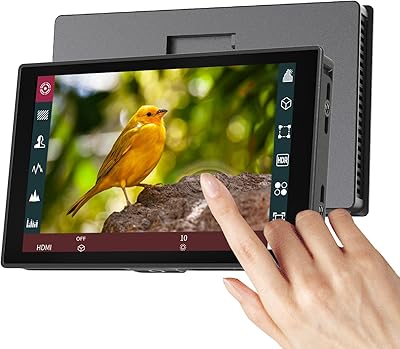
76%
88%
Value for Money
79%
Display Quality
83%
Touchscreen Responsiveness
59%
Build Quality
86%
3D LUT Support
More
Portkeys HD7T 7″ Field Monitor
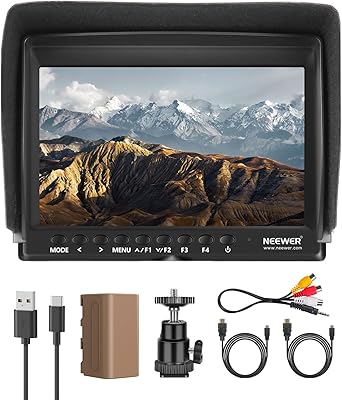
77%
91%
Outdoor Brightness
88%
Value for Money
89%
Monitoring Tool Set
67%
Touchscreen Responsiveness
72%
Panel Resolution & Clarity
More
Feelworld S55 6″ Field Monitor
77%
86%
Image Clarity
53%
Outdoor Visibility
88%
Exposure Monitoring Tools
81%
LUT Support
62%
Build Quality
More
FEELWORLD FW568 6″ Field Monitor
77%
88%
Image Clarity & Sharpness
84%
Color Accuracy
91%
LUT Support & Preview
87%
Exposure & Focus Assist Tools
63%
Brightness & Outdoor Usability
More

FAQ

No battery is included. The box ships with an F970 battery plate already attached, but you will need to source an F970 cell — or any compatible NP-F series battery — separately before the monitor is ready to run on battery power. FEELWORLD references a compatible F550 battery under ASIN B0CT387VH8 if you need a starting point.

Yes, but the LP-E6 battery plate is sold separately and does not ship in the standard package. Once you have the correct plate, swapping it in is straightforward and means you can share battery cells across your Canon body and the monitor — which many Canon shooters find very convenient on longer shoots.

It is workable in overcast or partially shaded conditions with the sunshade attached, but direct sunlight is a genuine challenge. The glossy screen surface reflects ambient light, and the 450 cd/m² brightness ceiling is not high enough to overpower bright midday sun. If the majority of your work is outdoor daytime shooting, a higher-nit monitor with a matte screen would serve you better.

You will need to format your LUT as a .cube file and transfer it via a USB drive to the monitor through the designated input. The process works, but the menu navigation to import and assign LUTs is not particularly intuitive — plan to spend some time with the manual the first time. Once loaded and assigned, the LUT preview updates in real time on the display.

No, the HDMI output is a passthrough at the same 4K@30Hz signal quality as the input — there is no transcoding or compression happening. Whatever your camera sends in is what gets passed out to any connected second display, so daisy-chaining to a director monitor works cleanly.

Yes, both cameras output a full-size or micro HDMI signal that the T7 Plus accepts cleanly. You will want to double-check your cable type since the monitor uses a mini HDMI port — a micro-to-mini or full-to-mini adapter may be needed depending on your specific camera body.

Partially. The sunshade does help in partially shaded or overcast outdoor conditions, but most users describe it as a functional rather than premium accessory. The plastic tabs that attach it to the monitor feel flimsy with repeated assembly and removal, and it does not solve the reflection problem in direct sunlight — it just reduces it somewhat.

Long-term owners generally report that the display and core electronics remain stable — no dead pixels or signal issues commonly reported after extended use. The aluminum chassis resists cosmetic damage well. The main wear points are button label fading on frequently accessed controls and, on some units, mild backlight unevenness at the screen edges appearing after heavy use.

At 320g without battery, this on-camera monitor is among the lighter options in its class and is used on gimbals regularly. The key is balancing your gimbal carefully after mounting, since even a light monitor shifts the center of gravity. Most users report successful gimbal use with systems like the DJI RS series with proper counterbalancing.

Yes, this field monitor includes focus peaking to assist with manual focus pulls, and zebra pattern display for highlight exposure monitoring — both are accessible through the menu system. These tools, combined with the waveform display, give solo shooters a reasonably complete set of exposure and focus aids without needing a separate device.

Where to Buy