Overview

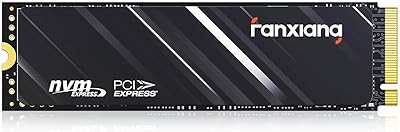
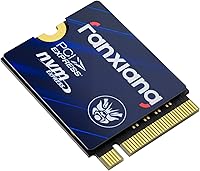
The fanxiang S630 1TB M.2 2230 NVMe SSD arrived in early 2025 as a practical storage upgrade aimed squarely at handheld gaming devices and small form-factor machines. fanxiang is a Chinese brand that has quietly built a following among budget-minded PC enthusiasts who want real performance without flagship pricing. This 2230 NVMe drive uses a PCIe Gen 4x4 interface, pushing sequential reads up to 5000 MB/s and writes up to 3600 MB/s. It also stays backward compatible with PCIe 3.0 slots, so older hosts are not left out. One thing to clarify early: actual speeds depend entirely on what device you are plugging it into.
Features & Benefits

The S630 packs a few thoughtful details into its tiny frame. A graphene heat dissipation sticker sits on the surface, acting as a paper-thin passive cooler — genuinely useful inside a Steam Deck or mini PC where airflow is nearly nonexistent. The drive is rated for 320 TBW endurance backed by a 5-year warranty, which is longer than many competitors at this price tier offer. One honest caveat: there is no indication of onboard DRAM cache, which is common at this price point. For everyday gaming and general use that is fine, but sustained large file transfers may see speed dips once the write buffer fills.

Best For

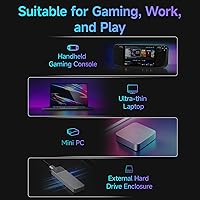
This compact SSD is practically tailor-made for a specific type of buyer. Steam Deck and ROG Ally owners will find it an ideal drop-in upgrade — the 2230 footprint is exactly what both handhelds require, and 1TB gives you room for a proper game library. Mini PC builders constrained to the shorter M.2 slot will appreciate having a PCIe 4.0 option at a reasonable outlay. Surface Pro users should tread carefully: only the Surface Pro 9 Intel version actually taps into full PCIe 4.0 speeds. Older Surface models top out at PCIe 3.0, so you will still see a solid upgrade, just not the headline numbers.

User Feedback

With 163 ratings and a 4.7-star average for a drive that debuted in March 2025, the early reception is genuinely encouraging. Buyers consistently highlight how straightforward installation is — even for first-timers swapping storage on a Steam Deck — and many report noticeably faster game load times afterward. On the flip side, a handful of users note that prolonged write sessions can cause some slowdown, which lines up with the likely absence of a DRAM cache. A few Surface Pro owners have also flagged confusion over which models support full PCIe 4.0 throughput. Overall, satisfaction runs high, but setting realistic expectations about sustained workloads helps avoid disappointment.

Pros

  • Drop-in compatible with Steam Deck, ROG Ally, and 2230-slot mini PCs — no adapters needed.
  • 1TB capacity gives handheld gamers room for a proper library without constant file management.
  • PCIe Gen 4x4 speeds up to 5000 MB/s deliver a dramatic step up from stock eMMC storage.
  • Graphene heat sticker provides passive cooling that actually matters inside cramped, fanless enclosures.
  • Backward compatible with PCIe 3.0 hosts, so older devices still benefit from the upgrade.
  • 320 TBW endurance rating is competitive for everyday gaming and general storage workloads.
  • Five-year warranty is longer than many rivals at this price point, adding meaningful peace of mind.
  • Weighs under 0.2 ounces — negligible impact on portable device balance or handling.
  • Early user satisfaction is strong, with consistent praise for installation ease and real-world speed gains.

Cons

  • No onboard DRAM cache means sustained write speeds can drop under heavy or prolonged transfer loads.
  • Advertised peak speeds require a PCIe 4.0 host — many buyers do not verify this before purchasing.
  • fanxiang lacks the long public reliability track record of established brands like Samsung or Crucial.
  • No proprietary health monitoring software; drive diagnostics depend entirely on third-party tools.
  • Minimal included accessories — no mounting screw, bracket, or beginner installation guide in the box.
  • Surface Pro compatibility details are easy to misread, leading to unmet speed expectations on older models.
  • Being a newer brand, long-term failure rate data is still limited compared to more established competitors.

Ratings

The fanxiang S630 1TB M.2 2230 NVMe SSD scores below are generated by AI after analyzing verified global user reviews, with spam, bot-submitted, and incentivized feedback actively filtered out. The result is an honest snapshot of where this compact drive genuinely delivers and where real buyers have run into friction. Both the strengths and the sticking points are reflected transparently in every category.

Read Speed Performance
88%
Steam Deck and ROG Ally users consistently report a dramatic difference in game load times after swapping in the S630. Titles that previously took 20-plus seconds to load are often cut nearly in half, which is a tangible, day-to-day improvement for handheld gaming sessions.
Peak sequential reads are only achievable on PCIe 4.0 hosts, and not every buyer verifies compatibility before purchasing. On PCIe 3.0 devices like the Surface Pro 8 or ROG Ally X in certain modes, throughput is capped well below the advertised ceiling.
Write Speed Performance
74%
26%
For typical gaming workloads — installing titles, saving game states, transferring screenshots — write speeds feel responsive and hold up well. Most handheld users never push the drive hard enough to notice any bottleneck during normal play.
The absence of a dedicated DRAM cache is a real limitation for sustained sequential writes. Users copying large video files or doing repeated bulk transfers report noticeable slowdowns once the SLC write buffer is exhausted, which is a known trade-off at this price tier.
Device Compatibility
81%
19%
The 2230 form factor is a near-perfect match for Steam Deck, ROG Ally, and a wide range of mini PCs that mandate the shorter M.2 slot. Drop-in fitment is consistently praised, with most users reporting zero clearance issues or adapter requirements.
Surface Pro compatibility is a recurring source of confusion. Only the Surface Pro 9 Intel version supports full PCIe 4.0 throughput — ARM and 5G variants are limited to PCIe 3.0 — and fanxiang's own product page does not make this distinction easy enough to spot before buying.
Thermal Management
79%
21%
The graphene heat sticker is a smart inclusion for a drive living inside thermally constrained chassis. Users running the S630 in mini PCs and the Steam Deck report stable temperatures during extended gaming sessions, with no throttling complaints under typical loads.
Under sustained workloads in poorly ventilated enclosures, a thin sticker can only do so much. A small number of users note that the drive runs noticeably warm after long periods of intensive use, though outright thermal throttling events appear to be uncommon.
Installation Experience
93%
This is arguably where the S630 earns its most enthusiastic praise. First-time upgraders on the Steam Deck regularly describe the swap as straightforward, and the drive's light weight means it seats without any awkward handling. No additional adapters or brackets are needed for the primary target devices.
The included documentation is minimal. Users upgrading devices like certain mini PC models that require a specific screw size or mounting bracket have occasionally had to source hardware separately, which adds a small but unnecessary friction point.
Value for Money
91%
At its price point, getting a full 1TB of PCIe 4.0 NVMe storage in the compact 2230 footprint is genuinely hard to beat. Buyers who compare it directly to Samsung or WD equivalents in the same form factor consistently find the S630 delivers comparable everyday performance at a lower outlay.
The value calculus shifts slightly if your device is PCIe 3.0 only, since you are then paying for a PCIe 4.0 drive you cannot fully utilize. In that scenario, a slightly cheaper PCIe 3.0 2230 drive might represent better actual value for your specific setup.
Build Quality & Durability
77%
23%
The drive feels solid for its size, and the 3D NAND construction with a 320 TBW endurance rating is competitive for this class. For handheld gaming use, where the SSD is enclosed and protected, the physical build is more than adequate.
fanxiang does not have the long track record of established brands, so long-term field data is still accumulating. Some buyers express mild uncertainty about multi-year reliability, even with the 5-year warranty in place, simply because the brand has less public history to draw from.
Warranty & After-Sales Support
82%
18%
A 5-year warranty paired with a 320 TBW endurance rating is a meaningful commitment for a value-tier drive. Buyers who have had to contact fanxiang support report reasonably prompt responses and a willingness to resolve issues without excessive friction.
Support is primarily handled through digital channels, and response times can vary depending on region. Users outside of major English-speaking markets sometimes report longer waits or communication gaps, which is worth considering if after-sales responsiveness matters to you.
Sequential Read Consistency
76%
24%
For queue-depth-heavy workloads like loading a large open-world game from a cold start, the S630 performs reliably and close to its rated speeds on compatible hosts. Most gaming benchmarks show consistent results across multiple test runs.
Low queue depth random read performance — the kind relevant to OS responsiveness and small file access — is more modest. This is not unique to the S630, but DRAM-less drives as a category tend to feel slightly less snappy in desktop multitasking compared to cached alternatives.
Form Factor Fit & Footprint
96%
The 2230 specification is executed precisely here. The drive slides into a Steam Deck or ROG Ally slot with zero modification, and at under 0.2 ounces it adds negligible weight to portable devices where every gram matters to some users.
The shorter 2230 form factor is a constraint, not a choice, for many buyers — meaning there is no option to step up to a 2280 version of this same drive for devices that could accommodate it. This is a category limitation rather than a product flaw.
Gaming Load Time Improvement
89%
Real-world gaming results are where the S630 makes its case most convincingly. Steam Deck users moving from the stock eMMC storage to this drive report load time reductions that are immediately noticeable across a broad range of game genres and sizes.
The improvement is most dramatic for users upgrading from eMMC or older SATA SSDs. Buyers replacing a previous-generation NVMe drive may see a smaller perceptible difference in everyday gaming, even if benchmark numbers improve on paper.
Brand Reputation & Trust
67%
33%
fanxiang has steadily built credibility in enthusiast communities as a capable budget-tier SSD brand. Its growing presence on platforms like Reddit and YouTube reviews has helped establish a baseline of community trust that pure spec-sheet comparisons alone cannot provide.
The brand simply lacks the decades-long track record that Samsung, WD, or Crucial bring to the table. For buyers who prioritize proven long-term reliability data above all else, the relative novelty of fanxiang in Western markets is a legitimate hesitation, regardless of current review scores.
Packaging & Unboxing
72%
28%
The drive arrives well-protected and in a compact box appropriate for its size. Nothing feels loose or poorly secured in transit, and the graphene sticker arrives pre-applied, saving an installation step.
The packaging is purely functional. There are no extras like a screwdriver, mounting screw, or installation guide for beginners. Budget brands often skip these inclusions, but for a product aimed partly at first-time upgraders, the omission is a missed opportunity.
Software & Firmware Support
61%
39%
The S630 works plug-and-play on all target platforms without requiring proprietary software. For Steam Deck users in particular, the drive is recognized instantly during the SteamOS installation process with no extra configuration needed.
fanxiang does not currently offer a dedicated SSD management or health monitoring tool comparable to Samsung Magician or WD Dashboard. Users who want granular drive health data, firmware update notifications, or over-provisioning controls have to rely on third-party utilities.

Suitable for:

The fanxiang S630 1TB M.2 2230 NVMe SSD is purpose-built for a specific and growing crowd: handheld gaming enthusiasts and compact PC builders who need real NVMe performance in a short M.2 slot. Steam Deck owners running out of space on the stock storage will find this a natural, well-fitting upgrade that meaningfully cuts game load times without requiring any adapters or modifications. ROG Ally users in the same boat get the same drop-in benefit. Mini PC builders constrained to the 2230 slot — a requirement in many compact chassis — will appreciate having a PCIe 4.0 option available at a price that does not demand a premium. Surface Pro 9 Intel users looking for a cost-effective internal storage bump also land squarely in the target audience, provided they confirm their specific model before purchasing. In short, if your device mandates the 2230 form factor and you want the best performance per dollar available in that footprint, this compact SSD makes a genuinely strong case.

Not suitable for:

The fanxiang S630 1TB M.2 2230 NVMe SSD is not the right call for every buyer, and being honest about that matters. If your workflow regularly involves bulk file transfers, video editing scratch drives, or large sequential writes, the likely absence of a DRAM cache will frustrate you — sustained write speeds can drop noticeably once the buffer fills, which is a known limitation of DRAM-less designs at this price tier. Surface Pro owners with models older than the Pro 9 Intel — including the Pro 7+, Pro 8, and all ARM variants — will be capped at PCIe 3.0 speeds regardless, meaning they are paying for PCIe 4.0 headroom they cannot access. Buyers who prioritize long-established brand reliability and extensive public field data over price efficiency may also feel more comfortable with Samsung or WD equivalents, even at a higher cost. And if your device takes a standard 2280 M.2 drive, there is no reason to limit yourself to the shorter 2230 format — you would have more competitive options available at similar or lower prices.

Specifications

  • Capacity: The drive offers 1TB of usable storage, making it practical for large game libraries on handheld devices.
  • Form Factor: Built to the M.2 2230 standard, measuring 22mm wide and 30mm long for compatibility with compact and handheld device slots.
  • Interface: Uses a PCIe Gen 4x4 NVMe interface, with backward compatibility for PCIe 3.0 hosts.
  • Sequential Read: Rated for sequential read speeds up to 5000 MB/s on a compatible PCIe 4.0 host.
  • Sequential Write: Rated for sequential write speeds up to 3600 MB/s under optimal PCIe 4.0 conditions.
  • Flash Type: Equipped with 3D NAND flash memory for layered cell density and improved endurance over planar alternatives.
  • DRAM Cache: No dedicated DRAM cache is included, which is typical for drives at this price tier and may affect sustained write consistency.
  • Endurance: Rated at 320 TBW (terabytes written), sufficient for years of typical gaming and general-purpose use.
  • Warranty: Covered by a 5-year manufacturer warranty, providing long-term protection beyond the standard 3-year offering common in this category.
  • Thermal Design: A pre-applied graphene heat dissipation sticker on the drive surface acts as an ultra-thin passive heatsink to manage operating temperature.
  • Weight: Weighs just 0.176 ounces (approximately 5 grams), adding negligible mass to portable or handheld host devices.
  • Dimensions: Physical dimensions are approximately 1.18 x 0.79 x 0.87 inches, consistent with the compact 2230 footprint.
  • Installation Type: Designed for internal installation only, fitting directly into any M.2 2230 slot without requiring an external enclosure or adapter.
  • Compatible Devices: Verified compatible with Steam Deck, ROG Ally, Microsoft Surface Pro (select models), mini PCs, and ultrabooks with a 2230 M.2 slot.
  • PCIe 3.0 Speeds: On PCIe 3.0 hosts, maximum sequential read speeds are limited to approximately 3500 MB/s rather than the full 5000 MB/s rated figure.
  • Launch Date: First made available in March 2025, making it a recent release with a still-growing field reliability dataset.
  • Brand & Series: Manufactured by fanxiang under the S630 product series, positioned in the budget-to-mid-range segment of the NVMe SSD market.
  • Shock Resistance: The drive is rated as shock resistant, an important characteristic for storage used in portable handheld gaming devices subject to movement.

Related Reviews
fanxiang S630 500GB M.2 2230 NVMe SSD
88%
96%
Sequential Read Speed
91%
Sequential Write Speed
88%
Random Read/Write Performance
90%
Build Quality
85%
Thermal Management
More
fanxiang S630 2TB M.2 2230 NVMe SSD
87%
89%
Performance
90%
Speed (Read/Write)
88%
Thermal Management
85%
Ease of Installation
92%
Build Quality
More
fanxiang S770 1TB NVMe M.2 SSD
79%
88%
Read Speed Performance
91%
PS5 Compatibility
86%
Value for Money
83%
Thermal Management
67%
Write Speed Consistency
More
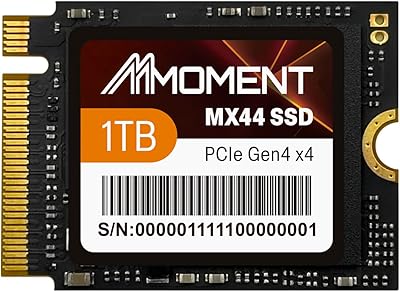
MMOMENT MX44 1TB M.2 2230 NVMe SSD
86%
92%
Performance
89%
Value for Money
95%
Ease of Installation
85%
Build Quality
87%
Durability (Dust/Water/Shock Resistance)
More
KingSpec 1TB M.2 2230 SSD NVMe Gen3x4
87%
94%
Performance
92%
Read Speed
88%
Compatibility with Small Devices
65%
Ease of Installation
89%
Durability (Shock Resistance)
More
Fanxiang S690Q 1TB NVMe SSD PCIe Gen4 M.2
86%
88%
Performance for Gaming
91%
Read Speed
83%
Heat Dissipation
92%
Ease of Installation
90%
PS5 Compatibility
More
Timetec 1TB M.2 2230 NVMe PCIe Gen4x4 SSD
88%
92%
Performance (Speed)
89%
Value for Money
84%
Ease of Installation
90%
Compatibility with Steam Deck
88%
Compatibility with Surface Pro
More
Dogfish M.2 2230 NVMe PCIe 4.0 1TB SSD
87%
94%
Performance
93%
Read Speed
91%
Write Speed
89%
Compatibility
88%
Ease of Installation
More
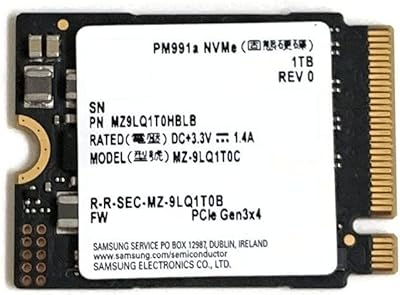
Samsung PM991a 1TB M.2 2230 NVMe SSD
73%
94%
Form Factor Compatibility
88%
Read Performance
74%
Write Performance
91%
Storage Capacity
87%
Build & Component Quality
More
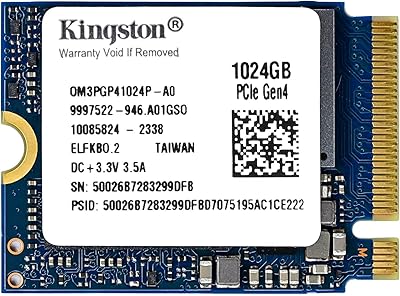
Kingston 1TB M.2 2230 PCIe Gen 4.0x4 NVMe SSD
86%
92%
Performance
90%
Read Speed
88%
Write Speed
85%
Installation Ease
91%
Compatibility with Mini PCs
More

FAQ

Yes, it fits directly into the Steam Deck's M.2 2230 slot with no adapters or brackets needed. After installation, you just boot into the Steam Deck recovery environment and reinstall SteamOS onto the new drive. The process is well-documented and most users complete it within 30 minutes.

Unfortunately, no. Only the Surface Pro 9 with an Intel processor supports PCIe 4.0, which is required to hit those peak speeds. The Surface Pro 8, Surface Pro 7+, and all ARM-based Surface Pro models are limited to PCIe 3.0, capping sequential reads at around 3500 MB/s. You will still notice a real-world improvement over the stock drive, but the headline numbers simply will not apply.

Based on available product information, this drive does not include a dedicated DRAM cache. For gaming and everyday storage tasks that is generally fine — you will not notice a difference. Where it can matter is during prolonged, heavy sequential writes, like copying dozens of gigabytes in a single session, where speed may dip once the SLC write buffer fills up.

Graphene is an excellent thermal conductor, so the sticker helps spread heat generated by the NAND chips across a wider surface area rather than letting it concentrate in one spot. Inside a Steam Deck or mini PC where there is minimal airflow, this kind of passive thermal management genuinely helps maintain consistent performance over longer gaming sessions. It is not a full heatsink, but for the tight spaces this drive targets, it is a thoughtful addition.

The S630 is compatible with both. Both ROG Ally models use the M.2 2230 form factor, so the physical fit is identical. Whether you get full PCIe 4.0 throughput depends on the slot configuration of your specific unit, but in practice both models support PCIe 4.0 and should run the drive at or near its rated speeds.

Installing a new SSD in the Steam Deck does not void the drive's own 5-year warranty from fanxiang, since that covers the drive itself as a product. As for Valve's Steam Deck warranty, Valve has generally been user-repair friendly and opening the back to swap an SSD is a common, widely documented procedure. That said, if you are concerned, it is worth reviewing Valve's current warranty terms before proceeding.

fanxiang is a newer entrant in Western markets compared to Samsung or WD, so the long-term field data is still building up. Current user reviews are strong, and the specs — 3D NAND, 320 TBW, 5-year warranty — are competitive. If absolute peace of mind from a decades-proven brand is your top priority, Samsung or WD will feel safer. But if you are comfortable with a well-reviewed value-tier brand and the warranty coverage reassures you, the S630 holds up well for its target use case.

Technically it will work electrically if your laptop supports M.2 NVMe, but a 2230 drive in a 2280 slot will be shorter than the slot length and may not have a mounting point to secure it properly. Some laptops include secondary screw holes for 2230 drives, but many do not. If your laptop has a full 2280 slot available, you would be better served by a 2280 drive that fits correctly and often costs less.

For the Steam Deck, a small Phillips head screwdriver (typically a #0 or #1) is all you need to open the back panel and access the M.2 slot. Mini PC requirements vary by chassis, but most use a single small screw to secure the drive. The drive itself arrives ready to install with the graphene sticker already applied, so no additional thermal prep is required.

For most Steam Deck users, 1TB is a meaningful sweet spot. The original 64GB and 256GB models felt genuinely limiting, and a 1TB upgrade gives you room for 15 to 30 installed titles depending on game size without constant library juggling. If you primarily play large AAA open-world games, you might eventually feel the pinch, but for the majority of handheld gaming use cases, 1TB hits the right balance of capacity and cost.