




Overview

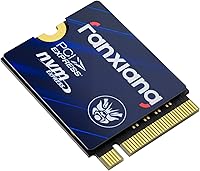
The fanxiang S630 500GB M.2 2230 NVMe SSD is a compact, purpose-built storage upgrade released in early 2025, targeting devices where space is the primary constraint — think Steam Deck, mini PCs, and Surface Pro tablets. It runs on a PCIe Gen 4x4 interface, capable of read speeds up to 4,850 MB/s, though it also works on PCIe 3.0 hosts at reduced speeds — something worth knowing upfront if your device is not Gen 4 ready. A graphene heat sticker comes pre-applied to help manage temperatures in tight, fanless enclosures. Backed by a 5-year warranty and 160TBW endurance rating, this compact NVMe drive punches reasonably well for its price tier.

Features & Benefits

The S630 SSD's headline numbers — 4,850 MB/s sequential read and 1,900 MB/s write — translate into noticeably quicker game load times and faster app launches on compatible Gen 4 hardware. The 30mm length is the defining physical trait here; plenty of drives offer strong performance but only in 2280 size, which simply will not fit a Steam Deck or ROG Ally slot. The 3D NAND flash and accompanying controller are built to sustain workloads rather than just peak briefly during benchmark runs. The included graphene sticker is thin, but in passively cooled devices it does help keep temperatures from climbing during prolonged sessions. Shock resistance adds further reassurance for portable, on-the-go use.

Best For

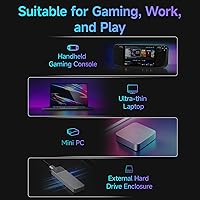
This 2230 upgrade drive makes the most sense if you own a Steam Deck, ROG Ally, or similar handheld and want more room for your game library without sacrificing load speed. Surface Pro 9 (Intel) users will also get the full Gen 4 benefit — just note that older Surface models top out at PCIe 3.0 throughput. Mini PC builders who need a short-length drive for tight chassis will find the fit straightforward. Budget-conscious buyers who still want Gen 4 headroom rather than settling for a slower Gen 3 option will appreciate what this compact NVMe drive offers at its price point. It is less suited to high-endurance professional workstation tasks.

User Feedback

Among buyers, the most consistent praise goes to installation simplicity — most describe the swap as quick and painless, with Steam Deck owners especially satisfied. Real-world speeds on Gen 4 machines reportedly track close to the advertised figures, which builds confidence for a brand that many buyers are trying for the first time. On the flip side, those running PCIe 3.0 hardware sometimes express mild surprise at the lower throughput, even though fanxiang discloses this clearly. The graphene sticker gets mixed but mostly positive mentions. A recurring gripe is that documentation is sparse, which can leave first-time SSD installers unsure of the process. Overall, the rating and review volume point to solid consistency for a newer market entrant.

Pros

  • Gen 4 speeds up to 4,850 MB/s deliver noticeably faster game load times on compatible hardware.
  • The 30mm length makes this compact NVMe drive compatible with Steam Deck, ROG Ally, and Surface Pro slots.
  • Real-world speeds reported by buyers closely match the advertised figures on Gen 4 host devices.
  • A 5-year warranty adds meaningful long-term reassurance for a budget-tier storage purchase.
  • PCIe 3.0 backward compatibility means the drive still works in older devices, just at reduced speeds.
  • The graphene heat sticker provides passive thermal management in tight, fanless enclosures.
  • Installation is consistently described as quick and painless, even for first-time SSD upgraders.
  • Shock-resistant NAND construction suits the bumps and drops of handheld portable use.
  • Strong early review ratings suggest reliable quality control for a brand still building its reputation.

Cons

  • PCIe 3.0 users will see significantly lower throughput than the advertised peak speeds.
  • At 500GB, storage may fill up faster than expected for gamers with large modern title libraries.
  • fanxiang has a limited track record compared to established storage brands, which may concern cautious buyers.
  • The included graphene sticker is notably thin and may offer only marginal thermal benefit under sustained heavy loads.
  • Packaging and documentation are sparse, leaving first-time installers without clear guidance.
  • 160TBW endurance is on the lower end for users planning intensive write-heavy professional workloads.
  • No included cloning software or migration tool is bundled, adding a small extra step for drive-to-drive transfers.
  • Brand support and parts availability may be harder to access compared to larger, more established manufacturers.

Ratings

Our AI scoring system analyzed verified global buyer reviews for the fanxiang S630 500GB M.2 2230 NVMe SSD, actively filtering out incentivized, bot-generated, and duplicate feedback to surface what real users genuinely experienced. The scores below reflect both the strengths that drove strong satisfaction and the pain points that tempered enthusiasm in specific use cases. Nothing has been smoothed over — every category tells the honest story.

Read Performance
88%
On Gen 4 hosts like the ROG Ally and Steam Deck, buyers consistently report that real-world read speeds land close to the advertised 4,850 MB/s figure, which translates to noticeably snappier game load times and faster file transfers. For a drive at this price tier, that alignment between marketing and reality is genuinely appreciated.
Users on PCIe 3.0 devices see substantially lower throughput — around 3,500 MB/s — which is expected but occasionally surprises buyers who did not check their host compatibility beforehand. The drop is not a defect, but it does mean the headline speed is only fully accessible on a subset of compatible devices.
Write Performance
74%
26%
Sequential write speeds of up to 1,900 MB/s are more than sufficient for game installations, OS updates, and general file management on handheld gaming devices. Most Steam Deck and mini PC users report no perceivable bottleneck during everyday write-heavy tasks.
Write speeds are meaningfully lower than read speeds, and under sustained write workloads — like large game installs or repeated file copying — some users note performance settling below peak figures. For heavy content creation tasks, this asymmetry becomes more apparent compared to higher-end NVMe alternatives.
Form Factor Fit
94%
The 2230 length is precisely what devices like the Steam Deck, ROG Ally, and Surface Pro require, and buyers universally confirm it drops in without any adapter or modification. This is one area where the S630 SSD has zero compromise — it physically fits where standard 2280 drives simply cannot go.
The specificity of the 2230 format is also its limitation: if you ever want to reuse this compact NVMe drive in a future device that only accepts the more common 2280 size, it will not fit. Buyers should treat it as a device-specific upgrade rather than a versatile general-purpose drive.
Installation Experience
86%
The swap process is widely described as fast and physically straightforward — most Steam Deck owners report getting in and out in under 15 minutes with a basic screwdriver. The drive fits exactly as expected, with no surprises around connector alignment or clearance issues.
Documentation bundled in the box is sparse, and a handful of first-time SSD installers felt underprepared when it came to the software side — cloning an existing drive or reinstalling an OS is not covered. Fanxiang does not include any migration software, which adds a small but real extra step for users new to storage upgrades.
Thermal Management
71%
29%
The pre-applied graphene sticker provides passive heat dissipation that several owners of fanless devices — particularly mini PCs and the Steam Deck — say keeps temperatures stable during longer gaming sessions. Having it pre-installed means there is no fiddly thermal pad application required.
Multiple reviewers note the sticker is noticeably thin, and a few express skepticism about its effectiveness under sustained, intensive workloads compared to a proper copper or aluminum heatsink. In actively cooled devices where airflow is present, the sticker adds minimal practical benefit.
Build & Durability
79%
21%
The 3D NAND construction and shock-resistant design are well-suited to the physical demands of handheld gaming, where drops and jostling are a real-world concern. Buyers using this 2230 upgrade drive in Steam Decks that travel in bags and cases report no reliability issues over months of use.
As a budget-positioned drive, the physical construction lacks the premium feel of more expensive NVMe options, and the thin sticker does not add much structural confidence. Long-term durability data is still limited given the drive only launched in early 2025.
Value for Money
91%
For buyers who need a 2230 form factor Gen 4 drive specifically, the price-to-performance ratio stands out clearly — comparable options from more established brands often cost significantly more for similar spec sheets. Steam Deck upgraders in particular frequently call it one of the smarter purchases they made for the device.
The value calculus shifts if your device is PCIe 3.0 only, since you pay for Gen 4 capability you cannot fully utilize. In that scenario, a cheaper Gen 3 2230 drive may offer better practical value for the actual speeds you will experience.
Compatibility Range
83%
The S630 SSD covers a broad device ecosystem — Steam Deck, ROG Ally, Surface Pro 9 (Intel), a wide range of mini PCs, and ultrabooks with 2230 slots — making it one of the more versatile options in this niche format. PCIe 3.0 backward compatibility extends its reach further to older host platforms.
Surface Pro buyers need to be careful about which model they own, since only the Intel variant of the Surface Pro 9 gets Gen 4 speeds — ARM and older models are capped at PCIe 3.0 throughput. The compatibility footnotes are disclosed but can catch buyers off guard if they skim the product listing.
Brand Trust
68%
32%
The combination of a strong aggregate rating, a meaningful review count, and a 5-year warranty helps offset the unfamiliarity some buyers feel about the fanxiang brand. Users who took the chance report positive outcomes, and the warranty provides a concrete safety net if something goes wrong.
fanxiang does not yet have the long-established reputation of brands like Samsung, WD, or Crucial, and some buyers admit they hesitated before purchasing. For buyers who heavily weight brand heritage and long-term support infrastructure, that gap in track record is a real consideration.
Packaging & Unboxing
58%
42%
The drive arrives protected and functional, and buyers are not reporting units damaged in transit. For a purely utilitarian storage upgrade, the packaging does its basic job adequately.
Several reviewers describe the packaging as minimal and the included documentation as nearly non-existent, which is a missed opportunity given that the target audience includes first-time SSD upgraders. A simple quick-start guide or QR code pointing to installation resources would meaningfully improve the experience.
Sustained Workload Stability
73%
27%
For typical gaming and general consumer use — loading titles, installing updates, navigating the OS — the S630 SSD maintains consistent performance without obvious signs of throttling during normal sessions. The controller appears capable of handling everyday workloads without dramatic dips.
Under extended, write-intensive tasks the drive shows some performance variation, which is common at this price tier but worth flagging for anyone planning more demanding use. Heavy workloads that would stress the 160 TBW endurance rating faster should be approached with that ceiling in mind.
Endurance Rating
66%
34%
160 TBW is a reasonable endurance figure for most gamers and everyday users, who are unlikely to approach that threshold within the lifespan of their host device. For its intended audience the rating is functional and adequately matched to typical usage patterns.
Compared to higher-endurance drives in adjacent price brackets, 160 TBW is on the conservative side, and professional users with heavy write workflows will find it limiting. It reinforces that this is a consumer gaming upgrade rather than a drive built for intensive prosumer tasks.

Suitable for:

The fanxiang S630 500GB M.2 2230 NVMe SSD is purpose-built for anyone whose device physically requires the shorter 30mm drive format — a constraint that rules out most mainstream SSDs immediately. Steam Deck owners are the clearest fit: swapping the factory storage for this compact NVMe drive is a straightforward way to double or triple available space for a growing game library without dealing with microSD speed limitations. ROG Ally users and owners of other handheld gaming PCs will find the same direct compatibility and performance uplift. Mini PC builders working with compact chassis that only accept 2230 slots will also appreciate having a Gen 4 option at a sensible price. Surface Pro 9 (Intel) users get the full speed advantage, making it a practical internal upgrade for anyone who finds the stock storage running tight on that platform.

Not suitable for:

Buyers with devices running only PCIe 3.0 will not get the headline speeds advertised and should calibrate expectations before purchasing — the S630 SSD will still work, but throughput will be noticeably capped compared to Gen 4 hosts. Anyone requiring a standard 2280-length drive for a mainstream laptop or desktop should look elsewhere, since the 2230 form factor is simply not designed for those slots. Power users running intensive creative workloads — large video editing projects, database operations, or heavy virtual machine usage — may find the 160TBW endurance rating on the lower side for sustained professional demands. Those who strongly prefer established storage brands with longer track records in the market may feel hesitant about fanxiang as a newer entrant, even with its warranty coverage. Finally, anyone needing more than 500GB who wants to avoid future upgrades should weigh whether this capacity will remain sufficient over the device's lifespan.

Specifications

  • Capacity: This drive offers 500 GB of usable storage space for games, applications, and files.
  • Form Factor: It uses the M.2 2230 format, measuring 30mm in length, designed for compact and space-constrained devices.
  • Interface: The drive connects via PCIe Gen 4x4 NVMe, delivering the highest throughput on compatible Gen 4 host platforms.
  • Sequential Read: Peak sequential read speed reaches up to 4,850 MB/s on a PCIe Gen 4 host.
  • Sequential Write: Peak sequential write speed reaches up to 1,900 MB/s under optimal Gen 4 conditions.
  • PCIe Compatibility: Backward compatible with PCIe 3.0 slots, though maximum speeds on those hosts are limited to approximately 3,500 MB/s read.
  • Flash Type: The drive uses 3D NAND flash memory paired with a robust controller for consistent sustained performance.
  • Thermal Design: A graphene heat dissipation sticker is pre-applied to the drive surface, acting as an ultra-thin passive heatsink.
  • Endurance: Rated for 160 TBW (terabytes written), suitable for typical consumer and light prosumer workloads.
  • Warranty: Covered by a 5-year manufacturer warranty, providing long-term protection for the buyer.
  • Weight: The drive weighs 1.06 ounces, making it negligible in the overall weight of any host device.
  • Dimensions: Physical dimensions are 1.18 x 0.87 x 0.11 inches (LxWxH), confirming the compact 2230 footprint.
  • Installation: Designed for internal installation, fitting directly into any M.2 2230 slot without adapters or modifications.
  • Shock Resistance: The NAND design includes shock-resistant characteristics, adding durability for portable and handheld device use.
  • Compatible Devices: Compatible with Steam Deck, ROG Ally, Microsoft Surface Pro, mini PCs, ultrabooks, and other laptops with M.2 2230 slots.
  • Availability: The drive became commercially available in March 2025, making it one of the newer Gen 4 2230 options on the market.

Related Reviews
fanxiang S630 1TB M.2 2230 NVMe SSD
80%
88%
Read Speed Performance
74%
Write Speed Performance
81%
Device Compatibility
79%
Thermal Management
93%
Installation Experience
More
fanxiang S630 2TB M.2 2230 NVMe SSD
79%
88%
Read Speed Performance
71%
Sustained Write Speed
93%
Form Factor Compatibility
79%
Thermal Management
86%
Installation Experience
More
KINGDATA 2TB M.2 2230 NVMe SSD
75%
81%
Real-World Speed
93%
Form Factor Fit
78%
Installation Experience
84%
Value for Money
62%
Brand Reliability Confidence
More
fanxiang S770 1TB NVMe M.2 SSD
79%
88%
Read Speed Performance
91%
PS5 Compatibility
86%
Value for Money
83%
Thermal Management
67%
Write Speed Consistency
More
GEWOKLIY Ge-MC13 M.2 2230 NVMe SSD Enclosure
78%
83%
Transfer Speed
88%
Build Quality
79%
Compatibility
67%
Thermal Management
92%
Ease of Setup
More
SanDisk SSD Plus 500GB M.2 NVMe SSD
81%
83%
Read Performance
64%
Write Performance
96%
Installation Ease
88%
Value for Money
84%
Compatibility
More
PNY CS1030 M.2 NVMe SSD 500GB
86%
89%
Performance
92%
Value for Money
84%
Installation Process
90%
Boot Time Improvement
87%
File Transfer Speed
More
PNY CS2230 500GB M.2 NVMe SSD
82%
93%
Value for Money
84%
Read/Write Performance
91%
Installation Ease
88%
Compatibility
89%
Warranty & Support
More
fanxiang S770 2TB NVMe M.2 SSD
79%
88%
Sequential Read Speed
91%
PS5 Compatibility
86%
Value for Money
83%
Thermal Management
74%
Build Quality
More
Kingston NV3 500GB NVMe SSD
81%
91%
Read Performance
78%
Write Performance
94%
Value for Money
63%
Thermal Management
93%
Installation Ease
More

FAQ

Yes, the S630 SSD is a direct fit for all Steam Deck models. The 2230 form factor is exactly what Valve uses in the Deck, so you just swap the existing drive and reinstall SteamOS. Many buyers have done exactly this and report the process takes under 15 minutes with a basic screwdriver.

On a PCIe 3.0 host, you will not hit the 4,850 MB/s headline figure — expect sequential reads closer to 3,500 MB/s instead. That is still comfortably fast for gaming and general use, but it is worth knowing upfront if your device is not Gen 4 capable. fanxiang does disclose this limitation, so it is not a hidden caveat.

Yes, it fits the ROG Ally directly. The ROG Ally uses an M.2 2230 slot and supports PCIe Gen 4, so you will get the full speed benefit with this compact NVMe drive. Just make sure to back up your data before swapping, as you will need to reinstall Windows or restore from a recovery image afterward.

The sticker works as a passive heatsink, spreading heat away from the drive controller during sustained workloads. In fanless devices like the Steam Deck or a small mini PC, there is no active airflow to cool the SSD, so even a thin layer of thermal management helps prevent throttling over long sessions. It is pre-applied, so there is nothing extra you need to do.

It works with several Surface Pro models, but only the Surface Pro 9 with an Intel processor supports PCIe Gen 4, meaning that is the one that gets the full speed advantage. Older models like the Surface Pro 7 Plus, Surface Pro 8, and the ARM or 5G variants of the Surface Pro 9 are limited to PCIe 3.0 speeds. Always check your specific model before purchasing.

Generally yes, though the documentation included in the box is reportedly minimal, so you may want to look up a device-specific guide online before starting. For the Steam Deck in particular, there are detailed video tutorials available that walk through the whole process step by step. Having a small Phillips screwdriver on hand is usually all the tooling you need.

160 TBW is adequate for typical gaming and everyday consumer use — at moderate write workloads, most users will take years to approach that limit. It is on the lower side if you are doing heavy video editing, database work, or constant large file transfers, so for pure professional write-heavy tasks there are more durable options. For the target audience of gamers and general users, it should last the life of the host device comfortably.

fanxiang is a newer brand compared to established names, but this 2230 upgrade drive has accumulated a solid number of reviews with a high average rating, which is a reasonable indicator of consistent build quality. The 5-year warranty also provides a meaningful safety net. As with any newer brand, just make sure to register your purchase or keep proof of purchase in case you ever need warranty support.

Technically yes, if you use an M.2 NVMe enclosure that supports PCIe or has an NVMe-to-USB bridge chip. However, this drive is designed and sized for internal use, and the speeds you get over USB will be limited by the USB interface rather than the drive itself. It is a perfectly fine option for an external use case, but its real value is as an internal upgrade.

In most cases, yes — but you have options. You can either do a fresh OS install, which is the most straightforward path on devices like the Steam Deck, or you can clone your existing drive to this one using third-party cloning software before the swap. Note that no cloning tool is bundled with the drive, so you would need to source that separately if you prefer the cloning route.