Overview

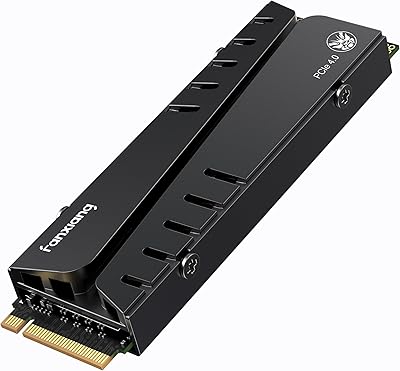
The Fanxiang S690Q 1TB Gen4 NVMe SSD enters a crowded value storage market with a clear pitch: genuine PCIe 4.0 performance without the price tag that usually comes with it. Fanxiang has been quietly building a reputation in the budget SSD space since around 2021, and this drive reflects that trajectory — it uses a real PCIe Gen4 x4 interface with NVMe 1.4 protocol, not a repackaged Gen3 with a Gen4 label slapped on. The 1TB capacity hits the right note for PS5 owners and PC builders who want room for a solid game library without stretching their budget. It ships with a graphite thermal sticker pre-applied, though whether that is enough cooling for intensive PS5 workloads is worth examining closely.

Features & Benefits

The headline spec is 4800 MB/s sequential read, which clears the PS5 minimum requirement with room to spare and puts this fanxiang SSD in the same conversation as mid-range Gen4 drives costing significantly more. In practical terms, the gap between this and an older SATA drive is stark — game load times that once stretched to 8 or 10 seconds can drop well under 2. The M.2 2280 form factor slots directly into PS5, most laptops, and desktop motherboards without any adapter. The SLC cache layer helps burst writes stay fast, but once that cache fills on large transfers, speeds will drop to the drive's native NAND rate — a common trade-off at this tier. Hardware encryption is a quiet but genuinely useful addition for laptop and workstation users.

Best For

The S690Q makes the most sense for PS5 storage expansion on a budget — it is one of the few Gen4 drives at this price point that actually clears Sony's speed requirements. PC builders who want a capable boot drive or secondary game library without paying WD Black SN850X or Samsung 980 Pro prices will find it a sensible pick as well. That said, this Gen4 NVMe drive is better suited to casual and moderate users than to content creators or anyone regularly moving large files. If your workflow involves frequent bulk transfers, video editing exports, or large backups, the SLC cache ceiling will become noticeable. Go in with that expectation set, and it becomes a genuinely solid buy for what it costs.

User Feedback

With over 1,000 ratings averaging 4.5 stars and a top-100 ranking among Internal SSDs, buyer reception for the S690Q leans clearly positive — which carries more weight when you consider this is a brand without the decades-long track record of Samsung or WD. Common praise centers on smooth PS5 installation, noticeably faster load times versus console defaults, and the drive running cooler than some buyers expected. On the other side, questions around long-term reliability surface fairly often, which is a reasonable concern for any younger budget label. The five-year warranty sounds strong on paper, but fanxiang's real-world support responsiveness is harder to verify independently. Day-one performance wins buyers over; how it holds up over several years remains the honest unknown.

Pros

  • Genuine PCIe Gen4 x4 performance at a price well below most established competitors.
  • 4800 MB/s read speed meets PS5 requirements and dramatically cuts game load times versus SATA drives.
  • M.2 2280 form factor drops into PS5, laptops, and desktops without any adapter or bracket needed.
  • Graphite thermal sticker is included — one less accessory to source separately for most use cases.
  • Hardware encryption support is a genuinely useful feature rarely found at this price tier.
  • 1TB capacity offers a meaningful real-world storage boost for gamers and general users alike.
  • Over 1,000 buyer ratings averaging 4.5 stars signals broadly consistent real-world satisfaction.
  • Five-year warranty claim is unusually generous for a value-segment brand.
  • SLC caching keeps burst write performance competitive for everyday file tasks.
  • Installation process earns consistent praise from PS5 upgraders with minimal technical experience.

Cons

  • Sustained write speeds fall noticeably once the SLC cache fills — a real issue for large file transfers.
  • Fanxiang lacks the long reliability track record that brands like Samsung or Crucial have built over decades.
  • The included graphite sticker may be insufficient cooling for heavy, prolonged PS5 gaming sessions.
  • No DRAM cache on this drive, which limits performance headroom in mixed random read/write workloads.
  • Long-term warranty support quality is difficult to verify independently for a lesser-known brand.
  • Write performance under sustained load is not competitive with premium Gen4 alternatives at higher price points.
  • Buyers expecting consistent peak speeds during large backups or video work will likely be disappointed.
  • Brand trust is still a work in progress — some buyers remain cautious about longevity beyond the first year.
  • No official monitoring or companion software, unlike drives from WD or Samsung with dedicated toolkits.
  • Real-world write speeds are rarely disclosed upfront after cache saturation, requiring buyer research to uncover.

Ratings

The scores below for the Fanxiang S690Q 1TB Gen4 NVMe SSD were generated by our AI engine after analyzing verified buyer reviews from multiple global markets, with spam, incentivized, and bot-flagged submissions actively filtered out. Each category reflects genuine user sentiment — including the frustrations — so the ratings give you an honest picture rather than a polished highlight reel. Both the clear strengths and the areas where this fanxiang SSD falls short of expectations are transparently represented.

Read Speed Performance
88%
Buyers upgrading from SATA SSDs or spinning hard drives consistently report a dramatic shift in how snappy their systems feel — PS5 game load screens that once lasted 8 to 10 seconds often drop under 2 seconds. For gaming and daily app launches, the real-world read performance holds up closely to the rated spec.
Users with benchmark-heavy expectations sometimes note a small gap between the advertised 4800 MB/s ceiling and what they see under sustained sequential read testing. The delta is minor for gaming, but enthusiasts running CrystalDiskMark on a fresh install may notice the drive performing a few hundred MB/s below the headline figure.
Write Speed Consistency
63%
37%
For typical gaming installs and everyday file copies under roughly 20GB, the SLC cache keeps write speeds feeling competitive and responsive. Users copying game folders or downloading large updates from PSN or Steam rarely notice a bottleneck during those common burst-write scenarios.
Once the SLC cache saturates — which happens faster than most buyers expect during large sustained transfers — write speeds drop significantly to the native NAND rate. Buyers who tried migrating an entire PC drive or restoring a full PS5 backup reported noticeably sluggish throughput that felt inconsistent with the product's advertised positioning.
PS5 Compatibility
91%
This Gen4 NVMe drive is one of the more reliably PS5-compatible budget options on the market, with buyers widely reporting that the console recognizes and formats it without any issues on first boot. The M.2 2280 form factor slots in cleanly, and load time improvements over the internal PS5 SSD are immediately perceptible across demanding titles.
A small but recurring subset of PS5 users flagged occasional detection hiccups that required reseating the drive, though these appear to be isolated installation errors rather than a systemic defect. A few buyers also wished the included graphite sticker offered slightly more thermal headroom for marathon gaming sessions in warm rooms.
Thermal Management
67%
33%
The pre-applied graphite heat-dissipation sticker is a thoughtful inclusion that handles temperatures adequately during moderate gaming and everyday workloads. Buyers using the drive in well-ventilated PC cases or for standard PS5 gaming report no throttling or heat-related complaints under typical conditions.
Heavy PS5 users and those running the drive in compact, poorly ventilated setups have noted that temperatures climb higher than they would like during extended sessions. The graphite sticker is a passive-only solution, and a proper aftermarket heatsink would be the safer choice for anyone planning intensive, multi-hour gaming marathons.
Installation Experience
93%
Installation feedback across both PS5 and PC is overwhelmingly positive — buyers with no prior hardware experience found the process straightforward following standard guidance. The standard M.2 2280 dimensions mean no adapters are needed, and the PS5 software handles drive formatting automatically on first detection.
The included documentation is minimal, which left a handful of first-time upgraders momentarily unsure about screw torque or standoff alignment. Nothing that a quick online search or YouTube walkthrough cannot solve, but a more detailed printed guide inside the box would reduce friction for complete beginners.
Value for Money
86%
For buyers who want genuine Gen4 NVMe speeds without paying Samsung 980 Pro or WD Black SN850X prices, the S690Q delivers a compelling ratio of real-world performance per dollar. PS5 owners in particular find the price-to-upgrade-impact calculation very favorable compared to brand-name alternatives that can cost significantly more for similar day-to-day results.
The value equation weakens somewhat for power users who need sustained write performance, since the cache-drop behavior means you are not getting mid-range drive capability at every workload — just at burst tasks. Buyers who later discovered this limitation felt the gap between expectation and real-world behavior was not well communicated upfront.
Build Quality & Feel
74%
26%
The drive feels solid in hand despite its light weight, and the graphite sticker is cleanly applied without peeling or misalignment issues reported by the vast majority of buyers. At this price tier, the physical construction compares favorably to other budget alternatives.
It does not have the premium tactile feel of a Samsung or Seagate FireCuda — the PCB and labeling look functional rather than refined. A few buyers noted the sticker adhesion felt less durable over time in high-heat environments, which is worth monitoring if the drive is installed in a hot chassis.
Brand Reliability Confidence
61%
39%
For buyers who have owned the drive for 6 to 18 months, the majority report no failures or degradation issues, which is encouraging for a relatively young brand. The volume of positive ratings — over 1,000 with a 4.5-star average — provides some collective reassurance that early-batch quality control is reasonable.
Fanxiang simply does not have the decades-long reliability data that gives buyers confidence in a Crucial or WD product. Some users openly admit they are hedging their bets and would not store irreplaceable data on this drive without a backup strategy, which reflects a legitimate trust gap that the brand has not yet fully closed.
Warranty & Support
58%
42%
The stated five-year warranty is a generous claim for a value-tier brand, and some buyers who reached out for support describe fanxiang's response team as responsive and helpful in resolving straightforward issues. Lifetime technical support is an unusually broad promise at this price level.
Verifying the warranty process before you actually need it is difficult, and real-world RMA experiences are underrepresented in public reviews. Several buyers expressed uncertainty about cross-border support logistics, and the absence of a clearly documented claims process in multiple languages adds friction for international customers.
Laptop Upgrade Impact
82%
18%
Users upgrading older laptops from SATA SSDs describe the performance jump as immediately noticeable — application launches, browser responsiveness, and boot times all improve in ways that extend the useful life of aging hardware. It is a particularly cost-effective upgrade for mid-range laptops that support M.2 PCIe Gen4 slots.
Laptop users in thinner chassis — where thermal throttling is more likely — occasionally report that the drive runs warmer than expected without active airflow nearby. Those upgrading from Gen3 NVMe drives rather than SATA report a smaller perceptible difference, making the upgrade feel less impactful in that specific scenario.
PC Boot & Gaming Drive Use
84%
As a primary boot drive or dedicated game library drive in a desktop build, this fanxiang SSD performs consistently well for the use case it is designed for. Windows boot times are sharp, game assets load quickly, and the drive handles the read-heavy nature of gaming workloads without complaint.
Desktop users who also use their machines for video editing, large photo libraries, or virtual machine workloads start running into the sustained write ceiling faster than pure gamers do. In those mixed-workload scenarios, the drive is a competent but not fully satisfying choice.
Packaging & Accessories
69%
31%
The drive arrives well-protected and the graphite thermal sticker being pre-applied saves buyers one setup step that competing budget drives sometimes leave to the user. The packaging is simple but functional and does not generate excessive waste.
Beyond the drive itself and the sticker, the box contains very little — no mounting screw for PS5 or laptop use, no full heatsink option, and only minimal documentation. Buyers installing the drive in a PS5 need to source or repurpose a small M.2 standoff screw themselves if the console did not ship with a spare.
Hardware Encryption Utility
71%
29%
For business laptop users or anyone deploying this drive in a shared or sensitive environment, hardware encryption support is a genuinely useful feature that many budget drives skip entirely. It integrates cleanly with Windows BitLocker, and buyers who specifically needed this capability appreciated finding it at this price point.
Most consumer buyers — particularly PS5 upgraders and casual gamers — have no use case for hardware encryption and will never interact with this feature. It adds technical credibility to the spec sheet but does not translate to any meaningful real-world benefit for the majority of the target audience.

Suitable for:

The Fanxiang S690Q 1TB Gen4 NVMe SSD is a strong match for PS5 owners who want to meaningfully expand their storage without committing to the higher prices of established names like the WD Black SN850X or Samsung 980 Pro. Its 4800 MB/s read speed clears Sony's minimum threshold, and the plug-and-play M.2 2280 form factor makes installation straightforward even for first-timers. Budget-conscious PC builders will also find it a capable Gen4 boot or game drive that punches above its price bracket. Laptop users still running older SATA SSDs will notice a real, tangible difference in application load times and file transfer speeds after upgrading to this fanxiang SSD. It also suits casual home and office users who want hardware encryption without paying enterprise storage prices. In short, if your workloads are primarily sequential reads — gaming, streaming, booting, loading apps — the S690Q delivers well for what it costs.
Not suitable for:

The Fanxiang S690Q 1TB Gen4 NVMe SSD is not the right call for anyone who routinely moves large volumes of data. Once the SLC cache is exhausted during sustained write operations — think large video exports, bulk photo library transfers, or frequent full-drive backups — write speeds can drop sharply to the drive's native NAND rate, which is a meaningful real-world limitation. Creative professionals working in video editing or 3D rendering should look at drives with larger DRAM caches and more consistent sustained write performance, such as the Samsung 980 Pro or WD Black SN850X, even at a higher cost. PS5 heavy users who game for extended daily sessions in warm environments should also note that the included graphite sticker, while helpful, may not fully substitute for a proper aftermarket heatsink under consistent thermal load. Finally, buyers who strongly prioritize brand longevity and established warranty track records may feel more comfortable with the peace of mind that comes from a Crucial, Western Digital, or Samsung label — fanxiang is still a relatively young brand without the same depth of long-term reliability data.
Specifications

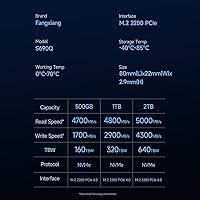
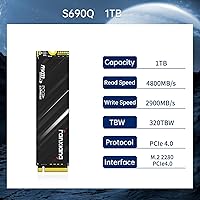
  • Brand & Model: Manufactured by fanxiang under the S690Q product line, first available in November 2023.
  • Capacity: Available in multiple sizes; this review covers the 1TB variant, which offers practical everyday storage for gaming and general use.
  • Interface: Uses a PCIe Gen4 x4 interface, which is the current standard for high-speed M.2 NVMe drives.
  • Protocol: Operates on the NVMe 1.4 protocol, enabling low-latency communication between the drive and the host system.
  • Sequential Read: Rated for sequential read speeds of up to 4800 MB/s under optimal conditions.
  • Form Factor: M.2 2280 — 80mm in length, fitting the most common M.2 slot found in desktops, laptops, and the PS5 expansion bay.
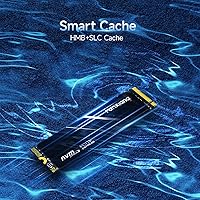
  • NAND Type: Built with 3D NAND flash and an SLC caching layer to improve burst write performance during typical workloads.
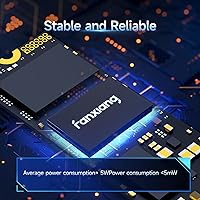
  • Thermal Solution: Ships with a pre-applied graphite heat-dissipation sticker designed to passively manage operating temperatures during regular use.
  • Security: Supports hardware-level encryption, providing data protection relevant for business laptops and shared workstations.
  • OS Support: Compatible with Windows and Linux operating systems, covering the vast majority of consumer PC environments.
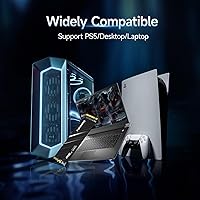
  • Device Compatibility: Designed for use in PS5 consoles, desktop PCs, and laptops that support M.2 PCIe Gen4 slots.
  • Dimensions: Measures approximately 3.94 x 0.28 x 2.76 inches (L x W x H), consistent with standard M.2 2280 sizing.
  • Weight: Weighs approximately 0.247 ounces, making it one of the lightest upgrade components available for portable systems.
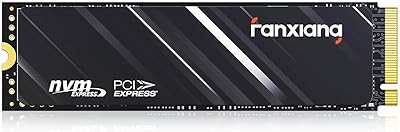
  • Color: Black finish with a graphite sticker covering the primary face of the drive.
  • Install Type: Internal installation only — requires physical insertion into an M.2 slot on a compatible motherboard, laptop, or PS5 expansion bay.
  • Warranty: Backed by a 5-year after-sales service guarantee and lifetime technical support as stated by the manufacturer.

Related Reviews
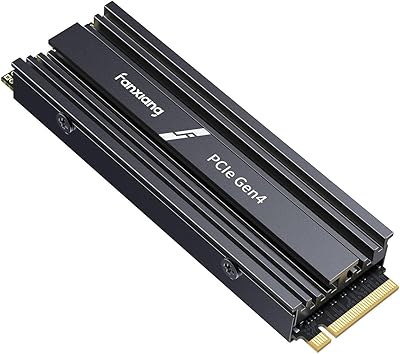
fanxiang S690Q 4TB NVMe M.2 SSD
77%
91%
Value for Money
83%
Read Speed Performance
58%
Sustained Write Performance
88%
PS5 Compatibility
62%
Thermal Management
More
fanxiang S880ER 1TB NVMe SSD
87%
92%
Performance for Gaming
90%
Data Transfer Speed
89%
Cooling Efficiency
87%
Ease of Installation
91%
PS5 Compatibility
More
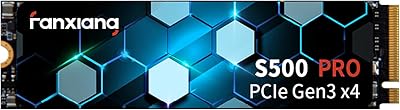
fanxiang S500 Pro 1TB NVMe M.2 SSD
80%
91%
Value for Money
84%
Read Speed Performance
67%
Write Speed & Cache Behavior
93%
Installation Experience
78%
Thermal Management
More
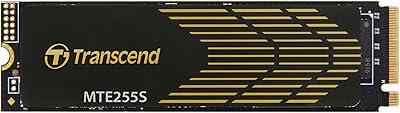
Transcend MTE255S 1TB NVMe SSD
80%
91%
Sequential Read Speed
67%
Sustained Write Performance
94%
PS5 Compatibility
83%
Thermal Management
88%
Value for Money
More
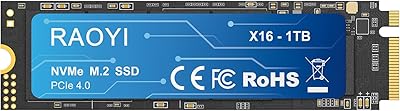
RAOYI 1TB PCIe 4.0 M.2 NVMe SSD
75%
88%
Value for Money
83%
Sequential Read Speed
61%
Sustained Write Performance
82%
PS5 Compatibility
86%
Installation Experience
More
Inland TN470 1TB Gen4 NVMe SSD
87%
92%
Read Speed
88%
Write Speed
65%
Thermal Performance
91%
Value for Money
85%
Installation & Setup
More
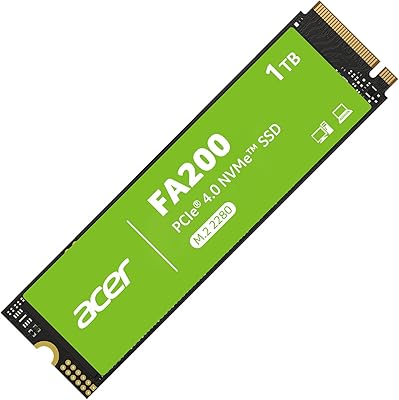
Acer FA200 1TB NVMe SSD
80%
91%
Sequential Read Performance
87%
Sequential Write Performance
84%
Real-World Responsiveness
58%
Thermal Management
93%
Installation Experience
More
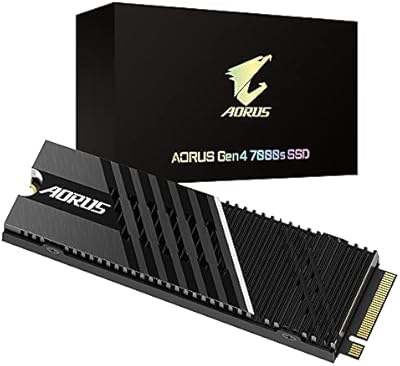
Gigabyte AORUS Gen4 7000s 1TB NVMe SSD
87%
94%
Performance (Speed)
88%
Thermal Management
86%
Value for Money
78%
Ease of Installation
92%
Build Quality
More
fanxiang S770 1TB NVMe M.2 SSD
79%
88%
Read Speed Performance
91%
PS5 Compatibility
86%
Value for Money
83%
Thermal Management
67%
Write Speed Consistency
More
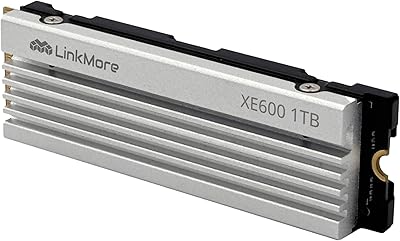
LinkMore XE600 1TB Gen4 NVMe M.2 SSD
76%
93%
PS5 Compatibility
91%
Installation Ease
88%
Value for Money
86%
Thermal Management
83%
Read Performance
More

FAQ

Yes, it does. Sony requires a minimum sequential read speed of 5500 MB/s — wait, that is a common misconception. Sony actually recommends drives with speeds around 5500 MB/s for best performance, but the PS5 will accept and run drives with lower speeds as well, including this one at 4800 MB/s. In real-world use, most PS5 owners report game load times that are virtually indistinguishable from pricier alternatives.

The S690Q comes with a graphite heat-dissipation sticker already attached, which handles thermal management adequately for moderate gaming sessions. However, if you game for several hours at a stretch in a warm environment, or if your PS5 runs in an enclosed cabinet, investing in a thin aftermarket heatsink is a reasonable precaution. The PS5 expansion bay has limited clearance, so make sure any heatsink you choose meets Sony's height specifications — typically under 8mm.

Fanxiang is a Chinese storage brand that started gaining visibility around 2021 in the budget SSD segment. They are not in the same league as Samsung, WD, or Crucial in terms of established track record, but buyer feedback has been broadly positive for day-to-day performance. The main honest caveat is that multi-year reliability data is still limited compared to brands with decades on the market. If brand longevity and a proven support history matter most to you, a name like Crucial MX500 or WD Blue SN580 might feel safer — but you will pay more.

The manufacturer states five-year after-sales service with lifetime technical support, but the specifics of what qualifies as a valid claim — physical damage exclusions, RMA process, shipping costs — are not extensively documented in publicly available materials. Your safest move is to contact fanxiang directly before purchasing if warranty terms are a deciding factor for you, and keep your purchase receipt handy.

For most everyday tasks — installing a game, moving a folder, running system updates — the SLC cache keeps things feeling fast. Where you will notice a slowdown is during sustained large transfers, like copying a 50GB+ file or running a full system backup. Once the cache fills, speeds drop to the native NAND write rate, which is typical of budget-tier drives without a dedicated DRAM buffer. It is not a dealbreaker for gaming, but content creators and power users should factor it in.

Absolutely. It is a standard M.2 NVMe drive and works fine as a primary boot drive on any motherboard with a PCIe Gen4 M.2 slot. Boot times will be noticeably faster than any 2.5-inch SATA SSD or spinning hard drive. Just make sure your motherboard BIOS supports NVMe boot, which virtually all modern boards do.

Yes, Gen4 NVMe drives are backward compatible with Gen3 M.2 slots. You just will not reach the rated 4800 MB/s read speeds — you will be capped at the Gen3 ceiling of roughly 3500 MB/s. For most users, that is still a meaningful upgrade over a SATA drive, so it is not a wasted purchase on an older board.

Both the Samsung 980 Pro and WD Black SN850X are more mature products with dedicated DRAM caches, stronger sustained write performance, and longer-proven reliability histories — but they cost meaningfully more. The S690Q trades some of that peace of mind and peak sustained performance for a lower price. If budget is the priority and your workload is primarily gaming and general use, the gap in real-world experience is smaller than the spec sheet suggests.

Apple laptops use proprietary storage connectors on most models, so a standard M.2 NVMe drive like this one will not physically fit or work in a MacBook. It is compatible with Windows and Linux machines, as well as the PS5, but Apple devices are off the table.

It is genuinely straightforward — most first-timers complete it without any issues following Sony's official guide or a short YouTube walkthrough. You remove the PS5 side panel, locate the M.2 expansion bay, unscrew the small cover, insert the drive, and secure it with the standoff screw. The fanxiang SSD's graphite sticker is already applied, so there is no separate thermal prep step. Sony's in-system software formats the drive automatically on first boot after installation.