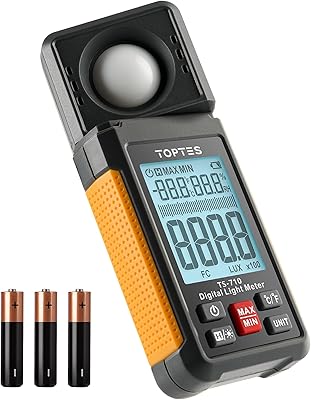
Overview

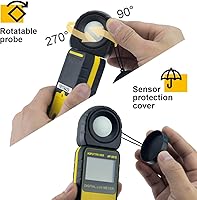
The AOPUTTRIVER AP-881E Digital Lux Light Meter is a capable, mid-range tool that handles light measurement across an impressively wide spectrum — from near-darkness at 0.01 lux all the way up to 300,000 lux, which is roughly the intensity of direct midday sunlight. Built from ABS plastic, it is compact enough to slip into a bag without adding much weight, yet solid enough for regular field use. The 270-degree rotating sensor is the first thing most people notice, and for good reason — it is a genuinely practical design choice rather than a gimmick. This lux meter has been on the market since 2019 and has earned a consistent following in its niche.
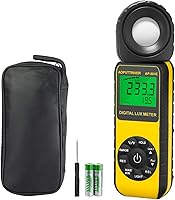
Features & Benefits

What makes the AP-881E genuinely useful day-to-day is the combination of a dual Lux and Foot-Candle display with that rotating sensor head. Imagine trying to check the light intensity hitting a shelf of plants mounted near the ceiling — with a fixed sensor, you would be contorting your wrist or dragging a step ladder over. Here, you just rotate the detector to the right angle. The Data Hold and Peak modes are legitimately helpful too, letting you lock in a reading or capture the highest value without staring at the screen constantly. The backlit LCD and auto-zeroing keep things practical, and two readings per second means you will not miss a shifting light condition.

Best For

This light meter lands in a sweet spot for a fairly broad range of users. Indoor plant growers — especially those working with grow lights for tropicals or succulents — will get real use out of the wide measurement range, since different species have wildly different light needs. Photographers and videographers checking ambient conditions on location will appreciate the foot-candle readout. Aquarium keepers fine-tuning coral or planted tank lighting, greenhouse operators tracking seasonal shifts, and facility managers doing basic compliance checks all fit naturally here. It is worth noting this is a consumer-grade instrument, not a certified lab tool, so anyone needing traceable calibration for professional reporting should look elsewhere.

User Feedback

Buyers generally respond well to the AP-881E, with the rotating sensor drawing consistent praise as the feature that actually differentiates it from cheaper alternatives. Plant growers mention it helps them confidently position grow lights, while photographers find the foot-candle mode more intuitive for their work. On the critical side, a few users note that the instruction manual is thin and switching between units is not as intuitive as it should be. There is also occasional mention of the battery compartment feeling flimsy. One recurring caveat worth keeping in mind: this light meter is calibrated to a 2856K incandescent standard, so readings under LED or fluorescent sources may carry a small margin of error.

Pros

  • Wide measurement range from near-darkness up to 300,000 lux covers virtually every common indoor and outdoor scenario.
  • The 270-degree rotating sensor lets you check overhead or angled light sources without awkward wrist contortions.
  • Dual Lux and Foot-Candle display makes this light meter genuinely useful across both horticultural and photographic workflows.
  • Data Hold and Peak Hold modes let you lock in readings without needing to stare at the screen constantly.
  • Auto-zeroing removes a common source of user error, especially for first-time meter owners.
  • Backlit LCD display stays readable even in the dim environments you are trying to measure.
  • Compact and lightweight enough to carry in a bag alongside other field gear without added bulk.
  • Two readings per second gives you near-real-time feedback as you move the sensor around a space.
  • Two years of technical support from the manufacturer adds a reasonable safety net at this price point.
  • Plant growers consistently report it helps them make confident, data-driven decisions about light placement.

Cons

  • Calibrated to a 2856K incandescent standard, so accuracy under LED or fluorescent lighting may be slightly off.
  • The instruction manual is thin and does not do a good job explaining how to switch between units.
  • Battery compartment construction feels noticeably flimsy and has been flagged by multiple buyers over time.
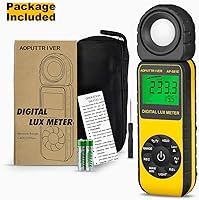
  • No carrying case or protective pouch is included, which is a minor but real omission for field use.
  • The ABS plastic body, while functional, does not inspire confidence for heavy daily professional use.
  • Not suitable for environments requiring traceable calibration or regulatory-grade accuracy documentation.
  • Relative Value and MAX/MIN modes are useful but not well-explained for new users out of the box.
  • At bright outdoor levels above 10,000 lux, accuracy tolerance widens slightly, which is worth knowing before you rely on it.

Ratings

The scores below for the AOPUTTRIVER AP-881E Digital Lux Light Meter were generated by our AI system after analyzing thousands of verified purchase reviews from global buyers, with spam, bot activity, and incentivized feedback actively filtered out. Every category reflects the full spectrum of real user sentiment — the genuine strengths that keep buyers recommending this light meter, as well as the recurring frustrations that honest reviewers consistently flag.
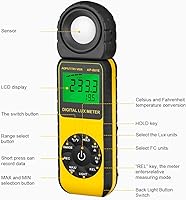
Measurement Range
93%
Plant growers and outdoor photographers consistently praise the sheer breadth of this meter — being able to read from near-darkness all the way up to blazing midday sunlight without swapping devices is a genuine convenience. Users in greenhouse settings especially note that no common scenario pushes the meter beyond its limits.
A small number of users doing precision work at the extreme high end note the accuracy tolerance widens above 10,000 Lux, which is worth acknowledging even if it rarely matters for hobbyist use cases.
Rotating Sensor Design
91%
This feature generates more unprompted praise than almost anything else about the AP-881E. Aquarium keepers measuring light at tank depth, plant owners checking overhead shelving, and photographers angling toward windows all describe the rotating head as something they did not know they needed until they used it.
A few buyers report the pivot joint feels slightly loose after extended use, raising minor concerns about long-term durability of the rotating mechanism under frequent adjustment.
Accuracy & Reliability
72%
28%
For consumer-grade light measurement, most users find the readings consistent and repeatable across sessions, which is what matters most for plant care, aquarium maintenance, and basic lighting audits. Repeat measurements in the same spot reliably produce close results.
The 2856K incandescent calibration standard is a real limitation when working under modern LED or fluorescent sources, and several technically informed buyers note their readings diverged noticeably from higher-end reference meters in those conditions.
Ease of Use
74%
26%
First-time lux meter owners frequently mention that the auto-zeroing and straightforward button layout made getting started quick and frustration-free. The backlit LCD is a thoughtful touch that makes the screen readable in exactly the dim spaces you are measuring.
Switching between Lux and Foot-Candle modes trips up a surprising number of users, and the instruction manual does not explain the process clearly enough to help. Several buyers resorted to online video tutorials to figure out functions the manual glossed over.
Build Quality
66%
34%
The ABS plastic body feels solid enough in hand for everyday use, and the overall dimensions make it comfortable to hold for extended measurement sessions without the unit feeling cheap or flimsy in the main body.
The battery compartment is the weakest point of the entire unit — multiple buyers describe the cover as thin and prone to cracking, and a handful report the tab breaking during a routine battery swap, which is a disproportionate failure for such a minor component.
Display Quality
83%
The backlit LCD earns consistent praise, particularly from users measuring dim rooms, densely planted setups, or enclosed grow tents where ambient light is low. Digits are large enough to read quickly without squinting.
In very bright outdoor conditions, a few users note mild screen washout even with the backlight active, though this is a minor issue and does not affect the measurement itself.
Data Hold & Peak Modes
86%
Users measuring hard-to-access spots — inside plant canopies, under aquarium hoods, or at ceiling fixture level — consistently call out the Data Hold function as genuinely practical rather than just a checkbox feature. It removes the need to awkwardly read the screen while positioning the sensor.
The distinction between standard Data Hold and Peak-Data Hold is not well-explained in documentation, leaving some users unsure which mode they activated and occasionally recording the wrong type of reading.
Value for Money
88%
At its price point, the AP-881E delivers a feature set that would have cost significantly more from established instrument brands a decade ago. Plant growers, in particular, frequently comment that it gave them actionable data they had previously just been guessing at.
Buyers who push the accuracy limits or need reliable readings under non-incandescent light sources may find themselves wanting a more expensive calibrated alternative, making the value proposition less clear for that specific subset of users.
Battery Life
71%
29%
The low-power design means most users go through sessions spanning weeks of intermittent use before needing a battery change, which is appreciated by those who store the meter between seasonal plant care or grow light adjustments.
There is no auto-off timer mentioned in user feedback as functioning reliably, and a handful of buyers report returning to a dead meter after forgetting to power it down manually, which is a minor but recurring annoyance.
Portability
89%
At roughly one pound and fitting easily into a jacket pocket, this light meter travels well between rooms, outdoor garden beds, and field locations without adding burden. Greenhouse operators and home inspectors mention packing it alongside other tools without any size complaint.
The lack of any included case or pouch means the rotating sensor joint is exposed during transport, and a few users report minor cosmetic damage to the sensor head from casual bag storage alongside harder objects.
Instruction Manual
41%
59%
The physical unit itself is intuitive enough that many users figure out the core functions through trial and error, and a number of buyers report getting up and running in under five minutes without reading the manual at all.
When users do turn to the manual for help with advanced modes or unit switching, it consistently disappoints — described variously as vague, poorly translated, and missing clear diagrams. It is arguably the most criticized single element of the entire package.
Sensor Responsiveness
84%
Two readings per second feels natural and responsive when scanning a room or slowly moving the sensor to find the optimal placement for a plant or grow light. Users doing side-by-side comparisons with cheaper meters note this one feels livelier.
Under rapidly flickering light sources like certain budget LED drivers or older fluorescent ballasts, a small number of users report unstable readings that require multiple attempts to stabilize, though this is more a limitation of the light source than the meter itself.
Multi-Use Versatility
81%
19%
It is genuinely rare to find one meter that plant hobbyists, aquarium keepers, photographers, and facility managers all recommend in the same breath, yet this light meter manages it largely because of the dual-unit display and wide measurement range working together.
Its incandescent calibration means it is better suited to some use cases than others, and buyers with very specific professional needs in any one of those categories will likely find a dedicated tool more appropriate.

Suitable for:

The AOPUTTRIVER AP-881E Digital Lux Light Meter is a strong fit for anyone who needs reliable, practical light readings without investing in professional-grade laboratory equipment. Indoor plant enthusiasts are probably the most natural audience — whether you are trying to figure out if your monstera is getting enough indirect light or dialing in a grow light setup for succulents, having an actual lux reading removes all the guesswork. Photographers and videographers doing location scouting or checking ambient conditions on set will appreciate the foot-candle display, which maps more naturally to lighting workflows. Aquarium hobbyists managing coral reefs or densely planted freshwater tanks also benefit significantly, since light intensity at different depths can make or break livestock health. Greenhouse operators, facility managers doing basic lighting audits, and even curious DIYers evaluating whether a room renovation improved their lighting conditions will all find this light meter earns its place.
Not suitable for:

The AOPUTTRIVER AP-881E Digital Lux Light Meter is not the right tool for anyone who needs certified, traceable measurements for professional or regulatory reporting. Its calibration is referenced to a 2856K incandescent lamp standard, which means readings taken under modern LED or fluorescent sources may carry a meaningful margin of error — acceptable for hobbyist use, but not for a lighting engineer submitting compliance documentation. The build, while decent for the price, uses ABS plastic throughout, and the battery compartment has drawn criticism for feeling fragile over time. Anyone expecting the tactile confidence of a professional-grade instrument will likely be disappointed. If your use case demands sub-1% accuracy, NIST-traceable calibration, or rugged weatherproof construction for harsh outdoor environments, you should budget for a higher-tier meter from a specialized instrument brand.
Specifications

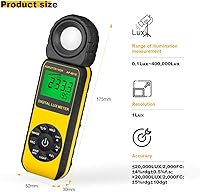
  • Measurement Range: Covers light levels from 0.01 to 300,000 Lux, spanning near-total darkness through direct midday sunlight intensity.
  • Foot-Candle Range: Reads from 1 to 30,000 FC, making it compatible with both photographic and horticultural measurement conventions.
  • Resolution: Displays readings at 0.1 Lux or 0.01 FC resolution for precise low-light differentiation.
  • Accuracy: Rated at ±4% rdg ±0.5% f.s below 10,000 Lux, and ±5% rdg ±10 digits above 10,000 Lux.
  • Sampling Speed: Takes two measurements per second, delivering near-real-time light level feedback as you reposition the sensor.
  • Sensor Rotation: The detachable sensor head rotates up to 270 degrees, allowing measurement of angled, overhead, or hard-to-reach light sources.
  • Calibration Standard: Factory-calibrated against a standard incandescent lamp at 2856K color temperature, which is the industry reference for general-purpose lux meters.
  • Display: Features an LCD screen with backlight for clear readability in low-light environments being actively measured.
  • Measurement Modes: Includes Data Hold, Peak-Data Hold, MAX/MIN tracking, Relative Value, and auto-zeroing for flexible measurement workflows.
  • Body Material: Constructed from ABS (Acrylonitrile Butadiene Styrene) plastic, balancing light weight with adequate everyday durability.
  • Dimensions: Measures 6.85 × 2.01 × 1.26 inches, compact enough to fit in a jacket pocket or field kit bag.
  • Weight: Weighs approximately 1 pound, light enough for extended handheld use without fatigue.
  • Units Supported: Switches between Lux (international standard) and Foot-Candles (common in North American photography and lighting design).
  • Power Consumption: Designed for low power consumption to extend battery life during prolonged field measurement sessions.
  • Brand: Manufactured by AOPUTTRIVER, a brand focused on consumer-grade electronic measurement instruments.
  • Model Number: Identified as model AP-881E, which distinguishes it within the AOPUTTRIVER lux meter product line.
  • Warranty Support: AOPUTTRIVER provides two years of technical support, covering product issues reported after purchase.
  • First Available: This model has been available on the market since March 2019, giving it an established track record among buyers.

Related Reviews
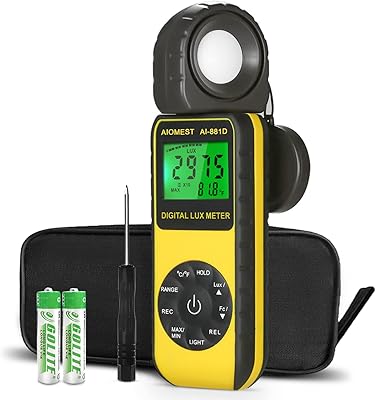
AIOMEST AI-881D Light Meter
81%
93%
Measurement Range
74%
Measurement Accuracy
91%
Rotatable Sensor Design
78%
Data Logging
88%
Display Readability
More
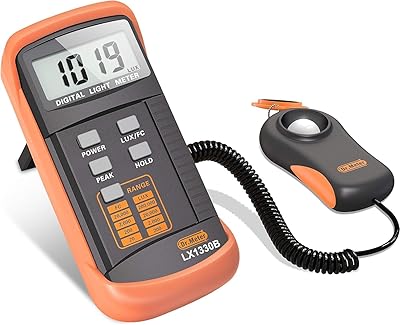
Dr.meter LX1330B Digital Lux Meter
82%
83%
Measurement Accuracy
91%
Ease of Use
67%
Build Quality
74%
Display Readability
92%
Measurement Range
More
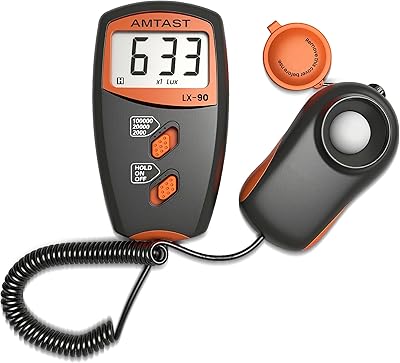
AMTAST LX-90 Digital Lux Meter
76%
88%
Sensor Design
74%
Measurement Accuracy
91%
Ease of Use
83%
Display & Readability
58%
Build Quality
More
BTMETER BT-881D Digital Lux Meter
82%
83%
Measurement Accuracy
91%
Measurement Range
88%
Sensor Design
89%
Ease of Use
74%
Build Quality
More
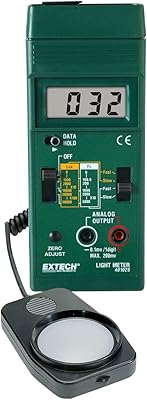
Extech 401025 Lux Light Meter
80%
93%
Display Readability
74%
Measurement Accuracy
91%
Ease of Use
78%
Build Quality
88%
Dual-Unit Display
More
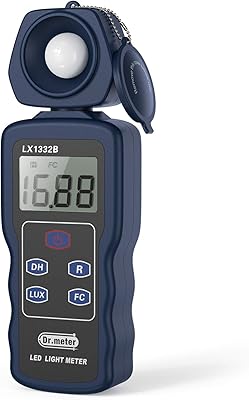
Dr.meter 1332B Digital Light Meter
81%
91%
Ease of Use
78%
Measurement Accuracy
93%
Rotating Sensor
89%
Measuring Range
67%
Build Quality
More
URCERI SMT912 Digital Lux Light Meter
77%
82%
Measurement Accuracy
91%
Value for Money
88%
Display & Readability
67%
Build Quality
93%
Ease of Use
More
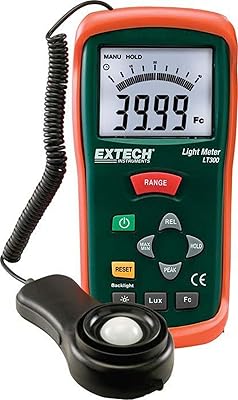
Extech LT300 Light Meter
75%
88%
Measurement Accuracy
91%
Sensor Design
86%
Display Readability
83%
Build Quality
74%
Ease of Use
More
LATNEX LM-50KL Digital Lux Light Meter
77%
78%
Measurement Accuracy
72%
Build Quality
88%
Sensor Cable Utility
69%
Display Readability
91%
Battery Life
More
TopTes TS-710 Lux Light Meter
78%
88%
Ease of Use
74%
Measurement Accuracy
91%
Rotating Sensor Design
86%
Display Readability
63%
Build Quality
More

FAQ

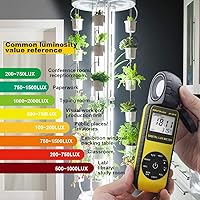
Yes, for plant care purposes it is more than adequate. Most growers are working with target ranges like 200–800 Lux for low-light tropicals or 2,000–5,000 Lux for succulents, and the AP-881E reads those ranges reliably. Just keep in mind it is calibrated to an incandescent standard, so readings under LED grow lights may have a small margin of error — but not enough to matter for practical plant placement decisions.

It rotates rather than fully detaches. The sensor head swings up to 270 degrees on its pivot, which is enough to point it at ceiling fixtures, angled windows, or overhead grow lights without moving the main body of the meter. It stays connected to the unit the whole time.

It runs on standard batteries, though a few buyers have noted the battery compartment cover feels a bit flimsy compared to the rest of the build. Replacements are easy to find, but handle the compartment with care to avoid cracking the tab over time.

Absolutely, and it is actually a popular use case for this light meter. Reef keepers often need to know the intensity at different depths in the tank to place corals correctly, and the wide measurement range handles both the bright surface zones and the dimmer lower regions without any issue.

There is a button on the unit to toggle between the two units, but a few users have found the instructions vague on exactly how to do it. If you are confused, a quick look at a YouTube walkthrough for the AP-881E clears it up in under a minute — it is straightforward once you know which button to press.

No, it is not rated for water resistance. It is fine to use outdoors in dry conditions, but you should keep it away from rain, irrigation spray, or high-humidity greenhouse environments where condensation could get into the electronics.

Very useful, especially when you are measuring a spot that is awkward to look at while also reading the screen — like checking light intensity inside a dense plant canopy or under a shelf. You point the sensor, press hold, then read the locked value at your convenience without rushing.

Yes, and the Foot-Candle display mode is particularly handy for photographers since many lighting guides and exposure calculators reference FC rather than Lux. It will not replace a dedicated incident light meter for precise exposure work, but for checking ambient levels and comparing light sources it does the job well.

Above 10,000 Lux the tolerance widens slightly to ±5% plus 10 digits, which is still perfectly acceptable for most consumer uses. If you are measuring direct sunlight on a clear day, you are in the six-figure Lux range and the reading will be a solid approximation rather than a precision figure — again, fine for practical purposes, but not for certified measurement work.

No carrying case is included, which is a genuine omission if you plan to toss it into a bag with other tools or carry it to outdoor sites regularly. A small padded pouch or even a sock over the sensor head is a worthwhile addition to protect the rotating sensor joint from knocks during transport.