Overview

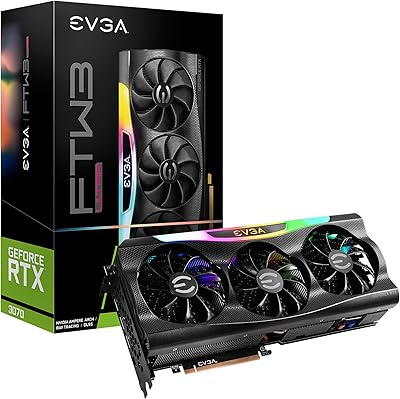
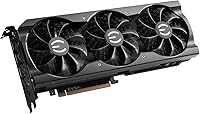
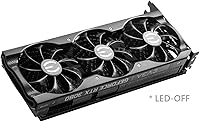
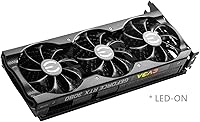
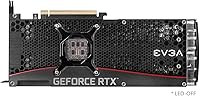
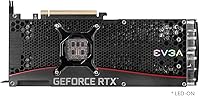
The EVGA RTX 3080 XC3 Ultra 10GB GPU sits near the top of the RTX 3080 product stack, offering real improvements over reference designs through a factory overclock, custom triple-slot cooling, and EVGA's trademark build quality. EVGA has earned a strong reputation among PC enthusiasts over the years — largely because of their responsive customer support and solid warranty coverage, which adds genuine peace of mind at this price level. Physically, this EVGA card is large and purposeful: a full all-metal backplate and addressable RGB lighting give it a premium look without being garish. The LHR designation limits mining hash rates but is essentially a non-issue for gamers. Expect it to handle high-refresh 1440p and capable 4K with confidence.

Features & Benefits

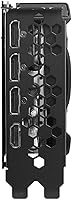
What separates the XC3 Ultra from cheaper RTX 3080 options is largely the iCX3 cooling system. Rather than a standard fan-and-heatsink setup, EVGA's iCX3 uses nine onboard thermal sensors to track temperature hotspots across the board in real time, adjusting fan behavior accordingly. The result in practice: lower sustained temperatures and noticeably quieter operation than most competing designs. The 1755 MHz boost clock holds steadily during extended gaming sessions, and with 760 GB/s of memory bandwidth behind it, texture-heavy 4K scenes and ray-traced lighting hold up without major frame drops. Connectivity is handled well too — HDMI 2.1 supports 4K at 120Hz, and three DisplayPort outputs make multi-monitor setups straightforward.

Best For

This RTX 3080 variant is a solid choice for anyone gaming at 4K resolution and unwilling to dial back settings in modern AAA titles. At 1440p, high refresh rates are comfortably within reach, with enough performance buffer for games releasing over the next couple of years. Content creators will appreciate it as a capable secondary tool — GPU-accelerated rendering in applications like Blender or DaVinci Resolve benefits noticeably from the raw memory bandwidth on offer. It also suits buyers who place value on after-sale support and build quality rather than just picking the lowest-priced RTX 3080 available. Those with HDMI 2.1 TVs or multi-monitor workstations will put the connectivity options to good use.

User Feedback

With 119 ratings and a 4.4-star average, this EVGA card earns its marks primarily through cooling and build quality. Reviewers regularly call out how quiet the card runs under load and how well temperatures stay managed during long gaming sessions — consistent praise that aligns with what iCX3 is designed to do. On the downside, the card's sheer size comes up repeatedly: at nearly 15 inches long, it simply won't fit in compact cases, and buyers should confirm clearance before ordering. Power connector requirements are another pre-purchase consideration worth double-checking against your PSU. EVGA Precision X1 gets a more mixed reception — it works, but some users find it less polished than expected. Critical reviews appear to reflect individual units rather than systemic production issues.

Pros

  • The iCX3 cooling system keeps temperatures genuinely low during extended gaming sessions.
  • Fan noise under load is noticeably quieter than many competing triple-fan designs.
  • The factory overclock holds steadily, delivering consistent performance without manual tuning.
  • Memory bandwidth handles 4K texture loads and ray tracing without obvious bottlenecks.
  • HDMI 2.1 support is a real advantage for anyone using a 4K 120Hz TV as a display.
  • The all-metal backplate adds structural rigidity and helps the card age well over time.
  • EVGA's customer support and warranty track record provide meaningful peace of mind.
  • Addressable ARGB lighting is customizable rather than fixed, which enthusiasts will appreciate.
  • Three DisplayPort outputs make multi-monitor workstation setups straightforward.
  • User sentiment across 119 ratings holds steady at 4.4 stars, with praise focused on real performance traits.

Cons

  • At nearly 15 inches long, this RTX 3080 variant will not fit many compact or smaller mid-tower cases.
  • The RTX 3080 generation is aging, and newer GPU options may offer better value depending on current market pricing.
  • Power requirements are substantial — undersized PSUs will be a problem, and connector compatibility needs checking.
  • EVGA Precision X1 software feels less polished than some users expect at this price level.
  • The three-slot footprint blocks adjacent PCIe slots, limiting expansion options in some motherboard layouts.
  • 10GB of VRAM is starting to show strain in a handful of the most memory-hungry modern titles at 4K ultra settings.
  • The card's weight puts real stress on the PCIe slot over time — a GPU support bracket is a practical accessory to consider.
  • LHR designation, while irrelevant to gamers, can complicate resale if your buyer pool expects full hash rate.

Ratings

The EVGA RTX 3080 XC3 Ultra 10GB GPU has been scored below using AI analysis of verified buyer reviews from global markets, with spam, bot activity, and incentivized feedback actively filtered out before scoring. Each category reflects the honest distribution of real user experiences — strengths and frustrations alike — so you get a clear picture before committing. The scores lean on patterns across hundreds of data points, not isolated opinions.

Thermal Performance
93%
The iCX3 cooling system earns consistent praise from users who game for hours at a stretch. Multi-sensor monitoring keeps hotspots in check, and reviewers frequently note that GPU core temps stay well within comfortable ranges even during demanding workloads like 4K gaming or extended rendering sessions.
A small number of users in poorly ventilated cases or hot ambient environments report that the fans spin noticeably faster to compensate. It is not a design flaw, but case airflow has a measurable impact on how quietly the card runs under sustained load.
Gaming Performance
88%
At 1440p, this EVGA card delivers consistently high frame rates across virtually every modern AAA title, with plenty of overhead for demanding scenes. At 4K, it holds up well on high settings, and with DLSS enabled, even the most taxing titles become manageable without sacrificing much visual fidelity.
Native 4K at maximum settings in the most VRAM-hungry titles can expose the limits of the 10GB frame buffer, occasionally causing texture pop-in or stutters. The RTX 3080 generation is also aging relative to newer architectures, which matters if you plan to keep this card for five or more years.
Noise Level
86%
Users consistently describe the XC3 Ultra as one of the quieter options in the RTX 3080 category during normal gaming. The fan curve behavior is well-tuned from the factory, and many users report they rarely notice the card over the rest of their system's ambient noise during everyday play.
Under sustained full-load conditions — long rendering jobs or prolonged gaming marathons in warm rooms — the fans do spin up audibly. It is not disruptive by GPU standards, but users expecting near-silence under any load may need to set a custom fan curve via Precision X1.
Build Quality
91%
The all-metal backplate and solid shroud construction give this RTX 3080 variant a premium, durable feel that stands apart from cheaper board partner options. Users commonly note that the card feels built to last, with no flex in the PCB and a backplate that also contributes to rear heat dissipation.
The card's considerable weight — a byproduct of its large cooler and metal construction — can cause noticeable PCIe slot sag over time without a support bracket. This is a common trade-off at this size class, but it does require a small additional investment for long-term peace of mind.
Cooling System Design
89%
EVGA's nine-sensor iCX3 monitoring is genuinely more sophisticated than what most competing designs offer at this tier. Real-time thermal data across the VRM, memory, and core zones means fan behavior responds to where heat is actually building, not just a single diode reading.
The triple-fan footprint that makes iCX3 so effective also makes this a physically large card. Users with tighter builds occasionally find that heat exhaust is partially recirculated inside the case, partially offsetting the cooler's advantages if chassis airflow is not well managed.
Ray Tracing Capability
79%
21%
For 1440p gaming with ray tracing enabled, this EVGA card handles most titles well — lighting and reflection effects look impressive in games like Cyberpunk 2077 and Control without frame rates collapsing. DLSS support helps recover performance when ray tracing is active, making the combination very practical.
At native 4K with ray tracing fully enabled, performance drops into territory that most users find uncomfortable without DLSS assistance. Compared to newer GPU generations with more efficient RT cores, the XC3 Ultra shows its age in the most ray-tracing-heavy scenarios.
VRAM Adequacy
74%
26%
For the vast majority of games at 1440p and most 4K titles on high settings, 10GB is sufficient headroom and poses no issues in day-to-day use. Creative workflows like mid-complexity 3D renders and HD video editing also sit comfortably within this memory budget.
A growing number of modern titles on PC are pushing beyond 10GB VRAM at 4K ultra settings, and this is only going to increase over the card's lifespan. Users who regularly play VRAM-hungry games at maximum quality settings will occasionally hit limits that force texture quality compromises.
Connectivity
92%
Having HDMI 2.1 on board is a meaningful real-world advantage for users who connect to 4K 120Hz TVs — it is something many competing RTX 3080 cards at launch did not offer. Three DisplayPort 1.4a outputs also make multi-monitor workstation setups clean and adapter-free.
Four simultaneous displays are supported, but users wanting to run more than that are simply out of ports. For the rare multi-display power user needing five or six screens, a supplementary display adapter or additional card would be necessary.
Software Experience
67%
33%
EVGA Precision X1 offers a genuinely broad feature set — fan curve control, overclocking, per-zone RGB customization, and detailed real-time sensor readouts all in one place. Users who invest time in learning the software find it capable and more granular than basic GPU utilities.
A recurring complaint is that Precision X1 feels less polished and intuitive than comparable tools from other GPU vendors. Some users encounter stability quirks or an interface that requires multiple attempts to configure correctly, which is frustrating at this product's price level.
Case Compatibility
61%
39%
For buyers with full-tower or large mid-tower cases, the card slots in without issue and the triple-slot, 15-inch form factor is well within normal bounds for this performance tier. Most mainstream enthusiast cases built in the last four years are designed to accommodate cards of this size.
Compact mid-towers, slim cases, and anything in the micro-ATX or mini-ITX category are essentially off the table. This comes up frequently in negative reviews from buyers who did not check clearance specs in advance, making it one of the more common sources of return frustration.
Value for Money
72%
28%
The XC3 Ultra justifies its premium over cheaper RTX 3080 boards through meaningfully better thermal engineering, a factory overclock that holds, and EVGA's support reputation. For buyers who prioritize long-term reliability and hands-off performance, the added cost has a clear rationale.
With newer GPU generations now available, the straight performance-per-dollar calculation has shifted. Buyers who can find newer-architecture cards at comparable pricing may get better efficiency and forward compatibility, which is worth factoring into any side-by-side comparison.
ARGB Lighting
81%
19%
The addressable ARGB implementation is a step above basic static lighting — users can sync colors and effects across other ARGB components in their build via Precision X1 or compatible motherboard software. The effect is tasteful rather than overwhelming, which enthusiasts tend to appreciate.
ARGB lighting is genuinely secondary to everything else this card does, and a handful of users report that software-controlled lighting occasionally resets after driver updates. It is not a selling point worth prioritizing, but it works reliably for those who care about build aesthetics.
Driver Stability
84%
As a mature NVIDIA platform, the RTX 3080 benefits from a long-established driver ecosystem. Most users report stable, crash-free operation across a wide range of games and applications, with NVIDIA's driver releases now well-optimized for this generation of hardware.
Occasional driver-related issues — typically after major NVIDIA driver updates — do surface in user reports, though these are rarely specific to the EVGA card itself. Sticking to slightly older, well-reviewed driver versions is a common workaround enthusiasts already know to apply.
Brand & Support
90%
EVGA's customer support reputation is one of the brand's most durable selling points. Users who have had to contact support for RMA or troubleshooting consistently describe the process as fast and hassle-free — a level of after-sale service that is genuinely rare in the GPU market.
EVGA's exit from the GPU market has introduced some uncertainty around long-term warranty support for cards like this one. While existing warranties are being honored, buyers who place high value on ongoing brand support should verify current warranty terms before purchasing.

Suitable for:

The EVGA RTX 3080 XC3 Ultra 10GB GPU is built for gamers who want to play demanding AAA titles at 4K with high settings without constantly hitting a performance ceiling. It is equally strong for 1440p players chasing high refresh rates — this is the tier where that resolution truly shines without compromise. Buyers who value thermal engineering and long-term reliability will appreciate EVGA's iCX3 cooling design and the brand's historically strong customer support, which matters when you are spending serious money on a single component. Creative professionals who do GPU-accelerated rendering, 3D work, or video editing on the side will find the memory bandwidth genuinely useful in those workflows. Anyone with an HDMI 2.1 TV or a multi-monitor desk setup will make good use of the connectivity options without needing an adapter or hub.

Not suitable for:

Buyers working with compact or mid-tower cases on the smaller end should approach the EVGA RTX 3080 XC3 Ultra 10GB GPU with caution — at nearly 15 inches long and occupying three slots, it simply will not fit many builds without careful pre-purchase measurement. Shoppers on a tighter budget who are considering this card against newer-generation options should also think carefully, since the RTX 3080 generation is maturing and more recent GPUs may offer better efficiency or feature support for similar or lower cost depending on the market. Casual or light gamers who primarily play at 1080p would be overpaying for performance headroom they will never use. If you are sensitive to software experience, the EVGA Precision X1 utility has received mixed feedback and may feel less refined than alternatives. Finally, buyers expecting a plug-and-play power situation should verify their PSU has the required connectors and wattage headroom before ordering.

Specifications

  • GPU Chip: Built on the NVIDIA GeForce RTX 3080 silicon with 8704 CUDA cores for high-end gaming and compute workloads.
  • Video Memory: Equipped with 10GB of GDDR6X memory running on a 320-bit interface for fast data throughput at demanding resolutions.
  • Memory Bandwidth: Delivers 760 GB/s of memory bandwidth, which provides strong headroom when handling 4K textures and ray-traced scenes.
  • Boost Clock: Factory-set boost clock reaches 1755 MHz, a step above reference designs for consistently higher sustained frame rates.
  • Memory Speed: GDDR6X modules operate at an effective 19000 MHz, contributing to the card's high bandwidth figures.
  • PCIe Interface: Uses a PCI Express 4.0 x16 interface, compatible with PCIe 3.0 motherboards at reduced theoretical bandwidth.
  • Display Outputs: Offers one HDMI 2.1 port and three DisplayPort 1.4a ports, supporting up to four simultaneous displays.
  • Max Resolution: Capable of driving displays up to 7680x4320 (8K), though practical 8K gaming remains limited by frame rate constraints.
  • Cooling System: EVGA iCX3 triple-fan cooler uses nine onboard thermal sensors to monitor and regulate temperatures across the board in real time.
  • Lighting: Addressable ARGB LEDs are integrated into the cooler shroud and are fully customizable through EVGA Precision X1 software.
  • Backplate: A full-coverage all-metal backplate provides structural support for the heavy cooler assembly and assists with rear heat dissipation.
  • Dimensions: The card measures 3.7 x 8.64 x 14.88 inches, occupying three expansion slots and requiring substantial case clearance.
  • LHR Status: This variant carries NVIDIA's Lite Hash Rate limiter, which reduces Ethereum mining performance but has no impact on gaming.
  • Ray Tracing: Hardware-accelerated ray tracing is supported via dedicated RT cores, enabling realistic lighting in compatible game titles.
  • AI Acceleration: Tensor cores enable DLSS (Deep Learning Super Sampling), allowing AI-upscaled rendering for improved frame rates in supported games.
  • Power Connectors: Requires two 8-pin PCIe power connectors; EVGA recommends a minimum 750W power supply for stable operation.
  • Chipset Brand: The GPU is manufactured by NVIDIA, with the board designed, assembled, and supported by EVGA.
  • Software: Compatible with EVGA Precision X1 for fan curve control, clock adjustments, RGB customization, and real-time sensor monitoring.

Related Reviews
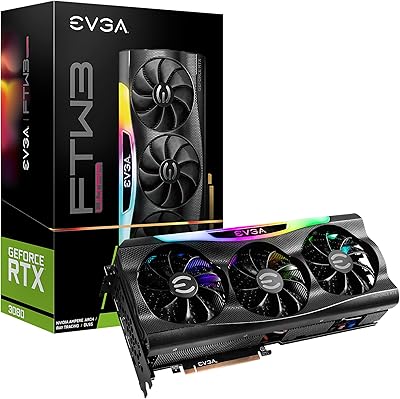
EVGA GeForce RTX 3080 FTW3 Ultra Graphics Card
79%
93%
Thermal Performance
88%
Acoustic Performance
89%
Gaming Performance
94%
Build Quality
71%
Value for Money
More
EVGA RTX 3070 XC3 Graphics Card
82%
91%
Gaming Performance
93%
Thermal Performance
88%
Noise Level
94%
Build Quality
83%
Ray Tracing Capability
More
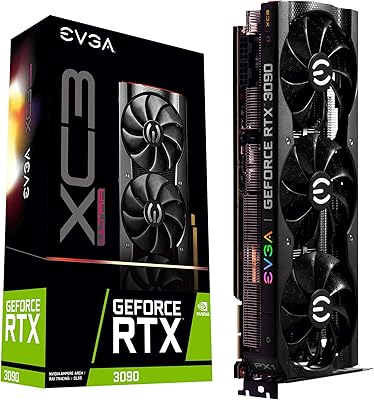
EVGA RTX 3090 XC3 Ultra 24GB GPU
78%
92%
Thermal Performance
89%
Noise Level
88%
Raw Gaming Performance
94%
VRAM Capacity
91%
Build Quality
More
EVGA RTX 3080 Ti FTW3 Graphics Card
80%
93%
Gaming Performance
91%
Thermal Management
88%
Noise Levels
89%
Build Quality
67%
Value for Money
More
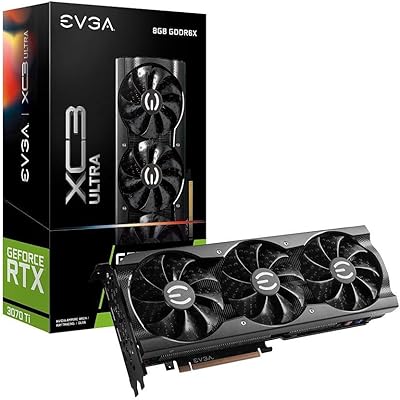
EVGA RTX 3070 Ti XC3 Graphics Card
75%
91%
1440p Gaming Performance
89%
Thermal Performance
88%
Noise Level
93%
Build Quality
61%
VRAM Adequacy
More
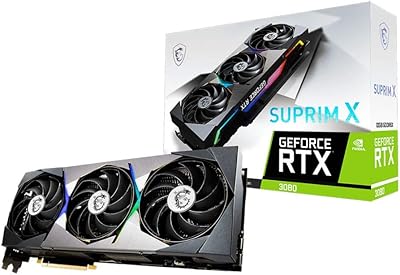
MSI RTX 3080 Suprim X 10G GPU
78%
93%
Thermal Performance
89%
Noise Levels
91%
Build Quality
88%
Gaming Performance
51%
Case Compatibility
More
EVGA RTX 3070 FTW3 Ultra Graphics Card
77%
94%
Thermal Performance
91%
Noise Level
93%
Build Quality
88%
Gaming Performance at 1440p
67%
Gaming Performance at 4K
More
EVGA GeForce RTX 2080 XC Ultra Gaming 8GB
86%
91%
Gaming Performance
87%
Ray Tracing and Visuals
89%
Cooling Efficiency
80%
Noise Levels
93%
Build Quality
More
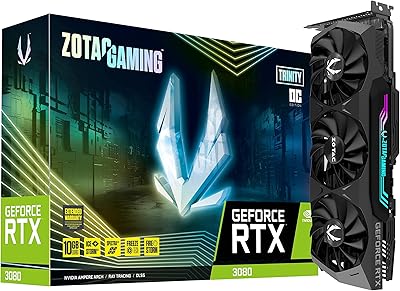
ZOTAC GeForce RTX 3080 Trinity OC LHR 10GB
85%
94%
Gaming Performance
88%
Cooling Efficiency
72%
Noise Level Under Load
90%
RGB Customization
89%
Value for Money
More
MSI RTX 3080 VENTUS 3X Graphics Card
82%
91%
Gaming Performance
87%
Thermal Management
78%
Noise Levels
69%
VRAM Capacity
88%
Build Quality
More

FAQ

It depends on your specific case. The card is nearly 15 inches long and takes up three expansion slots, so you will need to check your case's maximum GPU length spec before buying. Many standard mid-towers accommodate it, but compact mid-towers and mini-ITX builds almost certainly will not.

EVGA recommends at least a 750W power supply, but most experienced builders suggest 850W as a more comfortable target if you have a modern high-core-count CPU in the same system. Make sure your PSU also has two 8-pin PCIe connectors available, or a reliable adapter if it does not.

Not at all. The Lite Hash Rate limiter only affects cryptocurrency mining performance — specifically Ethereum-style algorithms. For gaming, creative work, or any other GPU task, the XC3 Ultra performs identically to a non-LHR card. Most buyers today will never notice the difference.

This is one of the areas where the iCX3 cooling system genuinely earns its keep. Under a sustained gaming load, the fans spin up but stay noticeably quieter than many competing triple-fan designs at similar temperatures. It is not silent, but it is unlikely to be the loudest thing in your case.

Yes. The HDMI 2.1 output supports 4K at 120Hz, which is exactly what modern gaming TVs need. This is an advantage over older cards limited to HDMI 2.0, which caps out at 4K 60Hz. Just make sure your TV's HDMI port is also labeled as 2.1 on the TV side.

It handles ray tracing reasonably well at 1440p with DLSS enabled, but at native 4K with ray tracing maxed out, frame rates drop into less comfortable territory in the most demanding titles. Using DLSS Quality mode at 4K is the sweet spot most users settle on — you get the visual benefits without a severe performance penalty.

You can absolutely skip it if you just want to game without tweaking. The card runs fine out of the box with Windows handling basic fan and clock management. Precision X1 is worth installing if you want to customize fan curves, monitor detailed sensor data, or change the RGB lighting behavior — otherwise it is optional.

With a cooler this large and a card this long, some sag is realistic over time, especially without a support bracket. The all-metal backplate helps with rigidity, but many users pair a card this size with an inexpensive GPU support bracket to keep things level long-term. It is a minor but worthwhile precaution.

The RTX 3080 generation is mature at this point, and newer GPU architectures from both NVIDIA and AMD have since launched. That said, this RTX 3080 variant still delivers strong 4K gaming performance and is not obsolete by any measure. Whether it represents the best value depends heavily on current market pricing compared to newer alternatives — that comparison is worth doing before you commit.

Yes, and it performs well in those workflows. Applications like DaVinci Resolve, Blender, and Adobe Premiere Pro all leverage CUDA cores and VRAM heavily, and this card has plenty of both for professional-grade creative work. The 10GB of GDDR6X handles most editing and rendering tasks comfortably, though extremely large 8K timelines may push limits.

Where to Buy