Overview

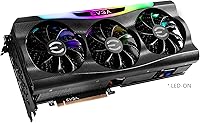
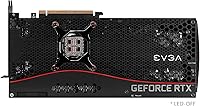
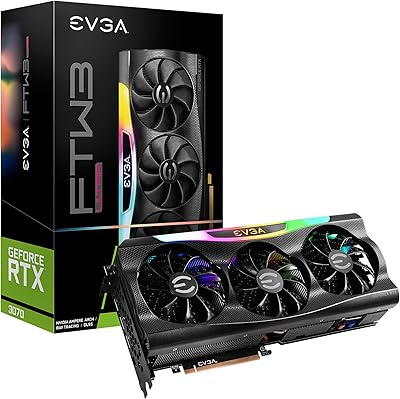
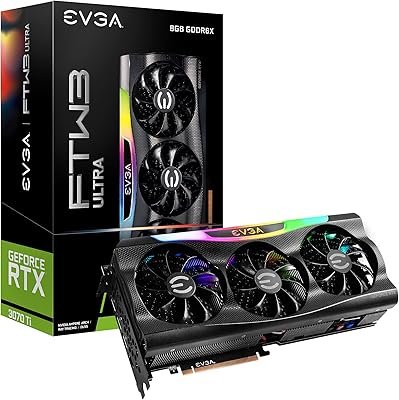
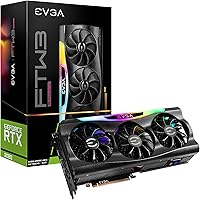
The EVGA GeForce RTX 3080 FTW3 Ultra Graphics Card is EVGA's top-tier take on NVIDIA's RTX 3080, arriving with a factory overclock that pushes the boost clock to 1800 MHz — a meaningful step above reference designs. It carries the LHR designation, meaning its mining performance is intentionally limited; for pure gamers, this is essentially irrelevant. Physically, it's a substantial card: triple-slot, nearly 15 inches long, and heavy enough that case compatibility deserves a second look before buying. EVGA's reputation for responsive warranty support and its step-up program add genuine peace of mind that goes well beyond what raw specs alone can offer.
Features & Benefits

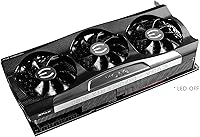
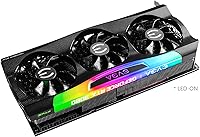
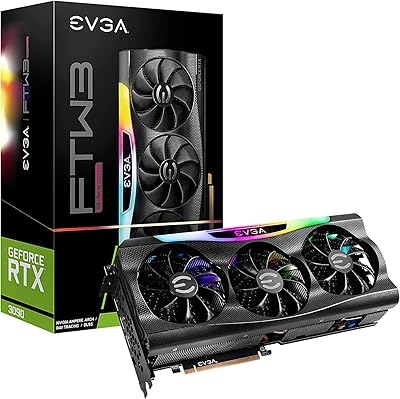
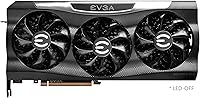
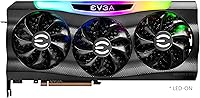
EVGA's iCX3 cooling system is one of the stronger arguments for choosing this card over a reference model. Rather than relying on a single thermal sensor, iCX3 monitors temperatures across multiple points on the PCB and VRAM, allowing the three fans to respond intelligently — the result is surprisingly quiet operation under sustained load. The 10GB GDDR6X memory runs at an effective 19000 MHz, providing the bandwidth needed for 4K textures and high-refresh 1440p without obvious bottlenecks in most titles. A solid metal backplate prevents sag on this nearly 15-inch card, and the ARGB lighting, controllable via Precision X1, is tasteful rather than garish.

Best For

The EVGA FTW3 Ultra makes the most sense for enthusiast 1440p gamers who want high frame rates in demanding titles without stressing over thermals. At 4K it performs well across a wide range of games, though VRAM-heavy titles at maximum settings can expose the limits of 10GB — worth keeping in mind. Builders who care about long-term reliability and quiet acoustics will appreciate the iCX3 setup more than someone chasing pure benchmark numbers. It also works capably as a secondary workstation card for light video encoding or 3D rendering tasks. If EVGA's step-up program is available to you, that alone shifts the value equation considerably.

User Feedback

Across more than 600 ratings, this factory-overclocked 3080 holds a 4.7-star average, and the patterns in buyer feedback are telling. Cooling and noise levels come up repeatedly as highlights — owners report the card staying composed even during extended gaming sessions, with build quality earning consistent praise. On the other side, a few buyers flagged case clearance issues given the card's length, and the power draw means a weak PSU is a real liability. The LHR variant draws occasional commentary, though most gaming-focused buyers treat it as a non-issue. Where EVGA genuinely stands out in long-term reviews is customer support — owners describe getting real, timely help when it matters.

Pros

  • The iCX3 multi-sensor cooling keeps temperatures genuinely low during long gaming sessions, not just on paper.
  • Fan noise under sustained load is notably quiet compared to many competing triple-fan designs.
  • Factory overclock delivers a real-world performance edge over reference RTX 3080 cards in demanding titles.
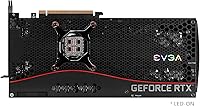
  • The metal backplate prevents GPU sag on a card this size, a practical detail that pays off over years of use.
  • ARGB lighting is tasteful and fully customizable via Precision X1 without dominating a clean build aesthetic.
  • EVGA's customer support is consistently praised by long-term owners as responsive and genuinely helpful.
  • The EVGA step-up program gives buyers a legitimate upgrade path, adding long-term value beyond the hardware itself.
  • A 4.7-star average across more than 600 real buyer reviews reflects broad, sustained satisfaction — not a launch-day spike.
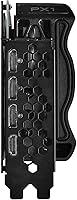
  • DisplayPort and HDMI outputs cover multi-monitor and high-refresh-rate display setups without needing adapters.

Cons

  • At nearly 15 inches long, this factory-overclocked 3080 requires careful case compatibility checks before purchasing.
  • The LHR variant may frustrate buyers who discover after purchase they wanted full compute performance.
  • Power draw is substantial — a marginal or aging PSU is a genuine liability, not just a theoretical one.
  • 10GB of VRAM can feel limiting in a handful of modern titles pushed to maximum texture settings at 4K.
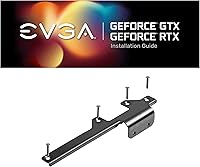
  • The card weighs 4.6 pounds, which puts real stress on the PCIe slot over time without a GPU support bracket.
  • Precision X1 software, while functional, has a learning curve and occasional stability quirks reported by some users.
  • The premium over a reference 3080 is only justifiable if cooling performance and support matter to you specifically.
  • Large physical dimensions make installation noticeably harder in cases with dense cable routing or tight GPU clearance.

Ratings

The EVGA GeForce RTX 3080 FTW3 Ultra Graphics Card earns an overall strong rating after our AI system processed and cross-referenced hundreds of verified global buyer reviews, actively filtering out incentivized, bot-generated, and outlier feedback to surface what real long-term owners actually experience. Scores reflect both the genuine strengths that make this factory-overclocked 3080 a compelling choice for serious gamers and the recurring pain points that prospective buyers deserve to know before committing. Nothing has been smoothed over — where the card divides opinion or shows real-world limitations, the scores reflect that honestly.
Thermal Performance
93%
Owners consistently describe the iCX3 cooling system as one of the best real-world thermal solutions in the RTX 3080 tier. During extended gaming sessions that would push many AIB cards into thermal throttling territory, the EVGA FTW3 Ultra holds steady temperatures that translate to consistent frame pacing and no unexpected clock drops.
A small number of users in poorly ventilated cases or warmer climates report higher idle temperatures than expected, suggesting the cooling system benefits from decent ambient airflow to reach its full potential. It is outstanding in a well-ventilated build but not entirely immune to environmental conditions.
Acoustic Performance
88%
Fan noise under load is one of the most frequently praised aspects of this card across long-term ownership reviews. Gamers who run open-bench setups or sit close to their rigs note that the iCX3 fans ramp gradually and stay subdued even when the GPU is working hard through dense open-world titles.
At very high sustained loads — extended stress tests or prolonged rendering sessions — the fans do become audible, which some users found surprising given the card's premium positioning. It is quiet for a gaming GPU but not silent, and buyers expecting near-inaudible operation in all scenarios may occasionally notice the card at work.
Gaming Performance
89%
At 1440p, this factory-overclocked 3080 delivers buttery frame rates in the most demanding AAA titles, and the factory overclock gives it a consistent edge over reference designs in side-by-side comparisons. For high-refresh-rate 1440p gaming in particular, it handles competitive and cinematic titles with equal confidence.
At native 4K with all settings maxed in a handful of newer, VRAM-hungry titles, 10GB of memory can become a bottleneck, leading to occasional stutters or forced texture quality reductions. It excels at 4K for most games but is not a completely unconstrained 4K card for every current and future title.
Build Quality
94%
The physical construction of the EVGA FTW3 Ultra draws consistent admiration from builders who handle a lot of hardware. The metal backplate feels substantial rather than decorative, the shroud has no flex or rattle, and the overall assembly gives the impression of a card that will hold up physically over years of use.
At 4.6 pounds, the card's weight is genuinely impressive to hold but creates real mechanical stress on the PCIe slot without a support bracket, which is not included in the box. A few long-term owners have noted minor bracket sag after extended periods, which is a predictable consequence of the card's mass rather than a manufacturing defect.
Value for Money
71%
29%
Buyers who prioritize thermal headroom, build quality, and EVGA's support ecosystem tend to feel the premium over a reference 3080 is justified — particularly those who have had to use the warranty or step-up program and found the process genuinely painless. The factory overclock also means you get above-reference performance without any tinkering.
For buyers who care primarily about raw frames-per-dollar, the price premium over competing AIB options is harder to justify on benchmarks alone. If EVGA's support reputation and the step-up program do not factor into your decision, there are cooler-running competitors at lower price points that close the performance gap considerably.
Ease of Installation
76%
24%
The installation process itself is straightforward for anyone with basic PC building experience, and the card's connectors and slot alignment are clean and well-positioned. Most builders familiar with high-end GPUs report no surprises during the physical installation process.
The sheer size of the card creates real challenges in some builds — routing power cables around it in tighter cases requires patience, and fitting it into cases without first checking clearance dimensions is a mistake multiple buyers have publicly admitted to. At 14.9 inches, it simply does not fit in a wide range of popular mid-tower cases.
Software & RGB Control
74%
26%
EVGA Precision X1 gives owners genuine control over fan curves, clock offsets, power limits, and the ARGB lighting, which is more than most competing AIB software suites offer in a single package. The lighting itself is tasteful and sits well in both windowed showcases and more understated builds.
Precision X1 has a learning curve that casual users find steeper than expected, and a subset of owners have reported occasional software crashes or lighting reset issues after Windows updates. For a card at this price point, the software experience feels like it lags slightly behind the quality of the hardware it controls.
Compatibility
67%
33%
PCIe compatibility is broad — the card works on both PCIe 3.0 and 4.0 motherboards without meaningful performance differences in gaming, and the output selection covers most modern display setups including high-refresh-rate and multi-monitor configurations without adapters.
Physical compatibility is a genuine problem for a meaningful segment of buyers. The card's triple-slot footprint combined with its near-15-inch length disqualifies it from a surprising number of cases that technically list GPU support but not at this scale. Case research before buying is not optional — it is essential.
Power Efficiency
62%
38%
The performance delivered per watt is competitive for the RTX 3080 generation, and the factory overclock does not dramatically worsen efficiency compared to reference clocks. Owners running the card within its default power limits generally report power draw in line with expectations for this class of GPU.
Total system power draw under full gaming load is substantial, and the card's demands make a quality, high-wattage PSU non-negotiable rather than just recommended. Several buyers discovered this the hard way when an aging or budget power supply caused instability, which initially looked like a GPU defect before the real cause was identified.
LHR Variant Reception
69%
31%
For gaming-focused buyers — which is the clear majority of the audience for this card — the LHR designation has zero practical impact on the experience they care about. Frame rates, ray tracing performance, and DLSS behavior are entirely unaffected, and most buyers report forgetting the LHR distinction exists within days of setup.
A subset of buyers, particularly those who wanted the flexibility to mine or run GPU compute tasks alongside gaming, feel the LHR variant was not clearly communicated at point of purchase and reduces the card's utility. Those buyers tend to rate the card lower not because of gaming performance but because of the constraint they did not expect.
Cooling Headroom for OC
81%
19%
Enthusiasts who push the card beyond factory settings find that the iCX3 platform has genuine thermal headroom left to exploit, with the cooling system maintaining stable temperatures even when the power limit is raised and clocks are pushed further. It behaves like a card designed with overclocking in mind rather than tuned exactly to its limits.
Manual overclocking does push fan speeds higher and audibly changes the acoustic profile, which somewhat undermines the quiet operation that makes the card appealing at stock settings. The headroom is real, but accessing it comes with an acoustic trade-off that not every buyer is willing to accept.
Long-term Reliability
87%
Long-term owners — those reviewing after a year or more of daily use — report very low rates of hardware failure, and the card's thermal management appears to contribute to sustained stability over time rather than degrading. EVGA's warranty backing adds a meaningful safety net if something does go wrong.
The card's weight remains a passive long-term concern, as the PCIe slot and connector can experience cumulative stress without a support bracket. A small number of owners also report that the thermal paste performance can degrade slightly after extended heavy use, though this is a maintenance consideration rather than a defect.
Display Output Flexibility
79%
21%
The combination of DisplayPort and HDMI outputs handles the most common multi-monitor and single high-refresh-rate display setups without any additional hardware. Owners running ultrawide displays or 4K monitors alongside a secondary productivity screen report clean, stable signal output across both connections simultaneously.
The output selection, while practical, is not exceptionally generous compared to some competing AIB cards that offer more ports or include USB-C display output for newer monitors. Buyers with more than two displays or those using USB-C monitors will need adapters or a hub, which adds minor friction to an otherwise clean setup.

Suitable for:

The EVGA GeForce RTX 3080 FTW3 Ultra Graphics Card is a strong match for enthusiast PC gamers who play at 1440p and want consistently high frame rates in demanding AAA titles without babysitting their thermals. The iCX3 cooling system makes it particularly well-suited to builders in smaller or less-ventilated full-tower cases, where a card that runs cool and quiet under sustained load genuinely matters. If you game for long sessions and noise levels bother you, this factory-overclocked 3080 is noticeably more composed than blower-style or budget AIB options. It also works well as a secondary workstation card for creators who do light GPU-accelerated tasks like video encoding or 3D rendering alongside gaming. Buyers who value EVGA's hands-on customer support and step-up program will find the overall ownership experience considerably more reassuring than going with a lesser-known brand at a similar price point.
Not suitable for:

The EVGA GeForce RTX 3080 FTW3 Ultra Graphics Card is a harder sell for buyers whose primary target is maximum 4K fidelity in the most VRAM-intensive titles, where 10GB can feel restrictive at ultra settings in certain modern games. It is not a practical fit for compact or mid-tower builds without careful case research — at nearly 15 inches long and occupying three slots, it physically will not fit many popular smaller enclosures. Buyers on a tight power supply budget should also think carefully, as the card's power draw demands a quality unit with adequate headroom, and cutting corners there creates real reliability risks. Anyone who specifically wanted the non-LHR version for compute or mining purposes will find this variant a poor match by design. Finally, if your gaming is primarily at 1080p, the price-to-performance ratio tilts unfavorably — this RTX 3080 FTW3 Ultra is built for higher-resolution workloads, and spending this much to play at 1080p is difficult to justify.
Specifications

  • GPU: Built on the NVIDIA GeForce RTX 3080 chip, delivering hardware-accelerated ray tracing and DLSS support for modern titles.
  • Boost Clock: Factory-overclocked to 1800 MHz boost, running above the reference RTX 3080 specification out of the box.
  • Memory: Equipped with 10GB of GDDR6X video memory for handling high-resolution textures at 1440p and 4K.
  • Memory Speed: VRAM operates at an effective 19000 MHz, providing substantial memory bandwidth for demanding rendering workloads.
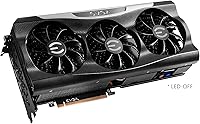
  • Cooling System: EVGA iCX3 triple-fan cooling uses multiple onboard thermal sensors to actively manage temperatures across the GPU, VRAM, and power delivery zones.
  • Form Factor: Triple-slot design requiring at least three expansion bays of clearance inside the chassis.
  • Dimensions: Measures 14.9 x 9.3 x 4.3 inches, making case length clearance a critical compatibility check before installation.
  • Weight: Weighs 4.6 pounds, which places meaningful mechanical stress on the PCIe slot without a dedicated GPU support bracket.
  • Outputs: Provides DisplayPort and HDMI outputs to support multi-monitor configurations and high-refresh-rate displays.
  • Max Resolution: Supports output up to 3840x2160 (4K UHD) for gaming and productivity display setups.
  • Backplate: Full-coverage metal backplate adds structural support and helps prevent flex or sag on this large, heavy card.
  • Lighting: ARGB LED illumination is built in and fully controllable through EVGA Precision X1 software.
  • Software: Compatible with EVGA Precision X1 for fan curve adjustment, overclocking, RGB control, and real-time telemetry monitoring.
  • LHR Variant: This model carries the Lite Hash Rate designation, which limits Ethereum mining throughput while leaving gaming performance fully intact.
  • Model Number: Official model identifier is 10G-P5-3897-KL, useful for verifying warranty registration and sourcing replacement parts.
  • Power Connector: Requires high-wattage PCIe power connectors; NVIDIA recommends a minimum 750W power supply for the RTX 3080 platform.
  • API Support: Supports DirectX 12 Ultimate, OpenGL 4.6, and Vulkan, covering the full range of modern game engine requirements.
  • Manufacturer: Designed and sold by EVGA, a company known for its responsive warranty process and step-up upgrade program for registered owners.

Related Reviews
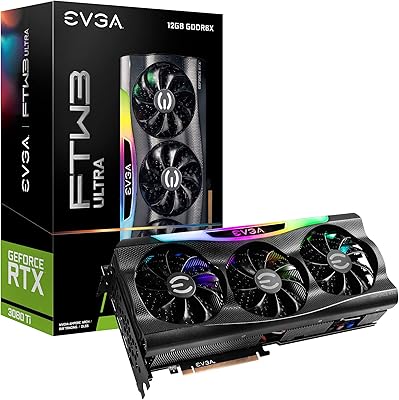
EVGA GeForce RTX 3080 Ti FTW3 ULTRA GAMING 12GB GDDR6X
87%
96%
Gaming Performance
92%
Ray Tracing Performance
94%
Cooling Efficiency
89%
Build Quality
85%
Value for Money
More
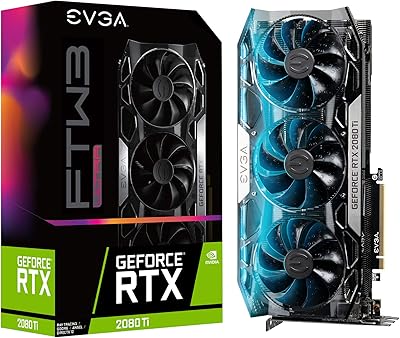
EVGA RTX 3070 FTW3 Ultra Graphics Card
77%
94%
Thermal Performance
91%
Noise Level
93%
Build Quality
88%
Gaming Performance at 1440p
67%
Gaming Performance at 4K
More
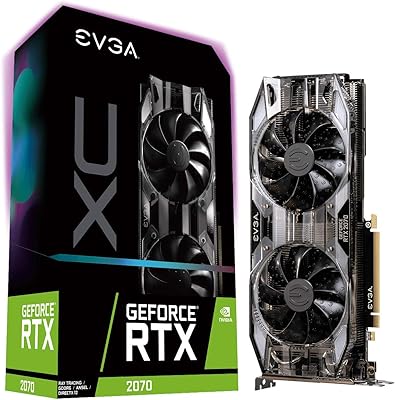
EVGA RTX 3090 FTW3 Ultra Graphics Card
79%
91%
Raw Gaming Performance
94%
VRAM Capacity
83%
Thermal Management
89%
Build Quality
67%
Noise Level
More
EVGA GeForce RTX 2080 Ti FTW3 Ultra 11GB GDDR6
87%
96%
Gaming Performance (4K)
94%
Ray Tracing & Graphics Quality
88%
Cooling & Noise Level
92%
Build Quality & Durability
91%
Overclocking Support
More
EVGA GeForce RTX 3080 XC3 Ultra Gaming 10GB GDDR6X
88%
96%
Performance in 4K Gaming
94%
Ray Tracing Capability
89%
Cooling Effectiveness (iCX3)
90%
Build Quality
85%
Compatibility with Older GPUs
More
Gigabyte AORUS GeForce RTX 3080 Ti Master 12GB Graphics Card
88%
93%
Overall Performance
96%
4K Gaming Experience
91%
Ray Tracing Capabilities
88%
Cooling Efficiency
89%
Build Quality
More
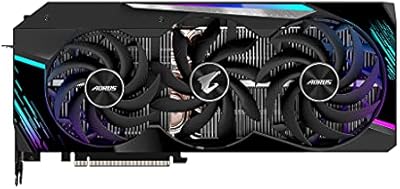
EVGA GeForce RTX 3070 Ti FTW3 Ultra Gaming 8GB GDDR6X
85%
93%
Performance in Gaming
88%
Thermal Management
91%
Build Quality
85%
Ease of Installation
78%
Compatibility with PC Cases
More
EVGA GeForce RTX 2070 XC Gaming 8GB GDDR6 Graphics Card
85%
91%
Gaming Performance
88%
Cooling Efficiency
75%
Ease of Installation
78%
Power Consumption
85%
Build Quality
More
KAER RX590 8GB Graphics Card
70%
71%
1080p Gaming Performance
63%
Value for Money
74%
Thermal Performance
69%
Fan Noise
83%
Driver & Software Support
More
EVGA GeForce RTX 2080 XC Ultra Gaming 8GB
86%
91%
Gaming Performance
87%
Ray Tracing and Visuals
89%
Cooling Efficiency
80%
Noise Levels
93%
Build Quality
More

FAQ

That depends on your specific case. At nearly 15 inches long and occupying three slots, the EVGA FTW3 Ultra is one of the larger AIB cards on the market. Check your case manufacturer's listed maximum GPU length carefully before ordering — many popular mid-towers cap out around 12 to 13 inches, which would make this a no-go without modification.

NVIDIA recommends at least a 750W PSU for the RTX 3080 platform, but given the FTW3 Ultra's factory overclock and real-world power spikes, a quality 850W unit gives you more comfortable headroom. The brand and efficiency rating of your PSU matters as much as raw wattage — a cheap 850W unit can be less stable than a well-built 750W one.

Not at all. The Lite Hash Rate limiter only affects cryptocurrency mining performance, specifically Ethereum hashrate. Every aspect of gaming performance — frame rates, ray tracing, DLSS, everything — is completely unaffected. If you are buying this card to game, the LHR designation is irrelevant to your experience.

Noticeably quieter than most people expect for a card this powerful. The iCX3 system monitors temperatures across multiple points and ramps fans gradually rather than aggressively, which keeps acoustics manageable even during long sessions. Most owners report it blends into typical case fan noise rather than standing out.

It is strongly recommended. At 4.6 pounds, this factory-overclocked 3080 can put real strain on the PCIe slot over time, and even modest GPU sag can cause cosmetic or eventual mechanical issues. Most cases do not include a bracket by default, so budget a few extra dollars for one — it is cheap insurance for an expensive card.

Yes, across most titles and settings it performs very well at 4K. The area to watch is VRAM — in a small number of modern, texture-heavy games at maximum settings, 10GB can feel tight. For the vast majority of 4K gaming scenarios, though, it handles the workload confidently. Just go in with realistic expectations rather than assuming it will max out every single game without compromise.

EVGA has a strong reputation for treating customers like humans rather than ticket numbers. Their warranty process is straightforward, RMA turnaround is generally faster than competitors, and their step-up program lets registered owners upgrade to a newer card within a set window by paying the price difference. It is one of the legitimate differentiators that justifies choosing EVGA over a generic AIB option.

Yes, it works capably for GPU-accelerated creative workloads like video encoding in Premiere, DaVinci Resolve, or light 3D rendering in Blender. It is not a professional workstation card, so do not expect Quadro-level driver stability or ECC memory, but for a creator who also games, the EVGA FTW3 Ultra covers both bases comfortably.

EVGA's Precision X1 software handles all the lighting customization, along with fan curves and overclocking if you want to push the card further. It is available as a free download from EVGA's website. The software has a modest learning curve, but the lighting controls specifically are straightforward once you find them.

The RTX 3080 supports PCIe 4.0, but it is also fully backward compatible with PCIe 3.0 motherboards. In real-world gaming scenarios, the bandwidth difference between PCIe 3.0 x16 and PCIe 4.0 x16 is negligible for this GPU — you will not see a meaningful performance gap from running it on an older platform.

Where to Buy