Overview

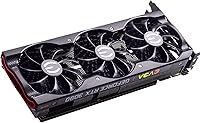
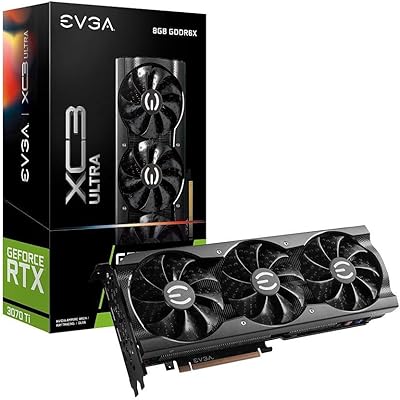
The EVGA RTX 3090 XC3 Ultra 24GB GPU was EVGA's most ambitious take on NVIDIA's RTX 3090, built for enthusiasts and content creators who genuinely needed every gigabyte of that 24GB GDDR6X VRAM. At launch, nothing else in the consumer GPU space matched it for memory capacity — that alone made it a serious tool for memory-hungry workloads rather than just a gaming trophy. EVGA backed the hardware with a triple-slot, triple-fan design that demands real case space, and the company's long-standing reputation for build quality and support gave buyers confidence that this wasn't just another rebadged reference card dressed up with RGB.
Features & Benefits

The iCX3 cooling system uses three Hydraulic Dynamic Bearing fans — HDB fans rely on fluid dynamics instead of traditional ball bearings, meaning they spin more quietly and hold up longer under sustained thermal load. In practice, this card maintains its boost clock well during extended gaming or rendering sessions without fan noise becoming a distraction. Ray tracing through dedicated RT cores brings genuinely improved lighting and shadow behavior in supported titles, though enabling it fully can cost frames — DLSS helps recover most of that. The 1725 MHz boost clock paired with GDDR6X memory at 19500 MHz gives the card enough bandwidth to handle 4K textures and large scene assets without the memory bus becoming a bottleneck.

Best For

This RTX 3090 XC3 Ultra makes the most sense for people running genuinely demanding workloads: 4K gaming at max settings in titles like Cyberpunk 2077 or Microsoft Flight Simulator, video editors cutting 4K or 8K timelines in DaVinci Resolve, and 3D artists whose scene files eat through VRAM fast. It also suits hobbyist machine learning setups where local model training benefits from a large, fast memory pool. That said, if your work is lighter — 1080p gaming, casual editing, or moderate 3D rendering — the 24GB buffer won't pay off, and a less demanding card would serve equally well. This card rewards buyers who will actually push it hard.

User Feedback

EVGA's top-tier 3090 holds a 4.2-star average, and the most consistent praise centers on thermal and acoustic performance — owners regularly report that the card runs cool and stays quiet under heavy load during long gaming sessions and multi-monitor use. On the critical side, several buyers flagged installation challenges tied to the card's sheer size and weight: at 3.7 pounds and 12 inches long, it can put real stress on PCIe slot brackets inside tighter cases, so checking clearance beforehand matters. A handful of reviews mentioned DOA units or early driver friction, though these appear to be isolated incidents rather than a recurring pattern across the broader owner base.

Pros

  • The 24GB GDDR6X VRAM handles memory-intensive creative workloads without breaking a sweat.
  • iCX3 HDB fans keep thermals stable under sustained load while staying remarkably quiet.
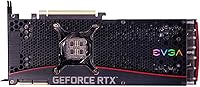
  • The all-metal backplate genuinely reduces sag — a practical benefit for a card this heavy.
  • Hardware ray tracing noticeably improves lighting and reflections in supported titles.
  • DLSS support helps recover frame rates when ray tracing is enabled, making the feature actually usable.
  • Factory boost clock holds steady during extended sessions without needing manual tuning.
  • DisplayPort and HDMI outputs give solid flexibility for multi-monitor and high-refresh setups.
  • ARGB lighting is adjustable and plays well with common RGB ecosystems without dominating the build.
  • EVGA's build quality and customer support reputation adds real peace of mind for a high-stakes purchase.
  • Owners consistently rate thermal and acoustic performance as a standout strength in real-world use.

Cons

  • At 12 inches long and triple-slot wide, this card simply will not fit many standard mid-tower cases.
  • The 3.7-pound weight puts meaningful stress on PCIe slots without a dedicated GPU support bracket.
  • Power requirements are steep — underpowered PSUs will struggle or cause instability.
  • Buyers with lighter workloads will never utilize the 24GB VRAM capacity they paid for.
  • A small but notable number of owners reported DOA units or early driver compatibility friction.
  • There is no meaningful factory overclocking headroom left for enthusiasts who like to push further.
  • 8K gaming output is largely theoretical — almost no real-world content pipeline benefits from it today.
  • The investment is hard to rationalize for 1080p or 1440p gaming, where cheaper cards close the gap.
  • Compact or ITX system builders are effectively excluded by the physical dimensions alone.
  • EVGA has since exited the GPU market, which may affect long-term warranty and support continuity.

Ratings

The scores below were generated by AI after analyzing verified global user reviews for the EVGA RTX 3090 XC3 Ultra 24GB GPU, with spam, bot activity, and incentivized feedback actively filtered out. Each category reflects the real distribution of buyer sentiment — including where this card genuinely excels and where it falls short for certain users. Both the standout strengths and the recurring frustrations are transparently represented.

Thermal Performance
92%
The iCX3 triple HDB fan setup earns consistent praise from owners who run long gaming sessions or multi-hour rendering jobs. Temperatures stay well-controlled even under sustained full-load conditions, and the card rarely throttles in well-ventilated cases.
In cases with restricted airflow or tight side clearance, exhaust heat can build up around the triple-slot footprint. A small number of users noted slightly higher temps than expected in chassis without dedicated GPU zone ventilation.
Noise Level
89%
Idle noise is nearly imperceptible — multiple owners specifically noted that the card is inaudible during light desktop use and web browsing. Under full gaming load, the fans spin up but remain noticeably quieter than competing triple-fan designs at the same thermal load.
Under extreme sustained compute workloads like extended local AI training, fan speeds ramp up more aggressively, and the noise becomes apparent in quiet rooms. This is a minor concern for most users but worth noting for those in shared or quiet work environments.
Raw Gaming Performance
88%
At 4K with maximum settings, this card handles demanding AAA titles with strong, consistent frame delivery. Games like Cyberpunk 2077 and Microsoft Flight Simulator — notoriously hard to run — perform at a genuinely playable and visually impressive level.
Enabling full ray tracing at 4K can cut frame rates sharply in the most demanding scenes, requiring DLSS to be enabled alongside it for comfortable play. Users expecting smooth 4K ray tracing without DLSS may be surprised by the performance trade-off.
VRAM Capacity
94%
The 24GB GDDR6X buffer is a genuine operational advantage for video editors, 3D artists, and machine learning users who regularly work with large assets. Users running high-resolution Blender scenes or 4K DaVinci Resolve timelines report that the card rarely hits memory limits where other GPUs would stall.
For buyers using this card purely for gaming, the 24GB is effectively unused headroom — even demanding 4K titles rarely exceed 12 to 14GB of VRAM. This makes the memory capacity a weak justification for gamers who don't also do creative or compute work.
Build Quality
91%
The all-metal backplate and solid overall construction give this card a reassuringly substantial feel during installation. Owners frequently comment that it feels noticeably better-made than reference-style cards, with no flex in the PCB and well-seated connectors.
The card's weight — 3.7 pounds — is a byproduct of that solid build, and without a GPU support bracket, PCIe slot stress is a real concern over time. The backplate adds rigidity to the card itself but does not address vertical sag from the slot side.
Ray Tracing Capability
79%
21%
Dedicated RT cores deliver a visible improvement in lighting fidelity, shadow accuracy, and reflections in supported titles. For buyers who play heavily in the RT-enabled game library, the effect on visual quality is tangible and appreciated.
The performance cost of ray tracing at 4K is steep enough that many users ultimately leave it disabled or use it only in less demanding scenes. Without DLSS enabled as a counterbalance, the frame rate drop can feel punishing in graphically complex games.
Content Creation Performance
93%
Video editors and 3D artists consistently rate this card as one of the strongest tools they have used for GPU-accelerated workflows. DaVinci Resolve playback, Blender Cycles renders, and Adobe Premiere GPU encoding all benefit from the combination of high VRAM and fast memory bandwidth.
Users with lighter creative workloads — short-form social media editing or simple motion graphics — will find the card significantly over-specified for their needs, making the investment difficult to justify on creative work alone at that tier.
Installation Experience
63%
37%
For builders working in full-tower or large mid-tower cases, installation is straightforward, and the card seats firmly. The clear model number and standard PCIe power connector layout make it compatible with most high-wattage PSU cable kits without adapters.
In mid-tower cases with less than 12.5 inches of GPU clearance, the card physically will not fit — a frustrating discovery after purchase. The weight also complicates single-person installation, and several buyers noted difficulty maneuvering the card into tight slots without a second set of hands.
Case Compatibility
57%
43%
Builders who specifically select their case around this card's dimensions report no issues, and full-tower cases like the Fractal Meshify 2 XL or Lian Li O11 Dynamic handle it without modifications.
The triple-slot, 12-inch length immediately disqualifies a wide range of popular mid-tower cases, and buyers who did not check clearance specs in advance make up a disproportionate share of negative reviews. Compact and ITX form factors are entirely off the table.
Power Efficiency
61%
39%
At idle and light load, power draw drops substantially and the card manages its TDP reasonably well for its performance class. Users with high-wattage PSUs report stable power delivery without voltage drops or unexpected shutdowns.
Under full gaming or compute load, the RTX 3090 is among the most power-hungry consumer GPUs ever made, requiring a minimum 850W PSU for a stable system. Buyers with older 650W or 750W units will need to budget for a PSU upgrade to avoid instability.
ARGB Lighting
74%
26%
The adjustable ARGB lighting looks clean in finished builds and syncs reliably with common motherboard RGB ecosystems including ASUS Aura Sync. Most users who care about lighting aesthetics are satisfied with the output and control options via Precision X1.
Users who prefer granular per-zone lighting control may find the options limited compared to more RGB-centric GPU designs. The lighting is also not a priority feature for professional or workstation-focused buyers, making it a negligible factor for a significant portion of the owner base.
Value for Money
67%
33%
For content creators and ML practitioners who actively push 24GB of VRAM in their daily workflows, the cost-per-performance-per-GB ratio is defensible. These users report feeling the card pays for itself in productivity gains over time.
Gamers who purchased this card primarily for gaming often express mixed feelings about value in hindsight — the gap in real-world gaming performance versus less expensive RTX 3080 variants is narrow, while the price difference is substantial. Value perception is tightly tied to whether buyers fully leverage the VRAM.
Driver & Software Stability
72%
28%
The majority of owners report no significant driver issues over extended ownership periods, and NVIDIA's regular driver update cadence means the card stays current with new game optimizations and feature support.
A subset of critical reviews flagged early driver friction at launch, and a handful noted compatibility issues with specific system configurations. These appear to be isolated rather than systemic, but they contributed to a small but consistent thread of one and two-star ratings.
Long-term Reliability
76%
24%
Most owners who have used this card for extended periods report that it remains stable and consistent in performance over time. The HDB fan design is built for longevity, and the all-metal backplate helps the PCB resist stress fatigue.
EVGA's 2022 exit from the GPU market is a legitimate long-term concern — warranty servicing and RMA availability may be uncertain depending on when a unit is purchased. Buyers should verify the warranty status carefully, as this is a meaningful risk factor for a high-cost component.

Suitable for:

The EVGA RTX 3090 XC3 Ultra 24GB GPU was built for people whose work or play genuinely taxes a GPU's memory and compute at the same time. Video editors cutting 4K or 8K footage in DaVinci Resolve, 3D artists juggling high-polygon scenes with complex textures, and machine learning hobbyists training models locally will all find the 24GB GDDR6X buffer to be a real operational advantage rather than a marketing footnote. Hardcore 4K gamers who want to run the most demanding AAA titles at maximum settings without compromise will also get strong mileage here. Multi-monitor power users and streamers outputting high-bandwidth feeds simultaneously will appreciate the display flexibility and raw throughput on offer. If you're someone who keeps a GPU for several years and wants a card that won't feel memory-constrained as workloads grow, EVGA's top-tier 3090 makes a compelling case.
Not suitable for:

The EVGA RTX 3090 XC3 Ultra 24GB GPU is genuinely hard to justify for buyers whose workloads don't push deep into VRAM territory. If you're gaming at 1080p or 1440p, editing shorter social media clips, or doing casual 3D work, you will rarely — if ever — use more than 10 to 12GB of VRAM, which means you'd be paying for headroom you'll never touch. The card's physical footprint is also a real obstacle: at 12 inches long, 3 inches thick, and 3.7 pounds, it won't fit in many mid-tower cases without careful planning, and it can stress PCIe slot brackets if not properly supported. Power draw is substantial too, so older or lower-wattage PSUs may not be up to the task. Budget-conscious buyers or anyone building a compact system should look elsewhere — this card demands a purpose-built environment to make sense.
Specifications

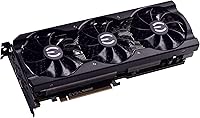
  • GPU Chip: Built on the NVIDIA GeForce RTX 3090 silicon, EVGA's top-end consumer Ampere architecture GPU.
  • VRAM: Equipped with 24GB of GDDR6X memory, providing substantial headroom for 4K textures, large 3D scenes, and local AI workloads.
  • Boost Clock: Rated at a real boost clock of 1725 MHz, reflecting actual sustained performance rather than a theoretical peak figure.
  • Memory Speed: GDDR6X memory operates at 19500 MHz effective speed, delivering high bandwidth for memory-intensive rendering and gaming scenarios.
  • Max Resolution: Supports output up to 7680x4320 (8K) via DisplayPort and HDMI connections.
  • Display Outputs: Provides DisplayPort and HDMI ports, supporting multi-monitor configurations and high-refresh-rate displays.
  • Cooling System: Uses EVGA's iCX3 cooling design with three Hydraulic Dynamic Bearing (HDB) fans for quieter, longer-lasting operation under sustained load.
  • Card Length: Measures 12 inches in length, requiring careful case clearance verification before installation.
  • Card Width: Spans 6 inches in width with a triple-slot thickness of 3 inches, occupying three expansion bay slots.
  • Weight: The card weighs 3.7 pounds, making a GPU support bracket a practical addition to prevent PCIe slot stress.
  • Backplate: Features a full all-metal backplate that adds structural rigidity and helps reduce flex on the PCB under the card's own weight.
  • Lighting: Includes adjustable ARGB LED lighting compatible with common motherboard RGB ecosystems for synchronized lighting control.
  • Ray Tracing: Dedicated RT cores enable real-time hardware-accelerated ray tracing in supported game titles and rendering applications.
  • DLSS Support: Supports NVIDIA DLSS (Deep Learning Super Sampling) to recover frame rates when demanding features like ray tracing are enabled.
  • Model Number: Official EVGA model identifier is 24G-P5-3975-KR, useful for warranty registration and compatibility verification.
  • Manufacturer: Designed and sold by EVGA, a brand historically known for its GPU build quality, thermal engineering, and customer support responsiveness.
  • Amazon Rating: Holds a 4.2 out of 5 star rating based on 83 Amazon customer ratings at the time of this review.

Related Reviews
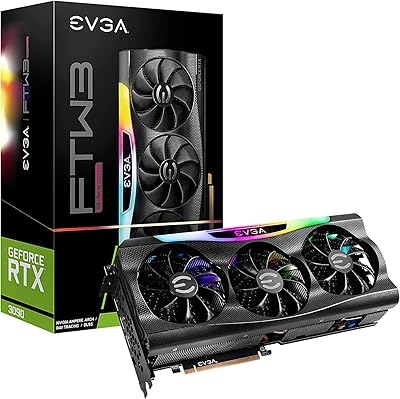
EVGA RTX 3090 FTW3 Ultra Graphics Card
79%
91%
Raw Gaming Performance
94%
VRAM Capacity
83%
Thermal Management
89%
Build Quality
67%
Noise Level
More
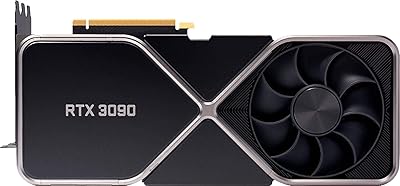
NVIDIA RTX 3090 Founders Edition Graphics Card
75%
93%
Raw GPU Performance
97%
VRAM Capacity
84%
Cooling & Thermal Management
51%
Power Consumption
88%
Build Quality & Design
More
EVGA RTX 3070 XC3 Graphics Card
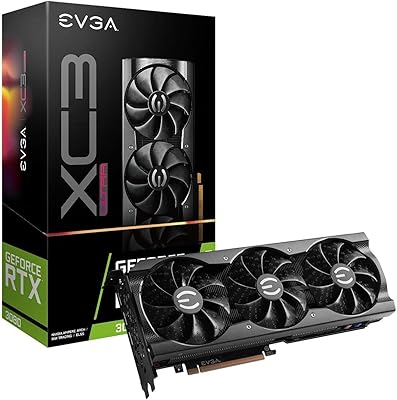
82%
91%
Gaming Performance
93%
Thermal Performance
88%
Noise Level
94%
Build Quality
83%
Ray Tracing Capability
More
EVGA RTX 3080 XC3 Ultra 10GB GPU
82%
93%
Thermal Performance
88%
Gaming Performance
86%
Noise Level
91%
Build Quality
89%
Cooling System Design
More
EVGA RTX 3070 Ti XC3 Graphics Card
75%
91%
1440p Gaming Performance
89%
Thermal Performance
88%
Noise Level
93%
Build Quality
61%
VRAM Adequacy
More
MSI GeForce RTX 3090 SUPRIM X 24GB
87%
96%
Performance
93%
Cooling System Efficiency
72%
Power Consumption
89%
Value for Money
91%
Build Quality
More
EVGA GeForce RTX 2080 XC Ultra Gaming 8GB
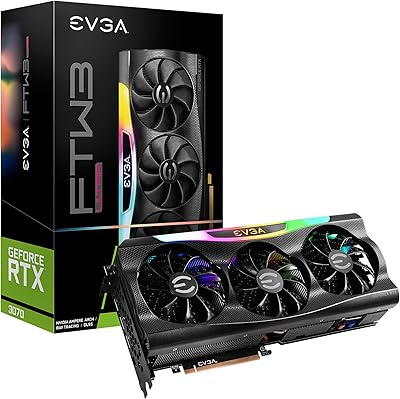
86%
91%
Gaming Performance
87%
Ray Tracing and Visuals
89%
Cooling Efficiency
80%
Noise Levels
93%
Build Quality
More
EVGA RTX 3070 FTW3 Ultra Graphics Card
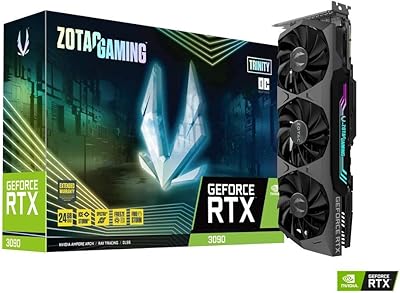
77%
94%
Thermal Performance
91%
Noise Level
93%
Build Quality
88%
Gaming Performance at 1440p
67%
Gaming Performance at 4K
More
ZOTAC GeForce RTX 3090 Trinity OC 24GB Graphics Card
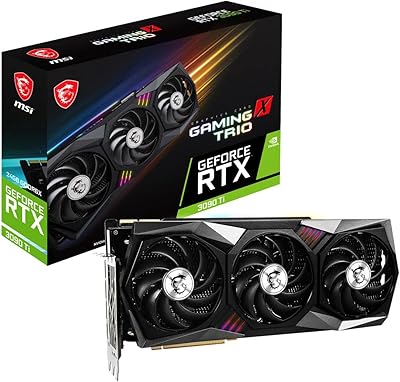
78%
88%
Thermal Performance
93%
VRAM Capacity & Utility
84%
Noise Levels
91%
Build Quality
58%
Value for Money
More
MSI GeForce RTX 3090 Ti Gaming X Trio 24GB
84%
94%
Gaming Performance
70%
Power Consumption
88%
Cooling Efficiency
65%
Size and Compatibility
92%
Overclocking Performance
More

FAQ

Not necessarily — at 12 inches long and triple-slot wide, this RTX 3090 XC3 Ultra is physically large by any measure. You'll want to check your case's GPU length clearance spec before ordering. Many popular mid-towers accommodate it, but compact cases and some budget enclosures will not.

NVIDIA recommends at least an 850W PSU for RTX 3090 builds, and that's a reasonable floor for a stable system with a mid-to-high-end CPU alongside this card. If your rig is heavily loaded or you're running multiple storage drives, a 1000W unit gives you comfortable headroom and is worth the modest extra cost.

Yes, noticeably so in practice. The Hydraulic Dynamic Bearing fans used in the iCX3 design produce less mechanical noise than standard ball-bearing fans, and the three-fan layout distributes heat across a larger surface area, so each fan doesn't have to spin as hard. Owners consistently report that this card runs quietly even under sustained gaming loads.

For the vast majority of gaming use cases today, it is more than you need — most 4K games max out well below 16GB of VRAM. Where the 24GB genuinely earns its place is in content creation: large Blender scenes, high-resolution video editing timelines, and texture-heavy 3D projects can push past 12GB without much effort. If gaming is your only use case, you'd likely never notice the difference versus a card with less memory.

Yes, and this is one area where the 24GB VRAM buffer makes a real difference. Frameworks like PyTorch and TensorFlow support CUDA-enabled NVIDIA GPUs, and the RTX 3090 has been a popular choice for hobbyists and small-scale researchers running local training jobs. The memory capacity allows for larger batch sizes and more complex model architectures than cards with 8 or 12GB of VRAM.

It depends heavily on the game and the quality settings. Enabling ray tracing can cut frame rates significantly in demanding titles, sometimes by 30 to 50 percent at 4K with high RT quality. The practical workaround is enabling DLSS alongside it — DLSS uses AI upscaling to recover a large chunk of those lost frames, making the combination usable at 4K in most supported titles.

At 3.7 pounds, there is a real and legitimate sag risk if the card is only supported by its PCIe slot bracket. The included all-metal backplate adds rigidity to the card itself, but it doesn't replace a vertical support bracket or GPU brace. If your case supports one, it's worth adding — it takes pressure off the slot and keeps the card level over time.

This card outputs via DisplayPort and HDMI, supporting multi-monitor configurations out of the box. You can connect up to four displays simultaneously using the available ports. High-refresh-rate and high-resolution monitors are well supported, and the card's bandwidth is more than sufficient for dual 4K or mixed-resolution setups.

EVGA exited the GPU market in 2022, which means no new EVGA GPU products are coming. However, existing cards still use standard NVIDIA drivers, which NVIDIA continues to update regardless of board partner. The main concern is warranty service — if your unit develops a fault and EVGA's warranty program has wound down, options may be limited. It's worth confirming the current warranty status directly with EVGA before purchasing.

EVGA's ARGB LEDs can be controlled through EVGA's own Precision X1 software, which lets you set colors, patterns, and brightness. If your motherboard supports a compatible RGB ecosystem such as ASUS Aura Sync or MSI Mystic Light, you may be able to sync the card's lighting through those platforms as well. It's not the most customizable ARGB implementation on the market, but it covers the basics cleanly.

Where to Buy

SHI International
In stock $1,802.09