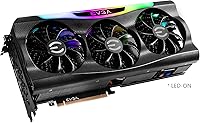
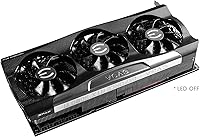
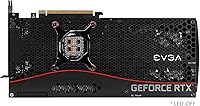
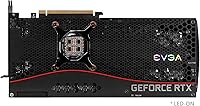
Overview

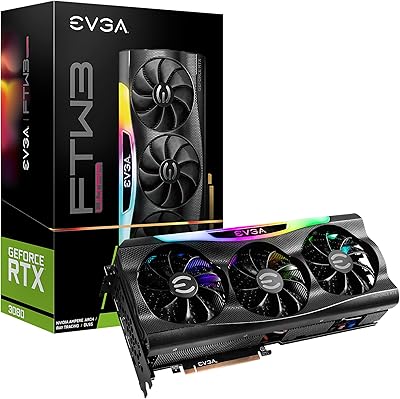
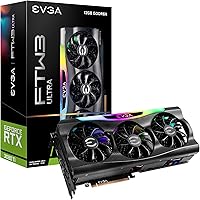
The EVGA RTX 3080 Ti FTW3 Graphics Card arrived in mid-2021 as one of the most aggressively spec'd third-party takes on NVIDIA's flagship Ti chip — and the FTW3 designation is not marketing shorthand. It represents EVGA's top factory-overclocked tier, built for buyers who want every clock cycle extracted from the silicon before the card even leaves the box. The 12GB GDDR6X frame buffer matters well beyond gaming, giving content creators and 3D artists real headroom for GPU-accelerated workloads. Newer GPUs exist today, but this high-end GPU still punches hard at 4K and remains a serious contender for anyone priced out of current-gen flagships.

Features & Benefits

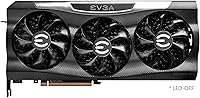
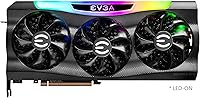
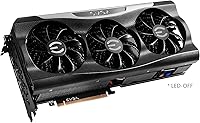
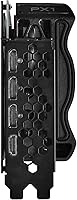
What separates the RTX 3080 Ti FTW3 from a stock reference card starts with its iCX3 cooling system — nine thermal sensors distributed across the board, not just the GPU die. That monitoring density lets the card sustain its 1800 MHz boost clock under real gaming loads rather than throttling when thermals climb. In Cyberpunk 2077 at 4K with ray tracing on, that thermal stability translates directly to smoother, more consistent frame delivery. The full metal backplate adds structural rigidity, which matters for a heavy triple-slot design. HDMI 2.1 and DisplayPort 1.4a outputs mean it is properly wired for 4K high-refresh displays and even 8K setups.

Best For

This EVGA FTW3 card is built for a specific buyer — one who actually pushes hardware rather than leaving performance sitting idle. Enthusiast 4K gamers chasing high frame rates in demanding titles like Microsoft Flight Simulator or Cyberpunk 2077 will find it well-matched to their needs. Content creators running GPU-accelerated renders in Blender or DaVinci Resolve will appreciate 12GB of fast VRAM without hitting memory ceilings mid-project. One practical note before purchasing: you will need an 850W or stronger PSU and a case with genuine clearance for a physically substantial triple-slot card. Casual or budget upgraders should look elsewhere — this is enthusiast-tier hardware.

User Feedback

Across more than 1,000 owner ratings, this high-end GPU holds a 4.6-star average, and the sentiment is notably consistent. Cooling and acoustics come up repeatedly — owners report impressively quiet operation under sustained gaming loads, which reflects real engineering rather than just aggressive fan curves. EVGA's customer service is another frequent highlight, with buyers specifically praising responsive RMA handling as a meaningful differentiator over competing brands. On the other side, a portion of users flag that Precision X1 software can feel finicky, with occasional quirks following driver updates. Power consumption is the other honest caveat — underpowered systems will struggle, and this card makes no apologies about its appetite.

Pros

  • The iCX3 cooling system keeps thermals impressively controlled, even during extended gaming sessions.
  • Sustained boost clock performance holds steady under real load, not just in short benchmark bursts.
  • 12GB of GDDR6X memory provides meaningful headroom for 4K texture packs and GPU-accelerated creative work.
  • HDMI 2.1 output supports 4K at 120Hz, making it properly paired with high-refresh displays.
  • EVGA's customer support and RMA process is consistently rated among the best in the GPU market.
  • The full metal backplate adds structural support and helps prevent PCB sag in a heavy triple-slot card.
  • Ray tracing and DLSS support deliver noticeable visual gains in compatible titles without destroying frame rates.
  • ARGB lighting is genuinely customizable through Precision X1, not just a fixed color loop.
  • Over 1,000 owner ratings hold at 4.6 stars, reflecting a broad base of satisfied buyers, not a handful of reviews.
  • Multi-monitor users benefit from multiple high-bandwidth outputs on a single card without compromises.

Cons

  • Power draw is substantial — underpowered systems will throttle or become unstable under gaming load.
  • The triple-slot footprint rules out a wide range of compact and mid-tower cases without generous GPU clearance.
  • Precision X1 software can behave inconsistently after driver updates, requiring occasional manual fixes.
  • At nearly 4 pounds, this high-end GPU puts real stress on the PCIe slot without a GPU support bracket.
  • The price premium over standard RTX 3080 Ti variants is hard to justify unless the factory overclock and cooler directly matter to your workflow.
  • Current-generation alternatives now offer competitive or better performance per dollar, making value harder to argue for new buyers.
  • EVGA has exited the GPU market entirely, meaning no future driver advocacy, firmware updates, or new warranty-backed replacements from the manufacturer.
  • The card runs warm in poorly ventilated cases despite the strong cooler — airflow planning is not optional.
  • 8K gaming support is technically present but practically unusable at playable frame rates with current hardware and game engines.

Ratings

The scores below reflect an AI-driven analysis of verified global owner reviews for the EVGA RTX 3080 Ti FTW3 Graphics Card, with spam, incentivized submissions, and bot activity actively filtered out to ensure the results represent genuine buyer experiences. We have weighted feedback across enthusiast gamers, content creators, and multi-display power users to give a complete picture of where this high-end GPU genuinely delivers and where it falls short. Both the strengths that make owners loyal and the frustrations that generate hesitation are transparently reflected in every score.

Gaming Performance
93%
Owners running demanding titles at 4K — from Red Dead Redemption 2 to Microsoft Flight Simulator — consistently report fluid, high-frame-rate experiences without the stuttering associated with VRAM-limited cards. The factory overclock delivers a tangible real-world edge over reference RTX 3080 Ti variants, particularly in scenes with dense geometry and heavy draw calls.
At 1080p or 1440p, the performance headroom is largely wasted, and buyers using lower-resolution panels rarely notice the premium paid for the FTW3 tier over a cheaper board partner card. A small number of users also report that the gains over a standard RTX 3080 Ti are narrower than the price gap suggests in less demanding titles.
Thermal Management
91%
The iCX3 cooling system with its nine distributed thermal sensors is one of the most praised aspects in owner reviews — users note that GPU temperatures stay well-controlled even during multi-hour gaming sessions, and the fans rarely spin up aggressively enough to become intrusive. Builders running the card in well-ventilated ATX cases report junction temperatures that comfortably stay within safe operating ranges.
In cases with restricted airflow or poor front-panel ventilation, thermal performance drops noticeably, and the card's own fans compensate with higher RPM noise. A minority of owners in compact or poorly configured builds reported higher-than-expected temperatures that required active case modification to resolve.
Noise Levels
88%
Under light desktop or streaming workloads, the fans enter a semi-passive mode and the card runs in near-silence — a detail that home office users and content creators especially appreciate. Even under sustained gaming loads, the acoustic profile stays well below what many buyers expected from a triple-fan design at this power level.
At maximum fan speed under extreme thermal stress — most commonly seen in poorly ventilated cases — the card produces noticeable coil whine in a portion of units, which some owners find distracting in quiet environments. This appears to be more prevalent under certain load patterns rather than universally across all units.
Build Quality
89%
The full metal backplate and triple-fan shroud feel premium and solid in hand, and owners building flagship rigs consistently comment that the card matches the aesthetic and structural expectations of a high-cost component. The backplate's role in preventing PCB flex during transport and installation also earns practical praise beyond its appearance.
At nearly 4 pounds, the card's weight creates sag risk over time without a support bracket, and EVGA's stock solution is not included in the box — an omission that frustrates buyers who expect a complete premium package at this price point. A few owners also noted that the shroud clips can feel less secure than the rest of the card's construction.
Value for Money
67%
33%
For buyers who find this card at a significant discount below its original launch price, the value case is genuinely strong — 12GB of fast memory, a top-tier cooler, and a factory overclock represent real engineering investment that cheaper RTX 3080 Ti variants do not match. Content creators and sim enthusiasts often cite the VRAM headroom alone as justifying a premium over 8GB or 10GB alternatives.
At or near original retail pricing, the RTX 3080 Ti FTW3 is a hard sell when current-generation GPUs offer competitive or better performance per dollar with improved power efficiency. EVGA's exit from the GPU market has also softened the long-term value argument, since there is no future upgrade path or continued manufacturer ecosystem to benefit from.
Ray Tracing & DLSS
84%
Owners running Cyberpunk 2077, Control, or Metro Exodus with ray tracing enabled and DLSS on Quality mode report a genuinely impressive visual experience at 4K that holds stable frame rates most competing cards in its generation cannot match at the same settings. DLSS 2.x support is mature and well-optimized on this architecture, making it a practical tool rather than a checkbox feature.
Without DLSS enabled, native 4K ray tracing at ultra settings pushes even this card toward the edges of its performance envelope in the most demanding scenes, with frame rate dips that remind buyers this generation has been surpassed by newer architectures for RT workloads. DLSS 3 frame generation, available on Ada Lovelace cards, is not supported here.
VRAM Headroom
87%
The 12GB frame buffer is consistently cited by Blender artists, DaVinci Resolve editors, and heavy modders as the single biggest practical advantage this card holds over the standard RTX 3080's 10GB. Users working with high-resolution textures in Unreal Engine or stacking GPU effects in video editing timelines report noticeably fewer forced fallbacks to slower system memory.
While 12GB was generous at launch, the gap between this card and higher-VRAM current-generation alternatives is narrowing, and buyers doing extremely VRAM-intensive professional work may find 16GB or 24GB options from newer GPU generations more future-proof. For pure gaming, most owners acknowledge that 12GB is unlikely to be a constraint at current game optimization levels.
Software Experience
62%
38%
EVGA Precision X1 offers genuinely useful fan curve customization and per-sensor monitoring that goes beyond what NVIDIA's own tools provide, and users who invest time in configuring it report better sustained boost clocks and quieter operation as a result. The ARGB lighting control built into the software is more granular than typical RGB utilities from competing brands.
Post-driver-update instability with Precision X1 is one of the more consistent criticisms in owner feedback — some users report needing to reinstall or reconfigure the software after routine NVIDIA driver updates, which becomes tedious over time. With EVGA having exited the GPU market, long-term software maintenance and compatibility updates are uncertain at best.
Power Efficiency
58%
42%
Within the context of high-end Ampere-generation cards, the FTW3's power delivery is stable and well-engineered, and owners with properly rated PSUs report no instability or unexpected shutdowns even under prolonged stress testing. The card draws power predictably, which makes PSU planning straightforward.
By modern standards, the RTX 3080 Ti's power appetite is significant — users migrating from previous-generation mid-range cards frequently report surprise at electricity costs over time and the need to replace their existing PSU before the card can even be installed. Current-generation alternatives deliver comparable or better performance at meaningfully lower wattage.
Physical Fit & Installation
71%
29%
In full-size ATX cases with adequate GPU clearance, installation is straightforward and the card's connectors and outputs are well-positioned for clean cable management. Builders working in spacious cases consistently report no fitment issues and appreciate the card's solid feel during installation.
The triple-slot footprint and large physical dimensions create real barriers for mid-tower and compact build owners — this is one of the more frequently cited pre-purchase regrets in negative reviews, from buyers who did not verify clearance specs in advance. The card also blocks adjacent PCIe slots, limiting expansion options on boards with tightly packed slot layouts.
Customer Support
86%
EVGA's support reputation is one of the most consistent positive themes across owner reviews — buyers describe responsive RMA processing, helpful technical staff, and a general sense that the company stood behind its products in a way that many GPU manufacturers do not. This reputation was a deliberate purchase driver for a significant portion of buyers.
With EVGA's exit from the GPU market, the future of this support infrastructure is legitimately uncertain, and buyers purchasing used units or remaining new-old-stock should verify warranty status directly with EVGA before committing. The strong support reputation is partly a historical asset rather than a guarantee of ongoing service quality.
Display Connectivity
82%
18%
The combination of HDMI 2.1 and three DisplayPort 1.4a outputs covers virtually every current monitor and TV standard, and multi-monitor users running 4K productivity setups or three-screen sim rigs consistently praise the card for handling all displays without bandwidth compromise. The HDMI 2.1 port in particular is valuable for users connecting to a high-refresh 4K TV.
The absence of a USB-C or Thunderbolt output is a minor limitation for users who run certain high-end creative monitors that prefer those interfaces. Four simultaneous display outputs cover most use cases, but users building larger video wall setups will hit the hardware ceiling quickly.
Aesthetics & RGB
76%
24%
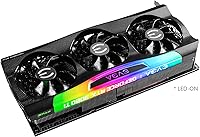
The ARGB implementation on the RTX 3080 Ti FTW3 is tasteful by enthusiast standards — the lighting is visible and customizable without dominating the card's appearance, and Precision X1 gives enough control to match system themes convincingly. Builders consistently rate the card's overall appearance as befitting its flagship positioning.
Users who prefer minimalist or non-lit builds find the lighting non-disableable without software intervention, which is a minor but recurring complaint. The ARGB zones are also fewer and less dramatic than competing cards from ASUS or MSI at the same tier, which matters to buyers for whom RGB visibility is a primary aesthetic goal.
Out-of-Box Readiness
79%
21%
The card works correctly with standard NVIDIA drivers out of the box — no EVGA-specific software installation is required to start gaming, and the factory overclock is active by default without any user configuration. Most buyers report a plug-and-play experience from physical installation to first game launch.
The lack of a GPU support bracket in the box is a notable omission at this price tier, and buyers who do not own one independently risk gradual slot stress from the card's weight over months of use. Some users also wish EVGA included a more robust accessories package to match the premium positioning of the FTW3 product line.

Suitable for:

The EVGA RTX 3080 Ti FTW3 Graphics Card is a strong match for enthusiast PC builders who game primarily at 4K and refuse to compromise on frame rates in demanding AAA titles like Microsoft Flight Simulator, Cyberpunk 2077, or Red Dead Redemption 2. The 12GB of fast GDDR6X memory also makes it genuinely useful outside of gaming — Blender artists, DaVinci Resolve editors, and architects running GPU-accelerated renders will hit VRAM ceilings far less often than they would on a card with 8GB or 10GB. Sim racing and flight simulation enthusiasts stand to benefit particularly well, since those genres reward both raw rasterization power and ample memory for high-resolution texture packs. Anyone building a flagship rig who values a strong factory overclock, a thoughtfully engineered cooler, and a manufacturer with a well-earned reputation for responsive customer support will find this card fits naturally at the top of their shortlist.

Not suitable for:

Budget-conscious buyers or anyone upgrading from a mid-range card for 1080p gaming should give the EVGA RTX 3080 Ti FTW3 Graphics Card a hard pass — the performance headroom it offers simply will not be meaningfully used at lower resolutions, and the cost premium cannot be justified in that context. This is also not a card for small form factor builds: at nearly 4 pounds and occupying three expansion slots, it demands a full-size ATX case with real clearance to spare. Power supply requirements are equally serious — plan for at least 850 watts of quality headroom, and preferably more if the rest of your system is power-hungry. Buyers on the fence about spending significantly more than a standard RTX 3080 Ti variant should weigh whether the factory overclock and premium cooler genuinely close that gap for their specific workloads, or whether a less expensive board partner card would serve them equally well.

Specifications

  • GPU Chip: Powered by the NVIDIA GeForce RTX 3080 Ti, NVIDIA's flagship Ampere-architecture chip built for high-end 4K gaming and accelerated compute workloads.
  • VRAM: Equipped with 12GB of GDDR6X memory running at an effective 19,000 MHz, providing substantial bandwidth for high-resolution textures and GPU-accelerated creative applications.
  • Boost Clock: Factory-overclocked to a real boost clock of 1800 MHz, which runs above NVIDIA's reference specification without requiring any manual tuning from the user.
  • Display Outputs: Offers one HDMI 2.1 port and three DisplayPort 1.4a ports, supporting up to four simultaneous displays with bandwidth sufficient for 4K at 120Hz or 8K output.
  • Max Resolution: Supports a maximum digital output resolution of 7680x4320 (8K), making it compatible with next-generation display standards.
  • Cooling System: Uses EVGA's iCX3 triple-fan cooler with nine onboard thermal sensors distributed across the GPU, memory, and VRM zones for precise, real-time thermal management.
  • Card Dimensions: Measures 5.38 x 2.22 x 5.38 inches and occupies three expansion slots, requiring a full-size case with adequate GPU clearance before purchase.
  • Card Weight: Weighs 3.96 pounds, making a GPU support bracket or riser highly advisable to prevent long-term stress on the PCIe slot and motherboard.
  • Backplate: Fitted with a full metal backplate that adds structural rigidity to the PCB and contributes modestly to overall thermal dissipation on the card's rear side.
  • Lighting: Features ARGB LED zones controllable through EVGA Precision X1 software, allowing per-zone color and effect customization to match a broader system aesthetic.
  • Power Connector: Requires a 12V power configuration; EVGA recommends a minimum 850W power supply unit to ensure stable operation under sustained full-load conditions.
  • Ray Tracing: Supports NVIDIA real-time ray tracing via dedicated RT cores, enabling hardware-accelerated lighting, shadow, and reflection effects in compatible game titles.
  • DLSS Support: Compatible with NVIDIA DLSS (Deep Learning Super Sampling), allowing games to render at lower resolutions and upscale intelligently to maintain high frame rates with minimal visual loss.
  • Model Number: Carries the official EVGA model number 12G-P5-3967-KR, which should be referenced when searching for compatible accessories, driver support, or warranty documentation.
  • Amazon Rating: Holds a 4.6 out of 5 star average across 1,084 owner ratings on Amazon, placing it at rank 551 in the Computer Graphics Cards category.
  • Memory Type: Uses GDDR6X memory, a higher-bandwidth variant of GDDR6 developed by Micron, which provides the memory throughput required for 4K and multi-monitor rendering workloads.
  • Slot Width: Occupies three PCIe expansion slots on the motherboard, which will block adjacent slots in most ATX motherboard layouts and must be accounted for in build planning.

Related Reviews
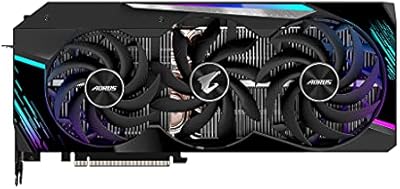
Gigabyte AORUS RTX 3080 Ti Graphics Card
78%
93%
Gaming Performance
91%
Thermal Management
88%
Noise Level
89%
Build & Physical Quality
61%
Value for Money
More
EVGA GeForce RTX 3080 FTW3 Ultra Graphics Card
79%
93%
Thermal Performance
88%
Acoustic Performance
89%
Gaming Performance
94%
Build Quality
71%
Value for Money
More
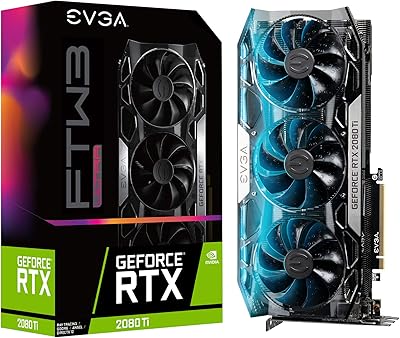
EVGA RTX 2080 Ti FTW3 Ultra GPU
78%
93%
Thermal Performance
91%
Build Quality
84%
Cooling Noise
88%
Gaming Performance
61%
Value for Money
More
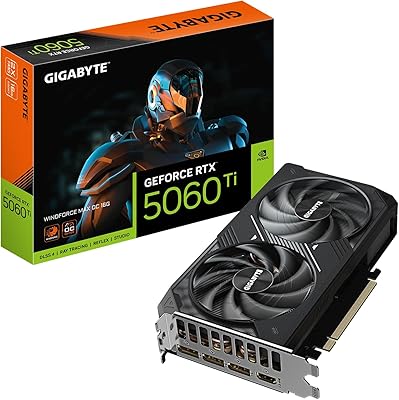
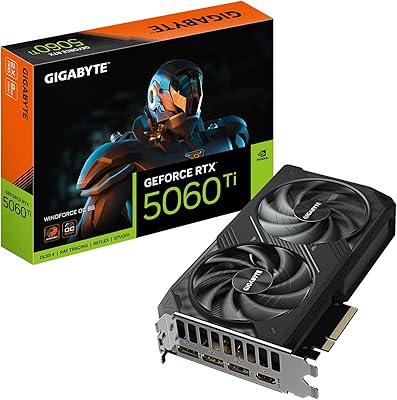
GIGABYTE RTX 5060 Ti 8GB Graphics Card
84%
88%
1440p Gaming Performance
91%
DLSS 4 & AI Upscaling
66%
VRAM Capacity & Adequacy
93%
Thermal Performance & Cooling
86%
Noise Level
More
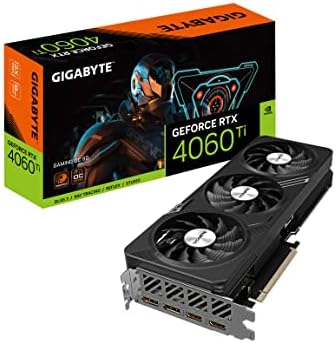
GIGABYTE GeForce RTX 4060 Ti Gaming OC 8GB Graphics Card
86%
92%
Performance
88%
Cooling Efficiency
89%
Value for Money
85%
Build Quality
91%
Ease of Setup
More
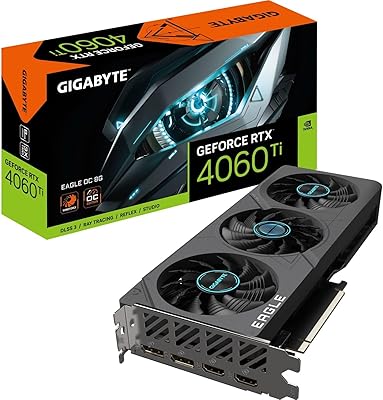
Gigabyte RTX 4060 Ti Eagle OC GPU
82%
83%
Gaming Performance
88%
Thermal Management
84%
Noise Level
86%
DLSS 3 & Frame Generation
61%
VRAM & Memory
More
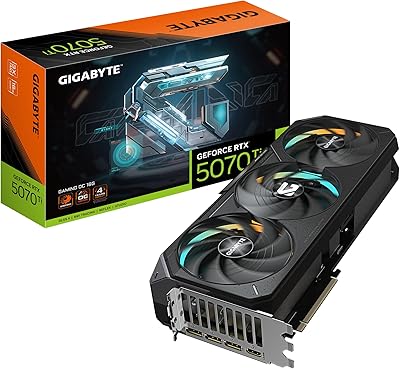
GIGABYTE GeForce RTX 5070 Ti Gaming OC 16G
86%
91%
4K Gaming Performance
89%
Ray Tracing & DLSS 4
93%
Cooling Efficiency
94%
VRAM & Memory Speed
87%
Acoustic Performance
More
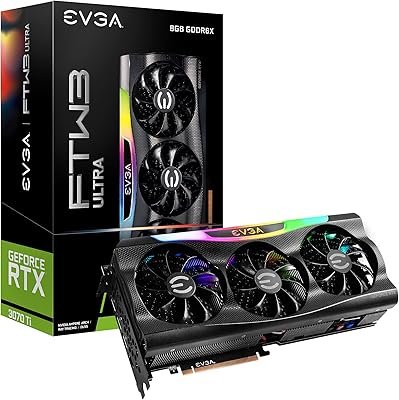
EVGA GeForce RTX 3070 Ti FTW3 Ultra Gaming 8GB GDDR6X
85%
93%
Performance in Gaming
88%
Thermal Management
91%
Build Quality
85%
Ease of Installation
78%
Compatibility with PC Cases
More
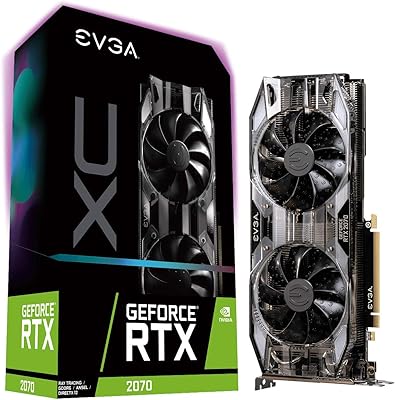
EVGA GeForce RTX 2070 XC Gaming 8GB GDDR6 Graphics Card
85%
91%
Gaming Performance
88%
Cooling Efficiency
75%
Ease of Installation
78%
Power Consumption
85%
Build Quality
More
Gigabyte RTX 4060 Ti 8GB Graphics Card
79%
91%
1080p Gaming Performance
74%
1440p Gaming Performance
58%
VRAM Adequacy
88%
Thermal Performance
86%
Acoustic Profile
More

FAQ

EVGA officially recommends a minimum 850W PSU, but if your CPU and other components are power-hungry, bumping to a 1000W unit gives you a comfortable buffer. Cutting corners on PSU wattage is one of the most common reasons people see crashes or instability with high-end GPUs, so it is not an area to economize.

It depends on the specific case, and the answer is not always obvious. The card occupies three expansion slots and is physically large, so you need to check your case's maximum GPU length clearance spec before buying. Many mid-towers handle it fine, but compact mid-towers or cases with front-mounted drive cages can be tight.

At the right price, yes — it still handles 4K gaming in demanding titles without breaking a sweat, and 12GB of GDDR6X holds up well for content creation workloads. That said, current-generation cards from NVIDIA and AMD have improved performance per watt noticeably, so if you can find this card at a meaningful discount compared to new alternatives, the value case is strong. At full original retail pricing, it is harder to recommend over newer options.

Quieter than most people expect for a card this powerful. The iCX3 triple-fan setup is well-tuned out of the box, and owner feedback consistently notes that noise levels remain reasonable even during extended gaming sessions. Under light or desktop workloads, the fans often stop completely.

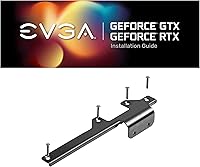
It is strongly advisable. At nearly 4 pounds across a triple-slot design, the card puts real leverage on the PCIe slot over time, particularly in a vertical motherboard orientation. EVGA sold a companion support bracket, and third-party options work just as well. It is a small investment that protects a large one.

It is genuinely capable for creative workloads. The 12GB VRAM is a meaningful advantage in applications like DaVinci Resolve, Adobe Premiere with GPU acceleration, and Blender, where running out of VRAM forces slower CPU-based fallback processing. If your work involves heavy GPU rendering or 3D scene complexity, this high-end GPU handles it comfortably.

It is entirely optional for basic use. The card works normally with standard NVIDIA drivers installed, and no EVGA software is needed to game or run applications. Precision X1 becomes relevant only if you want to adjust fan curves, monitor sensor data, tweak overclocking settings, or customize the ARGB lighting. Some users report occasional quirks after driver updates, so treating it as supplementary software rather than a dependency is a reasonable approach.

With ray tracing enabled at high or ultra settings and DLSS set to Quality mode, expect frame rates generally in the 60 to 80 fps range depending on scene complexity — playable and visually impressive. Without DLSS, native 4K ray tracing is more demanding and you will see lower averages. DLSS Quality mode at 4K is genuinely hard to distinguish from native rendering, so using it is a smart trade-off on this generation of hardware.

This is a legitimate concern for buyers considering a used or remaining new-old-stock unit. EVGA honored existing warranties after their GPU exit announcement, but coverage depends on purchase date and regional terms. If buying used, the warranty situation is likely expired or non-transferable. It is worth contacting EVGA support directly with the serial number to confirm the current status before committing to a purchase.

Yes. The RTX 3080 Ti FTW3 has one HDMI 2.1 and three DisplayPort 1.4a outputs, so four-monitor configurations are fully supported within NVIDIA's driver capabilities. Whether you are running a productivity multi-display setup or a surround gaming arrangement, the outputs and bandwidth are there to handle it.

Where to Buy