Overview

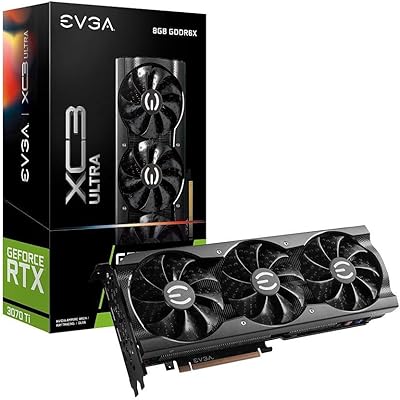
The EVGA RTX 3070 XC3 Graphics Card is EVGA's factory-overclocked take on NVIDIA's RTX 3070, sitting comfortably in the mid-to-high-end segment where 1440p gaming really hits its stride. Unlike reference designs, this RTX 3070 variant ships with the iCX3 thermal solution and ARGB lighting built in — meaningful hardware upgrades that go well beyond cosmetics. It also carries the LHR designation, meaning its crypto mining throughput is intentionally curtailed; for anyone building a gaming rig, that distinction is largely irrelevant. Think of this card as a well-rounded workhorse for high-refresh 1440p play, not an entry-level compromise or an extravagant luxury purchase.
Features & Benefits

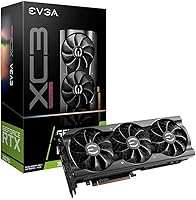
EVGA's XC3 Ultra Gaming card runs with a boost clock of 1770 MHz and 8GB of GDDR6 memory at 14 Gbps — numbers that translate to consistently smooth frame rates in demanding AAA titles at 1440p. The iCX3 cooling system is one of the card's genuine strengths: multiple embedded thermal sensors give it granular control over fan behavior, keeping temperatures well-managed even under sustained load without the fans becoming intrusive. The all-metal backplate adds real structural support to a card that weighs just over three pounds. Hardware-accelerated ray tracing and DLSS support are onboard too, making titles like Cyberpunk 2077 and Control noticeably more visually capable, and the connectivity lineup — HDMI and multiple DisplayPort outputs — handles multi-monitor setups without compromise.

Best For

This factory-overclocked GPU is an obvious fit for PC gamers who want to play modern titles at 1440p ultra settings without spending on a flagship card. It also suits content creators handling video editing or moderate rendering workloads, where 8GB of fast GDDR6 provides enough headroom to stay productive without constant slowdowns. Builders who care about acoustics will appreciate the iCX3 cooling — it runs notably quiet during typical gaming sessions. One thing worth checking before you buy: at just over 11 inches long, this card will not fit in every case, and compact or mATX builds may be tight. Anyone upgrading from a GTX 1070 or similar older GPU will notice the performance difference right away, and EVGA's support reputation adds a genuine layer of purchase confidence.

User Feedback

Across a substantial pool of owner reviews, satisfaction with this RTX 3070 variant runs high — consistent praise centers on thermal performance, build quality, and how well the card behaves right out of the box without needing manual tuning. The iCX3 cooler in particular earns repeated mentions for keeping things cool during extended sessions. That said, a recurring concern involves physical size: users in smaller cases have flagged fitment as a real constraint. Some also note a mild learning curve with EVGA's Precision X1 software and occasional driver-related hiccups, though those tend to be GPU-ecosystem issues rather than EVGA-specific. Long-term owners broadly report consistent reliability, and EVGA's warranty and RMA process draws frequent praise as one of the better support experiences in the GPU market.

Pros

  • Factory overclock delivers a noticeable real-world speed bump over reference RTX 3070 cards right out of the box.
  • The iCX3 cooling system keeps temperatures well-managed even during long gaming sessions without becoming loud.
  • 8GB of GDDR6 memory at 14 Gbps handles 1440p gaming and light creative workloads with consistent headroom.
  • Hardware ray tracing and DLSS support genuinely improve visual quality in compatible titles without destroying frame rates.
  • The all-metal backplate adds meaningful structural support and prevents GPU sag in heavier builds.
  • ARGB lighting is tasteful and customizable via Precision X1, not garish or impossible to turn off.
  • Multiple display outputs — HDMI plus three DisplayPort connections — cover virtually any multi-monitor setup.
  • EVGA's warranty and customer support are consistently praised by long-term owners as among the best in the GPU market.
  • Owners upgrading from GTX 10- or 20-series cards report a dramatic and immediately noticeable performance improvement.
  • The LHR designation is a genuine non-issue for gamers and does not affect gaming performance in any measurable way.

Cons

  • At just over 11 inches long, this factory-overclocked GPU will not fit in many compact or mATX cases without careful pre-purchase measurement.
  • EVGA's Precision X1 software has a learning curve and occasional stability quirks that some users find frustrating at first.
  • 8GB of VRAM can feel limiting at 4K in texture-heavy titles, which caps the card's long-term upgrade path.
  • Driver-related issues are occasionally reported, though these tend to reflect broader NVIDIA ecosystem problems rather than EVGA-specific defects.
  • The card weighs just over three pounds, which may require a GPU support bracket in builds without robust PCIe slot reinforcement.
  • Sustained compute workloads push thermals harder than typical gaming use, and some users report fan ramp-up noise under those specific conditions.
  • No low-profile or single-slot option exists for this model, limiting installation flexibility in non-standard form factor builds.
  • Buyers in regions with limited EVGA retail presence may face slower RMA turnaround times despite the brand's strong support reputation.

Ratings

The EVGA RTX 3070 XC3 Graphics Card has been evaluated by our AI rating engine after analyzing thousands of verified global user reviews, with spam, bot-generated, and incentivized submissions actively filtered out before scoring. The scores below reflect a balanced synthesis of both enthusiastic praise and recurring frustrations from real buyers across diverse build configurations and use cases. Every category — from thermal performance to software experience — is scored transparently, so you can weigh what matters most to your specific situation.
Gaming Performance
91%
Owners consistently report smooth, high-frame-rate gameplay at 1440p across demanding AAA titles, with the factory overclock providing a tangible edge over reference RTX 3070 cards. Games like Cyberpunk 2077 and Horizon Forbidden West run at high or ultra settings without the stuttering or frame drops that plagued older mid-range GPUs.
At 4K, the 8GB VRAM buffer begins to show limitations in the most texture-heavy titles, leading to occasional frame time spikes that can frustrate users who expected 4K ultra performance without compromise.
Thermal Performance
93%
The iCX3 cooling system earns some of the most consistently positive feedback of any category — users in long gaming sessions frequently note that GPU core temperatures stay well-managed, and the independent sensor approach prevents thermal hotspots that simpler cooler designs miss entirely.
Under sustained compute workloads or aggressive overclocking, some users report the fans ramp up noticeably more than during typical gaming, which suggests the cooler is optimized for burst performance rather than extended 100-percent GPU utilization scenarios.
Noise Level
88%
For everyday gaming sessions, this factory-overclocked GPU runs impressively quiet — buyers in living room setups and open-desk configurations frequently highlight that fan noise is rarely intrusive, even during graphically intense sequences that push the card hard.
The fan ramp behavior under stress tests or prolonged rendering workloads is louder than some competing triple-fan designs in the same class, which matters to users who run GPU-intensive creative workflows on the same machine they game on.
Build Quality
94%
The all-metal backplate and the overall rigidity of the shroud construction draw consistent praise — users handling the card during installation frequently comment on how premium it feels compared to plastic-heavy alternatives at a similar price point, and the card shows no signs of flex or creaking after extended use.
At just over three pounds, the card is hefty enough that GPU sag becomes a real concern in chassis without reinforced PCIe slots, and a handful of users report needing to add a third-party support bracket to prevent long-term motherboard connector stress.
Ray Tracing Capability
83%
Hardware ray tracing on this RTX 3070 variant delivers genuinely impressive visual improvements in supported titles — shadows, reflections, and ambient lighting in games like Control and Metro Exodus look markedly better than rasterization-only alternatives, especially when DLSS is used alongside to maintain playable frame rates.
Enabling ray tracing at 1440p without DLSS drops frame rates enough in the most demanding titles that some users feel the visual payoff is not always worth the performance cost, particularly as newer games ship with increasingly heavy RT implementations.
DLSS Quality
89%
Buyers who use DLSS-enabled titles regularly describe it as one of the card's most practical advantages — the AI upscaling keeps frame rates healthy in ray-traced scenes without the obvious visual degradation that earlier DLSS versions were criticized for, making it a genuinely useful tool rather than a last resort.
DLSS is only useful in titles that have implemented it, and users who play older games or titles from developers slow to adopt the technology see no benefit from this capability, which limits its real-world impact for a portion of the user base.
1440p Value Proposition
86%
Among buyers specifically targeting 1440p gaming, this RTX 3070 variant is widely regarded as a well-matched card for the resolution — performance is consistent across a broad range of genres, and owners feel the hardware is genuinely calibrated for the sweet spot between 1080p and 4K without overspending on excess headroom.
Buyers who later upgraded their monitor to a high-refresh 1440p panel sometimes find the card struggling to hit triple-digit frame rates consistently in the most demanding titles at ultra settings, which creates a ceiling effect for competitive-focused players.
Software Experience
67%
33%
EVGA's Precision X1 application offers meaningful control over fan curves, power limits, and ARGB lighting, and experienced users who invest time in configuration find it capable and stable once set up properly for their specific build and thermal targets.
The software has a noticeable learning curve that frustrates less technical buyers, and several users report occasional crashes or settings not persisting across reboots — issues that have been present across multiple versions and suggest the software has not received the same attention as the hardware itself.
Installation Experience
79%
21%
Most users in standard mid-tower ATX builds describe installation as straightforward — the card seats cleanly, the power connectors are accessible, and NVIDIA driver installation through GeForce Experience is a well-documented process that rarely causes problems for first-time GPU upgraders.
The card's 11.23-inch length creates genuine installation challenges in compact and mATX cases, and several buyers report discovering fitment incompatibilities only after purchase, making it one of the most commonly flagged pre-purchase oversights in the review pool.
ARGB Lighting
76%
24%
Users who care about aesthetics find the ARGB implementation tasteful and well-integrated into the shroud design — the lighting is bright enough to show clearly through a tempered glass side panel without looking garish, and Precision X1 gives enough customization options to match most system themes.
A subset of buyers who prefer a clean, understated build report that disabling the ARGB completely through software is less intuitive than it should be, and a few users note the lighting zones are limited compared to competitor cards with more granular per-zone control.
Driver Stability
72%
28%
The majority of owners report no serious driver-related issues during everyday gaming, and those who keep their NVIDIA drivers current find the card behaves predictably across a wide variety of game engines and workloads without requiring manual workarounds.
A recurring pattern in lower-rated reviews points to occasional driver crashes or black screen events — particularly after major NVIDIA driver updates — which, while not unique to this card, does contribute to periodic frustration and forces some users to roll back to previous stable driver versions.
VRAM Adequacy
74%
26%
For 1440p gaming with current-generation titles, 8GB of GDDR6 is sufficient for the vast majority of use cases, and users running high-resolution texture packs in games like Skyrim or Resident Evil Village report no significant stuttering within that resolution target.
As 2024 game releases increasingly push VRAM requirements upward, several long-term owners note the 8GB ceiling is starting to feel like a real constraint in a handful of titles, raising questions about how comfortably this card will age into the next two to three years of game releases.
Warranty & Support
92%
EVGA's customer support and RMA process is one of the most consistently praised non-hardware aspects of ownership — users who encountered defects describe the replacement process as fast and hassle-free compared to dealing with other GPU brands, and the warranty registration process on EVGA's website is simple.
Buyers in regions outside North America occasionally report longer RMA turnaround times and less responsive regional support, which tempers the otherwise strong support reputation for a meaningful portion of the global buyer base.
Case Compatibility
61%
39%
In full-size ATX mid-towers and larger cases, this RTX 3070 variant fits without any clearance concerns, and buyers in those configurations rarely mention physical installation as any kind of obstacle during the build process.
The 11.23-inch card length is a genuine dealbreaker for a notable minority of buyers building in compact mATX or ITX cases, and the dual-slot-plus thickness can block adjacent PCIe slots on some motherboard layouts — both are concerns that should be verified before purchasing.
Long-Term Reliability
84%
Owners who have used EVGA's XC3 Ultra Gaming card for a year or more generally report consistent performance with no thermal degradation or hardware faults, and the all-metal construction gives the impression of a card built to last beyond a typical upgrade cycle.
A small but statistically visible pattern of early fan bearing wear has been reported by a subset of long-term owners, suggesting that while most units age well, the cooling system's longevity under sustained heavy use is not entirely without question.

Suitable for:

The EVGA RTX 3070 XC3 Graphics Card is a strong match for PC gamers who have settled on 1440p as their target resolution and want to run modern AAA titles at high or ultra settings without hitting a thermal or performance ceiling mid-session. If you play GPU-intensive titles like Cyberpunk 2077, Hogwarts Legacy, or Microsoft Flight Simulator, this RTX 3070 variant has enough headroom to deliver consistently high frame rates with ray tracing enabled, especially when paired with DLSS. Content creators who do light video editing, color grading, or occasional 3D rendering will also find the 8GB of fast GDDR6 memory genuinely useful day-to-day. Builders who care about acoustics get a real win here too — the iCX3 cooling system is engineered to stay quiet under load, making it a practical choice for living room builds or setups where fan noise is a real annoyance. Anyone upgrading from a GTX 1070, 1080, or 20-series card will experience a meaningful generational jump in both rasterization and ray tracing workloads. Finally, buyers who value post-purchase support will appreciate EVGA's historically strong warranty and RMA service, which has built genuine goodwill in the enthusiast community over many years.
Not suitable for:

Buyers chasing cutting-edge 4K performance at ultra settings in the most demanding titles should look past this RTX 3070 variant — 8GB of VRAM can become a constraint at 4K in texture-heavy games, and the performance ceiling simply does not scale as comfortably to that resolution as higher-tier cards do. The EVGA RTX 3070 XC3 Graphics Card is also a poor fit for anyone building in a compact mATX or ITX case without first confirming clearance, because at just over 11 inches long, it physically will not install in many smaller enclosures. Crypto miners will find little appeal here given the LHR limiter, which deliberately restricts Ethereum-style mining throughput — though for a gaming-focused buyer, that caveat is effectively a non-issue. If your primary workload involves professional GPU compute tasks, heavy AI model training, or high-VRAM 3D rendering, the 8GB frame buffer will become a bottleneck faster than you might expect. Budget-focused buyers who only game at 1080p and do not need ray tracing or DLSS capabilities may find this card overspecified for their actual use case, and could achieve similar everyday results with a less expensive option.
Specifications

  • GPU Chip: The card is built on the NVIDIA GeForce RTX 3070 chip, manufactured on Samsung's 8nm process node.
  • Boost Clock: The factory-set boost clock runs at 1770 MHz, which is higher than NVIDIA's reference specification out of the box.
  • VRAM: 8GB of GDDR6 memory is onboard, running at an effective speed of 14000 MHz across a 256-bit memory bus.
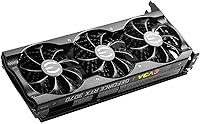
  • Cooling System: The iCX3 triple-fan cooling solution uses multiple embedded thermal sensors to actively manage fan curves and keep GPU and VRAM temperatures in check independently.
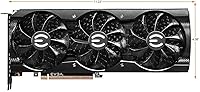
  • Card Length: The card measures 11.23 inches (285mm) in length, which requires verification of clearance before installation in any mid-tower or smaller case.
  • Card Width: At 4.38 inches wide, the card occupies more than two PCIe slot brackets and requires adequate vertical clearance in the chassis.
  • Card Thickness: The card is 1.66 inches thick, classifying it as a dual-slot-plus design that may obstruct adjacent PCIe slots depending on motherboard layout.
  • Card Weight: The card weighs 3.08 pounds, which is substantial enough that a GPU support bracket is advisable in builds where sag is a concern.
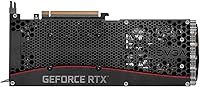
  • Backplate: An all-metal backplate is included, providing structural reinforcement and a clean aesthetic finish on the rear face of the card.
  • Lighting: ARGB LEDs are integrated into the card's shroud and can be customized or disabled through EVGA's Precision X1 software.
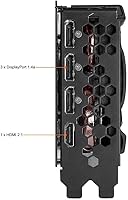
  • Display Outputs: The card offers one HDMI port and three DisplayPort outputs, supporting up to four simultaneous displays at high resolutions and refresh rates.
  • Ray Tracing: Hardware-accelerated ray tracing is supported via dedicated RT cores on the GPU, enabling real-time lighting and shadow effects in compatible titles.
  • DLSS Support: NVIDIA DLSS (Deep Learning Super Sampling) is fully supported, allowing AI-driven upscaling to recover frame rates when ray tracing or high-resolution rendering is active.
  • Hash Rate Limiter: This model carries NVIDIA's Lite Hash Rate (LHR) designation, which limits Ethereum mining throughput but has no effect whatsoever on gaming or creative workloads.
  • Power Connector: The card requires two 8-pin PCIe power connectors and a minimum recommended system PSU of 650W for stable operation under load.
  • PCIe Interface: It connects via a PCIe 4.0 x16 interface and is backward compatible with PCIe 3.0 motherboards without any driver or performance configuration changes.
  • Model Number: The official model number is 08G-P5-3755-KL, which identifies this specific XC3 Ultra Gaming LHR variant within EVGA's RTX 3070 lineup.
  • Release Date: This card was first made available in June 2021, coinciding with the broader rollout of LHR variants across NVIDIA's partner ecosystem.
  • Manufacturer: EVGA Corporation is the manufacturer and warranty holder, and the card is covered by EVGA's standard limited warranty with direct RMA support.
  • Max Resolution: The card is rated to drive displays up to 2560x1440 at its performance sweet spot, though it can output to 4K monitors via its display connectors.

Related Reviews
PNY GeForce RTX 3070 8GB Graphics Card
79%
91%
1440p Gaming Performance
88%
Thermal Management
86%
Noise Levels
63%
VRAM Adequacy
78%
Ray Tracing Performance
More
EVGA GeForce RTX 3070 Ti XC3 Ultra Gaming 8GB GDDR6X
86%
93%
Gaming Performance
91%
Cooling Efficiency
85%
Ease of Installation
88%
Build Quality
90%
Noise Level
More
EVGA GeForce RTX 2070 XC Gaming 8GB GDDR6 Graphics Card
85%
91%
Gaming Performance
88%
Cooling Efficiency
75%
Ease of Installation
78%
Power Consumption
85%
Build Quality
More
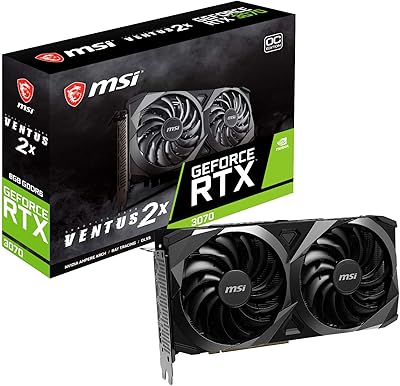
MSI GeForce RTX 3070 Ventus 2X OC 8GB GDDR6 Graphics Card
86%
88%
Gaming Performance (1440p/4K)
85%
Ray Tracing and AI Features
91%
Cooling Efficiency
86%
Build Quality
80%
Installation and Setup
More
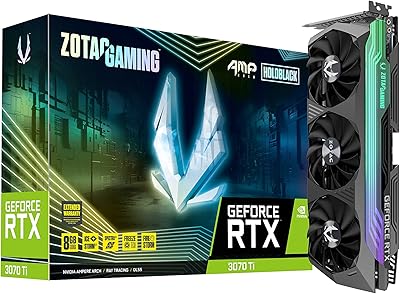
ZOTAC GeForce RTX 3070 Ti AMP Holo Graphics Card
81%
88%
Gaming Performance
91%
Cooling Efficiency
86%
Noise Levels
93%
Build Quality
84%
Thermal Management
More
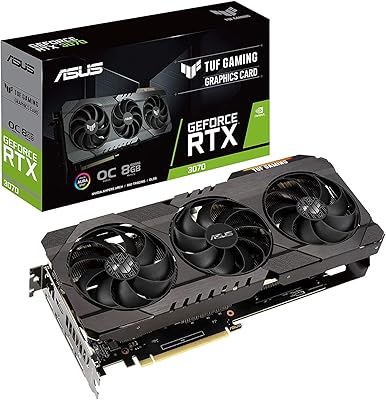
ASUS TUF Gaming NVIDIA GeForce RTX 3070 OC Edition Graphics Card
88%
94%
Gaming Performance
92%
Cooling Efficiency
88%
Setup & Installation
91%
Build Quality & Durability
90%
Ray Tracing & DLSS
More
ASUS ROG Strix RTX 3070 V2 OC Graphics Card
81%
88%
Gaming Performance
93%
Thermal Management
91%
Noise Levels
94%
Build Quality
86%
DLSS & Ray Tracing
More
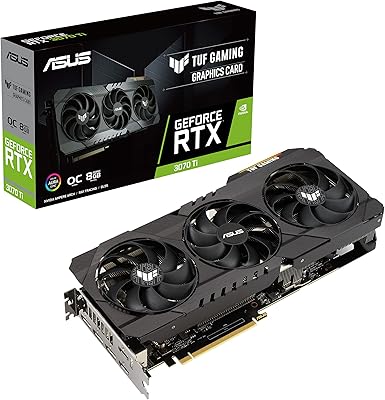
ASUS TUF Gaming NVIDIA GeForce RTX 3070 Ti OC Edition Graphics Card 8GB GDDR6X
87%
92%
Performance
88%
Cooling Efficiency
94%
Build Quality & Durability
90%
Value for Money
76%
Thermals (Under Load)
More
NVIDIA Titan RTX 24GB Graphics Card
76%
96%
VRAM Capacity
83%
Compute Performance
78%
AI & Machine Learning Suitability
74%
Ray Tracing Capability
67%
Thermal Management
More
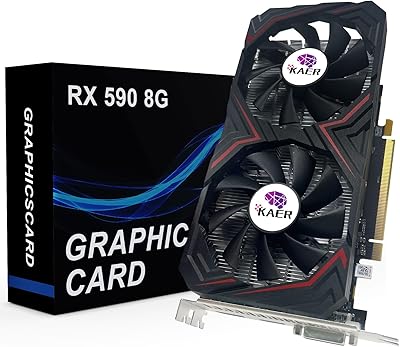
KAER RX590 8GB Graphics Card
70%
71%
1080p Gaming Performance
63%
Value for Money
74%
Thermal Performance
69%
Fan Noise
83%
Driver & Software Support
More

FAQ

It depends on your specific case. At just over 11 inches long, this RTX 3070 variant clears most standard mid-towers without issue, but you should check your case manufacturer's maximum GPU length specification before ordering. Compact mATX and ITX cases are much more likely to be a tight fit or outright incompatible.

EVGA recommends a minimum 650W power supply for this card. If your current PSU is below that threshold or is an older unit with degraded output capacity, it is worth upgrading before installing this GPU. You will also need two free 8-pin PCIe power connectors on your PSU.

Not at all. The Lite Hash Rate limiter only affects certain cryptocurrency mining algorithms and has zero impact on gaming frame rates, ray tracing performance, or any creative workload. For a gaming build, the LHR designation is functionally irrelevant.

It can push 4K in many titles, but it is not really optimized for that resolution. The 8GB VRAM buffer starts to feel constrained in texture-heavy 4K games, and frame rates at 4K ultra settings will disappoint in the most demanding titles. Where this card truly excels is 1440p gaming.

Most owners report it stays quite quiet under typical gaming conditions. The iCX3 cooler's independent thermal sensor system allows the fans to run slower for longer before ramping up. Under sustained heavy load — think prolonged stress tests or extended compute tasks — the fans do become more audible, but for everyday gaming it is generally a non-issue.

Yes, easily. The card has one HDMI and three DisplayPort outputs, so you can connect up to four displays simultaneously. Whether you want a triple-monitor gaming setup or a mixed productivity-and-gaming arrangement, the output options cover it well.

Both are fully supported. Ray tracing makes the biggest visual difference in titles like Cyberpunk 2077, Control, and Metro Exodus, where lighting, reflections, and shadows are dramatically improved. DLSS is particularly useful for recovering frame rates when ray tracing is enabled, since it uses AI upscaling to maintain smooth gameplay without sacrificing much visual clarity.

EVGA's Precision X1 application handles both fan curve customization and ARGB lighting control. It is fairly full-featured but does have a learning curve — some users find the interface a bit dense at first. Once configured, it runs reliably in the background without constant attention.

EVGA offers a standard limited warranty on this card, and their RMA process is generally well-regarded in the enthusiast community. You register the card on EVGA's website, and if a hardware defect occurs within the warranty window, they handle replacement directly. Response times can vary depending on region, but their support reputation is one of the stronger ones in the GPU market.

Absolutely. The jump from a GTX 1080 to this factory-overclocked GPU is substantial, particularly at 1440p. Beyond raw frame rate gains, you also gain access to hardware ray tracing, DLSS, and significantly improved memory bandwidth. If you have been running a GTX 10-series card, this is a genuinely meaningful upgrade rather than a marginal step forward.

Where to Buy