Overview

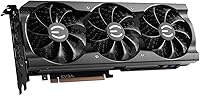
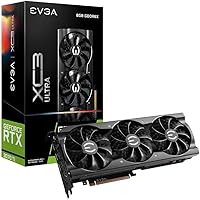
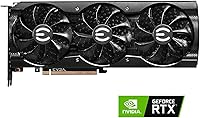
The EVGA RTX 3070 Ti XC3 Graphics Card arrived in mid-2021 as one of the more compelling factory-overclocked options in NVIDIA's RTX 30-series lineup — a generation that redrew the line between high-end 1440p and entry-level 4K gaming. EVGA, long regarded as one of NVIDIA's most trusted board partners, built the XC3 Ultra as a step above the reference Founders Edition in both cooling and clock speed. The headline specs — 8GB of GDDR6X memory and a 1815 MHz boost clock — paint an attractive picture. That said, honest buyers should know that 8GB of VRAM is increasingly tight in some modern open-world titles, so expectations should be set accordingly.
Features & Benefits

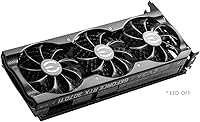
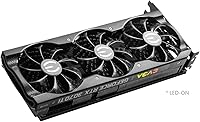
Where the XC3 Ultra really distinguishes itself is in how it handles heat. EVGA's iCX3 triple-fan cooling keeps temperatures genuinely controlled under extended gaming sessions — a world apart from the blower-style coolers found on some reference designs. The factory overclock, sitting 45 MHz above the Founders Edition baseline, delivers a modest but real performance edge without requiring any manual tuning. GDDR6X memory running at 19 Gbps gives this card a bandwidth advantage that shows up in texture-heavy scenarios. The all-metal backplate adds structural rigidity, and the adjustable ARGB lighting is tasteful rather than garish. EVGA's 3-year warranty rounds out a package that feels genuinely premium.

Best For

This EVGA 3070 Ti hits its stride at 1440p on high settings — it is the resolution where the card was clearly designed to operate, pushing well over 100 fps in most competitive and AAA titles. Content creators doing video exports or light rendering will also find value here, thanks to NVIDIA's NVENC encoder and CUDA acceleration. The triple-fan cooler and quiet acoustics make it a natural fit for open-case builds where noise and thermals matter. It is also a strong choice for anyone upgrading from a GTX 1070 or RTX 2070, where the generational improvement is substantial. A compact or ITX build, however, is a harder sell given the card's 11.23-inch length.

User Feedback

Across 259 ratings and a 4.6-star average, buyer sentiment is largely positive, with most praise landing on quiet fan operation and solid construction right out of the box. Several buyers specifically highlighted EVGA's support team when things went wrong — fast RMA response times appear consistently across positive reviews. The two most common criticisms are predictable but worth noting: the card's physical length creates fitment headaches in smaller cases, and the 8GB VRAM ceiling is becoming more noticeable in recent titles with high-resolution textures. Also worth flagging — EVGA exited the GPU market in late 2022, so while existing warranty coverage remains honored, this is a card with a finite support runway.

Pros

  • iCX3 triple-fan cooler keeps temperatures genuinely low and fan noise stays impressively quiet under gaming loads.
  • Factory overclock delivers a real-world performance edge without requiring any manual tuning from the buyer.
  • GDDR6X memory at 19 Gbps provides strong bandwidth headroom in texture-intensive games at 1440p.
  • All-metal backplate adds structural rigidity and looks clean in any open-side build.
  • Hardware ray tracing support brings meaningful visual improvements in titles built around it.
  • EVGA's 3-year warranty was one of the strongest guarantees offered by any AIB partner in its class.
  • NVENC encoder handles streaming and video export tasks efficiently without pulling from gaming performance.
  • Buyers consistently report smooth out-of-box performance with no driver headaches or coil whine issues.
  • ARGB lighting is adjustable and tasteful — easy to sync or simply turn off if that is your preference.
  • Customer support responsiveness earned repeated praise from buyers who went through the RMA process.

Cons

  • 8GB VRAM is increasingly limiting in newer open-world and texture-heavy titles, especially above 1080p.
  • At 11.23 inches long, this card simply will not fit in many compact or mini-ITX cases.
  • EVGA exited the GPU market in 2022, so no future product lineup or ecosystem support exists from this brand.
  • Competing current-generation cards may now offer comparable or better performance at lower prices on the used market.
  • Power draw is substantial — budget for a quality PSU with adequate headroom, ideally 750W or above.
  • No performance uplift from overclocking headroom beyond the factory boost since the XC3 already runs near the chip ceiling.
  • Ray tracing performance, while functional, drops frame rates noticeably in demanding RT-enabled titles at 1440p.
  • Heavier than average at 3.31 pounds, which can stress motherboard PCIe slots without a GPU support bracket.

Ratings

The scores below were generated by our AI system after analyzing verified buyer reviews for the EVGA RTX 3070 Ti XC3 Graphics Card from across global markets, with spam, bot submissions, and incentivized feedback actively filtered out before any scoring was calculated. Each category reflects both the genuine enthusiasm and the honest frustrations real owners have shared — nothing is smoothed over to make the card look better than it is.
1440p Gaming Performance
91%
Owners consistently report that this card handles demanding AAA titles at 1440p with high or ultra settings without breaking a sweat — games like Cyberpunk 2077 and Horizon Forbidden West run fluidly where older cards struggled. The factory overclock gives it a small but genuine edge in sustained frame rate consistency.
A handful of buyers noted that in some of the most GPU-intensive scenes, frame pacing can become slightly uneven without DLSS enabled. The gap between this card and the RTX 3080 becomes more noticeable when pushing frame rates above 144 fps in the most demanding titles.
Thermal Performance
89%
The iCX3 triple-fan cooler earns consistent praise from buyers who run long gaming sessions — GPU temperatures routinely land in the low-to-mid 70s Celsius under sustained load, which is genuinely impressive for a card at this performance tier. Several owners noted that the card felt cool to the touch on the backplate even after hours of use.
A small number of users in poorly ventilated cases reported temperatures creeping higher than expected, suggesting the card benefits from good airflow in the surrounding build. The cooler is also fairly large, contributing to the card's overall weight and length.
Noise Level
88%
Quiet operation is one of the most frequently praised traits across owner reviews — many buyers specifically switched from blower-style reference cards and described the difference as dramatic. Even under extended gaming loads, the fan noise stays at a level that is easy to ignore without headphones.
At maximum fan speeds — which typically only kick in during stress testing or extreme ambient temperatures — the card does become audible. A small number of units were reported to exhibit a faint coil whine under specific load conditions, though this appears to affect a minority of cards.
Build Quality
93%
The all-metal backplate and overall construction feel genuinely premium — buyers frequently describe the card as feeling solid and well-engineered compared to lighter plastic-backed alternatives. The PCB quality and component tolerances reflect the care EVGA put into its enthusiast-tier AIB designs.
At 3.31 pounds, the card is heavy enough that some buyers worry about long-term stress on the PCIe slot without a support bracket. The bracket itself is not included, which feels like an oversight at this price tier.
VRAM Adequacy
61%
39%
For games released before 2023, 8GB of GDDR6X is more than sufficient at 1440p — texture quality stays high, load times are fast, and there is no stuttering from VRAM overflow in most titles buyers are actually playing day-to-day.
In more recent open-world titles with high-resolution texture packs, 8GB is increasingly tight at 1440p and outright limiting at 4K. Several buyers noted they had to reduce texture settings in specific games to avoid hitching — a frustrating trade-off on what was a premium card at launch.
4K Gaming Capability
58%
42%
The card can output and handle 4K in lighter titles and older games without significant issues — strategy games, indie titles, and esports games at 4K all run cleanly. DLSS helps push playable frame rates in some more demanding 4K scenarios.
In demanding modern games at native 4K ultra settings, this card runs into both GPU headroom and VRAM limits simultaneously. Buyers who specifically purchased it for 4K gaming report disappointment; most end up dropping to high settings or enabling DLSS just to maintain acceptable performance.
Ray Tracing Performance
69%
31%
Hardware ray tracing is functional and noticeably improves visual quality in titles like Control and Metro Exodus — buyers who tried ray tracing for the first time on this card generally appreciated the visual upgrade. Pairing RT with DLSS Quality mode makes the experience considerably more practical.
Ray tracing at 1440p with ultra RT settings still pushes the card hard, and frame rates can drop below comfortable thresholds in the most demanding RT implementations. Most owners land on medium RT settings as the sweet spot between visuals and performance.
Factory Overclock Value
74%
26%
The 45 MHz boost clock advantage over the Founders Edition is consistent and requires no effort from the buyer — it simply runs faster out of the box with no manual tuning needed. For buyers who prefer a set-and-forget approach, the XC3 variant delivers that reliably.
The performance delta between the XC3 Ultra and reference clocks is real but modest in practice — most benchmarks show a 2 to 3 percent frame rate improvement, which is unlikely to be perceptible during normal gameplay. Manual overclockers may find the headroom above the factory clock is limited.
Case Compatibility
55%
45%
In standard mid-tower and full-tower cases, installation is straightforward with no unusual clearance issues. The card fits well in popular enclosures like the Fractal Meshify or NZXT H510, which are common choices among the enthusiast buyers this card targets.
At 11.23 inches long, this card is flatly incompatible with a significant number of compact and mini-ITX cases — it is one of the top recurring complaints in reviews. Buyers who did not measure first frequently returned or resold the card after discovering the fitment problem.
Streaming & Content Creation
83%
The NVENC hardware encoder handles OBS streaming at 1080p60 and 1440p60 with minimal frame rate impact during gaming — streamers specifically praise how smooth the output looks compared to software encoding on older cards. Light video editing and export in Premiere or Resolve also benefits from CUDA acceleration.
For heavier creative workflows involving 4K timelines with complex effects or 3D rendering, the 8GB VRAM ceiling becomes a bottleneck before the GPU compute does. Professional-grade workstation users would be better served by a card with more dedicated memory.
ARGB Lighting
77%
23%
Buyers with open-side cases consistently describe the ARGB lighting as tasteful and well-implemented — the illumination is bright enough to make an impact without overwhelming the rest of the build. The ability to turn it off entirely through Precision X1 is appreciated by those who prefer a clean look.
Integration with third-party RGB ecosystems like ASUS Aura Sync or MSI Mystic Light is inconsistent and not officially guaranteed. Some buyers found the syncing unreliable without manual workarounds, which is a friction point in builds centered around a unified lighting theme.
Warranty & Support
82%
18%
EVGA's 3-year warranty and the responsiveness of their RMA process earned genuine praise in buyer reviews — multiple owners described receiving replacement cards faster than expected after filing claims. The quality of human support interactions was a frequently cited differentiator compared to other AIB brands.
EVGA's exit from the GPU market in late 2022 introduces uncertainty around long-term support continuity, even if current warranty obligations are being honored. Buyers purchasing this card today should be aware that EVGA will not be releasing updated drivers, new products, or expanding GPU software support going forward.
Power Efficiency
63%
37%
Under light gaming loads and desktop use, the card draws power conservatively and the fans can run at low speeds or even stop entirely, which keeps the system quiet. The iCX3 cooling handles the thermal output of the card's TDP without requiring aggressive fan curves.
Under full gaming load, the RTX 3070 Ti is a genuinely power-hungry card — buyers with older or budget power supplies experienced instability or shutdowns before upgrading their PSU. The performance-per-watt ratio puts it behind more efficient current-generation alternatives.
Value for Money
66%
34%
At its original launch positioning, the XC3 Ultra offered a well-rounded package — strong cooling, a solid warranty, and factory overclocked performance in a premium build. Buyers who picked it up at or below its original pricing felt they received good value for a card that has held up well in its target resolution.
Compared to current-generation alternatives available today, the value calculus has shifted — newer mid-range cards offer competitive 1440p performance with more VRAM at lower prices. Buyers considering this card in today's market should compare carefully before committing, especially given EVGA's exit from GPU manufacturing.

Suitable for:

The EVGA RTX 3070 Ti XC3 Graphics Card is a strong match for enthusiast PC gamers who have settled on 1440p as their target resolution and want to run demanding titles at high or ultra settings without constant compromise. If you are coming from a GTX 1070, 1080, or any RTX 20-series card, the generational leap here is genuinely significant — faster rasterization, hardware ray tracing, and DLSS support all arrive in one upgrade. Content creators who do light video editing, streaming, or rendering will also find this card pulls its weight, particularly thanks to NVIDIA's NVENC encoder, which handles OBS streaming efficiently without gutting gaming performance. Builders who care about a quiet, well-cooled system will appreciate the iCX3 triple-fan setup, which keeps acoustic noise low even during extended play sessions. If warranty coverage and responsive customer support matter to you more than shaving a few dollars off the purchase price, this EVGA card historically backed that promise well.
Not suitable for:

Buyers chasing a serious 4K gaming setup should look elsewhere — while the EVGA RTX 3070 Ti XC3 Graphics Card can technically output at 4K, the 8GB GDDR6X frame buffer runs into real constraints in modern open-world games at that resolution, leading to texture pop-in or dropped settings. Anyone building in a compact or mini-ITX case should measure twice before buying, as the 11.23-inch card length rules out a significant number of smaller enclosures. Buyers hoping for long-term manufacturer ecosystem support should also factor in that EVGA exited the GPU market in late 2022, meaning there will be no successor products or expanding software ecosystem from this brand going forward. If your workload involves heavy 3D rendering, AI inference, or professional visualization that benefits from more VRAM, a card with 10GB or 12GB of memory would serve you considerably better. Budget-conscious shoppers comparing this against current-generation options may also find that newer mid-range cards offer competitive performance at a lower price point today.
Specifications

  • GPU Chip: Powered by the NVIDIA GeForce RTX 3070 Ti, built on Samsung's 8nm process node with 6144 CUDA cores.
  • Boost Clock: The factory overclock pushes the boost clock to 1815 MHz, sitting 45 MHz above the reference Founders Edition speed.
  • Memory: Equipped with 8GB of GDDR6X memory running at an effective 19 Gbps across a 256-bit memory bus.
  • Cooling System: EVGA's iCX3 cooling solution uses three fans with individually controlled thermal sensors to manage heat across the card's hot spots.
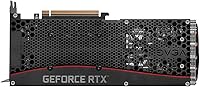
  • Backplate: A full-coverage all-metal backplate is included, providing structural rigidity and protecting the PCB from flex damage.
  • Lighting: Adjustable ARGB LED illumination is built into the card and can be customized or disabled via EVGA Precision X1 software.
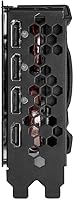
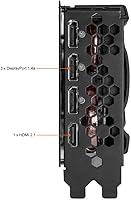
  • Display Outputs: The card provides three DisplayPort and one HDMI output, supporting a maximum resolution of 7680x4320 across up to four simultaneous displays.
  • Ray Tracing: Hardware-accelerated ray tracing is supported via dedicated RT cores on the Ampere architecture, enabling real-time lighting and shadow effects in compatible titles.
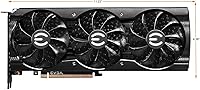
  • Card Length: The card measures 11.23 inches (285mm) in length, requiring a case with sufficient GPU clearance — compact and micro-ATX builds should verify compatibility before purchasing.
  • Card Dimensions: Full dimensions are 11.23 x 4.38 x 1.81 inches, occupying a dual-slot-plus footprint on the motherboard.
  • Weight: The card weighs 3.31 pounds, which is on the heavier end for a consumer GPU and may benefit from a PCIe support bracket in the case.
  • Interface: Connects to the motherboard via a PCI Express x16 slot, compatible with PCIe 3.0 and PCIe 4.0 motherboards.
  • Power Connectors: Requires two 8-pin PCIe power connectors; a quality power supply of at least 750W is recommended for stable operation under load.
  • DLSS Support: NVIDIA DLSS (Deep Learning Super Sampling) is supported, allowing AI-based upscaling to boost frame rates with minimal visual quality loss.
  • NVENC Encoder: The card includes NVIDIA's 7th-generation NVENC hardware encoder, which handles OBS streaming and video export tasks efficiently without impacting gaming performance.
  • Model Number: The official EVGA model number is 08G-P5-3785-KL, which identifies this specific XC3 Ultra variant within EVGA's 3070 Ti product family.
  • Warranty: EVGA covers this card with a 3-year limited warranty, including access to their direct technical support team for the duration of the coverage period.
  • Release Date: This card was first made available in June 2021, alongside the broader launch of NVIDIA's RTX 3070 Ti GPU lineup.

Related Reviews
ZOTAC GeForce RTX 3070 Ti AMP Holo Graphics Card
81%
88%
Gaming Performance
91%
Cooling Efficiency
86%
Noise Levels
93%
Build Quality
84%
Thermal Management
More
ASUS TUF RTX 3070 Ti Graphics Card
80%
88%
Gaming Performance
91%
Thermal Management
93%
Noise Levels
89%
Build Quality
61%
VRAM Capacity
More
EVGA RTX 3070 XC3 Graphics Card
82%
91%
Gaming Performance
93%
Thermal Performance
88%
Noise Level
94%
Build Quality
83%
Ray Tracing Capability
More
PNY GeForce RTX 3070 8GB Graphics Card
79%
91%
1440p Gaming Performance
88%
Thermal Management
86%
Noise Levels
63%
VRAM Adequacy
78%
Ray Tracing Performance
More
Gigabyte RTX 4060 Ti Eagle OC GPU
82%
83%
Gaming Performance
88%
Thermal Management
84%
Noise Level
86%
DLSS 3 & Frame Generation
61%
VRAM & Memory
More
GIGABYTE GeForce RTX 5070 Ti Gaming OC 16G
86%
91%
4K Gaming Performance
89%
Ray Tracing & DLSS 4
93%
Cooling Efficiency
94%
VRAM & Memory Speed
87%
Acoustic Performance
More
EVGA GeForce RTX 2070 XC Gaming 8GB GDDR6 Graphics Card
85%
91%
Gaming Performance
88%
Cooling Efficiency
75%
Ease of Installation
78%
Power Consumption
85%
Build Quality
More
GIGABYTE RTX 5060 Ti 8GB Graphics Card
84%
88%
1440p Gaming Performance
91%
DLSS 4 & AI Upscaling
66%
VRAM Capacity & Adequacy
93%
Thermal Performance & Cooling
86%
Noise Level
More
EVGA GeForce RTX 3070 Ti FTW3 Ultra Gaming 8GB GDDR6X
85%
93%
Performance in Gaming
88%
Thermal Management
91%
Build Quality
85%
Ease of Installation
78%
Compatibility with PC Cases
More
GIGABYTE GeForce RTX 4060 Ti Gaming OC 8GB Graphics Card
86%
92%
Performance
88%
Cooling Efficiency
89%
Value for Money
85%
Build Quality
91%
Ease of Setup
More

FAQ

Yes, 1440p is genuinely where the XC3 Ultra performs best. In most AAA titles you can expect high to ultra settings with frame rates comfortably above 100 fps. Competitive games will push even higher. It is a strong 1440p card without qualification.

It can output at 4K and handle lighter or older titles reasonably well at that resolution, but do not expect ultra settings at 60+ fps in demanding modern games. The 8GB GDDR6X frame buffer becomes a real bottleneck at 4K with high-resolution texture packs. If 4K gaming is your primary goal, a card with more VRAM would serve you better.

Noticeably quiet is the consistent feedback from owners. The iCX3 triple-fan system is designed to spread the thermal load across the card rather than dumping all heat through a single blower, which keeps both temperatures and fan noise well controlled. Most users report the fans are audible but not intrusive even after long gaming sessions.

That depends entirely on your case. At 11.23 inches long, this is a full-size card that fits comfortably in standard mid-tower and full-tower cases, but will be too long for many mini-ITX and some micro-ATX builds. Check your case manufacturer's listed maximum GPU length before buying — it is one of the most common fitment mistakes buyers run into.

NVIDIA's official recommendation for a 3070 Ti system is 750W, and that is a reasonable floor. If you have a high-end CPU like an Intel Core i9 or AMD Ryzen 9 in the same build, pushing toward an 850W unit gives you better headroom and protects system stability during peak load spikes.

Yes, EVGA has confirmed that warranty obligations on cards sold before their GPU exit remain honored. If you are within the 3-year coverage window, you can still submit RMA claims through EVGA's support system. That said, EVGA will not be releasing new GPU drivers, new products, or expanding its GPU ecosystem going forward, so factor that into your long-term thinking.

Yes, it holds up well for both. The NVENC hardware encoder handles OBS streaming without meaningfully cutting into your gaming frame rates, and CUDA acceleration speeds up timeline rendering in software like Adobe Premiere and DaVinci Resolve. For 4K video editing with heavy effects, you may hit memory limits, but for 1080p and standard 1440p editing workflows it is a capable tool.

The ARGB lighting is primarily controlled through EVGA's own Precision X1 software, which gives you full control over colors, patterns, and the option to turn it off entirely. Motherboard-level RGB sync support varies depending on your board and software ecosystem — it is not guaranteed to integrate with every RGB controller out of the box.

The RTX 3080 is a step above in raw performance, particularly at 4K, and critically it comes with 10GB of GDDR6X memory on the base model — more headroom in texture-heavy games. The gap in real-world 1440p performance is smaller and may not justify the price difference depending on what you find either card selling for. If 4K is in your future plans, the 3080 is the smarter long-term buy. For 1440p-only builds, the XC3 Ultra competes well.

At 3.31 pounds, sag is a legitimate concern, especially in builds where the case offers no side support for the GPU. A GPU support bracket is not included, but they are inexpensive and widely available. If you have a horizontal or open-air test bench layout, sag is less of an issue. For standard vertical PCIe mounting without a brace, adding a support bracket is a smart precaution.

Where to Buy