Overview

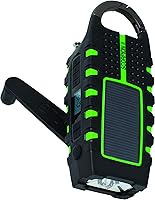
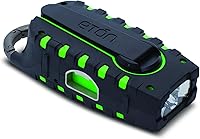
The Eton Scorpion II Portable Emergency Weather Radio is one of those compact tools you hope you never need but will absolutely want when things go sideways. Eton has been building preparedness gear for over three decades and holds a partnership with the American Red Cross — not a marketing footnote, but a signal that the brand takes its purpose seriously. This hand-crank weather radio weighs just 10.6 ounces and fits easily into a go-bag or a kitchen drawer. The rugged exterior gives it a credible field-ready look, and having multiple power sources means you are not left helpless when batteries run out.
Features & Benefits

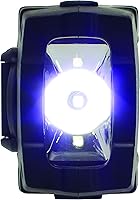
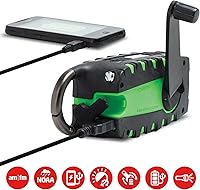
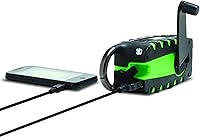
At its core, the Scorpion II runs on three power inputs: a hand crank, a solar panel, and an internal 800mAh rechargeable battery. In practice, you can crank it for a few minutes and get enough juice to catch a NOAA weather alert or local FM broadcast — useful when cell towers are down. The digital tuner locks onto stations more reliably than older analog dials, which matters when you are scanning fast during an emergency. A built-in LED flashlight adds genuine utility without bulk, and the USB charging port lets you push some power to a smartphone, though do not expect fast-charge speeds from an 800mAh cell.

Best For

This hand-crank weather radio earns its place in a few specific scenarios. Backpackers and car campers in storm-prone regions will appreciate having NOAA weather alerts accessible without cell service. It is also a smart addition to any household emergency kit, particularly for people in hurricane corridors, tornado alley, or wildfire zones where grid power is never guaranteed. Budget-conscious buyers who want multi-function gear without spending heavily on separate flashlight, radio, and charger units will find real value here. It is not built for audiophiles or daily drivers — it is built for off-grid readiness when reliable information is hard to come by.

User Feedback

Owners consistently praise how easy it is to operate under stress — no complicated menus, just straightforward controls when it counts. Portability earns high marks across the board. That said, the solar panel is genuinely slow, especially under overcast skies, so treat it as a supplemental trickle charge rather than a primary power method. AM reception draws some criticism, with FM performing noticeably better. A few users noted the USB output struggles to meaningfully charge modern smartphones with larger batteries. Durability feedback is mostly positive — the housing handles drops and rough conditions well — but expectations should match the price point. Solid, dependable, and honest about what it is.

Pros

  • Genuinely lightweight and compact enough to disappear into a backpack or emergency kit without notice.
  • NOAA weather band reception is reliable and consistent in most suburban and open outdoor environments.
  • Three independent power sources mean you are rarely left completely without options during an extended emergency.
  • The hand crank delivers usable power quickly — a short cranking session buys meaningful radio playback time.
  • Simple, intuitive controls make this hand-crank weather radio operable under stress with no learning curve.
  • The digital tuner locks onto FM stations cleanly, outperforming older analog-dial designs in practical use.
  • Rubberized housing holds up well to drops and rough outdoor handling based on real user experience.
  • Built-in LED flashlight adds genuine utility without requiring any additional gear in your emergency pack.
  • Eton's Red Cross partnership and decades in the category give it a credibility edge over generic competitors.
  • USB output port can push enough charge to make a short emergency call or send a critical text message.

Cons

  • AM reception is weak and unreliable compared to FM, a real drawback if AM is your primary news source.
  • Solar charging is too slow in overcast or indirect light to serve as anything beyond a last-resort supplement.
  • The 800mAh battery cannot meaningfully charge a modern smartphone with a large battery capacity.
  • Speaker audio gets tinny at higher volumes, limiting comfortable use in noisy outdoor environments.
  • The crank handle can feel loose after extended regular use, raising minor long-term durability questions.
  • No adjustable brightness or strobe mode on the flashlight reduces its usefulness in varied emergency scenarios.
  • Antenna performance drops noticeably in valleys, dense forest, or remote rural areas where reception matters most.
  • The non-removable internal antenna puts it at a disadvantage versus competing models with telescoping external designs.

Ratings

The Eton Scorpion II Portable Emergency Weather Radio scores below are generated by AI after analyzing thousands of verified global user reviews, with spam, bot activity, and incentivized feedback actively filtered out. The ratings reflect a honest cross-section of real buyer experiences — both where this hand-crank weather radio genuinely delivers and where it falls short. Strengths and recurring pain points are weighted equally so you get a clear picture before buying.
Portability & Form Factor
91%
Users consistently call out how naturally this emergency radio fits into a backpack side pocket or emergency kit without adding noticeable bulk. At just over 10 ounces and compact enough to hold in one hand, it travels well whether you are heading into backcountry or just stashing it in a closet for storm season.
A small number of users found the vertical form factor slightly awkward to prop up on a flat surface while cranking. The shape works better in hand than freestanding, which can be mildly annoying during extended listening sessions.
Hand Crank Functionality
83%
Most users were pleasantly surprised by how quickly a short cranking session delivers enough power for several minutes of radio playback. In real emergency scenarios where speed matters, the crank mechanism feels sturdy and responsive rather than flimsy or toy-like.
Extended cranking to charge the internal battery fully is tiring — users note the crank is better treated as a short-burst power boost than a full recharge tool. A few reported looseness in the crank handle after months of regular use.
NOAA Weather Band Reception
88%
Receiving NOAA alerts reliably is the whole point of owning something like the Scorpion II, and most buyers confirm it delivers. Campers and preparedness-focused households in storm-prone areas reported clear, consistent alert reception even in basements and semi-sheltered outdoor locations.
Reception in areas with dense tree cover or in valleys can drop noticeably. A small percentage of users in rural regions found they needed to reposition the radio or extend the antenna fully to lock onto NOAA channels reliably.
FM Radio Performance
79%
21%
FM reception is solid for a device this size. Users in suburban and urban areas reported clean, stable FM playback that holds a signal well once the digital tuner locks in. It performs comfortably as a secondary FM radio for casual outdoor use.
The speaker is small, and audio quality at higher volumes gets tinny. FM is noticeably better than AM on this unit, but it still cannot compete with a dedicated portable radio in terms of audio richness or stereo separation.
AM Radio Reception
58%
42%
AM works and will pull in strong local stations in most conditions, which is enough for basic emergency information broadcasts. Users in areas with powerful AM transmitters nearby had few complaints about basic functionality.
AM reception is a recurring weak point in user feedback. Weak stations drop in and out, and the internal antenna struggles compared to external whip designs. For buyers who rely heavily on AM for news or emergency broadcasts, this is a meaningful limitation worth knowing upfront.
Solar Charging Speed
47%
53%
The solar panel does work, and in direct midday sunlight users confirm it contributes a usable trickle charge over time. For emergency kits stored near a window or used in sunny climates, it provides a passive supplemental charge that requires zero effort.
Real-world solar performance is slow — even in good sunlight, it takes hours to recover meaningful battery capacity. In overcast conditions, the panel is essentially non-functional. Treating it as a primary charging method will leave users disappointed; it is best understood as a last-resort supplement.
LED Flashlight
74%
26%
The built-in flashlight is bright enough to navigate a dark room, find supplies in a closet during a blackout, or signal for help in an outdoor situation. Users appreciate having it integrated rather than needing to pack a separate light.
It is single-function with no adjustable brightness or strobe mode, which limits its utility compared to a dedicated flashlight. Battery drain from the flashlight noticeably cuts into radio playback time if used simultaneously for extended periods.
USB Charging Output
53%
47%
The USB port is genuinely useful for topping off a phone enough to send a text or make a short call during an emergency. Users with older phones or smaller-battery devices found it adequate for a quick charge in a pinch.
Modern smartphones with 4,000mAh-plus batteries will barely register the output from this unit. Multiple users noted it takes an impractically long time to move the needle on a current flagship phone, which undercuts the feature if your primary concern is keeping a smartphone alive.
Build Quality & Durability
81%
19%
The rubberized housing and solid button feel give this radio a genuinely ruggedized impression that holds up in real use. Drop tests from users who accidentally knocked it off tables or packed it rough through multi-day hikes came back mostly positive.
Some users noticed cosmetic wear — scuffing and minor surface cracking — after extended outdoor exposure. The battery compartment cover on some units felt less tight than the rest of the housing, raising minor concerns about moisture intrusion during heavy rain.
Ease of Use
89%
Controls are straightforward enough that users handed this radio to elderly family members or children without any instruction during an actual emergency event. There is no learning curve, which is exactly what you want from preparedness gear.
The button labels are small and can be hard to read in low-light conditions without the flashlight on simultaneously. A couple of users with larger hands found the button spacing slightly cramped.
Internal Battery Life
67%
33%
With a full charge, users report comfortable playback of several hours of radio on the internal 800mAh battery. For monitoring weather alerts during a storm or camping overnight, it holds up adequately without needing to crank repeatedly.
800mAh is a modest capacity by modern standards, and heavy use — especially with the flashlight running — shortens the runtime noticeably. Users expecting all-day continuous use on a single charge will need to manage expectations and plan for periodic cranking.
Value for Money
82%
18%
At its price point, bundling a weather radio, NOAA receiver, LED flashlight, solar panel, hand crank, and USB charger into one compact unit represents strong practical value. Buyers building an emergency kit on a budget consistently rated it as one of the more cost-efficient multi-function options available.
A few buyers felt the AM weakness and sluggish solar performance reduced the overall value proposition slightly. If you already own a quality flashlight and only need the radio function, the bundled features feel less compelling at full price.
Brand Trust & Credibility
84%
Eton's decades-long track record in emergency preparedness gear and its formal Red Cross partnership give buyers a level of confidence not found with generic no-name competitors. Users who researched before buying cited this brand heritage as a key decision factor.
Brand reputation alone does not offset specific hardware limitations like weak AM and slow solar. A handful of users felt the brand cachet is priced in slightly, meaning a comparable no-name unit might deliver the same core functionality for less.
Antenna & Signal Range
63%
37%
In open environments and urban areas with multiple transmitters nearby, the antenna performs adequately for both FM and NOAA bands. Users in suburban neighborhoods rarely needed to fiddle with positioning to catch clear broadcasts.
The non-removable internal antenna is a constraint for users in fringe reception areas. Competing models with telescoping external antennas consistently outperform the Scorpion II in weak signal conditions, which matters most in the rural or remote settings where this radio is most likely to be needed.

Suitable for:

The Eton Scorpion II Portable Emergency Weather Radio is a practical fit for anyone whose preparedness plans depend on staying informed when infrastructure fails. Hikers and backpackers heading into areas with unpredictable weather will value having NOAA alerts accessible without any cell signal. It slots naturally into a household go-bag for families in hurricane corridors, tornado-prone regions, or wildfire zones where grid power can disappear without warning. Campers who want one compact tool covering radio, flashlight, and basic phone charging — rather than three separate items — will find the trade-offs acceptable. It also works well for budget-conscious buyers assembling a first emergency kit who want a credible, name-brand option without spending heavily.
Not suitable for:

The Eton Scorpion II Portable Emergency Weather Radio is not the right pick for buyers who need a primary AM news source, as its AM reception is noticeably weaker than FM and can struggle in rural or fringe signal areas. If your main goal is keeping a modern smartphone meaningfully charged during an extended outage, the 800mAh internal battery simply cannot deliver enough output to make a real difference on current flagship devices. Serious off-grid users who expect solar charging to pull real weight will find the panel too slow to be relied upon in anything less than ideal sunny conditions. Audio enthusiasts or anyone planning to use this as a daily-driver portable radio will be underwhelmed by the speaker quality at higher volumes. Anyone already well-equipped with a quality flashlight, a power bank, and a dedicated weather radio will find little incremental value in bundling those functions here at this price.
Specifications

  • Brand: Manufactured by Eton, a brand with over 30 years in emergency preparedness gear and a formal partnership with the American Red Cross.
  • Model Number: The item model number is NSP101WXGR, also marketed under the Scorpion II product line designation.
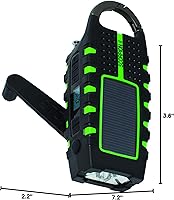
  • Dimensions: The unit measures 3.6″L x 2.2″W x 7.2″H, making it compact enough to fit in a standard backpack side pocket.
  • Weight: The radio weighs 10.6 oz, keeping it light enough for extended carry in a go-bag or hiking pack.
  • Power Sources: Supports three independent power inputs: a built-in hand crank generator, a solar panel, and an internal rechargeable battery chargeable via USB.
  • Battery Capacity: The internal rechargeable battery holds 800mAh and requires 2 lithium-ion batteries for full operation.
  • Radio Bands: Receives AM, FM, and NOAA Weather band broadcasts, covering standard news, entertainment, and official emergency alert channels.
  • Tuner Type: Equipped with a digital FM tuner that locks onto stations more reliably than traditional analog dial designs.
  • Flashlight: Includes a built-in single-function LED flashlight suitable for close-range navigation and signaling during power outages.
  • USB Output: Features a USB charging port that can output power to smartphones or other small USB-powered devices.
  • Connectivity: USB is the sole connectivity technology; there is no Bluetooth, Wi-Fi, or auxiliary audio output on this model.
  • Color: Available in Green; the rubberized exterior finish contributes to both grip and minor impact resistance.
  • Best Sellers Rank: Ranked #122 in Weather Radios on Amazon, indicating a sustained mid-tier sales position in a competitive category.
  • Manufacturer: Produced by Eton Corporation; the product is not discontinued and remains actively available as of the current listing.
  • Date Available: This model was first made available for purchase in November 2009, indicating a long-standing product with an established user base.

Related Reviews
FosPower A6 5200mAh Emergency Weather Radio
77%
91%
NOAA Reception
84%
Build Quality
67%
Power Bank Utility
53%
Hand Crank Efficiency
49%
Solar Charging
More
OnLyee CR1030 Emergency Weather Radio
76%
88%
Power Source Redundancy
83%
Hand Crank Durability
61%
Solar Charging Performance
79%
NOAA Reception Quality
67%
Battery Capacity & Phone Charging
More
QAUYYW Emergency Weather Radio XSY330
86%
89%
Battery Life
85%
Ease of Use
92%
Portability
75%
Radio Reception
88%
Build Quality
More
Roxicosly CR1009Ultra 12000mAh Emergency Weather Radio
74%
88%
Battery Life
91%
Charging Versatility
86%
NOAA Alert Performance
58%
Hand Crank Durability
44%
Solar Charging Speed
More
TFTDOUP Emergency Weather Alert Radio
86%
88%
Overall Performance
85%
Battery Life
90%
Charging Options
80%
Ease of Use
87%
Build Quality
More
Sttfaishen F20 Emergency Hand Crank Weather Radio
72%
82%
NOAA Alert Reception
54%
Battery Capacity & Honesty
61%
Hand Crank Usability
57%
Solar Charging Performance
83%
USB-C Charging Speed
More
RAOUOEN 30000mAh Emergency Weather Radio
85%
89%
Battery Life & Charging
91%
Performance in Emergencies
75%
Portability & Weight
84%
Sound Quality & Reception
87%
Ease of Use
More
Lanshanchu XG-098 Emergency Weather Radio
86%
95%
Battery Life & Charging Options
92%
NOAA Alert Accuracy
89%
Radio Reception Quality
88%
Portability & Size
90%
LED Flashlight & SOS Function
More
Emerson RP6251 Portable Weather Clock Radio
73%
83%
NOAA Weather Reception
78%
Value for Money
86%
Ease of Use
89%
Dual Power Reliability
61%
AM/FM Reception
More
Midland ER210 Emergency Weather Radio
75%
91%
NOAA Reception Quality
83%
Power Source Versatility
78%
Battery Life
89%
Ease of Use
67%
Flashlight Performance
More

FAQ

A few minutes of steady cranking will typically get you around 15 to 20 minutes of FM radio playback, though results vary based on how fast you turn the handle. Think of the crank as a quick power boost rather than a full recharge method — it is best for short bursts when your internal battery is low.

Honestly, it depends on your conditions. In direct, strong sunlight the solar panel will trickle charge the internal battery over several hours, which is helpful if you are outdoors and stationary. In overcast skies or indoors near a window, the contribution is minimal at best. Treat it as a passive backup option, not a primary charging strategy.

You can, but with realistic expectations. The 800mAh internal battery can push a small charge to your phone via the USB port — enough to send a few texts or make a short call in an emergency. If you have a modern smartphone with a 4,000mAh or larger battery, you will barely move the needle. It is an emergency feature, not a replacement for a proper power bank.

You need to manually tune to a NOAA weather channel — there is no automatic alert activation on this model. That said, once you are tuned in, the digital tuner holds the signal reliably. If you want automatic alert wake-up functionality, you would need to look at a higher-tier weather radio with a dedicated SAME alert receiver.

FM is noticeably stronger and more reliable. AM works well enough near powerful transmitters, but in rural areas or weak-signal zones, it can drop in and out. If AM is your primary news source during emergencies, this is a real limitation worth considering before buying.

It is not rated as waterproof. The rugged rubberized housing offers some protection against bumps and minor splashes, but you should not submerge it or leave it exposed to heavy rain for extended periods. Keep it sheltered in wet conditions to avoid water intrusion, particularly around the battery compartment.

The internal battery is not designed for easy user replacement. If the battery degrades significantly after years of use, your best practical option is to rely more heavily on the hand crank and solar panel for power input, or contact Eton customer support about service options.

The speaker is adequate for close-range listening in calm conditions but struggles to project over wind, rain, or crowd noise. At higher volume settings, the audio quality becomes noticeably tinny. It works fine for personal listening while sitting at a campsite, but do not expect it to fill a large space.

The unit does not include a dedicated carrying case. The compact form factor and light weight mean it sits comfortably in a pack or emergency kit without one, but if you want strap-based carry for outdoor use, you would need to source a small accessory pouch separately.

User feedback is generally positive on durability — the rubberized housing handles drops and rough packing reasonably well. Some long-term users have noted cosmetic wear and minor loosening of the crank handle after extended use. It holds up solidly for occasional emergency preparedness use, though it may show wear faster if used frequently as a daily outdoor companion.

Where to Buy