Overview

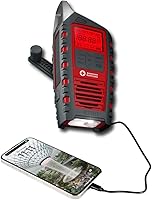
The Eton Odyssey All-Band Bluetooth Emergency Weather Radio sits in a practical sweet spot — capable enough to take seriously, compact enough to actually keep in a go-bag. Eton has been building emergency radios for decades, and the American Red Cross co-branding on this model isn't just marketing; it signals a baseline of design standards that prepared-minded buyers genuinely recognize. At roughly the size of a thick paperback, this hand-crank weather radio covers the basics without feeling bulky or overbuilt. It works just as well sitting on a kitchen shelf as it does stuffed into a hiking pack.
Features & Benefits

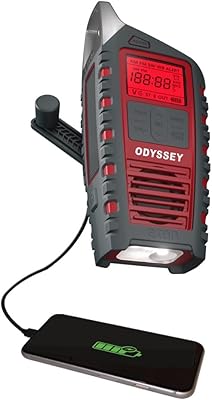
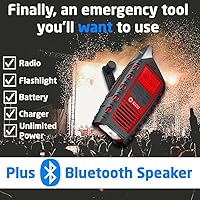
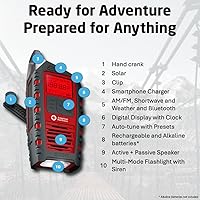
This emergency radio covers AM, FM, shortwave, and NOAA weather bands, with RDS support that displays station information on a large backlit LCD — useful when you need to identify a station fast in a stressful moment. Power is the real story here: solar, hand crank, a 2000mAh rechargeable battery, and USB input give you four ways to stay on. The USB output port lets you trickle-charge a phone in a pinch, which is more useful than it sounds during a multi-day outage. Bluetooth pairing adds casual day-to-day utility, and the three-mode LED flashlight with SOS strobe covers basic signaling needs.

Best For

The Eton Odyssey is a natural fit for anyone putting together or updating a home emergency kit — it checks enough boxes that you won't feel like you're compromising. Campers and day hikers will appreciate not needing separate devices for weather alerts, lighting, and audio. Households in hurricane corridors or tornado-prone areas will find the NOAA alert functionality particularly reassuring. It also makes a genuinely useful gift; the Red Cross branding does a lot of the explaining for you. That said, this hand-crank weather radio is best suited to users who want a reliable radio first, with Bluetooth as a bonus rather than the main draw.

User Feedback

Buyers consistently praise the reception quality across bands and find the interface easy to navigate without a manual. The build feels solid for the price point, and the backlit display draws frequent positive mentions. On the critical side, realistic expectations matter: the hand crank charges slowly, and solar replenishment in low-light conditions is modest at best — nobody should count on either as a primary power source during a prolonged outage. Bluetooth range is functional but short, closer to five or six feet in practice. A handful of reviewers comparing it to Midland or Kaito alternatives note the shortwave reception as a genuine advantage, though audio fidelity on FM is considered average.

Pros

  • Covers AM, FM, shortwave, and NOAA bands in one compact unit — genuinely useful range for emergencies and everyday listening.
  • Four distinct power sources mean you are rarely stuck without a way to keep this emergency radio running.
  • NOAA weather alerts deliver both audio and visual warnings, which matters when you need to wake up or act fast.
  • The 2000mAh internal battery is a meaningful step up from budget competitors, offering reasonable standby life.
  • Built-in USB output lets you give your phone a partial charge when the grid is down — small but valuable.
  • The three-mode LED flashlight with SOS strobe removes the need to pack a separate light for camping or outages.
  • RDS support displays station names and info on the backlit LCD, making it easy to identify the right channel quickly.
  • The Red Cross co-branding reflects a recognizable reliability standard that resonates with gift buyers and preparedness-minded shoppers.
  • At roughly 1.6 pounds, the Eton Odyssey is light enough to include in a go-bag without second-guessing the weight trade-off.
  • Bluetooth pairing adds casual day-to-day utility that most single-purpose emergency radios simply do not offer.

Cons

  • Hand crank charging is very slow — do not expect meaningful power restoration from a few minutes of cranking.
  • Solar charging is similarly limited; overcast conditions or indirect light make it nearly ineffective as a power source.
  • Bluetooth range is short in real-world use, often dropping connection beyond a few feet from the paired device.
  • FM audio quality is average at best — fine for news and alerts, but not satisfying for extended music listening.
  • The USB output charges devices slowly and is not a substitute for a proper power bank during extended outages.
  • Shortwave reception is a step above nothing, but seasoned listeners will find sensitivity and selectivity lacking.
  • No water resistance rating is listed, which limits confidence for use in rain or genuinely harsh outdoor conditions.
  • The hand crank mechanism feels lightweight and has drawn durability concerns from some buyers over long-term use.

Ratings

Our AI-generated scores for the Eton Odyssey All-Band Bluetooth Emergency Weather Radio reflect a rigorous analysis of verified global buyer reviews, with spam, bot activity, and incentivized feedback actively filtered out before scoring. Each category below is graded on both consistent praise and recurring pain points, so the numbers tell the full story — not just the highlights. Where this emergency radio genuinely delivers, the scores reflect it; where real-world performance falls short of expectations, that is reflected just as honestly.
Radio Reception Quality
83%
Buyers consistently report strong AM and FM reception, with NOAA weather band pickup being particularly reliable even in rural or fringe-signal areas. For the core purpose of catching emergency alerts during storms or power outages, the tuner performs well above what the price point might suggest.
Shortwave reception, while appreciated as a bonus feature, draws mixed feedback — sensitivity drops noticeably on higher SW bands, and users comparing it to dedicated shortwave receivers find selectivity lacking. A few buyers in dense urban environments also report occasional FM interference.
NOAA Weather Alerts
88%
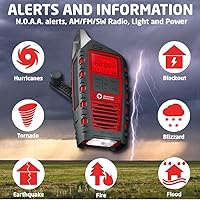
The automatic NOAA alert function is one of the most praised aspects across buyer reviews, with users in hurricane and tornado zones specifically calling it out as reliable and loud enough to serve as a genuine warning system. The combination of audio alarm and visual display on the LCD adds a layer of confidence for households with hearing-impaired members.
A small number of users note that the alert volume, while generally adequate, does not carry well through closed doors in larger homes. A few others mention the alert activation setup is not immediately intuitive straight out of the box without consulting the manual.
Power Versatility
78%
22%
Having four distinct ways to power the unit — solar, hand crank, USB input, and the internal battery — gives buyers genuine peace of mind for multi-day outages or off-grid camping trips. The 2000mAh internal battery is a clear step up from budget competitors, and buyers consistently appreciate having USB input as the practical daily charging method.
The hand crank and solar panel are the weak links in the power story. Experienced buyers understand the crank as a last-resort tool rather than a fast charger, and solar performance in anything less than direct sunlight disappoints users who expected more from it. Managing expectations on these two sources is the main friction point.
Build Quality
74%
26%
Most buyers describe the overall build as solid and reassuringly dense for its weight class, with the buttons and tuning controls feeling deliberate rather than flimsy. For a device in this price range, the general construction earns genuine positive mentions rather than just polite tolerance.
The hand crank mechanism specifically draws durability concerns — some buyers note it feels lighter and less robust than the rest of the body, raising questions about long-term reliability under repeated use. The plastic housing, while adequate, does not inspire rugged-use confidence for buyers in extreme outdoor environments.
Battery Performance
71%
29%
The 2000mAh rechargeable battery provides a meaningful runtime advantage over competitors carrying smaller cells, and buyers using it primarily for radio listening report solid multi-hour sessions on a single charge. For home standby use where the battery is kept topped up via USB, the experience is largely positive.
Users who run multiple features simultaneously — radio, flashlight, and Bluetooth together — find battery drain faster than expected. A handful of buyers also note that battery capacity seems to degrade more noticeably after six to twelve months of regular use, which is a standard lithium-ion concern but still worth flagging.
Flashlight Utility
81%
19%
The three-mode LED flashlight earns consistently warm feedback, with the flood setting in particular being called out as genuinely useful for lighting a tent interior or a dark room during an outage. The SOS strobe is a thoughtful addition that buyers in preparedness-focused communities appreciate as a real safety feature, not just a checkbox.
The flashlight is bright enough for close-range tasks but falls short for long-distance illumination needs like navigating trails at night. A few buyers wish the SOS mode were accessible more directly rather than requiring cycling through the other modes first.
Bluetooth Performance
63%
37%
Bluetooth streaming works reliably when the paired device is kept within close range, and buyers who use it at a desk or campsite with their phone nearby find it a genuinely useful bonus feature. The ability to stream audio without draining a phone's speaker is appreciated for low-key background listening.
Bluetooth range is the most commonly cited disappointment — real-world connectivity often drops beyond five to seven feet, and walls or obstacles make things worse. Audio quality over Bluetooth is also described as average, reinforcing the idea that this feature is a convenience add-on rather than a core strength.
Ease of Use
82%
18%
The large backlit LCD and clearly labeled controls make the learning curve short for most buyers, including older users and those with limited tech experience. Navigating between bands and setting the clock are tasks most buyers complete without needing to reference the manual more than once.
The initial NOAA alert configuration and understanding which USB port does what — input versus output — trips up a portion of first-time users. The manual, while included, is described by some buyers as brief to the point of being unhelpful for troubleshooting edge cases.
Portability
86%
At 1.6 pounds and with a form factor roughly comparable to a thick paperback book, this hand-crank weather radio fits comfortably into a go-bag, daypack, or emergency kit shelf without eating up significant space or weight budget. Campers and hikers specifically praise how much functionality is packed into its footprint.
The 8.1″ height means it is not a shirt-pocket device, and buyers who want something truly pocketable should look elsewhere. A carrying strap or clip would improve portability for active outdoor use, and the absence of one is a minor but recurring note in buyer feedback.
USB Device Charging
61%
39%
Having a USB output for charging a phone during a power outage is a feature buyers genuinely value — even modest power delivery can keep a smartphone alive long enough to make emergency calls or send messages when it matters most.
Charging speeds are slow, and buyers expecting power bank-level output are consistently let down. The Eton Odyssey is better thought of as a battery extender than a fast charger — useful for maintaining a low charge, but not for quickly recovering a dead device.
Display & Readability
84%
The backlit LCD is one of the more appreciated design choices, with buyers noting how easy it is to read frequency, RDS station data, and the clock in low-light conditions without straining. The display size is generous relative to competing radios in this category.
In very bright outdoor sunlight, the display can wash out and become harder to read, which is an ironic limitation for a radio often used outdoors. A small number of buyers also find the backlight timeout too short and wish it stayed on longer without requiring a button press.
Value for Money
79%
21%
Relative to what buyers get — four power sources, multi-band reception including shortwave, Bluetooth, a functional flashlight, USB output, and RDS — the overall value proposition is considered strong by most reviewers. The American Red Cross association also adds perceived credibility that makes the price feel justified for gift buyers.
Buyers who compare directly against stripped-down competitors at lower price points may feel some features like Bluetooth and shortwave are underdeveloped relative to expectations. A few users feel the hand crank and solar limitations, once understood, slightly undercut the value narrative built around the four-source power system.
Alert Volume & Clarity
77%
23%
The weather alert tone is loud enough to wake a sleeping adult in the same room and clear enough to be understood without confusion, which is the core job of this feature. Most buyers in apartment and mid-size home settings find the volume coverage adequate for their needs.
In larger homes or for buyers with hearing loss, the alert volume may not carry reliably to adjacent rooms or across a floor. There is no volume adjustment specifically for the alert tone separate from general speaker volume, which limits customization for users with specific needs.
Shortwave Reception
58%
42%
For an emergency-focused radio at this price, having any functional shortwave coverage at all is a differentiator, and casual listeners report picking up international stations with reasonable effort. Users who grew up with shortwave listening find it a satisfying inclusion for general curiosity and information gathering.
Enthusiast-level shortwave users find the sensitivity and selectivity noticeably below what a purpose-built shortwave radio delivers. There is no SSB mode, which rules this radio out for amateur radio monitoring, and tuning across the SW bands can feel imprecise compared to dedicated receivers.

Suitable for:

The Eton Odyssey All-Band Bluetooth Emergency Weather Radio is an especially strong pick for households that want a single, well-rounded device covering the basics of emergency preparedness without overcomplicating the setup. If you live in an area regularly threatened by hurricanes, tornadoes, or severe flooding, the direct NOAA weather alert access — with both audio and visual warnings — is genuinely worth having on hand. Campers and hikers who prefer not to carry separate devices for lighting, weather updates, and audio entertainment will find the all-in-one format practical and weight-efficient. It also works well as a gift for family members in storm-prone regions; the American Red Cross association makes the purpose immediately clear to recipients who might not know what to look for. Anyone assembling or refreshing a go-bag on a realistic budget will find this hand-crank weather radio hits a comfortable balance between capability and cost.
Not suitable for:

The Eton Odyssey All-Band Bluetooth Emergency Weather Radio is likely to disappoint buyers who treat the solar panel or hand crank as primary, high-capacity charging methods — in practice, both are slow and best understood as emergency trickle options rather than reliable power restorers. Serious shortwave listeners who prioritize audio fidelity and deep band sensitivity should look at dedicated shortwave receivers; this radio covers the band adequately but was not designed for enthusiast-level DX listening. If Bluetooth audio is your main priority — for daily music streaming, for example — a proper portable speaker will outperform it on sound quality and wireless range. Users expecting to charge a smartphone quickly via the USB output during an outage should know the power delivery is modest and better suited to maintaining a charge than recovering a dead battery fast. Those seeking a rugged, water-resistant device for serious outdoor conditions may also want to compare against purpose-built survival radios with more durable enclosures.
Specifications

  • Brand: Manufactured by Eton, a brand with a long track record in emergency and portable radio design.
  • Model: American Red Cross Odyssey edition, co-developed with the American Red Cross for emergency preparedness use.
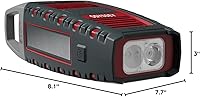
  • Dimensions: The unit measures 7.7″ long by 3″ wide by 8.1″ tall, keeping it compact enough for a go-bag or shelf storage.
  • Weight: The radio weighs 1.6 pounds, making it light enough to carry on extended outdoor trips without significant burden.
  • Radio Bands: Receives AM, FM, shortwave (SW), and NOAA weather band signals, covering both everyday and emergency broadcast sources.
  • RDS Support: Radio Data System (RDS) is included, allowing the backlit LCD to display station name and program information during FM reception.
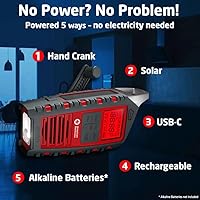
  • Power Sources: Supports four power inputs: a built-in solar panel, a manual hand crank, a USB charging input, and the internal rechargeable battery.
  • Battery Capacity: The internal lithium-ion battery holds 2000mAh, providing a meaningful reserve for radio use and device charging during outages.
  • USB Output: Includes a USB output port for charging smartphones and other small devices when no wall power is available.
  • Bluetooth: Bluetooth connectivity allows wireless audio streaming from a paired smartphone or tablet at close range.
  • Flashlight: The built-in LED flashlight offers three output modes — high, low, and flood — plus an SOS strobe for emergency signaling.
  • Display: Features a large backlit LCD screen that shows band, frequency, RDS data, and clock time, readable in low-light conditions.
  • Clock: An integrated clock is displayed on the LCD, functioning as a basic timekeeping reference even without a power grid connection.
  • Color: Available in a red colorway as part of the American Red Cross Odyssey edition.
  • Availability: First listed for sale in November 2023, making it a relatively recent addition to Eton's emergency radio lineup.
  • Sales Rank: Holds a Best Sellers Rank of approximately #70 in the Weather Radios category on Amazon at time of review.
  • Included Items: The package includes the radio unit and an owner's manual; no AC adapter or dedicated charging cable is listed as included.

Related Reviews

Eton Odyssey All-Band Emergency Weather Radio
68%
83%
NOAA Reception Quality
79%
AM/FM Reception
54%
Shortwave Performance
41%
Hand Crank Charging
38%
Solar Panel Effectiveness
More
Eton Scorpion II Portable Emergency Weather Radio
74%
91%
Portability & Form Factor
83%
Hand Crank Functionality
88%
NOAA Weather Band Reception
79%
FM Radio Performance
58%
AM Radio Reception
More
FosPower A6 5200mAh Emergency Weather Radio
77%
91%
NOAA Reception
84%
Build Quality
67%
Power Bank Utility
53%
Hand Crank Efficiency
49%
Solar Charging
More
QAUYYW Emergency Weather Radio XSY330
86%
89%
Battery Life
85%
Ease of Use
92%
Portability
75%
Radio Reception
88%
Build Quality
More
OnLyee CR1030 Emergency Weather Radio
76%
88%
Power Source Redundancy
83%
Hand Crank Durability
61%
Solar Charging Performance
79%
NOAA Reception Quality
67%
Battery Capacity & Phone Charging
More
TFTDOUP Emergency Weather Alert Radio
86%
88%
Overall Performance
85%
Battery Life
90%
Charging Options
80%
Ease of Use
87%
Build Quality
More
RAOUOEN 30000mAh Emergency Weather Radio
85%
89%
Battery Life & Charging
91%
Performance in Emergencies
75%
Portability & Weight
84%
Sound Quality & Reception
87%
Ease of Use
More
Roxicosly CR1009Ultra 12000mAh Emergency Weather Radio
74%
88%
Battery Life
91%
Charging Versatility
86%
NOAA Alert Performance
58%
Hand Crank Durability
44%
Solar Charging Speed
More
Sttfaishen F20 Emergency Hand Crank Weather Radio
72%
82%
NOAA Alert Reception
54%
Battery Capacity & Honesty
61%
Hand Crank Usability
57%
Solar Charging Performance
83%
USB-C Charging Speed
More
RunningSnail Emergency Crank Weather Radio
72%
88%
Value for Money
84%
Power Redundancy
91%
Built-in Cables
73%
NOAA Reception Quality
62%
Battery Capacity
More

FAQ

The NOAA weather alert function is designed to sound an alarm and display a visual warning when the National Weather Service issues alerts for your area — you do not need to be actively listening. That said, you do need to have the alert mode activated and the radio powered on or in standby for it to work. Think of it like a smoke detector for weather: it monitors in the background so you do not have to.

Honest answer: the hand crank is a last-resort option, not a practical primary charger. A few minutes of cranking will give you enough juice for a short listening session, but restoring meaningful battery capacity takes sustained effort. Most users find it reassuring to have but rarely rely on it exclusively. Keep the battery charged via USB whenever possible, and treat the crank as a backup to the backup.

In full direct sunlight the solar panel adds a trickle charge to the internal battery, but overcast conditions significantly slow that process, and indoor window light is generally too weak to be effective. Do not plan a camping trip around solar as your main power strategy — it works best as a supplemental option to extend overall battery life, not to restore it quickly.

In practice, Bluetooth on the Eton Odyssey All-Band Bluetooth Emergency Weather Radio is reliable at close range — roughly five to ten feet in open space — but it is not designed for whole-room coverage. Walls or obstructions will shorten that range further. If you want to stream music from your phone while it sits across the room, you may notice dropouts. For use at a desk or campsite where the phone is nearby, it works fine.
Both, depending on which port you use. The radio has a USB input for recharging its own internal battery from an external source like a power bank or wall adapter, and a separate USB output port for sending power to your phone or other small devices. Just make sure you are plugging into the correct port for what you want to do.

The shortwave coverage is functional and covers the major international bands, which is more than most emergency radios offer at this price point. For casual listening to international broadcasts or picking up stations during an emergency, it does the job. However, if you are an experienced shortwave enthusiast looking for deep sensitivity, fine selectivity, or SSB support, a dedicated shortwave receiver will serve you better.

The flashlight toggles on and stays on without holding any button, which makes it practical for actually lighting a space rather than just quick flashes. You cycle through the high, low, and flood modes with repeated presses, and the SOS strobe is accessible from the same button sequence. It is a genuine flashlight, not just a novelty feature.

The alert tone is noticeably loud for a device this size and is designed to be attention-grabbing rather than subtle. Whether it wakes someone in another room depends on your home layout and how soundly they sleep, but most users find it adequate for nighttime alerting in a bedroom or living area. It is not a whole-house siren, but it is not easy to sleep through either.

The internal 2000mAh battery is built into the unit and is not designed for user replacement in the way standard AA batteries are. Over years of use and charging cycles, lithium-ion batteries do lose capacity — that is normal for this type of design. For a device used occasionally and kept charged, the battery should remain serviceable for several years under typical conditions.

It is a reasonable choice for that scenario, particularly because the American Red Cross branding communicates the purpose clearly without needing explanation. The controls are straightforward and the display is easy to read. The one area to coach them on is the power source setup — making sure the battery stays charged via USB so it is ready when needed. The hand crank is simple enough to demonstrate in a few minutes.

Where to Buy