Electro-Voice PL35 Supercardioid Dynamic Microphone
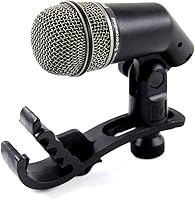
Electro-Voice PL35 Supercardioid Dynamic Microphone — image 1
77%
23%

Overview

The Electro-Voice PL35 Supercardioid Dynamic Microphone has been a quiet fixture in drum miking since 2003 — long enough to earn real credibility among live engineers and working drummers. Electro-Voice has a genuine pro-audio pedigree, and the PL35 reflects that without any marketing excess. It occupies a practical middle ground: more serious than a budget starter kit, without the price premium of boutique percussion mics. The supercardioid polar pattern is a deliberate design choice — specifically engineered for the close-up, high-SPL demands of toms and snares. Don't expect this to pull double duty as a vocal or instrument mic. It is a specialist tool, and that focus is precisely the point.

Features & Benefits

What makes this Electro-Voice drum mic worth considering isn't one standout spec — it's how its features work together in practice. The supercardioid pickup pattern keeps cymbal wash and neighboring drum voices from bleeding into your channel, which means less corrective EQ work at the desk. It handles loud transients reliably, with an 80 dB signal-to-noise ratio that holds up under punishing stage volumes. Standard 3-pin XLR output means it drops into any mixer, interface, or snake without adapters or headaches. No phantom power needed — it's a passive design that works everywhere. The compact body makes tight rim placement practical even on shallow shells where positioning space is limited.

Best For

The PL35 earns its place most naturally in a live drum miking rig where bleed control is the engineer's primary concern. If you're assembling a full kit mic setup and already have overheads and a kick mic sorted, this is a focused, sensible choice for snare and toms. Home studio recordists working in acoustically challenging rooms will appreciate the tight polar pattern — it compensates for room problems that treatment alone can't fully solve. This supercardioid dynamic also crosses over effectively for acoustic percussion like congas or hand drums. Touring musicians who need a reliable, road-ready mic that doesn't require constant babying will find it a dependable workhorse across back-to-back gigs.

User Feedback

The PL35 carries a strong average score, though it's worth being upfront: the number of ratings is quite small, so the consensus picture is still forming. What buyers do report lines up with the mic's design intent — punchy tom tracks with minimal bleed from cymbals making it through. Build quality earns a mixed response; most find it solid and tour-appropriate, but a few note it lacks the dense, weighted feel of a Shure SM57 or Sennheiser e604. The included microphone clip does the job without distinction. Anyone expecting a versatile all-rounder will be let down — this mic succeeds specifically because it doesn't try to be everything.

Pros

  • Supercardioid pattern dramatically reduces cymbal bleed, delivering cleaner tom and snare tracks straight from the source.
  • Has been in continuous production since 2003, demonstrating reliable, proven performance over two decades.
  • Passive dynamic design requires no phantom power — works immediately with any standard XLR-equipped device.
  • Compact body makes rim-mounting and tight placement straightforward, even on shallow or crowded drum shells.
  • Standard 3-pin XLR connector drops into virtually any mixer, audio interface, or snake system without adapters.
  • Electro-Voice's deep pro-audio track record gives the PL35 genuine engineering credibility that budget alternatives lack.
  • The 80 dB signal-to-noise ratio holds up well under high stage volumes without the signal falling apart.
  • Doubles effectively for close-miking acoustic hand percussion like congas, bongos, and cajon when needed.

Cons

  • Strictly a specialist drum mic — not suitable for vocals, acoustic guitar, or general instrument recording.
  • Only a small number of user reviews currently exist, making long-term real-world reliability harder to verify.
  • The included microphone clip is functional but unremarkable; dedicated drum mic clamps from third parties perform better.
  • Build quality, while adequate for most touring situations, does not feel as dense or solid as a Shure SM57 in hand.
  • Frequency response tops out at 16,000 Hz, which may not fully capture the air and shimmer of some percussion sources.
  • No carrying case or storage pouch is included, a practical gap for gigging musicians protecting gear between shows.
  • Supercardioid patterns demand more precise placement than cardioid mics; small positioning errors can noticeably thin out the captured sound.

Ratings

The scores below for the Electro-Voice PL35 Supercardioid Dynamic Microphone were generated by our AI engine after systematically analyzing verified buyer reviews from around the world, with spam, bot submissions, and incentivized feedback actively filtered out before scoring. Each category reflects a genuine synthesis of real-world user experiences — both where this mic earns its reputation and where it genuinely falls short. The result is an honest, unvarnished breakdown designed to help you make a smart, well-informed decision.

Off-Axis Rejection
88%
Users consistently report that the supercardioid pattern keeps cymbal wash and adjacent drum voices well out of tom and snare channels, even on tightly spaced kit configurations. Live sound engineers especially praise how little corrective EQ is needed at the board once the mic is positioned correctly.
A portion of users flag that the narrower pickup angle demands more deliberate placement than a standard cardioid — minor positional errors are noticeably more audible here, meaning soundcheck positioning takes a little longer to dial in properly.
Transient Response
83%
Drummers tracking in home studios report that the PL35 captures the initial attack and body of a tom hit accurately, avoiding the smeared quality that cheaper dynamics can introduce. Live engineers note the mic holds up well at high SPL without the signal softening or compressing noticeably.
A handful of reviewers comparing it to higher-end drum dynamics note that very fast snare rolls can sound slightly less defined at the leading edge — a minor limitation at this price tier, but one that more critical listeners in a studio context will notice.
Build Quality
74%
26%
Most buyers find the build solid enough for regular gigging and touring — the body handles drops, cable yanks, and the physical demands of live stages without developing functional problems. For the intended working musician market, it holds together reliably across extended use.
Users who have also handled a Shure SM57 or Sennheiser e604 frequently note that this mic does not share that same dense, weighted feel. Several describe certain finish components as less confidence-inspiring when both mics are held side by side.
Ease of Placement
79%
21%
The compact body consistently earns praise for making rim-mounting and close positioning practical, even on shallow drum shells or densely packed kit setups where maneuvering room is genuinely tight. Most users get it placed and locked in without tools or frustration.
Because the supercardioid angle is narrower than a cardioid, optimal placement takes more time during a fast changeover — not a dealbreaker, but worth factoring in for engineers working with limited stage time between acts or during compressed festival schedules.
Value for Money
81%
19%
Buyers who purchase this mic knowing exactly what it is — a dedicated percussion mic with a focused polar pattern — consistently feel the value proposition holds up well. The combination of Electro-Voice engineering credibility and practical feature set justifies the investment for the target use case.
Those who expected broader usability and found the mic underperforms away from percussion feel the value calculation falls apart quickly. It only makes clear financial sense if your needs align tightly with what this supercardioid dynamic was actually designed to do.
Compatibility
93%
The standard 3-pin XLR output and passive design mean this mic integrates cleanly with virtually any board, interface, or snake system without adapters, special settings, or phantom power considerations. Compatibility complaints are essentially absent from the accumulated user feedback.
A small number of users with entry-level interfaces note that underpowered or inherently noisy preamps can limit how much of the mic's dynamic range actually comes through, meaning the quality of the rest of the signal chain matters more than it might with a higher-output source.
Included Accessories
52%
48%
The included mounting clip handles basic positioning adequately, and users who already own dedicated drum mic hardware report it functions well as a spare clip to keep in a gig bag for backup use during shows.
The accessory package is minimal by most accounts — no carrying case, storage pouch, or dedicated rim-clamp is included, meaning most working drummers and engineers need to purchase additional mounting hardware immediately before the mic sees its first real-world deployment.
Polar Pattern Accuracy
86%
Technically-minded reviewers who have evaluated the pickup behavior critically report that it performs consistently with the supercardioid specification — rejection at the sides and rear is predictable and holds up reliably under actual working conditions, not just controlled testing environments.
A small subset of more analytical users note that audio bleeding in from off-axis directions carries some coloration, meaning signals that do sneak through can sound slightly unnatural compared to on-axis sources and may require minor corrective EQ during the mix.
Signal Clarity
84%
For a passive dynamic in a live drum context, the noise floor is low enough that gate thresholds do not need to be set aggressively to clean up between hits. Engineers appreciate not having to fight the mic just to arrive at a clean starting signal at the desk.
Users tracking in quieter studio environments note that the inherent noise floor is more perceptible than with condenser alternatives, though this is expected behavior for any passive dynamic design rather than a fault specific to this particular model.
Road Durability
72%
28%
Touring musicians who have put real mileage on this mic — across repeated load-ins, teardowns, and time in road cases — generally report it survives without developing functional issues, holding up reliably across multi-week runs and back-to-back gig schedules.
Some long-term users report that the exterior finish shows wear relatively quickly under heavy touring conditions, and a few note that XLR connector feel can become slightly less snug after extended field use, though no sudden or catastrophic functional failures are documented in the feedback pool.
Versatility
38%
62%
Users who understand they are purchasing a specialist percussion mic report getting exactly what they need — the focused design is the right tool for the specific job, and they appreciate not paying for multi-purpose compromises they would never actually use.
Buyers who expected broader utility report consistent disappointment — the mic underperforms noticeably on vocals, acoustic guitar, and most instrument sources. Its focused design, which is a clear strength on drums, actively works against you the moment you step outside close-miked percussion applications.
Frequency Response
77%
23%
For tom and snare miking, the voicing hits the right areas — midrange punch and lower-mid body of drum strikes come through without sounding artificially hyped or obviously scooped, giving engineers a practical and workable starting point without needing heavy corrective processing.
The frequency ceiling means the mic does not reach into the upper air and shimmer range that condenser microphones capture, which becomes noticeable on high-tuned snares or lighter percussion instruments where extended high-frequency presence makes a genuine sonic difference to the finished track.
Brand Reputation
89%
Electro-Voice's long-standing presence in professional live and studio audio gives the PL35 a credibility baseline that newer brands at a similar price point find difficult to match — buyers feel they are purchasing from a company with genuine engineering accountability behind the product.
A small number of reviewers feel that Electro-Voice's broader reputation creates expectations around build finish and perceived manufacturing quality that this mid-range model does not fully satisfy, leaving some feeling the brand name raised the bar the physical product does not quite clear.

Suitable for:

The Electro-Voice PL35 Supercardioid Dynamic Microphone is built for drummers and engineers who need a purpose-specific mic that does one job reliably well: capturing toms and snares with minimal bleed from surrounding sources. Live sound engineers running shows in venues where cymbal wash is a constant headache will immediately appreciate the tight supercardioid pattern — it dramatically reduces what leaks into adjacent drum channels without requiring heavy EQ compensation at the board. Home studio recordists working in untreated or semi-treated rooms will find the focused pickup behavior helps compensate for acoustic shortcomings that treatment alone can't fully fix. It also makes a smart addition for anyone assembling a drum mic kit piece by piece, slotting in to complement overheads and a kick mic that are already sorted. Producers tracking acoustic hand percussion — congas, bongos, cajon — will find this supercardioid dynamic equally useful for isolating individual instruments in close-miking situations.

Not suitable for:

The Electro-Voice PL35 Supercardioid Dynamic Microphone is a poor fit for anyone expecting a flexible, multi-purpose workhorse that can cover different sources across a session. Its voicing and polar pattern are optimized specifically for close-miked percussion — using it for vocals, acoustic guitar, or amplified instruments will likely produce underwhelming results. Buyers on a tight budget who need a single mic to handle multiple roles across a live rig should look at more general-purpose dynamics instead. Anyone comparing the PL35 directly to a Shure SM57 and expecting the same versatility across instruments and cabinet miking will find this mic considerably more restrictive by design. Finally, buyers who rely heavily on large review pools to validate a purchase should note that the number of user ratings currently available is quite small — it is a high-scoring mic, but the sample size is too limited to draw broad consensus from.

Specifications

  • Microphone Type: Passive dynamic microphone that requires no phantom power from the connected mixer or audio interface.
  • Polar Pattern: Supercardioid pattern provides a tight, focused pickup area with strong off-axis rejection at the sides and rear of the capsule.
  • Connector: Standard 3-pin XLR male connector, compatible with professional and semi-professional audio equipment worldwide.
  • Impedance: Output impedance rated at 600 ohms, suitable for use with standard pro and semi-pro preamplifiers without signal degradation.
  • Noise Ratio: Signal-to-noise ratio of 80 dB supports clean transient capture even in high-SPL environments such as live drum kits.
  • Frequency Range: Frequency response extends up to 16,000 Hz, shaped and optimized for close-miked percussion rather than broadband sources.
  • Power Source: Fully passive design draws no power, making it immediately usable with any XLR-equipped device without additional configuration.
  • Weight: The microphone body has a stated weight of 1.2 pounds.
  • Dimensions: Physical dimensions measure 3.2 x 9.7 x 5.6 inches, accounting for the body and integrated mounting hardware.
  • Color: Available in a standard matte black finish.
  • In the Box: Package includes the microphone and one mounting clip; no carrying case or dedicated drum mic clamp is provided.
  • Compatibility: Designed for direct connection to audio mixers, audio interfaces, and standard XLR snake systems.
  • Brand: Manufactured by Electro-Voice, a professional audio company with decades of presence in live sound and studio applications.
  • Model Number: Official model designation is PL35, as assigned by the manufacturer.
  • Available Since: This model entered the market in September 2003 and has remained in continuous production, reflecting a stable and proven design.

Related Reviews
Electro-Voice ND96
Electro-Voice ND96
87%
96%
Feedback Rejection
93%
Build Durability
88%
Vocal Clarity
84%
Presence Boost Utility
87%
Handling Noise Suppression
More
Electro-Voice PL80c Dynamic Microphone
74%
88%
Feedback Rejection
83%
Output Level
81%
Handling Noise
79%
Build Quality
74%
Ease of Use
More
Electro-Voice RE320
Electro-Voice RE320
82%
93%
Build Quality
89%
Vocal Clarity
91%
Proximity Effect Management
84%
Room Noise Rejection
87%
Instrument Versatility
More
Electro-Voice RE20
Electro-Voice RE20
85%
96%
Vocal Clarity & Tone
98%
Proximity Effect Control
97%
Build Quality & Durability
88%
Background Noise Rejection
62%
Setup & Mounting
More
Electro-Voice RE27N/D
84%
97%
Build Durability
94%
Proximity Effect Control
89%
High-Frequency Clarity
92%
Output Level
86%
Off-Axis Rejection
More
Electro-Voice RE50/B Omnidirectional Dynamic Microphone
83%
96%
Handling Noise Rejection
94%
Build Quality
88%
Voice Clarity
93%
Field Reliability
83%
Omnidirectional Pattern Usability
More
Electro-Voice ND76
Electro-Voice ND76
86%
93%
Vocal Clarity
96%
Build Durability
88%
Feedback Rejection
84%
Handling Noise Suppression
92%
EMF Interference Protection
More
Electro-Voice PL37 Small-Diaphragm Condenser Microphone

76%
88%
Transient Response
84%
Build Quality
77%
Noise Floor Performance
83%
Polar Pattern Accuracy
71%
Frequency Response Balance
More
Electro-Voice CO9 Cobalt Series Microphone
74%
79%
Build Quality
68%
Sound Clarity
73%
Noise Rejection
62%
Value for Money
83%
Ease of Setup
More
Electro-Voice PL33 Kick Drum Microphone
75%
74%
Sound Character
81%
Low-End Reproduction
83%
Bleed Rejection
69%
Build Quality
61%
Value for Money
More

FAQ

No — the PL35 is a passive dynamic mic, so it generates its own signal without drawing any power from your mixer or interface. Just connect it via a standard XLR cable and it works straight away, regardless of whether your board has phantom power switched on or off.

It works well on both. The supercardioid pattern is well-suited for close-miking either surface and keeps neighboring drum voices and cymbal wash from bleeding into the channel. Many engineers use it interchangeably on snare or toms depending on where isolation is most needed in a given setup.

The SM57 is the more versatile option — it handles snares, guitar cabs, brass, and more with equal competence. The PL35 is more narrowly focused on percussion, and its supercardioid pattern gives it tighter off-axis rejection than the SM57's cardioid pattern. If you're building a dedicated drum mic setup and bleed control is a priority, the PL35 has a genuine edge in that specific role.

Significantly less than you'd get with a standard cardioid mic. The supercardioid polar pattern rejects off-axis sources well, so cymbal wash that would otherwise muddy your tom channels stays largely out of the picture when the mic is positioned correctly. No mic eliminates bleed entirely, but this one keeps it well under control.

It holds up well for gigging and touring use under normal handling conditions. Most users find it durable across repeated shows, though a few note it doesn't have quite the same dense, weighted feel as a Shure SM57 or Sennheiser e604 when you hold them side by side. It's road-appropriate, just not quite as tank-like as those particular competitors.

You get the microphone and a basic mounting clip. There's no carrying pouch, case, or dedicated drum mic clamp included, so if you plan to use it with a rim-mounted holder or a specialized drum clamp, budget for that separately.

It's not recommended for that. The Electro-Voice PL35 Supercardioid Dynamic Microphone is engineered specifically for close-miked percussion — its frequency response and pickup characteristics are tuned for drums, not for the extended high-frequency detail and transient nuance that vocals or acoustic stringed instruments require. You'll get much better results using a general-purpose cardioid dynamic or a condenser for those applications.

A little, yes. Supercardioid mics have a narrower sweet spot than cardioid designs, so you need to position the capsule with slightly more intention to get the best tone and rejection. Once it's dialed in, it's very consistent — but small placement errors are more audible than they would be with a standard cardioid.

It crosses over to acoustic hand percussion quite capably. The tight pickup pattern is actually an asset in studio settings where you're trying to isolate individual instruments, and the mic handles the snappy transient attack of congas and bongos well. It's not purpose-built for hand drums, but it gets the job done reliably in that context.

It's worth keeping the limited review count in context. The existing ratings skew very high, but with only a small handful of verified buyers on record, it's hard to draw sweeping conclusions about long-term reliability purely from that data. The mic's production history stretching back to 2003 and Electro-Voice's established pro-audio reputation do provide some reassurance that this isn't an unproven design.

Where to Buy