Overview

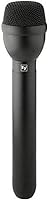
The Electro-Voice RE50/B Omnidirectional Dynamic Microphone has been a staple in professional broadcast kits since 2003, and its longevity says a lot about how precisely it was designed for the job. The omnidirectional polar pattern lets you hold it comfortably between yourself and a subject without endlessly chasing a sweet spot — a real advantage when you're working fast and often alone. It's self-generating, so no phantom power or batteries are required in the field. Worth stating clearly: this isn't a studio mic. Every design choice here reflects a single purpose — news gathering and ENG work — and that focus is exactly what makes it so dependable.
Features & Benefits

What makes this broadcast handheld mic stand out in practice starts with its handling-noise isolation. Grip it firmly, reposition mid-interview, shift it between hands — the mic absorbs that mechanical feedback rather than transmitting it. The aluminum body feels built for years of daily field use, and the XLR connection plugs cleanly into any professional recorder or camera preamp without adapter headaches. At 76 dB signal-to-noise, it holds its own in busy, noisy environments. The omni pattern also eliminates proximity bass buildup, so voices stay natural whether the mic is close to someone's chin or held a foot away — a quiet but meaningful consistency.

Best For

Electro-Voice's news mic is purpose-built for ENG crews, documentary filmmakers, and anyone capturing audio in environments they can't control. Sidewalk interviews, breaking news coverage, corporate talking-head segments across multiple locations in a single day — this mic fits those workflows naturally. Mobile podcasters and radio journalists recording field segments will find it equally useful. One practical note: the XLR-only connection means you'll need an appropriate recorder or mixer. It's not plug-and-play with most consumer cameras, so budget for a field recorder or preamp if you don't already have one. That's a workflow consideration, not a flaw.

User Feedback

With 35 ratings on record — a relatively modest sample — this broadcast handheld mic sits at 4.9 stars, which is about as consistent as a small pool gets. Buyers regularly highlight handling noise rejection as the standout quality, with several noting it outperforms cheaper omni alternatives they've tested. Solo operators appreciate the forgiving omni pattern, which removes the need for a second person managing mic placement. The fair criticisms center on weight — 1.1 pounds becomes noticeable on long shoots — and the 13 kHz frequency ceiling, which is a non-issue for speech but worth knowing upfront if you're expecting studio-grade fidelity from this mic.

Pros

  • Handling-noise isolation is genuinely excellent — grip adjustments and movement rarely translate into the recording.
  • The omni pattern eliminates the need to reposition during multi-person or back-and-forth interviews.
  • No phantom power or batteries required — one less thing to manage or troubleshoot in the field.
  • Aluminum construction feels built for years of rough daily use without babying.
  • 76 dB signal-to-noise ratio keeps speech clean even in busy, loud environments.
  • Voice tone stays natural and consistent regardless of how close or far the mic is held.
  • XLR output integrates cleanly with professional recorders, mixers, and broadcast equipment.
  • A long track record in professional broadcast kits speaks to its reliability over time.
  • Built-in wind protection and pop filtering reduce the need for extra accessories on location.

Cons

  • XLR-only connectivity requires an interface or field recorder — no direct connection to cameras or smartphones.
  • At 1.1 pounds, extended handheld use during long shoots can become physically tiring.
  • The 13 kHz frequency ceiling makes it unsuitable for any application beyond speech capture.
  • Omni pattern picks up ambient background noise indiscriminately — poor choice for uncontrolled indoor environments.
  • With only 35 reviews available, long-term reliability trends are harder to confirm than with more widely reviewed alternatives.
  • No stand adapter is included, limiting mounting flexibility out of the box.
  • The niche broadcast focus means it has little crossover value for studio, music, or content creation outside ENG work.
  • Buyers unfamiliar with XLR signal chains may face unexpected additional gear costs before getting it functional.

Ratings

Our AI-generated scores for the Electro-Voice RE50/B Omnidirectional Dynamic Microphone were produced by analyzing verified buyer reviews worldwide, with spam, bot-generated, and incentivized submissions actively filtered out before scoring. Each category reflects real patterns in how working professionals experience this mic day-to-day — including where it genuinely delivers and where it falls short. Both strengths and friction points are represented transparently so you can make a fully informed decision.

Handling Noise Rejection
96%
This is the category where the RE50/B consistently earns its reputation. Journalists and solo video producers repeatedly note that grip shifts, cable movement, and mid-interview repositioning simply do not show up in recordings the way they do with competing handheld mics. In run-and-gun ENG situations, that reliability is hard to put a price on.
A very small number of users working in exceptionally cold conditions noted that gloved hands created more noise transfer than expected, suggesting the isolation system has physical limits under extreme circumstances. This is a fringe scenario, but worth noting for Arctic or alpine field work.
Build Quality
94%
The machined aluminum body earns consistent praise from professionals who have carried this broadcast handheld mic through years of field assignments. Users describe it surviving drops, rain exposure, and the general abuse of daily kit-bag life without functional degradation. Several reviewers note owning the same unit for well over a decade.
A handful of buyers observed that the finish shows cosmetic wear — scratches and scuffs — relatively quickly under heavy use, even if the underlying structure remains solid. For those who care about appearance on camera, a worn exterior can become a minor aesthetic concern over time.
Voice Clarity
88%
Broadcast journalists consistently highlight how natural and intelligible voices sound through this mic, whether the subject is speaking directly into it or slightly off-axis. The lack of proximity bass buildup means vocal tone stays consistent even when mic distance varies during a conversation, which is a practical advantage in unscripted interview settings.
The 13 kHz frequency ceiling means the top-end air and presence that condenser microphones deliver is simply absent here. For speech intelligibility this is irrelevant, but users who later tried using this broadcast handheld mic for anything beyond spoken word noticed an obvious dullness in the upper register.
Field Reliability
93%
The self-generating dynamic design removes one of the most common points of failure in field audio — power dependency. Buyers working in remote locations or fast-moving news environments specifically call out the peace of mind that comes from never needing to check battery levels or enable phantom power before a take.
A few users noted that XLR connectivity, while reliable in professional signal chains, creates a compatibility gap when working with consumer or prosumer cameras that lack XLR inputs. That additional adapter or recorder requirement introduces its own potential point of failure, even if the mic itself is bulletproof.
Omnidirectional Pattern Usability
83%
Solo operators and small ENG crews find the forgiving omni pattern significantly reduces the mental overhead of mic management during interviews. You can hand the mic back and forth naturally, or hold it midway between two speakers, without worrying about lobing or off-axis coloration that directional mics introduce.
In louder or more reverberant environments — busy lobbies, outdoor markets, event floors — the omni pattern picks up ambient noise indiscriminately, and there is nothing you can do to narrow the pickup. Users who record in acoustically uncontrolled spaces without production support found background bleed harder to manage than expected.
Compatibility & Connectivity
71%
29%
Within a professional broadcast signal chain — field recorders, broadcast mixers, ENG cameras with XLR inputs — connectivity is completely straightforward and reliable. The 150 Ohm impedance pairs cleanly with standard balanced inputs, and users in professional setups report zero issues with signal matching or interference.
For anyone working outside a traditional broadcast rig, XLR-only output is a genuine barrier. Pairing this mic with DSLRs, mirrorless cameras, or computer-based recording setups requires additional adapters or interfaces, adding cost and complexity that some buyers did not anticipate before purchasing.
Weight & Ergonomics
67%
33%
The solid feel of the aluminum body actually inspires confidence for many users, particularly those who associate heft with durability. Professionals accustomed to broadcast-grade equipment generally report the weight as appropriate and well-balanced for a mic in this class.
At 1.1 pounds, Electro-Voice's news mic is noticeably heavier than lighter competing handhelds, and several buyers flagged fatigue during extended shoots lasting several hours. For journalists covering events that require sustained arm-out mic holding, the weight accumulates in a way that lighter plastic-bodied mics avoid.
Wind & Pop Protection
81%
19%
The integrated wind protection and pop filter earn solid marks from users recording outdoors in moderate wind conditions. Journalists doing street-level interviews note that light to medium wind is handled adequately without requiring an additional foam windscreen in most cases.
In strong wind — coastal locations, open fields, elevated positions — the built-in protection reaches its limits and an external windscreen or dead cat becomes necessary. A small number of outdoor broadcast users felt the integrated protection was adequate only up to a point before wind artifacts became audible in recordings.
Value for Money
78%
22%
Professionals who rely on this broadcast handheld mic daily consistently frame it as a long-term investment rather than a recurring cost. Given the durability track record and the absence of any consumable components like batteries, the total cost of ownership over several years compares favorably to cheaper mics that require replacement.
For buyers with more casual or infrequent field recording needs, the asking price is difficult to justify against budget omni alternatives that perform adequately in less demanding situations. The value proposition depends heavily on how hard and how often you actually use it in professional ENG contexts.
Setup & Ease of Use
89%
Plug in the XLR cable and you are ready — no menus, no pairing, no power switches. Seasoned broadcast crews and documentary producers specifically appreciate that there is genuinely nothing to configure or troubleshoot before a shoot, which matters when time is short and conditions are unpredictable.
The simplicity that professionals love can be disorienting for users newer to XLR signal chains who are not yet familiar with gain staging or balanced audio routing. A few less experienced buyers reported initial confusion about why levels seemed low before realizing their recorder's preamp gain needed adjustment.
Frequency Range for Speech
86%
Within its intended broadcast speech application, the frequency response is well-tuned and consistent. Voices come through with natural midrange clarity, and the deliberate roll-off design avoids the low-frequency muddiness that can occur with proximity-heavy handheld mics used in close-up interview situations.
The 13 kHz upper limit is a hard ceiling that makes this mic unsuitable for any application requiring extended high-frequency reproduction. Users who purchased it hoping to cover music performances, instrument capture, or studio voice-over work were disappointed by an obvious lack of high-end detail.
Longevity & Repairability
91%
Long-tenured broadcast professionals describe owning units that have remained in active service for ten or more years without meaningful performance degradation. The absence of battery compartments, phantom power circuitry, or moving electret components removes several common failure points that shorten the lifespan of competing mic types.
Given the limited review sample of 35 ratings, long-term failure pattern data is thin compared to more widely reviewed products. Repairability is also not widely discussed by users, leaving it unclear how easily internal components can be serviced if damage does eventually occur.
Packaging & Included Accessories
58%
42%
The mic itself arrives well-protected, and buyers generally report it is securely packaged for transit. For professional buyers who already own the accessories they need — stands, clips, cases — the minimal packaging approach is a non-issue.
The absence of a stand adapter clip is a recurring complaint, particularly from buyers who expected at least basic mounting hardware at this price point. Several users also noted the lack of a carry pouch or protective case, meaning additional purchases are required before the mic is fully deployment-ready for most workflows.

Suitable for:

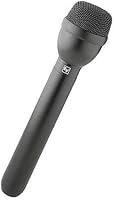
The Electro-Voice RE50/B Omnidirectional Dynamic Microphone was built for one world: professional broadcast and field audio, and it excels there without compromise. ENG crews who need to capture clean speech in unpredictable environments — street-level interviews, press conferences, active newsrooms — will find its omni pattern and handling-noise rejection far more practical than a directional mic that demands constant repositioning. Documentary filmmakers working solo or with a small crew will appreciate that it requires no power source, no batteries to die mid-shoot, and no phantom power from a recorder to function. Corporate video producers who bounce between office lobbies, warehouses, and conference rooms in a single day will value how consistently it captures voices regardless of acoustic environment. For mobile radio journalists or podcasters who record field segments on location, this broadcast handheld mic delivers the kind of speech clarity and durability that justifies the investment over cheaper alternatives.
Not suitable for:

The Electro-Voice RE50/B Omnidirectional Dynamic Microphone is not the right tool if your work is primarily studio-based or if you need extended high-frequency reproduction for instruments, music, or broadcast applications that demand above 13 kHz. Its omnidirectional pattern, while ideal for interviews, picks up ambient room sound from all directions — so anyone recording in a noisy indoor space without background control will find that characteristic frustrating rather than helpful. At 1.1 pounds, it is noticeably heavier than lighter handheld options, which matters on long shoots where fatigue adds up. The XLR-only connection means it cannot be used directly with consumer cameras, smartphones, or laptops without an additional interface — a real barrier for run-and-gun creators working with minimal gear. Buyers expecting plug-and-play simplicity or studio-grade fidelity from this mic will likely find it a poor fit for their workflow.

Specifications

  • Polar Pattern: Omnidirectional pickup captures sound evenly from all directions with no preferred axis.
  • Transducer Type: Dynamic moving-coil design that is self-generating and requires no external power source.
  • Connector: Standard 3-pin XLR output for direct connection to professional recorders, mixers, and camera preamps.
  • Frequency Response: Designed for speech-optimized capture with a response range extending up to 13 kHz.
  • Signal-to-Noise Ratio: Rated at 76 dB, providing clean, low-noise audio capture in demanding field environments.
  • Impedance: Output impedance is rated at 150 Ohm, compatible with standard professional balanced audio inputs.
  • Power Source: Fully self-generating dynamic element — no phantom power, batteries, or external power supply required.
  • Body Material: Machined aluminum construction for high durability and resistance to impact in field conditions.
  • Weight: Weighs 1.1 pounds, reflecting its solid aluminum build intended for professional daily use.
  • Channels: Single-channel mono output, standard for handheld broadcast and ENG interview applications.
  • Form Factor: Handheld-only microphone; no stand adapter clip is included with the base unit.
  • Special Features: Incorporates a proprietary handling-noise isolation system alongside integrated wind protection and a built-in pop filter.
  • Compatible Devices: Designed for use with professional cameras, field recorders, and broadcast mixing equipment via XLR connection.
  • Available Since: First made available in June 2003, establishing a long track record in professional broadcast environments.
  • Manufacturer: Designed and manufactured by Electro-Voice, a professional audio brand with deep roots in broadcast and live sound.

Related Reviews
Electro-Voice RE320
Electro-Voice RE320
82%
93%
Build Quality
89%
Vocal Clarity
91%
Proximity Effect Management
84%
Room Noise Rejection
87%
Instrument Versatility
More
Electro-Voice PL80c Dynamic Microphone
74%
88%
Feedback Rejection
83%
Output Level
81%
Handling Noise
79%
Build Quality
74%
Ease of Use
More
Electro-Voice RE20
Electro-Voice RE20
85%
96%
Vocal Clarity & Tone
98%
Proximity Effect Control
97%
Build Quality & Durability
88%
Background Noise Rejection
62%
Setup & Mounting
More
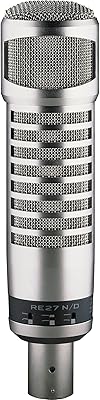
Electro-Voice RE27N/D
84%
97%
Build Durability
94%
Proximity Effect Control
89%
High-Frequency Clarity
92%
Output Level
86%
Off-Axis Rejection
More
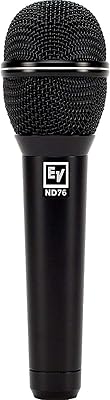
Electro-Voice ND76
Electro-Voice ND76
86%
93%
Vocal Clarity
96%
Build Durability
88%
Feedback Rejection
84%
Handling Noise Suppression
92%
EMF Interference Protection
More
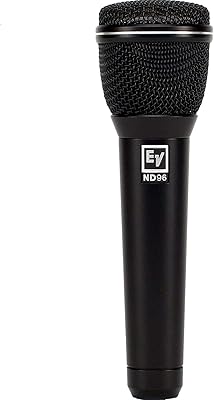
Electro-Voice ND96
Electro-Voice ND96
87%
96%
Feedback Rejection
93%
Build Durability
88%
Vocal Clarity
84%
Presence Boost Utility
87%
Handling Noise Suppression
More
Electro-Voice PL37 Small-Diaphragm Condenser Microphone

76%
88%
Transient Response
84%
Build Quality
77%
Noise Floor Performance
83%
Polar Pattern Accuracy
71%
Frequency Response Balance
More
Shure SM63LB Omnidirectional Dynamic Microphone
85%
93%
Build Quality
88%
Audio Clarity for Speech
84%
Omnidirectional Performance
94%
Durability in Field Use
81%
Handling Noise Rejection
More
Electro-Voice CO9 Cobalt Series Microphone
74%
79%
Build Quality
68%
Sound Clarity
73%
Noise Rejection
62%
Value for Money
83%
Ease of Setup
More
Electro-Voice PL33 Kick Drum Microphone
75%
74%
Sound Character
81%
Low-End Reproduction
83%
Bleed Rejection
69%
Build Quality
61%
Value for Money
More

FAQ

No, the RE50/B is a dynamic microphone with a self-generating element, so it requires absolutely no phantom power, batteries, or any external power source. You can plug it straight into an XLR input on a recorder or mixer and it will work immediately.

Not directly. The RE50/B uses a standard 3-pin XLR connector, so you will need either a camera-mounted audio interface like a Beachtek or Juiced Link adapter, or a separate field recorder, to get the signal into your camera. This is a common consideration for video shooters pairing a professional mic with a consumer or prosumer camera body.

It will pick up ambient sound from all directions — that is simply how an omni pattern works. In broadcast ENG and journalism contexts, that is often acceptable or even desirable, since it captures a sense of place and avoids the off-axis coloration you get from directional mics. If you are in a very loud or reverberant space with no acoustic control, a tighter directional mic may serve you better.

Yes, it is one of the most talked-about practical strengths of this mic. You can shift your grip, hand the mic between people, or move quickly without those mechanical noises showing up prominently in the recording. It is noticeably better than most competing handheld omni mics in this respect.

For speech capture in broadcast and news applications, it is not a meaningful limitation at all. Human voice intelligibility lives well below that ceiling, and the mic was tuned specifically for that use case. If you are hoping to use it for music, instruments, or audio that requires extended high-frequency reproduction, however, this mic was not designed for that and you would be better served by a condenser or wide-response dynamic.

It is actually one of the better choices for exactly that scenario. The omni pattern means you do not need to constantly adjust mic position between yourself and your subject, and the handling-noise isolation allows you to move freely without ruining takes. The lack of any power requirement also removes one potential point of failure when you are managing everything yourself.

The aluminum body is built to take real abuse. It is the kind of mic that broadcast crews toss into kit bags, use in rain-adjacent conditions, and drop without catastrophic consequences. Its long production history since 2003 suggests it holds up well over years of professional use.

Technically yes, but it is not optimized for that context. The omni pattern will pick up room reflections freely, and the 13 kHz frequency ceiling means voices may lack a little of the air and presence that studio condenser mics deliver. If your recording space is well-treated and you specifically need an omni pattern — for example, recording a roundtable without repositioning — it could work. Otherwise, a studio-focused condenser would be a more natural fit.

The base listing does not include a stand adapter clip, so if you plan to mount it on a boom or desk stand, you will need to source a compatible clip separately. Electro-Voice does offer accessories for this mic, so it is worth checking what is available from them directly or through professional audio retailers.

The handling-noise isolation system is the most significant practical differentiator — budget omni mics tend to transmit grip and movement noise much more readily, which becomes obvious in real field use. Build quality is also a step above most lower-priced alternatives, and the consistent off-axis response means voice tone does not shift when the mic moves relative to the speaker. Whether that gap justifies the price difference depends largely on how demanding your professional requirements are.

Where to Buy