Overview

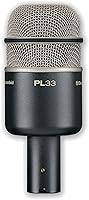
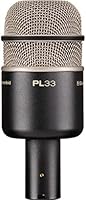
The Electro-Voice PL33 Kick Drum Microphone has been a fixture in drum mic lockers since 2003 — a long enough run to suggest it earns its keep. Built specifically for kick drum duty, it uses a dynamic element with a supercardioid polar pattern that keeps the focus tight and rejects off-axis noise effectively. The frequency response spans 20 Hz to 10,000 Hz, intentionally shaped for the low thump and beater attack that define a kick drum's character. It ships with a locking stand adapter, Euro-thread adapter, and a zippered gig bag — practical extras that remove the need for additional shopping. The PL33 competes directly with the AKG D112 and Shure Beta 52A, so value is always part of the conversation.
Features & Benefits

The supercardioid pickup pattern is genuinely useful on a crowded stage — it tightens the capture zone around the kick drum and keeps snare bleed and hi-hat chatter out of your kick channel. The low-end extension reaching down to 20 Hz means you hear the full body of the drum, not just the beater click. At 150 ohms output impedance, this kick drum mic plays nicely with virtually any console or preamp you would encounter live or in the studio. No phantom power is needed, which simplifies setup considerably. The compact, sturdy housing makes positioning inside or outside the drum port straightforward, and the included locking adapter and gig bag actually earn their place rather than serving as filler.

Best For

The PL33 makes the most sense for drummers who gig regularly and need a mic that can handle the physical realities of touring — fast setup, reliable night after night, and built to travel. Home and project studio owners looking for a purpose-built kick mic, rather than pressing a general-purpose large-diaphragm into service, will also find it fits well. Rock, metal, and hard pop styles especially benefit from that focused low-end response. Sound engineers who prefer low-fuss, plug-and-play dynamics will find the Electro-Voice dynamic slots naturally into a fast-moving workflow. Existing Electro-Voice users looking for brand consistency across their mic locker will feel right at home here.

User Feedback

With only seven Amazon ratings averaging 3.4 out of 5, drawing firm conclusions from the numbers would be a stretch. The feedback hints at a divided camp: some buyers appreciate the dedicated kick drum voicing and solid build for the price, while others feel it does not quite hold its own against more established alternatives when cost is factored in. Value-for-money appears to be the most common sticking point, suggesting buyers are actively cross-shopping against the Beta 52A and D112. The thin review count more likely reflects a niche but loyal user base than a fundamentally flawed product — but anyone making a purchase decision should factor in just how limited this data really is.

Pros

  • Purpose-built for kick drum duty — no compromises from trying to do everything at once.
  • Supercardioid pattern keeps bleed from the rest of the kit out of your kick channel on a live stage.
  • Low-end extension to 20 Hz means you capture real sub-bass weight, not just the surface attack.
  • No phantom power needed, which simplifies patching and reduces potential rig conflicts.
  • Compatible with virtually any console or preamp thanks to its standard 150-ohm impedance.
  • Compact build makes it easy to position precisely inside or outside the drum port.
  • Comes with a locking stand adapter and gig bag — genuinely useful accessories included from the start.
  • Two decades on the market suggests Electro-Voice has not abandoned this product or its user base.
  • Solid XLR connectivity means no proprietary headaches — just plug in and go.

Cons

  • Only seven Amazon reviews at a 3.4 average — far too thin to draw confident conclusions from.
  • Value-for-money is a recurring question mark when cross-shopped against the Beta 52A or D112.
  • The upper frequency ceiling at 10,000 Hz is narrower than some competing kick mics, limiting high-end detail.
  • Low brand visibility compared to Shure and AKG alternatives can make resale harder down the line.
  • Sparse user community means fewer online resources, forum tips, or placement guides tailored to this mic.
  • Build quality consistency across units is difficult to verify with such limited real-world feedback available.
  • Engineers used to the more sculpted voicing of dominant competitors may find the PL33 less immediately familiar.
  • Not a strong choice for studios where clients expect to see recognizable, well-documented mic names in the chain.

Ratings

The scores below reflect our AI-assisted analysis of verified buyer feedback for the Electro-Voice PL33 Kick Drum Microphone, drawn from review sources worldwide with spam, bot-submitted, and incentivized ratings actively filtered out. Because the available review pool is notably small, these scores are calibrated to be directional rather than definitive — they highlight where real buyers found satisfaction and where friction emerged. Both the strengths and the legitimate pain points are represented transparently, without softening the areas where the PL33 falls short of buyer expectations.

Sound Character
74%
26%
Buyers who play rock and metal consistently note that the PL33 captures the low-end thud of a kick drum with satisfying weight — the kind of sub-bass presence that translates well through a PA system at a live gig. The supercardioid voicing keeps the sound focused without feeling artificially scooped.
Some users feel the overall tonal character lacks the sculpted punch that competing mics deliver straight out of the box, requiring more EQ work at the board to get the kick sitting right in a dense mix. The upper frequency ceiling limits how much beater click you can draw out, which frustrates engineers who want more transient definition.
Low-End Reproduction
81%
19%
The extension down to 20 Hz gives the PL33 genuine sub-bass reach, and drummers playing in larger venues report that the kick drum comes through with real physical weight rather than a thin, papery low-end. For genres where the kick needs to move air, this is a meaningful advantage.
In smaller rooms or home studio environments with limited acoustic treatment, that extended low-end can become muddy and difficult to control without careful high-pass filtering. A few buyers noted the low end felt slightly loose compared to tighter-sounding competitors.
Bleed Rejection
83%
The supercardioid polar pattern performs well on a live stage where snare, hi-hats, and cymbals are all competing for space — drummers report noticeably cleaner kick channels compared to cardioid alternatives they had used before. This makes the mix engineer's job easier without requiring extreme gating.
The rear rejection lobe of a supercardioid, while narrow, can still pick up sound directly behind the mic — so positioning matters more than it would with a standard cardioid. Engineers who place the mic carelessly in a loud stage environment may still encounter bleed issues.
Build Quality
69%
31%
The housing feels solid in hand at 1.4 pounds, and for a mic at this price tier, buyers generally describe it as road-worthy enough for regular gigging. The XLR connector feels secure and does not exhibit the wobble that cheaper mics sometimes develop after heavy use.
With such limited user data available, long-term durability reports are scarce — and the feedback that does exist hints at some unit-to-unit inconsistency that prevents strong confidence in build reliability. A few buyers raised questions about finish quality that left them uncertain about longevity over years of heavy touring.
Value for Money
61%
39%
For buyers who already favor the Electro-Voice brand or who find the PL33 at a competitive price point, the combination of a gig bag, locking stand adapter, and Euro-thread adapter in the box adds tangible value that reduces out-of-pocket accessory spend. The mic does its core job without requiring additional purchases.
Value perception is where the PL33 takes the most damage in user feedback — when buyers compare it directly against the Beta 52A or D112 at similar price points, some feel those alternatives deliver a more polished, ready-to-use sound. The sparse review community makes it harder to justify the cost with confidence.
Ease of Setup
88%
No phantom power, standard XLR, and an included locking adapter mean the PL33 is genuinely plug-and-play — sound engineers on busy show days appreciate not having to troubleshoot unusual requirements or hunt for missing hardware. Setup from case to stand takes under a minute.
The supercardioid pattern demands more careful mic placement than a broader cardioid would, so engineers who are not familiar with the specific on-axis sweet spot may need a few minutes of repositioning to get the best result. There is a small but real learning curve to placement.
Live Performance Suitability
79%
21%
Drummers who gig weekly report that this kick drum mic handles loud, dynamic playing without flinching — it tolerates the high sound pressure levels of a kick drum consistently, night after night. The compact body fits through standard drum port holes without modification.
The relatively low profile of the PL33 in the gigging community means rental backlines and house mic collections rarely stock it, which creates practical issues for touring musicians who prefer consistency. If your kick mic goes missing at a venue, substituting this one on borrowed gear is not always straightforward.
Studio Recording Performance
71%
29%
In a project studio context, the PL33 gives home recordists a dedicated kick drum option that outperforms repurposing a general-purpose dynamic, capturing the drum body and beater attack with enough separation to work with in a DAW. It suits straightforward rock and pop drum tracking well.
In more critical recording environments, the limited high-frequency response means the mic relies heavily on post-processing to add beater definition and air. Engineers working on projects where the kick drum needs to sit in a polished, heavily produced mix may find themselves doing more corrective work than expected.
Mic Placement Flexibility
77%
23%
The compact and well-balanced form factor makes it easy to position inside the kick drum shell pointed at the beater, or outside the port for a more ambient capture — both positions are physically viable without awkward adapter gymnastics. The locking stand adapter keeps the mic exactly where you set it.
The narrower pickup angle of the supercardioid means small placement errors result in a noticeably thinner sound — there is less margin for error than with a wider-pattern mic. Drummers who frequently move their kit between venues may find consistent results harder to replicate quickly.
Compatibility
91%
The 150-ohm output impedance and standard 3-pin XLR connector ensure the PL33 works cleanly with essentially any mixing console, audio interface, or preamp a drummer or engineer is likely to encounter — there are no proprietary quirks to navigate. The passive design eliminates phantom power as a compatibility variable entirely.
While electrical compatibility is essentially universal, the mic's tonal character may not integrate as smoothly with every mixing chain — engineers using older or colored preamps sometimes note that the PL33 requires more careful gain staging than expected for its sensitivity rating.
Accessories Included
84%
The soft zippered gig bag and locking stand adapter with Euro-thread compatibility are genuinely practical inclusions — not token afterthoughts. Buyers appreciate arriving at a gig with everything needed to mount and protect the mic without an extra trip to the gear bag.
The gig bag, while functional, is basic and offers minimal padding — it is adequate for casual transport but would not inspire confidence in rough touring conditions. A semi-rigid case would have been a more meaningful inclusion at this price tier.
Noise Floor & Signal Clarity
78%
22%
The 80 dB signal-to-noise ratio is a respectable figure for a dynamic microphone used on a high-SPL source like a kick drum, and users report a clean, hiss-free signal even on console channels with lower-quality preamps. The output level is sufficient to drive most analog inputs without heavy gain.
On quieter kick drum performances or brush-style playing, the sensitivity at 0.63 mV/Pa may require more preamp gain than some budget interfaces comfortably deliver without adding audible noise. This is a minor concern for most use cases, but worth noting for studio applications with softer dynamics.
Brand & Community Support
57%
43%
Electro-Voice is an established name with decades of professional audio history, and their products generally benefit from reliable parts availability and manufacturer support. Buyers who already use EV gear in their live rig feel comfortable adding the PL33 to a familiar ecosystem.
The PL33 has an unusually thin community presence online — forum discussions, comparison videos, and placement tutorials specific to this mic are hard to find. Buyers who rely on peer resources and YouTube walkthroughs to get the most from a new mic will find very little to work with here.
Genre Versatility
63%
37%
Within its intended application, the Electro-Voice dynamic handles a solid range of drumming styles — from hard rock and metal to straightforward pop and funk — where a punchy, defined kick sound is the goal. It is not a one-trick pony within the kick drum space.
The voicing is too specialized to recommend for anything outside kick drum duty — attempting to use this mic on a floor tom, bass amplifier, or other low-frequency source will feel like a compromise. Buyers hoping for a mic that doubles across multiple instruments should look elsewhere.

Suitable for:

The Electro-Voice PL33 Kick Drum Microphone is a strong fit for drummers and sound engineers who want a purpose-built tool for kick drum work rather than a compromise solution. If you play live regularly — whether in clubs, rehearsal spaces, or on tour — the supercardioid pattern and rugged build make it a practical road companion that does not require babying. Project studio owners who want a dedicated kick mic without crossing into high-end condenser territory will find it delivers a focused, usable sound straight out of the box. It suits genres where the low-end foundation really matters: rock, metal, and hard pop all benefit from its extended bass response and tight pickup character. Engineers who value a simple, plug-and-play dynamic with no phantom power requirements will appreciate how little friction it adds to a fast setup.
Not suitable for:

Buyers who are already weighing the Electro-Voice PL33 Kick Drum Microphone against the Shure Beta 52A or AKG D112 should go in with clear expectations — those alternatives have larger review bases, stronger name recognition in professional circles, and may offer a more polished low-end shaping that seasoned engineers prefer. This kick drum mic is not the right choice for anyone expecting a versatile multi-purpose dynamic; its voicing is deliberately optimized for kick drum and will feel limiting on instruments that need a flatter, more neutral response. Buyers who rely heavily on community feedback and peer validation before committing may feel uneasy given the very thin review data available. Recording engineers working in high-budget studio environments where every spec is scrutinized may find better-documented options a safer professional choice. Anyone on a tight budget who expects to resell gear easily should also note that niche, lower-visibility products like this one tend to hold resale value less predictably.

Specifications

  • Element Type: The PL33 uses a dynamic transducer element, which requires no phantom power and handles high sound pressure levels with ease.
  • Polar Pattern: A supercardioid pattern provides focused front pickup with strong rejection of sound arriving from the sides and rear.
  • Frequency Response: The mic covers 20 Hz to 10,000 Hz, a range shaped specifically to reproduce the low-end body and beater attack of a kick drum.
  • Sensitivity: Output sensitivity is rated at 0.63 mV/Pa, delivering a usable signal level from high-SPL sources like kick drums without overloading preamp inputs.
  • Output Impedance: At 150 ohms, the PL33 is broadly compatible with professional mixing consoles, interfaces, and standalone preamps across all common configurations.
  • Connector: A standard 3-pin XLR connector is used, ensuring reliable, industry-standard connectivity with no proprietary cabling required.
  • Signal-to-Noise: The signal-to-noise ratio is rated at 80 dB, indicating a clean output with low self-noise relative to the dynamic class.
  • Power Source: The mic is entirely passive and corded, drawing no phantom power — it operates solely via the audio signal path through a standard XLR cable.
  • Channels: This is a single-channel mono microphone, outputting one balanced audio signal through its XLR connector.
  • Item Weight: The microphone weighs 1.4 pounds, a solid but manageable mass that reflects its sturdy dynamic capsule housing.
  • Stand Adapter: A locking stand adapter with a Euro-thread adapter is included, providing secure, rattle-free mounting on standard and metric mic stands.
  • Carrying Case: A soft zippered gig bag is included in the box, offering basic protection during transport and storage without adding significant bulk.
  • Manufacturer: The PL33 is manufactured by Electro-Voice, an American audio brand with a long history in professional live sound and broadcast equipment.
  • Model Number: The official model designation is PL33, and the product carries UPC code 800549445719 for retail identification.
  • Availability: The PL33 first became available in September 2003, giving it over two decades of continuous market presence.
  • Recommended Use: Electro-Voice designates this mic for live performance and studio recording, with kick drum miking as its primary application.
  • Discontinued Status: As of the most recent available data, this microphone has not been discontinued by the manufacturer.

Related Reviews
Electro-Voice PL37 Small-Diaphragm Condenser Microphone
76%
88%
Transient Response
84%
Build Quality
77%
Noise Floor Performance
83%
Polar Pattern Accuracy
71%
Frequency Response Balance
More
Electro-Voice RE320
Electro-Voice RE320
82%
93%
Build Quality
89%
Vocal Clarity
91%
Proximity Effect Management
84%
Room Noise Rejection
87%
Instrument Versatility
More
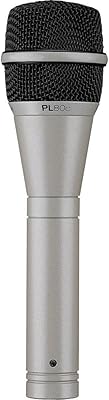
Electro-Voice PL80c Dynamic Microphone
74%
88%
Feedback Rejection
83%
Output Level
81%
Handling Noise
79%
Build Quality
74%
Ease of Use
More
Electro-Voice 635A Handheld Interview Microphone

83%
96%
Build Quality
78%
Audio Clarity for Voice
93%
Ease of Use
74%
Value for Money
58%
Handling Noise
More
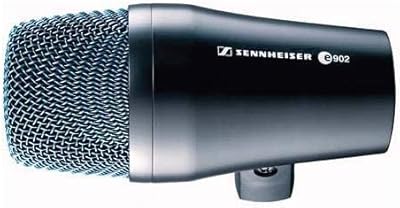
Sennheiser e902 Dynamic Kick Drum Microphone
83%
91%
Sound Quality
93%
Build Quality
89%
Low-End Capture
88%
Beater Attack Definition
84%
Bleed Rejection
More
Electro-Voice CO9 Cobalt Series Microphone
74%
79%
Build Quality
68%
Sound Clarity
73%
Noise Rejection
62%
Value for Money
83%
Ease of Setup
More
Shure Beta 52A
Shure Beta 52A
89%
96%
Low-End Punch
98%
Build Durability
92%
Feedback Rejection
84%
Mounting & Setup
97%
High SPL Handling
More
Electro-Voice RE20
Electro-Voice RE20
85%
96%
Vocal Clarity & Tone
98%
Proximity Effect Control
97%
Build Quality & Durability
88%
Background Noise Rejection
62%
Setup & Mounting
More
Audix F6 Hypercardioid Dynamic Kick Drum Microphone
80%
91%
Low-End Sound Quality
94%
SPL Handling
86%
Bleed Rejection
72%
Placement Flexibility
88%
Build Quality
More
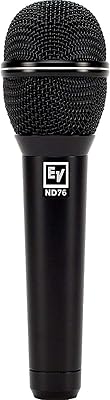
Electro-Voice ND76
Electro-Voice ND76
86%
93%
Vocal Clarity
96%
Build Durability
88%
Feedback Rejection
84%
Handling Noise Suppression
92%
EMF Interference Protection
More

FAQ

No, it does not. The PL33 is a passive dynamic microphone, so it draws no power from your console or interface. Just plug in a standard XLR cable and you are ready to go — no phantom power switch required.

Technically yes, but it is not really designed for that. The frequency response is tuned specifically for kick drum characteristics — heavy low end, limited high-frequency detail — so it will sound underwhelming on most other sources. If you need a general-purpose dynamic, you would be better served by a different mic.

Both positions work, and the compact body makes either practical. Placing it inside the shell through the port hole, pointed toward the beater, gives you more attack and punch. Positioning it outside the port softens the transient and adds more of the drum body. Most engineers experiment with both and blend or choose based on the mix context.

All three are dedicated kick drum dynamics in a similar price bracket, and the choice often comes down to personal taste. The Beta 52A has a more scooped, modern kick sound with pronounced high-mid attack, while the D112 is known for its warm, rounded low-end. The Electro-Voice dynamic sits in that competitive space but has a much smaller review base, so head-to-head comparisons from working engineers are harder to find. If possible, try all three before committing.

Almost certainly. The package includes both a standard adapter and a Euro-thread adapter, which covers the two most common thread specifications used on mic stands worldwide. Unless you have something highly unusual, one of the two will fit your stand without any additional hardware.

It is a reasonable choice for home and project studio use. If your recordings feature drums heavily and you want a dedicated kick mic rather than pointing a large-diaphragm condenser at the kick, the PL33 gives you purpose-built voicing at a sensible price. Just keep in mind that the limited online review data means you are taking a bit more of a leap of faith than you would with more widely documented alternatives.

Dynamic microphones as a class are built for road use, and the PL33 follows that tradition with a solid housing. Its 1.4-pound build feels substantial rather than flimsy. That said, the relatively small community of users means long-term durability reports are sparse — the available feedback does not raise major red flags, but hard evidence from heavy touring use is limited.

A standard balanced XLR cable — male on the mic end, female on the console or preamp end — is all you need. This is the most common cable in live and studio audio, so there is nothing special to source.

Yes, those are actually ideal genres for this kick drum mic. The extended low-end response captures the sub-bass thud that metal and rock kick drums rely on, and the supercardioid pattern helps control bleed in loud, dense mixes. If you are playing in a heavy band and need a mic that can handle high SPLs and deliver focused low-end, the PL33 fits the bill well.

For a kick drum mic, maintenance is fairly minimal. Wipe down the exterior housing with a dry or lightly damp cloth if it picks up dust or grime. Keep the XLR connector clean and free of debris by storing the mic in its included gig bag when not in use. Avoid exposing it to moisture or extreme humidity, and inspect the connector pins occasionally for corrosion if the mic is used in sweaty live environments.

Where to Buy