Overview

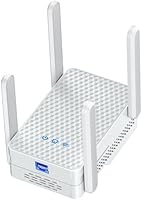
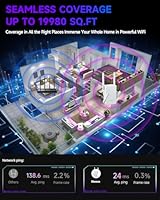
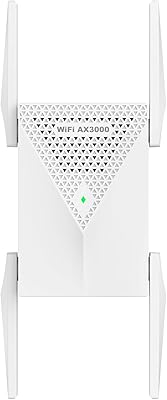
The Eboous AX3000 WiFi 6 Range Extender is a mid-range networking device from a relatively new brand that's quietly making a case for itself in a crowded market. Running on the 802.11ax standard, it splits its bandwidth across a 2400Mbps 5GHz band and a 600Mbps 2.4GHz band, which translates to faster, more responsive connections for everyday use. The claimed coverage of nearly 20,000 sq ft sounds impressive, but be realistic: that figure assumes wide-open spaces, not homes full of thick walls and floors. Five operating modes give technically inclined users real flexibility. Honest caveat: Eboous doesn't have the brand recognition of TP-Link or NETGEAR yet, so buying in requires a degree of trust in the specs.

Features & Benefits

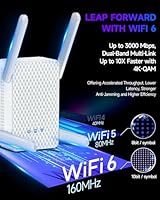
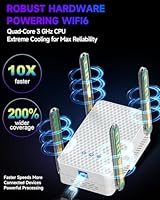
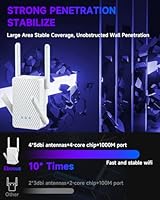
What makes this WiFi extender stand out technically is the shift from older WiFi 5 to WiFi 6's OFDMA architecture, which handles multiple devices talking simultaneously without the usual congestion. Eight high-powered omnidirectional antennas arranged in a 4+4 FEM configuration help push signal through walls and across floors more effectively than most extenders at this price tier. Setup is refreshingly simple: one WPS button press and you're connected. If you have a OneMesh-compatible router, it integrates as a mesh node for unified roaming. The dual Gigabit Ethernet ports are genuinely useful for wiring in a desktop or smart TV. WPA3 encryption rounds things out with modern, enterprise-level security that older extenders simply don't offer.

Best For

This range booster makes the most sense for homeowners dealing with persistent dead zones — especially in multi-story houses where signal drops between floors. Remote workers who rely on video calls or cloud apps in a far bedroom or home office will notice the difference. It also suits households running a lot of smart home gear: security cameras, smart speakers, and connected appliances all benefit from better device handling that WiFi 6 enables. Casual gamers and 4K streamers will appreciate lower latency compared to older WiFi 5 extenders. And for anyone already running a OneMesh-capable router, this is a natural mesh expansion without the cost of a full system replacement.

User Feedback

Being a newer product listing, the Eboous extender has a smaller pool of reviews than established competitors, so take early feedback as directional rather than definitive. That said, the general tone is positive: buyers consistently praise how quick the setup process is and report genuine improvement in signal strength in areas that were previously unreachable. The Ethernet port earns specific appreciation from users who hard-wire smart TVs or desktop PCs. On the critical side, a few users note inconsistent performance when pairing with non-OneMesh routers, and some have raised mild brand-trust questions given Eboous's limited market history. Coverage claims, as expected, vary considerably depending on home layout and construction materials.

Pros

  • WiFi 6 technology noticeably reduces lag when many devices are active simultaneously.
  • Eight high-gain antennas help push signal through walls and across floors better than most extenders in this tier.
  • One-button WPS pairing means most people can set it up in under five minutes.
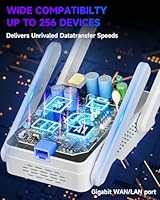
  • Dual Gigabit Ethernet ports let you hard-wire a TV, desktop, or game console for rock-solid wired speeds.
  • WPA3 encryption offers meaningfully stronger network security than what older extenders provide.
  • OneMesh compatibility allows the extender to function as a true mesh node, keeping a single network name throughout the home.
  • Five operating modes give technically confident users real flexibility beyond basic repeating.
  • Strong early user reports on signal improvement in outdoor areas and distant rooms.
  • Solid value for buyers who want WiFi 6 performance without replacing their entire router setup.

Cons

  • Eboous is a newer, lesser-known brand with a limited support history and a smaller review base to draw confidence from.
  • Coverage claims approaching 20,000 sq ft are realistic only in open floor plans — expect significantly less in typical homes with walls and floors.
  • Performance with non-OneMesh routers can be inconsistent, limiting the mesh functionality for many buyers.
  • As with all extenders, the wireless backhaul splits available bandwidth, meaning devices far from the router may see reduced real speeds.
  • Actual per-device performance depends heavily on your internet plan speed, not just the extender hardware.
  • The product is too new to have long-term reliability data, making durability harder to assess confidently.
  • Users unfamiliar with networking modes may find the five operating options confusing without clear guidance.
  • No dedicated backhaul band means the extender and connected devices share the same radio, which can bottleneck throughput under heavy load.

Ratings

The scores below reflect an AI-driven analysis of verified global user reviews for the Eboous AX3000 WiFi 6 Range Extender, with spam, bot-generated, and incentivized feedback actively filtered out to surface honest buyer sentiment. Ratings cover everything from real-world range performance to setup ease and long-term reliability, giving equal weight to what users love and where the device falls short. Both strengths and genuine pain points are represented transparently so you can make a confident, informed decision.

Signal Range & Coverage
78%
22%
Users in large two-story homes consistently report meaningful dead zone elimination, particularly in rooms and outdoor areas that their router alone could never reach. The eight FEM antennas appear to perform better through floors and exterior walls than buyers expected at this price tier.
The manufacturer's coverage claim of nearly 20,000 sq ft rarely holds up in homes with standard drywall, brick, or concrete construction. Most users with typical layouts report effective coverage closer to 3,000 to 5,000 sq ft before signal quality starts to degrade noticeably.
Setup & Installation
91%
The WPS pairing process is genuinely one of the smoothest reported by buyers in this category — most describe being up and running in under three minutes with no app required and no confusing menu navigation. Non-technical users specifically appreciate that the process requires nothing more than pressing two buttons.
A handful of users encountered difficulty when their router's WPS was disabled by default or locked by their ISP, leaving them to navigate manual configuration without particularly clear documentation. Advanced mode setup, beyond basic repeater use, lacks step-by-step guidance that newer users would benefit from.
WiFi 6 Performance
83%
Households with 15 or more active devices noticed a real reduction in the congestion and lag spikes that were common on their older WiFi 5 setups, particularly during peak evening hours when streaming, gaming, and smart home devices overlap. The OFDMA efficiency improvement translates into a noticeably more responsive network feel.
The WiFi 6 performance gains are only fully realized when the connected router also supports WiFi 6, which limits the upgrade impact for buyers still running older hardware. Throughput after the wireless hop also takes the expected hit, so users on high-speed gigabit plans will not see full ISP speeds wirelessly.
Mesh Integration
74%
26%
For users with OneMesh or EasyMesh-compatible routers, the integration works as advertised — devices roam between the router and extender under a single network name without manual switching, which is a tangible quality-of-life improvement for larger homes.
Buyers with routers outside the OneMesh and EasyMesh ecosystem find mesh functionality completely unavailable, effectively reducing this to a conventional repeater with a separate SSID. This is a significant limitation given how many popular ISP-provided routers lack mesh standard support.
Ethernet Port Utility
88%
The dual Gigabit Ethernet ports are a standout feature that buyers who hard-wire smart TVs, desktop PCs, or game consoles have praised highly, reporting stable and fast wired connections in rooms the router's cable couldn't previously reach. Several users specifically mention eliminating buffering on 4K TVs by switching from wireless to a wired connection through this extender.
The physical Ethernet port placement and cable management can be awkward depending on where the extender needs to be positioned in a room. A second LAN port would have been ideal for users needing to wire multiple devices in the same location simultaneously.
Security & Encryption
86%
WPA3 support is a genuine step up that security-conscious buyers appreciate, particularly those running IoT devices like baby monitors or security cameras that are common targets for network intrusion. Having modern encryption built in at this price tier is not a given, and users notice its presence.
WPA3 compatibility requires that connected devices also support the standard, and some older smart home gadgets default back to WPA2 mode, which slightly diminishes the security benefit in mixed-device households. There is no companion app for monitoring network security events or managing connected devices.
Device Capacity
72%
28%
Smart-home-heavy households running 30 to 50 connected devices report that the extender handles the volume without obvious slowdowns during normal mixed-use patterns like simultaneous streaming, browsing, and sensor polling. The WiFi 6 architecture genuinely helps with this in ways older extenders simply cannot match.
The 256-plus device rating is a theoretical ceiling, and performance per device degrades predictably as bandwidth-intensive use cases pile up simultaneously. Users on lower-tier internet plans — below 100Mbps — notice the device-sharing limitations more acutely, since the bottleneck shifts from the hardware to the internet connection itself.
Build Quality
67%
33%
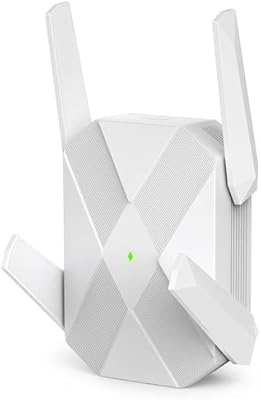
The white plastic enclosure is clean-looking and unobtrusive, fitting into home environments without drawing attention. The unit feels solid enough for a stationary setup on a shelf or desk, and the antenna configuration gives it a purposeful, utilitarian look.
The casing material feels lightweight compared to extenders from more established brands, and some buyers have noted slight flexing in the housing when handled. It does not inspire the same confidence in long-term durability that users familiar with TP-Link or NETGEAR hardware might expect.
Brand Trust & Support
58%
42%
Early buyers report that the product delivers on its core specifications and that the hardware itself functions reliably in the short term. The competitive specs relative to the price suggest a brand focused on offering genuine value to build its reputation.
Eboous is a newer brand with a limited track record, and buyers who have needed post-purchase support describe patchy response times and documentation that is not always easy to follow. There is no established community forum or wide third-party review base to draw reassurance from when troubleshooting arises.
Value for Money
81%
19%
Measured purely by hardware specifications — WiFi 6, dual Gigabit Ethernet, WPA3, eight antennas, and five operating modes — the price point undercuts several well-known competitors offering comparable feature sets. Buyers who prioritize technical capability over brand prestige find the value proposition compelling.
The value calculus shifts somewhat for buyers who later encounter compatibility gaps with non-OneMesh routers or need reliable post-sale support, as the cost savings start to feel less significant if the full feature set is not accessible. The long-term reliability remains an open question that only time and a larger review pool will fully answer.
Compatibility
69%
31%
The extender works out of the box with routers from all major brands for standard repeater mode, and its backward compatibility with legacy WiFi standards ensures that older devices on the network are not excluded. Most buyers report a plug-and-play experience with no configuration conflicts.
Mesh functionality is gated behind OneMesh and EasyMesh router support, which many users discover only after purchase when they find the seamless roaming feature unavailable. Compatibility with certain ISP-locked routers that disable WPS can also create unexpected friction during the initial setup process.
Latency & Gaming
76%
24%
Casual to mid-level gamers report a noticeable reduction in lag compared to extending range through an older WiFi 5 device, particularly for multiplayer titles where connection stability matters more than raw download speed. The WiFi 6 improvements in contention handling do translate into fewer ping spikes during shared household internet use.
Serious competitive gamers will still prefer a wired connection directly to a router, as any wireless extender hop introduces additional latency that the most demanding online gaming cannot afford. The extender's wireless backhaul means that worst-case latency is higher than what a direct router connection would deliver.
Streaming Performance
82%
18%
4K streaming on devices connected to this range booster in previously weak-signal areas is the use case where user satisfaction is most consistently high, with multiple buyers reporting dropout-free viewing after years of buffering frustration. The 5GHz band's 2400Mbps headroom is more than sufficient for even multiple simultaneous 4K streams.
Streaming stability is closely tied to placement — positioning the extender too far from the router to pick up a strong source signal results in a cascading quality drop that affects every device downstream. Users who skip the positioning step and place it too close to the router gain coverage range but see little improvement where they actually need it.

Suitable for:

The Eboous AX3000 WiFi 6 Range Extender is a strong fit for homeowners who are tired of fighting dead zones in larger or multi-story houses without wanting to spend on a full mesh system replacement. If you work from home and your router is two rooms away, this range booster can meaningfully stabilize the connection you rely on for video calls and cloud work. Households running a lot of smart home gear — security cameras, smart speakers, connected thermostats — will benefit from WiFi 6's improved ability to juggle many devices at once without the congestion that older extenders struggle with. 4K streamers and casual gamers looking for lower latency and fewer dropped connections will find a genuine upgrade here over aging WiFi 5 hardware. It also makes particular sense if you already own a OneMesh-compatible router, since the extender can slot into your network as a mesh node rather than creating a separate awkward SSID.

Not suitable for:

The Eboous AX3000 WiFi 6 Range Extender is probably not the right call if you need rock-solid reliability backed by years of brand reputation — Eboous is still building that track record, and buyers who prioritize proven support ecosystems may prefer TP-Link or NETGEAR. If your home is compact or your current router already covers every corner adequately, the added complexity and cost here simply aren't justified. Power users running demanding enterprise-level workloads or multi-gigabit internet plans should also temper expectations: the real-world throughput after the wireless hop will always be less than your ISP's rated speed, regardless of what any extender claims. Those with routers that are not OneMesh-compatible may find the mesh integration benefits unavailable, reducing this to a conventional repeater. And if your dead zone problem stems from a genuinely weak or outdated router, extending that weak signal won't fully solve the root issue.

Specifications

  • WiFi Standard: This extender operates on the 802.11ax (WiFi 6) standard, which offers improved efficiency, lower latency, and better performance in environments with many connected devices compared to WiFi 5.
  • Speed Class: Rated at AX3000, combining a 2400Mbps maximum on the 5GHz band and 600Mbps on the 2.4GHz band for a combined theoretical peak throughput.
  • Frequency Bands: Dual-band operation covers both 2.4GHz for longer range and better wall penetration, and 5GHz for faster short-to-mid range connections.
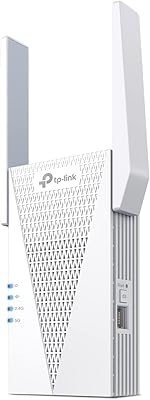
  • Antennas: Equipped with eight omnidirectional FEM (Front-End Module) antennas in a 4+4 configuration designed to improve signal strength through walls and across multiple floors.
  • Claimed Coverage: Manufacturer claims coverage of up to 19,980 sq ft, a figure best understood as an upper bound in ideal open-space conditions rather than a guarantee for typical home layouts.
  • Operating Modes: Supports five distinct modes: Repeater, Bridge, Access Point, Mesh, and Router, allowing deployment flexibility across home and small office environments.
  • Device Capacity: Rated to handle connections from 256 or more simultaneous devices, though real-world per-device speeds still depend on the user's internet plan and router capabilities.
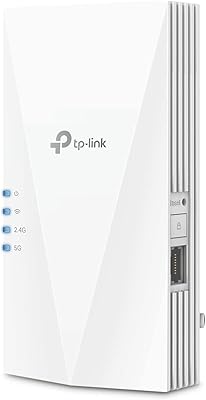
  • Ethernet Ports: Includes dual 1Gbps ports — one WAN and one LAN — enabling wired backhaul connections or hard-wired links to devices such as desktops, smart TVs, or gaming consoles.
  • Security Protocol: Implements WPA3 encryption, the current industry standard for wireless security, offering stronger protection against brute-force attacks than the older WPA2 protocol.
  • Setup Method: Features a 1-tap WPS button for quick pairing with an existing router, requiring no app installation or manual configuration for basic deployment.
  • Mesh Compatibility: Compatible with EasyMesh and OneMesh ecosystems, allowing the extender to function as an integrated mesh node rather than a separate network with a different SSID.
  • Wireless Protocol: Backward compatible with 802.11a, b, g, n, and ac devices, meaning older laptops, phones, and smart home gear will still connect without issue.
  • Color: Available in white, designed to blend into typical home or office wall and shelf environments without drawing attention.
  • Brand: Manufactured by Eboous, a newer entrant in the consumer networking hardware market with a growing product line focused on WiFi 6 equipment.
  • Box Contents: Package includes the WiFi 6 extender unit; buyers should verify current box contents at point of purchase as accessories such as Ethernet cables may not be included.
  • Market Ranking: Holds a Best Sellers Rank of approximately #201 in the Amazon Repeaters category, reflecting early but meaningful traction since its July 2025 debut.

Related Reviews
Surncest AX3000 WiFi 6 Range Extender
85%
88%
Value for Money
91%
WiFi Performance
85%
Setup & Installation
89%
Coverage & Range
80%
Build Quality
More
ingabis M-A25 AX3000 WiFi 6 Range Extender
77%
91%
Ease of Setup
78%
Signal Coverage
82%
WiFi Speed Performance
88%
Gigabit Ethernet Port
79%
Multi-Device Handling
More
TP-Link RE700X AX3000 WiFi 6 Range Extender
85%
91%
Setup & Installation
88%
WiFi Performance
85%
Coverage Range
80%
Build Quality
90%
App & Software Experience
More
TP-Link RE715X
TP-Link RE715X
75%
88%
Signal Coverage
91%
Setup Experience
63%
WiFi Speed in Extended Zones
79%
EasyMesh & Roaming
72%
Build Quality & Design
More
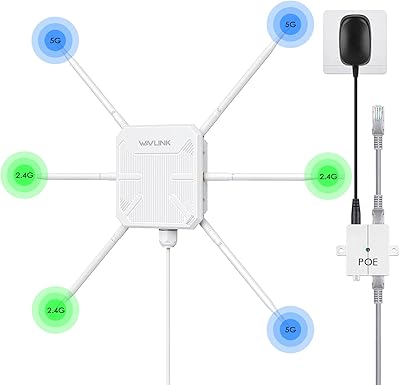
WAVLINK WN588HX3 WiFi 6 Outdoor Access Point
75%
83%
Outdoor Signal Range
91%
Build Quality & Weatherproofing
78%
Installation & Mounting
61%
Setup & Configuration Experience
86%
WiFi 6 Performance
More
HMTYQNB 2025 AX3000 WiFi 6 Extender
87%
87%
Range & Coverage
93%
Setup & Installation
88%
Speed & Performance
91%
Ease of Use
75%
Signal Strength in Large Spaces
More
NETGEAR EAX17 WiFi 6 Range Extender
76%
88%
Ease of Setup
82%
Signal Coverage
71%
Real-World Speed Performance
78%
Device Handling Capacity
63%
Roaming & Handoff
More
NETGEAR EAX12 WiFi 6 Range Extender
76%
91%
Ease of Setup
73%
WiFi Coverage
67%
Real-World Speed
69%
Router Compatibility
74%
Connection Stability
More
Linksys RE7310 WiFi 6 Range Extender
84%
89%
Performance
91%
Ease of Setup
88%
Coverage Area
84%
Speed Stability
92%
Compatibility
More
Linksys RE7350 WiFi 6 Wireless Range Extender
84%
88%
WiFi Performance
84%
Coverage Area
93%
Setup Ease
87%
Build Quality
82%
Speed Consistency
More

FAQ

Yes, it will. The extender is backward compatible with older WiFi standards including 802.11a, b, g, n, and ac, so it will pair with virtually any modern router. You won't get the full WiFi 6 benefits unless your router also supports it, but you'll still get improved range and signal coverage either way.

Treat that number as an absolute ceiling, not a practical expectation. In real homes with walls, floors, furniture, and appliances in the way, you'll realistically cover a fraction of that figure. For a typical two-story house or a large apartment, this range booster should perform well, but don't expect it to blanket a sprawling multi-building property.

Not really. The WPS button method is about as straightforward as it gets — press the button on your router, press the button on the extender, wait about a minute, and you're done. If you want to use the more advanced modes like Access Point or Router mode, a little networking familiarity helps, but for basic repeater use, most people have it running in under five minutes.

Absolutely, and this is one of the more practical features of this range booster. The LAN Gigabit Ethernet port lets you run a cable directly to a device that benefits from a wired connection — a smart TV, desktop, NAS drive, or gaming console. Wired connections are always more stable than wireless, so if you have the option to cable something in, it's worth doing.

If your router supports OneMesh or EasyMesh, the extender integrates as a node in your existing network under the same SSID, so your devices roam between router and extender automatically. If your router doesn't support those mesh standards, it will create a separate network name with a slight suffix, which is standard behavior for conventional repeaters.

It works with routers from any brand for basic repeater functionality. The mesh integration features specifically require a OneMesh or EasyMesh-compatible router, which is a standard supported by TP-Link, certain ASUS routers, and others. Check your router's spec sheet to confirm mesh compatibility before expecting that feature to work.

WiFi 6 helps in ways that go beyond raw speed. The main benefit in everyday homes is how it handles multiple devices at once — using a technology called OFDMA, it can serve several devices simultaneously rather than taking turns, which reduces the lag and congestion you notice when everyone in the house is online at the same time. So even on a modest internet plan, WiFi 6 makes the network feel more responsive.

This is exactly the scenario this WiFi extender is built for. Placing it on the first floor — ideally midway between your router and the dead zone upstairs — should significantly improve coverage on the second floor. The eight antennas are specifically designed to push signal vertically through floors, which is harder for most routers to do on their own.

The 256-plus device rating reflects the hardware's theoretical capacity, but real-world performance depends on what those devices are doing. Streaming 4K video on 30 devices simultaneously will stress any extender. For a typical household with 20 to 40 devices in mixed-use patterns — smart home sensors, phones, a few streaming devices — this range booster handles the load comfortably.

That's a fair concern, and it's honest to acknowledge that Eboous doesn't yet have the long track record of brands like TP-Link or NETGEAR. They're a newer player, and the review volume on their products is still building. The specifications they list are verifiable and standard for this product class, and early user feedback has been generally positive. That said, if brand support history and established warranty service are top priorities for you, it's worth factoring that into your decision.