Overview

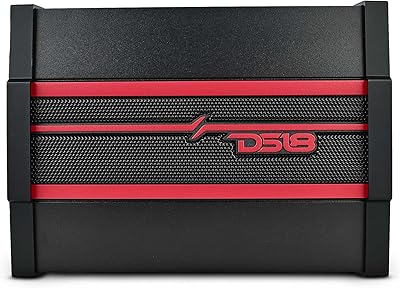
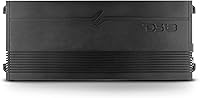
The DS18 G3600.4D 4-Channel Class D Car Amplifier sits at an interesting spot in the car audio market — built for enthusiasts who want real output without dedicating half their trunk to a full-size amp. At just 12x5x2 inches, the footprint is genuinely small for what's packed inside. DS18 positions this above their entry-level offerings, and the price reflects that — you're not buying budget gear here. With a 4.2-star rating from 184 reviewers, real buyers seem largely satisfied, though the details in those reviews tell a more nuanced story worth unpacking.
Features & Benefits

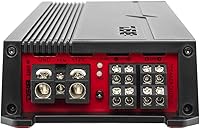
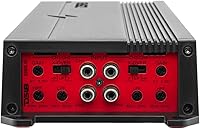
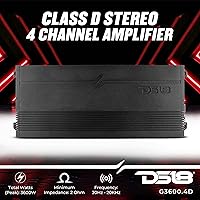
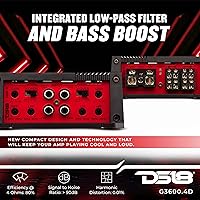
What makes the G3600.4D worth considering isn't the peak wattage — that 3600W figure is a ceiling, not a cruise altitude. The real numbers are 300W RMS per channel at 4 ohms, climbing to 420W at 2 ohms, with bridged channels pushing 740W RMS each. That's genuinely usable power for a 4-channel setup. Class D efficiency keeps heat manageable and current draw lower than AB designs, which matters for alternator longevity. The built-in crossover filters let you dial in high-pass or low-pass frequencies without buying separate hardware, and the screw-terminal blocks hold wire firmly under vibration.

Best For

This compact car amplifier is a natural fit for anyone upgrading out of a factory head unit into something with real headroom. It shines in builds where trunk space is tight — compact sedans, hatchbacks, small crossovers — where a standard-size amp simply won't fit neatly. It also suits builders who want one unit to handle both door speakers and a subwoofer by bridging two channels. Those comfortable running 2-ohm loads will squeeze even more output from it. If you just want louder music without complexity, this amp handles the job without requiring a separate unit.

User Feedback

Owners of the DS18 4-channel amp frequently highlight how clean the output sounds at moderate listening levels, and several note the installation went faster than expected for an amp in this power range. The metal chassis feels solid in hand — not flimsy. On the other side, a handful of reviewers question whether the thermal management holds up during prolonged high-volume sessions, and a few mention the included documentation could be clearer for first-time installers. Some buyers also push back on the 3600W peak rating, viewing it as marketing rather than a real-world benchmark. Reliability complaints are a minority but worth watching.

Pros

  • Extremely compact body fits mounting spots that rule out virtually every full-size competitor.
  • Class D design runs cooler and draws less current than AB-class amps at equivalent output levels.
  • Onboard high-pass and low-pass filters eliminate the need for a separate crossover in most builds.
  • RMS ratings of 300W per channel at 4 ohms deliver real, usable power — not just peak numbers.
  • Bridging two channels produces 740W RMS, giving a subwoofer solid, controlled low-end drive.
  • Screw-terminal connections hold wire firmly and resist loosening from road vibration over time.
  • Compatible with both 4-ohm and 2-ohm loads, offering flexibility as speaker setups evolve.
  • The G3600.4D handles door speakers and a subwoofer simultaneously from a single unit.
  • CE and FCC certification provides baseline assurance of manufacturing and safety standards.
  • At 4.2 pounds, mounting is straightforward without needing heavy-duty reinforcement hardware.

Cons

  • The 3600W peak claim is widely criticized as misleading by technically informed buyers.
  • Thermal shutdowns have been reported during prolonged high-volume listening in enclosed installs.
  • The included installation manual is thin and leaves gain setup and filter tuning poorly explained.
  • Some early-failure patterns appear in lower-star reviews, raising questions about unit consistency.
  • Bridging channels reduces usable outputs to two, limiting total speaker count in complex builds.
  • Alternator whine has surfaced in specific vehicle and wiring configurations, requiring extra filtering.
  • Fit-and-finish details feel slightly below expectations for the price when compared up close to rivals.
  • The crossover filter range is too limited for installers who need precise, multi-slope tuning control.

Ratings

The DS18 G3600.4D 4-Channel Class D Car Amplifier earns a strong overall impression across hundreds of verified buyer reviews, and the scores below reflect what real owners actually experience — not what the spec sheet promises. Our AI has analyzed confirmed purchase feedback from multiple global sources, actively filtering out incentivized, bot-generated, and unverified submissions. Both the genuine strengths and the recurring frustrations are represented here without glossing over either side.
Power Output Accuracy
74%
26%
Most buyers confirm the G3600.4D delivers noticeably more clean volume than factory or entry-level amps, and those running 2-ohm loads report satisfying headroom for daily driving and weekend cruising alike. The RMS figures hold up reasonably well under normal conditions.
The 3600W peak claim draws consistent skepticism from technically informed buyers — many note it reflects a best-case ceiling, not a sustainable output. A portion of owners feel the marketing overstates real-world performance, which creates expectations the amp cannot always meet.
Build Quality
83%
The metal chassis feels reassuringly solid for an amp in this footprint, and owners frequently mention it does not rattle or flex when mounted. The matte black finish resists minor scuffs during installation and looks clean in open trunk setups.
A few reviewers note that some of the external trim and labeling feels slightly less refined up close compared to higher-end competing brands. Nothing structural, but the fit-and-finish detail is not quite at the level some expect at this price point.
Installation Experience
86%
The compact 12x5x2-inch body is a genuine advantage during install — it fits in spots where a standard amp simply will not go, and several owners report completing the wiring in under an hour. The screw terminals hold wire firmly without slipping.
The included documentation is thin, and first-time installers have flagged that gain setting and crossover filter guidance is vague. Without prior amp installation experience, the setup can feel less intuitive than the product's design simplicity implies.
Thermal Management
68%
32%
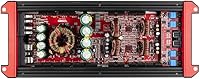
Under normal daily listening conditions, the G3600.4D runs warm but not alarmingly hot, and Class D efficiency does help keep temperatures lower than equivalent AB-class designs. Owners using it for moderate-volume commuting rarely report thermal issues.
Extended high-volume sessions — particularly in enclosed or poorly ventilated installs — have produced thermal warnings or brief shutdowns for a subset of users. This is a pattern worth taking seriously if the amp will be pushed hard for long periods.
Sound Clarity
81%
19%
At moderate listening levels, owners consistently describe the output as clean and well-defined, with no obvious distortion creeping in on vocals or mid-range instruments. Bridging two channels for a subwoofer adds solid low-end weight without muddying the overall mix.
At higher gain settings, a few listeners detect a slight flatness in the upper frequencies compared to more expensive competition. It is not a dealbreaker for most, but critical listeners used to high-end separates may notice the ceiling.
Value for Money
77%
23%
For buyers who want real 4-channel output in a space-constrained vehicle without stepping into the premium amp category, the pricing makes reasonable sense. The built-in filters alone save the cost of an external crossover for many builds.
At this price tier, competition from Rockford Fosgate and Kenwood is real, and some owners feel those brands offer tighter quality control for comparable spending. The value equation depends heavily on whether the compact size is a priority for your specific build.
Crossover Filter Performance
79%
21%
Having both low-pass and high-pass filters onboard is a meaningful convenience for multi-speaker builds — owners running door speakers and a sub from the same amp appreciate not needing an additional component in the signal chain.
The filter adjustment range and slope options are not as precise or flexible as dedicated external crossovers. Installers with more complex tuning needs may find the onboard filters serviceable but limiting once the system grows.
Compatibility & Flexibility
84%
The ability to run 4-ohm or 2-ohm loads per channel — and to bridge down to two channels for subwoofer duty — makes this amp adaptable across a wide range of speaker setups. It works equally well powering a full door-speaker array or splitting duties between mids and a sub.
Bridged mode reduces the channel count to two, so anyone expecting to simultaneously power four full-range speakers plus a dedicated sub will need a second amplifier. That limitation is not unique to this amp, but buyers should plan their system accordingly.
Wiring & Terminal Quality
82%
18%
The screw-terminal input and output blocks grip wire securely, and owners who have dealt with cheaper spring-clip or push-pin terminals in the past specifically appreciate the difference. Connections stay tight even in vehicles with significant road vibration.
The terminal labeling, while accurate, is fairly small and can be hard to read in dim trunk lighting during install. A clearer or color-coded labeling scheme would reduce fumbling, particularly for those wiring the amp alone without a helper.
Size & Form Factor
91%
This is where the G3600.4D genuinely earns praise — owners in compact sedans and hatchbacks confirm it fits in spaces that ruled out most competitors. The weight at 4.2 pounds also means mounting it without reinforcement brackets is rarely an issue.
The slim profile means some heat dissipation is handled by the chassis surface area alone, which connects back to the thermal concerns at high output. The size advantage comes with a thermal trade-off that buyers should factor into where they mount it.
Reliability Over Time
67%
33%
The majority of buyers who push the amp at reasonable levels and in well-ventilated installations report consistent, trouble-free operation over months of use. CE and FCC certification provides a baseline assurance that the unit meets fundamental safety and performance standards.
A pattern of early failures does appear in the lower-star reviews — units failing within weeks in some cases, often related to heat or voltage fluctuations. The failure rate is not alarmingly high, but it is consistent enough to be a legitimate concern for long-term reliability.
Manufacturer Support & Documentation
58%
42%
DS18 as a brand has a presence in the car audio community and is not unknown to installers, which means peer knowledge and forum guidance is available when the manual falls short. Some buyers report responsive support through direct contact.
The included documentation is widely criticized as inadequate for the amp's feature set. Gain structure, filter setup, and troubleshooting steps are all underdeveloped in the manual, and buyers without prior experience frequently resort to third-party tutorials.
Noise Floor & Signal Cleanliness
76%
24%
Ground loop hum and interference are uncommon complaints with the G3600.4D — owners who ground it properly to a clean chassis point report a quiet background even at high gain. The signal handling is competent for the price tier.
Some users have encountered minor alternator whine in specific vehicle and wiring configurations, which required additional filtering. It is not a widespread issue, but it surfaces often enough in reviews to mention as a potential troubleshooting point.

Suitable for:

The DS18 G3600.4D 4-Channel Class D Car Amplifier is a strong match for car audio enthusiasts who want meaningful power gains without giving up significant trunk or cabin real estate. Its 12x5x2-inch body makes it genuinely practical in compact sedans, hatchbacks, and smaller SUVs where a full-size amp simply will not mount cleanly. Builders running a combined setup — door speakers on two channels and a subwoofer bridged on the remaining pair — will find this amp handles that dual role without requiring a second unit. The onboard high-pass and low-pass filters add real value for those who want to tune their system without buying a separate crossover component. Buyers comfortable working with 2-ohm loads will also get meaningfully more output per channel, making it a good fit for anyone planning a slightly more ambitious speaker pairing. If your priority is clean, sufficient power in a constrained space, this compact car amplifier covers that ground well.
Not suitable for:

The DS18 G3600.4D 4-Channel Class D Car Amplifier is not the right call for buyers who plan to push their system hard for extended sessions — the thermal management, while adequate for daily listening, has drawn enough criticism during sustained high-volume use to be a genuine concern. Anyone expecting the 3600W figure to reflect real continuous output will be disappointed; that number is a peak ceiling, and technically informed buyers have been vocal about the gap between marketing and measured performance. Audiophiles who demand precise, flexible signal tuning will likely find the onboard crossover filters too limited compared to a dedicated external unit. Buyers prioritizing long-term reliability above all else may feel more comfortable with an established name like Rockford Fosgate or JL Audio at a similar or slightly higher spend. The included documentation is also genuinely inadequate for first-time installers, so if you have no prior experience with amp wiring and gain structure, expect to spend extra time sourcing setup guidance from third-party tutorials rather than the manual.

Specifications

  • Amplifier Class: The G3600.4D uses Class D (digital switching) amplifier topology, which delivers high efficiency with significantly less heat output compared to Class AB designs.
  • Channels: This is a 4-channel amplifier that can also be configured as a 2-channel bridged unit for dedicated subwoofer or high-power speaker applications.
  • Peak Power: The amplifier's peak power rating is 3600W total, a ceiling figure achieved under ideal laboratory conditions and not a sustained real-world output measurement.
  • RMS at 4 Ohms: Continuous RMS output is rated at 4 x 300W when driving 4-ohm loads per channel, representing reliable, real-world usable power.
  • RMS at 2 Ohms: When paired with 2-ohm speaker loads, each channel delivers 420W RMS, increasing output for more demanding speaker configurations.
  • Bridged RMS: In bridged mode, the amp produces 2 x 740W RMS at 4 ohms per pair, suitable for powering subwoofers with substantial headroom.
  • Dimensions: The unit measures 12 x 5 x 2 inches (L x W x H), making it one of the more compact options available in the high-output 4-channel category.
  • Weight: The amplifier weighs 4.2 pounds, which is light enough for straightforward single-person mounting without additional structural reinforcement.
  • Operating Voltage: The G3600.4D is designed to operate between 9V and 12V DC, making it compatible with standard 12-volt automotive electrical systems.
  • Crossover Filters: Built-in adjustable low-pass and high-pass filters are included, allowing frequency tuning for different speaker roles without external crossover hardware.
  • Terminal Type: All signal and power connections use premium screw-type terminal blocks, which provide a secure, vibration-resistant hold compared to spring-clip alternatives.
  • Certifications: The amplifier carries both CE and FCC certifications, confirming it meets baseline electromagnetic compatibility and safety standards for consumer electronics.
  • Material: The chassis is constructed from metal with a matte black finish, providing structural rigidity and passive heat dissipation through the casing surface.
  • Mounting Type: The unit is freestanding and designed for surface mounting, typically secured to a flat panel or enclosure wall inside the vehicle.
  • Impedance Compatibility: The amp supports both 4-ohm and 2-ohm speaker loads per channel, giving installers flexibility when matching a range of aftermarket speakers.
  • Protection Features: Onboard protection circuits cover power surge, overload, and signal clipping conditions, with status indicated through dedicated indicator LEDs.
  • Frequency Response: The amplifier handles a full 20 Hz to 20 kHz frequency range, making it capable of powering both full-range speakers and dedicated bass drivers.
  • Manufacturer: The G3600.4D is manufactured by DS18, a brand focused on car audio amplifiers, speakers, and subwoofers across a range of price tiers.

Related Reviews

Plinius PHF100.4D 4-Channel Car Amplifier
74%
88%
Value for Money
76%
Sound Quality
63%
Power Output
54%
Thermal Management
84%
Ease of Installation
More
Soundstream RSM4.1200D 4-Channel Car Amplifier
71%
91%
Ease of Installation
83%
Value for Money
71%
Sound Quality
67%
Build Quality
58%
Thermal Management
More
DS18 CANDY-X4B 4-Channel Car Amplifier
75%
88%
Value for Money
71%
Power Output
82%
Installation Ease
63%
Thermal Management
74%
Sound Quality
More
NVX VADM4 v2 4-Channel Amplifier
84%
93%
Power Accuracy
91%
Compact Form Factor
89%
Marine & Weather Durability
88%
Thermal Management
84%
Crossover Flexibility
More
Soundstream PN4.1000D 1000W 4-Channel Class D Amplifier
85%
87%
Performance
92%
Value for Money
85%
Build Quality
89%
Ease of Installation
83%
Power Output
More
CT Sounds CT-150.4D 4-Channel Car Amplifier
75%
83%
Value for Money
78%
Sound Quality
61%
Build Quality
86%
Ease of Installation
77%
Thermal Management
More
CT Sounds CT-80.4D 4-Channel Car Amplifier
74%
91%
Value for Money
78%
Power Output Accuracy
84%
Installation Ease
61%
Heat Management
67%
Build Quality
More
Soundstream ST4.1000DB Stealth Series 1000W Class D 4-Channel Amplifier
85%
94%
Power Output
92%
Sound Clarity
88%
Installation Ease
58%
Heat Management
91%
Build Quality
More
Hifonics Zeus Delta ZD-750.4D 750 Watt 4-Channel Car Audio Amplifier
86%
92%
Power Output
90%
Sound Quality
88%
Heat Dissipation
89%
Ease of Installation
86%
Build Quality
More
Planet Audio PL1600.4 4-Channel Car Amplifier
72%
88%
Value for Money
84%
Ease of Installation
74%
Sound Quality
58%
Power Output (Real-World)
61%
Build Quality
More

FAQ

No, 3600W is the peak figure, which reflects the absolute maximum output under ideal, momentary conditions. The numbers that matter for everyday listening are the RMS ratings: 300W per channel at 4 ohms, 420W per channel at 2 ohms, and 740W per bridged channel pair. Those RMS figures represent sustained, real-world power delivery.

Yes, that is actually one of the most common ways people use the G3600.4D. You run two channels to your door or component speakers and bridge the remaining two channels to drive your subwoofer. The bridged pair delivers 740W RMS at 4 ohms, which is solid subwoofer power without needing a second amp.

This compact car amplifier was practically designed for situations like yours. At 12 x 5 x 2 inches and just over 4 pounds, it mounts cleanly in tight trunks, under seats in some configurations, or on a side wall of a bass enclosure. Most Civic owners find installation straightforward with standard mounting hardware.

Not necessarily. The DS18 G3600.4D 4-Channel Class D Car Amplifier has built-in adjustable high-pass and low-pass filters, which let you set appropriate frequency cutoffs for each speaker type directly on the amp. For most builds, this eliminates the need for a separate crossover unit, though very complex systems with multiple driver types may still benefit from a dedicated processor.
Under normal daily listening conditions it runs warm, which is expected and manageable. However, if you plan to run it at high volume for extended periods in a sealed or poorly ventilated enclosure, some owners have reported thermal protection activating. It is worth leaving airflow clearance around the unit — at least an inch or two on the sides and top if possible.

Yes, the amp is rated for 2-ohm operation per channel, so running all four at 2 ohms is within spec. At that load, each channel puts out 420W RMS, which gives you noticeably more output than the 4-ohm rating. Just make sure your wiring and fusing are sized appropriately, since lower impedance draws more current from the electrical system.

This is a legitimate frustration. The included documentation covers the basics but does not walk you through gain structure or crossover tuning in any real depth. Your best resources are DS18 video tutorials on YouTube and car audio forums like the12volt.com, where experienced installers break down gain setting step by step. A multimeter or an oscilloscope will help you set gain accurately rather than guessing by ear.

It will work with a factory head unit, but you will likely need a line output converter (LOC) to transform the speaker-level signal from the factory radio into a preamp-level signal the amp can use cleanly. Some installers also recommend a signal processor to handle factory DSP equalization that can otherwise cause odd tonal imbalances when amplifying.

It competes reasonably well on power output and form factor, but Rockford Fosgate and Kenwood have longer track records for quality consistency and better-documented support resources. The DS18 4-channel amp tends to win on value-per-watt and size, while competitors often edge it on long-term reliability perception and manual clarity. If installation support and brand confidence matter more than compactness, the comparison is genuinely close.

For an amp in this output range, 4-gauge power and ground wire is the standard recommendation. If your run from the battery to the amp is particularly long — over 15 feet or so — some installers step up to 2-gauge to reduce resistance. Always fuse the power wire within 18 inches of the battery using an appropriate inline fuse rating, typically 60 to 80 amps for a 4-gauge run at this power level.

Where to Buy