Overview

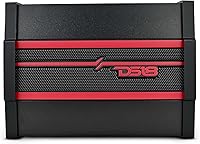
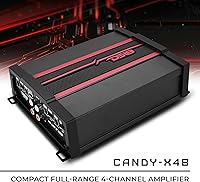
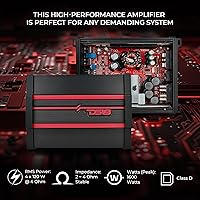
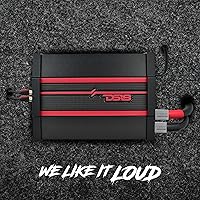
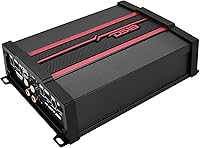
The DS18 CANDY-X4B 4-Channel Car Amplifier is DS18's answer to the growing demand for compact, capable amplifiers that don't require a serious budget stretch. DS18 has carved out a respectable niche in value-focused car audio, and this compact 4-channel amp fits squarely in that tradition. The 1600W peak figure gets the headline treatment, but real-world listening lands closer to the RMS ratings — still enough to wake up a dull factory system considerably. It's small enough to tuck under a seat or into a shallow trunk corner, and the matte black finish looks clean in any install. Think of it as a solid mid-range workhorse, not a boutique showpiece.

Features & Benefits

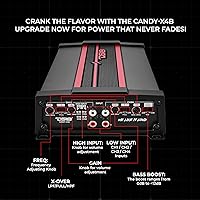
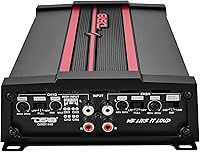
The CANDY-X4B runs on a Class D topology, meaning it generates less heat and draws less current than older amplifier designs — a real advantage when your vehicle's electrical system is already working hard. Three power modes give you practical flexibility: four channels at 4 ohm for door speakers, four channels at 2 ohm if your speakers can handle the load, or two bridged channels at 4 ohm for a dedicated sub. The crossover section spans LPF, HPF, and full-range modes with a wide frequency sweep, offering genuine tuning control. The adjustable bass boost is useful for subwoofer blending, though restraint pays off — pushing past a few dB invites distortion quickly. High-level inputs and auto turn-on simplify the install considerably.

Best For

This DS18 amplifier is a natural fit for anyone upgrading from a factory head unit and wanting a genuine step up in clarity without overhauling their entire audio chain. It's particularly well-suited to tight vehicle installs — think hatchbacks, sedans, or compact trucks where amp real estate is scarce. Running a component speaker set up front while bridging two channels for a small subwoofer in back? The power math works out well at this price tier. Experienced builders chasing serious SPL numbers will want a dedicated monoblock, but for a daily driver build where consistent reliability matters more than peak output, this compact 4-channel amp covers a lot of ground without overcomplicating things.

User Feedback

Owner sentiment around the CANDY-X4B skews positive, with most buyers praising how much output it delivers for its size and how manageable the installation process is — provided you do the prep work correctly. Proper grounding and an appropriately gauged power wire come up repeatedly in real-world discussions; skip those basics and you're inviting trouble regardless of which amp you buy. On the critical side, several owners feel the rated wattage figures are optimistic once the amp is loaded with real speakers under sustained listening, so temper your expectations accordingly. Heat under prolonged high-volume use is another occasional complaint. Match this DS18 amplifier to sensible speaker loads and the vast majority of those concerns tend to fade.

Pros

  • Compact footprint fits easily under seats or in tight trunk installations most full-size amps cannot.
  • Class D design runs cooler and draws less current than traditional Class AB amplifiers.
  • Three flexible power configurations let you match the amp to 4-ohm speakers, 2-ohm loads, or a bridged sub.
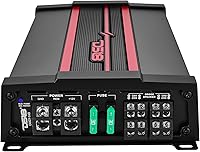
  • High-level inputs allow direct connection to factory head units without an aftermarket stereo.
  • Auto turn-on eliminates the need to fish a remote wire, saving real installation time.
  • Crossover section covers LPF, HPF, and full-range modes with a wide, usable frequency sweep.
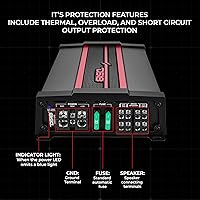
  • Built-in thermal, overload, and short-circuit protection helps the amp survive wiring mistakes and tough conditions.
  • Adjustable bass boost up to +12dB gives practical control when blending with a subwoofer.
  • Matte black finish looks clean and professional in any visible install location.
  • Strong value proposition for the price tier — noticeably outperforms factory head unit output.

Cons

  • Advertised peak wattage is a marketing figure; actual sustained RMS output under real load is considerably lower.
  • Can run noticeably warm under prolonged high-volume use, particularly in poorly ventilated spaces.
  • Thermal protection may cut output in tight under-seat locations with restricted airflow.
  • Wiring quality matters significantly — skimping on ground connections or power wire gauge causes reliability issues.
  • Not well-matched to power-hungry or low-sensitivity speakers that need a stronger dedicated amplifier.
  • Bridged subwoofer output may not satisfy listeners who want deep, controlled bass at higher volumes.
  • Limited brand prestige compared to established names, which may affect resale value and long-term support.
  • Bass boost control can push the amp into audible distortion quickly if turned up aggressively.
  • No remote bass knob included or referenced, which is a common expectation at this price point.
  • Mounting footprint, while compact by car audio standards, is still bulky for the smallest vehicle cabins.

Ratings

The scores below reflect our AI-driven analysis of verified global buyer feedback for the DS18 CANDY-X4B 4-Channel Car Amplifier, with spam, bot activity, and incentivized reviews actively filtered out to ensure the data reflects genuine ownership experiences. Ratings span both the strengths that make this compact amp a popular mid-range choice and the real frustrations that show up consistently once it is installed and pushed hard. Nothing has been softened — if a category underperforms, the score reflects it.

Value for Money
88%
Most buyers come away feeling the CANDY-X4B punches above its price class, especially when compared to similarly priced alternatives that offer less flexible power configurations. For someone upgrading a factory system on a practical budget, the perceived performance-per-dollar ratio is consistently praised across ownership feedback.
A meaningful segment of buyers feel the value equation shifts if they need to factor in a separate wiring kit, which adds to the total cost and is not always communicated clearly at the point of purchase. Those who expected boutique-level audio refinement at this price point tend to feel underserved.
Power Output
71%
29%
At moderate listening volumes driving standard 4-ohm door speakers, the CANDY-X4B delivers a noticeable and satisfying improvement over factory audio — which is the core use case it was designed for. The bridged output mode gives it enough headroom to control a small subwoofer without requiring a separate monoblock in a casual daily driver build.
The gap between the 1600W peak marketing figure and the real-world sustained RMS output is a recurring friction point among more informed buyers. Under continuous high-volume use with demanding speaker loads, the practical output falls short of what the headline numbers imply, leading to disappointment for anyone who based their speaker pairing decisions on peak wattage.
Installation Ease
82%
18%
High-level inputs and auto turn-on functionality make this one of the more approachable amps for first-time installers, removing two of the most common wiring headaches right out of the box. Buyers who connected it to a stock head unit in a weekend project generally report a smooth, frustration-free process.
Several owners hit unexpected snags related to grounding — a bad ground connection is responsible for a disproportionate share of the noise complaints and intermittent protection-circuit triggers reported in the field. The amp itself is not particularly forgiving of sloppy wiring technique, so beginners who skip proper gauge selection and clean ground contact points often regret it.
Thermal Management
63%
37%
Class D efficiency genuinely helps this compact 4-channel amp run cooler than an equivalent Class AB design would in the same space, which owners appreciate when mounting it in tight under-seat locations. For moderate daily listening — commutes, errands, typical road trips — heat is rarely reported as a problem.
Extended high-volume sessions, particularly in summer or in vehicles with minimal under-seat airflow, push the thermal protection into action more frequently than buyers expect. Several owners running the amp bridged at sustained volume report it cutting out and requiring a cool-down period, which is disruptive enough to be a genuine usability issue in those scenarios.
Sound Quality
74%
26%
For a mid-range Class D amplifier, the CANDY-X4B produces clean, clear audio at moderate gain settings that meaningfully outperforms factory head unit output across the frequency range. Buyers running quality component speakers on the front channels consistently comment on improved vocal clarity and midrange presence compared to their previous setup.
At higher gain and volume settings, some listeners detect a softness in fine detail and a slight hardness in the upper midrange that more discerning ears pick up on relatively quickly. This DS18 amplifier is not a reference-quality unit, and buyers pairing it with premium speakers sometimes feel the amp is the limiting factor in their system's overall transparency.
Build Quality
76%
24%
The matte black chassis feels solid and well-constructed for the price tier, and the heatsink design appears adequate for the amp's intended use case. Owners who have run it for a year or more as a daily driver generally report no structural issues, loose terminals, or cosmetic degradation.
The internal component quality is consistent with the value price tier rather than a premium build standard, and a subset of buyers have encountered early unit failures that suggest some variability in manufacturing tolerances. Terminal connections, while functional, feel slightly less robust than what you would find on amps at a higher price point.
Crossover Functionality
79%
21%
Having LPF, HPF, and full-range modes on a single amp at this price point gives builders real flexibility to tune a mixed speaker-and-subwoofer system without external crossover hardware. The broad 40Hz to 2kHz frequency range means the crossover works sensibly across a wide variety of speaker combinations.
The crossover adjustment knob lacks detents or clear calibration markings, making precise repeatable settings difficult to dial in — particularly frustrating when you want to return to a specific setting after experimenting. Buyers accustomed to digital signal processors or higher-end amps with labeled crossover points find this analogue approach imprecise.
Bass Boost Control
66%
34%
The 0dB to +12dB bass boost control is genuinely useful for lightly compensating when a subwoofer is rolled off, and most owners using it at conservative settings — around +3dB to +5dB — report it blending the low end naturally without audible side effects.
The control's upper range is more of a liability than an asset for most users; aggressive boost settings introduce audible distortion and can stress the amp unnecessarily. The absence of a center-frequency adjustment means the boost applies across a fixed band, which does not suit every subwoofer or enclosure type.
Compact Footprint
86%
The physical dimensions make this one of the more versatile amps available for vehicles where mounting space is genuinely limited — it slides cleanly under a range of front and rear seats in sedans and hatchbacks. Buyers with compact cars who had previously assumed an amplifier would not fit without a dedicated enclosure are frequently pleasantly surprised.
At 10 x 12 x 9 inches, the amp is compact relative to traditional 4-channel designs but still too large for the tightest under-seat profiles in some smaller vehicles, particularly city cars and subcompacts. A handful of owners report having to relocate the amp to a trunk panel after discovering the under-seat clearance was just insufficient.
Protection Circuits
81%
19%
The thermal, overload, and short-circuit protection work as advertised, and multiple buyers credit those circuits with saving both the amp and connected speakers from damage during wiring mistakes on first-time installs. For a product frequently bought by beginners, this safety net has real practical value.
Some owners find the thermal protection triggers a bit too conservatively under normal high-volume use, briefly cutting audio during listening sessions in warm conditions even when the amp is not truly in danger. While protective, the sensitivity of the circuit can feel intrusive during active listening.
Signal-to-Noise Ratio
68%
32%
When properly installed with clean power, a solid ground, and a shielded RCA connection, the CANDY-X4B produces an acceptably quiet noise floor that most casual listeners will find perfectly satisfactory for everyday use.
Noise sensitivity is a consistent complaint among owners who connected via high-level inputs or ran power cables alongside signal cables — alternator whine and interference appear more readily in this amp than in higher-end units. Getting a clean, quiet signal floor requires attention to installation detail that not all buyers anticipate needing.
Stability at 2 Ohm
72%
28%
The amp's rated 2-ohm stability across all four channels is a practical advantage for buyers running lower-impedance speakers, and owners who have run it in 2-ohm mode under moderate conditions generally report stable operation.
Running all four channels at 2 ohms simultaneously and at high volume generates considerably more heat, and the thermal protection becomes noticeably more active in this configuration. It is technically capable at 2 ohms but works best when the listener keeps volume levels in check and ventilation is adequate.
Long-Term Reliability
73%
27%
The majority of buyers using the CANDY-X4B as a daily driver for a year or more report continued reliable operation with no significant degradation in performance, which speaks reasonably well to its build consistency for the price tier.
A minority of buyers have experienced early-life failures — units developing channel imbalances or going into permanent protection mode within the first several months. While not a majority experience, the failure rate is elevated enough compared to premium brands that it registers as a genuine long-term reliability concern.

Suitable for:

The DS18 CANDY-X4B 4-Channel Car Amplifier is a smart pick for DIY car audio builders who want a meaningful upgrade over their factory sound system without committing to a complicated, expensive build. It works especially well in compact vehicles — sedans, hatchbacks, crossovers — where trunk or under-seat space is limited and a full-size amp simply won't fit. Beginners will appreciate the high-level inputs and auto turn-on functionality, which removes the need for a dedicated remote wire and simplifies wiring considerably. Intermediate builders who want to run component speakers on the front two channels while bridging the rear pair to drive a small subwoofer will find the power distribution flexible enough to handle that configuration comfortably. For daily commuters who prioritize long-term reliability over chasing maximum output figures, the built-in protection circuits and Class D efficiency make this a dependable everyday choice.

Not suitable for:

Buyers expecting the DS18 CANDY-X4B 4-Channel Car Amplifier to perform like a high-end audiophile unit will be disappointed — this is a value-tier product, and the real-world RMS output under sustained load falls short of what the peak power marketing might suggest. Enthusiasts planning to run power-hungry speakers at or near their limits for extended periods should factor in that this amp can run warm under heavy use, which may trigger thermal protection in poorly ventilated installs. Anyone building a serious SPL competition system or needing dedicated high-current output for a large subwoofer should look at a purpose-built monoblock instead. This DS18 amplifier also may not satisfy listeners who have already invested in premium speakers and expect a matching level of amplifier refinement in soundstage and low-level detail. If your priority is measured, lab-verified RMS specs from a brand with a long audiophile track record, you will likely want to budget up.

Specifications

  • Amplifier Class: Operates as a Class D amplifier, which prioritizes power efficiency and reduced heat output compared to Class AB designs.
  • Channels: 4-channel configuration supports full-range speaker setups or a mixed speaker-and-subwoofer arrangement via bridging.
  • Peak Power: Total peak power output is rated at 1600W across all channels under ideal conditions.
  • RMS at 4 Ohm: Delivers 4 x 120W RMS when driving standard 4-ohm speakers across all four channels.
  • RMS at 2 Ohm: Output increases to 4 x 200W RMS when paired with 2-ohm speaker loads across all four channels.
  • Bridged Output: In bridged stereo mode, the amp produces 2 x 350W RMS into 4-ohm loads, suitable for driving a subwoofer.
  • Crossover Modes: Includes selectable low-pass (LPF), high-pass (HPF), and full-range (FULL) crossover modes for flexible signal routing.
  • Frequency Range: Crossover frequency is adjustable across a 40Hz to 2kHz range to match a wide variety of speaker and subwoofer combinations.
  • Bass Boost: Onboard bass boost is adjustable from 0dB to +12dB, allowing low-frequency emphasis when integrating a subwoofer.
  • Input Type: Accepts both standard RCA low-level inputs and high-level speaker wire inputs for direct connection to factory head units.
  • Turn-On Method: Features automatic turn-on and turn-off functionality, eliminating the need for a dedicated remote wire in many installations.
  • Protection: Built-in thermal, overload, and short-circuit protection circuits help safeguard the amplifier and connected speakers during fault conditions.
  • Operating Voltage: Designed to operate at 14.4V DC, consistent with standard 12V automotive electrical systems under normal charging conditions.
  • Dimensions: Physical dimensions measure 10 x 12 x 9 inches, enabling installation in under-seat locations or compact trunk spaces.
  • Weight: The unit weighs 4 pounds, keeping the total install weight low for vehicles where mass is a consideration.
  • Finish: Exterior features a matte black finish that resists fingerprints and blends discreetly into most vehicle interiors.
  • Manufacturer: Designed and sold by DS18, a brand focused on delivering accessible car audio components at competitive price points.
  • Model Number: The official model designation is CANDY-X4B, distinguishing it within DS18's broader amplifier lineup.

Related Reviews
DS18 CANDY-X2B 800W Full-Range 2-Channel Car Amplifier
84%
88%
Performance
85%
Sound Quality
90%
Power Output
82%
Installation Ease
80%
Build Quality
More
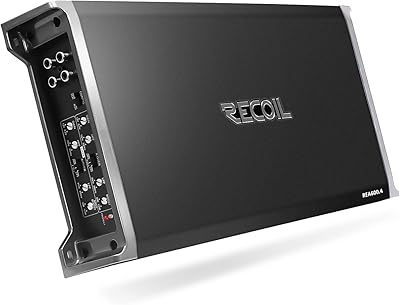
Recoil REA600.4 4-Channel Car Audio Amplifier
84%
89%
Audio Performance
91%
Ease of Installation
85%
Sound Quality at High Volumes
62%
Heat Management
90%
Power Output
More
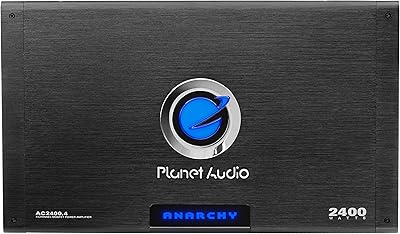
Planet Audio AC2400.4 4-Channel Car Amplifier
84%
95%
Power Output
89%
Sound Clarity
87%
Bass Performance
82%
Ease of Installation
65%
Thermals/Heat Management
More
Recoil DI550.4 4-Channel Car Audio Amplifier
74%
91%
Value for Money
78%
Power Output
86%
Ease of Installation
74%
Sound Quality
67%
Build Quality
More
Recoil DI800.4 4-Channel Car Audio Amplifier
83%
88%
Sound Quality
92%
Power Output
65%
Thermal Management
84%
Build Quality
91%
Ease of Installation
More
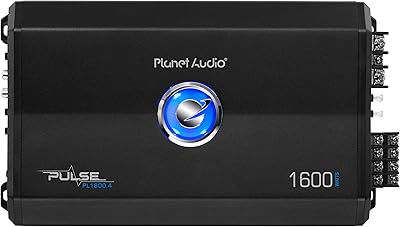
Planet Audio PL1600.4 4-Channel Car Amplifier
72%
88%
Value for Money
84%
Ease of Installation
74%
Sound Quality
58%
Power Output (Real-World)
61%
Build Quality
More
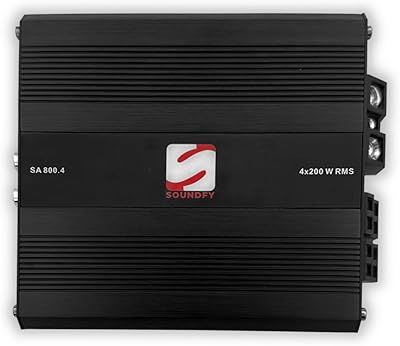
Soundfy SA 400.4 4-Channel Car Amplifier
71%
78%
Value for Money
72%
Sound Quality
63%
Power Output
58%
Build Quality
81%
Thermal Management
More
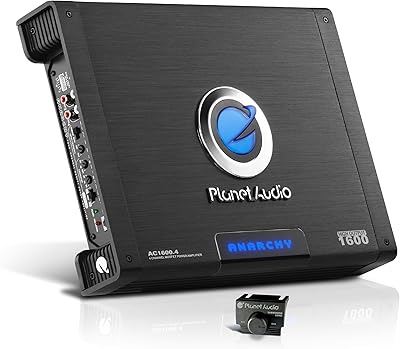
Planet Audio AC1600.4 Anarchy Series 4-Channel Car Amplifier
82%
94%
Power Output
88%
Sound Quality
70%
Ease of Installation
92%
Value for Money
85%
Build Quality
More
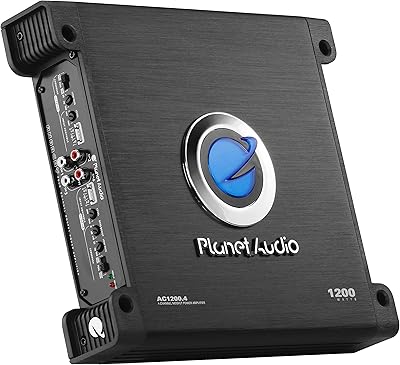
Planet Audio AC1200.4 4-Channel Car Amplifier
73%
88%
Value for Money
67%
Power Output
83%
Installation Ease
74%
Sound Quality
61%
Build Quality
More
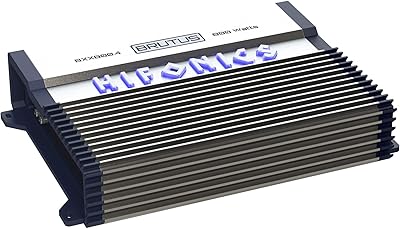
Hifonics BXX800.4 Brutus 800W RMS 4-Channel Car Audio Amplifier
86%
88%
Sound Quality
92%
Power Output
85%
Build Quality
72%
Heat Management
89%
Ease of Installation
More

FAQ

Yes, the high-level inputs on the DS18 CANDY-X4B 4-Channel Car Amplifier are designed exactly for this situation. You run speaker wire from your factory head unit's speaker outputs directly into those inputs, so no RCA outputs are required. The auto turn-on feature also means you don't need to trace a remote wire from the stereo — it detects the signal and powers on automatically.

For an amplifier in this power class, a 4-gauge power and ground wire kit is the typical recommendation. Using undersized wire is one of the most common installation mistakes — it causes voltage drop, limits output, and can create heat issues at the connections. Make sure your ground wire runs to bare metal on the chassis, kept as short as possible, and is properly cleaned to bare metal at the contact point.

Yes, but with realistic expectations. When you bridge two channels together, the CANDY-X4B delivers around 350W RMS into a 4-ohm subwoofer load. That is enough to power a single 10-inch or 12-inch subwoofer at moderate output levels. If you want to push a large, power-hungry sub at high volume, a dedicated monoblock amplifier will serve you much better.

Class D amps run cooler than older designs, but this compact 4-channel amp will still generate noticeable heat under sustained high-volume listening. If you mount it under a seat or in a tight enclosure with poor airflow, you may occasionally trigger the thermal protection, which cuts output to let the unit cool down. Leave at least a couple of inches of clearance around the amp for ventilation if at all possible.

Yes, the amp is rated at 4 x 200W RMS into 2-ohm loads, so it is 2-ohm stable on all four channels. That said, running at 2 ohms generates more heat and puts more stress on the amplifier, so adequate ventilation becomes even more important in that configuration.

DS18 does not include a full wiring kit in the box with this amplifier. You will need to purchase a wiring kit separately, which should include a power cable, ground cable, inline fuse holder, RCA cables if needed, and a signal wire. Trying to repurpose thin or low-quality wire from another install is not recommended.

For door or component speakers, set the channels driving those speakers to HPF (high-pass filter) and dial the crossover frequency to somewhere between 80Hz and 120Hz depending on your speaker size — this prevents them from trying to reproduce deep bass they cannot handle cleanly. For the bridged subwoofer channels, switch to LPF (low-pass filter) and set the cutoff in the same 80–120Hz range so the sub only handles the low frequencies.

At 10 x 12 x 9 inches, it is compact by car amplifier standards, but whether it fits under a specific seat depends on the vehicle. Many midsize sedans have enough clearance for this, but you will want to measure the available height and depth under your seat before committing. Some buyers mount it in the trunk or behind a rear seat panel as an alternative if under-seat clearance is marginal.

That 1600W figure is a peak power rating measured under very specific and brief conditions — it is not the sustained output you can expect during normal listening. The more meaningful numbers are the RMS ratings: 120W per channel into 4 ohms is what the amp can deliver continuously. That is still a solid improvement over factory audio, but it is worth understanding the distinction before making your decision.

It can, yes. The +12dB maximum bass boost is there as a tuning tool, not a volume knob. Pushing it to its upper limit almost always introduces distortion unless your gain is set conservatively and your subwoofer is well-matched to the power. Most experienced installers recommend using no more than +3dB to +6dB of bass boost and letting your head unit's EQ handle the rest.

Where to Buy