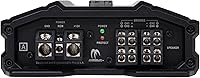
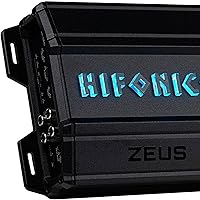
Overview

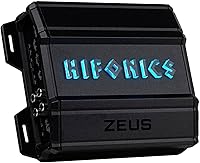
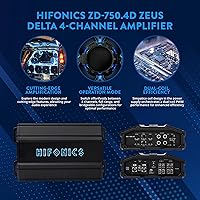
The Hifonics ZD-750.4D 4-Channel Car Amplifier is a mid-range unit that punches above its price point without demanding a complex install setup. Hifonics has been building car audio gear for decades, and this amp reflects that experience — compact enough at 7.3 x 5.8 x 2.2 inches to fit in tight spaces, yet capable of 750W peak output across four channels. What really stands out early on is the auto turn-on feature, which uses DC signal sense to power the amp without a remote wire. For buyers shopping against Pioneer or Rockford Fosgate at this price tier, this Hifonics amp offers a genuinely competitive package.

Features & Benefits

The ZD-750.4D runs on a PWM MOSFET power supply, which keeps output stable and minimizes heat during long listening sessions — something you notice when the amp is tucked under a seat for hours. The aluminum heat sink handles thermal dissipation passively, so there are no fans to worry about. Nickel-plated RCA inputs add a layer of protection against the corrosion that plagues budget connectors over time. On the end panel, LED protection indicators light up if the amp detects an overload or speaker short, which beats hunting for problems blindly. Bridged, it pushes 2 x 375W at 4 ohms — useful if you want to run a subwoofer on two channels.

Best For

This 4-channel amplifier makes the most sense for a few specific buyer profiles. If you are working with a factory head unit that has no remote turn-on output, the DC signal sense feature is a real installation simplifier. Space-constrained builds — think hatchbacks, motorcycles, or small trucks — benefit from the compact chassis without sacrificing channel count. It is also well-suited to anyone powering a complete front and rear speaker setup from a single amp without bridging. Budget-minded enthusiasts who want reasonable power and solid build quality without climbing into premium Rockford Fosgate territory will find this Hifonics amp a practical, no-frills choice.

User Feedback

With around 98 ratings and a 4.1-star average, the feedback on the ZD-750.4D is mostly positive, though the sample size is modest enough to treat individual reviews with some caution. Buyers consistently praise the straightforward installation and the auto turn-on feature, especially those coming from head units without a remote wire output. Sound clarity at everyday listening volumes draws regular compliments. On the flip side, a handful of users raise concerns about heat at high volume, and a few note the included documentation could be clearer for first-time installers. Long-term reliability data is still limited given the relatively small review pool, but early durability impressions are generally encouraging.

Pros

  • Auto turn-on via DC signal sense eliminates the need for a remote wire, simplifying installs significantly.
  • Compact dimensions make it genuinely practical for tight spaces like under seats or small trunks.
  • Nickel-plated RCA inputs resist corrosion and hold a secure connection over time.
  • LED protection indicators on the end panel make troubleshooting overloads and speaker shorts fast and clear.
  • The PWM MOSFET power supply keeps output stable and reduces heat during longer listening sessions.
  • Bridged mode opens up 2 x 375W at 4 ohms, adding flexibility for users who want to power a subwoofer.
  • Buyers consistently praise the straightforward installation process, even without professional help.
  • Sound clarity at everyday listening volumes earns regular compliments from verified owners.
  • The aluminum heat sink handles thermal management passively, with no fans or moving parts to fail.
  • Sits at an accessible price point that competes credibly with similarly specced entry-to-mid alternatives.

Cons

  • Peak power of 750W sounds impressive, but real-world RMS output is considerably more modest per channel.
  • Heat management can become a concern when the amp is pushed hard at high volumes for extended periods.
  • The included documentation is reported by some buyers as unclear, which can frustrate first-time installers.
  • Channel output consistency has been questioned in a small number of reviews, worth monitoring after install.
  • With only around 98 ratings, there is not enough long-term owner data to draw firm conclusions on durability.
  • The auto turn-on feature, while convenient, may not suit every setup and is not adjustable for all head units.
  • No bass remote is included, limiting hands-on control for users who want to tune output on the fly.
  • Surface-mount only design restricts installation options for builds requiring a flush or recessed fit.
  • At 4 x 100W RMS, this 4-channel amplifier will not satisfy buyers expecting high-output, high-headroom performance.
  • Buyers stepping up from genuinely premium amplifier brands may notice a difference in build refinement up close.

Ratings

Our AI rating system analyzed verified owner reviews for the Hifonics ZD-750.4D 4-Channel Car Amplifier from across multiple global markets, actively filtering out incentivized, bot-generated, and duplicate submissions to surface genuine buyer sentiment. The scores below reflect a balanced synthesis of what real users praised and where they ran into friction — nothing is glossed over. Both the standout strengths and the honest pain points are captured transparently in each category.

Ease of Installation
83%
The auto turn-on feature consistently earned praise from buyers who dreaded running a remote wire through their firewall or dashboard. DIYers with moderate experience reported clean, manageable installs, and the angled terminal block made routing wires in tight trunk corners noticeably less frustrating than competing units at this price.
A recurring complaint from first-time installers was that the included documentation lacks enough detail for someone starting from scratch. A handful of buyers had to rely on third-party guides and forum threads to complete what should have been a straightforward job.
Sound Quality
77%
23%
At everyday listening volumes, this Hifonics amp delivers clean, clear audio that represents a genuine improvement over passive factory systems. Front-stage imaging is respectable for the price tier, and most buyers running a full four-speaker setup reported satisfying results for daily commutes and road trips.
At higher volumes, a small but notable number of users observed that the sound loses some of its composure, with mild distortion creeping in near the upper gain range. Buyers expecting audiophile-grade clarity or precise stereo separation may find the ZD-750.4D falls short of their expectations.
Power Output
68%
32%
For casual listeners and those coming from completely unamplified factory audio, the real-world output from this 4-channel amplifier feels like a meaningful step up. Running 4-ohm speakers at moderate demand, the amp handles the load without obvious strain during typical daily use.
The gap between the marketed 750W peak figure and the actual 100W RMS per channel at 4 ohms frustrates buyers who took the headline spec at face value. Several reviewers noted the amp does not deliver the punch they anticipated from a product marketed as 750 watts, which is a reasonable disappointment when expectations are set by peak numbers.
Thermal Management
71%
29%
Under normal listening conditions and with adequate ventilation, the aluminum heat sink keeps surface temperatures well within a comfortable range. Buyers who mounted the amp in open trunk spaces reported no heat-related issues even during longer drives in warm weather.
When pushed hard at high volumes in a confined or poorly ventilated space, heat buildup becomes a real concern, with some users reporting the protection circuit triggering during extended high-demand sessions. Under-seat installs with limited airflow around the heat sink appear to be the most common scenario where thermal issues surface.
Build Quality
74%
26%
The chassis feels solid for its price class, and the nickel-plated RCA inputs give the unit a more premium touch than bare-metal connectors found on cheaper amplifiers. The molded terminal block is firm and well-anchored, which matters when you are tugging on heavy power cables during installation.
Up close, some of the fit and finish details — particularly around the end panel and casing seams — do not match what you get from more expensive amplifiers. A small number of buyers noted the unit felt lighter and less substantial than expected, raising minor questions about long-term durability.
Value for Money
81%
19%
Relative to its asking price, the ZD-750.4D offers a competitive feature set that includes auto turn-on, corrosion-resistant inputs, and LED protection diagnostics — features that often cost more on comparable units from other brands at this tier. Buyers who understood what they were purchasing consistently rated it as a fair deal.
Buyers who made purchase decisions based on peak wattage figures felt they overpaid once they understood the real RMS output numbers. For the price, the included documentation and out-of-box accessories could also be more complete, which adds minor hidden costs if professional installation is needed.
Reliability
69%
31%
The majority of buyers who have owned this Hifonics amp for several months report no major failures, and the protection circuitry appears to do its job of preventing damage during brief overload events. Short-term reliability feedback is generally positive across the review pool.
With fewer than 100 verified reviews at the time of analysis, there is simply not enough long-term ownership data to draw confident conclusions about multi-year durability. A handful of early failure reports exist, and until the review pool grows, reliability beyond the first year remains an open question.
Channel Consistency
66%
34%
In the majority of four-channel setups, output levels across all channels are balanced enough for practical use without excessive manual adjustment at the head unit. Most buyers running symmetrical speaker pairs reported acceptable left-right balance out of the box.
A recurring thread in critical reviews involves slight output imbalances between channels, requiring gain adjustment to compensate. While not universal, this is consistent enough to flag for buyers planning precise, tuned audio builds where matched channel output matters.
Auto Turn-On Feature
88%
This is the feature that buyers mention most enthusiastically, and for good reason — in vehicles where the head unit lacks a remote output, the DC signal sense makes installation dramatically simpler. Multiple reviewers specifically cited this as the deciding factor in choosing this amp over alternatives.
The feature is not universally compatible with every head unit or signal processor configuration. A small subset of buyers reported the amp occasionally turning on at unintended times, or failing to turn off cleanly, pointing to edge cases where signal sense behavior is less predictable.
Compact Footprint
86%
At 7.3 x 5.8 x 2.2 inches, this 4-channel amplifier genuinely fits in spaces where larger amps simply cannot go. Hatchback owners, motorcycle enthusiasts, and anyone working with a small trunk all cited the compact size as a key reason they chose it over similarly specced competitors.
The compact size does come with one practical trade-off — the heat sink surface area is smaller than on larger amplifiers, which directly constrains how aggressively you can drive the unit before thermal limitations become relevant. For high-output applications, the size advantage works against effective cooling.
Documentation & Support
53%
47%
The amplifier itself arrives well-packaged and undamaged in virtually all reported cases, and the basic wiring diagram included is sufficient for experienced installers who just need a quick reference for terminal layout and gain settings.
For anyone without prior amplifier installation experience, the manual is widely criticized as too brief and lacking in practical guidance. Hifonics does not appear to offer robust online support resources to compensate, leaving newer installers dependent on third-party forums and video tutorials.
RCA Input Quality
79%
21%
The nickel plating on the input connectors is a tangible quality upgrade compared to the bare-metal or chrome-dipped inputs seen on budget amplifiers in the same price range. Buyers who have dealt with corroded RCA inputs on older amps specifically noted this as a welcome improvement.
While the inputs hold up well in normal conditions, there is limited owner data on how they perform over several years in high-humidity or extreme temperature environments. The impact-resistance claim has not been widely tested or reported on by the existing review pool.
Bridged Mode Performance
72%
28%
Buyers who used the bridged configuration to drive a subwoofer alongside a two-channel front stage reported solid results, with the 375W bridged output providing enough headroom for moderate sub performance without a dedicated mono amp. It works as a flexible interim solution for budget builds.
Running bridged puts significantly more thermal demand on the amplifier, and this is where heat complaints become most concentrated in the user feedback. Buyers who bridge both pairs for maximum output in a warm environment are most likely to encounter protection circuit trips or sustained heat issues.

Suitable for:

The Hifonics ZD-750.4D 4-Channel Car Amplifier is a strong fit for DIY installers and everyday car audio enthusiasts who want a meaningful upgrade over factory sound without overcomplicating the wiring job. Its DC signal sense auto turn-on is particularly useful for anyone running a factory or aftermarket head unit that lacks a dedicated remote output wire — a common scenario in older vehicles and budget deck swaps. The compact chassis, measuring just 7.3 x 5.8 x 2.2 inches, makes it a practical option for hatchbacks, compact trucks, or any build where under-seat or trunk space is at a premium. It handles a full four-speaker setup well at moderate listening levels, making it a sensible single-amp solution for anyone powering both a front stage and rear fill. Budget-conscious buyers who want a recognizable brand with a real track record in car audio — without paying for features they will never use — will find this Hifonics amp hits a reasonable sweet spot.

Not suitable for:

The Hifonics ZD-750.4D 4-Channel Car Amplifier is not the right tool for enthusiasts chasing serious output or planning a high-demand, competition-level audio build. The 750W figure is peak power, and the real-world RMS output — 100W per channel at 4 ohms — is solid for casual listening but will disappoint anyone expecting wall-shaking volume at sustained levels. Buyers who already have a head unit with a proper remote turn-on wire may find the auto turn-on feature redundant rather than useful, and some setups may actually require a manual remote trigger for better control. Those planning to run power-hungry subwoofers as the centerpiece of their system should look at a dedicated mono amplifier instead of relying on this unit bridged. With a relatively modest review count, long-term reliability data is still thin, so buyers prioritizing proven durability over several years may want to wait for a larger sample of owner feedback before committing.

Specifications

  • Model Number: This amplifier is officially designated as the ZD-750.4D within the Hifonics Zeus Delta product line.
  • Channels: The unit operates as a full 4-channel amplifier, capable of powering up to four individual speakers simultaneously.
  • Peak Power: Total peak power output is rated at 750W across all four channels combined.
  • RMS at 4 Ohms: Each channel delivers 100W RMS into a 4-ohm load, reflecting real-world continuous output under normal listening conditions.
  • RMS at 2 Ohms: Output increases to 175W RMS per channel when driving a 2-ohm load, suitable for lower-impedance speaker configurations.
  • Bridged Power: When bridged, the amplifier delivers 2 x 375W at 4 ohms, allowing two channels to be combined for higher output to a single speaker or subwoofer.
  • Fuse Rating: An external 60A fuse is required, which must be installed close to the vehicle battery as part of a safe wiring setup.
  • Supply Voltage: The amplifier is designed to operate on a standard 12V DC automotive electrical system.
  • Power Supply: A PWM MOSFET internal power supply manages energy conversion, providing stable output while reducing excess heat generation.
  • Dimensions: The chassis measures 7.3 x 5.8 x 2.2 inches, making it compact enough for under-seat or trunk installations in most vehicles.
  • Mounting Type: Surface mount installation is the supported method, requiring a flat, stable mounting surface within the vehicle.
  • RCA Inputs: Input connections are nickel-plated and impact-resistant, designed to resist corrosion and maintain a secure signal connection over time.
  • Turn-On Method: The amplifier activates automatically via DC signal sense, detecting audio signal from the head unit without requiring a dedicated remote turn-on wire.
  • Heat Management: An aluminum heat sink with a ventilated design dissipates thermal buildup passively, with no active cooling components such as fans.
  • Protection System: LED indicators on the end panel monitor and display overload and speaker short-circuit conditions in real time.
  • Connection Terminal: The wiring terminal is molded and angled to improve access during installation, particularly in tight or confined mounting locations.
  • Brand: This amplifier is manufactured by Hifonics, a brand with an established history in the car audio amplifier market.
  • Color: The unit is finished in black with a modern design aesthetic consistent with the Zeus Delta product family.

Related Reviews

Hifonics BXX800.4 Brutus 800W RMS 4-Channel Car Audio Amplifier
86%
88%
Sound Quality
92%
Power Output
85%
Build Quality
72%
Heat Management
89%
Ease of Installation
More
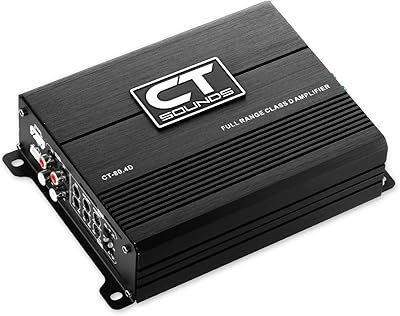
CT Sounds CT-80.4D 4-Channel Car Amplifier
74%
91%
Value for Money
78%
Power Output Accuracy
84%
Installation Ease
61%
Heat Management
67%
Build Quality
More
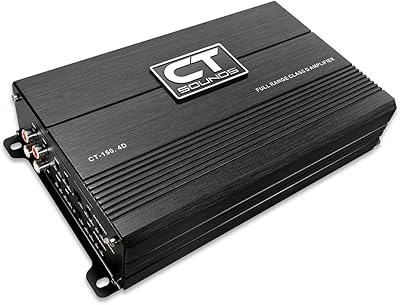
CT Sounds CT-150.4D 4-Channel Car Amplifier
75%
83%
Value for Money
78%
Sound Quality
61%
Build Quality
86%
Ease of Installation
77%
Thermal Management
More
Plinius PHF100.4D 4-Channel Car Amplifier
74%
88%
Value for Money
76%
Sound Quality
63%
Power Output
54%
Thermal Management
84%
Ease of Installation
More
Recoil DI800.4 4-Channel Car Amplifier
75%
88%
Value for Money
51%
Power Accuracy
63%
Build Quality
79%
Thermal Management
86%
Ease of Installation
More
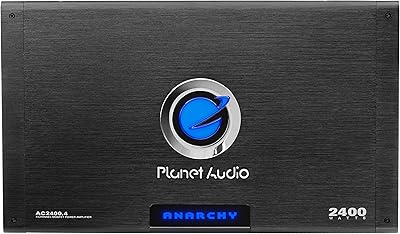
Planet Audio AC2400.4 4-Channel Car Amplifier
84%
95%
Power Output
89%
Sound Clarity
87%
Bass Performance
82%
Ease of Installation
65%
Thermals/Heat Management
More
Recoil DI550.4 4-Channel Car Audio Amplifier
74%
91%
Value for Money
78%
Power Output
86%
Ease of Installation
74%
Sound Quality
67%
Build Quality
More
Planet Audio PL1600.4 4-Channel Car Amplifier
72%
88%
Value for Money
84%
Ease of Installation
74%
Sound Quality
58%
Power Output (Real-World)
61%
Build Quality
More
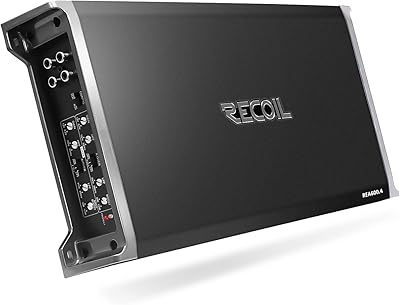
Recoil REA600.4 4-Channel Car Audio Amplifier
84%
89%
Audio Performance
91%
Ease of Installation
85%
Sound Quality at High Volumes
62%
Heat Management
90%
Power Output
More
Planet Audio AC1200.4 4-Channel Car Amplifier
73%
88%
Value for Money
67%
Power Output
83%
Installation Ease
74%
Sound Quality
61%
Build Quality
More

FAQ

That is correct for most setups. The ZD-750.4D uses DC signal sense to detect when audio is playing and powers itself on automatically. This works well with factory head units and many aftermarket decks that lack a dedicated remote output. That said, some head units or more complex signal processor setups may behave differently, so it is worth confirming compatibility with your specific system before assuming you can skip the wire entirely.

The 750W figure is peak power, which is a marketing-friendly maximum reached only under very specific test conditions. In real-world use, you are working with 100W RMS per channel at 4 ohms, or 175W RMS per channel at 2 ohms. Those are the numbers that matter for day-to-day listening. For most street-level audio builds, 100W per channel is genuinely adequate, but do not expect the same headroom you would get from a higher-rated amplifier at the same impedance.

Yes, but with some planning. You can bridge two of the four channels to drive a subwoofer, which gives you up to 375W at 4 ohms for that sub while the remaining two channels handle your front speakers. Just keep in mind you would be giving up your rear fill speakers in that configuration. If you want a full four-speaker setup plus a sub, you are better off pairing this 4-channel amplifier with a separate mono amp dedicated to the subwoofer.

It has a good chance of fitting, but you should measure first. The unit is 7.3 inches long, 5.8 inches wide, and 2.2 inches tall, which is genuinely compact for a 4-channel amplifier. Many standard sedans, hatchbacks, and trucks can accommodate it under a front seat, but clearance varies significantly by vehicle. Make sure there is also adequate airflow around the heat sink — do not mount it completely enclosed against carpet on all sides.

Most buyers with basic car audio knowledge report a straightforward experience, especially because the auto turn-on feature removes one of the trickier wiring steps. That said, the included documentation has drawn some criticism for being light on detail. If you are doing this for the first time, it is worth supplementing the manual with a general online guide covering power wiring, RCA connections, and gain setting. Having the right wire gauge for the 60A fuse circuit is also important before you start.

The Hifonics ZD-750.4D 4-Channel Car Amplifier is stable down to 2 ohms per channel in stereo mode, and down to 4 ohms per channel when bridged. Most aftermarket car speakers are 4-ohm units, so you will be well within safe operating range in a typical setup. Running below the rated minimum impedance can cause overheating or trigger the protection circuit, so check your speaker specs before wiring.

Under moderate listening conditions it stays reasonably cool, thanks to the passive aluminum heat sink. Some users have reported warmth becoming more noticeable when the amp is pushed closer to its limits for extended periods — which is not unusual for amplifiers in this class. Mounting it in a location with decent airflow, rather than completely enclosed, will help manage temperatures during longer drives.

With a 60A external fuse requirement, you will want to use at minimum 8-gauge wire for power and ground, though 4-gauge is a safer choice if your cable runs are longer or if you want headroom. The fuse holder should be placed as close to the battery as practical — typically within 18 inches. Using undersized wire can cause voltage drop, which directly hurts amplifier performance.

They are better than what you typically find on entry-level amplifiers. The nickel plating helps prevent the oxidation that degrades signal quality on cheaper bare-metal connectors over time. They are also described as impact-resistant, which matters in an automotive environment where vibration and occasional contact are unavoidable. For a build at this price tier, the input quality is a genuine positive.

It is physically compact enough to consider, but there are some caveats. The unit is designed for a standard 12V DC automotive system, which most motorcycles and ATVs do share. However, vibration exposure in powersports applications is significantly higher than in a car, and weather protection on this amp is not rated for any exposure to moisture. If you are doing a powersports build, plan for proper enclosure and vibration dampening around the unit.

Where to Buy