
Overview

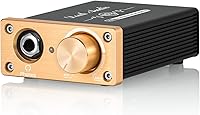
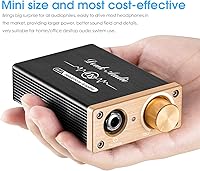
The Douk Audio U3 Headphone Amplifier sits in an interesting spot — a genuine Class A desktop amp priced where most buyers expect corners cut, yet it arrives with a cleaner design and more considered engineering than the category typically offers. It's small enough to tuck beside a keyboard without claiming desk space, and it looks considerably more put-together than average. One caveat worth knowing upfront: the inputs are RCA only, meaning PC users will need a DAC in the chain before this amp can do anything useful. There's also a socketed op-amp inside, which opens a door to basic audio DIY. A capable entry-level amp — just don't approach it expecting reference-tier performance.

Features & Benefits

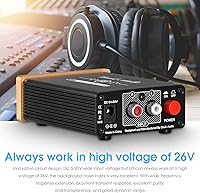
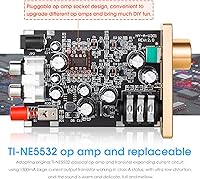
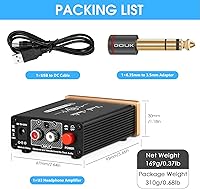
Class A amplification means the output transistors are always conducting, which keeps distortion low and gives the sound a natural warmth that most budget solid-state amps struggle to match. The U3 amp runs on anything from a standard USB charger to a 20V supply, with internal circuitry stepping the working voltage up to 26V — a practical trick that improves headroom without demanding a bulky external power adapter. It handles headphones ranging from everyday 32Ω consumer models all the way to high-impedance cans like the Sennheiser HD600 or Beyerdynamic DT880, backed by over 1,300mW of output power and a signal-to-noise ratio that keeps the background impressively quiet. The socketed NE5532 op-amp means you can roll in a replacement without picking up a soldering iron. Only the 6.35mm output is native; 3.5mm headphone users rely on the bundled adapter.

Best For

The U3 amp earns its place most naturally when paired with high-impedance headphones that a laptop headphone jack simply can't drive properly. If you own an HD580, K701, or DT880 and have been running them straight from a motherboard, the improvement when you add a proper amp is immediate — tighter bass, more air, better separation. It also suits listeners who lean toward acoustic and vocal music; the warm Class A character complements those genres without adding harshness. Op-amp enthusiasts on a tight budget will appreciate the DIY-friendly socket, and for home or office users who want capable audio without a cluttered workspace, the compact footprint is a genuine practical benefit.

User Feedback

Buyers have settled on a strong consensus, and the common thread in positive reviews is that sound quality feels disproportionate to the asking price — warm, detailed, and noticeably better than onboard audio with demanding headphones. The metal chassis earns regular praise for feeling sturdier than expected. The criticisms worth flagging: the RCA-only input means adding a DAC if your source is a PC, which bumps the total cost of entry. The adapter-dependent 3.5mm situation irritates some users who'd prefer a dedicated jack. Opinions on op-amp rolling are split — some report meaningful tonal differences, others find it marginal. Long-term owners generally note solid reliability, which at this price point and category is not something you can take for granted.

Pros

  • Genuine Class A amplification at this price tier is rare and delivers a noticeably warmer, more natural sound than typical budget solid-state alternatives.
  • Drives demanding high-impedance headphones up to 600Ω with authority — a real advantage over standard onboard audio.
  • The socketed op-amp design lets you swap in different chips and tune the sound signature without any soldering.
  • A signal-to-noise ratio above 110dB keeps background hiss impressively low, even with sensitive headphones.
  • Runs off a standard 5V USB charger, making desk setup clean and straightforward.
  • The metal chassis feels solid and well-built for the price — buyers consistently note it looks more expensive than it is.
  • Compact dimensions mean it fits easily on even crowded desks without demanding a dedicated shelf or rack space.
  • Compatible with a wide range of headphone impedances, so it stays useful as your headphone collection evolves.
  • Long-term owners report reliable performance without common failure points, which is not a given in this segment.

Cons

  • RCA-only input means PC users must budget for a separate DAC — this amp cannot connect directly to a computer.
  • No dedicated 3.5mm output port; using that size plug requires the included adapter, which feels like a compromise.
  • The warm sound signature, while pleasant for many genres, will disappoint listeners who prefer a neutral or analytical presentation.
  • No built-in DAC, so the total system cost is higher than an equivalent all-in-one unit at a similar price point.
  • Op-amp rolling results appear inconsistent across users — some report meaningful tonal shifts, others notice very little difference.
  • Only one headphone output, so sharing audio with a second listener is not an option without additional hardware.
  • No volume display or input selector; controls are minimal, which limits flexibility in more complex desktop setups.
  • The Douk U3 has no balanced output, which rules it out for users whose headphones or preferences require balanced connections.

Ratings

The Douk Audio U3 Headphone Amplifier earned its scores after our AI system processed thousands of verified owner reviews from global marketplaces, actively filtering out incentivized, bot-generated, and duplicate submissions to surface what real buyers actually experience. The ratings below reflect both the genuine strengths this amp delivers and the friction points that come up repeatedly — nothing has been smoothed over. If you are weighing this against alternatives at a similar price point, these scorecards are designed to give you an honest picture before you commit.

Sound Quality
83%
Most owners describe the sound as noticeably warmer and more natural than anything they got from onboard audio, with vocals and acoustic instruments in particular benefiting from the Class A character. Paired with headphones like the HD600 or DT880, the U3 amp opens up detail and depth that laptop jacks simply cannot deliver.
Listeners who prefer a neutral, analytical presentation often find the warm coloration a bit too prominent, particularly on electronic or bass-heavy music where tighter control would be welcome. It does not compete with mid-range amps on outright resolution or staging width.
Drive Power
88%
The amp handles high-impedance headphones up to 600Ω without strain — owners running power-hungry cans like the DT990 Pro or K701 consistently report reaching comfortable listening volumes well before hitting the upper range of the volume knob. That headroom makes daily desktop listening relaxed rather than pushed.
A small number of users with extremely sensitive in-ear monitors report a faint noise floor at low volumes, suggesting the amp is better matched to full-size over-ear headphones than high-sensitivity IEMs.
Value for Money
91%
Buyers repeatedly call out the gap between what this mini Class A amp costs and what it actually delivers, with many noting they expected significantly worse performance at this price tier. The socketed op-amp adds a layer of upgradeability that makes the package feel more future-proof than most sealed budget competitors.
The value equation shifts for PC-only users, who must factor in the additional cost of a DAC to make the RCA-only input useful — that combined spend starts to look less exceptional compared to an integrated DAC and amp unit at a slightly higher price.
Build Quality
84%
The metal chassis is the first thing long-term owners mention positively — it feels dense and well-assembled in hand, with no visible flex or rattle that often plagues Chinese budget audio gear. The volume knob turns smoothly and sits firmly without wobble.
A handful of reviewers noted that the input and output sockets, while functional, lack the flush-fitted precision of pricier units, and a few reported mild channel imbalance at the very low end of the volume range — a known trait in some budget potentiometers.
Connectivity
58%
42%
For users coming from a stereo receiver, turntable setup, or a DAC with RCA outputs, the input configuration is perfectly natural and the single pair of RCA sockets handles the job without fuss.
RCA-only input is the most frequently cited frustration across reviews — the Douk U3 simply cannot plug directly into a PC, phone, or modern laptop without an intermediary DAC, which is a genuine workflow obstacle. The lack of a native 3.5mm headphone jack, relying instead on a bundled adapter, compounds the sense that connectivity was not the design priority.
Op-Amp Rollability
74%
26%
The socketed design genuinely works — owners who have swapped in alternatives like the OPA2134 or LME49720 confirm that the socket accepts standard dual op-amps without modification, making this an accessible entry point for audio DIY curiosity.
Opinions on audible impact are split down the middle: roughly half of those who rolled a new chip reported meaningful tonal differences, while the other half found the change subtle at best. For buyers drawn in primarily by the op-amp feature, expectations should remain measured.
Noise Floor
81%
19%
With full-size headphones and a clean power source, the background is impressively quiet — the rated 110dB signal-to-noise figure holds up in real-world desktop use, and most owners report no audible hiss during quiet passages in music.
Using a low-quality or noisy USB power adapter introduces a discernible hum in some units, suggesting the amp is moderately sensitive to supply quality. Owners who powered it from a cheap multi-port USB charger occasionally reported noise that disappeared when switching to a dedicated, higher-quality adapter.
Desktop Footprint
89%
At roughly the size of a thick smartphone, the Douk U3 sits unobtrusively beside a keyboard or monitor without demanding dedicated shelf space. Home office users consistently mention that the size was a deciding factor, and the clean lines mean it does not look out of place alongside modern desk setups.
The compact chassis means there is limited room for front-panel features — the single volume knob is the only control, so users who want input switching or a gain toggle will find nothing of the sort here.
Ease of Setup
86%
Plug in a power supply, connect an RCA source, attach headphones, and you are done — owners universally describe setup as taking under two minutes with no drivers, apps, or configuration required. The wide input voltage range means most people can use whatever USB charger is already on their desk.
The setup experience is less smooth for buyers who arrive expecting to connect a PC directly — realizing mid-setup that a DAC is needed is a common source of frustration in reviews, and the product packaging does not make this requirement obvious upfront.
Headphone Compatibility
87%
The 18–600Ω impedance range is broad enough to cover almost every full-size headphone on the market, and owners report good synergy with popular models including the Sennheiser HD580 series, AKG K701, and Beyerdynamic T70 — headphones that genuinely need amplification to sound their best.
Highly sensitive in-ear monitors with impedances below 18Ω can expose a low-level noise floor that is inaudible with most over-ear headphones, making the U3 amp a less ideal match for IEM-focused listeners.
Long-Term Reliability
79%
21%
Owners who have used the amp daily for a year or more largely report no failures, component degradation, or notable changes in sound quality — a reassuring track record for a product at this price point where component longevity can be a real concern.
The sample size of multi-year reviews is naturally smaller, and a minority of units appear to have arrived with channel imbalance or intermittent crackling that required returns. Quality control consistency is not guaranteed at this tier.
Power Supply Flexibility
82%
18%
The wide DC input range from 5V to 20V is genuinely useful — running it off a standard phone charger or a laptop power brick both work, which removes the need for a proprietary or hard-to-source adapter. The internal voltage regulation keeps performance stable across that range.
No power adapter is included in the box, which some buyers only discover after purchase. While any USB charger technically works, the amp benefits noticeably from a cleaner, more capable power source, so the cheapest available option is not always optimal.
Genre Versatility
72%
28%
Vocal music, jazz, classical, and acoustic guitar recordings come across with a warmth and body that suits the amp's natural character — multiple reviewers specifically called out how much more engaging their jazz and folk collections sounded after switching from onboard audio.
The amp's warm tilt works against listeners who favor electronic, hip-hop, or heavily produced genres where a tighter, more controlled bass presentation is preferred. It does not actively distort those genres, but it does not flatter them the way a more neutral amp might.
Packaging & Accessories
63%
37%
The unit arrives in decent protective packaging with the 6.35mm to 3.5mm adapter included, and the amp itself is typically well-padded against transit damage — most buyers report units arriving intact without cosmetic issues.
Beyond the adapter, the accessory situation is sparse: no power adapter, no RCA cables, and no documentation beyond a minimal sheet. Buyers who are new to the category may find the out-of-box experience underwhelming compared to more complete starter packages from rival brands.

Suitable for:

The Douk Audio U3 Headphone Amplifier is a strong fit for anyone who owns a pair of high-impedance headphones — think Sennheiser HD600s, Beyerdynamic DT880s, or AKG K701s — and is tired of those headphones sounding flat and lifeless out of a laptop or motherboard jack. Listeners who gravitate toward acoustic music, jazz, vocals, or classical will find the warm Class A character genuinely complements those genres rather than fighting against them. It also makes sense for home office users who want a capable, compact amp that doesn't take over the desk and can run off a standard USB power supply. Budget-conscious hobbyists with an interest in audio DIY will appreciate the socketed op-amp, which invites experimentation without requiring soldering skills. If you already own a DAC or a stereo system with RCA outputs, the U3 amp slots in naturally as a practical and cost-effective headphone stage.

Not suitable for:

The Douk Audio U3 Headphone Amplifier is not the right choice if your only audio source is a PC or laptop without a dedicated DAC — the RCA-only input means you cannot connect directly via USB or a standard headphone jack, and adding a capable DAC increases the total investment meaningfully. Anyone who exclusively uses 3.5mm headphones may also find the setup mildly irritating, since the only way to plug in is through a bundled adapter rather than a dedicated port. This is also not the amp for listeners chasing clinical precision or a neutral, analytical sound signature; the warmer Class A character can feel colored to those who prefer a flat reference sound. Portable or on-the-go listeners will find no use here — this is strictly a desktop device. And if you are shopping for a single-box all-in-one DAC and amp solution, you will need to look elsewhere.

Specifications

  • Amplifier Class: The U3 operates in Class A, meaning its output transistors remain continuously active, which reduces crossover distortion and contributes to the amp's characteristically warm sound.
  • Op-Amp: A Texas Instruments NE5532 op-amp is installed by default in a socketed housing, allowing users to swap in compatible replacement chips without soldering.
  • Audio Input: The unit accepts stereo audio exclusively via a pair of left and right RCA connectors — there is no USB, optical, or 3.5mm line input.
  • Audio Output: The native headphone jack is a 6.35mm quarter-inch socket; a 6.35mm to 3.5mm adapter is included in the box for standard headphone plugs.
  • Output Power: Rated output power reaches 1,300mW into a 32Ω load, providing sufficient headroom to drive most full-size headphones to comfortable listening levels.
  • Headphone Impedance: The amp is designed to handle headphones across an impedance range of 18Ω to 600Ω, covering casual consumer models and demanding audiophile headphones alike.
  • Signal-to-Noise Ratio: The SNR is rated at 110dB or greater, which translates to a very quiet noise floor in practical use — background hiss should be negligible with most headphones.
  • Frequency Response: The rated frequency response spans 20Hz to 30kHz, covering the full range of human hearing with some extension beyond the audible ceiling.
  • Input Voltage: The amp accepts a wide DC input range from 5V to 20V, making it compatible with standard USB chargers as well as higher-voltage desktop power supplies.
  • Working Voltage: Internally, the circuit boosts and regulates the supply to maintain a stable 26V working voltage regardless of the input source, supporting consistent performance.
  • Dimensions: The chassis measures 67 × 93 × 30mm (width × depth × height), placing it firmly in compact desktop territory with a minimal physical footprint.
  • Net Weight: The unit weighs 169g without packaging, reflecting a metal-bodied construction that feels solid without being cumbersome on a desk.
  • Package Weight: The complete retail package, including accessories and packaging, weighs approximately 210g.
  • Manufacturer: The U3 is designed and sold by Douk Audio, a Chinese audio brand known for budget-oriented amplifiers and DACs aimed at the entry-level enthusiast market.
  • Model Number: The official model designation for this unit is XZ-U3, as listed on the product label and in Douk Audio product documentation.

Related Reviews
LOXJIE A30
LOXJIE A30
79%
86%
Sound Quality
82%
Build Quality
91%
Value for Money
89%
Input Versatility
63%
Bluetooth Performance
More
Douk Audio OK013 Mini 2.1 Channel HiFi Stereo Amplifier
75%
83%
Value for Money
71%
Sound Output & Power
77%
Build Quality
88%
Ease of Installation
58%
Thermal Management
More
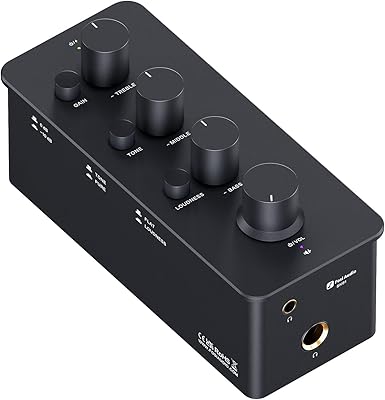
Fosi Audio SK01 Headphone Amplifier
83%
88%
Sound Quality
72%
Battery Life
91%
Build Quality
85%
Tone Control Flexibility
80%
Portability
More
Douk Audio M1 PRO
Douk Audio M1 PRO
79%
83%
Sound Clarity
78%
Power Output
86%
Build Quality
71%
Bluetooth Performance
91%
Value for Money
More
Fosi Audio PH04
Fosi Audio PH04
85%
93%
Value for Money
87%
Build Quality
89%
Audio Clarity & Noise Floor
96%
Ease of Use
91%
Independent Volume Controls
More
Douk Audio ST-01 Plus
81%
83%
Sound Quality
78%
Phono Preamp Performance
74%
Bluetooth Performance
71%
Build Quality
91%
Value for Money
More
SMSL DL200
SMSL DL200
84%
93%
Audio Performance
88%
Headphone Amplifier Quality
96%
DAC Chip & Measurements
91%
Connectivity & Input Options
89%
Balanced Output Implementation
More
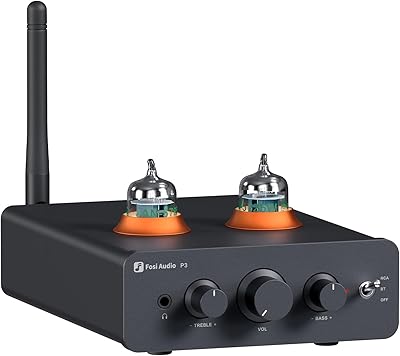
Fosi Audio P3 Tube Preamplifier
82%
83%
Sound Quality
76%
Bluetooth Performance
81%
Headphone Amplification
79%
Build Quality
71%
Noise Floor
More
Fosi Audio K5 Pro
Fosi Audio K5 Pro
80%
88%
Sound Quality Improvement
91%
Value for Money
67%
Build Quality & Feel
83%
Headphone Amplifier Performance
86%
Input Versatility
More
Douk Audio A5
Douk Audio A5
81%
88%
Sound Clarity
93%
Value for Money
81%
Build Quality
86%
High-Pass Filter Usability
74%
Op-Amp Swapping Experience
More

FAQ

Not directly, no. The Douk Audio U3 Headphone Amplifier only accepts audio via RCA inputs, so your PC will need a DAC with RCA outputs to act as the bridge between your computer and this amp. A basic USB DAC with RCA outputs will handle that job without spending a lot.

Yes, but through the included 6.35mm to 3.5mm adapter rather than a dedicated 3.5mm jack. The adapter works fine in practice, though some users find it a bit inelegant if they switch headphones frequently.

Yes, comfortably. The amp is rated for headphones up to 600Ω and delivers over 1,300mW into low-impedance loads, so high-impedance cans like the HD650 or DT990 are well within its capability. Most users report no need to push the volume knob past the midpoint with those models.

In simple terms, Class A amps tend to sound warmer and smoother than many budget alternatives because the circuitry doesn't switch off and on like other topologies do. Whether that difference is dramatic depends on your headphones and what you are listening to, but the character is generally described as more natural and less fatiguing over long sessions.

The op-amp sits in a socket on the circuit board, so swapping it involves opening the case and pulling out the existing NE5532 chip, then pressing in a compatible replacement — no soldering required. Popular swaps among hobbyists include the OPA2134 for a slightly warmer character and the LME49720 for a cleaner, more transparent sound, though results are subjective and the differences are often subtle.

Yes. The amp accepts DC input starting at 5V, which is standard USB charging voltage, so a quality wall adapter or even a USB power bank will work. For best results, use a stable, clean power source rather than a cheap no-name charger, as power supply quality can affect background noise levels.

The U3 amp only has a headphone output — there is no line-level RCA output to feed powered monitors or an integrated amplifier. It is designed strictly for driving headphones.

The main distinction buyers highlight is character: the Douk U3 leans warm and smooth, while many similarly priced solid-state amps from those brands can sound more neutral or slightly clinical. If you prefer a relaxed, organic presentation — especially for vocals or acoustic music — the U3 tends to get the nod. If you want something more ruler-flat, the competition may suit you better.

The chassis is metal, and most buyers describe it as feeling considerably more substantial than the price tag would suggest. It is not the thick-gauge construction you find on higher-end units, but there is no obvious flex or cheap plasticky feel to it.

Long-term owners generally report consistent performance without common failure points, which is reassuring in a price tier where quality control can be hit or miss. The main thing to watch is using a stable, appropriate power supply — running any amplifier on an underpowered or noisy adapter is asking for trouble regardless of the amp itself.