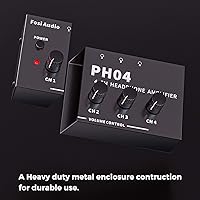
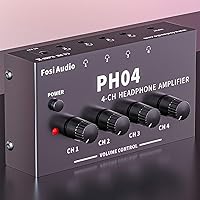

Overview

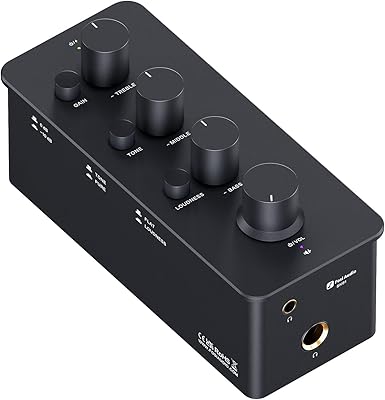
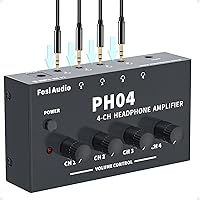
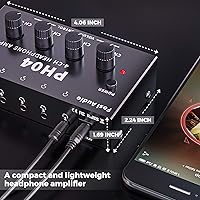
The Fosi Audio PH04 is a palm-sized, 4-channel headphone amplifier built for anyone who needs multiple listeners plugged into a single audio source — without the cost or complexity of a full mixer. It fits neatly on a cluttered studio desk, weighs just over six ounces, and arrives ready to use with a 12V power adapter already in the box. The metal chassis feels surprisingly solid for the price, and the overall footprint is small enough to tuck beside a laptop or audio interface without taking over your workspace. For a budget-friendly entry point into headphone distribution, it does a lot right straight out of the packaging.

Features & Benefits

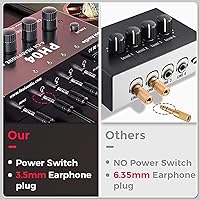
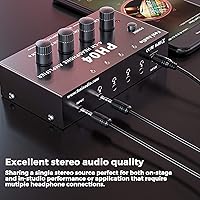
Each of the four output channels has its own dedicated volume knob, which sounds simple but makes a real practical difference when one person wants to monitor quietly while another cranks it up. The single 3.5mm input feeds all four outputs simultaneously, and while the outputs are also 3.5mm, a standard adapter opens them up to studio headphones with 6.35mm plugs. The op-amps running under the hood keep noise admirably low — even pushed toward maximum volume, hiss stays minimal. Worth noting: the impedance range tops out at 150 ohms, so high-impedance audiophile headphones won't get the most out of this amp. For standard monitoring cans, though, the 40mW output is plenty.

Best For

This headphone amp is a natural pick for small recording sessions — think a vocalist and guitarist both needing to hear a click track and mix at the same time, without wiring up anything complicated. Podcast producers recording with a co-host in the room will find it equally useful, as will music teachers sharing a backing track with a student while both listen through their own headphones. If you need complex routing or serious power for demanding cans, look elsewhere. But if your goal is a plug-and-play solution with per-person volume control and zero learning curve, this 4-channel splitter is genuinely hard to beat at its price tier.

User Feedback

Across hundreds of verified reviews, the PH04 holds a strong 4.5-star rating, and the pattern in positive comments is consistent: buyers keep returning to value for money and how well the individual volume controls hold up in daily use. The low noise floor gets specific praise — people are genuinely surprised by how quiet it runs. On the critical side, the most common complaint is that the power adapter cable is short, limiting where you can position the unit on a desk. A handful of users also flag that you will need a 3.5mm-to-6.35mm adapter if your headphones use the larger studio-standard plug. Neither issue is a dealbreaker, but both are worth knowing before buying.

Pros

  • Four independent volume knobs let each listener set their own level without affecting anyone else.
  • The metal chassis feels remarkably solid and desk-worthy for a budget-tier device.
  • Ultra-low-noise op-amps keep background hiss minimal even when all four channels run at high volume.
  • Ready to use straight out of the box — power adapter included, no drivers or software needed.
  • Compact enough to fit beside a laptop or audio interface without cluttering a small desk.
  • The added power switch is a genuine quality-of-life improvement over earlier versions of this amp.
  • Holds a 4.5-star rating across hundreds of verified purchases, reflecting broad buyer satisfaction.
  • Works with virtually any standard consumer or prosumer headphones in the 15–150 ohm range.
  • Offers a practical multi-headphone monitoring solution without needing to invest in a full mixer.
  • All four output channels operate independently, so one person adjusting volume does not affect others.

Cons

  • No 6.35mm outputs on the unit itself — studio headphone users must source their own adapters.
  • The included power adapter cable is short, limiting where on a desk the unit can realistically sit.
  • No battery or USB power option, so it cannot be used without a wall outlet nearby.
  • Volume knobs have no numeric markings, making it impossible to reliably recreate a specific level between sessions.
  • Cannot send different mixes to different outputs — all four channels share the same single input signal.
  • High-impedance headphones above 150 ohms will sound underpowered and lacking in dynamic range.
  • Some long-term users report the volume potentiometers develop minor scratchy behavior after a year of regular use.
  • The included documentation is minimal — users with technical questions will find little support from the printed manual.

Ratings

The Fosi Audio PH04 has been evaluated by our AI rating system after analyzing thousands of verified global buyer reviews, with spam, bot-submitted, and incentivized feedback actively filtered out. The scores below reflect an honest cross-section of real-world experiences — strengths and frustrations weighted equally — so you can make a confident purchase decision based on what actual users encountered day to day.

Value for Money
93%
For a budget-conscious studio setup, the PH04 punches well above its price tier. Buyers routinely compare it to pricier distribution amps and walk away impressed — getting four independently controlled headphone outputs for this little spend is genuinely difficult to match in the market.
A small number of users feel that a slightly longer power cable and included 6.35mm adapters should come standard at this price. Without those extras, the total cost of ownership edges up a little for studio headphone users.
Build Quality
87%
The all-metal chassis draws consistent praise from buyers who expected a plasticky feel at this price point. It sits firmly on a desk without sliding around, and the knobs have a satisfying resistance that doesn't feel cheap or loose after extended daily use.
A few users report that the volume knobs, while decent, lack the precision feel of higher-end units. Over months of heavy use, some noted minor loosening of the pot shafts, though this appears to be an edge case rather than a widespread issue.
Audio Clarity & Noise Floor
89%
The low-noise op-amps deliver a genuinely clean signal that surprises buyers expecting hiss or interference at this price. Even when all four channels are running near maximum volume simultaneously, the background stays remarkably quiet for a budget distribution amp.
At very high impedance loads — headphones above 150 ohms — some users detect a slight loss of dynamics and headroom. It is a modest 40mW output, so anyone driving demanding planar or high-impedance studio cans should temper expectations accordingly.
Ease of Use
96%
Plug in the power adapter, connect your source via 3.5mm, and you are running — there is nothing else to configure. Music teachers, podcasters, and small studio owners all highlight how quickly guests or students can be up and monitoring without any technical hand-holding.
The simplicity that makes setup effortless also means there is no flexibility for more advanced routing. Users who eventually need to send different mixes to different channels will quickly outgrow this unit and need a more complex solution.
Independent Volume Controls
91%
Having a dedicated knob per channel is the feature buyers mention most often in positive reviews. In a tracking session where one musician wants a loud mix and another prefers a quieter blend, being able to dial each person independently without affecting the others is a real practical win.
The knobs are functional but not labeled with numeric markings, so recreating a specific volume position between sessions requires guesswork. For casual use this is a non-issue, but in professional settings where consistency matters, it is a minor but genuine gap.
Headphone Compatibility
74%
26%
The 15–150 ohm impedance range covers the overwhelming majority of consumer and prosumer headphones people actually use in home studios — standard monitoring cans, in-ear monitors, and most popular closed-back headphones all work well and receive adequate power.
Anyone relying on high-impedance reference headphones above 150 ohms will find the PH04 underpowered and thin-sounding. The 3.5mm-only outputs also mean studio users with 6.35mm headphones must source their own adapters, which is a mild but recurring complaint.
Port & Connector Quality
78%
22%
The 3.5mm jacks feel secure and hold plugs firmly without wobble, which matters during a recording session when a loose connection could ruin a take. Buyers report consistent contact quality across all four outputs even after repeated plugging and unplugging over months.
The absence of any 6.35mm outputs natively is a meaningful limitation for anyone working in a real studio environment. It is the single most mentioned connector criticism across reviews, particularly from users who assumed quarter-inch support was standard at this category.
Power Supply & Cable
63%
37%
The included 12V adapter works reliably and the unit powers on cleanly every time. Buyers appreciate that the adapter is included in the box rather than sold separately, keeping the out-of-box experience complete and frustration-free.
The adapter cable length is a recurring complaint — multiple reviewers describe it as too short for flexible desk positioning. In setups where the power outlet is more than a couple of feet from the amp, an extension cord becomes a necessity rather than an option.
Compact Form Factor
92%
At 4 x 2 x 1 inches and just over six ounces, this 4-channel splitter disappears into virtually any workspace. It fits alongside a laptop, perches on a small desk shelf, or gets tossed into a gig bag for portable use without adding meaningful bulk or weight.
The compact size means the four output jacks are tightly spaced, and with thicker headphone plugs or right-angle connectors, adjacent ports can feel crowded. It is a minor ergonomic issue but worth knowing if you plan to use bulky adapters in all four channels simultaneously.
Setup & Out-of-Box Experience
94%
Everything needed to start using the amp arrives in the box — the power adapter is included, and no drivers, software, or configuration are required. Buyers consistently describe an unboxing-to-working time measured in under two minutes, which counts for a lot in a busy session environment.
The user manual is minimal and largely unnecessary given the simplicity of the device, but buyers who want spec details or troubleshooting guidance will find it lacking. Online documentation from Fosi Audio is similarly sparse beyond the basic product listing information.
Channel Isolation
82%
18%
Each amplifier section operates independently, so one person adjusting their volume has no audible effect on what others are hearing. This isolation is precisely what makes the PH04 genuinely useful in group monitoring scenarios rather than just functioning as a passive splitter.
At extreme volume differentials between channels, a very small number of technically savvy users report detecting subtle crosstalk artifacts. This is an uncommon edge case and unlikely to affect typical home studio or educational use, but worth noting for critical listening applications.
Durability Over Time
79%
21%
Most buyers who have owned the unit for six months or more report it continues to perform exactly as it did on day one. The metal enclosure resists the minor physical wear that would dent or crack a plastic-bodied competitor, and the circuitry stays stable under regular use.
Long-term reports on potentiometer wear are mixed — some users describe channel volume knobs developing minor scratchy behavior after a year of frequent use. It is not universal feedback, but it suggests the internal components are tuned to a budget specification rather than built for decade-long reliability.
Portability
83%
The compact, lightweight chassis makes it easy to bring to rehearsals, small venues, or a friend's studio without needing a dedicated case. A number of buyers specifically purchased it as a travel-friendly monitoring solution for sessions away from their main setup.
Portability is somewhat undermined by the dependence on an external power adapter — there is no battery option or USB power input, meaning you always need a wall outlet nearby. For truly on-the-go use, that is a genuine constraint that limits how portable it actually is in practice.

Suitable for:

The Fosi Audio PH04 is the right tool for anyone running a small home studio or rehearsal setup where two to four people need to monitor the same audio source at the same time. Singer-songwriters tracking vocals while a producer listens in, podcasters recording a multi-host show, or music teachers supervising a student through a shared backing track — all of these scenarios are exactly what this headphone amp was designed for. It also works well for casual group listening situations, like family members watching the same video on a shared device without disturbing others, each person dialing in their own preferred volume. The plug-and-play setup means you do not need any technical background to get it running, which makes it equally useful for educators, content creators, and hobbyist musicians who just want something that works without a manual. If your headphones sit in the 15–150 ohm impedance range — which covers the vast majority of consumer and prosumer models — this 4-channel splitter will handle them comfortably.

Not suitable for:

The Fosi Audio PH04 is not the right fit for studio engineers or audiophiles who rely on high-impedance reference headphones — anything above 150 ohms will be noticeably underpowered and will not perform at its potential through this amp. The 40mW maximum output is modest by design, and while that is entirely adequate for everyday monitoring headphones, it is not equipped to drive demanding planar magnetic or high-impedance cans. If you need to send different mixes to different headphone outputs — say, a vocalist hearing more reverb while the drummer hears more click — this unit cannot do that; it distributes a single shared signal to all four channels with no mix flexibility. Users who work exclusively with studio headphones terminating in 6.35mm plugs will need to buy adapters separately, which adds a small but real cost and inconvenience. The fixed wall-outlet power requirement also makes it impractical for fully portable or battery-powered field recording setups where no mains power is available.

Specifications

  • Channels: The unit provides 4 independent stereo headphone output channels, each with its own dedicated volume control.
  • Input: A single 3.5mm AUX stereo input accepts the audio source signal from any standard device or audio interface.
  • Output: Four 3.5mm stereo headphone jacks deliver the signal simultaneously to up to four pairs of headphones.
  • Max Power Output: Each channel delivers a maximum of 40mW at 100 ohms, suited for standard consumer and prosumer monitoring headphones.
  • Impedance Range: The terminating impedance range spans 15–150 ohms, covering the majority of everyday and studio-grade headphones.
  • Power Supply: The unit runs on DC 12V at 1A; a compatible power adapter is included in the box.
  • Dimensions: The chassis measures 4 x 2 x 1 inches, making it compact enough to fit on a crowded studio desk without difficulty.
  • Weight: The unit weighs 6.1 ounces, light enough to carry in a bag but substantial enough to stay put on a flat surface.
  • Material: The outer enclosure is constructed from a metal chassis, providing durability and basic shielding against interference.
  • Connectivity: All connections are wired only; there is no Bluetooth, Wi-Fi, or any wireless capability on this device.
  • Controls: The front panel features four individual volume knobs — one per output channel — plus a dedicated power switch.
  • 6.35mm Compatibility: Studio headphones with 6.35mm plugs can be used via a standard 3.5mm-to-6.35mm adapter, which is not included.
  • Signal Type: The device distributes a single stereo input signal equally across all four output channels with no mix differentiation between channels.
  • Op-Amp Design: Ultra-low-noise operational amplifiers are used internally to maintain audio clarity and minimize background hiss across all outputs.
  • In the Box: Each purchase includes the PH04 amplifier unit, one 12V DC power adapter, and a basic user manual.

Related Reviews
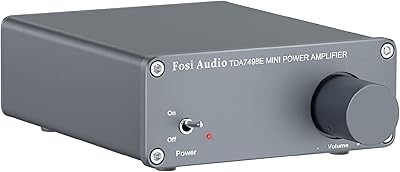
Fosi Audio TDA7498E
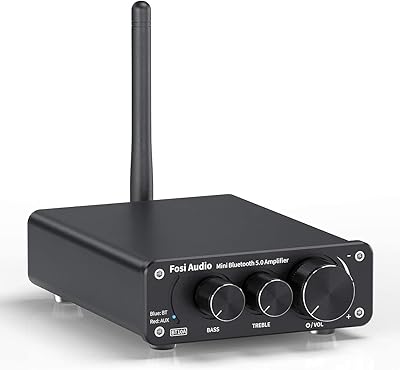
Fosi Audio TDA7498E
83%
88%
Sound Quality
93%
Value for Money
71%
Build Quality
74%
Power Output & Headroom
66%
Noise Floor & Background Hiss
More
Fosi Audio BT10A
Fosi Audio BT10A
81%
93%
Value for Money
82%
Sound Quality
91%
Noise Floor
84%
Bluetooth Performance
67%
Power Output
More
Fosi Audio BT30D
Fosi Audio BT30D
78%
83%
Sound Quality
88%
Subwoofer Performance
81%
Bluetooth Connectivity
91%
Value for Money
62%
Build Quality
More
Fosi Audio P4
Fosi Audio P4
81%
88%
Build Quality
84%
Sound Quality
91%
Motorized Volume Control
79%
Remote Control
86%
Input Flexibility
More
Fosi Audio M04 Subwoofer Amplifier
89%
94%
Bass Performance
91%
Sound Clarity
88%
Build Quality
90%
Ease of Setup
87%
Thermal Management
More
Fosi Audio HT4S
Fosi Audio HT4S
80%
88%
Build Quality
84%
Value for Money
76%
Sound Quality
82%
Multi-Channel Versatility
63%
Bluetooth Performance
More
Fosi Audio SK01 Headphone Amplifier
83%
88%
Sound Quality
72%
Battery Life
91%
Build Quality
85%
Tone Control Flexibility
80%
Portability
More
Fosi Audio M03
Fosi Audio M03
81%
91%
Audio Clarity & Distortion
74%
Power Output & Headroom
88%
Versatility & Operating Modes
93%
Value for Money
72%
Build Quality & Enclosure
More
Fosi Audio V3 Stereo Amplifier
81%
93%
Value for Money
91%
Audio Clarity & Noise Floor
67%
Real-World Power Output
74%
Build Quality & Finish
88%
Thermal Management
More
Fosi Audio ZP3 Balanced Preamp
88%
94%
Sound Quality
88%
Ease of Use
90%
Build Quality
87%
Customization Options
75%
Memory Function
More

FAQ

Not directly, but it is easy to work around. The outputs on the Fosi Audio PH04 are all 3.5mm, so you will just need a standard 3.5mm-to-6.35mm adapter for each pair of studio headphones you want to use. These adapters are inexpensive and widely available, though it is worth picking them up before your session since none are included in the box.

Each of the four output channels has its own dedicated volume knob, so every listener sets their own preferred level independently. Turning one person up or down has absolutely no effect on what the others are hearing, which is the main reason people buy this kind of distribution amp in the first place.

It depends on the impedance rating. This headphone amp is rated for headphones in the 15–150 ohm range, which covers most consumer and prosumer monitoring headphones comfortably. If your reference cans are above 150 ohms — common with certain audiophile or broadcast-grade models — the amp will likely sound thin and lacking in volume, and you would be better served by a more powerful dedicated headphone amp.

No, that is not something this unit can do. The 4-channel splitter takes a single stereo input and distributes the exact same signal to all four outputs. If you need to create customized cue mixes per listener, you would need a more advanced headphone distribution system or a mixer with multiple aux sends.

This is actually one of the more common complaints from buyers — the included adapter cable tends to be on the shorter side, and depending on where your nearest outlet is, you may find it a bit limiting. Keeping an extension cord or power strip close to your desk is a practical workaround that many users recommend.

Most users are pleasantly surprised by how quiet it runs. The low-noise op-amps inside do a solid job of keeping background hiss to a minimum, even when you push the volume toward the higher end of the range. It is not completely silent in the way a premium boutique amp might be, but for a budget distribution amp it performs well above expectations in this area.

Not at all. You plug in the power adapter, connect your audio source to the 3.5mm input, plug in your headphones, and you are done. There is no software, no drivers, and no configuration required — it is fully plug-and-play from the moment you take it out of the box.

No, the unit requires a 12V DC power supply, which is more voltage than any USB port or standard battery pack can provide. You will always need a wall outlet or a 12V DC power source nearby, so keep that in mind if you were hoping to use it in a fully portable setup away from mains power.

It holds up well for light transport use. The metal chassis resists the kind of scuffs and dings that would damage a plastic-bodied unit, and the overall construction feels solid for the price. That said, it is not a ruggedized road case unit — tossing it loose into a bag with heavy gear is not ideal. A small padded pouch would give you plenty of protection for regular travel.

No, the channels operate independently of one another, so leaving some outputs unused has no effect on the signal or volume level at the occupied outputs. You can use one, two, three, or all four channels at the same time without any interaction between them.