Overview

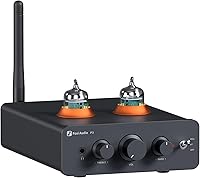
The Fosi Audio P3 Tube Preamplifier is a compact desktop unit that packs a Bluetooth receiver, headphone amplifier, and preamplifier into a box small enough to sit beside a keyboard. What separates it from many rivals at this price point is the 54V tube circuit voltage — most budget preamps run their tubes at far lower voltages, which limits how much the tubes actually contribute to the sound. This little preamplifier arrived in late 2023 as part of Fosi Audio's expanding V/P series, and it has accumulated over 400 ratings averaging 4.3 out of 5 — a score that suggests genuine value but also some real-world limitations worth knowing about.
Features & Benefits

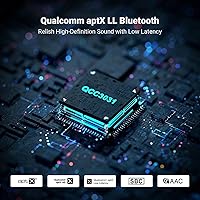
The P3 preamp leans on a Qualcomm QCC3031 chip for its Bluetooth 5.1 connection, bringing support for aptX HD and aptX LL codecs — the latter being useful if you plan to watch video without distracting audio lag. On the analog side, the headphone output drives impedances from 16Ω to 300Ω, handling everything from budget earbuds to demanding over-ear cans. The bass and treble controls include center detent positions, so you can park them at flat and ignore them entirely. ELNA capacitors and a taper-A potentiometer round out component choices that feel considered for this price tier, backed by a 103dB SNR and 95dB crosstalk figure.

Best For

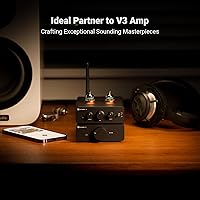
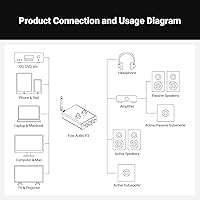
This tube preamp fits best in desktop audio setups where you want one box to handle multiple sources — a turntable via RCA, a phone over Bluetooth, and a pair of active speakers, all without juggling cables constantly. High-impedance headphone owners will appreciate a proper driving stage rather than relying on a weak DAC output. Space-conscious home office listeners are another natural fit. If you already own the Fosi V3 amplifier, this little preamplifier slots in naturally as a matching front end. For anyone tube-curious but reluctant to commit serious money, the P3 preamp offers a genuinely low-risk starting point.

User Feedback

Owners most commonly highlight improved warmth and soundstage compared to running active speakers straight from a source — a real improvement, even if the tube contribution is entry-level rather than transformative. Bluetooth range gets described as functional indoors but unimpressive through walls. The glowing tubes on a desk draw consistent compliments, which matters more than it might seem for daily enjoyment. The main sore point: users with highly sensitive speakers or IEMs report a background hiss that can intrude at low volumes. Tube rollers note the included 5654W tubes are a decent baseline but simple to swap. Satisfaction runs high among buyers who arrived with calibrated expectations.

Pros

  • The 54V tube circuit actually drives the included 5654W tubes properly, unlike many rivals that treat tubes as decorative.
  • Bluetooth aptX LL support makes the P3 preamp usable for video without distracting lip-sync delays on compatible devices.
  • Drives headphones from 16Ω to 300Ω from a single output — genuinely useful range for most real-world headphone collections.
  • Bass and treble controls click into a flat detent position, so tone shaping is optional rather than forced on you.
  • ELNA capacitors and a taper-A pot are deliberate, quality-oriented choices that stand out at this price tier.
  • Consolidates Bluetooth streaming, tube preamp, and headphone amplification into a chassis smaller than a paperback book.
  • A manual Bluetooth reset button is a small but practical feature that prevents unwanted pairing takeovers in shared spaces.
  • Tube rolling is straightforward and the 5654W type has enough aftermarket availability to meaningfully upgrade the sound later.
  • The glowing tubes add genuine desk character that owners consistently mention as a daily quality-of-life bonus.

Cons

  • Audible hiss at low volumes makes this tube preamp a poor match for sensitive speakers or in-ear monitors.
  • No USB or optical input limits its usefulness as a desktop hub for computer-based audio systems.
  • Bluetooth range drops off noticeably through walls, making it unreliable beyond a single room.
  • aptX LL only activates when the source device negotiates it correctly — older laptops and phones often fall back to inferior codecs.
  • The included stock tubes are functional but represent the floor of what the circuit can sound like, not the ceiling.
  • Rear panel is dense enough that routing multiple thick RCA cables simultaneously becomes a fiddly exercise.
  • Gain output can run hotter than expected, causing some active speakers to distort at lower-than-usual volume knob positions.
  • No optical output means you cannot pass audio downstream to a DAC-equipped receiver or soundbar digitally.

Ratings

The Fosi Audio P3 Tube Preamplifier scores here reflect an AI-driven analysis of verified global buyer reviews, with spam, bot activity, and incentivized feedback actively filtered out before any score was calculated. The result is an honest picture of where this little preamplifier genuinely impresses and where it shows the compromises you accept at this price tier. Both the strengths and the friction points are weighted transparently so you can decide if this unit fits your actual setup.

Sound Quality
83%
Most buyers report a meaningful improvement in warmth and perceived depth compared to running active speakers directly from a source. The 54V tube circuit voltage does real work here — the midrange gains body and the soundstage opens up noticeably on well-recorded material.
This is still entry-level tube territory, and listeners coming from higher-voltage tube gear will notice the ceiling quickly. The coloration is subtle rather than transformative, which can disappoint buyers expecting a dramatic vintage tube sound.
Bluetooth Performance
76%
24%
The Qualcomm QCC3031 chip handles aptX LL well enough for video syncing at typical desktop distances, which is a genuine differentiator in this category. Pairing is quick and the manual reset button is a practical touch for shared living spaces.
Through walls or across larger rooms, the range drops off faster than competitors using newer Bluetooth chipsets. A handful of users also note occasional dropout during initial pairing sessions before the connection stabilizes.
Headphone Amplification
81%
19%
The headphone stage handles impedances from 16Ω to 300Ω without audible strain, making it genuinely useful for owners of harder-to-drive over-ear headphones who would otherwise need a separate dedicated amp. Output feels clean and controlled at moderate listening levels.
With very sensitive in-ear monitors, a background hiss becomes noticeable at low volumes — not a dealbreaker for most, but a real irritant for IEM-focused users. The gain structure is not adjustable, so matching to low-impedance earbuds is less refined.
Build Quality
79%
21%
The chassis feels solid for its weight class, and the ELNA capacitors and taper-A potentiometer reflect deliberate component choices rather than cost-cutting. The volume knob action is smooth with no channel imbalance at low settings.
The unit is primarily metal but includes some plastic elements that feel slightly out of place at this price point. A few buyers mention that the tube sockets feel less snug than expected, requiring careful seating during initial setup.
Noise Floor
71%
29%
At 103dB SNR and 95dB crosstalk, the measured specs are genuinely competitive for this tier, and most users with standard bookshelf speakers in a desktop setup report a satisfyingly quiet background between tracks.
Those specs do not always translate cleanly to real-world use with high-sensitivity speakers. Owners of horn-loaded or very efficient speakers regularly report a hiss floor that is audible from the listening position, which the specs alone do not predict.
Connectivity & Versatility
88%
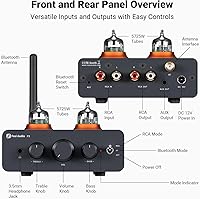
Having Bluetooth input, RCA input, and three output options — RCA, AUX, and a 3.5mm headphone jack — in a box this small is genuinely convenient. It handles a 2.1 speaker configuration out of the box without requiring an external splitter.
There is no optical or USB digital input, which limits its role as a DAC-free desktop hub for PC users. Buyers who want to connect more than two analog sources will need an external switch.
Tone Controls
84%
The bass and treble controls have center detents that let you lock them at flat effortlessly, which is something many budget preamps skip entirely. When engaged, the adjustments are smooth and musical rather than abrupt or artificial-sounding.
The controls offer a fairly narrow adjustment range, so users dealing with significantly room-colored sound or poorly tuned speakers will hit the limits quickly. There is no midrange control, which purists often wish for when correcting problematic acoustics.
Value for Money
86%
For a unit that consolidates Bluetooth streaming, tube preamplification, and headphone driving into one compact device, the price-to-feature ratio is difficult to fault in this category. The component choices back up the asking price rather than undermining it.
Buyers who stretch slightly further in budget can find units with better noise floors or more refined Bluetooth implementations. The value case is strongest for those who actually need all three functions; if you only need one, more focused alternatives exist.
Aesthetic & Desk Presence
91%
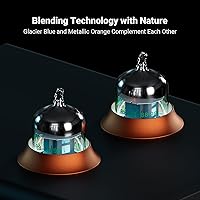
The glowing 5654W tubes are consistently praised for adding character to a desk setup in a way that purely solid-state gear cannot replicate. Several reviewers specifically mention the visual appeal as a daily source of enjoyment beyond just the audio.
The tube glow is pleasant but fixed in intensity — there is no dimming option for users who work in dark environments late at night. The compact footprint also means the tubes sit quite close together, which some find looks slightly cramped.
Setup & Ease of Use
87%
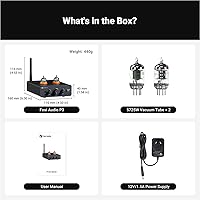
Getting the unit running takes only a few minutes even for first-timers. The included power supply, tubes, and manual mean everything you need is in the box, and the tube installation instruction to remove copper rings is a genuinely helpful detail.
The manual is brief and assumes some baseline familiarity with audio signal chains. Users new to preamplifiers occasionally report confusion about gain staging and optimal volume levels between the preamp and their active speakers.
Tube Rolling Potential
77%
23%
The 5654W tube type has a modest but active aftermarket, and several experienced buyers have reported meaningful improvements in noise and texture by swapping to NOS alternatives. The socket design makes rolling straightforward without tools.
The included stock tubes are a functional but unremarkable baseline, and buyers who want the best the circuit can offer will need to invest in upgrades. For casual users, this adds an unexpected optional cost that was not factored into the purchase.
Wireless Latency
74%
26%
With aptX LL support active on a compatible source, lip-sync delay during video playback is minimal enough that most users find it fully acceptable for daily desktop viewing. This puts the P3 preamp ahead of many rivals that top out at standard aptX.
aptX LL only functions when both the source and receiver negotiate the codec correctly, and not all devices trigger it reliably. Users pairing with older phones or laptops may fall back to standard aptX or SBC, losing the low-latency benefit entirely.
Ecosystem Compatibility
82%
18%
Owners of the Fosi V3 amplifier find that this tube preamp slots in naturally as a front end, both in terms of signal matching and visual consistency. The RCA output impedance plays well with most downstream amplifiers without loading issues.
Outside of the Fosi ecosystem, there is no guarantee of gain-stage compatibility with every active speaker on the market. A small number of buyers report that the preamp output is hotter than expected, causing distortion at lower volume knob positions on certain speakers.
Portability & Footprint
85%
At 1.1 pounds and measuring just over four inches wide, this little preamplifier is easy to reposition, store, or take to a second room without any hassle. The compact chassis leaves desk real estate free for other equipment.
The compact size means the rear panel is fairly dense, and plugging in multiple cables simultaneously can feel fiddly, especially with thicker RCA connectors. The power socket location also makes cable management slightly awkward depending on desk layout.

Suitable for:

The Fosi Audio P3 Tube Preamplifier is a strong match for desktop audio enthusiasts who want to consolidate multiple sources — a turntable, a Bluetooth device, and a pair of active speakers — into a single, tidy unit without sacrificing sound character. If you own high-impedance headphones in the 100Ω to 300Ω range and have been relying on a DAC or receiver output that struggles to drive them properly, this tube preamp offers a dedicated headphone stage that handles the job with genuine competence. Home office listeners who care about sound quality but cannot justify a full rack setup will find the compact footprint and all-in-one functionality genuinely practical. Buyers already in the Fosi ecosystem — particularly those using the V3 amplifier — will appreciate how naturally the P3 preamp slots in as a front end, both sonically and aesthetically. Budget-conscious audiophiles who are tube-curious but unwilling to spend heavily on a first experiment will find the 54V circuit voltage a meaningful step above the under-driven tube stages common at lower price points.
Not suitable for:

The Fosi Audio P3 Tube Preamplifier is not the right call if you own high-sensitivity speakers or in-ear monitors, as a background hiss at low volumes is a recurring complaint from exactly that type of user — and there is no adjustable gain to mitigate it. Listeners expecting a dramatic, vintage tube transformation will likely be underwhelmed; the sound coloration is real but subtle, and anyone coming from higher-voltage tube amplification will notice the ceiling quickly. This little preamplifier also lacks optical and USB digital inputs, which rules it out as a hub for PC-centric setups that rely on digital output from a computer. If your listening room is large or your router and source device are in a different room, the Bluetooth range may frustrate you, since wall penetration is merely adequate rather than reliable. Experienced audiophiles building a serious reference system will find the component quality honest but not exceptional, and would be better served by dedicated separates at higher price points.

Specifications

  • Dimensions: The unit measures 4.33 × 6.3 × 1.57 inches, making it compact enough to sit comfortably on a crowded desktop without dominating the surface.
  • Weight: At 1.1 pounds, the chassis is light enough to reposition easily but substantial enough to stay put during normal use.
  • Tube Voltage: The preamplifier circuit elevates voltage to 54V, ensuring the included vacuum tubes operate within a meaningful working range rather than being decorative.
  • Included Tubes: Two 5654W vacuum tubes are included in the box, pre-matched and ready to install after removing the copper shipping rings.
  • Bluetooth Version: Bluetooth 5.1 is handled by a Qualcomm QCC3031 chipset, supporting aptX HD and aptX LL codec negotiation with compatible source devices.
  • Inputs: The unit accepts signal via Bluetooth 5.1 wireless and one stereo RCA analog input on the rear panel.
  • Outputs: Three output options are available: stereo RCA line out, a 3.5mm AUX output, and a 3.5mm headphone jack on the front panel.
  • Headphone Impedance: The headphone amplifier stage supports headphones with impedances ranging from 16Ω to 300Ω, covering most consumer and semi-professional models.
  • Signal-to-Noise Ratio: The measured SNR reaches up to 103dB, which is a strong figure for this price tier and contributes to a quiet background on most speaker setups.
  • Crosstalk: Channel separation is rated at 95dB, helping maintain a clean stereo image and preventing left-right signal bleed during critical listening.
  • Capacitors: ELNA audiophile-grade capacitors are used in the signal path, a component choice that reflects deliberate quality prioritization rather than cost-cutting.
  • Potentiometer: A taper-A (audio taper) potentiometer controls the volume, providing a more natural-feeling logarithmic volume curve suited to music listening.
  • Tone Controls: Independent bass and treble controls are fitted with center detents, allowing users to lock both adjustments at a flat, neutral position.
  • Channel Config: The unit supports a 2.1-channel configuration, with the ability to connect both a pair of stereo speakers and a subwoofer simultaneously via its outputs.
  • Power Supply: A 12V / 1.5A DC power adapter is included in the box and is required for operation — the unit does not run on battery or USB power.
  • Bluetooth Codec: aptX LL (Low Latency) support reduces audio delay to levels acceptable for video playback when the source device also supports and negotiates the codec.
  • Manufacturer: Fosi Audio, a Chinese audio brand increasingly recognized in the budget-to-mid-range HiFi community, manufactures and supports the product.
  • Release Date: The P3 was first made available in September 2023 as part of Fosi Audio's expanding V/P series of desktop audio components.

Related Reviews
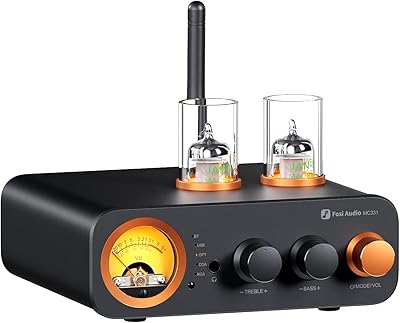
Fosi Audio MC331
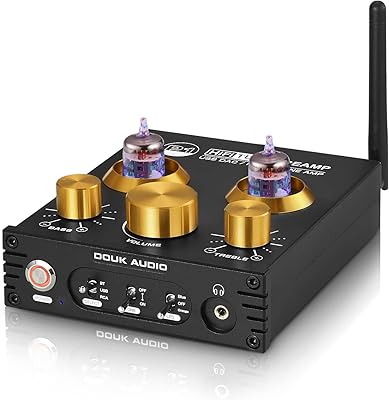
Fosi Audio MC331
79%
83%
Sound Character
77%
Build Quality
91%
Feature Set
88%
Value for Money
89%
VU Meter & Aesthetics
More
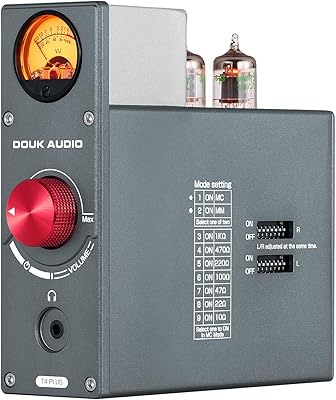
Douk Audio P1 Vacuum Tube Preamplifier
79%
83%
Sound Quality
78%
Bluetooth Performance
81%
USB DAC Quality
61%
Headphone Amplifier Power
74%
Build Quality
More
Douk Audio T4 Plus
Douk Audio T4 Plus
78%
78%
Sound Quality
81%
Phono Stage Performance
74%
Headphone Amplifier
88%
Value for Money
76%
Build Quality & Construction
More
Fosi Audio BOX X4 Tube Phono Preamp
78%
81%
Sound Quality
67%
Noise Floor & Hiss
84%
Build Quality
89%
Value for Money
63%
Tube Quality (Stock)
More
Fosi Audio TDA7498E
Fosi Audio TDA7498E
83%
88%
Sound Quality
93%
Value for Money
71%
Build Quality
74%
Power Output & Headroom
66%
Noise Floor & Background Hiss
More
Fosi Audio BT10A
Fosi Audio BT10A
81%
93%
Value for Money
82%
Sound Quality
91%
Noise Floor
84%
Bluetooth Performance
67%
Power Output
More
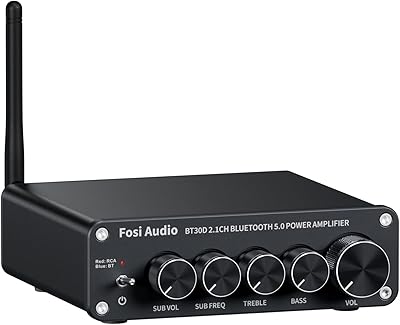
Fosi Audio BT30D
Fosi Audio BT30D
78%
83%
Sound Quality
88%
Subwoofer Performance
81%
Bluetooth Connectivity
91%
Value for Money
62%
Build Quality
More
Fosi Audio SK01 Headphone Amplifier
83%
88%
Sound Quality
72%
Battery Life
91%
Build Quality
85%
Tone Control Flexibility
80%
Portability
More
Fosi Audio P4
Fosi Audio P4
81%
88%
Build Quality
84%
Sound Quality
91%
Motorized Volume Control
79%
Remote Control
86%
Input Flexibility
More
Fosi Audio M03
Fosi Audio M03
81%
91%
Audio Clarity & Distortion
74%
Power Output & Headroom
88%
Versatility & Operating Modes
93%
Value for Money
72%
Build Quality & Enclosure
More

FAQ

Yes — remove the small copper rings from the tube pins before inserting them into the sockets. Those rings are shipping protection, not part of the installation. It is easy to miss this step, but skipping it will prevent the tubes from seating properly.

Yes, the headphone amp stage is rated for impedances up to 300Ω, so headphones in that range should be driven without strain. That said, the output level is fixed in terms of gain, so very inefficient planar magnetic headphones may still not reach loud volumes depending on the recording.

It depends on your speakers. With standard bookshelf speakers at typical desktop distances, the noise floor is generally inaudible. However, if you have high-sensitivity speakers — anything above roughly 92dB sensitivity — or you use in-ear monitors directly, a background hiss is noticeable and is a recurring complaint from users in that situation.

Absolutely. Connect a Bluetooth source, run the RCA output into your amplifier's line input, and the P3 preamp functions cleanly as a wireless receiver with a tube-buffered output stage. Many users buy it specifically for this use case.

It can, but only when both your source device and the P3 preamp successfully negotiate the aptX LL codec. If your phone or laptop does not support aptX LL, it will fall back to aptX or SBC, and latency will increase. Check your source device specs before assuming low-latency mode will activate.

The two units work well together in terms of signal matching and gain staging — the P3 feeds the V3 cleanly without overdriving its input. They also share a visual design language, which matters if you care about how your desk setup looks. That said, the P3 works fine with other amplifiers too; it is not locked into the Fosi ecosystem.

Yes, and the center detents on both the bass and treble controls make this easy to do reliably. You get the tube buffering and preamplification benefit regardless of where the tone controls sit, so running it flat is a perfectly valid and common choice.

The 5654W type is compatible, and NOS alternatives like the GE 5654 or Mullard M8100 are popular upgrade paths that owners report improving noise and texture meaningfully. The socket is standard enough that rolling is physically straightforward, though tube availability at reasonable prices does require some searching.

Yes, it functions as a standalone headphone amplifier. You feed a source via RCA or Bluetooth, plug headphones into the front 3.5mm jack, and the speaker outputs simply go unused. It is a clean and practical setup for desk listening without active speakers.

The unit remembers previously paired devices, but only one can actively stream at a time. The manual reset button is there specifically for situations where you want to clear the pairing history and start fresh — useful in shared households or offices where someone else accidentally connects.

Where to Buy