Overview

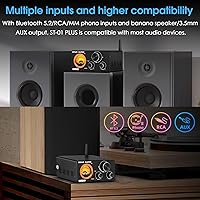
The Douk Audio ST-01 Plus is one of those rare little boxes that makes you question why you ever bought separate components. Packed into a chassis roughly the size of a thick paperback, it combines a class-D TPA3255 amplifier, a built-in MM phono preamp, and a Bluetooth receiver into a single aluminum alloy unit. Before you order, note that a DC power supply is not included — budget for that separately. The VU meter glowing in warm backlight gives the whole thing a retro personality that looks sharp on a shelf. It sits firmly in the mid-range budget space, going toe-to-toe with entry-level separates.

Features & Benefits

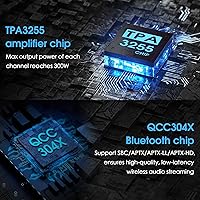
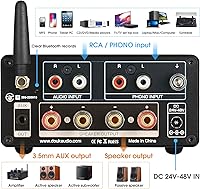
The MM phono input handles most standard moving-magnet cartridges directly — no extra preamp box required, which alone saves both money and desk space. Bluetooth 5.2 via the QCC304X chip supports aptX HD and aptX-LL, so wireless audio from a phone or laptop comes through with noticeably low latency and decent resolution. The amp is rated at 300W per channel into 4 ohms, though real-world listening levels rarely push past a fraction of that — the headroom is simply reassuring for speaker compatibility. A 3.5mm AUX output lets you loop in a subwoofer or second amp for a 2.1 setup. Bass and treble controls offer a practical six-decibel swing either way for basic room correction.

Best For

This all-in-one turntable amplifier is tailor-made for anyone who wants a proper hi-fi setup without filling a shelf with separate boxes. Apartment listeners, desktop audio fans, and anyone stepping up from a Bluetooth speaker to passive bookshelf speakers will find it fits the bill. The retro VU meter aesthetic makes it a natural companion for a record player on a side table or media console. It also works well in a secondary room where installing a bulky AV receiver makes no sense. If you already own a dedicated phono stage or a high-end Bluetooth receiver, some of this unit's value overlaps — but for everyone else, the consolidated input options are genuinely convenient.

User Feedback

With a 4.2-star average across a healthy number of reviews, the ST-01 Plus earns its rating without much controversy. The VU meter backlighting is the feature buyers mention most enthusiastically — it simply looks good in a dark room. Sound quality for the price draws consistent praise, particularly from newcomers to passive speaker setups. On the downside, a notable share of buyers were caught off guard discovering the power supply is sold separately, so factor that into your budget upfront. Bluetooth range in larger spaces has also drawn mild criticism. A handful of reviewers flagged minor inconsistencies in chassis finishing quality, though nothing that appears to affect performance. Overall, satisfaction is solid for this price bracket.

Pros

  • Built-in MM phono preamp eliminates the need and cost of a separate phono stage entirely.
  • Bluetooth 5.2 with aptX HD delivers noticeably cleaner wireless audio than most amps at this price.
  • The aluminum alloy shell acts as a passive heat sink, helping the amp run cooler and last longer.
  • Compact enough to fit virtually anywhere without rearranging an entire setup.
  • A 3.5mm AUX output makes adding a powered subwoofer straightforward and affordable.
  • Bass and treble controls give enough range to compensate for imperfect room acoustics.
  • The glowing VU meters are a genuine visual highlight that elevates any desk or shelf setup.
  • Input indicator LEDs make switching between sources clear and immediate, even for beginners.
  • aptX-LL support keeps latency low enough for comfortable video playback over Bluetooth.
  • Drives most passive bookshelf speakers with plenty of headroom at realistic listening volumes.

Cons

  • No power supply is included in the box — an easy-to-miss extra cost that catches many buyers off guard.
  • Bluetooth range weakens noticeably through walls, limiting usefulness in larger or multi-room spaces.
  • Only one stereo RCA input means multi-source analog setups require an external input switcher.
  • Moving-coil cartridge users get no benefit from the onboard phono stage whatsoever.
  • Minor cosmetic inconsistencies — uneven gaps, off-center knobs — appear often enough to be a real pattern.
  • No digital inputs such as optical or coaxial, limiting TV and disc transport connectivity options.
  • The VU meters are more decorative than accurate; do not rely on them for actual signal metering.
  • Subwoofer output volume is linked to the main volume knob, complicating independent bass calibration.
  • The manual lacks enough detail to help less experienced users troubleshoot hum or Bluetooth issues.
  • Sustained use in enclosed or poorly ventilated spaces causes the chassis to run noticeably warm.

Ratings

The Douk Audio ST-01 Plus has been put through its paces by buyers across North America, Europe, and Asia — and our AI rating engine has combed through verified purchase reviews worldwide, actively filtering out incentivized, bot-generated, and spam submissions to surface what real users actually experience. Scores reflect both the genuine strengths that keep repeat customers happy and the friction points that show up consistently enough to matter. Nothing is glossed over.

Sound Quality
83%
For a class-D amp at this price, the audio output impresses most listeners who run it with bookshelf or floor-standing passive speakers. The low THD figure of 0.02% at 1kHz translates to a clean, unfatiguing sound that holds up well during longer vinyl listening sessions.
Audiophiles with high-impedance or particularly revealing speakers may notice a slight thinning in the midrange at higher volumes. It is a competent performer, but it does not quite match the warmth of dedicated analog amplification in direct comparisons.
Phono Preamp Performance
78%
22%
The built-in MM phono stage handles standard moving-magnet cartridges capably, saving buyers from purchasing a separate preamp box. Users with entry-level to mid-range turntables report clean, well-balanced vinyl playback without any obvious noise floor issues.
The phono stage is strictly MM — owners of moving-coil cartridges will need an external step-up or preamp, which undercuts the all-in-one appeal for that audience. A handful of reviewers noted slightly elevated hum when using longer unshielded turntable cables.
Bluetooth Performance
74%
26%
The QCC304X chip with aptX HD support gives wireless streaming noticeably better resolution than what most budget amps offer, and aptX-LL keeps latency low enough for video watching without obvious lip-sync issues. Pairing is fast and stable in typical room distances.
Range becomes unreliable beyond roughly 8 to 10 meters, especially through walls, which frustrates users in open-plan apartments or larger rooms. A small number of buyers also reported occasional dropouts when other 2.4GHz devices were active nearby.
Build Quality
71%
29%
The aluminum alloy shell feels noticeably more premium than plastic-bodied competitors at a similar price, and it doubles as a passive heat sink which helps the TPA3255 chip run cooler during extended use. The unit feels dense and planted on a shelf.
A consistent thread in reviews points to minor cosmetic inconsistencies — uneven panel gaps, slightly off-center knobs, or small blemishes on the faceplate. Nothing structural, but noticeable enough that buyers with high cosmetic standards have flagged it repeatedly.
Value for Money
91%
Replacing a phono preamp, a Bluetooth receiver, and a stereo amplifier with one compact unit at this price point is genuinely difficult to argue against. Most users feel the feature-to-cost ratio is among the best available in the compact amp category right now.
The omission of a power supply from the box stings a little — it is an extra purchase that catches first-time buyers off guard and adds to the real-world cost. Factor that in before comparing sticker prices with competitors that include the supply.
VU Meter
88%
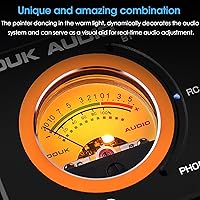
The warm backlit needle display is consistently one of the most mentioned positives in user reviews — it genuinely transforms the visual character of a desktop or shelf audio setup. The ability to adjust meter sensitivity so it actually reacts to your input signal level is a thoughtful touch.
It is worth being clear-eyed: the VU meter here is more decorative than precision instrumentation. It gives a general sense of signal activity but should not be relied upon for accurate metering in any critical context.
Power Output & Headroom
82%
18%
The 300W-per-channel specification into 4 ohms provides genuine confidence when pairing with larger or lower-sensitivity passive speakers that would struggle with lesser amps. Even at moderate listening volumes there is plenty of dynamic headroom for sudden peaks in orchestral or bass-heavy recordings.
The 300W figure represents a peak under ideal lab conditions — real-world continuous output at home listening levels is a fraction of that. Buyers expecting to shake walls in a large room may be setting expectations higher than the unit is designed to meet.
Input Versatility
86%
Having MM phono, stereo RCA, and Bluetooth 5.2 on a single device covers the vast majority of source combinations a typical home listener would assemble. Switching between a turntable and a TV streamer without rewiring anything is a daily convenience that users genuinely appreciate.
There is no optical or coaxial digital input, which limits connectivity for buyers wanting to loop in a TV via TOSLINK or connect a CD transport digitally. The RCA input is also limited to one stereo pair, so multi-source analog setups require an external switch.
Subwoofer & AUX Output
77%
23%
The 3.5mm AUX output at a 2V rated level is a practical addition that opens up 2.1 configurations without requiring an active crossover or additional hardware. Users who added a powered subwoofer reported the integration worked cleanly with minimal setup.
A 3.5mm jack rather than a dedicated RCA subwoofer output feels slightly undersized for the role, and some powered subs lack a 3.5mm input requiring an adapter. Output level control for the AUX is tied to the main volume, which limits independent subwoofer calibration.
Tone Controls
72%
28%
The plus-or-minus 6dB range on bass and treble is enough to compensate for room acoustics or speaker colorations without overcorrecting into an artificial sound. Buyers using the amp in acoustically untreated rooms praised this as a practical equalizer substitute.
The tone controls are purely analog shelving filters with no center frequency adjustment, which limits precision. Users looking for a more surgical sound correction — particularly in the midrange — will find the controls too coarse for that kind of tuning.
Setup & Ease of Use
84%
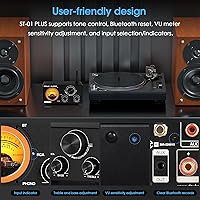
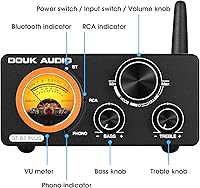
Input selection is handled by a clearly labeled front-panel switch with indicator LEDs, making source switching intuitive even for buyers new to component audio. The option to clear Bluetooth pairing records from the front panel is a small but welcome quality-of-life feature.
The lack of an included power supply means setup requires sourcing a compatible DC adapter separately, which adds a step that trips up less experienced buyers. The manual is functional but thin on detail for troubleshooting edge cases like hum or pairing conflicts.
Size & Footprint
93%
At 115 x 100 x 60mm and under 700 grams, this all-in-one turntable amplifier slots into spaces where nothing else would fit — a corner of a desk, a small media shelf, or between a record player and a pair of bookshelf speakers. The compact footprint is a genuine differentiator.
The small chassis does limit internal component spacing, and sustained high-volume use in poorly ventilated spaces can cause the unit to run warm. It is not a problem under normal use, but placing it in an enclosed cabinet without airflow is not advisable.
Connectivity Reliability
69%
31%
In typical living room or desktop scenarios — source device within 5 to 7 meters with clear line of sight — the Bluetooth connection holds steady without interruption. The QCC304X chip manages power efficiently, so there are no obvious heat-related dropout issues under normal conditions.
Walls, metal furniture, and competing wireless devices noticeably degrade the connection stability at distances many users consider standard. Several reviews from owners in larger apartments specifically cited this as a frustration that diminishes the wireless convenience the unit is marketed on.
Aesthetic Design
89%
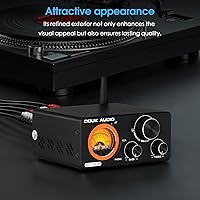
The combination of brushed aluminum casing, glowing VU meters, and clean front-panel layout makes this one of the better-looking budget amps available. It photographs well and draws positive comments from visitors, which matters to buyers who keep audio gear visible in a living space.
The retro-modern aesthetic will not suit every interior style, and there is only one color option. Minor finishing inconsistencies mentioned in build quality reviews can occasionally undercut the otherwise polished visual impression in person.

Suitable for:

The Douk Audio ST-01 Plus is built for the kind of listener who wants a proper hi-fi setup without dedicating an entire shelf to separate components. If you own a turntable with a standard moving-magnet cartridge and have been running it through a cheap receiver or a basic Bluetooth speaker, this mini phono amp is a meaningful and practical upgrade. Apartment dwellers, dorm room audiophiles, and anyone working with a small media console will appreciate how little footprint it demands while still driving real passive bookshelf speakers with authority. It also suits the growing segment of listeners who split their time between vinyl and streaming — the ability to flip between a turntable and a phone over aptX HD Bluetooth without touching a single cable is genuinely convenient for daily use. Secondary rooms in a home — a bedroom, a home office, a reading nook — are ideal territory for this all-in-one turntable amplifier, where dragging in a full AV receiver would be overkill and a Bluetooth speaker alone feels like a compromise.

Not suitable for:

The Douk Audio ST-01 Plus has real limitations that make it the wrong choice for certain buyers, and it is worth being direct about them. If your turntable uses a moving-coil cartridge, the onboard phono stage simply will not work — you will need an external MC preamp, which defeats much of the convenience argument. Listeners in larger open-plan spaces or multi-room setups will likely find the Bluetooth range frustrating; walls and interference sources reduce reliability in ways that a dedicated wireless receiver handles far better. Anyone who wants more than one analog source — a CD player and a turntable simultaneously connected, for example — will hit a wall immediately since there is only one RCA input. Power users expecting to drive large floor-standers in a big listening room should also look elsewhere; the real-world continuous output, while respectable, is better matched to nearfield or small-room scenarios than to demanding high-volume applications. Finally, buyers who notice minor cosmetic finishing imperfections on hardware will want to manage expectations, as build consistency has been a recurring point of criticism across user reviews.

Specifications

  • Amplifier Chip: The unit uses a Texas Instruments TPA3255 class-D amplifier chip, known for high efficiency and low heat output relative to its power rating.
  • Max Output Power: Rated at 300W per channel into a 4-ohm load; real-world continuous listening output is considerably lower, with peak figures used under ideal lab conditions.
  • Bluetooth Version: Bluetooth 5.2 is handled by the Qualcomm QCC304X chip, providing stable pairing, efficient power use, and support for multiple audio codecs.
  • Bluetooth Codecs: Supported codecs include SBC, aptX, aptX-LL, and aptX HD, covering everything from standard streaming to low-latency and high-resolution wireless audio.
  • Audio Inputs: Three inputs are available: a moving-magnet phono input, a stereo RCA line input, and Bluetooth 5.2 wireless.
  • Audio Outputs: Speaker outputs use banana plug terminals; a 3.5mm AUX line output at 2V rated level allows connection of a powered subwoofer or secondary amplifier.
  • Phono Sensitivity: The MM phono input is calibrated for a 5mV input sensitivity, compatible with the vast majority of standard moving-magnet turntable cartridges.
  • Distortion (THD+N): Total harmonic distortion plus noise measures 0.02% at 1kHz, indicating a clean signal path with very low audible coloration under normal listening conditions.
  • Signal-to-Noise Ratio: SNR is rated at 107dB or higher, meaning background noise is effectively inaudible at typical home listening volumes.
  • Frequency Response: The amp covers 20Hz to 20kHz within plus or minus 1dB, spanning the full range of human hearing with consistent output across the audio band.
  • Tone Controls: Separate bass and treble shelving controls each offer a plus or minus 6dB adjustment range for basic room and speaker compensation.
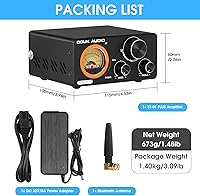
  • Working Voltage: The unit accepts DC input between 24V and 48V; no power supply is included in the box and must be purchased separately.
  • Dimensions: The chassis measures 115mm wide by 100mm deep by 60mm tall (approximately 4.53″ x 3.94″ x 2.36″), making it one of the most compact amps in its category.
  • Net Weight: The unit weighs 673 grams (approximately 1.48 lb), light enough to reposition easily but dense enough to feel solid on a shelf.
  • Shell Material: The outer enclosure is machined aluminum alloy, which serves both as structural protection and as passive thermal dissipation for the internal amplifier components.
  • VU Meter: Two analog-style VU meters with warm backlighting are built into the front panel; sensitivity is user-adjustable to match different input signal levels.
  • Certifications: The unit carries FCC certification, confirming it meets US regulatory standards for electromagnetic interference and radio frequency emissions.
  • Channel Configuration: The amplifier operates as a stereo 2.0 unit by default, expandable to 2.1 by connecting a powered subwoofer via the 3.5mm AUX output.

Related Reviews
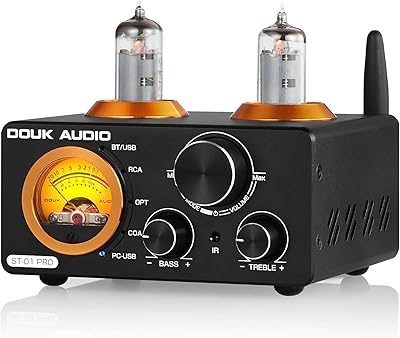
Douk Audio ST-01 PRO
74%
84%
Sound Character & Warmth
88%
Value for Money
91%
Input Versatility
67%
Build Quality
93%
Visual Design & VU Meters
More
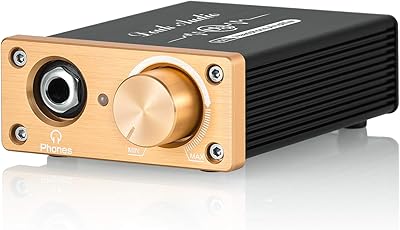
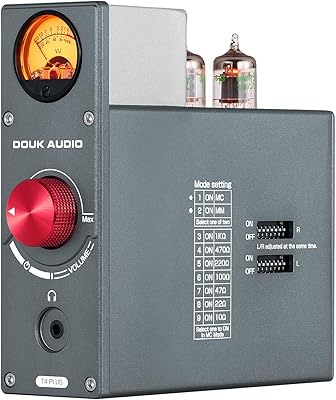
Douk Audio T4 Plus
Douk Audio T4 Plus
78%
78%
Sound Quality
81%
Phono Stage Performance
74%
Headphone Amplifier
88%
Value for Money
76%
Build Quality & Construction
More
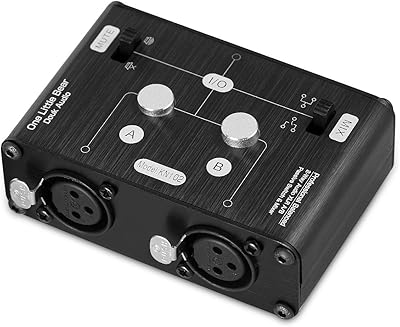
Douk Audio KN102 2-IN-1-OUT XLR Switcher
80%
83%
Build Quality
78%
Signal Integrity
94%
Ease of Setup
89%
Value for Money
76%
Switch Modes & Functionality
More
Douk Audio OK013 Mini 2.1 Channel HiFi Stereo Amplifier
75%
83%
Value for Money
71%
Sound Output & Power
77%
Build Quality
88%
Ease of Installation
58%
Thermal Management
More
Douk Audio VU3
Douk Audio VU3
90%
94%
Build Quality
91%
VU Meter Accuracy
87%
Ease of Setup
89%
Remote Control Functionality
93%
Channel Isolation
More
Douk Audio U3 Headphone Amplifier
89%
94%
Sound Clarity
91%
Frequency Response Accuracy
89%
Output Power
86%
Build Quality
90%
Ease of Setup
More
Douk Audio T9 Vacuum Tube Phono Preamp
87%
92%
Sound Quality
88%
Ease of Setup
93%
Tube Warmth & Performance
86%
Build Quality
89%
Adjustability (Bass/Treble)
More
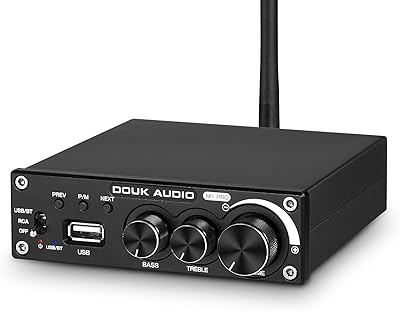
Douk Audio M1 PRO
Douk Audio M1 PRO
79%
83%
Sound Clarity
78%
Power Output
86%
Build Quality
71%
Bluetooth Performance
91%
Value for Money
More
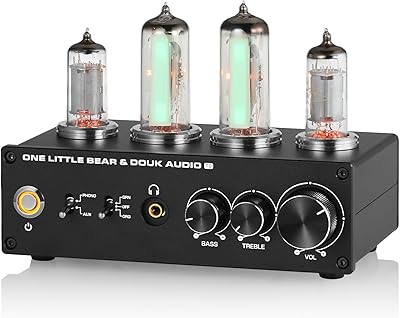
Douk Audio P1 Vacuum Tube Bluetooth Preamplifier
85%
89%
Sound Quality
92%
Bluetooth Connectivity
85%
Build Quality
88%
Ease of Use
87%
Tone Control Flexibility
More
Douk Audio VU3 Pro
Douk Audio VU3 Pro
80%
91%
Build Quality
88%
VU Meter Display
86%
Switching Functionality
89%
Amplifier Compatibility
78%
Remote Control
More

FAQ

No, it does not — and this catches a lot of buyers off guard. You will need to purchase a compatible DC power supply separately, rated between 24V and 48V. A 32V or 36V supply is commonly recommended for balanced performance. Make sure you factor that into your total budget before ordering.

Yes, as long as your turntable uses a standard moving-magnet cartridge. The Douk Audio ST-01 Plus has a built-in MM phono stage calibrated for a 5mV input, which covers the overwhelming majority of entry-level to mid-range turntables sold today. If your table has a built-in preamp already, just use the RCA line input instead and bypass the phono stage.

No. The onboard phono stage is MM only and does not have enough gain for MC cartridges, which typically output far lower voltages. If you run an MC cartridge, you will need a separate MC-capable phono preamp between the turntable and this amp.

In a clear line-of-sight scenario within about 7 to 8 meters, the connection is solid and stable. Through walls or in apartments with lots of competing wireless devices, you may start to notice dropouts or a weaker signal beyond that. It is fine for typical desktop or single-room use, but do not expect it to cover a large open-plan space reliably.

Yes. The 3.5mm AUX output on the rear provides a 2V line-level signal that you can run into any powered subwoofer with a 3.5mm or RCA input. Keep in mind the subwoofer output level tracks the main volume knob, so you cannot adjust them completely independently — a minor but real limitation for dialing in precise bass balance.

This all-in-one turntable amplifier works well with most 4-ohm and 8-ohm passive bookshelf and floor-standing speakers. The rated output of 300W per channel into 4 ohms is a peak figure; real continuous power is lower, but still more than sufficient for home listening in small to medium-sized rooms. Very large, low-sensitivity speakers in big rooms are where it starts to feel underpowered.

They give you a general visual indication of signal activity — the needles move with the music, which looks great, especially with the backlight on. You can adjust their sensitivity to suit your input level. That said, they are not precision instruments; do not use them to set exact recording levels or diagnose signal issues. Think of them as aesthetic with a functional bonus rather than the other way around.

Not simultaneously on separate inputs in a convenient way. There is one RCA line input and one phono input, and you switch between them using the front-panel selector. If you want to connect a TV, you would use the RCA input — but that means unplugging your turntable or using a separate input switcher box to share that RCA input between multiple sources.

It runs warm under sustained use, which is normal for a class-D amp working at reasonable volumes. The aluminum alloy shell helps dissipate heat passively, and under typical home listening conditions the temperature stays within safe limits. Where you do want to be careful is placing it inside a closed cabinet with no airflow — that can cause it to run hotter than intended over long sessions.

There is a dedicated function built into the front panel to wipe stored pairing records, which is handy when you are switching between devices or handing the unit to someone else. The exact button sequence is described in the manual — it typically involves holding the Bluetooth input button for a few seconds until an indicator flashes to confirm the memory has been cleared.