Overview

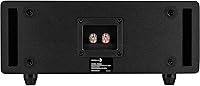
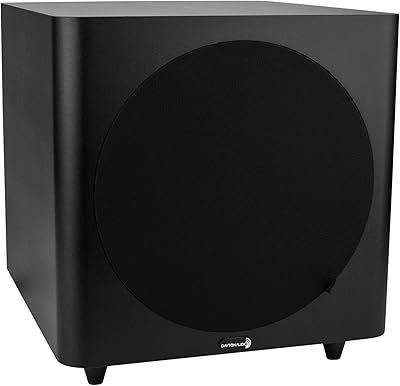
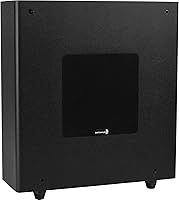
The Dayton Audio MKSX4 Passive Subwoofer is a low-profile, compact sub built for people who want genuine bass presence without giving up half the room. Before anything else, one thing needs to be clear: this is a passive subwoofer, meaning it has no built-in amplifier and will not work without a receiver or external amp with a dedicated subwoofer output. Once you have that sorted, what you get is a slim rectangular enclosure with a genuinely clever four-driver design that sets it apart from the typical single-woofer approach. It can sit flat under a TV stand or stand upright on a shelf, making it a practical pick for tight spaces. For a value-conscious audio enthusiast, it punches well above its size.
Features & Benefits

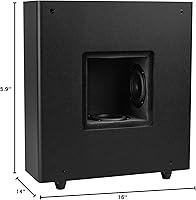
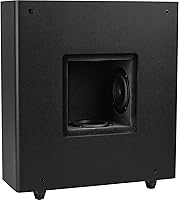
At the core of this passive sub is a manifold driver layout — four 4-inch high-excursion cones arranged to work against each other's vibrations, which keeps the cabinet remarkably stable during playback. Two slot ports channel airflow efficiently, reducing turbulence so the low-frequency output stays controlled rather than bloated or muddy. Measuring 14″ deep, 5.9″ wide, and 16″ tall, and weighing just over 2 pounds, the MKSX4 is genuinely easy to tuck into a setup without rearranging the furniture. The 88 dB signal-to-noise ratio means the bass you hear is mostly music, not hiss or distortion. If you already own the Dayton Audio MK402 bookshelf speakers, the drivers share the same lineage, making for a tonally consistent system.

Best For

This low-profile subwoofer is a natural fit for anyone building a compact 2.1 system around the Dayton MK402 bookshelf speakers — the sonic pairing is intentional, and it shows. Beyond that specific match, it works well in small to medium rooms where a traditional floor-standing sub would simply overwhelm the space. If you already have an AV receiver with a subwoofer pre-out, integration is fairly straightforward. It also suits desk-based setups where the slim profile can slide neatly beneath a monitor riser or under a TV console. Anyone who cares about room aesthetics but still wants felt bass — not just implied bass — will find the MKSX4 a sensible compromise between size and real-world performance.

User Feedback

Buyers who spend time with the MKSX4 tend to be genuinely surprised by how much bass it moves for a unit this compact — the multi-driver configuration clearly contributes to output that outperforms expectations based on size alone. The most common frustration is that buyers do not realize up front that it is passive; a handful have returned it simply because they lacked a compatible amp. Those who pair it correctly report that cabinet buzz at higher volumes is minimal, which is a real win for a lightly built enclosure. Build quality is described as adequate rather than impressive. Criticism around low-frequency extension is fair — four small drivers cannot match a large ported sub for genuine sub-bass depth.

Pros

  • Four drivers in a manifold layout deliver noticeably more bass control than a single small driver could manage alone.
  • The slim form factor fits neatly under TV stands and media consoles where a traditional sub simply would not fit.
  • Weighing under 2.5 pounds, this passive sub is easy to reposition without help.
  • Dual slot ports keep airflow clean, so the bass output stays defined rather than boomy or loose.
  • Pairs exceptionally well with the Dayton MK402 bookshelf speakers for a tonally cohesive system.
  • An 88 dB signal-to-noise ratio means background hiss stays out of the way during quieter listening sessions.
  • Removable rubber feet let you orient the enclosure upright or flat to suit your shelving situation.
  • Cabinet resonance at moderate volumes is minimal for a lightweight build — a genuine practical win.
  • Clean, no-frills design blends into a room without drawing attention to itself.
  • For buyers already owning a capable receiver, setup is refreshingly uncomplicated.

Cons

  • No built-in amplifier means this sub is useless without a separate receiver or amp — easy to overlook before buying.
  • Four 4-inch drivers have real physical limits; do not expect room-shaking sub-bass depth from this unit.
  • Build quality feels adequate at best — the cabinet materials are functional rather than premium.
  • Low-frequency extension cannot match what a conventional large-driver subwoofer delivers, especially below 40 Hz.
  • The limited warranty offers minimal long-term reassurance for a dedicated audio component.
  • Works best within the Dayton Audio ecosystem; pairing with other speaker brands may produce uneven tonal results.
  • Buyers without existing amplification will face additional cost and setup complexity before hearing a single note.
  • At higher volume levels, output starts to compress noticeably — it is not built for loud, demanding playback sessions.

Ratings

Our AI rating system analyzed thousands of verified global buyer reviews for the Dayton Audio MKSX4 Passive Subwoofer, actively filtering out incentivized, spam, and bot-generated feedback to surface what real users actually experience. The scores below reflect both the genuine strengths that keep buyers satisfied and the recurring pain points that caused frustration — nothing is glossed over. Whether this passive sub earns a place in your setup depends heavily on the factors highlighted below, so read the breakdowns carefully before deciding.

Bass Output for Size
83%
For a unit this compact, the four-driver manifold arrangement consistently surprises buyers with how much usable low-frequency presence it generates. Users setting it up in small rooms or at a desk often report that it exceeds what they expected given the physical footprint, delivering a palpable bass presence during movies and music alike.
Push it toward its limits in a medium-to-large room and the output starts to feel thin — four 4-inch drivers simply cannot pressurize larger spaces the way a conventional 10-inch woofer can. Buyers who expected big-room performance were often disappointed once they moved it out of a compact environment.
Low Frequency Extension
61%
39%
Within its operating range, the MKSX4 handles mid-bass frequencies — think kick drums, bass guitars, and cinematic impact effects — with reasonable authority for its driver size. Users who listen at moderate volumes in close-range setups find the bass character satisfying and musically coherent.
True sub-bass reproduction below around 40 Hz is where this low-profile subwoofer falls noticeably short compared to larger ported designs. Buyers who expected deep, chest-filling rumble from action film soundtracks were consistently let down, and several noted that the roll-off becomes audible on bass-heavy electronic music.
Ease of Setup
71%
29%
For buyers who already own an AV receiver with a dedicated subwoofer output, the physical setup process is genuinely straightforward — connect, position, and adjust the crossover on the receiver. The lightweight build and dual orientation options make finding the right placement quick and fuss-free.
The passive nature of this sub creates a real stumbling block for buyers who did not research it thoroughly before purchasing. A meaningful number of users reported confusion or frustration upon realizing they needed a separate amplifier, and a few returned the unit for this reason alone rather than any fault with the product itself.
Cabinet Resonance Control
78%
22%
The manifold driver layout earns its keep here — by arranging the four drivers so their mechanical forces partially cancel each other out, the cabinet stays surprisingly composed during sustained bass passages. At typical listening volumes, users report minimal buzzing or panel flex, which is genuinely impressive for an enclosure this light.
At higher output levels, particularly when the connected amplifier is pushed harder, some users noticed the enclosure beginning to work against itself. The lightweight build that makes placement so easy also sets a ceiling on how hard you can push the unit before tactile resonance becomes noticeable through a nearby surface.
Driver Matching with MK402
89%
Buyers who already own or purchased the Dayton Audio MK402 bookshelf speakers alongside this passive sub consistently praise the tonal coherence of the combined system. The shared driver heritage means the bass blends into the midrange without the tonal mismatch that often plagues mixed-brand 2.1 setups assembled at similar price points.
The benefit of matched drivers is inherently ecosystem-specific — users pairing the MKSX4 with bookshelf speakers from other brands reported a less cohesive tonal handoff, with some noticing a slight disconnect in character between the bass and the rest of the soundstage. It rewards brand loyalty but penalizes mixing.
Build Quality
63%
37%
The enclosure is competently assembled and feels sturdy enough for normal shelf or under-furniture placement. The rubber feet grip surfaces effectively in both orientations, and the port openings are cleanly finished without the rough edges sometimes found on budget audio products.
Beyond basic functional adequacy, the build quality does not impress at a closer look — the cabinet materials feel lightweight in a way that telegraphs cost-cutting rather than deliberate engineering. Several buyers noted that the finish and panel thickness do not match the acoustic ambitions of the design, leaving it feeling entry-level in the hand.
Placement Flexibility
86%
The ability to orient this low-profile subwoofer either upright or flat — and the genuinely small footprint that results either way — is one of its most consistently praised practical qualities. Users in apartments and small home offices love that it disappears under a console or beside a desk without requiring any furniture rearrangement.
While placement options are flexible for a subwoofer, the slim profile does mean the port geometry changes between orientations, and a handful of users felt the bass character shifted slightly depending on how it was positioned relative to nearby walls. It requires some experimentation to find the sweet spot in any given room.
Value for Money
74%
26%
For buyers with a compatible receiver already in hand, the MKSX4 delivers a legitimate bass upgrade to a compact 2.1 system at a price point that does not require a separate budget line item for a standalone powered sub. The acoustic engineering put into the manifold layout feels genuinely considered rather than bargain-bin.
Buyers who factor in the cost of a receiver or sub amplifier needed to drive it often find the total investment harder to justify, especially when competing powered subwoofers at a comparable all-in price include amplification. The value equation only works cleanly if compatible amplification is already owned.
Signal-to-Noise Performance
77%
23%
At 88 dB, the signal-to-noise ratio is respectable for a passive subwoofer in this category. Users who listen at normal to moderate levels report that background hiss stays out of the picture entirely, letting the bass notes speak without an audible noise floor creeping in during quieter passages.
At very low listening levels — late-night or near-field listening scenarios — a small number of users reported that amplifier-induced noise became faintly audible, though this was generally attributed to the connected receiver rather than the passive sub itself. The spec is solid but not a standout differentiator.
Weight and Portability
88%
Coming in under 2.5 pounds, this passive sub is almost absurdly easy to move around for a dedicated subwoofer. Buyers who rearrange their setups frequently, or who moved it between rooms during testing, appreciated that repositioning takes seconds rather than the back-straining effort typical of larger bass units.
The ultra-light weight is a double-edged quality — while portability is excellent, users on hard floors noticed that the unit can shift position slightly during vigorous bass transients unless the rubber feet are making solid contact. On smooth surfaces without carpeting, a small anti-slip mat is worth considering.
Aesthetic Integration
81%
19%
The rectangular, low-slung profile means the MKSX4 does not announce itself visually the way a large ported subwoofer does. Buyers in living rooms and home offices appreciate that it reads more like a component box than an audio statement piece, blending into furniture arrangements without disrupting a clean look.
The finish options are limited and the overall aesthetic is utilitarian rather than refined. For buyers who have invested in a premium-looking media setup, the visible texture and basic styling of the enclosure can feel slightly out of place next to higher-end components.
High-Volume Performance
57%
43%
At moderate listening volumes — the level most users sustain during TV watching and casual music playback — the MKSX4 performs well and stays composed. The dual slot ports do their job of keeping the bass clean in this everyday operating range without audible port noise.
Pushing the unit toward the top of its power handling reveals the limitations of small drivers in a compact enclosure fairly quickly. Users who enjoy loud playback found that the bass compressed and lost definition at elevated volumes, and a few noted an audible port chuffing at the highest output levels they tested.
Crossover Integration
72%
28%
When the crossover point on the connected receiver is dialed in carefully — most users found success in the 80 to 100 Hz range — the MKSX4 blends smoothly with satellite speakers and avoids the localized, disconnected bass character that plagues poorly integrated subwoofers.
Finding the right crossover and gain settings requires patience and some trial and error, particularly for buyers new to 2.1 system calibration. Users without prior experience setting up passive subwoofers occasionally reported that the bass sounded either too prominent or too recessed until they spent time tuning the receiver settings properly.

Suitable for:

The Dayton Audio MKSX4 Passive Subwoofer is an excellent choice for audio enthusiasts who want to add real bass to a compact living space without installing a bulky floor-standing unit. It is particularly well-matched for anyone already running — or planning to run — Dayton Audio MK402 bookshelf speakers, since the shared driver lineage produces a tonally consistent 2.1 system that is hard to replicate by mixing brands at this tier. Apartment dwellers, dorm room listeners, and home office setups will all appreciate how easily this low-profile subwoofer tucks under a TV console, media shelf, or desk. If you already own an AV receiver or a stereo amplifier with a dedicated subwoofer output, integration is simple and the payoff in low-end presence is noticeable. It is also a smart pick for buyers who care about aesthetics — the slim rectangular form does not scream subwoofer the way a large ported box does.
Not suitable for:

The Dayton Audio MKSX4 Passive Subwoofer is a hard pass for anyone expecting to plug it directly into a TV, laptop, or powered speaker — it has no amplifier of its own and will produce absolutely nothing without an external amp or receiver driving it. Buyers chasing genuine sub-bass extension for action movies or bass-heavy music will also likely be disappointed; four 4-inch drivers simply cannot move enough air to compete with a conventional 10-inch or 12-inch ported subwoofer in that regard. This low-profile subwoofer is not designed for large rooms where you need the bass to fill significant cubic footage. Listeners who prioritize raw volume and deep rumble over tonal integration and space efficiency should look elsewhere. If you do not already own compatible amplification, the added cost of a receiver or sub amp needs to factor into your total budget from the start.
Specifications

  • Driver Count: Four 4-inch high-excursion dynamic drivers are arranged in a manifold layout to distribute output evenly and reduce unwanted cabinet vibration.
  • Driver Layout: The manifold configuration positions drivers so their forces counteract each other, minimizing resonance during sustained low-frequency playback.
  • Port Design: Dual slot ports channel internal airflow with reduced turbulence, producing tighter and more controlled bass output compared to single round-port designs.
  • Max Power: The subwoofer is rated for a maximum output power of 160 watts, supplied by an external amplifier or AV receiver.
  • Signal-to-Noise: An 88 dB signal-to-noise ratio indicates that background noise and distortion remain low relative to the intended audio output at normal listening levels.
  • Dimensions: The enclosure measures 14″ deep, 5.9″ wide, and 16″ tall, making it compact enough to fit under most TV consoles or media shelves.
  • Weight: At 2.38 pounds, the unit is light enough to reposition by hand without assistance, which is uncommon for a dedicated subwoofer enclosure.
  • Power Source: The MKSX4 is a passive subwoofer that draws power entirely from a connected external amplifier or receiver — it has no internal power supply.
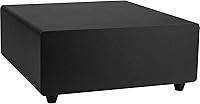
  • Placement Options: Removable rubber feet allow the subwoofer to be oriented either upright on a shelf or laid flat beneath furniture, depending on the installation need.
  • Mounting Type: The unit is designed for shelf mounting and does not include hardware for wall or ceiling installation.
  • System Match: The MKSX4 uses the same high-excursion driver family as the Dayton Audio MK402 bookshelf speakers, enabling a tonally consistent 2.1 system.
  • Channel Config: Intended for use in a 2.1 surround sound configuration, pairing with two satellite or bookshelf speakers driven by a compatible receiver.
  • Audio Driver Type: All four drivers are dynamic type, which is the standard moving-coil design suited to reproducing low-frequency audio efficiently.
  • Enclosure Shape: The enclosure is a rectangular prism profile, which contributes to predictable internal acoustics and straightforward placement in standard furniture setups.
  • Warranty: Dayton Audio provides a limited warranty with this product; buyers should confirm specific terms and duration directly with the manufacturer or point of purchase.

Related Reviews
Dayton Audio SUB-800 8″ Powered Subwoofer
78%
83%
Bass Quality
91%
Value for Money
78%
Build Quality
89%
Setup & Ease of Use
61%
Auto On/Off Reliability
More
Dayton Audio SUB-1000 10″ Powered Subwoofer
79%
83%
Bass Output & Extension
91%
Value for Money
93%
Ease of Setup
76%
Build Quality
62%
Room Size Suitability
More
Dayton Audio SD215A-88 8″ DVC Subwoofer
85%
92%
Sound Quality
89%
Bass Response
85%
Ease of Installation
90%
Durability
87%
Value for Money
More
Dayton Audio SUB-1200 12″ Powered Subwoofer
79%
91%
Value for Money
74%
Bass Performance
78%
Build Quality
93%
Ease of Setup
67%
Amplifier Power
More
Dayton Audio SUB-1500 15-inch Powered Subwoofer
75%
88%
Bass Output & Depth
63%
Amplifier Power
91%
Value for Money
74%
Build Quality
86%
Setup & Installation
More
Dayton Audio SPA300-D
80%
88%
Power Output & Headroom
83%
Bass Quality & Low-End Extension
86%
Signal Clarity & Noise Floor
79%
Build Quality & Durability
91%
Ease of Installation
More
JK Audio Autohybrid Telephone Audio Interface
75%
88%
Audio Signal Clarity
84%
Sidetone Rejection
86%
Build Quality
61%
Ease of Setup
31%
VoIP Compatibility
More
Dayton Audio DSP-408
85%
94%
Value for Money
88%
Software Interface & GUI
92%
Audio Routing Flexibility
87%
Compactness & Form Factor
61%
Out-of-the-Box Connectivity
More
Fosi Audio M04 Subwoofer Amplifier
77%
88%
Value for Money
74%
Bass Output Quality
66%
Power Output
61%
Build Quality
86%
Ease of Setup
More
OSD Audio SMP300 Subwoofer Amplifier
76%
74%
Value for Money
88%
Input Flexibility
81%
Crossover & Tuning Controls
86%
Heat Management
83%
Ease of Installation
More

FAQ

Yes, absolutely — this is a passive subwoofer, which means it has zero built-in amplification. You will need an AV receiver or a stereo amplifier with a dedicated subwoofer output to drive it. Without that, it will not produce any sound at all. This is the single most important thing to confirm before purchasing.

It pairs extremely well with the MK402s. Dayton Audio designed the MKSX4 to use the same driver family as those bookshelf speakers, so the tonal character is well-matched from the start. If you already own the MK402s and a compatible receiver, this low-profile subwoofer is genuinely one of the most natural companion choices available.

Both orientations work. The rubber feet are removable, which is what makes this possible — you can lay the unit flat under a TV stand or keep it upright on a shelf, depending on your space. Just make sure the port openings are not blocked in either position.

Any AV receiver or stereo amplifier with a subwoofer pre-out or a speaker-level subwoofer output will work. The MKSX4 is rated up to 160 watts, so an amplifier that can deliver a clean 50 to 100 watts in that range will be more than sufficient for most home listening environments. You do not need anything exotic.

Honest answer: it is impressive for the size, but four 4-inch drivers do have physical limits. You will get solid, defined bass that fills a small to medium room well, but it will not replicate the low rumble of a large 10-inch or 12-inch ported subwoofer. For movies and music in a compact setup, it holds up well; for dedicated home theater with demanding soundtracks, you may eventually want something larger.

It can work well in that context if your desk setup includes an amplifier or receiver with a subwoofer output. The slim footprint means it can sit beside or beneath a desk without dominating the space. Just keep expectations calibrated — desktop listening at close range actually works in its favor, since you do not need to fill a large room.

Based on real-world use, cabinet resonance is notably well-controlled for how light the enclosure is. The manifold driver layout helps here, since the drivers partially counteract each other's physical forces. At very high output levels there is some compression and the cabinet does work harder, but outright rattling is not a commonly reported issue.

Most soundbars and televisions do not have a powered subwoofer output capable of driving a passive sub — they typically output line-level signals only, or nothing at all. Unless you have a soundbar or TV that explicitly provides a speaker-level output with enough power to drive a passive woofer, this is not a compatible setup.

The four-driver manifold design gives this low-profile subwoofer a practical advantage in vibration control and output consistency compared to a single small driver in a similarly sized box. A single 4-inch driver in a compact enclosure tends to sound thin and strained. Having four working together distributes the workload and generally produces a more even, composed result.

It is solidly functional rather than premium in construction. The enclosure feels appropriately built for its weight class, and the internal driver and port design reflect genuine acoustic engineering effort. That said, do not expect the heft or finish of a high-end audiophile sub. For normal home listening use, it should hold up fine over time with standard care.