Overview

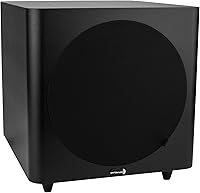
The Dayton Audio SUB-1000 10″ Powered Subwoofer has been a quiet staple in the budget audio market since 2011 — a long run that speaks to its reliability and consistent appeal. It sits in the middle of Dayton Audio's SUB series, stepping up from the 8-inch model while stopping short of the larger 12-inch and 15-inch options. This 10-inch sub is built for small-to-medium rooms — think apartments, dorm setups, or a compact home theater nook — not cavernous living rooms. Its downward-firing ported cabinet is a defining design choice, helping spread bass energy across the floor rather than projecting it narrowly in one direction.
Features & Benefits

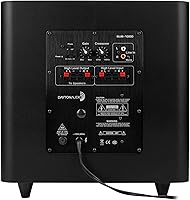
At the heart of this Dayton Audio subwoofer is an 80-watt built-in amplifier driving a long-throw 10-inch woofer capable of reaching down to 30 Hz — enough to put real weight behind movie explosions or a bass guitar line. The variable crossover, adjustable from 40 to 140 Hz, makes blending it with bookshelf speakers surprisingly straightforward. Hookup is flexible too: RCA line-level and speaker-level inputs mean it works with most receivers and even older stereo amps lacking an RCA output. The auto-on circuit is a small but practical touch — it wakes up when music plays and goes quiet when you stop, with no manual intervention needed.

Best For

The SUB-1000 is a natural fit for anyone building their first dedicated home theater in a compact space. If you've been getting by with a soundbar or bookshelf speakers and feel like something is missing at the low end, this 10-inch sub closes that gap without demanding much real estate or setup effort. It also pairs well with desktop speaker rigs or TV audio setups where the source lacks bass depth. There's no app, no DSP menu to navigate — just a power cable, an RCA connection, and a crossover knob. For buyers who prioritize plug-and-play simplicity over feature overload, that restraint is genuinely refreshing.

User Feedback

Across hundreds of verified buyers, the SUB-1000 holds a strong 4.4-star rating — not a fluke for a product that has been on the market for over a decade. Owners frequently praise the easy out-of-box setup and bass output that punches above expectations at this price tier. The compact cabinet earns consistent credit for fitting into tight spaces without drawing attention. That said, honest buyers are clear about the limits: this sub won't fill a large open-plan room, and a few note the amplifier plate runs noticeably warm during long sessions. Against pricier alternatives, most agree the value-for-money ratio is genuinely hard to beat in this segment.

Pros

  • Reaches down to 30 Hz, adding genuine weight to movie soundtracks and bass-heavy music in small rooms.
  • Both RCA and speaker-level inputs mean it connects to almost any receiver or stereo amp without adapters.
  • The auto-on circuit works reliably, making it a true set-and-forget addition to any desk or TV setup.
  • A wood cabinet at this price point feels substantially more solid than most plastic-bodied competitors.
  • The SUB-1000 has been in continuous production since 2011, a real-world signal of dependable build consistency.
  • Variable crossover spanning 40 to 140 Hz gives meaningful flexibility when blending with different main speakers.
  • Compact footprint fits discreetly under desks, beside TV consoles, or in room corners without dominating the space.
  • Setup typically takes under ten minutes, even for buyers with no prior subwoofer experience.
  • Consistently outperforms buyer expectations relative to its price tier, based on years of verified owner feedback.

Cons

  • Output compresses noticeably at higher volumes, limiting its usefulness for loud or energetic listening sessions.
  • The amplifier plate runs warm during extended use, raising long-term durability questions for heavy users.
  • No LFE dedicated input restricts clean integration with modern AV receivers that have a dedicated subwoofer output.
  • Port noise becomes audible during demanding low-frequency content when pushed near its upper output limits.
  • Wired-only connectivity forces cable runs that can complicate placement in larger or more finished rooms.
  • Crossover adjustment is analog with no visual reference, making precise speaker blending a trial-and-error process.
  • At nearly 33 pounds, repositioning for placement experimentation is more physically awkward than expected for its size.
  • The limited warranty provides less coverage reassurance than competing subs from brands with more robust support programs.

Ratings

The Dayton Audio SUB-1000 10″ Powered Subwoofer has been scored by our AI system after processing hundreds of verified global buyer reviews, with spam, incentivized, and bot-flagged submissions actively filtered out before analysis. The scores below reflect a transparent picture of where this 10-inch sub genuinely delivers and where real-world buyers ran into friction. Both the strengths that keep it consistently well-rated and the limitations that matter for certain use cases are represented honestly.
Bass Output & Extension
83%
For its price tier, the SUB-1000 reaches surprisingly low — buyers consistently note it adds genuine weight to movie soundtracks and music that smaller bookshelf speakers simply can't reproduce. In a compact living room or bedroom setup, the 30 Hz low-end capability is felt as much as heard, especially on action films or bass-heavy electronic music.
Push it in a larger open-plan space and the limits become obvious — the 80-watt amplifier doesn't have enough headroom to pressurize a big room convincingly. Several buyers who moved apartments reported needing to upgrade once their room size increased.
Value for Money
91%
Buyers repeatedly frame this sub as one of the most honest performers at its price point — you get a real wood-cabinet subwoofer with a respectable frequency range and flexible inputs, not a plasticky afterthought. Compared to similarly priced alternatives, reviewers note the SUB-1000 consistently holds its own on pure bass performance per dollar.
The value calculus only works if your expectations are calibrated to the price tier. Buyers expecting near-audiophile output were disappointed, and a handful noted that saving a bit more for a step-up model would have been the smarter long-term decision for their needs.
Ease of Setup
93%
This is one of the most praised aspects across all reviews — buyers with zero subwoofer experience report having it connected and producing bass within minutes of unboxing. The combination of speaker-level and RCA inputs means it plays nicely with almost any receiver or stereo amplifier without requiring adapters.
The lack of any digital setup assistance or EQ app means dialing in the crossover knob is done entirely by ear, which can be hit-or-miss for first-timers. A few buyers noted they spent more time fine-tuning the blend with their main speakers than they anticipated.
Build Quality
76%
24%
The wood-core cabinet with textured black vinyl feels substantially more solid than competing subs at this price, and owners report the finish holds up well over years of use without peeling or warping. The downward-firing port design also contributes to a cabinet that feels purposefully engineered rather than cheaply assembled.
The amplifier plate is the weak point most frequently flagged — it runs noticeably warm during extended listening sessions, and a small number of long-term owners reported amp-side failures after several years. The cabinet corners and vinyl edges can show wear if the unit is moved frequently.
Room Size Suitability
62%
38%
In rooms up to roughly 150–200 square feet, the SUB-1000 fills the space comfortably and delivers satisfying bass without strain. Apartment dwellers and dorm users consistently report it as more than adequate for their setups, often commenting that it exceeded expectations given the room dimensions.
Buyers in larger living rooms or open-concept spaces frequently cite underwhelming performance — the sub simply lacks the power to maintain bass authority at moderate-to-high volumes in bigger environments. This is the single most common source of buyer disappointment in negative reviews.
Low-Frequency Accuracy
74%
26%
The ported downward-firing design does a reasonable job of producing clean bass at moderate listening levels — buyers note it handles cinematic low-end and acoustic bass instruments without obvious muddiness in well-matched setups. The flared port helps minimize the chuffing noise that cheaper ported designs often suffer from.
At higher output levels, some buyers detect a slight bloat in the midbass region that can color the overall sound, particularly with music. It is not a tight, audiophile-grade performer at full tilt, and critical listeners tend to notice this more than casual home theater users.
Crossover Flexibility
81%
19%
The continuously variable crossover spanning 40 to 140 Hz is genuinely broad for this price class and gives buyers real flexibility when pairing with different main speakers — from small satellite speakers needing a high crossover point to larger bookshelf speakers that only need the lowest frequencies filled in.
The crossover is analog and lacks any visual feedback, so finding the ideal blend point is a process of trial and adjustment rather than precision. Buyers without a measurement tool like a free SPL app sometimes struggled to get the integration sounding natural on the first attempt.
Connectivity & Compatibility
88%
Having both RCA line-level and speaker-level inputs is a practical advantage that buyers with older stereo receivers especially appreciate — no need to purchase adapters or replace functioning equipment just to add a subwoofer. The wired-only approach keeps the signal path simple and reliable.
There is no Bluetooth, no wireless option, and no LFE-dedicated input, which limits placement flexibility and will frustrate buyers expecting modern convenience. Running speaker wire or RCA cables across a room is a minor but real inconvenience that some reviewers mention.
Auto-On Reliability
79%
21%
The auto-on circuit works consistently for most buyers — it detects signal promptly and powers down reliably when playback stops, which is genuinely useful in desktop or TV setups where manually switching the sub off would be easy to forget. Buyers praise it as a set-it-and-forget-it convenience that holds up over time.
A minority of buyers report the auto-on circuit being overly sensitive or, conversely, slow to trigger at low volume levels — particularly in desktop setups where ambient signal levels are modest. It is not a deal-breaker but does come up with enough regularity to note.
Cabinet Size & Footprint
85%
At roughly 15 inches in each major dimension, the SUB-1000 fits under desks, beside TV stands, or in corners without dominating the space — a genuinely appreciated trait for apartment and small-room buyers who cited size as a key factor in their purchase decision. The matte vinyl finish blends into most room decors without drawing attention.
At nearly 33 pounds, it is heavier than it looks, which made repositioning and placement experimentation less convenient for some buyers. A few noted that the downward-firing design requires a relatively flat, stable floor surface to sound its best.
Long-Term Reliability
77%
23%
A product that has remained in active production since 2011 and still commands strong ratings carries meaningful reliability credentials — and buyers who have owned the SUB-1000 for three to five years generally report no major issues with the driver or cabinet. Dayton Audio's reputation for standing behind their products also comes up positively in long-term owner reviews.
The amplifier module is the most commonly cited longevity concern, with a subset of multi-year owners reporting eventual amp failure. While the driver itself seems durable, the internal electronics appear to be the component most likely to limit the sub's usable lifespan in heavy-use scenarios.
Volume & Headroom
67%
33%
At moderate listening levels in small rooms, the SUB-1000 delivers satisfying output without any obvious strain — buyers describe it as more than loud enough for typical TV watching, music listening, and casual gaming without pushing the amp hard. The long-throw woofer design helps maintain composure at moderate output.
Buyers who listen loud or want to feel bass physically at higher volumes run into compression and a loss of tightness fairly quickly. The 80-watt amplifier simply doesn't have the reserve power to maintain clean output during sustained high-volume passages, which limits its ceiling noticeably.
Noise & Distortion
72%
28%
Under normal conditions and at sensible volume levels, the SUB-1000 operates cleanly — the flared port does its job reducing turbulence noise, and buyers in quiet listening environments note an absence of hum or mechanical noise during normal use. Most users never encounter distortion in everyday setups.
Port noise becomes audible during particularly demanding low-frequency content at high volumes, and a handful of buyers noted a faint electrical hum in their specific setups — often traced to ground loop issues rather than a defect in the unit itself, but still a friction point worth flagging.
Aesthetics & Finish
80%
20%
The textured black vinyl wrapping over a wood cabinet looks clean and unobtrusive, and buyers consistently note that it does not look or feel cheap for the price point. It reads as a neutral, professional-looking audio component that fits without clashing in most room styles.
The finish is purely utilitarian — there is nothing visually distinctive about the cabinet, and buyers wanting a product that makes a visual statement will find it underwhelming. Over time, the vinyl edges can show minor wear, particularly near the port and amplifier panel.

Suitable for:

The Dayton Audio SUB-1000 10″ Powered Subwoofer is a strong fit for anyone taking their first real step into dedicated bass reproduction — particularly apartment dwellers, dorm residents, or small home theater builders who need a meaningful low-end upgrade without committing to a large or expensive unit. If you have been relying on a soundbar or a pair of bookshelf speakers and find yourself wishing movie scenes hit harder or music felt more complete, this 10-inch sub addresses that gap directly and without a complicated setup process. It works especially well in rooms under roughly 200 square feet, where its 80-watt amplifier has enough headroom to fill the space comfortably at normal to moderate listening volumes. Desktop audio enthusiasts pairing it with compact satellite speakers will also find the wide crossover range makes integration straightforward, even without calibration software. Buyers who value wired simplicity and have no interest in app-based tuning or wireless connectivity will feel right at home with its no-frills, plug-and-play approach.
Not suitable for:

Buyers with larger open-plan living spaces, dedicated home theater rooms, or a habit of listening at high volumes should think carefully before committing to the SUB-1000, because the Dayton Audio SUB-1000 10″ Powered Subwoofer simply does not have the amplifier headroom or driver displacement to pressurize bigger rooms convincingly. If you regularly host movie nights where you want bass you can physically feel across a 300-plus square foot space, this sub will likely leave you underwhelmed and reaching for the volume knob more than it can handle. Audiophiles or critical listeners who prioritize tight, accurate bass reproduction at higher output levels will also notice compression and a slight midbass bloom that more refined and costlier subwoofers handle better. Anyone hoping to avoid cable management will find the wired-only connectivity a limiting factor, particularly if the ideal placement spot is far from the receiver. Finally, buyers who want a long-term workhorse for heavy daily use should note that the amplifier plate has a documented history of running warm and occasionally failing in extended high-volume scenarios over multi-year ownership.
Specifications

  • Woofer Size: The unit uses a 10-inch long-throw dynamic driver designed to move significant air volume for deep, controlled bass reproduction.
  • Amplifier Power: An internally mounted 80-watt amplifier powers the driver and is matched to the cabinet tuning for optimal output within the sub's operating range.
  • Frequency Response: The SUB-1000 is rated to reproduce frequencies from 30 Hz to 140 Hz, covering the full range of low-frequency audio content in home theater and music playback.
  • Enclosure Type: The cabinet uses a downward-firing ported design with a flared port opening, which helps distribute bass evenly across the floor and reduces audible port turbulence noise.
  • Crossover Range: A continuously variable low-pass crossover is adjustable from 40 Hz to 140 Hz at a slope of 12 dB per octave, allowing flexible blending with a wide range of main speakers.
  • Inputs: The subwoofer accepts both RCA line-level signals and speaker-level inputs, making it compatible with virtually any stereo receiver, AV receiver, or amplifier regardless of age or design.
  • Outputs: A speaker-level output is included, allowing the signal to pass through to main speakers when the subwoofer is inserted in a speaker-level connection chain.
  • Auto-On: The built-in auto-on circuit detects an incoming audio signal and powers the unit on automatically, then switches to standby when signal is absent for a set period.
  • Cabinet Material: The enclosure is constructed from wood and finished in a textured black vinyl wrap that resists minor scuffs and blends neutrally into most room decors.
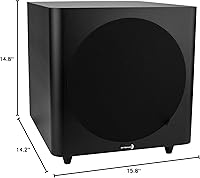
  • Dimensions: The cabinet measures 14-3/4″ in height, 14-3/16″ in width, and 15-3/4″ in depth, making it compact enough for placement in small rooms or under furniture.
  • Weight: The complete unit weighs 32.9 pounds, reflecting the solid wood cabinet construction and internally mounted amplifier assembly.
  • Power Requirement: The subwoofer requires a standard 120 VAC, 60 Hz power connection and is intended for use in North American electrical environments.
  • Connectivity: All signal connections are wired only — there is no Bluetooth, Wi-Fi, or any other wireless transmission technology included or supported.
  • Surround Config: The SUB-1000 is compatible with 5.1 surround sound configurations when used alongside a capable AV receiver and five-channel speaker arrangement.
  • Warranty: Dayton Audio provides a limited warranty with the subwoofer; buyers should confirm the current warranty duration and claim process directly with the manufacturer or authorized retailer.

Related Reviews
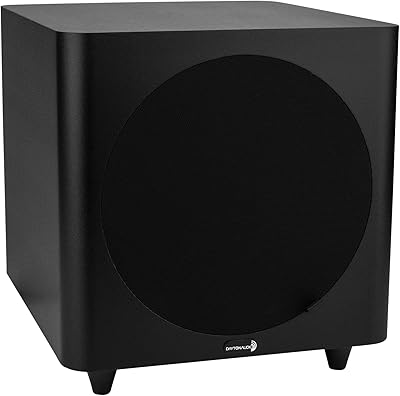
Dayton Audio SUB-800 8″ Powered Subwoofer
78%
83%
Bass Quality
91%
Value for Money
78%
Build Quality
89%
Setup & Ease of Use
61%
Auto On/Off Reliability
More
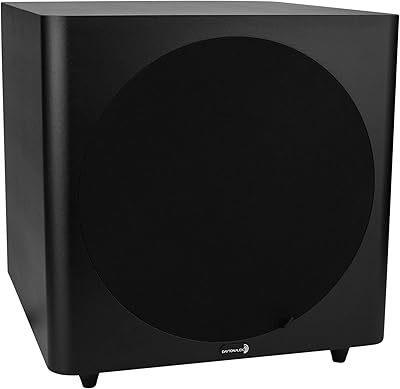
Dayton Audio SUB-1200 12″ Powered Subwoofer
79%
91%
Value for Money
74%
Bass Performance
78%
Build Quality
93%
Ease of Setup
67%
Amplifier Power
More
Dayton Audio SUB-1500 15-inch Powered Subwoofer
75%
88%
Bass Output & Depth
63%
Amplifier Power
91%
Value for Money
74%
Build Quality
86%
Setup & Installation
More
Acoustic Audio PSW400-10 10-Inch Powered Subwoofer
85%
91%
Bass Performance
88%
Ease of Setup
85%
Sound Quality
92%
Value for Money
87%
Build Quality
More
Polk Audio PSW10 10-inch Powered Subwoofer
75%
78%
Bass Performance
93%
Ease of Setup
67%
Build Quality
84%
Value for Money
72%
Room Suitability
More
Q Power QBOMB10S 10″ Sealed Subwoofer Enclosure
80%
83%
Build Quality
88%
Value for Money
79%
Bass Accuracy
91%
Ease of Installation
82%
Finish & Aesthetics
More
Rockville RTB10A 10″ Powered Subwoofer
83%
91%
Sound Quality
88%
Bass Performance
75%
Ease of Installation
86%
Build Quality
82%
Durability
More
Klipsch SPL-100 10″ Powered Subwoofer
80%
93%
Bass Output & Impact
88%
Bass Clarity & Accuracy
91%
Build Quality
86%
Placement Flexibility
84%
System Integration
More
Dayton Audio APA150
Dayton Audio APA150
81%
88%
Sound Quality
83%
Build Quality
91%
Value for Money
89%
Noise Floor & Fan Operation
61%
Crossover Precision
More
Rockville Bass Blaster 10
77%
78%
Bass Performance
83%
Build Quality
76%
Amplifier & Power Delivery
81%
Tuning & Customization
87%
Connectivity & Compatibility
More

FAQ

Yes, and this is actually one of the SUB-1000's practical strengths. It accepts speaker-level inputs directly from your receiver's speaker terminals, so you don't need a dedicated subwoofer output or RCA pre-out to make it work. Just run speaker wire from your receiver to the sub's speaker-level input, and you're connected.

Realistically, the Dayton Audio SUB-1000 10″ Powered Subwoofer performs best in rooms up to roughly 150 to 200 square feet. In that range, it fills the space with satisfying bass at normal to moderately loud volumes. Push it into a larger open-plan room and you will notice it struggling to maintain the same presence, especially during demanding movie scenes or high-volume music.

For most buyers, the auto-on circuit works consistently and is one of the more appreciated features. It wakes up quickly when music or audio starts playing and goes into standby reliably afterward. The one caveat is at very low volume levels — a handful of users report that whisper-quiet signal levels occasionally don't trigger it, so you may need to nudge the volume slightly if that happens.

If your soundbar has a dedicated subwoofer RCA output, yes — just connect it to the SUB-1000's RCA line-level input and set the crossover on the sub to its highest point, since the soundbar will typically handle crossover duties itself. Not all soundbars have this output, so check your soundbar's specs before assuming it will work.

Not at all — in fact, carpet can actually help by slightly damping resonance between the port and the floor. The flared port opening is designed with enough clearance that airflow is not meaningfully restricted by typical carpet pile. On hard floors it works fine too, though placing it on a low-pile rug can sometimes help reduce floor-transmitted vibration in apartments.

It takes a bit of patience since the crossover knob has no numbered markings or detents — it's a smooth rotary control you dial by ear. A practical approach is to start the crossover at the upper range of your bookshelf speaker's stated frequency response, then adjust incrementally while playing familiar music until the bass feels integrated rather than separate. A free SPL meter app on your phone can help if you want to be more precise.

Most users report no audible hum or noise under normal conditions. If you do experience a low-level hum, it's almost always a ground loop issue caused by the cable or connection path between your receiver and the sub — not a defect in the unit itself. A basic RCA ground loop isolator, which costs just a few dollars, typically resolves it completely.

The SUB-1200 adds a 12-inch driver and more amplifier power, which translates to noticeably better output in larger rooms and more headroom at high volumes. If your room is under 200 square feet and you listen at moderate levels, the extra cost for the SUB-1200 probably isn't necessary. But if you're on the boundary — a medium-sized living room or a habit of cranking the volume during movies — the 1200 is worth serious consideration.

The amplifier plate running warm during extended listening is normal for class A/B amplifier designs in this category and is not a defect by itself. What matters is that it has adequate ventilation around it — don't press it flush against a wall or enclose it in a cabinet with no airflow. Give it a few inches of clearance around the amp panel and it should operate within safe thermal limits for typical use.

The sub itself does not come bundled with cables, so you will need to pick up the appropriate connection based on your setup. If your receiver has a subwoofer pre-out, a standard single RCA cable is all you need. If you're using the speaker-level input instead, a length of regular speaker wire will do the job. Neither type is expensive, and both are widely available at any electronics retailer.