Overview

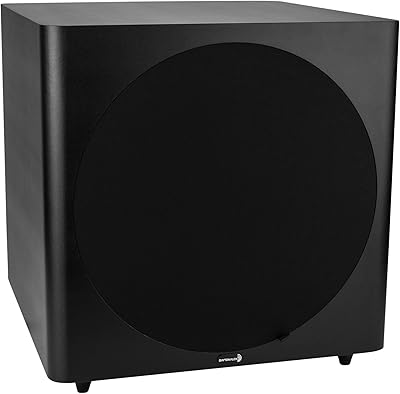
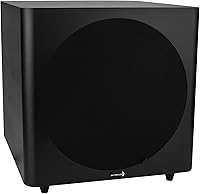
The Dayton Audio SUB-1200 12″ Powered Subwoofer has been a quiet staple in the budget home theater world since its introduction in 2011 — and it's still around for good reason. Sitting between Dayton Audio's 10-inch and 15-inch models, it targets buyers who want a meaningful bass upgrade without spending a lot. The cabinet uses a downward-firing ported design, which means bass energy is directed toward the floor and dispersed outward rather than firing directly at the listener. In practice, this tends to produce a diffuse, room-filling low end that blends naturally with smaller speakers rather than calling attention to itself.
Features & Benefits

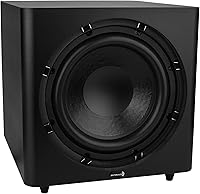
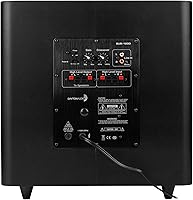
The 12-inch long-throw woofer is driven by an 80-watt onboard amplifier — modest on paper, but capable enough for typical living room or bedroom use. A continuously variable crossover lets you dial in the handoff point anywhere between 40 and 140 Hz, giving real flexibility when pairing with bookshelf or satellite speakers. The flared port reduces the audible chuffing that plagues cheaper subs at higher volumes. RCA line-level inputs make connection to an AV receiver straightforward, and the auto-on feature kicks in whenever a signal is detected, so you never have to remember to power it manually. The whole cabinet fits within roughly a 17-inch square footprint.

Best For

This 12-inch subwoofer suits small to medium rooms best — think a bedroom, a studio apartment living area, or a modest dedicated media room. If you're upgrading from a soundbar or a basic 2.0 stereo setup, the improvement in bass presence will be immediately noticeable. It pairs especially well with bookshelf speakers that roll off below 80 Hz. Buyers chasing truly deep, subsonic output for large spaces should look elsewhere — perhaps at the BIC America F12 or a higher-powered sealed design. But for someone who wants controlled low-end without a complicated setup, Dayton Audio's entry-level sub handles the job cleanly.

User Feedback

Across several hundred owner reviews, the SUB-1200 holds a strong 4.4-star average, and the feedback is refreshingly consistent. Most buyers highlight easy setup and a build quality that feels solid for the price. Movie dialogue and mid-bass punch get frequent praise. On the critical side, some owners note the knobs feel imprecise at lower dial positions, making fine adjustments trickier than expected. A few users also mention the amplifier runs warm during long sessions, so avoid enclosing it in tight cabinetry without airflow. What stands out most, though, is long-term reliability — buyers who've owned this sub for several years routinely report zero problems, which speaks well of the brand.

Pros

  • Delivers a meaningful, room-filling bass upgrade over soundbars and 2.0 stereo setups at a modest price point.
  • The variable crossover spanning 40 to 140 Hz makes pairing with a wide variety of bookshelf and satellite speakers genuinely flexible.
  • Setup takes under ten minutes — one RCA cable and two dial adjustments and it is ready to go.
  • The auto-on feature works reliably, activating within seconds of detecting a signal and powering down after idle.
  • Long-term owners consistently report years of trouble-free operation, which is uncommon at this price tier.
  • The compact square cabinet fits neatly under most TV stands without dominating the room visually.
  • The downward-firing ported design keeps audible port noise low at moderate listening levels.
  • Neutral matte black finish blends with virtually any furniture or decor without drawing attention to itself.
  • Mid-bass punch for action films, TV content, and mainstream music is consistently strong relative to cost.
  • Solid wood cabinet construction feels durable and resists cosmetic wear over time.

Cons

  • Sub-30 Hz extension is noticeably limited — deep cinematic LFE content and bass-heavy electronic music expose this ceiling quickly.
  • The amplifier runs warm during extended sessions, requiring thoughtful placement away from enclosed or poorly ventilated spaces.
  • Volume and crossover knobs lack precision at lower dial positions, making fine adjustments more guesswork than control.
  • Only RCA line-level inputs are provided, which creates a compatibility gap for older amplifiers without a preamp output.
  • Output headroom in larger or open-plan rooms is insufficient — the sub audibly compresses when pushed hard.
  • No speaker-level inputs limits flexibility for buyers integrating the sub into non-standard or legacy system configurations.
  • Included documentation offers no placement guidance or crossover-matching reference, leaving first-time buyers without a useful starting point.
  • Minor panel resonance has been reported at higher volumes, suggesting internal damping is kept to a minimum.
  • The auto-off circuit does not trigger correctly in setups where the source component outputs a continuous low-level signal.
  • No wireless connectivity means placement is constrained by cable routing, which can be limiting in some room layouts.

Ratings

The Dayton Audio SUB-1200 12″ Powered Subwoofer has been scrutinized by our AI rating system across hundreds of verified global buyer reviews, with spam, incentivized posts, and bot activity actively filtered out before scoring. The result is an honest breakdown that reflects both what this 12-inch subwoofer genuinely does well and where real-world owners have run into frustration. Scores are category-specific and weighted by how much each factor actually influences a typical buying decision.
Value for Money
91%
Buyers repeatedly describe the SUB-1200 as one of the best returns on investment in its price bracket. For someone stepping up from a soundbar or a TV's built-in speakers, the improvement in bass presence feels disproportionately large relative to the cost.
At this price point, corners are cut somewhere — and here it's raw power and deep-frequency extension. If your expectations are shaped by premium subs costing two or three times more, the value equation looks considerably less impressive.
Bass Performance
74%
26%
For everyday content like action movies, TV dramas, and mainstream music, the SUB-1200 delivers a full, warm low end that fills a small to medium room convincingly. Mid-bass punch — think car chases, explosions, and kick drums — is where it earns the most consistent praise.
Sub-30 Hz extension is genuinely limited. Owners who tested it with bass-heavy electronic music or dedicated home theater calibration tones noticed the floor drops out earlier than specs imply. It is not the right tool for reproducing truly deep cinematic LFE content at high volume.
Build Quality
78%
22%
The wood cabinet feels sturdy for the price, and the textured black vinyl finish holds up well over time without peeling or scuffing easily. Several long-term owners note it still looks and functions like new after years of regular use.
The cabinet joinery and internal bracing are functional but unremarkable. At higher volumes, a small number of owners reported minor panel resonance, suggesting the internal damping material is minimal — a known trade-off at this price tier.
Ease of Setup
93%
Virtually every reviewer comments on how fast the initial setup is. Plug in a single RCA cable from an AV receiver or stereo preamp, set the crossover dial roughly to match your main speakers, and the SUB-1200 is ready to go — no app, no calibration mic required.
The lack of speaker-level inputs (only RCA line-level) can be a minor obstacle for buyers connecting to older amplifiers or soundbars without a dedicated subwoofer output. It is a niche limitation, but it does come up in reviews.
Amplifier Power
67%
33%
The onboard 80-watt amplifier handles typical living room volumes without audible strain. For casual listeners who keep levels moderate, it performs consistently and without noticeable distortion in the mid-bass range.
Push it hard in a larger room and the amplifier's limits become apparent — dynamics compress and the low end loses texture. Several reviewers also noted the amp chassis runs noticeably warm during extended sessions, which warrants careful placement away from enclosed spaces.
Crossover Flexibility
76%
24%
The continuously variable crossover spanning 40 to 140 Hz is a genuine advantage over fixed-crossover budget alternatives. It allows meaningful tuning when pairing with a variety of bookshelf or satellite speakers with different rolloff points.
The physical knob lacks detents or markings precise enough for reliable fine-tuning. More than a few owners describe overshooting their target setting and struggling to return to it, which makes critical matching with specific speakers more trial-and-error than it should be.
Control Precision
58%
42%
The volume and crossover controls cover a useful range, and for most listeners who set them once and leave them alone, day-to-day operation is completely trouble-free. The auto-on feature further reduces the need to interact with controls at all.
Both knobs feel somewhat loose and are not well-suited to incremental adjustment. At the lower end of the volume dial especially, the channel between near-silence and noticeably loud is compressed into a small arc, making subtle level changes frustrating.
Noise & Distortion
72%
28%
At moderate listening levels, the SUB-1200 is impressively clean. The flared downward-firing port does a reasonable job of reducing the audible chuffing common in cheaper ported designs, and hiss at idle is low enough to be inaudible from normal seating distances.
When pushed toward the upper half of its volume range, port noise becomes more noticeable, particularly on sustained low-frequency tones. A small number of buyers also reported a faint amplifier hum in very quiet listening environments, though this appears to be a unit-variance issue rather than universal.
Room Integration
79%
21%
The downward-firing port and square cabinet profile help the sub blend into a room without creating an obvious localization point. In small to medium spaces, the bass energy distributes evenly enough that it genuinely feels like it's coming from the main speakers rather than a dedicated box.
In larger rooms or open-plan spaces, the 12-inch driver and 80-watt amp struggle to pressurize the space adequately. Placement also matters more than it might with a front-firing design — corners and wall boundaries make a bigger difference to perceived output level.
Long-Term Reliability
88%
This is one of the SUB-1200's quiet strengths. Owners who have run it daily for three or more years consistently report zero failures, no driver deterioration, and no amplifier issues. For a budget product, that kind of track record is not common.
There is limited data on failure rates beyond five or six years, and Dayton Audio's warranty support for older units can be inconsistent depending on the retailer. Buyers should keep their purchase documentation in case a warranty claim is needed later.
Aesthetics & Footprint
82%
18%
The compact square cabinet — just under 17 inches on each side — tucks unobtrusively beneath a TV stand or beside a media console without dominating the room. The matte black vinyl finish is neutral enough to disappear against most furniture.
The square shape, while space-efficient, is not particularly refined-looking compared to the curved or gloss-finished cabinets found on competing subs at slightly higher price points. It reads clearly as a budget product up close.
Auto-On Responsiveness
81%
19%
The signal-sensing auto-on works reliably in most setups, waking the sub within a second or two of audio beginning and powering down after a reasonable idle period. For a dedicated media room setup, it removes one more thing to think about.
With some source components that output a low-level continuous signal, the sub stays on indefinitely rather than entering standby. It is not a common problem, but a handful of users in specific setups find the auto-off never triggers correctly.
Compatibility
83%
RCA line-level connectivity covers the vast majority of modern AV receivers, stereo integrated amps, and even some TVs with dedicated subwoofer outputs. The variable crossover extends its pairing range to both small bookshelf speakers and larger floorstanding models.
The absence of wireless capability and speaker-level inputs narrows compatibility with older or unconventional source components. Buyers with a legacy analog amplifier that has no preamp output will need an adapter or signal converter to make it work.
Packaging & Unboxing
77%
23%
The SUB-1200 arrives well-protected with dense foam inserts that have kept the cabinet in good condition through typical shipping handling. Setup materials are minimal and self-explanatory, which aligns well with the plug-and-play buyer this sub is designed for.
Documentation is sparse — no detailed placement guide or crossover-matching reference is included. First-time subwoofer buyers who are unsure how to integrate a sub into their system are largely left to online resources, which is a missed opportunity for Dayton Audio.

Suitable for:

The Dayton Audio SUB-1200 12″ Powered Subwoofer is a strong fit for first-time subwoofer buyers who are upgrading from a soundbar or a basic stereo setup and want a noticeable improvement in bass without a steep learning curve or a large outlay. It works particularly well in small to medium-sized rooms — a bedroom, a den, or a compact living space — where a 15-inch driver would be overkill both physically and acoustically. Listeners who pair it with bookshelf or satellite speakers that naturally roll off around 80 Hz will find the crossover range flexible enough to achieve a clean, well-integrated blend. The plug-and-play nature of the setup makes it ideal for people who have no interest in calibration software or DSP tweaking — connect an RCA cable, set the dial, and it works. It also suits buyers who prioritize long-term reliability over cutting-edge features, since the SUB-1200 has a well-documented track record of running trouble-free for years.
Not suitable for:

The Dayton Audio SUB-1200 12″ Powered Subwoofer is not the right choice for buyers chasing genuinely deep, subsonic bass — the kind that pressurizes a room during a film's low-frequency effects track or reproduces the lowest octave of an electronic music production. In larger living rooms or open-plan spaces, the 80-watt amplifier and 12-inch driver simply lack the output headroom to fill the space convincingly at higher volumes. Dedicated home theater enthusiasts who already own a capable AV receiver with room correction and want a subwoofer that can keep pace should look at higher-powered alternatives like the BIC America F12 or the Polk Audio HTS 10. Buyers with older amplifiers that lack a dedicated preamp or subwoofer output may also run into compatibility friction, since only RCA line-level inputs are provided. And anyone who expects precise, tactile control over volume and crossover settings will find the physical knobs frustratingly imprecise for critical tuning work.
Specifications

  • Woofer Size: The driver is a 12-inch long-throw dynamic woofer designed to move a higher volume of air than standard-throw drivers of the same diameter.
  • Amplifier Power: An 80-watt onboard Class AB amplifier powers the driver, providing sufficient headroom for small to medium room use at moderate listening levels.
  • Frequency Response: The SUB-1200 is rated to reproduce frequencies from 30 Hz to 140 Hz, though real-world output below 35 Hz rolls off meaningfully in typical room conditions.
  • Crossover Range: The low-pass crossover is continuously variable from 40 Hz to 140 Hz at a 12 dB per octave slope, allowing flexible integration with a wide range of main speakers.
  • Cabinet Design: The enclosure uses a downward-firing ported design with a flared port opening, which helps reduce audible port turbulence at higher output levels.
  • Inputs: Connectivity is provided via a single RCA line-level input, compatible with the subwoofer preamp output found on most AV receivers and stereo integrated amplifiers.
  • Impedance: The woofer operates at 4 ohms, which is matched internally to the onboard amplifier and is not a user-configurable parameter.
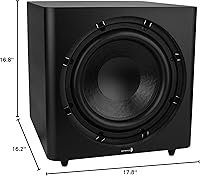
  • Dimensions: The cabinet measures 17.75″ deep, 16.68″ wide, and 16.75″ tall, including the plastic feet that lift it slightly off the floor.
  • Weight: The unit weighs 32.9 pounds, which is typical for a wood-cabinet 12-inch powered subwoofer and manageable for one person to position and reposition.
  • Cabinet Material: The enclosure is constructed from wood panels finished in a textured black vinyl wrap that resists light surface scuffs and blends with most media furniture.
  • Power Requirements: The amplifier runs on 120 VAC at 60 Hz, meaning it is designed for North American power standards and requires a standard three-prong outlet.
  • Auto-On Feature: A signal-sensing auto-on circuit activates the subwoofer when audio input is detected and powers the unit down after a period of signal absence.
  • Wireless: The SUB-1200 has no wireless connectivity of any kind — placement is entirely dependent on physical RCA cable routing from the source component.
  • Mounting Type: The subwoofer is designed exclusively for floor-standing use and is not rated or structurally intended for wall or shelf mounting.
  • Finish: The exterior is covered in a matte textured black vinyl, which is a common and durable finish choice for budget-tier subwoofer cabinets.
  • Warranty: Dayton Audio provides a full manufacturer warranty on the SUB-1200, though coverage duration and service terms should be confirmed with the retailer at the point of purchase.
  • Phase Control: A phase switch allows the listener to align the subwoofer's output phase with that of the main speakers, helping to avoid bass cancellation at the crossover point.
  • Surround Config: The subwoofer operates as a single monaural channel (1.0 configuration), as is standard for virtually all standalone powered subwoofers in this category.

Related Reviews
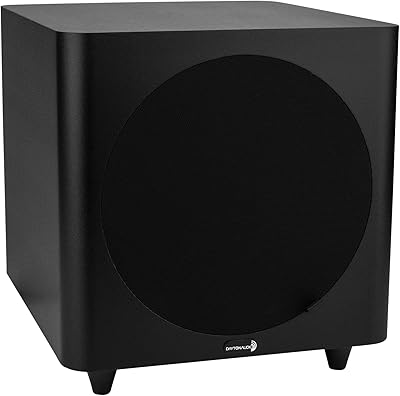
Dayton Audio SUB-1000 10″ Powered Subwoofer
79%
83%
Bass Output & Extension
91%
Value for Money
93%
Ease of Setup
76%
Build Quality
62%
Room Size Suitability
More
Dayton Audio SUB-800 8″ Powered Subwoofer
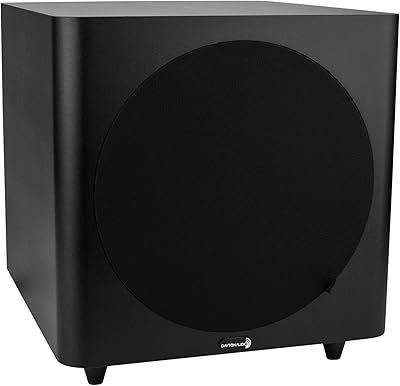
78%
83%
Bass Quality
91%
Value for Money
78%
Build Quality
89%
Setup & Ease of Use
61%
Auto On/Off Reliability
More
Dayton Audio SUB-1500 15-inch Powered Subwoofer
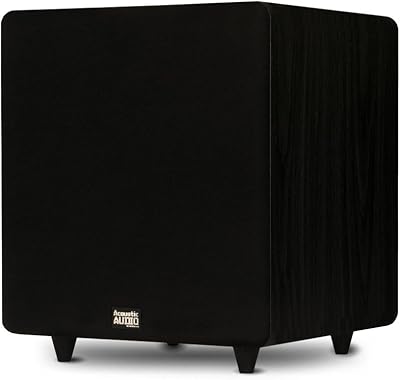
75%
88%
Bass Output & Depth
63%
Amplifier Power
91%
Value for Money
74%
Build Quality
86%
Setup & Installation
More
Acoustic Audio PSW500-12 Powered 12-Inch LFE Subwoofer
82%
92%
Value for Money
88%
Bass Performance
85%
Ease of Setup
80%
Sound Quality
77%
Build Quality
More
BOSS Audio B12ES 12-Inch Powered Car Subwoofer
72%
88%
Ease of Installation
79%
Bass Output & Impact
83%
Value for Money
63%
Build Quality & Materials
81%
Remote Bass Control Usability
More
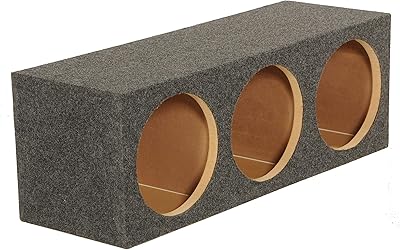
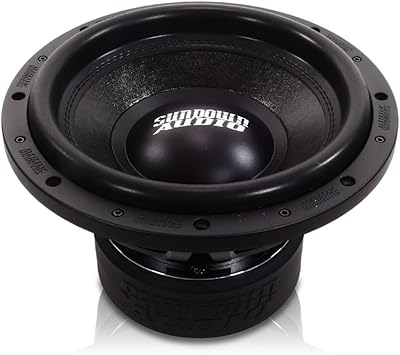
Q Power HD12 12″ Sealed Triple Car Audio Subwoofer Box Enclosure
85%
88%
Bass Performance
91%
Build Quality
89%
Durability
86%
Sound Clarity
78%
Ease of Installation
More
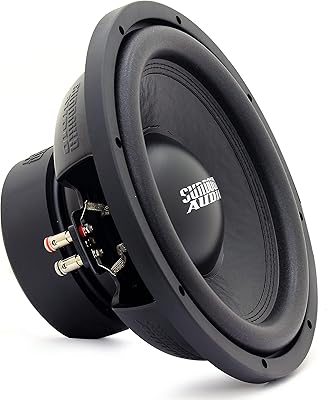
Sundown Audio SA-12 V.2 D4 12″ Subwoofer
86%
94%
Bass Performance
90%
Build Quality
88%
Value for Money
72%
Ease of Installation
92%
Durability
More
Sundown Audio E-12 V.3 D4 12″ 500W RMS Dual 4-Ohm EV.3 Series Subwoofer
88%
94%
Bass Performance
89%
Durability & Build Quality
90%
Power Handling
85%
Ease of Installation
88%
Sound Clarity & Distortion
More
Infinity Primus 1200 12″ Subwoofer
85%
89%
Bass Performance
84%
Sound Clarity at High Volume
91%
Power Handling
85%
Build Quality
70%
Ease of Installation
More
JBL SUBBP12AM 12-inch Powered Subwoofer
75%
86%
Bass Output Quality
81%
Ease of Installation
78%
Amplifier Performance
67%
Long-Term Durability
73%
Value for Money
More

FAQ

It works with any AV receiver or stereo amplifier that has a dedicated subwoofer preamp output — which is nearly every modern unit on the market. You just run a single RCA cable from that output to the sub's input, set the crossover dial, and you are done. Brand does not matter at all here.

Unfortunately the SUB-1200 only accepts RCA line-level input, so if your amplifier has no preamp or subwoofer output, a direct connection isn't straightforward. Your options are a line-level converter that taps your speaker terminals or upgrading to a receiver with a dedicated sub output. It's one of the more common compatibility questions for this model.

Realistically, it's best in a small to medium room — somewhere in the range of 150 to 250 square feet. In a large open-plan living space, the 80-watt amplifier starts to run out of headroom before the room is properly pressurized. If your space is larger than that, a higher-powered sub will serve you better.

The rated low-end is 30 Hz, but in practice, output below about 35 Hz drops off noticeably in a typical room without boundary reinforcement. For movies and most music, that's perfectly adequate. If you specifically want to feel the very lowest frequencies in film soundtracks or electronic music, this sub will leave some of that on the table.

Yes, it's a known characteristic of the onboard amplifier and not a sign of a defect under normal use. That said, you should make sure the cabinet isn't tucked inside a closed entertainment center or pressed against a wall without any air gap on the sides. Give it a few inches of breathing room and it should stay within safe operating temperatures.

It works perfectly well in a two-channel stereo system, provided your stereo integrated amplifier or preamp has a dedicated subwoofer or LFE output. Many modern stereo amps include one specifically for this purpose. If yours doesn't, a high-level speaker-to-RCA adapter can bridge the gap, though that adds a step to the setup.

Start by setting the crossover frequency 10 to 20 Hz above your bookshelf speakers' rated low-frequency limit — so if they're rated to 80 Hz, try starting around 90 to 100 Hz on the dial. Then use the phase switch to find the setting that produces the fullest bass at your listening position. Small adjustments to subwoofer placement, particularly moving it closer to a wall, can also make a significant difference.

Honestly, precision is not a strong point of the physical controls. The knobs cover their full range in less than a full rotation, which makes small incremental adjustments tricky — particularly at the lower end of the volume dial where a slight turn can make a bigger change than you expected. Most owners settle on a position that works and leave it alone rather than tweaking regularly.

When the sub detects an audio signal above a certain threshold, it powers on automatically. After a period of silence — typically a few minutes — it goes back into standby. You can usually override this by switching the unit to a manual-on mode if available, though the exact implementation varies by unit revision. A small number of users have found that certain source components output a constant low-level signal that keeps the sub from ever entering standby.

It occupies a very similar market position to the BIC America F12 and lower-tier Polk models — all three target first-time buyers who want a significant bass upgrade without a large investment. The BIC F12 has a slight edge in raw output and deep extension due to its higher wattage, while Polk subs often come with a more polished fit and finish. Dayton Audio's entry-level sub tends to win on price-to-performance at the moment of purchase, and its reliability record over several years is a genuine differentiator.

Where to Buy