Overview

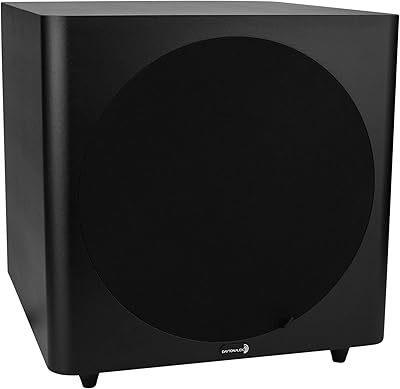
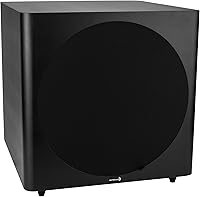
The Dayton Audio SUB-1500 15-inch Powered Subwoofer is built for one purpose: filling a large room with serious, authoritative bass. At a time when most powered subs top out at 10 or 12 inches, a 15-inch driver puts this unit in a different class — one typically reserved for far pricier options. The cabinet is a substantial floor-standing box wrapped in textured black vinyl, which looks tidy without drawing attention to itself. Fair warning: this thing is genuinely big and heavy. If you were hoping to tuck a subwoofer discreetly behind a sofa, this Dayton Audio sub will require its own dedicated real estate.
Features & Benefits

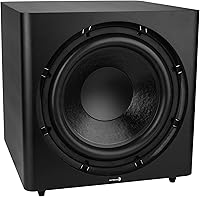
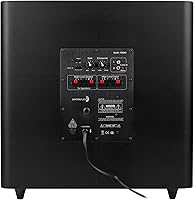
The 15-inch long-throw woofer is the obvious headline, and it delivers in terms of low-frequency reach. Paired with a downward-firing flared port, the design channels bass energy toward the floor, keeping output controlled rather than boomy. The built-in 80-watt amplifier handles most listening rooms well, though buyers expecting concert-level output in very large spaces may find the headroom tighter than ideal. Connectivity is flexible: both RCA line-level and speaker-level inputs are included, and a continuously variable crossover lets you dial in the blend with your main speakers anywhere from 40 to 140 Hz. Auto on/off and a phase switch round out the practical everyday usability.

Best For

This 15-inch subwoofer makes the most sense in a dedicated home theater room or a large open-plan living space where a smaller driver simply cannot move enough air. It fits naturally into 5.1 surround setups where deep, cinematic bass is the priority — think action films, sci-fi, and anything with a demanding low-end soundtrack. It also appeals to buyers who want a big-driver sub without paying premium-brand prices. Stepping up from an 8-inch or 10-inch unit, the SUB-1500 delivers a noticeable, tangible difference in bass presence. Audiophile purists chasing pinpoint accuracy may look elsewhere, but home theater enthusiasts will find it hits the mark.

User Feedback

Owners consistently praise the depth and output volume relative to what this Dayton Audio sub costs, with many noting it outperforms expectations in rooms where smaller subs fell flat. Setup earns good marks too — the dual-input flexibility means it drops into most existing systems without complication. On the critical side, a recurring theme is that the 80-watt amplifier can feel underpowered when pushed hard, and some users report mild cabinet resonance at very high volume levels. Long-term reliability appears solid based on multi-year ownership reports. Against competing 15-inch options at similar price points, the majority of buyers consider it a worthwhile, well-balanced investment.

Pros

  • The 15-inch driver delivers genuine, room-filling bass depth that smaller subs at this price simply cannot match.
  • Both RCA line-level and speaker-level inputs mean it integrates cleanly with almost any receiver or amplifier.
  • The continuously variable crossover gives you real tuning flexibility when blending with different main speakers.
  • Long-term reliability reports from multi-year owners are broadly positive with few hardware failures under normal use.
  • The downward-firing ported design keeps bass output controlled rather than bloated or one-note.
  • Auto on/off works reliably in standard home theater setups, so daily operation requires zero manual intervention.
  • For the driver size you are getting, the price-to-performance ratio is difficult to beat in this category.
  • Buyers upgrading from an 8 or 10-inch sub consistently describe the improvement as immediately noticeable.

Cons

  • The 80-watt amplifier runs out of headroom noticeably when pushed hard in larger rooms or at high volumes.
  • Cabinet resonance and mild port noise have been reported by users who regularly listen at elevated output levels.
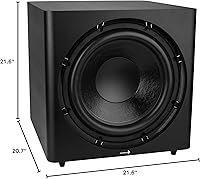
  • At nearly 20 inches cubed, this sub requires significant dedicated floor space that not every room can accommodate.
  • The included documentation is sparse, making crossover and phase calibration frustrating for first-time sub owners.
  • The binary phase switch covers most scenarios but limits fine-tuning compared to a variable phase control.
  • The textured vinyl finish scuffs during routine repositioning and does not hold up well to frequent moves.
  • The auto-on circuit can stay permanently active in systems that output a low-level standby signal from the receiver.
  • Very deep sub-bass extension below 25 Hz is room-dependent and benefits heavily from corner placement to perform well.

Ratings

The Dayton Audio SUB-1500 15-inch Powered Subwoofer has been scored across 12 performance and usability categories by our AI system, which analyzed verified global owner reviews while actively filtering out incentivized, bot-generated, and spam submissions. The result is an honest, nuanced snapshot that captures what real buyers love about this sub — and where a few genuine frustrations keep showing up.
Bass Output & Depth
88%
Owners consistently describe the low-end reach as genuinely impressive for the price tier, with many noting it handles movie soundtracks and action sequences in ways their previous 10 or 12-inch subs simply could not. The 15-inch driver moves a lot of air, and in large rooms that difference is felt physically, not just heard.
A small contingent of users found the very lowest frequencies — below 25 Hz — less prominent than expected, suggesting the driver prioritizes punch over sub-bass extension. In acoustically treated rooms with high expectations, this limitation becomes more noticeable.
Amplifier Power
63%
37%
For average-sized home theater rooms at moderate listening levels, the 80-watt amplifier performs adequately, keeping up with typical movie and TV content without obvious strain. Buyers who run the sub at conversational volumes report a clean, controlled sound.
This is the category where criticism clusters most consistently. Users with larger rooms or who like to push volume report the amp running out of headroom noticeably, sometimes causing the auto-protection circuit to engage. Several buyers wished Dayton had paired this driver with a more powerful amplifier.
Value for Money
91%
The price-to-driver-size ratio is the single most praised aspect across hundreds of reviews. Buyers repeatedly point out that getting a 15-inch powered sub at this price point from a reputable audio brand is genuinely difficult to match with competing options.
A few buyers who expected performance equivalent to higher-end 15-inch subs at double the price were disappointed, though most analysts would argue those expectations were unrealistic given the positioning. The value proposition holds firmly within its own tier.
Build Quality
74%
26%
The cabinet feels solid and well-braced for its price class, and the textured black vinyl wrap gives it a cleaner, more finished look than budget competitors with bare MDF corners. Most long-term owners report no structural issues after years of use.
The finish can show scuffs from routine repositioning, and a handful of users noted that cabinet flex under heavy bass at high volumes produces a faint rattle. It does not feel like a boutique build, but it holds together reliably under normal use conditions.
Setup & Installation
86%
The combination of RCA line-level and speaker-level inputs means this sub integrates with almost any receiver or amplifier without adapters or workarounds. Buyers with older systems lacking a dedicated subwoofer output specifically called out this flexibility as a deciding factor.
The included documentation is sparse, and first-time subwoofer owners occasionally struggled with crossover and phase calibration without a reference guide. Dayton assumes a baseline of AV familiarity that not every buyer has.
Crossover Control
79%
21%
The continuously variable crossover spanning 40 to 140 Hz gives users meaningful tuning flexibility when blending with bookshelf speakers or floor-standers with different roll-off characteristics. Enthusiasts appreciate having a real dial rather than a fixed preset.
Without calibration software or an SPL meter, achieving an optimal crossover blend requires some patience and trial-and-error. A few buyers noted that the crossover knob feels slightly imprecise at lower frequency settings, making fine adjustments fiddly.
Cabinet Resonance & Port Noise
61%
39%
At moderate listening volumes the port behaves cleanly, with no audible chuffing or air turbulence reported under typical home theater use cases like streaming films or gaming.
When pushed to higher output levels, a notable segment of users reported port noise and cabinet resonance becoming audible, particularly with bass-heavy electronic music or reference-level movie playback. This appears to be an inherent limitation of the enclosure tuning at the limits of the amplifier.
Size & Footprint
58%
42%
Buyers who specifically needed a high-output sub and had the floor space for it appreciated that the nearly 20-inch cube footprint translates directly into bass capability. It fits naturally in the corner of a dedicated theater room without looking out of place.
In smaller apartments or living rooms with limited floor space, this sub is simply impractical. Multiple buyers mentioned underestimating its physical presence before delivery, and a few returned it purely on size grounds despite being satisfied with the sound.
Auto On/Off Reliability
72%
28%
The auto-sensing power circuit works reliably in standard home theater configurations, waking up promptly when signal is detected and powering down after a reasonable idle period without requiring manual intervention.
In systems where the sub receives a very low-level standby signal from the receiver, the auto-on circuit occasionally stays active continuously rather than cycling off. A small number of users resorted to plugging it into a switched power strip as a workaround.
Low-Frequency Extension
71%
29%
The downward-firing ported design helps the SUB-1500 reach convincingly into the 20s Hz range under favorable room conditions, which is what gives it that chest-impact quality on cinematic content that smaller sealed subs struggle to replicate.
Actual usable extension is room-dependent and benefits significantly from corner placement. In open-plan spaces with acoustically absorptive surfaces, some of the low-end presence dissipates and the sub sounds less authoritative than in a more contained room.
Long-Term Reliability
81%
19%
Multi-year ownership reports are broadly positive, with the amplifier module appearing to be the most durable component. Several buyers noted their unit had been running continuously for three or more years without failure or degraded performance.
A small but recurring cluster of reviews mentions amplifier board failures after extended use at high output levels, which aligns with the general concern about the amp being conservatively rated for the driver size. Out-of-warranty repair options are limited.
Phase & Integration Accuracy
76%
24%
The inclusion of a phase switch — rather than a continuous phase control — covers the two most common integration scenarios effectively. In most real-world setups, toggling between 0 and 180 degrees is sufficient to lock the sub in with the main speakers.
Purists and home theater calibration enthusiasts would prefer a variable phase dial, which allows finer adjustment when the crossover point lands in an acoustically awkward frequency region. The binary switch is practical but represents a compromise in flexibility.

Suitable for:

The Dayton Audio SUB-1500 15-inch Powered Subwoofer is built for home theater enthusiasts who have the space to let a large sub do its job properly. If your living room or dedicated theater room runs on the larger side — think open-plan spaces or rooms where a 10 or 12-inch sub always felt like it was working too hard — this is where the 15-inch driver genuinely pays off. Movie lovers who want to feel action sequences, not just hear them, will find the low-end output satisfying at normal to moderately high listening levels. It also fits buyers upgrading from a compact entry-level sub who want a meaningful, noticeable step up without crossing into premium brand pricing. The dual-input design makes it easy to drop into almost any existing 5.1 receiver setup, whether you have a dedicated subwoofer output or only speaker-level connections available.
Not suitable for:

The Dayton Audio SUB-1500 15-inch Powered Subwoofer is a poor fit for anyone working with limited floor space or living in an apartment where physical size is a genuine constraint. At nearly 20 inches in each dimension and weighing close to 33 pounds, it demands dedicated real estate — buyers who discovered this only after delivery make up a recurring theme in return reviews. If you regularly push your system to reference or near-reference listening levels in a large room, the 80-watt amplifier will hit its ceiling and you may find the output falls short of your expectations. Audiophiles chasing tight, precise, low-distortion bass for two-channel music listening will likely find better-suited options from brands with stronger engineering pedigrees in that niche. Similarly, anyone needing a discreet or aesthetically integrated sub for a modern minimalist room may struggle to place this unit without it dominating the visual space.
Specifications

  • Woofer Size: The subwoofer uses a 15-inch long-throw dynamic driver designed to move significant air volume for deep, impactful low-frequency reproduction.
  • Enclosure Type: The cabinet uses a downward-firing ported design with a flared port opening directed toward the floor to reduce turbulence and control bass output.
  • Amplifier Power: An internal 80-watt amplifier powers the driver, providing adequate headroom for average-sized home theater rooms at moderate to moderately high listening levels.
  • Frequency Response: The SUB-1500 is engineered for low-frequency extension, with usable output reaching into the deep bass region suited for cinematic and surround sound content.
  • Inputs: Connectivity includes both RCA line-level inputs and speaker-level inputs, allowing integration with virtually any receiver, amplifier, or AV processor.
  • Output: A speaker-level pass-through output is included, enabling connection to main speakers downstream of the subwoofer in systems without a dedicated amplifier output.
  • Crossover Control: The built-in low-pass crossover is continuously variable from 40 Hz to 140 Hz at a 12 dB-per-octave slope, allowing precise blending with main speakers of varying sizes.
  • Phase Switch: A two-position phase switch (0 and 180 degrees) is provided to help align the subwoofer's output timing with the main speakers for a coherent, integrated soundstage.
  • Auto On/Off: The unit includes an automatic signal-sensing power circuit that activates when an audio signal is detected and enters standby after a period of signal absence.
  • Finish: The exterior cabinet is wrapped in textured black vinyl, providing a neutral, unobtrusive appearance compatible with most home theater decor.
  • Dimensions: The cabinet measures 19.75″ deep by 19.24″ wide by 19.75″ tall, making it one of the larger floor-standing subwoofer enclosures in its price class.
  • Weight: The unit weighs 32.9 pounds, requiring careful handling during placement and repositioning — a two-person lift is advisable for initial installation.
  • Power Requirements: The SUB-1500 operates on standard North American 120 VAC at 60 Hz via a corded electric connection, and is not compatible with international voltages without a step-down transformer.
  • Surround Config: The subwoofer is designed for use in 5.1 and similar multi-channel surround sound configurations typical of home theater installations.
  • Mounting Type: The unit is a floor-standing design and must be placed on a stable, level surface — wall or ceiling mounting is not supported and not recommended.
  • Warranty: Dayton Audio provides a full manufacturer warranty covering defects in materials and workmanship under normal use conditions.
  • Control Method: Operational controls including volume, crossover frequency, and phase are located on the unit itself; a remote is listed as the control method in product documentation.

Related Reviews
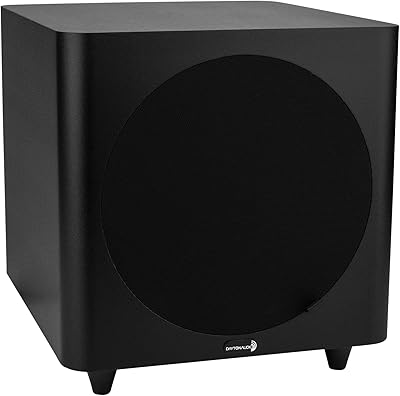
Dayton Audio SUB-1000 10″ Powered Subwoofer
79%
83%
Bass Output & Extension
91%
Value for Money
93%
Ease of Setup
76%
Build Quality
62%
Room Size Suitability
More
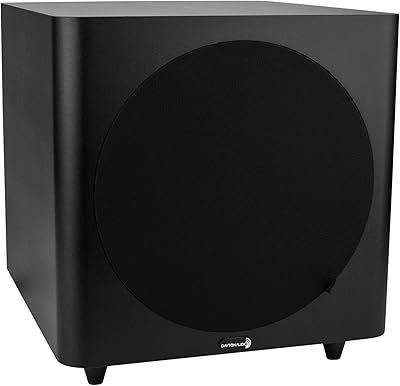
Dayton Audio SUB-800 8″ Powered Subwoofer
78%
83%
Bass Quality
91%
Value for Money
78%
Build Quality
89%
Setup & Ease of Use
61%
Auto On/Off Reliability
More
Dayton Audio SUB-1200 12″ Powered Subwoofer
79%
91%
Value for Money
74%
Bass Performance
78%
Build Quality
93%
Ease of Setup
67%
Amplifier Power
More
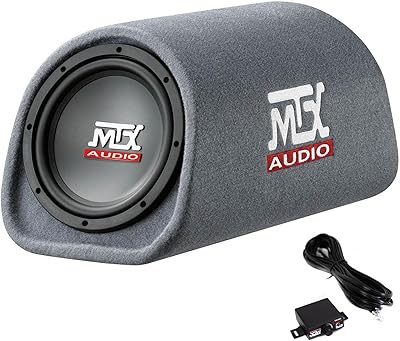
MTX Audio RT8PT 8-Inch Powered Subwoofer
83%
88%
Bass Performance
92%
Value for Money
89%
Build Quality
85%
Ease of Installation
80%
Sound Clarity
More
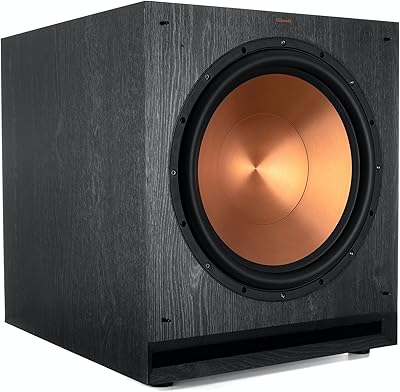
Klipsch SPL-150SW 15-inch Powered Subwoofer
79%
93%
Bass Output & Power
89%
Build Quality & Materials
84%
Placement Flexibility
88%
Amplifier Performance
71%
Integration & Tuning Controls
More
Acoustic Audio PSW400-10 10-Inch Powered Subwoofer
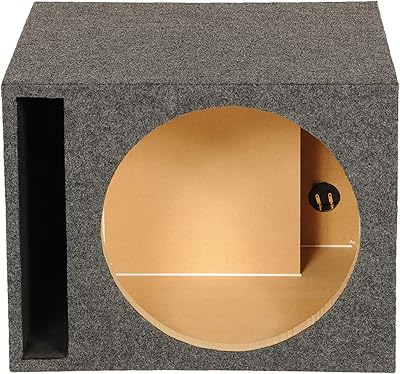
85%
91%
Bass Performance
88%
Ease of Setup
85%
Sound Quality
92%
Value for Money
87%
Build Quality
More
Planet Audio P10AW 10-Inch Amplified Car Subwoofer
76%
91%
Ease of Installation
83%
Value for Money
67%
Bass Output & Impact
74%
Build Quality
62%
Sound Clarity
More
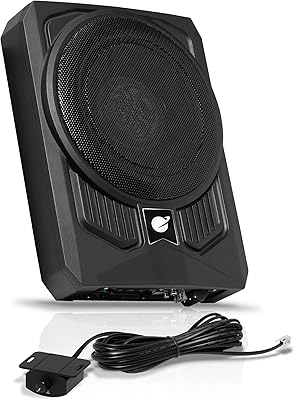
Q Power HD115 15-Inch Subwoofer Enclosure
74%
78%
Build Quality
74%
Carpet Finish
82%
Bass Output
86%
Value for Money
88%
Ease of Installation
More
Acoustic Audio PSW500-12 Powered 12-Inch LFE Subwoofer
82%
92%
Value for Money
88%
Bass Performance
85%
Ease of Setup
80%
Sound Quality
77%
Build Quality
More
Q Power QBASS Dual 15-Inch Subwoofer Enclosure
75%
83%
Build Quality
78%
Bass Output
86%
Value for Money
69%
Ease of Installation
61%
Driver Consistency
More

FAQ

Yes, it will. The SUB-1500 includes speaker-level inputs specifically for this situation. You connect it using the same speaker wire terminals your receiver already uses for your main speakers, so there is no need to upgrade your receiver just to add this sub.

It handles most large living rooms and dedicated home theater spaces well at moderate to moderately high listening levels. The 80-watt amplifier is the limiting factor — in very large or acoustically challenging rooms where you want to push volume hard, you may find it falls short of truly reference-level output. For typical residential use it performs solidly.

Not in most cases. The flared port is designed to work on both hard floors and carpet, and the cabinet feet provide enough clearance to allow airflow. Some users on very thick carpet prefer to place the sub on a thin board or tile to ensure the port breathes freely, though this is optional rather than essential.

You can, and many owners do. It handles bass-heavy music genres like hip-hop, electronic, and rock well. That said, its character leans toward the kind of deep, impactful bass that suits cinematic content. Two-channel audiophiles looking for tight, analytically precise bass reproduction may prefer a sealed subwoofer design instead.

For most setups it works without issue — the sub wakes up when your receiver starts sending signal and powers down after a quiet period. The one scenario where it can be inconsistent is when a receiver outputs a low-level background signal during standby, which can keep the sub permanently active. If that happens, plugging it into a switched power strip is a straightforward workaround.

The physical connection is simple, but dialing in the crossover and phase settings can take some patience if you are new to this. The manual is not especially detailed, so first-timers may want to look up a basic subwoofer calibration guide online. Starting with the crossover around 80 Hz and adjusting from there is a reasonable baseline for most systems.

A small number of long-term owners have reported amplifier board failures, particularly in units that were regularly driven hard near maximum output. The majority of multi-year owners report no issues under normal use conditions. Avoiding sustained high-volume operation appears to be the best way to preserve amplifier longevity.

The sub does not include interconnect cables in the box. You will need to supply your own RCA cable if using the line-level input, or standard speaker wire if using the speaker-level input. Both are inexpensive and widely available, so it is a minor inconvenience rather than a real cost concern.

It is not required, but it helps — especially with very deep bass frequencies below 30 Hz. Corner placement uses the room boundaries to reinforce output, which is a free acoustic advantage worth taking if your room layout allows it. In open-plan spaces without natural corners, some of the sub-bass presence is lost compared to a more enclosed room.

Buyers who have owned both consistently report that the step up in driver size produces a noticeable difference in bass depth and physical impact, particularly on movie content. The trade-off is physical size — the cabinet is significantly larger than most 12-inch competitors. If floor space is not a constraint and deep bass output is the priority, most buyers in this category favor the larger driver over a more powerful amplifier in a smaller box.