Overview

The DATO ARS330 1TB M.2 2230 NVMe SSD targets a surprisingly specific corner of the storage market — the short 2230 form factor, built for compact devices where a standard-length 2280 drive won't physically fit. DATO, a brand by DATOTEK, is still carving out its name in Western markets, so some skepticism is fair. What stands out, though, is that the drive pairs Gen 3x4 speeds with an integrated aluminum heatsink — rare at this price tier and form factor. Sequential performance looks solid on paper, but real-world sustained loads will tell the real story. The five-year limited warranty adds a layer of reassurance that most budget alternatives don't bother offering.
Features & Benefits

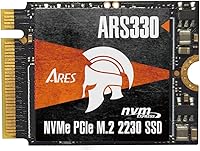
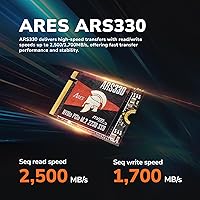
Running on a PCIe Gen3x4 NVMe 1.4 interface, the ARS330 reaches up to 2500 MB/s read and 1700 MB/s write — numbers that beat most SATA drives by a wide margin, though Gen 4 drives will pull ahead in sequential tasks. Where this compact NVMe drive does something genuinely useful is with its aluminum heatsink: sustained workloads in tight chassis typically cause thermal throttling, and having passive cooling baked in helps maintain consistent throughput. The single-sided layout is also worth noting — some compact devices only accept single-sided 2230 drives, making this a practical pick when thicker alternatives literally won't seat properly. Power draw is low, which helps battery life in laptops and tablets.

Best For

This 2230 SSD is an obvious candidate for Steam Deck or ROG Ally owners who want more storage without breaking the bank — the handheld gaming market is arguably where 2230 drives get the most attention. It's equally at home in Intel NUC-style mini PCs and similarly slotted compact desktops. Students or remote workers in slim ultrabooks that don't support Gen 4 will find the speed jump over an aging SATA drive noticeable for everyday tasks. Video editors working on moderate projects will appreciate the faster scratch-disk behavior. It also makes a sensible OEM replacement when a factory drive fails or simply runs out of space.

User Feedback

With a 4.4-star average across over 300 ratings, the ARS330 is performing well for a relatively new brand. Buyers consistently praise how straightforward the installation is and report real, tangible speed improvements coming from older or slower drives. The heatsink gets called out as a practical addition rather than a gimmick — users in mini PCs specifically note it keeps temperatures in check during longer sessions. Criticism tends to be mild: some buyers express hesitation about choosing a lesser-known brand over WD or Samsung alternatives, and a small number report device-specific compatibility hiccups worth checking before purchasing. No widespread reliability concerns appear at this stage.

Pros

  • Up to 2500 MB/s read speed is a substantial jump over any SATA SSD in the same slot.
  • The integrated aluminum heatsink genuinely helps in tight chassis where thermal throttling is a real problem.
  • Single-sided design clears compatibility hurdles in devices that reject thicker double-sided drives.
  • A five-year limited warranty is unusually generous for a drive at this price point.
  • Low power draw makes it a considerate choice for laptops and tablets where battery life matters.
  • Straightforward installation — buyers with basic hardware experience report no friction getting it running.
  • The 1TB capacity hits a practical sweet spot for gaming handhelds, ultrabooks, and mini PCs.
  • Ranking in the top 100 of Internal Solid State Drives on Amazon suggests solid, consistent market reception.
  • Broad device compatibility covers desktops, laptops, tablets, and supported gaming consoles without special configuration.

Cons

  • DATOTEK is a relatively unknown brand in Western markets, which may give cautious buyers pause.
  • Gen 3 speeds are noticeably behind Gen 4 alternatives — buyers with compatible slots should compare carefully.
  • Real-world sustained write performance may fall short of the peak rated figures under continuous heavy loads.
  • Limited independent long-term reliability data available, given the drive only launched in early 2025.
  • Some users have flagged device-specific compatibility issues, so checking your hardware specs before buying is essential.
  • No DRAM cache is confirmed in the specs, which can affect random read/write performance in multitasking scenarios.
  • The 2230 form factor limits resale flexibility — it is only useful in a narrow range of compatible devices.
  • Community support and troubleshooting resources for this brand are thin compared to Samsung or WD equivalents.

Ratings

The DATO ARS330 1TB M.2 2230 NVMe SSD was scored by our AI after processing verified global buyer reviews, with spam, bot submissions, and incentivized feedback actively filtered out. Scores reflect how real users experienced this compact NVMe drive across installation, daily performance, thermal behavior, and long-term reliability. Both the genuine strengths and the recurring frustrations are weighted transparently into each category below.
Sequential Read Speed
83%
Buyers coming from SATA drives report a dramatically faster boot and app-launch experience after switching to the ARS330. Loading large game files on a Steam Deck or pulling data from a mini PC feels noticeably snappier, and most users doing everyday tasks hit speeds that genuinely impress at this price point.
The rated 2500 MB/s ceiling is a best-case figure that requires ideal queue depth conditions — real-world sequential reads in typical single-threaded workloads land lower. Users with Gen 4 slots who benchmarked both options noted the gap is tangible during large file transfers, even if it rarely matters for casual use.
Sustained Write Performance
71%
29%
For moderate workloads — copying a few game installs, writing a video project to scratch storage, or moving a large photo archive — the ARS330 handles sustained writes without obvious hesitation. Users editing 1080p footage or working with mid-size datasets report acceptable throughput consistency during typical sessions.
Under prolonged, back-to-back heavy writes, some buyers report speed dipping more noticeably than expected, likely linked to SLC cache exhaustion. Content creators working with large 4K file exports flagged this as a real limitation, and it reinforces that this drive is better suited to moderate rather than professional-grade sustained write demands.
Thermal Management
88%
The integrated aluminum heatsink is a genuine standout at this form factor and tier. Users running the drive in NUC-style mini PCs and compact gaming handhelds note that temperatures stay controlled during extended sessions, and throttling events that plagued previous drives in the same slot became noticeably less frequent after switching to the ARS330.
In very tight enclosures where there is almost no airflow at all — certain slim laptops with a cover plate directly over the M.2 slot — the heatsink adds thickness that can cause fitment concerns. A small number of buyers also noted the heatsink alone cannot fully compensate during extreme ambient heat conditions without any supplemental airflow.
Form Factor Compatibility
91%
The single-sided 2230 layout is the right call for the target audience. Steam Deck owners, Surface Pro users, and mini PC builders confirm it seats cleanly without the clearance headaches that double-sided alternatives sometimes cause. This is one area where the engineering decision clearly reflects an understanding of the actual use cases.
The 2230 form factor is inherently limiting — if your device has a standard 2280 slot with no physical restriction, this drive offers no compatibility advantage and narrows your future resale or repurposing options. A handful of users with less common compact devices also reported unexpected slot mismatches, so verifying specs before purchasing remains essential.
Value for Money
86%
Buyers consistently flag the price-to-performance ratio as one of the strongest arguments for choosing the ARS330 over pricier 2230 options from more recognized brands. Getting 1TB of NVMe Gen 3 storage with a heatsink included, plus a five-year warranty, strikes most users as a fair and defensible trade at the current market price.
The value case weakens slightly when Gen 4 competitors are factored in, since the price gap between Gen 3 and Gen 4 2230 drives has tightened. A few buyers who shopped more carefully felt they could have stretched slightly further and gotten a meaningfully faster drive, making the ARS330 feel more like a budget default than an obvious best value.
Installation Experience
93%
Nearly every reviewer who mentions installation describes it as quick and uncomplicated. The drive is recognized immediately by both Windows and SteamOS without requiring additional drivers, and first-time upgraders report feeling confident through the process. The physical fit in standard M.2 slots is clean and secure.
The heatsink adds a small amount of bulk compared to a bare drive, which in very tight laptop designs occasionally requires removing a factory thermal pad or shield to seat the retention screw properly. This is a minor issue, but it caught a few first-time builders off guard during installation.
Brand Reliability Confidence
67%
33%
DATOTEK backs the ARS330 with a five-year limited warranty, which is longer than what several well-known competitors offer at comparable price points. The drive reaching the top 100 in its Amazon category and maintaining a 4.4-star rating across hundreds of purchases suggests the manufacturing quality is at minimum consistent and acceptable.
DATO simply does not carry the trust capital that Western Digital, Samsung, or Kingston have built over decades. Long-term reliability data beyond one year is sparse given the drive only entered the Western market in early 2025. Buyers who prioritize brand track record over specs will reasonably feel more hesitant here than the raw scores suggest.
Random Read/Write (IOPS)
72%
28%
For typical desktop and gaming use — launching multiple apps simultaneously, reading game assets from various file locations — the ARS330 delivers random performance that feels responsive and avoids the sluggishness of SATA. Everyday multitasking on a mini PC or ultrabook sees a real, tangible improvement over older storage.
Without confirmed DRAM cache, random IOPS performance under heavy queue depths is likely handled by the controller alone, which constrains the ceiling. Power users running database workloads, virtual machines, or intensive multitasking on a workstation-class system will find the random performance profile underwhelming compared to DRAM-equipped alternatives.
Power Efficiency
84%
Laptop and tablet users report that switching to this 2230 SSD did not negatively impact battery life, with some noting marginal improvements over their previous drive. The low power draw profile is well-suited to always-on portable devices where every watt matters over the course of a workday.
Precise power consumption figures are not publicly disclosed by DATOTEK, making direct comparisons to competitors difficult for technically minded buyers. Users who benchmark power draw closely note the drive is competitive but not class-leading, and some Gen 4 drives with modern controllers offer similar efficiency at higher performance levels.
Warranty & After-Sales Support
74%
26%
Five years of warranty coverage is a genuine differentiator that takes some sting out of buying from a less established brand. Buyers who have interacted with DATO customer support for pre-purchase compatibility questions report receiving helpful, timely responses, which adds to the overall confidence in the purchase.
The warranty process itself has not been widely tested in public reviews yet, given the drive is still relatively new to market. Regional support infrastructure outside of major markets is unclear, and buyers in countries where DATOTEK has no direct presence may find the claims process more cumbersome than expected.
Gaming Load Times
82%
18%
Steam Deck and ROG Ally owners specifically call out faster game load times compared to the factory drive, with some titles loading meaningfully quicker after the swap. Open-world games that stream assets continuously benefit from the drive's read speed headroom, making the upgrade feel worthwhile for dedicated handheld gamers.
The improvement is most pronounced for users upgrading from eMMC or older SATA drives — buyers replacing a previous NVMe drive may notice a subtler difference. A few users running the most asset-heavy modern titles report load times that, while improved, still fall short of what a high-end Gen 4 drive delivers in the same hardware.
Build & Structural Quality
79%
21%
The physical construction feels solid for the price tier — the PCB is clean, components are evenly placed, and the aluminum heatsink is securely bonded rather than loosely attached. Users who have handled multiple budget 2230 drives describe the ARS330 as feeling more substantial and better finished than several alternatives at a similar cost.
The heatsink adhesion, while adequate for normal use, has been flagged by a small number of users as something to handle carefully during installation to avoid shifting the plate before it is seated. It is a minor build note rather than a quality crisis, but it reflects the trade-offs present in a value-tier product.
Device Compatibility Range
77%
23%
The ARS330 covers an impressively broad range of device types for a 2230-format drive — laptops, desktops with compatible slots, mini PCs, select tablets, and gaming handhelds all appear on the confirmed compatibility list. For buyers with multiple compact devices in the household, this flexibility adds practical utility.
Compatibility is inherently constrained by the 2230 form factor — this drive is simply irrelevant for any device with a standard 2280 or 2242 slot. A small but consistent thread of buyer reports also flags that a few niche compact devices produced unexpected compatibility errors, suggesting the supported device list may not be exhaustive.

Suitable for:

The DATO ARS330 1TB M.2 2230 NVMe SSD was built for a specific kind of buyer: someone whose device physically requires the shorter 2230 form factor and who wants real NVMe performance without paying flagship prices. Steam Deck and ROG Ally owners are an obvious fit — the handheld gaming market is where 2230 drives see the most demand, and the 1TB capacity gives meaningful headroom for a growing game library. Mini PC builders working with compact NUC-style chassis will also find this a practical match, especially since the single-sided layout avoids clearance issues that can trip up double-sided alternatives. Students or remote workers upgrading an older ultrabook that tops out at Gen 3 speeds will notice a genuine improvement over any SATA drive they are replacing. The five-year warranty makes the brand risk feel much more manageable for buyers who are otherwise unfamiliar with DATOTEK.

Not suitable for:

If your motherboard or device supports PCIe Gen 4, the DATO ARS330 1TB M.2 2230 NVMe SSD is not the most future-proof choice — a Gen 4 drive in the same slot will deliver meaningfully faster sequential speeds, and the price gap has narrowed enough to make that upgrade worth considering. Professionals running sustained, heavy workloads like 4K video encoding, large database operations, or server-grade tasks will likely hit the ceiling of what Gen 3 performance can offer. Buyers who place brand reputation above all else may feel more comfortable with established names like Western Digital or Samsung, which have longer track records in Western markets and broader community support. If your device uses a standard 2280 slot with no physical restrictions, the 2230 form factor offers no advantage and your options open up considerably. This is also not the right pick for anyone planning to use the drive in a high-performance desktop build where sustained write speeds and queue-depth performance matter most.

Specifications

  • Capacity: The drive offers 1 TB of usable storage, with a 512 GB variant also available in the ARS330 series.
  • Form Factor: Uses the M.2 2230 format, measuring 1.18 x 0.87 x 0.12 inches — significantly shorter than the common 2280 standard.
  • Interface: Connects via PCIe Gen3x4, delivering four lanes of third-generation PCI Express bandwidth to the host system.
  • Protocol: Operates over NVMe 1.4, the standard that enables low-latency communication between the drive and the CPU.
  • Read Speed: Sequential read performance reaches up to 2500 MB/s under optimal, lightly queued conditions.
  • Write Speed: Sequential write performance reaches up to 1700 MB/s, though sustained workloads may see some variance depending on thermal conditions.
  • Heatsink: An integrated aluminum heatsink is factory-attached to the drive to assist with passive heat dissipation in confined spaces.
  • Drive Layout: The ARS330 is a single-sided drive, meaning all NAND components are mounted on one face of the PCB only.
  • Weight: The complete unit weighs 0.353 ounces, keeping system weight impact negligible even in ultraportable devices.
  • Power Draw: Designed for low power consumption, making it a practical fit for battery-dependent devices like laptops and tablets.
  • Warranty: DATOTEK covers the ARS330 series with a five-year limited warranty, which is notably longer than many competitors at this tier.
  • Manufacturer: Built by DATOTEK, a storage hardware company that has been expanding its presence in Western retail markets since 2025.
  • Compatible Devices: Officially compatible with laptops, desktop PCs, mini PCs, tablets, and certain gaming consoles that accept M.2 2230 drives.
  • Installation: Installs internally via a standard M.2 M-Key slot; no external enclosure or adapter is required for supported devices.
  • Series: Part of the DATO ARS330 product family, which currently covers the 2230 form factor in two storage capacities.

Related Reviews
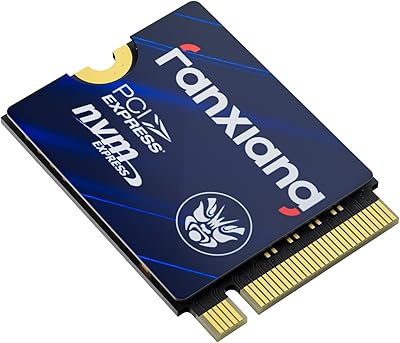
fanxiang S630 1TB M.2 2230 NVMe SSD
80%
88%
Read Speed Performance
74%
Write Speed Performance
81%
Device Compatibility
79%
Thermal Management
93%
Installation Experience
More
KingSpec NX 1TB M.2 2230 NVMe SSD
74%
88%
Read Performance
63%
Write Performance
94%
Form Factor Fit
86%
Installation Experience
89%
Value for Money
More
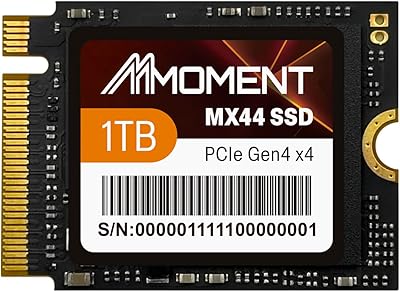
MMOMENT MX44 1TB M.2 2230 NVMe SSD
86%
92%
Performance
89%
Value for Money
95%
Ease of Installation
85%
Build Quality
87%
Durability (Dust/Water/Shock Resistance)
More
Timetec 1TB M.2 2230 NVMe SSD
78%
93%
Device Compatibility
88%
Installation Experience
84%
Read Performance
79%
Write Performance
62%
Thermal Management
More
Dogfish M.2 2230 NVMe PCIe 4.0 1TB SSD
87%
94%
Performance
93%
Read Speed
91%
Write Speed
89%
Compatibility
88%
Ease of Installation
More
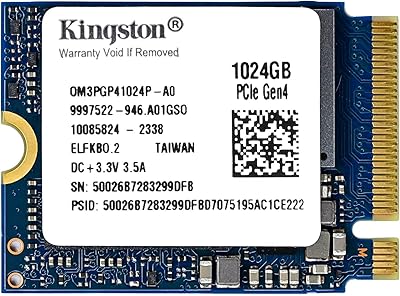
Kingston 1TB M.2 2230 PCIe Gen 4.0x4 NVMe SSD
86%
92%
Performance
90%
Read Speed
88%
Write Speed
85%
Installation Ease
91%
Compatibility with Mini PCs
More
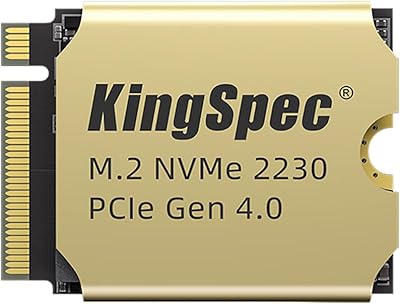
Samsung PM991a 1TB M.2 2230 NVMe SSD
73%
94%
Form Factor Compatibility
88%
Read Performance
74%
Write Performance
91%
Storage Capacity
87%
Build & Component Quality
More
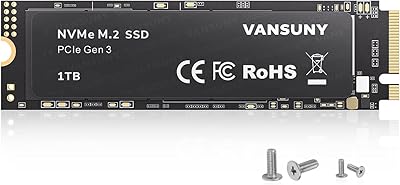
KingSpec XF-2230 1TB M.2 2230 SSD
77%
88%
Read/Write Performance
81%
Thermal Management
84%
Installation Experience
79%
Value for Money
63%
Brand Trust & Reputation
More
Vansuny X15 1TB NVMe M.2 SSD
77%
82%
Read & Write Performance
89%
Value for Money
91%
Installation Ease
58%
Brand Reliability
86%
Capacity Utility
More
GAMERKING 1TB M.2 2280 NVMe SSD
75%
88%
Value for Money
83%
Read Performance
76%
Write Performance
71%
Thermal Management
73%
Build Quality
More

FAQ

Yes, the Steam Deck uses a 2230 M.2 slot, and this compact NVMe drive is fully compatible with it. The single-sided layout is also important here — the Steam Deck has limited clearance, and double-sided drives can cause fitment issues that the ARS330 avoids entirely.

For most day-to-day tasks — booting, launching apps, loading games — the difference between Gen 3 and Gen 4 is not something you will feel in practice. The gap becomes more apparent during large sequential file transfers, like moving big video files or doing full system backups. If your device only supports Gen 3, you are not leaving anything on the table by choosing this drive.

It is a legitimate feature, especially in small form factor devices. Mini PCs and compact chassis trap heat more aggressively than standard desktops, and without thermal management, NVMe drives can throttle their speeds to protect themselves. The aluminum plate on the ARS330 helps dissipate that heat passively, which keeps performance more consistent during longer read/write sessions.

Fair concern. DATO, made by DATOTEK, is newer to Western markets and does not have the same name recognition as Western Digital or Samsung. That said, its ranking among the top 100 internal SSDs on Amazon and a 4.4-star average across hundreds of ratings suggests buyers are generally satisfied. The five-year warranty also signals the manufacturer has some confidence in the hardware's longevity.

You can, as long as your motherboard has an M.2 slot that physically accepts a 2230-length drive. Many full-size motherboards are keyed for 2280 and have the standoff positioned at the far end, but some boards include closer standoff positions or multiple options. Check your motherboard manual before ordering.

It is single-sided, meaning all the flash memory chips are on one face of the board. This matters in devices like the Surface Pro, certain ultrabooks, and handheld gaming PCs where the M.2 slot sits directly against a housing with very little vertical clearance. A double-sided drive in those slots simply will not seat properly or may not fit at all.

For a handheld device or mini PC, 1 TB is a solid amount of headroom. Modern AAA titles can run anywhere from 50 GB to over 100 GB each, so you are realistically looking at space for 10 to 20 games installed simultaneously, which covers most users comfortably. If you are a heavy collector with hundreds of titles, you may eventually want external storage as a supplement.

A small Phillips-head screwdriver is all you need in most cases — just to remove and replace the M.2 retention screw. Some devices like the Steam Deck also require a small Torx screwdriver to remove the back panel first. The drive itself just slides in at an angle and locks down with that single screw.

It could in very space-constrained builds. The heatsink adds a small amount of thickness to the drive, so if your device has a cover plate directly above the M.2 slot — which some laptops and mini PCs do — verify the clearance before installing. Most devices designed for 2230 drives will accommodate it without issue, but it is worth double-checking for unusually tight builds.

DATOTEK offers a five-year limited warranty on the ARS330 series, which means you can contact them for a replacement or repair if the drive fails under normal use conditions. As with any warranty, it typically excludes physical damage or misuse. Keep your proof of purchase, and check DATOTEK's support channels for the specific RMA process applicable in your region.