Overview

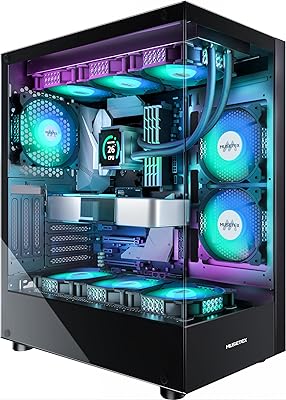
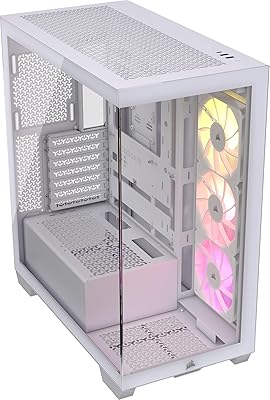
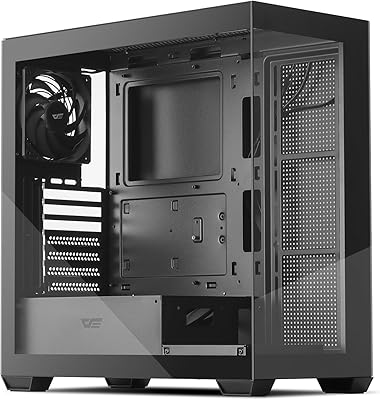
The darkFlash DS900 ATX Mid-Tower PC Case entered the market in late 2023 and has already reached a top-50 ranking in Computer Cases on Amazon — a sign that it resonates with builders looking for visual impact without the price tag of premium brands. The standout feature here is the 270° dual tempered glass coverage, wrapping both the front and side of the chassis so your components are visible from nearly every angle. darkFlash has been carving out a space in the budget-to-mid segment, and the DS900 is among their most ambitious offerings. Aesthetics and airflow value are genuine strengths, but prospective buyers should assess panel fit and build rigidity for themselves.

Features & Benefits

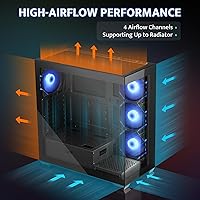
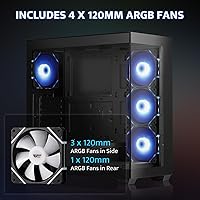
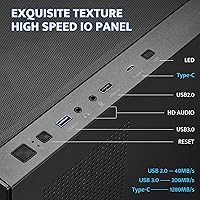
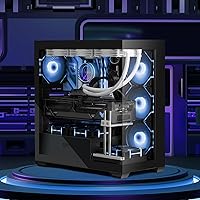
Out of the box, this glass gaming case ships with four 120mm PWM ARGB fans already installed, which means you have real airflow working from day one without spending extra. The 270° tempered glass coverage spans both the front and side panels, giving clear sight lines to your hardware and lighting from nearly every angle. The front I/O includes a Type-C port alongside USB 3.0 and USB 2.0, covering most modern connectivity needs without much fuss. Cooling headroom is notably generous: the top mounts a 360mm radiator and the side handles a 240mm unit. Magnetic dust filters at the top and on the panel reduce long-term buildup. One thing to know before buying: no RGB hub controller is included, so synchronized lighting control requires a separate component.

Best For

This mid-tower case makes the most sense for first-time PC builders who want a visually impressive result without buying a case and fans separately. If RGB lighting is part of your build plan, having four ARGB fans already inside takes that line item off your shopping list entirely. Builders running longer GPUs will appreciate the 425mm clearance — that covers most high-end cards without needing a full-tower chassis. If you're planning an AIO cooler, the 360mm top radiator support is a genuine draw at this price point. This is also a natural fit for desk-facing display builds where the case sits prominently visible and the panoramic glass actually serves a purpose, rather than being a checkbox feature nobody looks at.

User Feedback

With a 4.4-star average across nearly 300 ratings, the DS900 lands in well-reviewed territory for its segment. Buyers consistently praise the glass panel quality and how effectively it showcases interior lighting, with several noting that cable management went more smoothly than expected. On the critical side, a handful of reviewers flag minor panel fitment inconsistencies, and some describe the included fans as adequate rather than outstanding — usable, but not whisper-quiet under load. The missing RGB hub comes up in reviews too; it is not a dealbreaker for everyone, but buyers expecting plug-and-play light sync should factor in that added cost. Compared to similarly priced alternatives, most feedback suggests this case wins on aesthetics while competing reasonably on thermals, with build rigidity drawing the most mixed reactions.

Pros

  • Four 120mm ARGB fans are included out of the box, so you get working airflow and lighting without extra purchases.
  • The 270° tempered glass layout gives an almost unobstructed view of your components from the front and side simultaneously.
  • A top-mounted 360mm radiator slot makes serious AIO cooling accessible at a mid-range price.
  • The front I/O features a Type-C port, which is still missing on many competing cases in this price bracket.
  • Supports ATX, Micro-ATX, and ITX motherboards, giving it flexibility across a wide range of builds.
  • Magnetic dust filters on the top and panel help reduce interior buildup without requiring tools to remove and clean.
  • A 425mm maximum GPU clearance handles virtually every current consumer graphics card without a full-tower chassis.
  • Cable management has been called out positively by multiple buyers as easier than expected for the price.
  • The DS900 holds a top-50 Amazon Best Seller rank in Computer Cases, reflecting sustained buyer confidence since its late 2023 launch.

Cons

  • No RGB hub controller is included, meaning synchronized lighting requires sourcing and installing an additional component.
  • Included fans are adequate for airflow but have been described by some buyers as louder than expected under sustained load.
  • Panel fitment inconsistencies have appeared in buyer reports, with some units showing minor gaps or alignment issues.
  • Only two HDD and two SSD bays are available, which limits storage expansion for media-heavy or workstation builds.
  • Build rigidity feedback is mixed — the chassis feels solid to most buyers, but a minority note flex in the glass panel mounts.
  • The 170mm CPU cooler height limit may rule out some popular air coolers, so clearance should be verified before buying.
  • darkFlash is a relatively newer brand in the Western market, meaning long-term durability data and after-sales support history are still limited.
  • With only one USB 3.0 port on the front I/O, users with multiple high-speed peripherals may find the panel underpowered.

Ratings

The scores below reflect AI analysis of verified buyer feedback for the darkFlash DS900 ATX Mid-Tower PC Case, drawing on hundreds of real-world reviews worldwide with spam, incentivized, and bot-generated submissions actively identified and filtered out. Each category weighs what genuinely resonated with builders against the frustrations that surfaced repeatedly in critical feedback — nothing is softened to make the picture rosier than it actually is. From first-time builders chasing visual impact to experienced enthusiasts evaluating cooling headroom, these ratings are designed to surface what truly matters at the point of purchase.

Aesthetics & Design
89%
The 270° panoramic glass layout covering both the front and side panels is the single most praised aspect among buyers, and the visual payoff consistently exceeds expectations for a case in this price range. Builders who invest in RGB components or custom cable kits find the wide glass coverage genuinely rewards that effort, making the build visible from nearly every desk angle.
The all-glass aesthetic invites fingerprints quickly and requires regular wiping to stay presentable, which some buyers find more tedious than anticipated. The broad glass surface also makes interior dust accumulation more visible between cleaning sessions compared to cases with solid or vented front panels.
Build Quality
71%
29%
The steel chassis feels acceptably solid for a mid-range case, and most buyers report no obvious structural weaknesses during their initial build. The tempered glass itself draws broadly positive comments, with reviewers noting it feels thicker and less prone to flex than expected given the price point.
A recurring theme in critical reviews is inconsistent panel fitment — some units show minor gaps at panel seams or glass that does not seat perfectly flush with the frame. These issues do not affect functionality for most users, but buyers who notice small fit-and-finish imperfections tend to find them hard to ignore once spotted.
Airflow & Cooling
82%
18%
Having four 120mm PWM fans pre-installed means the case moves a meaningful amount of air from day one, covering both intake and exhaust positions without requiring an immediate extra purchase. Builders running mid-to-high-end CPUs and GPUs generally report that temperatures stay within expected ranges under normal gaming workloads.
The glass-heavy front panel restricts passive intake airflow compared to mesh-front alternatives, which becomes noticeable in thermally demanding configurations running sustained loads. Buyers pushing high-end GPUs hard during extended gaming sessions occasionally report temperatures climbing higher than they would prefer without adding supplemental fans.
Value for Money
86%
The combination of four included ARGB fans, 360mm radiator support, front Type-C connectivity, and wide glass coverage represents a strong accessories-per-dollar ratio against competing cases in the same bracket. Several buyers specifically note that sourcing equivalent fans separately would have cost close to what they paid for the entire case.
The missing RGB hub controller is the most frequently cited value-for-money frustration, introducing an unexpected extra cost for buyers who assumed full out-of-box lighting control. When that purchase is factored in, the effective cost of a fully synchronized RGB setup is noticeably higher than the case's sticker price implies.
Noise Level
63%
37%
At idle and during light workloads like browsing or casual desktop use, the included fans produce a background hum that most users find easy to tune out. Builders running modest configurations report generally acceptable noise levels that do not intrude on typical daily use.
Under sustained gaming or rendering loads, a notable share of buyers describe the fans as distinctly audible — not disruptive from across the room, but noticeable enough for users sitting close to the case. Noise-sensitive users are frequently recommended in community discussions to budget for quieter aftermarket fans as a follow-up upgrade.
Panel Fitment
67%
33%
The majority of buyers manage to seat both glass panels without issue, and the removal mechanism is described as intuitive once completed once. For most builds, the panels stay securely in place and show no rattling during normal desktop use or even moderate vibration from nearby audio.
A consistent minority of reviews flag panel alignment as hit-or-miss between units, with some buyers receiving cases where the glass does not sit perfectly flush against the frame. The variance appears to be a production consistency issue rather than a design flaw, which makes it difficult to predict before purchase.
Ease of Assembly
81%
19%
First-time builders consistently rate this mid-tower case as more approachable than expected, citing clear cable routing channels and sufficient working room around the motherboard tray and GPU area. The pre-installed fans also reduce installation steps meaningfully compared to cases that require mounting fans from scratch.
The included manual is functional but sparse, and locating the correct standoff positions for Micro-ATX and Mini-ITX boards requires some trial and error for builders unfamiliar with those form factors. Top-mounted radiator installation can also feel tight depending on cooler thickness and nearby RAM configuration.
Front I/O & Connectivity
74%
26%
The front USB Type-C port is a genuinely useful inclusion that competing cases at similar prices frequently omit, and buyers using modern peripherals and devices find it a practical daily convenience. The HD audio jack handles headset connections reliably during gaming sessions, which users frequently mention as a baseline they rely on.
Having only a single USB 3.0 port on the front panel frustrates builders who regularly connect external drives, controllers, and headsets simultaneously. The single USB 2.0 port adds minimal practical value for most modern peripherals, leaving the front panel feeling underpowered for multi-device setups.
Dust Management
77%
23%
The magnetic top dust filter stands out as a practical detail — it pulls off without tools and can be cleaned in seconds, making routine maintenance noticeably less tedious. Buyers running the DS900 in dusty environments report that the combined top and panel filtering makes a visible difference in how quickly the interior accumulates buildup.
The glass-dominant panel design means overall filtration coverage is more limited compared to fully meshed cases with filters across all major intake surfaces. Buyers in particularly dusty rooms note the interior still requires cleaning more frequently than they had hoped, especially around the bottom intake area.
RGB & Lighting
72%
28%
The four pre-installed ARGB fans produce colorful, visible lighting effects that photograph well and genuinely look impressive when the build is displayed prominently on a desk. Buyers with motherboards that have ARGB headers find connecting and controlling the fans straightforward without any additional hardware.
The absence of a bundled RGB hub controller is a meaningful gap for builders whose motherboards lack ARGB headers, leaving the fan lighting effectively uncontrollable without a separate purchase. Buyers expecting a fully synchronized out-of-box light show — as the product marketing implies — frequently report feeling caught off guard when they unbox the case.
Cooling Headroom
84%
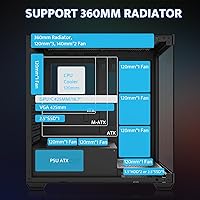
Supporting a 360mm radiator at the top and a 240mm unit on the side gives this glass gaming case more liquid cooling flexibility than most comparably priced mid-towers. AIO builders consistently cite this as a primary reason for choosing it, and capacity for up to 10 fans leaves meaningful room for future airflow upgrades.
The side-mounted 240mm radiator slot imposes a 45mm RAM height restriction that catches builders off guard when using tall DDR5 kits with large heatspreaders. Top radiator installation can also feel cramped when combined with motherboards that have components positioned close to the board's upper edge.
Compatibility & Clearance
83%
ATX, Micro-ATX, and Mini-ITX support combined with a 425mm GPU length limit covers a very broad range of build configurations, making the DS900 a versatile option for builders who have not yet finalized their component list. Most current-generation consumer GPU models fit without modification or creative mounting.
The 170mm CPU cooler height ceiling rules out some popular large dual-tower air coolers, which matters specifically to builders prioritizing silent air cooling over liquid options. Full E-ATX motherboard users are excluded entirely, narrowing the audience for oversized workstation or extreme enthusiast builds.
Storage Options
58%
42%
For gaming-focused builders relying primarily on NVMe SSDs mounted directly to the motherboard, the two 2.5-inch SSD bays provide adequate secondary mounting without consuming unnecessary interior space. The drive bay layout keeps installed drives accessible for periodic swaps or additions.
Two HDD bays and two SSD bays is a notably limited allocation that frustrates builders needing to house multiple spinning disks for media libraries, backups, or large game collections. Users migrating from older cases with four or more drive bays frequently flag this as a genuine regression they did not anticipate before purchasing.
Cable Management
78%
22%
Cable management is one of the more consistent positive surprises noted in buyer feedback, with the behind-tray routing space and cable anchor points described as adequate for producing a clean-looking interior. First-time builders in particular appreciate that the routing channels are more forgiving than other cases they considered in the same price bracket.
The cable management does not reach the standard of premium cases where virtually every run can be fully concealed, and builders doing elaborate custom sleeved setups may find the routing channels limiting. The PSU shroud, while present, leaves some lower cable runs partially visible through the side glass in less tidy build executions.

Suitable for:

The darkFlash DS900 ATX Mid-Tower PC Case is a strong match for first-time and intermediate builders who want their rig to look impressive on a desk without spending a premium to get there. The 270° panoramic glass layout means that if you're putting money into RGB components or a custom cable kit, those details will actually be visible — which isn't something every mid-range case can offer at this price point. Builders planning an AIO liquid cooling loop will find the 360mm top radiator clearance genuinely useful, and the four included ARGB fans mean you're not immediately buying extra hardware just to get decent airflow moving. GPU clearance of 425mm covers virtually every current consumer card, so you won't run into fitment headaches with high-end builds. This case also suits anyone who prioritizes desk aesthetics as much as function — if the PC is sitting in plain view, the wide glass coverage earns its place.

Not suitable for:

Builders who care deeply about acoustic performance may find the darkFlash DS900 ATX Mid-Tower PC Case a frustrating fit, as the included fans have been described by some buyers as serviceable rather than quiet, and the wide glass panels do little to dampen noise. If you rely on a motherboard-native RGB ecosystem and expect everything to sync out of the box, note that no RGB hub controller is included — getting unified lighting control means sourcing that component separately, which adds cost and setup friction. Professionals or enthusiasts who prioritize long-term chassis rigidity and tight panel tolerances may want to scrutinize user feedback carefully before committing, as build consistency has drawn mixed reactions. This is also not the right pick for anyone needing extensive internal storage expansion, since the case accommodates only two HDDs and two SSDs. Finally, if your CPU cooler exceeds 170mm in height, you will hit a hard clearance limit and need to look elsewhere.

Specifications

  • Form Factor: Built as an ATX Mid-Tower, this case fits comfortably on most desks without requiring the larger footprint of a full-tower chassis.
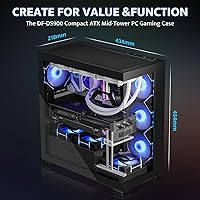
  • Dimensions: Physical dimensions measure 434mm long by 218mm wide by 454mm tall, placing it firmly in standard mid-tower size territory.
  • Weight: The unloaded chassis weighs approximately 15 lbs, a reflection of its steel frame and dual tempered glass panel construction.
  • Motherboard Support: Compatible with ATX, Micro-ATX, and Mini-ITX motherboard form factors, covering the vast majority of consumer desktop builds.
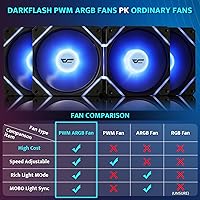
  • Included Fans: Ships with four pre-installed 120mm PWM ARGB fans, providing both airflow and addressable RGB lighting without any additional fan purchases required at setup.
  • Fan Capacity: The chassis can house up to 10 fans in total, with mounting positions across the rear, side, top, PSU area, and HDD bracket.
  • GPU Clearance: Supports graphics cards up to 425mm in length, accommodating virtually all current consumer-grade GPUs including full-size flagship models.
  • CPU Cooler Height: Maximum CPU air cooler height is 170mm, which fits most mid-to-large tower coolers but may exclude some oversized premium aftermarket units.
  • PSU Clearance: Accepts power supply units up to 220mm in length, covering the large majority of standard ATX PSUs currently available.
  • Radiator Support: The top panel accommodates radiators up to 360mm, while the side panel supports up to a 240mm radiator with RAM height limited to 45mm for that mounting position.
  • Front I/O: The front panel includes one USB Type-C port, one USB 3.0 port, one USB 2.0 port, a combined headphone and microphone audio jack, and power, reset, and LED lighting controls.
  • Storage Bays: Provides two 3.5-inch HDD bays and two 2.5-inch SSD mounting positions for internal storage configuration.
  • Expansion Slots: Features seven rear expansion slots, supporting a range of add-in cards and multi-slot GPU configurations.
  • Panel Material: The structural frame is steel, while both the front and left side panels are high-strength tempered glass designed for visual clarity and reasonable impact resistance.
  • Dust Filtration: Equipped with a magnetic dust filter on the top panel and a secondary filter at the panel level to reduce interior particulate buildup over time.

Related Reviews
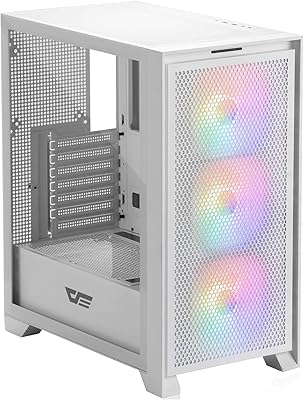
darkFlash DS900 ATX Mid-Tower PC Case
75%
76%
Build Quality
83%
Cooling Potential
91%
Aesthetics & Visibility
88%
Value for Money
74%
Cable Management
More
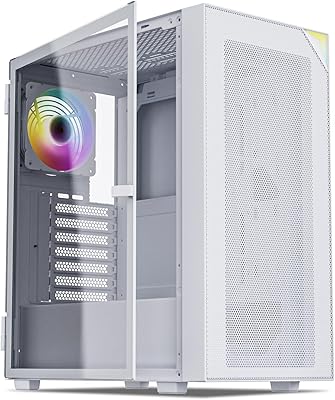
darkFlash DRX70 ATX Mid-Tower PC Case
74%
83%
Value for Money
78%
Airflow Performance
89%
Ease of Assembly
67%
RGB Lighting
71%
Build Quality & Materials
More
Zalman S4 Mid-Tower ATX PC Case
75%
72%
Build Quality
88%
Value for Money
91%
Ease of Assembly
67%
Airflow Performance
63%
Cable Management
More
SAMA S40 Mid Tower ATX PC Case
79%
88%
Airflow Performance
83%
Included Fan Quality
79%
Build Quality & Finish
92%
GPU Compatibility
61%
Cable Management
More
KEDIERS K4 ATX Mid Tower PC Case
80%
91%
Value for Money
93%
Aesthetic Design
74%
Build Quality
72%
Cooling Performance
84%
Ease of Assembly
More
SZSKYING CMSVB-1 Mid-Tower PC Gaming Case
74%
91%
Value for Money
88%
Included Fans
86%
Aesthetics & RGB
61%
Build Quality
74%
Airflow Performance
More
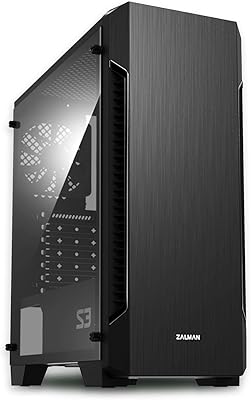
Vetroo AL800 Mid Tower ATX PC Case
76%
78%
Build Quality
84%
Tempered Glass Panel
76%
Airflow Performance
61%
Fan Included & Expandability
69%
Cable Management
More
Zalman S2 ATX Mid-Tower PC Case
76%
88%
Airflow Performance
63%
Build Quality
91%
Value for Money
86%
Ease of Assembly
84%
Cooling Expandability
More
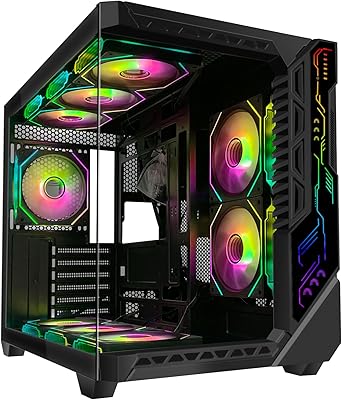
Zalman S3 ATX Mid-Tower PC Case
74%
83%
Value for Money
71%
Build Quality
58%
Airflow & Cooling Performance
86%
Ease of Assembly
67%
Acrylic Side Panel
More
Antec C5 ARGB
Antec C5 ARGB
84%
93%
Out-of-Box Value
88%
Build Quality
84%
Airflow & Thermal Performance
86%
Cable Management
91%
ARGB Lighting Quality
More
DARKROCK EC2 ATX Mid Tower PC Case
77%
88%
Airflow Performance
91%
Cooling Headroom
67%
Build Quality
84%
GPU Compatibility
86%
Ease of Assembly
More

FAQ

The darkFlash DS900 ATX Mid-Tower PC Case ships with four 120mm PWM ARGB fans pre-installed, so you have working airflow and addressable RGB lighting from the moment you start building. You do not need to budget for additional fans just to get the system up and running, which is a real advantage at this price point.

Yes, and this is worth knowing before you purchase. The included fans are ARGB but no hub controller comes in the box, so to control or synchronize their lighting you will need either a motherboard with ARGB headers or a standalone RGB hub bought separately. If your motherboard already has ARGB support, you can likely connect the fans directly without extra hardware.

The case supports GPU lengths up to 425mm, which covers nearly every consumer graphics card currently available, including full-size flagship models from both major manufacturers. Just verify your specific card's listed length against that figure before buying — most cards land well under that ceiling.

Yes, the top of the case is designed to accept a 360mm radiator, which makes it a viable option for builders going the liquid cooling route without stepping up to a full-tower. The side panel also supports a 240mm radiator if you prefer that position, though your RAM sticks will need to be 45mm or shorter in height to avoid a clearance conflict there.

Most buyers, including first-timers, report that working inside this case is more manageable than expected. Cable routing options are decent and the layout does not create too many blind spots or awkward angles during installation. Reading a build guide beforehand and taking your time will make the experience much smoother, as it would with any mid-tower.

The side glass panel is typically secured by thumb screws at the rear and can be slid or swung off once loosened — refer to the included manual for the exact mechanism on your unit. For cleaning, a dry or lightly dampened microfiber cloth works well to remove fingerprints and dust from the glass surface. Avoid abrasive materials or harsh chemical cleaners that could damage the panel coating.

It supports all three of the most common consumer form factors: ATX, Micro-ATX, and Mini-ITX. Full E-ATX motherboards are not compatible, so if you're planning a workstation or high-end enthusiast build on an E-ATX board, you will need to look at larger chassis options.

Buyer feedback on this is genuinely mixed. At idle and light loads the fans are fairly unobtrusive, but a number of users report that they become noticeably audible during extended gaming or other sustained workloads. If near-silent operation is important to you, treating the included fans as a starting point and upgrading to quieter aftermarket fans later is a reasonable approach.

Cable management is one of the more consistently positive talking points in real buyer feedback for this mid-tower case. There is a useful amount of space behind the motherboard tray for routing cables, and the general layout is organized enough to produce a clean-looking build without being overly difficult. It is not on par with premium cases that go out of their way to hide every wire, but it is noticeably better than what you might expect at this price.

For the money, the value proposition is strong when you account for four ARGB fans included, 360mm radiator support, wide glass panel coverage, and a front Type-C port — features that some competitors in this range charge more for or omit entirely. The main areas where it trails better-established brands are build consistency and after-sales support track record, since darkFlash is still relatively newer in the Western market. If you prioritize included accessories and aesthetics over brand pedigree, this glass gaming case competes well; if long-term durability assurance matters most, reading recent buyer reviews before committing is a smart step.