Overview

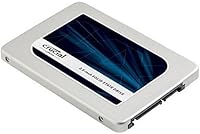
The Crucial MX300 2TB Internal SSD launched in 2016 at a moment when two-terabyte solid state drives were still a premium proposition, and it quickly became one of Crucial's most recognized consumer options for desktop upgraders. Built around a standard 2.5-inch form factor with a SATA interface, it works with both PC and Mac systems without any fuss. Worth noting upfront: Crucial has since discontinued this drive, so shoppers today are typically looking at remaining retail stock or refurbished units. It is not an NVMe speed demon — this is a SATA-based performer — but for anyone who does not need bleeding-edge throughput, the MX300 2TB holds up as a solid, dependable upgrade.

Features & Benefits

The headline spec is obvious: 2TB of storage gives you room for an operating system, a full application suite, and a serious media library without juggling external drives. The SATA III interface tops out around 530 MB/s sequential reads in real-world use — fast enough to make the jump from a spinning hard drive feel dramatic, even if it cannot match modern NVMe drives. Crucial built this SATA SSD on 3D NAND flash, which stacks memory cells vertically to improve both durability and efficiency compared to older flat designs. It also packs AES 256-bit encryption and ships with Acronis True Image software for cloning your existing drive — a thoughtful inclusion that makes migration considerably less painful.

Best For

This Crucial drive makes the most sense for desktop users still running a mechanical hard drive who want a meaningful speed boost without rebuilding their system around an NVMe setup. It suits home office and small business environments equally well, where reliable bulk storage matters more than raw peak performance. Mac and PC users benefit from plug-and-play SATA compatibility — no driver installs, no firmware gymnastics. Content creators keeping large video or photo libraries on-system will appreciate having 2TB in a single internal slot. That said, if you are building a new machine or already have an NVMe-capable board, faster alternatives at competitive prices are worth exploring first.

User Feedback

Across nearly 12,000 ratings, the MX300 2TB holds a 4.6-star average — a figure that reflects genuine long-term satisfaction rather than a burst of early enthusiasm. The most consistent praise focuses on real-world speed improvements over mechanical drives, with owners describing noticeably faster boot times and snappier application launches. Long-term reliability also earns repeat mentions; many users report years of trouble-free daily use. On the downside, some buyers point out that since discontinuation, newer SATA drives now offer better value per gigabyte, so the price math has shifted. A small share of reviewers flag compatibility questions on very old motherboards — worth double-checking your specs before committing.

Pros

  • A massive 2TB capacity handles operating systems, apps, and large media libraries in a single drive.
  • Real-world read speeds around 530 MB/s make the upgrade from a hard disk feel immediately transformative.
  • 3D NAND flash improves long-term durability compared to older storage technologies.
  • Broad compatibility with both PC and Mac systems means virtually no setup friction.
  • AES 256-bit hardware encryption protects sensitive data without taxing the processor.
  • Acronis True Image cloning software is included, making hard drive migration straightforward for non-technical users.
  • The slim 0.28-inch profile fits standard desktop bays and most laptop upgrade slots.
  • A 4.6-star average across nearly 12,000 ratings reflects genuine, sustained user satisfaction.
  • Long-term owners consistently report years of reliable, trouble-free daily operation.

Cons

  • Discontinued by the manufacturer, meaning no new warranty coverage and no ongoing firmware support.
  • Newer in-production SATA SSDs now offer better price-per-gigabyte value, shifting the economics against this drive.
  • SATA III throughput is a hard ceiling — NVMe alternatives are several times faster for demanding workloads.
  • Buyers sourcing remaining or refurbished stock take on added risk with no guarantee of drive age or condition.
  • A small number of users have flagged compatibility issues with very old motherboard SATA controllers.
  • No official support channel for troubleshooting since the product line has been retired.
  • Not ideal for users who anticipate needing manufacturer recourse if the drive fails out of the box.

Ratings

The scores below were generated by AI after analyzing thousands of verified global user reviews for the Crucial MX300 2TB Internal SSD, with spam, bot activity, and incentivized feedback actively filtered out to reflect honest buyer experiences. Both the genuine strengths and real pain points are represented transparently, so you get a clear picture of where this drive excels and where it falls short before making a decision.

Read & Write Speed
78%
22%
For users upgrading from a mechanical hard drive, the real-world speed difference is striking — boot times that once stretched past a minute drop to under fifteen seconds, and large file transfers that used to crawl feel genuinely fast. Everyday desktop use feels noticeably snappier across the board.
The SATA III ceiling is a hard constraint, and buyers who later move to a system with an NVMe-capable M.2 slot quickly realize how much headroom they left on the table. For video editors or anyone shuffling large raw files regularly, this limitation becomes tangible.
Storage Capacity
91%
Two terabytes in a single 2.5-inch internal drive gives desktop upgraders room for a full OS install, a large game library, and years of accumulated documents and media without ever feeling squeezed. Users who previously juggled multiple drives consistently highlight the convenience of consolidating everything onto one reliable unit.
The only real complaint here is that as personal media libraries grow — particularly 4K video and large game installs — even 2TB starts feeling less generous than it once did. A small subset of power users noted they filled the drive faster than anticipated.
Reliability & Longevity
88%
Long-term owners are among this drive's most vocal advocates. Reports of consistent, trouble-free operation across three, four, and even five years of daily use are common, and many buyers specifically returned to leave updated reviews noting the drive had never skipped a beat.
Because the drive is discontinued and production has stopped, buyers sourcing remaining or refurbished stock have no way to know the exact age or prior usage history of a specific unit. A small number of early failure reports exist, though they represent a clear minority of the overall feedback.
Value for Money
63%
37%
At its original launch price, the MX300 2TB was genuinely competitive for its time, and many early adopters feel they got strong value from years of reliable service. The bundled Acronis cloning software added practical worth that buyers upgrading from a hard drive genuinely appreciated.
The discontinued status has shifted the value equation considerably. Newer in-production 2TB SATA SSDs now routinely offer comparable or better performance at lower price points with active warranty coverage, making it difficult to recommend this drive purely on price when current alternatives exist.
Installation & Setup
86%
The standard 2.5-inch form factor means the physical installation is about as simple as internal drive swaps get — standard SATA connectors, no proprietary mounting, and it fits into virtually any desktop bay without adapters. Coupled with the included Acronis software, most users report cloning their old drive and booting from the new one the same afternoon.
A small number of users encountered compatibility friction with older or budget motherboards, particularly around SATA controller recognition. The software experience was also occasionally described as clunky on the first run, especially for less technically confident users.
Compatibility
83%
Broad SATA compatibility across PC and Mac platforms means most users simply plug it in and it works. Desktop machines, older MacBook Pros, and Mac Minis from the Intel era all handle this drive without needing driver installs or firmware adjustments.
Very old motherboards with non-standard SATA implementations caused detection issues for a small subset of buyers. Newer Mac hardware with proprietary storage connectors is outright incompatible, which occasionally caught buyers off guard when they did not verify their specific model first.
Data Security
79%
21%
Built-in AES 256-bit hardware encryption means the processing load for data security sits on the drive itself rather than taxing the CPU, which matters for users running encryption on a system used for other demanding tasks simultaneously. IT-minded home office users flagged this as a meaningful differentiator over budget SSDs that lack hardware encryption entirely.
The encryption is not active out of the box — it requires deliberate configuration through BitLocker or compatible software, which many everyday users never set up. For non-technical buyers, this feature might as well not exist unless they are specifically guided through activation.
Build Quality
84%
The drive feels solid and purposeful in hand despite its light weight, with a metal housing that dissipates heat adequately under normal desktop workloads. Users who have handled it alongside cheaper plastic-cased competitors consistently note the more premium feel of the enclosure.
A slim minority of buyers who used the drive in high-ambient-temperature environments reported it running warm during sustained write operations. Under typical desktop conditions this is rarely an issue, but it is worth noting for compact or poorly ventilated enclosures.
Noise & Vibration
97%
As a solid state drive with no moving parts, it is completely silent under all operating conditions — no spindle noise, no seek chatter, nothing. Users who switched from loud mechanical drives frequently mention how much quieter their entire system became as a side benefit of the upgrade.
There is essentially nothing to criticize here from an acoustic standpoint. The only vague edge case is electrical coil whine in some very rare system configurations, which is a motherboard or PSU issue rather than anything attributable to the drive itself.
Software Bundle
71%
29%
Acronis True Image for Crucial is a genuinely useful inclusion — it handles full disk cloning competently, and for users with no prior migration experience, having dedicated software bundled in removes one meaningful barrier to a successful upgrade.
The Acronis interface has a learning curve that frustrates less experienced users, and the bundled version is typically limited to cloning functions rather than the full Acronis feature set. Some buyers found the activation process unnecessarily convoluted for what should be a simple tool.
Manufacturer Support
41%
59%
In its active years, Crucial's support reputation was solid, and the broader Micron backing gave buyers confidence in warranty handling. Users who purchased the drive during its production window generally had positive experiences when support was needed.
With the drive now discontinued, manufacturer support is effectively unavailable for new purchasers. There are no firmware updates being issued, no active warranty enrollment for new buyers, and the product page itself reflects its retired status — a meaningful concern for anyone planning a long-term storage investment.
Power Efficiency
82%
18%
3D NAND flash is inherently more power-efficient than older planar designs, and real-world idle power draw is low enough that it has a negligible impact on desktop system power budgets. Users who repurposed the drive inside a USB enclosure noted good battery impact when used with a laptop.
At sustained peak workloads, power consumption climbs more than some competing SSDs from newer generations, though this is only a practical concern in battery-sensitive portable setups. For standard desktop use, it is a non-issue for the vast majority of buyers.
Form Factor Flexibility
81%
19%
The slim 0.28-inch profile is thin enough to fit into standard desktop bays, most 2.5-inch laptop slots, and portable USB enclosures without issue. Users who wanted to repurpose the drive after a system upgrade found it transferred easily into an external enclosure for backup or portable use.
It is strictly a 2.5-inch SATA drive and offers no flexibility for M.2 or NVMe slots, which limits its usefulness as the industry has moved toward those form factors. Buyers hoping to use it in a newer ultrabook or a laptop that dropped the 2.5-inch bay entirely will find it incompatible.

Suitable for:

The Crucial MX300 2TB Internal SSD is a strong fit for anyone still running a desktop or laptop on a mechanical hard drive who wants a meaningful, no-fuss performance upgrade without overhauling their entire system. Its SATA interface means it drops into virtually any machine built in the last decade — PC or Mac — with zero driver headaches. Home and small office users who need reliable bulk storage for documents, backups, and everyday applications will find 2TB more than adequate for years of use. Content creators who keep large photo or video archives on a local drive will appreciate the capacity without needing to stack multiple smaller SSDs. It also suits budget-conscious buyers who prioritize proven reliability and ample storage over cutting-edge read speeds, since the real-world jump from a spinning disk to this SATA SSD is still dramatic and immediately noticeable.

Not suitable for:

If you are building a new system from scratch or already have an M.2 slot available on your motherboard, the Crucial MX300 2TB Internal SSD is probably not the right call — current NVMe drives deliver several times the throughput at increasingly competitive prices, and there is little reason to settle for SATA when faster options are accessible. Buyers who need manufacturer warranty support or long-term firmware updates should also think carefully, since this drive has been discontinued and Crucial no longer actively supports it. Gamers or creative professionals running workloads that demand the fastest possible load times — think large 3D project files or high-bitrate video timelines — will hit the inherent ceiling of the SATA interface. Anyone considering a refurbished unit should factor in the absence of a fresh warranty and the age of the drive. If price-per-gigabyte efficiency is your top priority, newer in-production SATA SSDs now offer comparable or better value without the discontinued-product risk.

Specifications

  • Storage Capacity: This internal SSD provides 2TB of usable flash storage, suitable for operating systems, applications, and large media libraries.
  • Interface: It uses a SATA III (6 Gb/s) interface, backward compatible with SATA II ports at reduced speeds.
  • Form Factor: The drive follows the standard 2.5-inch form factor used in most desktops and many laptops.
  • Dimensions: Physical dimensions measure 4.06 x 2.76 x 0.28 inches (length x width x thickness).
  • Weight: The drive weighs 3.52 ounces, making it lightweight enough for both desktop and portable enclosure use.
  • Flash Type: Storage cells use 3D NAND flash technology, which stacks memory layers vertically for improved endurance and power efficiency over planar NAND.
  • Sequential Read: Real-world sequential read speeds reach up to approximately 530 MB/s under typical operating conditions.
  • Sequential Write: Sequential write speeds reach up to approximately 510 MB/s, suitable for large file transfers and media workflows.
  • Encryption: Hardware-level AES 256-bit encryption is built in, allowing data protection without software overhead or processor load.
  • Compatible Platforms: The drive is officially compatible with both Windows PC and Mac systems that feature a standard SATA port.
  • Installation Type: This is an internal drive designed for permanent installation inside a desktop tower, all-in-one, or compatible laptop chassis.
  • Bundled Software: Acronis True Image for Crucial is included, enabling full disk cloning from an existing hard drive to the new SSD.
  • Model Number: The official Crucial model identifier is CT2050MX300SSD1, which reflects the 2TB capacity variant in the MX300 series.
  • Manufacturer: Crucial is a consumer storage brand operated by Micron Technology, one of the largest NAND flash manufacturers in the world.
  • Product Status: This drive has been officially discontinued by the manufacturer and is no longer in active production or covered by new warranty support.
  • First Available: The MX300 2TB variant was first listed for sale in August 2016, during a period when 2TB SSDs were considered high-capacity consumer drives.
  • User Rating: The drive holds a 4.6 out of 5 star average rating based on nearly 12,000 verified customer ratings on Amazon.
  • BSR Rank: It ranks at approximately number 623 in the Internal Solid State Drives category on Amazon, reflecting sustained long-term demand.

Related Reviews
SanDisk SSD Plus 2TB Internal SSD
82%
88%
Read Speed Performance
74%
Write Speed Performance
94%
Installation & Compatibility
91%
Value for Money
86%
Long-Term Durability & Reliability
More
Crucial BX500 2TB Internal SSD
81%
93%
Value for Money
74%
Read/Write Performance
71%
Reliability & Longevity
91%
Installation Ease
89%
Storage Capacity
More
Crucial P5 Plus 2TB NVMe SSD
82%
93%
Sequential Read Performance
88%
Sequential Write Performance
61%
Thermal Management
96%
PS5 Compatibility
91%
Installation Experience
More
Patriot P210 2TB Internal SATA SSD
80%
93%
Value for Money
76%
Read & Write Speed
91%
Installation Ease
78%
Compatibility
67%
Long-term Reliability
More
Crucial T710 2TB Gen5 NVMe SSD
88%
96%
Performance
94%
Speed (Read/Write)
90%
Thermal Management (Cooling)
88%
Ease of Installation
70%
Software Experience
More
Patriot Memory P320 2TB NVMe M.2 SSD
77%
91%
Value for Money
78%
Read & Write Performance
93%
Installation Ease
88%
Compatibility
74%
Build & Reliability
More
RAOYI 2TB PCIe Gen4 M.2 NVMe SSD
77%
91%
Value for Money
84%
Read Speed Performance
73%
Write Speed Performance
93%
PS5 Compatibility
88%
Ease of Installation
More
Crucial P510 2TB Gen5 NVMe SSD
85%
94%
Sequential Read Performance
91%
Sequential Write Performance
62%
Thermal Management
93%
Installation & Setup
74%
Data Migration Software
More
Patriot Memory P220 2TB Internal SATA SSD
77%
93%
Value for Money
78%
Read & Write Speed
91%
Installation Ease
88%
Boot & Load Times
74%
Build & Durability
More
Crucial P3 Plus 2TB NVMe SSD
80%
88%
Sequential Read Speed
61%
Sustained Write Performance
69%
Random Access Performance
91%
Value for Money
87%
Gaming Load Times
More

FAQ

Yes, it will work, but you will not get the full speed. SATA III drives are backward compatible with SATA II ports, so the drive will function correctly — it just tops out at the SATA II ceiling of around 300 MB/s rather than the full 530 MB/s. For most everyday tasks, that is still a massive improvement over a spinning hard drive.

It works with both. The drive is a standard SATA SSD, so any Mac that has an accessible SATA slot — older MacBook Pros, Mac Minis, and Mac Pros from roughly 2009 to 2015 — can use it without issue. Newer Macs with proprietary blade-style storage do not have a SATA slot at all, so check your specific model first.

This is where the discontinued status matters most. Crucial no longer actively supports or sells the MX300 2TB, which means getting manufacturer warranty service is unlikely to be straightforward. If you are buying from remaining retail stock, check carefully whether the seller offers any return or replacement policy of their own, and factor in that you are purchasing an older product without ongoing manufacturer backing.

Installation is pretty approachable even for beginners. You will need a standard SATA data cable (often already inside your desktop) and a SATA power connector from your power supply. The drive slots into any standard 2.5-inch or 3.5-inch bay with an adapter bracket, which many cases include. The bundled Acronis software also makes cloning your old drive onto the SSD quite manageable without needing technical expertise.

For most gaming scenarios — loading screens, installing large game libraries, running the OS — this SATA SSD is genuinely good. The jump from a hard drive to any SSD dramatically cuts load times. That said, if you are building a brand new gaming rig with an M.2 slot available, a current NVMe drive will load some games noticeably faster and costs less per gigabyte than this drive does at its current market price.

Absolutely. A standard 2.5-inch USB-to-SATA enclosure will work perfectly with this drive. Keep in mind you will be limited by the USB connection speed rather than the drive itself, but for portable backups, media storage, or transferring large files between computers, it is a practical and reliable option.

3D NAND is simply a way of describing how the memory cells inside the drive are arranged — stacked in layers rather than laid flat on a single plane. The practical benefit for buyers is better durability and longer lifespan compared to older flat-design flash chips. In everyday terms, it means the drive is better equipped to handle years of regular read and write cycles before showing any wear.

The hardware encryption capability is built into the drive's controller, but you need to activate it through software or your system's security settings to actually use it. On Windows, you can enable it via BitLocker if your system supports it. On its own, the drive does not encrypt your data by default — it just has the hardware ready to do so when configured properly.

Newer in-production 2TB SATA SSDs — from brands like Samsung, Western Digital, or even Crucial's own newer series — now often offer comparable or better performance at prices that have come down considerably. The MX300 2TB made a lot of sense at its original launch price, but the SSD market has moved significantly since 2016. If this Crucial drive is priced similarly to current alternatives, a newer model with active warranty support and fresher NAND is generally the safer long-term buy.

A small number of users have reported issues with very old motherboards that use non-standard SATA controller implementations. This is relatively uncommon, but if your machine is from the mid-2000s or uses an off-brand SATA controller, it is worth checking user forums for your specific motherboard model before purchasing. Most systems from 2008 onward handle this drive without any problems.