Overview

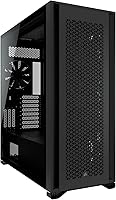
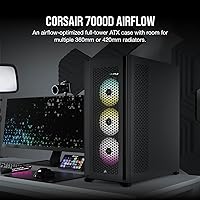
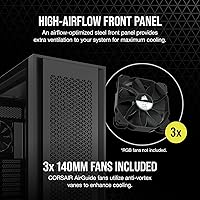
The Corsair 7000D Airflow Full-Tower PC Case is built for builders who refuse to compromise — whether that means fitting a custom water loop, mounting a dozen fans, or simply having enough room to work without knocking components together. The front panel prioritizes airflow over aesthetics, using a steel mesh design that pulls serious air into the system rather than looking sleek while starving your hardware. Inside, the spacious interior dwarfs most mid-tower alternatives and makes component installation feel genuinely comfortable. Corsair also bundles in three 140mm AirGuide fans and a PWM repeater — a solid starting point that most competitors at this tier don't bother to include.
Features & Benefits

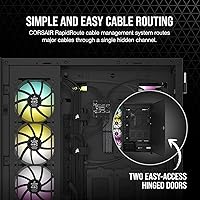
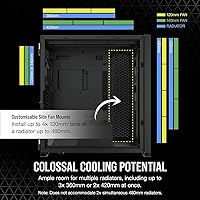
The RapidRoute cable management system is one of this full-tower case's most practical strengths — a dedicated channel routes your main cables behind the motherboard tray, hidden behind a hinged door, with a generous 30mm of clearance that keeps even thick cable bundles under control. The steel front panel lets air move freely, and builders upgrading from glass-front cases will notice the temperature difference almost immediately. The included AirGuide fans use anti-vortex vanes to reduce turbulence at the fan exit, directing airflow toward your components rather than letting it swirl inefficiently. Support for three simultaneous 360mm radiators makes ambitious custom loop builds genuinely viable right out of the gate.

Best For

The 7000D Airflow is a natural fit for custom water-cooling enthusiasts who need room for multiple radiators without compromising fan placement. It also makes a strong argument for content creators and power users whose systems run hot during sustained workloads — people who've learned that thermal headroom matters during long sessions. Builders who've outgrown mid-tower cases and want room to expand will appreciate the generous cooling capacity that doesn't require working around tight constraints. That said, anyone with limited desk or floor space should measure carefully. This Corsair chassis commands significant physical real estate, and that's a real consideration before buying.

User Feedback

Owners of this Corsair chassis consistently highlight the build quality and how the interior layout simplifies even complex hardware configurations. The cable management draws frequent praise, with many buyers noting it meaningfully reduced their build time. On the less positive side, the 41-plus pound weight comes up regularly among buyers who move their systems often, and the sheer physical footprint doesn't suit every setup. A handful of users also noted that the airflow-focused front panel trades away some visual flair compared to glass alternatives. Overall, satisfaction among enthusiast builders remains high, and most trade-offs read like intentional design priorities rather than overlooked shortcomings.

Pros

  • Exceptional interior space makes building and upgrading far less frustrating than in tighter cases.
  • Supports up to three simultaneous 360mm radiators, a genuine rarity at any price point.
  • RapidRoute cable management dramatically reduces clutter and speeds up the building process.
  • Three 140mm AirGuide fans are included, giving builders a capable starting point without extra spending.
  • The steel mesh front panel delivers noticeably better airflow than glass-front alternatives.
  • 30mm of clearance behind the motherboard tray handles even thick, unruly cable bundles comfortably.
  • Bottom-mounted PSU keeps the power supply thermals isolated from the rest of the build.
  • The 7000D Airflow supports up to twelve 120mm or seven 140mm fans for extreme cooling configurations.
  • Build quality is consistently praised by owners, with solid panel fit and reliable hardware throughout.
  • The included PWM repeater simplifies fan control without requiring an additional hub or controller.

Cons

  • At over 41 pounds, moving or transporting this Corsair chassis is genuinely cumbersome.
  • The large physical footprint can overwhelm smaller desks or confined spaces.
  • The airflow-focused front panel sacrifices visual appeal compared to tempered glass alternatives.
  • Builders with modest hardware may find the case unnecessarily large for their actual needs.
  • No USB-C front panel port, which is an increasingly expected feature on premium cases.
  • The sheer size means this chassis suits a desktop floor placement better than most desk surfaces.
  • Buyers who prefer a quieter aesthetic may find the mesh front panel less refined-looking.
  • Niche suitability means casual or first-time builders are essentially paying for features they will never use.

Ratings

Our AI-generated scores for the Corsair 7000D Airflow Full-Tower PC Case are derived from analyzing thousands of verified global buyer reviews, with spam, bot activity, and incentivized feedback actively filtered out before scoring. Each category reflects the honest distribution of real user sentiment — strengths are credited where earned, and genuine pain points are not softened or buried. The result is a transparent, balanced picture of where this Corsair chassis excels and where it asks for compromise.
Build Quality
93%
Owners consistently describe the panels, frame, and hardware as feeling solid and well-engineered — not the hollow, flexing experience common in cheaper full-tower cases. The steel construction holds up well over time, and the tempered glass panel sits flush without rattling during operation.
A small number of buyers reported minor fitment inconsistencies with the side panels or front mesh, though these appear to be isolated production variance cases rather than a systemic issue. At this price tier, any such imperfection is noticed and mentioned.
Airflow Performance
91%
The steel mesh front panel is the defining feature here, and real-world thermal results back up the design intent. Builders upgrading from glass-front cases frequently report measurable temperature drops under sustained loads, particularly in GPU and VRM zones.
Because the front panel is optimized purely for airflow rather than noise dampening, the case does little to muffle fan noise at higher RPMs. Users sensitive to ambient system noise may find it louder than cases with acoustic foam or restricted intakes.
Interior Space & Layout
94%
The interior is genuinely expansive in a way that changes the building experience — there is room to maneuver hands, seat cables without rushing, and plan radiator layouts without compromise. Builders coming from mid-towers describe it as an immediate quality-of-life upgrade.
The sheer volume of available space can feel excessive for standard ATX builds that do not leverage multiple radiator positions or heavy fan arrays. It is a strength that only pays off when the hardware inside actually demands it.
Cable Management
89%
The RapidRoute system earns consistent praise from builders of all experience levels. The hinged door, dedicated routing channel, and 30mm of clearance behind the tray combine to make even messy multi-GPU or custom loop cable runs look organized with relatively little effort.
The system works best with modular PSUs and tidy cable kits — builders using older non-modular units may still struggle to fill the space cleanly. The hinged door can also feel slightly stiff initially and requires some breaking in before it closes smoothly.
Cooling Potential
96%
Support for three simultaneous 360mm radiators is not a marketing stretch — it is a real, functional capability that gives custom loop builders an almost unmatched canvas to work with. Air-cooled builders also benefit from support for up to twelve 120mm fans.
Realizing the full cooling potential requires a significant additional investment in fans, radiators, and fittings beyond what is included. Builders who do not intend to expand cooling over time are paying for headroom they will never actually use.
Included Accessories
82%
18%
Three 140mm AirGuide fans and a PWM repeater represent a genuinely useful starting bundle — most competing full-towers at similar price points include fewer or lower-quality fans out of the box. The anti-vortex vanes are a functional differentiator, not just a cosmetic label.
While the included fans are capable, they are not the highest-performing units Corsair makes, and builders chasing low noise or maximum static pressure may want to replace or supplement them relatively quickly. Three fans also leaves a lot of the available fan slots unfilled.
Water Cooling Compatibility
94%
The layout accommodates both AIO and custom open-loop configurations with unusual flexibility. Multiple radiator positions mean builders are not forced to choose between top, front, or bottom mounting — they can use all three simultaneously.
Fitting a 420mm radiator in the front while using tall DDR5 memory modules or large air-cooled VRM heatsinks requires careful clearance planning. A minority of builders reported having to swap RAM or adjust component choices to make their preferred radiator layout work.
Noise Levels
63%
37%
At low to moderate fan speeds the system runs quietly enough for office or bedroom use, and the PWM repeater allows the motherboard to manage fan curves automatically, keeping noise down during lighter workloads.
The open mesh front panel offers virtually no acoustic dampening, so any noise generated inside the case travels outward with minimal resistance. Builders who prioritize a quiet working environment will likely need aftermarket low-noise fans and careful fan curve tuning to compensate.
Ease of Assembly
88%
The combination of spacious interior and thoughtful cable routing infrastructure means most builders — including those tackling their first full-tower build — find the assembly process noticeably less frustrating than in cramped alternatives. Standoffs and mounts are clearly positioned and accessible.
The sheer size of the chassis means it requires a large, clear workspace to build in comfortably. Moving or rotating the case during assembly is also physically demanding given its unloaded weight, which can be tiring during longer builds.
Front I/O & Connectivity
67%
33%
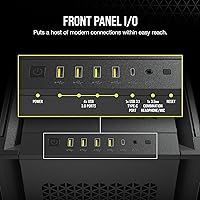
Eight total USB ports across the front panel covers the needs of most users, and the port placement is accessible without being awkwardly positioned. For users running USB peripherals or storage devices at the front, the count is generous.
The absence of a USB-C port on the front I/O is a notable omission for a case at this tier, especially as more peripherals and fast-transfer devices adopt the connector. Builders who rely on front-panel USB-C will need a workaround or an adapter.
Aesthetics
74%
26%
The blacked-out exterior and tempered glass side panel create a clean, understated look that works well in most setups. Builders who prefer a no-frills, functional aesthetic over RGB-heavy styling will find the design agreeable.
The steel mesh front panel is a divisive design choice — buyers who prefer the polished, premium look of a glass front will find this case visually plain by comparison. There is also no pre-installed RGB lighting, which some enthusiasts expect at this price point.
Value for Money
79%
21%
For builders who actually need the cooling capacity and interior space this chassis offers, the per-feature cost is competitive when stacked against alternatives with similar radiator support and build quality. The included fan bundle adds tangible out-of-box value.
For builders running modest hardware who do not plan to expand, the case represents a significant spend on features that will sit unused. The price is justified by capability, not by suitability for every buyer — and that distinction matters.
Portability & Handling
41%
59%
The structural integrity of the chassis means it handles the rigors of occasional transport without flex or damage to internal components. Builders who do move it report that nothing shifts or loosens inside under normal handling.
At 41.2 lbs before components are installed, this is one of the heavier cases on the market and is simply not practical to move regularly. Builders who attend LAN events or frequently rearrange their workspace will find this a recurring frustration rather than a minor inconvenience.
Dust Filtration
72%
28%
Removable dust filters on key intake areas help keep dust accumulation manageable over time, and the bottom-mount PSU area includes coverage that is easy to remove and clean without tools. Regular maintenance keeps the interior noticeably cleaner than cases without filters.
The large mesh front panel surface area means more potential entry points for fine dust particles compared to more restricted intake designs. Builders in dusty environments may find they need to clean filters and wipe down fan blades more frequently than expected.

Suitable for:

The Corsair 7000D Airflow Full-Tower PC Case was built for a specific kind of builder — one who thinks seriously about cooling and plans to push their system hard over the long term. Custom water-cooling enthusiasts will find it particularly well-matched, given the ability to mount up to three 360mm radiators simultaneously without having to sacrifice fan positions or resort to creative workarounds. Content creators, streamers, and power users running sustained workloads will also benefit from the airflow-first front panel design, which keeps temperatures in check during the long sessions where thermals tend to creep up. Builders who have outgrown a mid-tower and want a chassis that won't limit future upgrades — more fans, bigger radiators, additional storage — will appreciate the room this case provides from day one. If you value a tidy build and hate cable chaos, the RapidRoute system addresses that directly in a way most cases at any price tier do not.
Not suitable for:

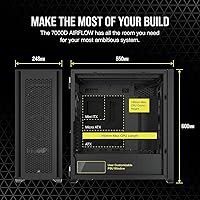
The Corsair 7000D Airflow Full-Tower PC Case is a poor fit for anyone working within tight space constraints — at nearly 22 inches deep and over 23 inches tall, it occupies serious real estate on a desk or floor, and buyers in smaller rooms or with compact setups should measure twice before committing. At over 41 pounds, it is also not a practical choice for anyone who transports their system regularly, whether to LAN events or between locations. Budget-conscious builders or those assembling a modest everyday PC will likely find the scale and feature set well beyond what their hardware actually demands. If you prefer a case with a glass front panel for aesthetics, this full-tower case makes a deliberate trade — visual flair takes a back seat to airflow, and that front panel will not satisfy buyers who prioritize looks above all else. Compact or mini-ITX builds are simply not compatible with this chassis by design.
Specifications

  • Form Factor: Full-tower design accommodates ATX and E-ATX motherboards, making it suitable for high-end and enthusiast-grade system builds.
  • Dimensions: The case measures 21.65″ long, 9.76″ wide, and 23.62″ tall, requiring significant dedicated space in any setup.
  • Weight: At 41.2 lbs unloaded, this is a substantial chassis that is best treated as a permanent installation rather than a portable system.
  • Case Material: The chassis is constructed from steel with a tempered glass side panel, balancing structural rigidity with interior visibility.
  • Included Fans: Three 140mm AirGuide PWM fans are included out of the box, each featuring anti-vortex vanes to reduce airflow turbulence.
  • Fan Capacity: The interior supports up to twelve 120mm or seven 140mm cooling fans simultaneously for maximum air-cooled configurations.
  • Radiator Support: Up to three 360mm radiators or two 420mm radiators can be installed at the same time, supporting aggressive custom water-cooling loops.
  • Cable Management: The RapidRoute system routes primary cables through a single concealed channel behind the motherboard tray, accessed via a hinged door.
  • Tray Clearance: A 30mm gap behind the motherboard tray provides ample room for cable routing without compressing or damaging cable sleeves.
  • PSU Mounting: The power supply mounts at the bottom of the chassis, thermally separating it from the main components and improving overall airflow organization.
  • USB Ports: The front I/O includes four USB 2.0 ports and four USB 3.0 ports for a total of eight front-accessible connections.
  • Cooling Method: The case is compatible with both air and liquid cooling configurations, including custom open-loop and all-in-one liquid setups.
  • Front Panel: The front panel uses a high-airflow steel mesh design engineered specifically to maximize intake volume rather than prioritize aesthetics.
  • Fan Controller: A PWM fan repeater is included, allowing all three AirGuide fans to be controlled from a single motherboard PWM header.
  • Color: Available in Black; the exterior finish is consistent across the steel body and front panel mesh.

Related Reviews

Corsair 3000D Airflow Mid-Tower PC Case
81%
93%
Airflow Performance
88%
Build Quality & Materials
91%
Thermal Management Design
84%
Cable Management
61%
Included Fans Quality
More
Antec C8 White Full-Tower PC Case
85%
89%
Cooling Performance
91%
Build Quality
88%
Ease of Assembly
93%
Design and Aesthetics
87%
Value for Money
More
Corsair FRAME 4000D RS Mid-Tower Case
82%
91%
Airflow Performance
88%
Build Quality
86%
Modularity & Upgradability
83%
Fan Mounting System
78%
GPU Compatibility
More
Corsair 6500D Airflow Mid-Tower ATX Case
85%
88%
Cooling Performance
93%
Build Quality
91%
Airflow Efficiency
85%
Ease of Setup
90%
Cable Management
More
Corsair 3500X ARGB Mid-Tower ATX PC Case
84%
92%
Cooling Performance
87%
Build Quality
90%
Design & Aesthetics
85%
Ease of Installation
89%
Airflow Support
More
Antec Flux Pro White Full-Tower E-ATX Case
83%
91%
Build Quality
89%
Airflow Performance
93%
Cooling Headroom & Radiator Support
88%
Fan Inclusion & Value
92%
Design & Aesthetics
More
darkFlash DY470 Full-Tower ATX PC Case
80%
93%
Cable Management
78%
Build Quality & Materials
84%
Cooling Potential
91%
Aesthetics & Visual Design
89%
GPU Compatibility & Mounting
More
Antec C8 ARGB Full-Tower PC Case
80%
83%
Build Quality
88%
Thermal Performance
93%
Cooling Flexibility
91%
Aesthetics & Visual Design
74%
Cable Management
More
RUIX OV502 Mini-Tower PC Case
86%
88%
Cooling Performance
91%
Build Quality
89%
Ease of Assembly
62%
Cable Management
93%
Design and Aesthetics
More
SAMA V60 Mid Tower PC Case
80%
93%
Out-of-Box Cooling Value
78%
Airflow Performance
91%
AIO & Radiator Flexibility
88%
Tempered Glass & Aesthetics
71%
Build Quality & Materials
More

FAQ

Yes, the 7000D Airflow natively supports E-ATX motherboards alongside standard ATX. The interior is dimensioned to accommodate the larger board footprint without requiring any bracket adjustments or panel removal workarounds.

It is a genuine, supported configuration rather than a marketing figure. The case has mounting positions that allow three 360mm radiators to be installed simultaneously, though you will need to plan your fan and radiator layout carefully to avoid clearance conflicts with tall RAM or large VRM heatsinks.

Most builders find it genuinely useful rather than a gimmick. The hinged door makes it easy to tuck cables away without the usual wrestling match, and the 30mm of clearance behind the tray means even braided or sleeved cables lie flat without forcing the panel shut. It is one of the features owners mention most positively after completing their build.

The three included 140mm AirGuide fans are capable performers and not placeholder units meant to be discarded. The anti-vortex vanes do reduce airflow turbulence in a measurable way, and user feedback suggests most builders are happy keeping them as intake fans. That said, builders running extreme thermal loads or chasing low noise levels may eventually want to supplement or replace them.

No, the front I/O on this chassis does not include a USB-C port, which is an increasingly common feature on newer cases. If front-panel USB-C connectivity is important to your workflow, that is worth factoring into your decision.

The AirGuide fans are PWM-controlled, so at lower speeds they are quiet enough for everyday use. At full speed they produce noticeable airflow noise, but the PWM repeater lets your motherboard manage the curve automatically, so most users never hear them at maximum output during normal tasks.

At nearly 22 inches deep and over 23 inches tall, the Corsair 7000D Airflow Full-Tower PC Case is a large unit that overwhelms most standard desks. Most builders find it works better on a sturdy floor placement beside the desk rather than on the desk surface itself, especially given the weight.
Tempered glass is generally more scratch-resistant than acrylic alternatives, but it will show fingerprints and dust readily. A soft microfiber cloth with a small amount of glass cleaner is all you need — avoid abrasive materials or paper towels, which can leave fine marks over time.

A front-mounted 420mm radiator is supported, but clearance with tall RAM modules or large air coolers can become tight depending on your specific components. It is worth checking Corsair's compatibility notes or community build logs for your exact hardware combination before committing to that layout.

Technically it works, but practically it is overkill for a simple air-cooled setup. The 7000D Airflow is engineered for builders who need the space and cooling headroom — if your build is straightforward, you would be paying for features you will never use, and a mid-tower would serve you just as well for less money and desk space.

Where to Buy