Overview

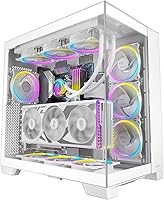
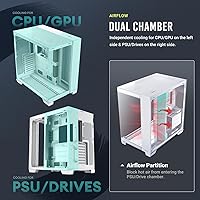
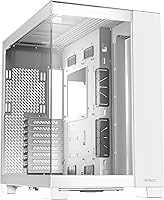
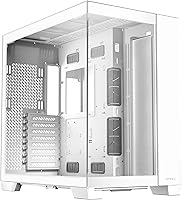
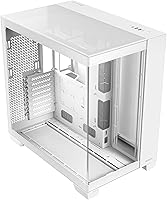
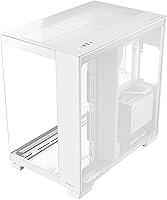
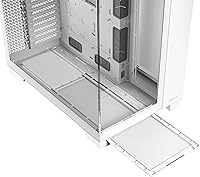
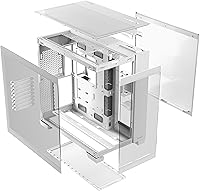
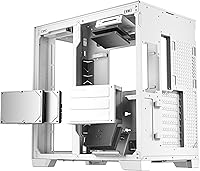
The Antec C8 Full-Tower E-ATX PC Case is built for builders who refuse to compromise — people putting together serious rigs with large motherboards, powerful GPUs, and demanding cooling setups. What sets this E-ATX enclosure apart immediately is the dual-chamber layout, which physically separates the PSU and storage area from the main build space. That separation means cleaner cable routing and better airflow where it counts. The front and side panels are edge-to-edge tempered glass, giving an unobstructed view of everything inside. One thing to know upfront: no fans are included, so factor that into your total budget before purchasing.

Features & Benefits

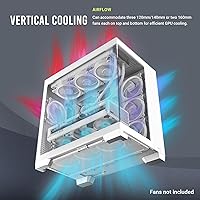
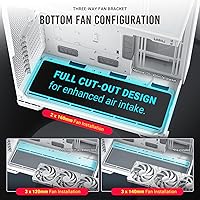
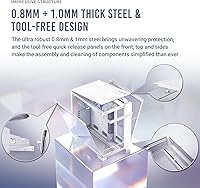
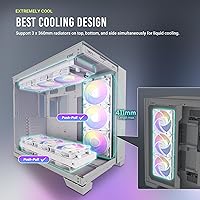
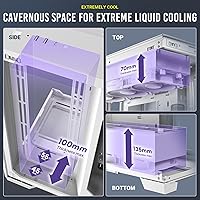
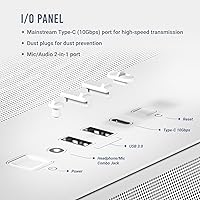
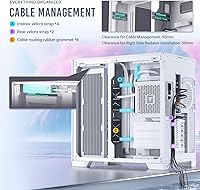
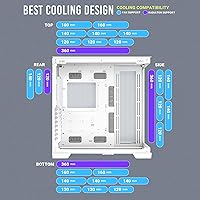
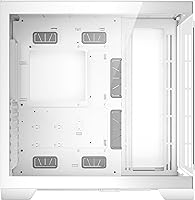
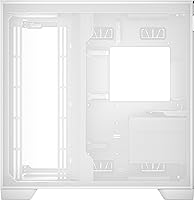
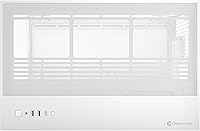
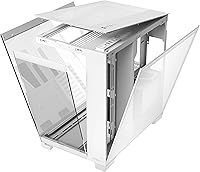
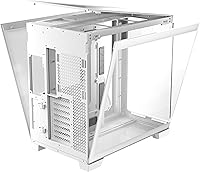
The dual-chamber design is more than an aesthetic choice — it genuinely changes how a build comes together. Power supply cables stay tucked behind the wall, leaving the main chamber looking intentional rather than improvised. Cooling flexibility is exceptional: this full-tower case supports 360mm radiators on the top, bottom, and side simultaneously, which gives custom loop builders real room to work. The bottom fan bracket swaps between 120mm and 140mm configurations without tools. Panels detach without a screwdriver as well, saving time during test builds or upgrades. Front I/O includes a USB Type-C port alongside four standard USB connections for everyday convenience.

Best For

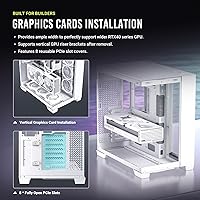
This E-ATX enclosure is a strong fit for enthusiast builders — specifically those working with E-ATX or large ATX motherboards paired with RTX 40-series or similarly sized GPUs. If you are planning a custom water-cooling loop with multiple radiators, the internal layout was practically designed with you in mind. The tempered glass panels make it a natural choice for anyone who takes pride in how their rig looks. It also suits builders who already have a fan selection in mind or want to choose their own; the flexible brackets accommodate that without compromise. A clean, organized build is genuinely rewarded here.

User Feedback

Buyers who have spent time with the Antec C8 tend to praise the glass panel quality specifically — not just as a visual feature, but as something that feels genuinely well-made rather than an afterthought. The interior space draws consistent appreciation; people building with large GPUs and thick radiators report having enough room to work without fighting the case. The weight, over 23 pounds, does come up regularly, with some noting that installation goes smoother with two people. Panel clip adjustment takes a little getting used to on first assembly. The no-fans policy draws occasional commentary, but most experienced builders treat it as expected at this tier.

Pros

  • Dual-chamber layout keeps PSU cables completely out of the main build area, making the interior look intentional and clean.
  • Supports 360mm radiators on the top, bottom, and side at the same time — rare flexibility for serious custom loop builders.
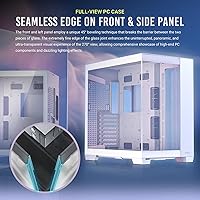
  • Edge-to-edge tempered glass on both the front and side panels looks genuinely premium, not just passable.
  • Toolless panel removal makes test builds and hardware swaps noticeably faster and less frustrating.
  • Spacious interior handles large E-ATX motherboards and triple-slot GPUs without forcing awkward fitment compromises.
  • Interchangeable bottom fan brackets accommodate both 120mm and 140mm fans, giving builders real configuration flexibility.
  • Front I/O includes a USB Type-C port alongside four traditional USB connections, covering both modern and legacy devices.
  • Build quality earns consistent praise from buyers — the chassis feels solid and well-finished, not hollow or flimsy.
  • Fan agnosticism lets experienced builders bring their preferred cooling hardware rather than working around bundled stock fans.

Cons

  • No fans are included, so the total build cost is meaningfully higher once you account for adequate airflow coverage.
  • At over 23 pounds empty, moving or repositioning this full-tower case during a build is genuinely awkward solo.
  • The panel clips require some initial adjustment and patience — first-time assembly is not as intuitive as it could be.
  • The large footprint means it will dominate or not fit many standard desk and floor setups without planning ahead.
  • Builders on a mid-range budget may find comparable cases offer better value given the extra fan investment required here.
  • The premium size and weight make transport or LAN party use impractical compared to smaller form-factor alternatives.
  • New builders unfamiliar with dual-chamber layouts may find the routing process more complex than a conventional single-chamber case.

Ratings

The Antec C8 Full-Tower E-ATX PC Case scores are generated by our AI engine after analyzing verified buyer reviews from global markets, with spam, bot activity, and incentivized feedback actively filtered out before scoring. This full-tower case earns consistently strong marks across most categories, and the analysis below reflects both the genuine strengths that make it a standout and the real friction points that affect certain buyers. Nothing is glossed over — the scores represent what actual builders experienced, not a polished marketing summary.

Build Quality
93%
Buyers across multiple markets consistently describe the chassis as feeling solid and well-engineered from the moment they lift it out of the box. The steel frame shows no flex under the weight of heavy components, and the tempered glass panels feel thick and substantial rather than decorative.
A small number of users noted minor finishing inconsistencies on interior edges and panel mounting points, which are not structural issues but are noticeable on a case at this price tier. These appear to be isolated production variance rather than a systemic flaw.
Cooling Flexibility
96%
The ability to mount 360mm radiators simultaneously on the top, bottom, and side is something very few cases at any price offer, and custom loop builders repeatedly call this out as the main reason they chose the Antec C8. The interchangeable bottom brackets add even more configuration options for air-cooled setups.
Because fans are not included, realizing this cooling potential requires meaningful additional investment, and some buyers underestimated how many fans a case this size needs to move air efficiently. Without at least a base set of fans installed, thermal performance is essentially zero out of the box.
Cable Management
89%
The dual-chamber layout is the most frequently praised practical feature in user reviews — once builders experience the clean separation of PSU cables from the main compartment, going back to a single-chamber design feels like a regression. Cable routing channels are well-positioned and the grommets are large enough to handle thick cable runs.
A few builders with particularly large PSU cables or modular extensions noted that the rear chamber, while functional, can still get crowded if you are running a high-wattage unit with many cables. It manages the situation better than most cases, but it is not infinitely spacious behind the tray.
Aesthetic Design
91%
The edge-to-edge tempered glass on both the front and side panels is the most discussed visual feature, and in-person impressions consistently match the promotional imagery — there is no visible metal framing to break the sightlines. Builders who invest in RGB components or visible custom loops find this enclosure genuinely showcases their work.
The white version, while striking, requires more maintenance to keep looking clean — fingerprints and dust on both large glass surfaces are more visible than on darker alternatives. Some buyers noted that smudges from installation were immediately apparent before they had even finished the build.
Assembly Experience
74%
26%
The toolless panel system genuinely speeds up the process for experienced builders who have assembled multiple systems. Once you understand how the clips work, swapping panels for cleaning or hardware upgrades takes under a minute per panel, which is a practical time saver during iterative testing.
First-time assembly drew consistent complaints about the panel clips requiring unintuitive pressure to seat and release correctly, with some buyers worrying they were about to crack a glass panel before getting the feel for it. The dual-chamber routing also adds complexity that beginners may find disorienting compared to straightforward single-chamber cases.
Interior Space
94%
Builders running E-ATX boards paired with triple-slot GPUs and thick 360mm radiators describe the interior as genuinely roomy rather than just technically adequate. There is enough clearance to work comfortably inside the case without components fighting for the same real estate.
The sheer internal volume does mean the case demands a large physical footprint in your workspace, and users with desks or setups optimized for mid-tower dimensions found placement more complicated than expected. Vertical space under desks in particular can be a constraint given the 18.5-inch height.
Front I/O
78%
22%
The inclusion of a USB Type-C port on the front panel is genuinely useful for modern peripherals and storage devices, and most builders appreciate having four traditional USB ports alongside it for everyday use. The port placement is practical rather than awkwardly positioned.
Some users pointed out that the front I/O lacks a dedicated audio jack on more recent unit revisions, which is a friction point for anyone using wired headsets during gaming sessions. At this price tier, a more comprehensive I/O panel would be expected by a portion of the audience.
Value for Money
71%
29%
For builders who will fully utilize the radiator support, dual-chamber layout, and glass panels, the price makes sense as an investment in a platform that will accommodate multiple build generations without needing replacement. Users who did their homework before buying generally feel the build quality justifies the cost.
The no-fans-included policy meaningfully raises the real-world cost of entry, and when you factor in purchasing enough fans to populate a case this size properly, the total spend climbs well above the sticker price. Budget-conscious builders who compare headline prices without accounting for this often feel the value proposition is weaker than it first appears.
Noise Isolation
62%
38%
The solid steel chassis and thick tempered glass panels do provide some passive acoustic mass compared to thinner budget cases, and builders using high-quality low-RPM fans report reasonably controlled noise levels during light workloads.
There is no sound dampening material anywhere in the enclosure, which is increasingly common at this price in competing cases. Builders pushing the cooling hard with multiple high-speed fans found the case does nothing to reduce operational noise, which is a notable gap for a premium product.
Fan Compatibility
88%
Support for both 120mm and 140mm fans at the bottom, plus 140mm and 160mm options at the top, means this E-ATX enclosure works with virtually any fan a builder might already own or want to buy. That broad compatibility reduces friction for upgraders migrating fans from an older system.
The lack of any pre-installed fans means new builders have no reference point for airflow direction or placement until they research it independently, which adds a step that more beginner-friendly cases handle for you. Fan mounting hardware, while present, occasionally drew comments about being fiddly to align correctly.
GPU Clearance
92%
Large modern GPUs — including the longest triple-slot RTX 40-series cards — install without modification or compromise, and the vertical clearance from the PCIe slot area is generous enough to accommodate aftermarket GPU support brackets. Builders with flagship graphics cards repeatedly confirm a clean, unconstrained fit.
Antec does not publish an explicit maximum GPU length figure in all markets, which creates pre-purchase uncertainty for buyers with unusually long cards. Most users found this to be a non-issue in practice, but the ambiguity in official documentation is an avoidable annoyance.
Liquid Cooling Support
97%
Triple simultaneous 360mm radiator support is the headline specification that separates this full-tower case from most competitors, and enthusiasts building serious custom loops describe the routing options as well thought out for both inlet and outlet placement. It handles demanding thermal configurations that would require compromise in nearly any other enclosure.
Realizing the full liquid cooling potential of this case requires a substantial additional investment in pumps, reservoirs, tubing, and radiators that significantly exceeds the cost of the case itself. Buyers who purchased primarily for this feature without accounting for the total system cost occasionally expressed surprise at the overall outlay.
Portability & Weight
44%
56%
The weight reflects the substantial steel and glass construction, and for a permanent desktop setup this is simply not a concern — the chassis stays planted and stable on any surface without risk of tipping during cable management.
At 23.1 pounds empty, moving this case between rooms, carrying it to a LAN event, or even repositioning it during assembly is genuinely difficult for a single person. Multiple buyers specifically recommend having a second person present for initial assembly, and anyone who moves their system regularly will find the weight a persistent inconvenience.
Dust Filtration
67%
33%
Removable dust filters at the bottom intake positions help protect components from particulate buildup over time, and their placement makes sense given that bottom-mounted fans are a common configuration in this case.
Coverage is not comprehensive across all intake points, meaning a case running multiple fans in various positions will still accumulate dust in areas that are harder to maintain. Users in dusty environments noted the need for more frequent manual cleaning than they expected based on the number of open mesh areas.

Suitable for:

The Antec C8 Full-Tower E-ATX PC Case is purpose-built for enthusiast builders who want a serious platform for high-end components — not a case that merely fits everything, but one that organizes and showcases it. If you are working with an E-ATX motherboard, a triple-slot GPU from the RTX 40 series, and have plans for a custom water-cooling loop, this full-tower case was essentially designed around that exact scenario. The dual-chamber layout is a genuine quality-of-life improvement for anyone who has wrestled with cable management in a cramped single-chamber enclosure. Builders who take pride in how their system looks will also appreciate the edge-to-edge tempered glass on both the front and side — it turns the interior into a display rather than something to hide. If you already have a fan selection planned or own high-quality fans from a previous build, the flexible bracket system means you can slot right in without compromise.

Not suitable for:

The Antec C8 Full-Tower E-ATX PC Case is a poor fit for anyone working within a tight overall budget, because the case itself sits at a premium price point and ships without any fans — meaning additional spending is required before the system can run properly cooled. Compact or mid-tower fans who need a case that fits under a desk or in a constrained space should look elsewhere; at over 23 pounds and nearly 18.5 inches tall, this E-ATX enclosure demands a dedicated, spacious setup. Casual builders putting together a basic office or entry-level gaming PC would find the feature set excessive and the size impractical. Anyone who prefers a straightforward, no-fuss assembly experience may find that the panel clips and dual-chamber layout add complexity that simpler cases avoid. If aesthetics are not a priority and you just need functional housing for components, the cost-to-value ratio here will not make sense for your use case.

Specifications

  • Form Factor: Full Tower design accommodates Extended ATX (E-ATX) and standard ATX motherboards with ample interior clearance.
  • Dimensions: The case measures 18.11″ x 11.81″ x 18.5″ (Length x Width x Height), requiring dedicated desk or floor space.
  • Weight: The empty chassis weighs 23.1 pounds, which is typical for a steel full-tower build of this scale.
  • Materials: Construction uses a steel chassis paired with tempered glass panels on both the front and side faces.
  • Glass Panels: Both the front and side panels feature edge-to-edge tempered glass with no visible framing interrupting the view.
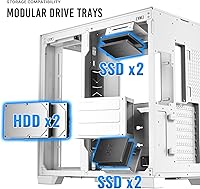
  • Chamber Layout: A dual-chamber interior physically separates the PSU and storage bay from the primary motherboard and cooling compartment.
  • Radiator Support: The case supports 360mm radiators simultaneously on the top, bottom, and side mounting positions.
  • Top Fan Support: The top of the case fits up to three 140mm fans or two 160mm fans for exhaust or radiator mounting.
  • Bottom Fan Bracket: A full cut-out bottom includes interchangeable brackets that accept either 120mm or 140mm fan configurations.
  • Panel Removal: All panels use a toolless removal system, allowing access to the interior without a screwdriver.
  • Front I/O: Front connectivity includes one USB Type-C port, two USB 3.0 ports, and two USB 2.0 ports.
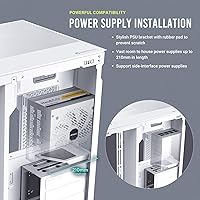
  • PSU Mounting: The power supply mounts at the rear of the lower chamber, keeping it isolated from the main build area.
  • GPU Compatibility: The interior is verified compatible with large modern GPUs including RTX 40-series cards with triple-slot coolers.
  • Fans Included: No fans are included with the case; buyers must source and install their own cooling hardware separately.
  • Motherboard Support: Officially supports E-ATX and ATX form factors; smaller standards such as Micro-ATX and Mini-ITX are also physically compatible.

Related Reviews
Antec C8 ARGB Full-Tower PC Case
80%
83%
Build Quality
88%
Thermal Performance
93%
Cooling Flexibility
91%
Aesthetics & Visual Design
74%
Cable Management
More
Antec Flux Wood Mid-Tower PC Case
83%
91%
Build Quality
88%
Airflow Performance
94%
Aesthetic Design
86%
Fan Inclusion & Quality
89%
Radiator Compatibility
More
Antec Flux Pro White Full-Tower E-ATX Case
83%
91%
Build Quality
89%
Airflow Performance
93%
Cooling Headroom & Radiator Support
88%
Fan Inclusion & Value
92%
Design & Aesthetics
More
darkFlash DY470 Full-Tower ATX PC Case
80%
93%
Cable Management
78%
Build Quality & Materials
84%
Cooling Potential
91%
Aesthetics & Visual Design
89%
GPU Compatibility & Mounting
More
Antec C5 ARGB
Antec C5 ARGB
84%
93%
Out-of-Box Value
88%
Build Quality
84%
Airflow & Thermal Performance
86%
Cable Management
91%
ARGB Lighting Quality
More
Vetroo AL800 Mid Tower ATX PC Case
76%
78%
Build Quality
84%
Tempered Glass Panel
76%
Airflow Performance
61%
Fan Included & Expandability
69%
Cable Management
More
Antec VSK3000E-U3 Micro ATX Mini Tower Case
72%
78%
Build Quality
86%
Value for Money
57%
Cooling Performance
83%
Front I/O & Connectivity
84%
Drive Bay Versatility
More
Zalman S2 ATX Mid-Tower PC Case
76%
88%
Airflow Performance
63%
Build Quality
91%
Value for Money
86%
Ease of Assembly
84%
Cooling Expandability
More
darkFlash DS900 ATX Mid-Tower PC Case
75%
76%
Build Quality
83%
Cooling Potential
91%
Aesthetics & Visibility
88%
Value for Money
74%
Cable Management
More
KEDIERS K4 ATX Mid Tower PC Case
80%
91%
Value for Money
93%
Aesthetic Design
74%
Build Quality
72%
Cooling Performance
84%
Ease of Assembly
More

FAQ

No, the Antec C8 Full-Tower E-ATX PC Case ships without any fans included. You will need to purchase fans separately, so factor that into your total build budget. The upside is you get to choose exactly which fans suit your airflow or noise preferences.

Yes, and that is one of the stronger points of this enclosure. It supports 360mm radiators on the top, bottom, and side simultaneously, which gives custom loop builders a lot of flexibility when planning their cooling layout.

It fits without issue. The interior was designed with E-ATX in mind, and most buyers report having plenty of room left over for cable routing and component clearance even with large motherboards installed.

Most builders find it straightforward, though the panel clips take a bit of trial and error the first time. Once you get a feel for how they seat and release, it becomes second nature. Having a second person on hand is helpful given how heavy the empty chassis is.

Both the front and the side panel are tempered glass, and both run edge-to-edge without visible framing. The result is a fully open view of the interior from two angles, which is a genuine visual advantage if your build includes RGB or custom loop components.

Antec has not published a single rigid GPU length limit for this model, but the dual-chamber layout and full-tower interior comfortably handle the largest cards currently available, including triple-slot RTX 40-series designs. If you are running an unusually long card, checking Antec's official spec sheet for your specific GPU is always a safe step.

You can use both. The bottom bracket is interchangeable between 120mm and 140mm configurations, so you are not locked into one size. The top supports up to three 140mm or two 160mm fans, giving you real flexibility depending on what you already own.

The PSU and storage drives sit in a separate rear compartment, which means all the bulky power cables stay behind the motherboard tray rather than running through the main visible area. For builders who care about a clean interior, it removes a lot of the clutter that typically comes with rear-mount PSU setups.

Honestly, the feature set is geared toward enthusiast and high-end builds. For a budget or mid-range system, you would be paying for cooling and expansion capabilities you may never use, and you still need to buy fans on top of the case price. It makes the most sense when paired with components that justify the platform.

A soft microfiber cloth slightly dampened with water or a screen-safe cleaner works well for fingerprints and dust. Avoid abrasive materials or alcohol-based sprays directly on the glass. Since the panels are toollessly removable, you can take them off entirely for a thorough cleaning without awkward angles.

Where to Buy