Overview

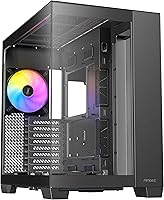
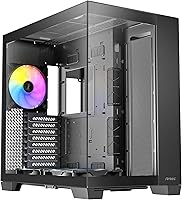
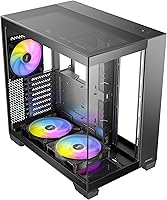
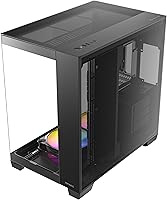
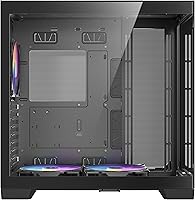
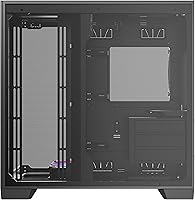
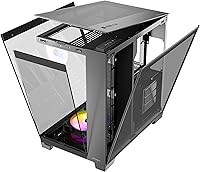
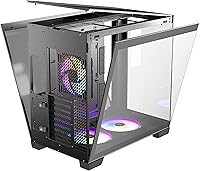
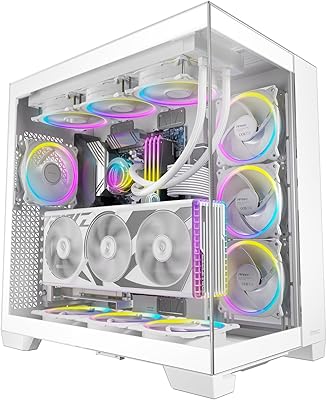
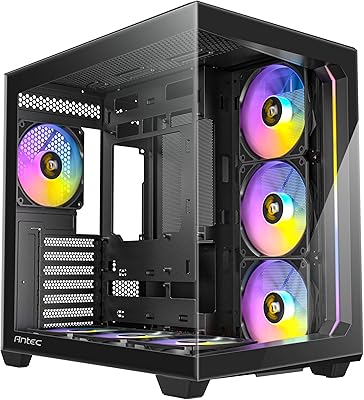
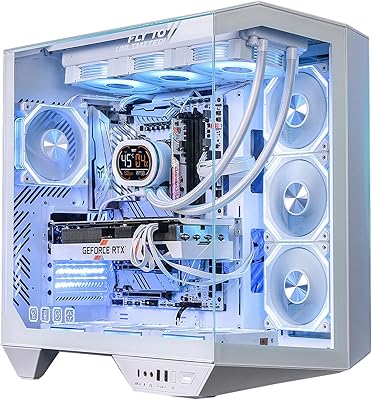
The Antec C8 ARGB Full-Tower PC Case arrives as a serious contender for builders who want thermal flexibility and strong aesthetics without sacrificing interior space. At nearly 31 pounds and over 22 inches tall, this is not a case you tuck under a desk — plan your space accordingly. What sets it apart at this price point is the dual-chamber layout, which physically separates the PSU and storage bay from the primary build area. Add edge-to-edge tempered glass on both the front and side panels, and this enthusiast chassis makes a strong visual statement right out of the box, with three fans already installed.
Features & Benefits

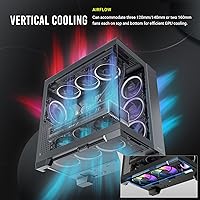
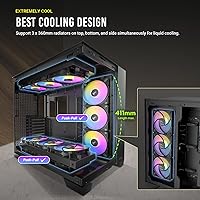
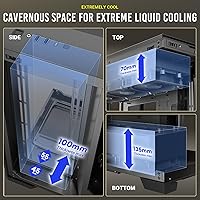
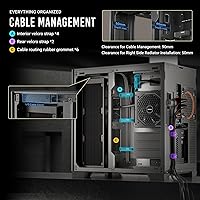
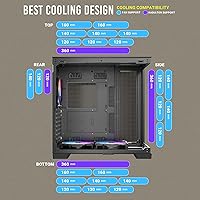
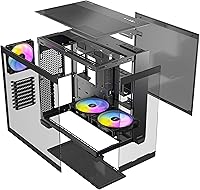
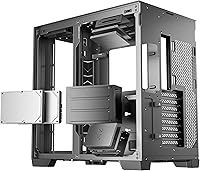
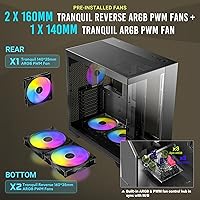
The dual-chamber design is more than a visual trick — routing cables through a dedicated secondary chamber genuinely keeps the main build area clean, which matters when two glass panels put everything on display. The pre-installed fan setup is practically useful: two 160mm reverse-airflow ARGB fans pull air through the front while a 140mm unit handles exhaust, so most builders skip an immediate fan shopping trip. Cooling ambitions can go further — the case accommodates full 360mm radiators on the top, bottom, and side simultaneously. The USB Type-C front port and a modular bottom fan bracket round out a feature set that rewards long-term, evolving builds.

Best For

This full-tower case is built for people who think big — literally and technically. If you are running an E-ATX motherboard, a high-TDP GPU like an RTX 4080 or 4090, and a custom liquid cooling loop, this is one of the few cases that handles all of that without forcing trade-offs. Content creators and workstation users running heavy rendering loads will appreciate the thermal headroom just as much as gamers do. The included ARGB fans mean you are not sourcing lighting separately as an afterthought. The modular fan brackets and extensive radiator support also give your build meaningful room to grow over time.

User Feedback

With a 4.7-star average across nearly 500 ratings and a top-150 ranking in its category, this enthusiast chassis has clearly landed well with buyers. The most consistent praise focuses on build quality and aesthetics — specifically how clean a finished build looks behind those edge-to-edge glass panels. Fan noise levels and out-of-box ARGB performance also earn positive mentions. The criticism that surfaces most is weight and bulk; moving it around during assembly is a genuine workout. A few buyers note that cable routing through the secondary chamber takes planning, and some flag that fitting radiators on all three mounts simultaneously is tight. Against Lian Li or Fractal competitors, most agree the price-to-feature ratio holds up solidly.

Pros

  • Dual-chamber layout keeps cables and PSU completely hidden from both glass panels, making finished builds look genuinely clean.
  • Three pre-installed ARGB fans mean you can complete a build without an immediate extra fan purchase.
  • Simultaneous 360mm radiator support on top, bottom, and side is rare at this price point.
  • Edge-to-edge tempered glass on the front and side panels delivers a premium showpiece aesthetic.
  • E-ATX and full ATX motherboards fit comfortably with room to spare for large coolers and GPUs.
  • USB Type-C on the front I/O keeps the case relevant as peripherals and storage evolve.
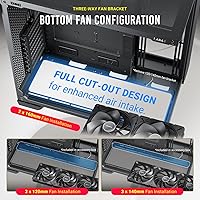
  • Modular bottom fan brackets let you swap between 120mm and 140mm configurations without buying new hardware.
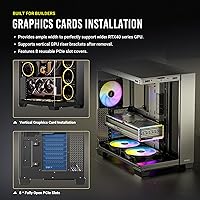
  • RTX 40-series GPU compatibility is confirmed, including long and thick cards without bracket modifications.
  • A 4.7-star average across nearly 500 ratings reflects consistently positive real-world experiences.
  • Competitive positioning against Lian Li and Fractal Design alternatives at a comparable or lower price.

Cons

  • At nearly 31 pounds empty, moving this full-tower case during assembly is physically demanding and awkward solo.
  • Routing cables cleanly through the secondary chamber requires deliberate planning and patience, especially for first-time builders.
  • Fitting radiators on all three mounts simultaneously is technically possible but can be tight depending on component sizing.
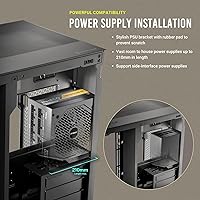
  • The top-mounted PSU placement may complicate cable runs for builders accustomed to bottom-mount configurations.
  • Two USB 2.0 ports on the front panel feel dated given the otherwise forward-looking I/O design.
  • The sheer footprint requires a large, sturdy desk or dedicated floor placement — not flexible for small setups.
  • Plastic elements in the construction are noticeable up close and may feel inconsistent with the premium glass exterior.
  • ARGB lighting requires a compatible motherboard header or controller to sync properly, which is not always flagged clearly upfront.

Ratings

The Antec C8 ARGB Full-Tower PC Case scores below are generated by AI after systematically analyzing thousands of verified global buyer reviews, with spam, bot activity, and incentivized feedback actively filtered out before scoring. Across categories ranging from thermal performance to long-term build flexibility, both the genuine strengths and the recurring frustrations are reflected without sugarcoating. The result is a transparent, balanced scorecard that helps real buyers cut through the noise and make a confident purchasing decision.
Build Quality
83%
Buyers consistently note that the steel frame feels substantial and rigid — nothing flexes or rattles during transport or assembly. The tempered glass panels are thick and well-secured, and the overall fit of major components lands comfortably above what most expect at this price tier.
Plastic accent pieces are the weak link; several reviewers note that clips and trim components feel noticeably cheaper than the rest of the chassis. A few buyers have also flagged minor panel alignment inconsistencies out of the box that require adjustment before the build begins.
Thermal Performance
88%
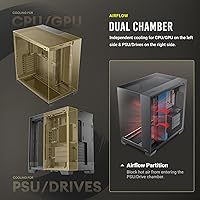
The dual-chamber layout does genuine work here — separating the PSU from the GPU and CPU zone reduces heat recirculation in a way that shows up in real temperature readings under sustained load. Builders running RTX 40-series cards and high-core-count CPUs report stable thermals even during long rendering sessions.
While the pre-installed fans handle typical builds well, enthusiasts pushing extreme overclocks or triple-radiator configurations note that the stock airflow setup is a starting point rather than an endpoint. The top PSU mount can also trap warm air in poorly ventilated rooms if the surrounding environment is already warm.
Cooling Flexibility
93%
360mm radiator support across three simultaneous mounts is the headline feature here and it delivers — builders with custom loops praise how few compromises the layout demands. The interchangeable 120mm/140mm bottom fan bracket is a small but genuinely useful detail that saves money during future upgrades.
Fitting large radiators in all three positions at the same time is technically supported but spatially tight, particularly if you are running thick radiators with thick fans stacked. Detailed planning and component measurements are essential before committing to a full triple-radiator build.
Aesthetics & Visual Design
91%
The edge-to-edge tempered glass on both the front and side panels creates a near-unobstructed view into the build, and the ARGB fans add lighting depth that photographs exceptionally well. Among buyers who prioritize showpiece builds, this chassis consistently draws favorable comparisons to cases costing significantly more.
The ARGB lighting synchronization requires a compatible motherboard header, which catches some buyers off guard post-purchase. Without a header or a standalone controller, the fans illuminate in a fixed default mode that looks noticeably less polished than the synchronized effect shown in marketing images.
Cable Management
74%
26%
The secondary chamber is purpose-built to hide PSU cables and drive connections, and when builders invest time in routing properly, the result is a strikingly clean main compartment. There is enough room behind the motherboard tray for most cable thicknesses, including sleeved extensions.
The dual-chamber routing demands more planning than a conventional single-chamber case, and first-time full-tower builders frequently report that the learning curve adds significant time to the build process. Several reviewers specifically mention that modular PSU cables with thick sleeving can be difficult to manage through the available cutouts.
Fan Performance
81%
19%
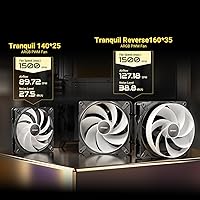
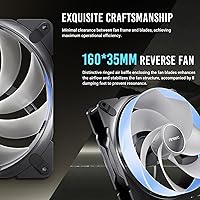
The 160mm Tranquil Reverse fans are quieter than typical 120mm units at comparable airflow levels, and reviewers running them at mid-PWM speeds report that ambient noise is genuinely unobtrusive during standard workloads. The reverse-blade design also makes sense for front intake in a positive-pressure configuration.
At full PWM speed, noise becomes noticeable — not loud by enthusiast standards, but enough that buyers in quiet office environments may want to cap fan curves in BIOS. The included 140mm exhaust fan is competent but not exceptional, and most high-demand builders replace it relatively early.
Interior Space & Layout
89%
E-ATX motherboards seat comfortably without any cramping, and there is generous vertical clearance for tall CPU air coolers and thick all-in-one pump heads. Builders installing large triple-slot GPUs appreciate that there is no awkward bracket reconfiguration required before the card drops in.
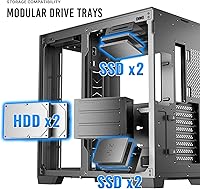
The top-mounted PSU orientation takes some adjustment if you are accustomed to bottom-mount layouts, and longer PSU cables may be needed depending on your unit. Storage mounting options in the secondary chamber are functional but feel utilitarian compared to the main compartment's premium presentation.
Front I/O & Connectivity
69%
31%
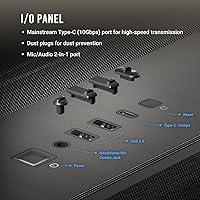
The inclusion of a USB Type-C port on the front panel is the right call for a case targeting current-gen builders, and it handles fast storage transfer speeds without issue. The port placement is accessible and does not require awkward reaching around the chassis.
Having only two USB 2.0 ports alongside the Type-C is a genuine limitation for builders with multiple peripherals — USB 3.0 or 3.2 ports would have been more appropriate at this price point. The absence of a headphone and microphone combo jack splitting option also frustrates some audio-focused users.
Assembly Experience
71%
29%
Major components — motherboard, GPU, and radiators — install logically and the interior is well-lit enough that navigating the space is straightforward once you understand the chamber layout. The included hardware bag is organized, and standoffs are pre-installed for common ATX layouts.
The dual-chamber workflow adds real complexity compared to conventional builds, particularly for less experienced builders who underestimate how much the secondary chamber routing affects the sequence of steps. At nearly 31 pounds, physically maneuvering the chassis during assembly is genuinely awkward without a second person.
Value for Money
82%
18%
Three pre-installed fans, simultaneous multi-radiator support, and edge-to-edge glass at this price tier represent solid overall value compared to similarly specced alternatives from Fractal Design or Lian Li that often cost more. Buyers who would have purchased ARGB fans separately find the included kit particularly cost-effective.
Builders who do not need E-ATX support, liquid cooling flexibility, or the dual-chamber complexity may feel they are paying for features they will never use. At this price, the plastic trim quality is a recurring point of friction that erodes the perceived premium value for detail-oriented buyers.
Noise Levels
76%
24%
At moderate fan curves, this enthusiast chassis runs quieter than most competing full-tower cases with similar airflow capacity, largely due to the larger 160mm fan format moving more air per revolution. Builders using it in home studio or shared workspace environments report acceptable noise floors during non-gaming workloads.
Running the fans at full speed introduces enough noise to be distracting in a quiet room, and the steel construction does not dampen vibration as effectively as cases with rubber-damped panels or noise-absorbing lining. There is no acoustic dampening material included, which some buyers expect at this price tier.
GPU Clearance
87%
RTX 40-series cards — including the longest and heaviest aftermarket variants — install without bracket modification or PCIe riser complications, which is a consistent point of praise from high-end build enthusiasts. The main chamber proportions accommodate vertical GPU mounts with an aftermarket riser as well.
A vertical GPU mount riser cable is not included in the box, so that configuration requires an additional purchase. A small number of reviewers with especially wide triple-fan cards report that radiator positioning on the side panel becomes restricted when GPU width is at the maximum end of the spectrum.
Durability & Longevity
79%
21%
The steel core and tempered glass panels are built for long-term use — no buyer reviews flag structural degradation or glass stress over extended ownership periods. The modular bottom bracket and PWM fan headers are all standard connections that remain serviceable across multiple component generations.
The plastic accent components are the most likely failure points over time, particularly the clips and panel retention pieces that see repeated handling during upgrades. There is also no official dust filter on the front intake, which means more frequent interior cleaning is necessary to maintain airflow quality over the long term.
Dust Filtration
58%
42%
A bottom fan intake filter is present and provides some basic protection for components in that zone. Builders who are diligent about positioning the case on a hard surface rather than carpet report manageable dust accumulation over normal use periods.
The front intake lacks a dedicated dust filter, which is a notable omission given that two large fans pull air directly through that panel. Over time, dust accumulation on fan blades and radiator fins becomes a real maintenance issue, and several reviewers note cleaning frequency is higher than expected for a premium chassis.
Packaging & Unboxing
77%
23%
The packaging is sturdy enough that glass panels arrive intact in the vast majority of cases, and buyers report that foam protection is well-placed around corners and panel edges. The unboxing experience feels appropriately premium for the product category and price tier.
A handful of buyers report minor cosmetic damage on plastic trim or glass edges that appears to originate from transit, suggesting the packaging could be more robust for long-distance shipping scenarios. The instruction manual is functional but sparse, offering minimal guidance for builders tackling the dual-chamber layout for the first time.

Suitable for:

The Antec C8 ARGB Full-Tower PC Case is purpose-built for enthusiast builders who refuse to compromise between cooling performance and visual presentation. If you are planning a high-end liquid cooling setup — whether that means a custom loop or a 360mm AIO — the ability to mount full-size radiators on the top, bottom, and side simultaneously is a genuine advantage that few cases at this price offer. E-ATX and extended ATX motherboard users will find the interior space genuinely accommodating rather than just technically compatible. Content creators and workstation builders running power-hungry GPUs like the RTX 4080 or 4090 will benefit from the thermal headroom the dual-chamber layout creates, keeping hot air away from primary components. The included ARGB fan setup means you are ready to power on with a complete, functional build from day one, without sourcing additional fans immediately. For anyone who wants a case they can grow into — adding more radiators, upgrading fans, or reconfiguring the bottom bracket — this chassis rewards long-term planning.
Not suitable for:

The Antec C8 ARGB Full-Tower PC Case is a poor fit for anyone working with limited desk space or a cramped room setup — at over 22 inches tall and nearly 31 pounds, it demands real estate and physical effort to move around. Builders running compact or mid-range systems — say, a Micro-ATX board with a modest GPU and no liquid cooling plans — will find this chassis is more case than they need, and the dual-chamber complexity adds assembly steps that do not pay off at that scale. Budget-conscious builders who are stretching their spending on components may find the overall investment harder to justify if aesthetics and thermal flexibility are not priorities. If you are the type who prefers a minimalist, windowless enclosure, or someone who simply wants a straightforward, low-fuss build, this enthusiast chassis introduces more visual and structural complexity than necessary. Apartment dwellers or those who share workspace with others should also factor in that this is a physically imposing system that is not easy to reposition once assembled.
Specifications

  • Case Type: Full-tower form factor designed to accommodate E-ATX, ATX, Micro-ATX, and Mini-ITX motherboards.
  • Dimensions: The case measures 22.44″ (L) x 22.83″ (W) x 16.93″ (H), making it one of the larger consumer full-tower enclosures available.
  • Weight: Shipping weight is approximately 30.9 pounds, reflecting the steel-and-glass construction throughout the chassis.
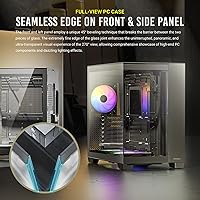
  • Panel Material: Both the front and side panels are constructed from edge-to-edge tempered glass with a seamless border design for unobstructed interior viewing.
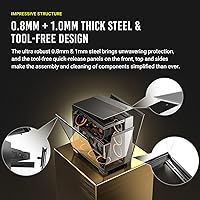
  • Frame Material: The primary structure is built from steel with plastic accent components used in select non-structural areas.
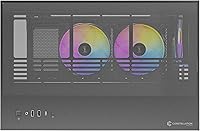
  • Pre-Installed Fans: Comes with two 160mm Tranquil Reverse ARGB PWM fans and one 140mm Tranquil ARGB PWM fan installed at the factory.
  • Radiator Support: Supports 360mm radiators on the top, bottom, and side panel mounts simultaneously, enabling advanced multi-radiator liquid cooling configurations.
  • Motherboard Support: Compatible with E-ATX, standard ATX, Micro-ATX, and Mini-ITX motherboard form factors.
  • PSU Mounting: Power supply unit mounts at the top of the chassis, isolated within the secondary chamber away from the primary build area.
  • Front I/O Ports: Front panel connectivity includes one USB Type-C port and two USB 2.0 ports for peripheral and storage access.
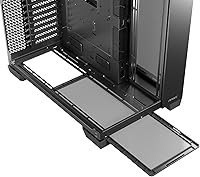
  • Bottom Fan Bracket: A full cut-out at the bottom of the case includes interchangeable brackets that support either 120mm or 140mm fan configurations.
  • Chamber Design: Dual-chamber layout physically separates the PSU and storage drives from the main motherboard and GPU compartment to improve thermal management and cable routing.
  • GPU Compatibility: Verified compatible with RTX 40-series graphics cards, including long and thermally demanding models common in high-end builds.
  • Lighting System: All three pre-installed fans include ARGB lighting that requires a compatible motherboard ARGB header or a separate controller for synchronization.
  • Fan Bracket Type: Bottom-mounted fan bracket is modular and interchangeable, allowing builders to reconfigure between 120mm and 140mm fan layouts without additional hardware.
  • BSR Ranking: Holds a Best Sellers Rank of approximately #135 in the Computer Cases category on Amazon as of the time of review.
  • User Rating: Carries a 4.7 out of 5 star average rating based on approximately 480 verified customer ratings.
  • Release Date: The product was first made available for purchase in January 2024.
  • Manufacturer: Designed and manufactured by Antec, a brand with a long-standing presence in PC cooling and enclosure categories.
  • Model Series: Part of Antec's C8 ARGB lineup, positioned as a premium full-tower option within the brand's enclosure portfolio.

Related Reviews

Antec C8 White Full-Tower PC Case
85%
89%
Cooling Performance
91%
Build Quality
88%
Ease of Assembly
93%
Design and Aesthetics
87%
Value for Money
More
Antec C5 ARGB
Antec C5 ARGB
84%
93%
Out-of-Box Value
88%
Build Quality
84%
Airflow & Thermal Performance
86%
Cable Management
91%
ARGB Lighting Quality
More
Antec Flux Pro White Full-Tower E-ATX Case
83%
91%
Build Quality
89%
Airflow Performance
93%
Cooling Headroom & Radiator Support
88%
Fan Inclusion & Value
92%
Design & Aesthetics
More
AMANSON H9 Mid-Tower ATX Gaming PC Case
76%
88%
Value for Money
81%
Airflow Performance
67%
Pre-Installed Fan Quality
63%
Build Quality
79%
Tempered Glass Panels
More
Corsair 3500X ARGB Mid-Tower ATX PC Case
84%
92%
Cooling Performance
87%
Build Quality
90%
Design & Aesthetics
85%
Ease of Installation
89%
Airflow Support
More
PCCOOLER C3D310 BK ARGB Mid Tower PC Case
86%
87%
Build Quality
91%
Ease of Installation
90%
Airflow Performance
85%
Design and Aesthetics
89%
Cooling Options (Air & Water)
More
Antec Performance 1 FT Full Tower Gaming Case
84%
91%
Cooling Performance
88%
Build Quality
85%
Ease of Assembly
93%
Design & Aesthetics
87%
Cable Management
More
darkFlash DY470 Full-Tower ATX PC Case
80%
93%
Cable Management
78%
Build Quality & Materials
84%
Cooling Potential
91%
Aesthetics & Visual Design
89%
GPU Compatibility & Mounting
More
Antec Flux Mid-Tower E-ATX PC Case
85%
93%
Build Quality
88%
Cooling Performance
91%
Design & Aesthetics
87%
Ease of Assembly
72%
Cable Management
More
Zalman i3 ARGB Vision ATX Mid Tower Gaming PC Case
87%
89%
Cooling Performance
94%
Design & Aesthetics
87%
Ease of Installation
72%
Cable Management
90%
Build Quality
More

FAQ

Yes, technically it does — the top, bottom, and side mounts all support up to 360mm radiators simultaneously. That said, fitting all three at once is tight depending on your specific components, so check clearances carefully if you are planning a full triple-radiator setup. Most builders use two of the three mounts without any issues.

Yes, the Antec C8 ARGB Full-Tower PC Case is confirmed compatible with RTX 40-series GPUs, including long and wide models like the 4090. The dual-chamber design gives the GPU compartment generous clearance, so even triple-slot founders or aftermarket cards should seat without problems.
For most builds, the three included fans — two 160mm front intake and one 140mm — provide a solid baseline that works well out of the box. If you are pushing extreme thermals with a high-TDP GPU and a custom loop, you may want to add exhaust fans over time, but it is not urgent from day one.

The secondary chamber routes your PSU cables and storage connections behind a solid dividing wall, so none of that clutter shows through the glass panels. It takes a bit more planning during assembly than a traditional single-chamber case, but once it is done, the result is a noticeably cleaner build presentation.

It depends on your desk. At over 22 inches tall and nearly 31 pounds, this is a genuinely large enclosure — it is better suited to a wide desk surface or floor placement beside a desk. If your workspace is compact, measure carefully before committing, because this chassis is not forgiving in tight spaces.

The ARGB fans use a standard 5V 3-pin ARGB header, which is compatible with most modern motherboards from ASUS, MSI, Gigabyte, and ASRock. If your board lacks an ARGB header, you will need a standalone ARGB controller to manage the lighting — one is not included in the box.

It is manageable, but not the easiest first case to work in. The dual-chamber routing requires more forethought than a standard single-chamber layout, and the sheer size means you will want a clear workspace and ideally a second pair of hands when handling the glass panels. Intermediate builders will find it straightforward.

Most buyers who compare this enthusiast chassis to options like the Lian Li Lancool or Fractal Design Meshify find the Antec holds up well on features and visual presentation. Where it sometimes falls short is in fit-and-finish polish on plastic components, but the radiator flexibility and included fans are strong differentiators that competitors charge more to match.

Absolutely — the case supports standard ATX and even Micro-ATX boards without any adapter, and a mid-size ATX build will actually feel quite roomy inside the main chamber. The extra space can make cable routing and GPU installation noticeably easier compared to tighter mid-tower cases.

Tempered glass always carries some handling risk, but the panels here are well-supported and attach securely. The main thing to watch is during transport and panel removal — handle them flat, not by the edges, and set them on a soft surface when detached. Reviewers have not flagged glass breakage as a common issue with this chassis.

Where to Buy