Overview

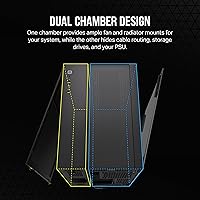
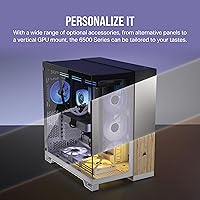
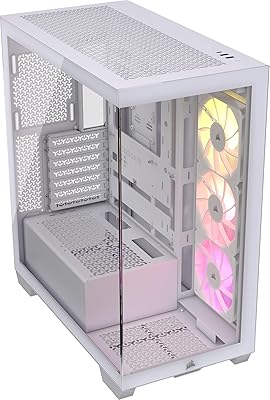
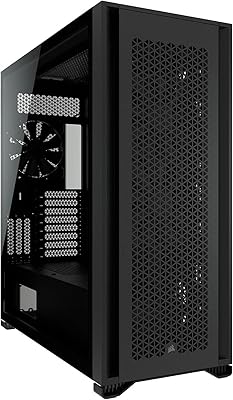
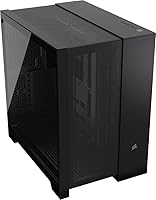
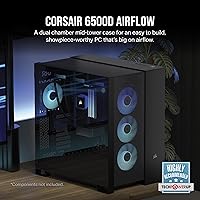
The Corsair 6500D Airflow Mid-Tower PC Case sits at the upper end of Corsair's mid-tower lineup, built around a dual-chamber interior that physically separates the PSU and cables from the main build space. That separation keeps the motherboard side clean without heroic cable management effort. The tempered glass panel lets you actually see the result — thick, clear, and scratch-resistant. This Corsair chassis also supports reverse connection motherboards, a newer standard that hides power cables behind the board entirely. No fans are included, which is either refreshing or frustrating depending on your build approach. This is a premium-tier case aimed squarely at builders who prioritize presentation.
Features & Benefits

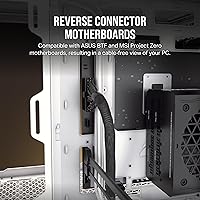
The dual-chamber layout is the headline feature. By isolating the PSU behind a dedicated divider wall, the main chamber stays uncluttered — no dangling cables ruining your view through that glass panel. The bottom-mount PSU also keeps heat from rising directly into your GPU intake zone, which matters when running a power-hungry card. Reverse connector motherboard support is forward-thinking: boards like ASUS BTF plug their power connectors through the rear, leaving the front face completely bare. Front intake clearance is generous enough to keep thermals competitive despite the relatively enclosed exterior. Drive bays and interior panels are tool-friendly and easy to reconfigure for different storage layouts.

Best For

The 6500D Airflow makes most sense for enthusiast-level builders who want their system to look as sharp as it performs. If you are already committed to a reverse connector board — ASUS BTF, MSI Project Zero, or similar — this mid-tower case is one of the few that fully capitalizes on that setup. High-performance systems with demanding GPUs and large air coolers also benefit from the structured airflow and thermal separation baked into the layout. And if you would rather hand-pick your own fans than pay for included ones you would likely replace anyway, starting with a clean slate works in your favor. Casual or budget-focused builders may find better value at lower price points.

User Feedback

Most buyers highlight the solid build quality and how clean the main chamber looks once a build is complete. Assembly earns consistent praise — the interior is well-organized and more approachable than many competitors at this tier. The recurring complaint is simple: no fans included means additional cost on top of an already premium price, and not every buyer anticipates that upfront. The reverse connection support excites those already invested in compatible boards, though a few find it confusing without prior experience. Some owners have also noted tighter-than-expected clearances for very long GPUs or tall air coolers, so component compatibility is worth verifying before committing.

Pros

  • Dual-chamber interior keeps cables and the PSU completely out of the main build view.
  • Native support for reverse connector motherboards makes this one of few cases built for that ecosystem.
  • Tempered glass panel is thick, clear, and noticeably more scratch-resistant than budget alternatives.
  • Bottom-mount PSU improves thermal separation and keeps hot air away from GPU intake.
  • Generous front intake clearance keeps thermals competitive for high-performance builds.
  • Tool-friendly drive bays and modular panels make initial assembly and future upgrades straightforward.
  • Steel and glass construction feels solid — no flex, no rattles, no cheap plastic.
  • No bundled fans means you are not paying for components you would likely replace anyway.
  • Ranked among the top cases in its category, reflecting strong market trust from experienced builders.

Cons

  • No fans are included, so budget at least for a basic set on top of the purchase price.
  • Reverse connector motherboard support is still a niche standard — irrelevant for most traditional builds.
  • Some users have reported tighter-than-expected clearance for very long GPUs or large air coolers.
  • At roughly 32 pounds empty, this mid-tower case is heavy and awkward to move or reposition.
  • The premium price tier makes it hard to justify for builds without equally premium components inside.
  • Cable routing behind the motherboard tray can feel cramped depending on PSU cable length and stiffness.
  • Black-only colorway limits options for builders who want a white or custom-colored interior aesthetic.
  • The enclosed front panel aesthetic, while clean-looking, can restrict airflow compared to fully open mesh designs.

Ratings

Our AI rating engine analyzed thousands of verified global purchases of the Corsair 6500D Airflow Mid-Tower PC Case, actively filtering out incentivized reviews, duplicate submissions, and bot activity to surface what real builders actually experienced. The scores below reflect a transparent synthesis of both consistent praise and recurring frustrations — nothing is glossed over. Where the 6500D Airflow genuinely excels, you will see it; where it falls short for certain buyers, that is reflected too.

Build Quality
93%
Buyers repeatedly describe the chassis as feeling noticeably more solid than anything in its price class — no panel flex, no vibration rattles during operation, and a heft that communicates durability before you even open the box. The steel frame and tempered glass combination holds up well over time.
A small number of users noted minor sharp edges along internal mounting points during the build process, which is a finishing detail that competitors at this tier occasionally handle better. It is a minor gripe but worth wearing gloves during assembly.
Interior Layout
91%
The dual-chamber design genuinely changes how a build looks when finished — PSU and cables live behind a divider wall, leaving the main compartment clean and uncluttered. Builders who have worked inside traditional single-chamber cases notice the difference immediately and rarely want to go back.
The separation does require more intentional planning around cable lengths and PSU cable routing into the secondary chamber. Builders using shorter modular cables sometimes find the routing path tighter than expected, especially when adding multiple storage drives.
Airflow Performance
88%
The front intake area is generously sized for a case with an enclosed aesthetic, and the bottom-mount PSU keeps thermal interference between the power supply and GPU to a minimum. Builders running high-TDP processors and flagship GPUs report stable temperatures when paired with a proper fan configuration.
Since no fans are included, airflow performance is entirely dependent on what the buyer installs — a poorly chosen or inadequate fan setup will underperform compared to cases that ship with a solid baseline configuration. The enclosed front also restricts intake slightly compared to fully open mesh alternatives.
Reverse Connector Support
84%
For builders already using or planning to adopt ASUS BTF or MSI Project Zero boards, the 6500D Airflow is one of very few cases that properly accommodates the cable-free front presentation those boards enable. Early adopters consistently highlight this as a differentiating feature that makes the premium feel justified.
This feature is simply irrelevant for the majority of buyers using traditional motherboards, which means a meaningful portion of customers are paying for engineering they will never use. There is also a learning curve for first-time reverse connector builds that a few users did not anticipate.
Cable Management
79%
21%
Dedicated routing channels, velcro tie points, and the natural separation the dual-chamber layout provides make cable management more achievable than in most competing cases. Builders who take time to route properly end up with genuinely clean results that photograph well.
The space behind the motherboard tray is adequate but not generous, and users with thick or stiff PSU cables — particularly those using non-modular power supplies — report that closing the rear panel cleanly takes considerably more effort. This is a known pain point at this chassis size.
Value for Money
74%
26%
For a builder who fully utilizes the dual-chamber layout and is pairing it with a reverse connector board, the asking price feels justified relative to what it offers. The build quality alone outpaces similarly priced options from competing brands.
The no-fans-included reality means the true out-of-pocket cost is higher than the sticker price suggests, which stings given the premium tier. Buyers who do not need the reverse connector feature may find better overall value in alternatives that include fans and cost less.
Tempered Glass Panel
89%
The glass is thick, optically clear, and feels more substantial than panels found on cases at lower price points. It attaches and removes cleanly, and buyers who clean their builds regularly report that it resists fingerprints and smudging better than expected.
Like any tempered glass panel, it is vulnerable to cracking if dropped on a hard floor during a case move or transport — something a handful of buyers experienced during shipping or relocation. Replacement panels are available but add to the total cost of ownership.
Assembly Experience
86%
The modular interior panels, clearly labeled mounting points, and tool-friendly drive bays make the initial build process smooth for experienced builders. Several buyers specifically called out how much easier component installation felt compared to previous builds in other cases.
First-time builders or those unfamiliar with dual-chamber layouts occasionally find the two-zone approach confusing during initial assembly. The documentation included in the box is functional but does not go deep enough for builders encountering certain routing decisions for the first time.
GPU Clearance
71%
29%
The majority of modern triple-fan graphics cards fit without any modifications, and builders running standard-length flagship cards report no conflicts with front-mounted fans or radiators in typical configurations.
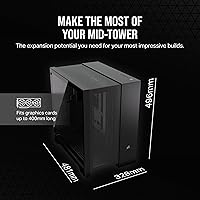
A recurring complaint involves cards in the 340mm-plus range, where clearance becomes tight enough to create real installation challenges. Builders running large radiators simultaneously with long GPUs have reported needing to remove brackets or compromise on storage mounting.
CPU Cooler Clearance
77%
23%
Tall tower air coolers in the 160mm range generally fit without issue, giving builders the flexibility to run high-end air cooling solutions without worrying about lid clearance. This is a common concern in mid-towers that the 6500D Airflow handles reasonably well.
A few users with particularly large dual-tower coolers or coolers with wide fan configurations noted that RAM slot access became awkward after the cooler was seated. It is not a dealbreaker but worth checking your specific cooler dimensions against the spec sheet.
Dust Filtration
76%
24%
Removable filters on the front intake and PSU compartment help reduce particulate buildup inside the chassis over time. Users who clean their systems monthly report the interior staying noticeably cleaner than in cases without proper filtration.
The filter coverage is adequate but not comprehensive — some builders in dusty environments note accumulation in areas that the included filters do not fully cover. The mesh density is also not the finest available, which limits effectiveness against very fine particles.
Storage Options
78%
22%
The modular bracket system handles a reasonable mix of 2.5-inch SSDs and 3.5-inch hard drives, and most gaming or workstation builds can fit their storage without any creative workarounds. Reconfiguring the layout is straightforward when needs change.
Heavy storage users who run four or more drives will find the available bay count limiting without sacrificing other mounting positions. The shift toward SSD-focused builds means this is not a dealbreaker for most buyers, but it matters for NAS-adjacent setups.
Noise Dampening
62%
38%
The steel construction and enclosed front panel provide a modest degree of passive noise reduction compared to fully open mesh cases, which some users in quiet workspaces appreciate when running fans at moderate speeds.
There is no acoustic dampening material lining the panels, which means at higher fan speeds the case is not particularly quiet. Buyers prioritizing silent operation will need to invest in low-noise fans and thoughtful speed curves to compensate.
Front I/O Ports
81%
19%
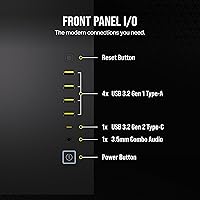
The front panel includes both USB Type-A and USB Type-C ports alongside audio headers, covering the connectivity needs of most modern builds without requiring a hub. The layout is clean and conveniently positioned for desk use.
Power users who regularly connect multiple high-bandwidth peripherals or external drives directly to the front panel may find the port count limiting. There is no card reader or additional Thunderbolt option, which some content creators would have welcomed.
Aesthetics
90%
The blacked-out exterior, tempered glass panel, and clean front fascia give finished builds a refined, understated look that photographs extremely well. The lack of aggressive styling means it fits equally well in a gaming setup or a professional workstation environment.
The black-only colorway is a real limitation for builders who prefer a white interior or want to match a specific color scheme — especially since white mid-tower cases are increasingly popular and competitors offer both options at similar price points.

Suitable for:

The Corsair 6500D Airflow Mid-Tower PC Case is purpose-built for enthusiast builders who treat their system as much as a display piece as a performance machine. If you are planning a build around a reverse connector motherboard — think ASUS BTF or MSI Project Zero — this chassis was essentially designed with you in mind, giving that hidden-cable aesthetic a proper home. Gamers and content creators running high-wattage GPUs and demanding CPU coolers will also appreciate the structured thermal separation that the dual-chamber layout provides. Builders who prefer curating their own fan selection rather than inheriting bundled fans they would swap out anyway will find the blank slate refreshing. This is ultimately a case for someone willing to invest in a premium foundation and build around it intentionally.
Not suitable for:

Buyers on a tight budget should look elsewhere — the 6500D Airflow sits at a price point that assumes you are already committed to spending on quality components, and the added cost of purchasing fans separately makes the total outlay even higher. If your motherboard uses traditional cable connections, the reverse connector compatibility is simply irrelevant, and you would be paying a premium for a feature that does nothing for your build. Builders working with very large tower air coolers or extra-long graphics cards should carefully verify clearance specs before purchasing, as some users have reported tighter fits than expected. Anyone who needs a compact or SFF case will also want to look at other options, since at nearly 19 inches tall and 32 pounds, this Corsair chassis is a substantial, desk-footprint-demanding enclosure. If you just need a functional mid-tower without the showcase ambitions, more affordable options will serve you just as well.

Specifications

  • Form Factor: Supports ATX mid-tower builds, making it compatible with the most common motherboard sizes on the market.
  • Dimensions: The case measures 18.94 x 12.91 x 19.53 inches, providing ample internal space for full-sized ATX configurations.
  • Weight: At approximately 32 pounds empty, this is a substantial chassis that reflects its steel and tempered glass construction.
  • Interior Layout: A dual-chamber design physically separates the PSU and cabling from the main motherboard compartment for a cleaner build presentation.
  • Side Panel: A tempered glass side panel offers a clear, scratch-resistant view of the internal components.
  • PSU Placement: The power supply mounts at the bottom of the chassis, isolating heat output from the main airflow path.
  • Motherboard Support: Compatible with standard ATX motherboards as well as reverse connector boards such as ASUS BTF and MSI Project Zero.
  • Fans Included: No fans are included in the box; buyers need to purchase their preferred cooling solution separately.
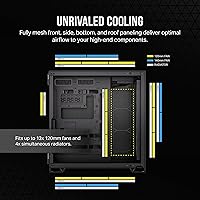
  • Cooling Method: The case is designed exclusively for air cooling, with front intake clearance sized to accommodate multiple 120mm or 140mm fans.
  • Material: Primary construction uses steel for the chassis frame and tempered glass for the side panel, contributing to the overall rigidity.
  • Color: Available in black with a matte finish across the steel exterior panels.
  • Drive Bays: Modular drive bay and bracket system supports multiple 2.5-inch and 3.5-inch storage configurations depending on layout preference.
  • Cable Management: Dedicated rear cable routing channels and velcro tie-down points are built into the non-visible chamber to keep wiring organized.
  • I/O Panel: Front I/O typically includes USB Type-A, USB Type-C, and audio headers for convenient front-panel access.
  • BSR Ranking: Ranked in the top 400 in the Computer Cases category on Amazon, reflecting strong sales performance in the premium segment.
  • Manufacturer: Produced by Corsair, a well-established brand in PC hardware with a broad ecosystem of compatible fans, coolers, and accessories.
  • Model Number: The official Corsair model number is CC-9011259-WW, useful for warranty registration and identifying compatible accessories.
  • Radiator Support: The front and top mounts support radiator installations for builders who may wish to add liquid cooling in the future.

Related Reviews

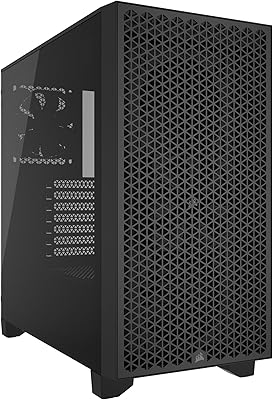
Corsair 3000D Airflow Mid-Tower PC Case
81%
93%
Airflow Performance
88%
Build Quality & Materials
91%
Thermal Management Design
84%
Cable Management
61%
Included Fans Quality
More
Corsair FRAME 4000D RS Mid-Tower Case
82%
91%
Airflow Performance
88%
Build Quality
86%
Modularity & Upgradability
83%
Fan Mounting System
78%
GPU Compatibility
More
Corsair 3500X ARGB Mid-Tower PC Case
78%
93%
Aesthetic Design
91%
ARGB Lighting
88%
Build Quality
87%
Interior Space
86%
Fan Inclusion
More
SAMA V60 Mid Tower PC Case
80%
93%
Out-of-Box Cooling Value
78%
Airflow Performance
91%
AIO & Radiator Flexibility
88%
Tempered Glass & Aesthetics
71%
Build Quality & Materials
More
darkFlash DS900 ATX Mid-Tower PC Case
75%
76%
Build Quality
83%
Cooling Potential
91%
Aesthetics & Visibility
88%
Value for Money
74%
Cable Management
More
Zalman S2 ATX Mid-Tower PC Case
76%
88%
Airflow Performance
63%
Build Quality
91%
Value for Money
86%
Ease of Assembly
84%
Cooling Expandability
More
Zalman S3 ATX Mid-Tower PC Case
74%
83%
Value for Money
71%
Build Quality
58%
Airflow & Cooling Performance
86%
Ease of Assembly
67%
Acrylic Side Panel
More
Vetroo AL800 Mid Tower ATX PC Case
76%
78%
Build Quality
84%
Tempered Glass Panel
76%
Airflow Performance
61%
Fan Included & Expandability
69%
Cable Management
More
AMANSON H9 Mid-Tower ATX Gaming PC Case
76%
88%
Value for Money
81%
Airflow Performance
67%
Pre-Installed Fan Quality
63%
Build Quality
79%
Tempered Glass Panels
More
ANSAITE W9 Mid-Tower ATX PC Case
77%
88%
Value for Money
91%
RGB & Lighting Performance
74%
Airflow & Cooling Capacity
63%
Build Quality & Materials
84%
Cable Management
More

FAQ

No, the 6500D Airflow ships without any fans included. You will need to budget for fans separately. The upside is that you get to choose exactly the fans you want — whether that is high-static-pressure models for the front intake or quieter options for the exhaust — rather than being stuck replacing mediocre bundled fans right away.

Yes, the cable-free front-facing look only works if you pair the case with a reverse connector motherboard, such as those in the ASUS BTF or MSI Project Zero lines. If you are using a standard ATX board, the case works perfectly fine — you just route cables the traditional way. The reverse connection support is a bonus for those already in that ecosystem, not a requirement for everyone.

Most modern triple-fan GPUs fit without any trouble, but some users have flagged that very long cards — in the 340mm-plus range — can be a tighter fit than expected, especially when combined with front-mounted fans or radiators. It is worth measuring your specific GPU against the case clearance specs before purchasing if you are running something particularly long.

Most builders find it quite approachable. The tool-friendly drive bays, modular panels, and clearly separated chambers make the initial assembly process less frustrating than many competitors at this price tier. The dual-chamber design does require you to think about cable routing into the secondary compartment, but once you get the hang of it, the layout is logical.

Yes, the front and top of the Corsair 6500D Airflow Mid-Tower PC Case support radiator mounting, so liquid cooling is a viable option if you decide to go that route later. Just confirm the specific radiator size you intend to use against the mounting slot dimensions to make sure there are no conflicts with your RAM height or other components.
Yes, the glass panel is designed for relatively straightforward removal — no tools required in most cases. It attaches with a standard hinge or latch mechanism, so opening it up for dust cleaning or component swaps is not a chore. Just handle the panel carefully since tempered glass, while tough, can still crack if dropped on a hard surface.

The 6500D Airflow includes dust filters on the front intake and PSU intake to help keep the interior cleaner over time. They are removable for regular cleaning, which is especially important if you are running the case without a full set of positive-pressure fans. Cleaning every few weeks in a dusty environment is a reasonable habit.

In addition to full ATX boards, this mid-tower case accommodates Micro-ATX and Mini-ITX motherboards as well. If you are building with a smaller board, you will have more interior room to work with, which makes routing and component placement even easier.

The build quality is consistently praised by buyers and feels noticeably solid compared to budget-tier cases. There is very little panel flex and no rattling at normal operating conditions. At roughly 32 pounds empty, it is not a lightweight product — and that weight is a fair reflection of the material quality.

The modular drive bay system supports a reasonable number of both 2.5-inch SSDs and 3.5-inch hard drives, with the exact count depending on how you configure the removable brackets. For most gaming or workstation builds, there is more than enough room to accommodate two or three drives without needing any creative workarounds.