Overview

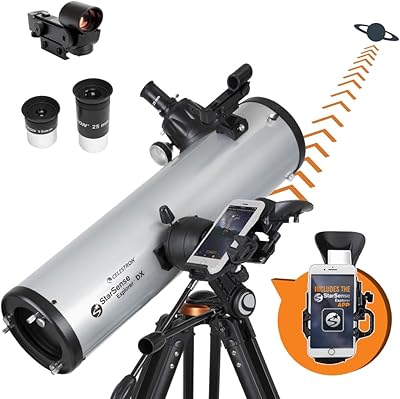
The Celestron StarSense Explorer LT 80AZ Refractor Telescope is one of the more thoughtfully designed entry points into amateur astronomy available today. What genuinely separates it from the crowd is the StarSense app — instead of squinting at paper star charts, you dock your phone and follow on-screen arrows until you land on your target. The optics are solid for this price tier: an 80mm aperture with an f/11 focal ratio handles the Moon and bright planets well. Celestron has been making telescopes in California since 1960, and the included 2-year warranty reflects that confidence. Just be clear-eyed: faint deep-sky objects from a light-polluted backyard will disappoint, but for lunar craters and Saturn's rings, this StarSense refractor genuinely delivers.
Features & Benefits

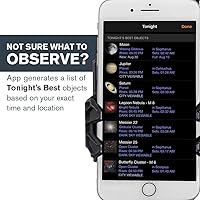
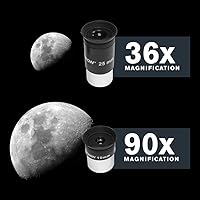
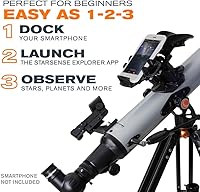
The app is the headline feature, but it works differently from a typical astronomy GPS tool. It actually reads the star patterns overhead through your phone's camera to figure out exactly where the telescope is pointing — no manual alignment required. From there, arrows guide you to your chosen target, and a green bullseye confirms you're on it. The optics support this well: the 80mm multi-coated refractor produces sharp lunar detail and respectable planetary views at 36x and 90x with the two included eyepieces. The slow-motion altitude control on the altazimuth mount is a small but welcome touch for keeping subjects centered. And since the mount runs entirely without batteries, the only thing needing a charge is your phone.

Best For

This app-guided telescope really is aimed at people who want to look up but have no idea where to start. Star chart novices, kids who get bored quickly without tangible payoff, and city-dwellers trying to catch Jupiter or a full Moon on a clear night are the natural audience here. Parents in particular tend to appreciate how the interactive app keeps younger observers engaged far longer than a traditional setup would. At roughly 9 pounds assembled, it travels reasonably well — a backyard session or camping trip is manageable. That said, if you are already comfortable with manual sky navigation or are chasing faint nebulae, this is not the instrument to grow into.

User Feedback

Across more than 500 reviews and a 4.2-star average, the consistent themes are easy setup — most buyers report being outside and observing within 30 minutes — and genuine satisfaction with how well the app performs in the field. The lunar views draw particular praise, with many first-timers describing visible craters as a revelation. On the critical side, the tripod feels flimsy under real-world use, which is a fair complaint; vibrations can disrupt a view, especially at higher magnifications. A handful of users also flag that older smartphones may not fit the dock snugly. And the 80mm aperture, as expected, draws some disappointment from anyone hoping to resolve faint galaxies. Balanced overall, but the hardware quality lags behind the optics and software.

Pros

  • The StarSense app actually works — finding Saturn or the Orion Nebula on your first night out is realistic, not a marketing promise.
  • Most users are set up and observing within 30 minutes, with no prior astronomy knowledge required.
  • Lunar views through this StarSense refractor are genuinely impressive — crater detail is sharp and immediately rewarding.
  • The slow-motion altitude adjustment makes it far easier to center and hold targets than a fully manual mount would.
  • Two eyepieces included out of the box mean you can start observing at different magnifications without spending more.
  • No batteries or power cables needed for the mount itself — just a charged phone.
  • Celestron backs it with a 2-year warranty and US-based support, which reduces the risk for a first purchase.
  • At 9.2 pounds assembled, it is light enough to carry to a dark-sky site or set up on a balcony without hassle.
  • The app curates a nightly list of visible targets based on your location, which keeps sessions focused and avoids aimless scanning.

Cons

  • The included tripod flexes noticeably at higher magnifications, and vibrations can take a few seconds to settle after any adjustment.
  • The focuser is stiff on many units straight out of the box and requires several sessions of use before it loosens up.
  • Owners of older smartphones may find the dock fit loose or the app sluggish, adding an unexpected compatibility headache.
  • The 80mm aperture hits a hard ceiling on faint deep-sky targets — expect soft, unconvincing views of anything beyond the brightest nebulae.
  • There is no dedicated carrying case included, so protecting the tube during transport requires sourcing your own solution.
  • The StarPointer finderscope needs its own battery and can drift out of alignment after the scope is moved or bumped.
  • Heavy reliance on the app means that with a dead phone battery, the telescope becomes significantly harder to use effectively.
  • Buyers outside the US face a more complicated warranty and service experience than domestic customers.

Ratings

The Celestron StarSense Explorer LT 80AZ Refractor Telescope earns its strong community reputation by genuinely delivering on its core promise: making the night sky accessible to complete beginners without a frustrating learning curve. The scores below are generated by AI after systematically analyzing verified global user reviews, with spam, bot activity, and incentivized feedback actively filtered out. Both the standout strengths and the recurring pain points are reflected honestly, so you can make a fully informed call before buying.
App Navigation Experience
88%
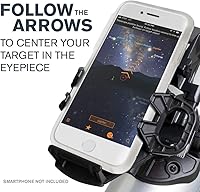
The StarSense app is the single biggest reason most buyers recommend this telescope to friends and family. It reads live star patterns overhead rather than relying on GPS alone, which means it actually knows where the tube is pointing — a distinction that genuinely matters when you are trying to locate Saturn for the first time in a dark backyard.
A small but consistent group of users report that the app occasionally struggles on heavily overcast or light-polluted nights when fewer stars are visible for it to read. Phone placement in the dock can also require some trial and error before the calibration feels reliable.
Optical Clarity
83%
For lunar and bright planetary targets, the 80mm multi-coated refractor punches well for its class. Crater rims on the Moon show crisp edge definition, and on steady nights, Jupiter's equatorial bands and Saturn's ring gap are clearly distinguishable — the kind of view that genuinely hooks first-timers.
The optics show their limits quickly when pointed at faint deep-sky objects. Galaxies beyond the Andromeda and nebulae fainter than the Orion Nebula tend to appear as soft, unconvincing smudges, particularly from suburban skies with moderate light pollution.
Ease of Setup
91%
Most buyers are outside and observing within 25 to 30 minutes of opening the box, which is a legitimately impressive benchmark for an optical instrument. The assembly steps are intuitive, the app walks you through alignment, and there are no complicated polar alignment procedures to wrestle with.
A minority of users note that the instruction manual could be clearer in a few spots, particularly around securing the optical tube to the mount. The focuser knob can also feel stiff right out of the box and benefits from gentle break-in use over the first few sessions.
Build Quality
61%
39%
The optical tube itself feels reasonably solid and the focuser, once loosened up, operates smoothly. For a telescope in this price bracket, the overall assembly quality is consistent with what Celestron delivers across its entry-level line, and nothing feels obviously misaligned from the factory.
The tripod is the most frequently cited hardware complaint across reviews, and it is a fair one. Legs flex noticeably when nudging the telescope at higher magnifications, and vibrations can take a few seconds to settle — enough to be mildly frustrating when chasing a small planetary detail.
Value for Money
86%
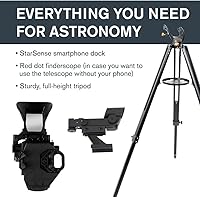
For a beginner who would otherwise spend hours fumbling with star charts and still not find anything, the app-guided experience represents a genuine quality-of-life upgrade over comparably priced conventional refractors. The included eyepiece pair, red dot finderscope, and no-battery mount operation add to the overall package value.
Buyers who progress past the beginner stage relatively quickly may feel limited by the 80mm aperture and the altazimuth mount before the two-year warranty even expires. Compared to similarly priced reflector options, you are partly paying for the StarSense technology rather than raw aperture.
App Compatibility
72%
28%
The app works reliably on current iPhone and Android models, and most users with devices from the past three to four years report a smooth, frustration-free experience from download through first use. iOS users in particular tend to report fewer hiccups in the dock fit.
Owners of older smartphones — particularly those with smaller or non-standard screen sizes — occasionally report poor fit in the phone dock or reduced app responsiveness. A few Android users on budget handsets note GPS and camera permission quirks that required extra troubleshooting steps.
Magnification Range
74%
26%
The two included eyepieces cover the most practical range for a beginner: 36x for wide, sweeping lunar views and 90x for getting closer to planetary detail. Having both in the box means new observers are not forced to spend more immediately just to have a functional setup.
Ninety times magnification is a ceiling that experienced observers will feel quickly. Pushing the theoretical maximum with aftermarket eyepieces tends to expose atmospheric turbulence and mount vibration before the optics themselves give out, limiting how useful the upper magnification range actually is.
Portability
79%
21%
At 9.2 pounds assembled, this app-guided telescope is light enough to carry to a dark campsite or set up on an apartment balcony without much effort. The altazimuth mount does not require any counterweights, which keeps the overall footprint compact and manageable for solo transport.
The assembled dimensions — nearly 39 inches long in the box — mean it does not fit neatly into a car boot alongside other gear without some planning. There is no dedicated carrying case included, so protecting the tube during transport requires improvisation or an aftermarket solution.
Mount Stability
58%
42%
The slow-motion altitude adjustment rod is a thoughtful inclusion for fine-tuning positioning once you are close to a target. For low-magnification viewing of the Moon or wide star fields, the mount is stable enough to deliver an enjoyable experience without constant re-centering.
At 90x magnification and above, the altazimuth mount's limitations become apparent. Any accidental nudge sends the view shaking, and on uneven outdoor ground the tripod legs settle unevenly. Multiple reviewers wish Celestron had invested slightly more in the tripod given how capable the optics and app are.
Focuser Quality
63%
37%
Once broken in after several sessions, the rack-and-pinion focuser operates with reasonable smoothness for this class of telescope. Finding focus on a bright object like the Moon is quick enough that beginners are not left fumbling in the dark for extended periods.
Out of the box, the focuser is stiff on a notable number of units — enough that it comes up frequently in early reviews. There is also some focus shift detectable when switching between the two included eyepieces, which can be mildly annoying when alternating between magnifications mid-session.
Star-Finding Accuracy
84%
When the sky is reasonably clear and the phone is properly seated, the arrow-based guidance system gets beginners onto their target in under a minute in most cases. Finding Saturn or the Orion Nebula on a first night out is something many users describe as unexpectedly satisfying.
Accuracy dips slightly in areas with heavy sky glow or when only a narrow patch of sky is visible between buildings and trees. The system works best with an unobstructed horizon view, and users in dense urban environments may find the sky recognition takes longer to lock in.
Included Accessories
71%
29%
Two eyepieces, a red dot finderscope, and the smartphone dock represent a reasonably complete beginner kit. You can genuinely observe on your first night without buying anything extra, which is not always the case with entry-level telescopes that include only a single eyepiece.
The eyepiece quality is functional rather than impressive — edge-of-field sharpness is average, and upgrading to a wider-field eyepiece noticeably improves the experience. The StarPointer finderscope also requires its own battery and occasionally needs realignment after transport.
Learning Curve
89%
The whole system is intentionally designed to remove the most intimidating parts of learning astronomy: finding objects. Users with zero prior experience consistently report feeling confident after just one or two sessions, which is a strong indicator that the design philosophy actually lands in practice.
There is a ceiling to how much the app teaches you about the sky itself. Some users note that after months of use, they still rely entirely on the app and have not developed any independent sky navigation skills — which may or may not matter depending on your goals.
Warranty and Support
82%
18%
Celestron's 2-year US warranty is above average for entry-level telescopes, and the US-based support team draws consistent praise in reviews for being knowledgeable and responsive. For a first-time buyer nervous about making a significant purchase, that backing genuinely reduces risk.
The warranty is US-centric, and international buyers report a noticeably more complicated service experience. A handful of users also note that warranty claims for the app-related issues, which are software rather than hardware, fell into a grey area that required back-and-forth to resolve.

Suitable for:

The Celestron StarSense Explorer LT 80AZ Refractor Telescope was essentially built for the person who has always been curious about astronomy but has never known where to begin. If the idea of memorizing star charts or manually aligning a telescope sounds more exhausting than exciting, this app-guided telescope removes that barrier entirely — you dock your phone, the app reads the sky overhead, and arrows guide you straight to your target. Parents shopping for an educational gift will find it holds a child's attention far better than a conventional beginner scope, since the interactive app gives immediate payoff rather than a frustrating first night of finding nothing. Urban and suburban observers who primarily want to see the Moon in detail, track Saturn's rings across seasons, or catch Jupiter during opposition will get consistent, rewarding results. At around 9 pounds and with no external power required for the mount, it also works well for anyone who wants to toss it in the car for a camping trip without hauling a heavy kit.
Not suitable for:

The Celestron StarSense Explorer LT 80AZ Refractor Telescope is genuinely not the right tool for observers who have already moved past the beginner stage or who are drawn to deep-sky objects like faint galaxies and dim nebulae. The 80mm aperture is an honest entry-level spec — it handles bright targets well, but it cannot gather enough light to reveal the kind of detail that serious deep-sky observers expect, especially from light-polluted suburban or city skies. Anyone planning to do astrophotography should also look elsewhere, as the manual altazimuth mount lacks the tracking capability that long-exposure imaging requires. If you already own a serviceable telescope and are considering this primarily for the app, know that the StarSense technology is genuinely useful but not a reason on its own to replace working optics. Buyers with older smartphones should also check compatibility carefully before purchasing, as the phone dock and app have known friction with certain older or non-standard handsets.
Specifications

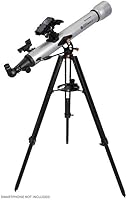
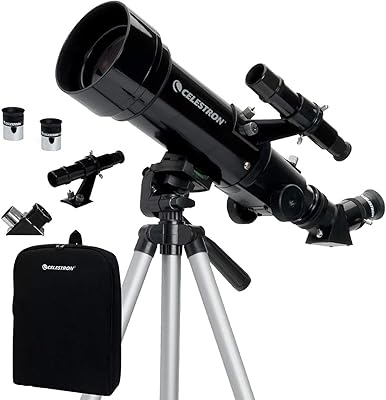
  • Optical Design: The telescope uses a refractor design, meaning it gathers and focuses light through a glass objective lens rather than mirrors.
  • Aperture: The objective lens measures 80mm (3.1 inches) in diameter, determining how much light the telescope collects.
  • Focal Length: The optical tube has a focal length of 900mm, which shapes the magnification and field of view when paired with different eyepieces.
  • Focal Ratio: The focal ratio is f/11, making this a slow, narrow-field refractor well suited to high-contrast planetary and lunar viewing.
  • Included Eyepieces: Two eyepieces are included in the box: a 25mm for 36x magnification and a 10mm for 90x magnification.
  • Max Magnification: The highest theoretical magnification is 189x, though practical atmospheric and mount limitations mean performance peaks well below this figure.
  • Limiting Magnitude: The telescope has a limiting magnitude of 12.0, meaning it can theoretically reveal stars and objects invisible to the naked eye under dark skies.
  • Mount Type: The telescope ships with a manual altazimuth mount featuring a slow-motion altitude control rod for fine vertical adjustments.
  • Tube Length: The optical tube measures 965mm in length, which affects balance on the mount and overall packed size.
  • Assembled Weight: The fully assembled telescope and tripod weigh 9.2 pounds, making it manageable for a single adult to transport and set up alone.
  • Box Dimensions: The packaged product measures 38.98 x 18.03 x 11.02 inches, so plan for moderate storage space when not in use.
  • Finderscope: A StarPointer red dot finderscope is included to assist with initial rough pointing before the StarSense app takes over guidance.
  • App Compatibility: The StarSense Explorer app is compatible with both iPhone and Android smartphones and is available as a free download.
  • Power Source: The mount and optical tube require no external power; only the user's smartphone needs to be charged to run the navigation app.
  • Battery (Finderscope): The StarPointer red dot finderscope requires one lithium metal battery, which is included in the box.
  • Warranty: Celestron provides a 2-year US warranty along with unlimited support from a US-based customer service team.
  • Manufacturer: The telescope is manufactured by Celestron, a California-based optics company that has been producing telescopes since 1960.

Related Reviews
Celestron StarSense Explorer LT 114AZ
74%
88%
App Navigation Experience
83%
Optical Clarity
86%
Ease of Setup
61%
Mount Stability
79%
Value for Money
More
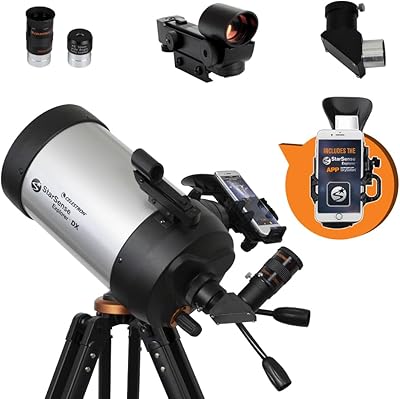
Celestron StarSense Explorer DX 102AZ Refractor Telescope
77%
88%
Ease of Setup
81%
StarSense App Performance
84%
Optical Clarity
61%
Deep-Sky Performance
67%
Mount Stability
More
Celestron StarSense Explorer 8″ Dobsonian Telescope
79%
91%
Optical Performance
88%
App Navigation Accuracy
86%
Ease of Use
84%
Build Quality
79%
Value for Money
More
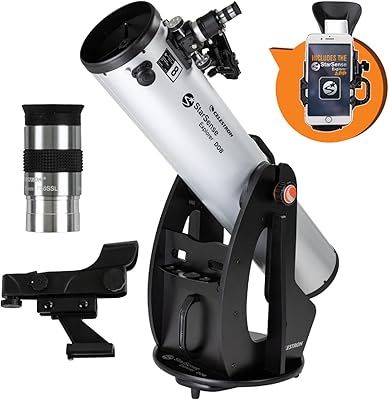
Celestron StarSense Explorer DX 5″ Telescope
73%
88%
Ease of Setup
83%
App Navigation Accuracy
79%
Optical Performance
61%
Mount Stability
57%
Manual Tracking Experience
More
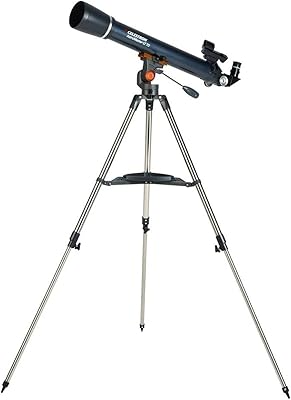
Celestron StarSense Explorer 8″ Dobsonian Telescope
81%
91%
Ease of Use
88%
Optical Performance
86%
StarSense App & Technology
89%
Mount Stability
83%
Value for Money
More
Celestron AstroMaster LT 70AZ Telescope
84%
91%
Ease of Use
88%
Optical Quality
92%
Setup and Installation
85%
Portability
80%
Build Quality
More
Celestron StarSense Explorer DX 130AZ
76%
91%
App Navigation & Sky Recognition
83%
Optical Performance
88%
Ease of Setup & Assembly
67%
Mount Stability & Build
58%
Collimation & Optical Alignment
More
Celestron Travel Scope 70
79%
83%
Optical Clarity
91%
Portability & Weight
67%
Build Quality
93%
Ease of Setup
54%
Tripod Stability
More
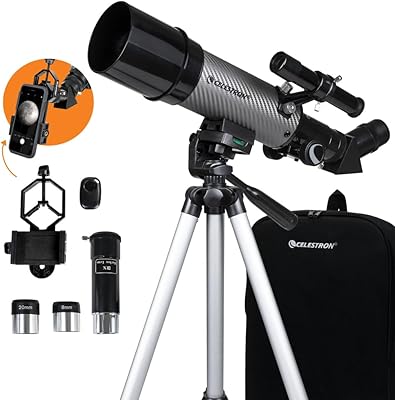
Celestron Travel Scope 60DX Portable Refractor Telescope
76%
76%
Optical Performance
63%
Build Quality
91%
Portability
89%
Ease of Setup
54%
Tripod Stability
More
Celestron Travel Scope 50 Refractor Telescope
75%
74%
Optical Clarity
91%
Portability & Weight
88%
Ease of Setup
58%
Build Quality & Materials
53%
Tripod Stability
More

FAQ

Most users have it assembled and ready to observe within 25 to 30 minutes, even without any prior telescope experience. The steps are fairly intuitive, and the StarSense app walks you through the initial alignment process once you are outside.

No, the app is completely free to download on both iPhone and Android. The hardware dock that mounts your phone to the telescope is what you are paying for as part of the kit — the app itself has no subscription or purchase fee.

Most current iPhone and Android models fit without any issue, but owners of older or less common handsets have occasionally reported a loose fit or compatibility quirks. It is worth checking Celestron's compatibility list on their website before purchasing if your phone is more than four or five years old.

Yes, and this is genuinely one of the highlights of owning this app-guided telescope. On a steady night with clear skies, Saturn's rings are clearly visible and distinct — it is the kind of view that tends to leave first-time observers speechless.

It is actually one of the better options for that age group precisely because the app does the hard work of finding objects. Kids stay engaged because they are actually seeing things within the first few minutes rather than spending an hour searching and finding nothing. Adult supervision during setup is recommended, but after that most kids can operate it independently.

Not in any serious capacity. The manual altazimuth mount has no motorized tracking, which means objects drift out of frame quickly during longer exposures. It can capture a decent snapshot of the Moon through a smartphone held up to the eyepiece, but it is not designed or suited for deep-sky astrophotography.

Almost certainly not. A stiff focuser out of the box is a common experience with this telescope and tends to loosen up naturally after a few sessions of regular use. If it remains very stiff after several outings, Celestron's support team can advise on a simple adjustment.

GPS is involved in determining your location, but the clever part is that the app uses your phone's camera to read the actual star patterns it can see overhead. It matches what it sees to a star map and figures out exactly where the telescope is pointing at that moment, then guides you from there. It works well as long as a reasonable number of stars are visible.

It is functional but not particularly impressive — this is the most consistent complaint from real users. At lower magnifications it is fine, but at 90x any tap or nudge creates visible vibration that takes a few seconds to settle. If stability matters to you, placing the tripod on firm, level ground and avoiding touching the tube while viewing helps significantly.

The Orion Nebula and the Andromeda Galaxy are both achievable from suburban skies with this StarSense refractor, though they will appear as soft glows rather than the detailed images you might see in photographs. Open star clusters like the Pleiades look excellent. Faint galaxies and planetary nebulae are a stretch from anywhere with significant light pollution, so it is best to manage expectations on that front.

Where to Buy