Overview

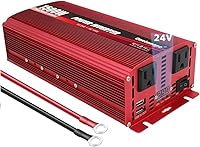
The Cantonape 1500W 24V Power Inverter is a mid-range DC-to-AC unit built primarily for truck drivers, RV owners, and off-grid campers who already run a 24V electrical system. That 24V input is worth flagging upfront — this isn't a fit for standard 12V car setups. It's designed for large semi trucks, certain RVs, and 24V solar battery banks. At under four pounds and roughly the size of a hardcover book, the compact aluminum build makes installation practical in tight cab spaces. Cantonape released it in late 2024, and for its wattage class, the pricing sits at a reasonable middle ground — not the cheapest option out there, but not a stretch for anyone who needs dependable power on the road.
Features & Benefits

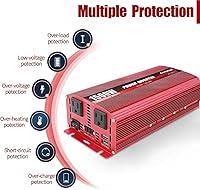
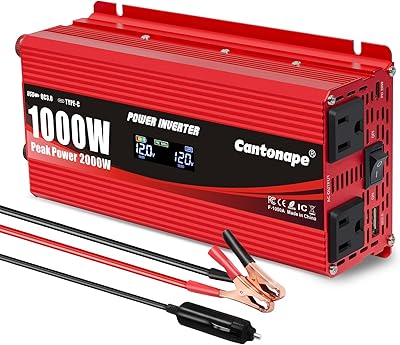
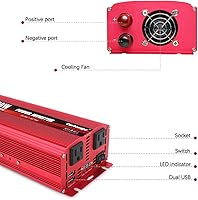
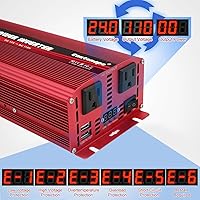
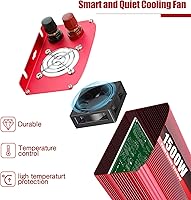
The front-panel LED diagnostic display is one of the more practical touches here — it shows live input and output voltage alongside current wattage draw, and if something goes wrong, it throws an error code rather than just shutting off silently. Six built-in protections cover the usual suspects: overload, short circuit, overheating, reverse polarity, and both under- and over-voltage. The dual AC outlets are spaced well enough to fit two bulky plugs side by side, and the two 3.1A USB ports handle phone and tablet charging without needing a separate adapter. The aluminum body helps with heat management, but modified sine wave inverters at this power level still get warm under sustained heavy loads. The cooling fan is temperature-controlled, so it stays quiet during light use.

Best For

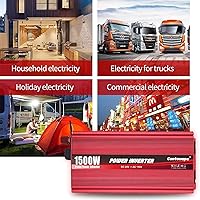
One important thing to clarify before buying: this 24V inverter only works with 24V DC sources. Most passenger cars and smaller SUVs run 12V systems, so this isn't the right pick for that crowd. Where it really fits is in long-haul trucking rigs, which commonly run 24V electrical systems, and in RV or van builds where the house battery bank has been set up at 24V. Off-grid campers and overlanders running a 24V solar setup will find the power headroom here sufficient to run a small refrigerator, a fan, and a laptop simultaneously without pushing the unit. It also works well as an emergency backup for a few key household appliances, provided you already have a compatible 24V battery system in place.

User Feedback

With a 4.2-star average from over 400 reviews collected since its late 2024 launch, the Cantonape inverter has generally earned its rating. Buyers frequently call out the clear LED readout as a genuine convenience — knowing actual load wattage in real time helps avoid accidental overloads. Setup also gets consistent praise for being straightforward. On the downside, a handful of reviewers mention fan noise becoming noticeable under heavier loads, and a few have flagged a faint hum even at idle, which could be an issue in a quiet cab at night. Since this is a relatively new product, long-term durability data is still thin. Most feedback reflects early use, so post-warranty reliability remains an open question worth monitoring.

Pros

  • The real-time LED display showing live voltage and wattage makes battery management genuinely practical on the road.
  • Six layers of hardware protection give real peace of mind in mobile setups where wiring errors are more likely.
  • Dual AC outlets are spaced far enough apart to fit two bulky plugs simultaneously without blocking each other.
  • At under four pounds, this 24V inverter is easy to mount, reposition, or carry between a truck and a campsite.
  • The aluminum chassis handles heat better than plastic-bodied alternatives at this price tier.
  • Temperature-controlled fan stays quiet during light use, which matters for overnight cab stays.
  • Built-in USB ports eliminate the need for a separate wall adapter when charging phones and tablets alongside AC devices.
  • Over 90 percent conversion efficiency means less battery drain wasted as heat during normal operation.
  • Error codes on the display identify specific fault types, making troubleshooting faster than a unit that just shuts off silently.
  • Setup is straightforward enough that most users are running within minutes of unpacking, with no technical background required.

Cons

  • Modified sine wave output is incompatible with certain sensitive electronics, CPAP machines, and some variable-speed tools.
  • The 24V input requirement rules out use in the vast majority of standard passenger vehicles, which run on 12V systems.
  • Fan noise becomes noticeably loud under heavy loads, which can be disruptive in a quiet overnight truck cab.
  • A faint idle hum has been reported on some units, even when no load is connected.
  • Pushing the inverter close to its continuous wattage limit for extended periods can cause it to throttle or trip protection.
  • Mounting hardware is not included, requiring buyers to source their own brackets for a permanent fixed installation.
  • USB ports are USB-A only, so USB-C devices need a separate adapter for full charging speed.
  • Long-term durability is unproven, as the product only entered the market in late 2024 with limited multi-season use data.
  • The 12-month warranty is on the shorter end for an electrical component expected to see heavy daily use.
  • Display readability drops noticeably in direct sunlight, which limits its usefulness in open outdoor or cab environments.

Ratings

The Cantonape 1500W 24V Power Inverter has been evaluated by our AI rating system after analyzing verified buyer reviews from multiple global marketplaces, with spam, bot-generated, and incentivized feedback actively filtered out. The scores below reflect a genuine cross-section of experiences from truck drivers, RV owners, and off-grid users who have put this power inverter through real-world use. Both the standout strengths and the honest frustrations are represented here, so you can make a well-informed decision.
Power Output Reliability
82%
18%
Most users report that the 1500W continuous rating holds up well for running a laptop, a small fan, and phone charging simultaneously without tripping the overload protection. Truck drivers in particular noted stable performance during multi-hour hauls without unexpected shutdowns.
A portion of reviewers found that pushing the unit close to its rated limit for extended periods caused it to throttle or cut out, which suggests the real comfortable ceiling is somewhat below the advertised continuous figure. Demanding loads like portable compressors or microwaves near the peak threshold drew the most complaints.
Ease of Setup
91%
Buyers consistently called out how little effort it takes to get this inverter running. The cable connections are clearly labeled, the unit is light enough to maneuver in a cramped truck cab, and most users were up and running within minutes of unboxing.
A small number of reviewers wished the included documentation covered more edge cases, like which appliance types work best with a modified sine wave output. Those without prior inverter experience occasionally had questions that the manual did not clearly address.
LED Display & Diagnostics
88%
The real-time voltage and wattage readout is genuinely useful in daily use — knowing exactly how much load you are pulling prevents accidental overloads and helps users manage their battery draw. The error code system also makes troubleshooting specific faults much faster than guessing.
A few buyers noted the display can be hard to read in direct sunlight, which is a real limitation for outdoor or open-cab applications. The error codes themselves require referencing the manual, and the font size on the display is on the smaller side.
Build Quality
74%
26%
The aluminum alloy chassis feels noticeably more solid than similarly priced plastic-bodied inverters, and users appreciated that it does not flex or creak under stress. At under four pounds it is easy to mount securely, and the overall construction inspires more confidence than the price point might suggest.
This is not a heavy-duty industrial unit, and a handful of reviewers observed that the casing showed minor scuffing or finish wear after rough handling in truck beds or outdoor environments. Long-term structural durability data is still limited given the product only launched in late 2024.
Thermal Management
69%
31%
The temperature-controlled fan is a practical feature — it stays quiet during lighter loads, which matters when the inverter is running in a sleeping cab overnight. The aluminum body does assist with passive heat dissipation during moderate use.
Under sustained heavy loads, this inverter gets noticeably warm, which is fairly normal for modified sine wave units at this price tier but worth acknowledging. Several users mentioned the fan ramps up aggressively when the unit is under stress, and the audible noise at high speed bothered those in quiet environments.
Fan Noise
61%
39%
During light-to-moderate use, the fan either stays off entirely or runs at a low speed that is barely noticeable. This makes the inverter a reasonable choice for overnight cab use when loads are kept modest, such as charging devices or running a small CPAP machine.
At higher loads or in warm ambient conditions, the fan becomes loud enough to be disruptive — multiple reviewers specifically flagged this as a frustration during nighttime use in truck cabs. Even at idle, some units produced a faint but persistent hum that a quieter environment would amplify.
Waveform Compatibility
71%
29%
For the typical use cases this inverter is built for — laptops, phone chargers, fans, LED lighting, mini-fridges — the modified sine wave output works without issue. Users running basic electronics reported no interference, overheating of adapters, or degraded performance.
Modified sine wave is not suitable for all AC devices. Sensitive electronics, certain medical equipment like CPAP machines with advanced pressure adjustment, and some variable-speed tools may not perform correctly or could sustain damage over time. Buyers need to check their device compatibility before relying on this inverter.
USB Charging Performance
79%
21%
The dual 3.1A USB ports charge phones and tablets at a respectable speed, and users appreciated not needing a separate wall adapter just for device charging. Having USB and AC available at the same time is a practical convenience in a truck cab or at a campsite.
The USB ports are USB-A only, so users with devices that require USB-C for fast charging will need their own adapters. A few reviewers also noted that charging speeds felt inconsistent when both USB ports and both AC outlets were in use simultaneously at high loads.
AC Outlet Design
83%
The dual AC outlets are spaced generously enough that two standard or even slightly bulky plugs fit side by side without one blocking the other. This detail is often overlooked by competitors and was specifically mentioned as a positive by multiple reviewers dealing with transformer-block adapters.
The outlet placement on the unit means the power cables run in a fixed direction that may not suit every mounting orientation. A few users with larger three-prong adapter blocks noted a fit that felt marginally loose, though no safety issues were reported from this.
Protection Features
86%
Having six layers of hardware protection covering overload, short circuit, reverse polarity, and voltage extremes gives users genuine peace of mind, particularly in mobile environments where wiring errors are more likely. Reviewers noted that the protection systems triggered correctly and recoverable faults reset cleanly.
Some users found that the overload protection tripped earlier than expected when running appliances with high startup surge currents, like compressors or power tools. While the unit does handle peak loads up to its rated ceiling, the transition from continuous to peak protection is not always predictable.
Value for Money
78%
22%
For what it delivers — a solid aluminum build, an informative LED display, dual AC plus dual USB, and a comprehensive protection suite — the Cantonape inverter offers a fair return at its price tier. Users comparing it against bare-bones alternatives at similar or lower prices frequently rated it as the better overall package.
Buyers who stepped up from a cheaper inverter appreciated the upgrade, but those comparing it against premium brands noted the gap in long-term reliability data and overall refinement. At this price, the modified sine wave output is expected, but users who later discovered they needed pure sine wave felt the cost was not transferable.
24V Compatibility Clarity
58%
42%
For buyers who specifically searched for a 24V inverter — primarily semi-truck owners and those with 24V solar battery banks — the Cantonape inverter slots in correctly and performs as expected. The 24V input is clearly stated on the product, and targeted buyers had no confusion.
A recurring theme in negative reviews was buyers who purchased this expecting it to work with a standard 12V vehicle system. The 24V input requirement is easy to miss for less experienced buyers, and several one-star reviews reflected straightforward compatibility errors rather than product failures — a real pre-purchase clarity gap.
Portability & Mounting
81%
19%
At just under four pounds and with compact dimensions, this inverter is easy to reposition, mount on a cab wall, or carry between a truck and a campsite. The weight makes single-person installation practical without needing a second set of hands.
Mounting hardware is not included in the box, which means buyers need to source their own brackets or straps for a permanent installation. A few users found the unit shifted position more than they would have liked when not secured, which is a minor but notable omission given the target audience.
Long-Term Durability
63%
37%
Early adopters who have been running the Cantonape inverter since its launch in late 2024 report that it continues to perform without significant degradation under normal use conditions. The aluminum chassis holds up better than plastic alternatives when exposed to temperature swings in a truck cab.
Because this product has only been on the market since late 2024, there is simply not enough long-term data to rate durability with full confidence. The 12-month warranty is adequate but not exceptional for the category, and buyers have not yet had the chance to stress-test it across multiple seasons of heavy use.

Suitable for:

The Cantonape 1500W 24V Power Inverter is a well-matched choice for long-haul truck drivers whose rigs run a 24V electrical system and who need a reliable way to power a laptop, charge devices, or run a small appliance during rest stops or overnight stays. RV owners and van-life builders who have deliberately set up a 24V house battery bank will find the power headroom here comfortable for everyday off-grid use — running a small refrigerator, a fan, and a few charging devices at once is well within its practical range. Off-grid campers and overlanders using a 24V solar setup will also appreciate how the LED display lets them monitor battery draw in real time, helping avoid unexpected drain. It works as an emergency home backup too, provided you already have a compatible 24V battery system, making it a reasonable addition to a prepared household. Anyone who primarily needs to run standard consumer electronics — laptops, LED TVs, phone chargers, gaming consoles — rather than sensitive medical or high-precision equipment will find the modified sine wave output perfectly adequate.
Not suitable for:

The Cantonape 1500W 24V Power Inverter is a firm pass for anyone whose vehicle runs a standard 12V system, which covers the vast majority of cars, SUVs, and light trucks — plugging a 24V inverter into a 12V source simply will not work, and this is the single most common purchase mistake in the reviews. Buyers who need to power sensitive medical devices, such as certain CPAP machines with precise pressure modulation, or high-end audio equipment and variable-speed tools, should look at a pure sine wave inverter instead, since the modified sine wave output can cause interference, overheating of power supplies, or degraded performance in those devices. If you regularly need to run appliances with high startup surge currents — compressors, certain power tools, or large microwave ovens — you may find the protection circuits trip more often than expected near the upper load range. Those who need a permanently mounted, heavy-duty installation with a long warranty and established long-term reliability track record should probably consider a more established brand, since this inverter only launched in late 2024 and multi-year durability data simply does not exist yet. Finally, anyone sensitive to fan noise in a quiet sleeping environment at night may find the cooling fan disruptive under moderate or heavy loads.
Specifications

  • Continuous Output: The inverter delivers a steady 1500W of continuous AC power, suitable for running multiple devices simultaneously under normal conditions.
  • Peak Output: A 3000W peak capacity handles the brief startup surge currents that motors and compressors draw when they first power on.
  • Input Voltage: Requires a DC 24V power source, making it compatible with large semi trucks, certain RVs, and 24V battery bank systems.
  • Output Voltage: Produces AC 110V to 120V at 60Hz, matching the standard household current used across the United States.
  • Waveform Type: Outputs a modified sine wave, which works reliably with most common consumer electronics but is not recommended for sensitive medical devices or precision audio equipment.
  • AC Outlets: Two standard US three-prong AC outlets are included, spaced to accommodate two large or transformer-block plugs simultaneously.
  • USB Ports: Two USB-A ports each rated at 3.1A allow simultaneous fast charging of phones and tablets alongside active AC loads.
  • Conversion Efficiency: Rated at greater than 90% conversion efficiency, meaning minimal energy is lost as heat during normal operation.
  • Body Material: The outer casing is constructed from aluminum alloy, which provides structural rigidity and assists with passive heat dissipation.
  • Cooling System: A built-in temperature-controlled fan activates automatically based on internal heat levels, staying quiet during light use and ramping up under heavier loads.
  • Protections: Six hardware protection systems guard against overload, short circuit, overheating, reverse polarity connection, under-voltage, and over-voltage conditions.
  • Display: An LED panel shows real-time input voltage, output voltage, and current wattage draw, and displays coded fault messages when a protection system is triggered.
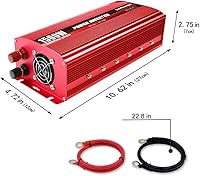
  • Dimensions: The unit measures 12.28 × 6.77 × 2.91 inches, keeping the footprint compact enough for cab-mounted or under-seat installations.
  • Weight: At 3.94 lbs, the inverter is light enough for a single person to mount, reposition, or transport without assistance.
  • Ground Neutral: An isolated ground-neutral design is incorporated to reduce the risk of electrical interference and improve safety when powering sensitive electronics.
  • Warranty: Cantonape provides a 12-month manufacturer warranty covering defects in materials and workmanship from the date of purchase.
  • Brand: Manufactured by Cantonape, a brand specializing in budget-to-mid-range vehicle and portable power accessories.
  • Availability Date: This model was first made available for purchase in September 2024, making long-term durability data still limited at this stage.

Related Reviews
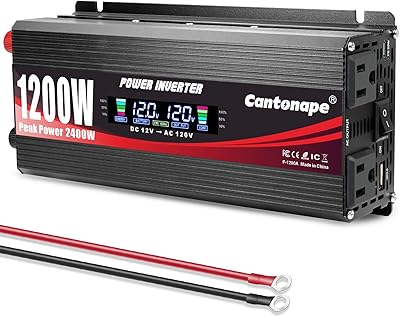
Cantonape 1200W Power Inverter
76%
78%
Power Output Reliability
88%
LCD Display Usefulness
74%
Build Quality
61%
Modified Sine Wave Compatibility
83%
USB Charging Performance
More
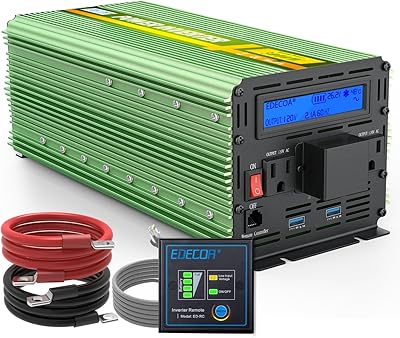
EDECOA 3000W 24V Power Inverter
86%
91%
Value for Money
87%
Performance under Load
95%
Ease of Setup
62%
Noise Level at High Loads
88%
Reliability
More
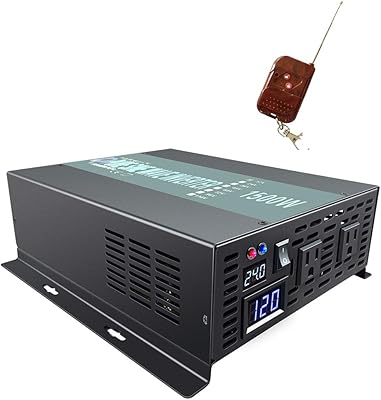
Cantonape 1000W Car Power Inverter
86%
88%
Performance
85%
Build Quality
91%
Ease of Use
83%
Portability
90%
Charging Capability
More
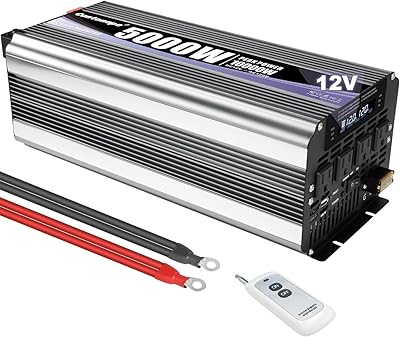
Cantonape MSW1500W-LED-US 5000W Power Inverter
86%
88%
Performance under Load
92%
Build Quality & Durability
85%
Ease of Setup
90%
Safety Features
89%
LCD Display Functionality
More
LEESKY 1500W Pure Sine Wave Power Inverter
82%
88%
Output Power Quality
84%
Build Quality
86%
Value for Money
91%
Remote Controller Usefulness
79%
Noise Level
More
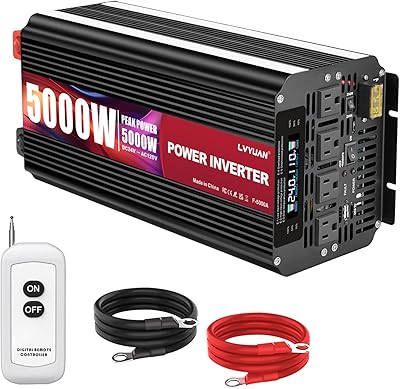
LVYUAN 5000W Power Inverter 24V to 110V/120V
84%
88%
Power Performance
84%
Ease of Use
92%
Safety Features
67%
Portability/Size
90%
Reliability in Off-Grid Use
More
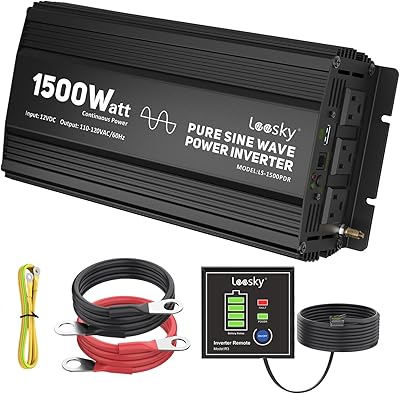
WZRELB 1500W 24V Pure Sine Wave Inverter
85%
84%
Performance under Load
91%
Ease of Installation
88%
Quiet Operation
89%
Reliability and Durability
82%
Power Conversion Efficiency
More
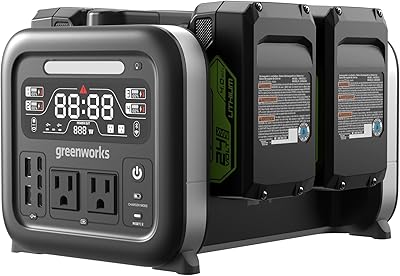
Greenworks 500W 24V Portable Power Inverter with 4 Batteries
84%
88%
App Control Experience
91%
Ease of Setup
64%
Portability/Weight
85%
Battery Life/Power
90%
AC Outlet Performance
More
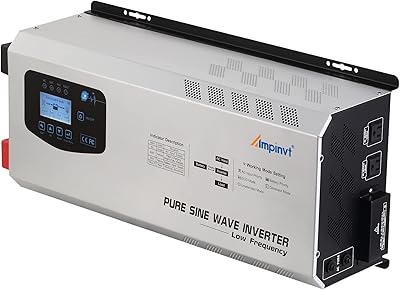
Ampinvt 5000W 24V Split Phase Power Inverter
72%
83%
Power Output Reliability
78%
Build Quality
86%
Pure Sine Wave Quality
81%
Battery Charger Performance
54%
Installation Experience
More
GIANDEL GS-4000KAR-24V 4000W Pure Sine Wave Power Inverter
87%
89%
Performance
90%
Build Quality
94%
Surge Power Handling
80%
Ease of Setup
85%
Remote Control Usability
More

FAQ

Almost certainly not, unless your vehicle has been specifically converted to a 24V system. The vast majority of passenger cars, SUVs, and light pickup trucks run on 12V electrical systems. This inverter requires a 24V DC input, so it is designed for large semi trucks, certain diesel-powered RVs, and off-grid setups built around a 24V battery bank. If you are unsure, check your vehicle manual or measure the voltage at your battery terminals before buying.

It depends on your specific CPAP model. Basic CPAP machines that simply maintain a fixed pressure often work fine with a modified sine wave inverter. However, more advanced models with auto-adjusting pressure, heated humidifiers, or sensitive electronics may not function correctly, could produce unusual sounds, or might sustain internal damage over time. Check your CPAP manual or contact the manufacturer to confirm whether it accepts modified sine wave power before relying on this for overnight use.

The LED display uses a simple numbered code system to identify specific fault conditions. E-1 means low voltage on the input, E-2 means the input voltage is too high, E-3 signals an overtemperature condition, E-4 means the unit detected an overload, E-5 indicates a short circuit, and E-6 means repeated faults have triggered a full shutdown that requires a manual restart. Most of these resolve themselves once the underlying condition is corrected — reduce your load for E-4, check your wiring for E-5, or let the unit cool down for E-3.

At light-to-moderate loads, the fan either stays off entirely or runs at a low speed that most users describe as barely noticeable. Under heavier loads or in warm ambient conditions, it ramps up and becomes audible. A number of reviewers who ran it overnight in a truck cab flagged the higher fan speed as disruptive in a quiet sleeping environment. If noise is a concern, keeping loads modest at night and ensuring good ambient airflow around the unit will help keep the fan at its lower speeds.

Yes, that combination is well within the practical range of this power inverter. A typical 12V portable compressor fridge draws somewhere between 40W and 60W while running, and a laptop charger usually pulls between 45W and 90W depending on the model, which leaves plenty of headroom. Just be mindful of the startup surge a compressor fridge pulls when its motor first kicks on — that brief spike is why the 3000W peak rating exists. As long as you are not stacking multiple high-draw appliances simultaneously, you should have no issues.

The product listing indicates it comes with connection cables, but several reviewers have noted the included cables are functional rather than heavy-gauge. For occasional or light use they are adequate, but if you plan to regularly run loads close to the continuous wattage limit, upgrading to thicker gauge cables is a practical step that reduces resistance and heat buildup at the connection points. Always ensure connections to the battery are secure and protected with an appropriately rated fuse close to the battery terminal.

Yes, provided your solar battery bank operates at 24V. Many off-grid solar builds use 24V or 48V configurations specifically because they are more efficient for higher power loads, and this inverter plugs neatly into a 24V battery bank to supply standard AC outlets. The real-time display is particularly handy in a solar context because you can monitor exactly how much power you are drawing and avoid discharging your batteries too deeply.

It gets warm — that is honest. Modified sine wave inverters at this wattage level generate meaningful heat when running close to their continuous load limit, and the aluminum body helps dissipate some of that passively. The temperature-controlled fan handles the rest under normal conditions. That said, if you mount it in a poorly ventilated space or run it near its maximum capacity for extended periods, expect the housing to become quite warm to the touch. Always leave clearance around the unit for airflow and avoid covering it.

Yes, both AC outlets are active simultaneously and the outlet spacing is designed to fit two standard or bulky plugs side by side without one blocking the other. The combined draw across both outlets just needs to stay within the 1500W continuous limit. Running both USB ports at the same time alongside two AC loads is also fine, as long as the total wattage of everything connected stays within that ceiling.

The inverter includes reverse polarity protection, which means it should not sustain damage from a brief accidental swap of the positive and negative connections. In practice, the protection circuit will prevent the unit from powering on and should keep it safe. That said, reverse polarity protection is a safeguard, not a license for repeated mistakes — always double-check your positive and negative terminals before making the final connection to the battery, as no protection system is infallible.