Overview

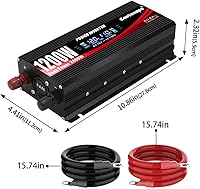
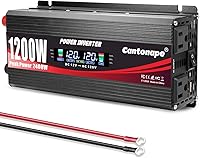
The Cantonape 1200W Power Inverter is a mid-range 12V to 110V/120V modified sine wave unit aimed at travelers, truckers, and campers who need dependable AC power away from a wall outlet. Cantonape sits in the budget-to-mid-tier accessories space, and this inverter reflects that positioning — practical, sensibly specced, and priced to compete in a crowded 1000–1500W segment. At 2.53 pounds, the aluminum body keeps things manageable without feeling flimsy, and it genuinely helps with heat dissipation during longer sessions. What stands out early is that battery cables are included in the box — a small but real convenience that many rivals skip entirely.
Features & Benefits

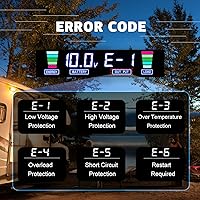
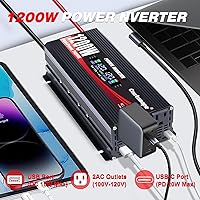
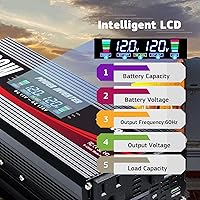
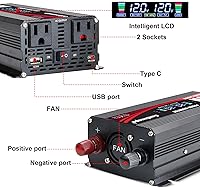
This inverter delivers 1200W continuous power — enough to run a laptop, a box fan, or a small appliance without issue. The 2400W peak rating handles startup surges, though that ceiling is momentary and not sustained, so don't plan around it for high-draw gear. The LCD display shows input and output voltage, battery level, load percentage, and output frequency in real time — and if something goes wrong, it throws a specific fault code rather than just cutting out silently. The dual AC outlets are spaced to accept two large plugs at once, and a QC 3.0 USB-A plus a 20W USB-C port round out the charging options nicely.

Best For

This 1200W car inverter suits people who spend extended time in their vehicles and want a straightforward way to power everyday electronics. Truck drivers running a laptop between hauls, road trippers charging multiple devices, and campers wanting a compact alternative to a portable generator will all find it practical. It also works as a low-cost home backup for brief outages — enough to keep phones charged or run a small fan. If diagnostic visibility matters to you — knowing exactly why an inverter shuts off rather than just watching a light go out — this unit holds a genuine edge over simpler, display-free competitors in the same price range.

User Feedback

With 69 ratings and a 3.9 out of 5 average, the Cantonape unit has a reasonable early reception, though the pool is still too small to draw firm conclusions. Buyers leaving positive notes tend to highlight the clear LCD readout and the convenience of the included wiring cables. On the critical side, some flag that modified sine wave output isn't ideal for sensitive electronics — certain audio equipment, medical devices, or precision chargers can behave unpredictably with it. Fan noise under load surfaces occasionally as a minor complaint. Neither issue appears to be a dealbreaker for most buyers, but both are worth knowing before purchasing.

Pros

  • Battery cables are included in the box — a genuine convenience that most rivals at this price skip entirely.
  • The LCD display shows live voltage, load, and battery data, so you always know what is happening with your power draw.
  • Specific fault codes tell you exactly why the inverter shut off instead of leaving you to guess.
  • At under 2.6 pounds, this inverter is easy to move between vehicles or tuck away when not in use.
  • Dual AC outlets are spaced to accept two large plugs simultaneously without one blocking the other.
  • Both QC 3.0 USB-A and 20W USB-C ports allow fast charging of phones and tablets without occupying an AC outlet.
  • Six-layer protection — including reverse polarity coverage — gives less experienced users a meaningful safety net.
  • The temperature-controlled fan stays quiet under light loads, which matters in a cab or tent environment.
  • Conversion efficiency above 90 percent keeps energy waste low during extended vehicle battery use.
  • A 12-month warranty provides a reasonable baseline assurance for a mid-tier electrical accessory.

Cons

  • Modified sine wave output is incompatible with sensitive electronics like CPAP machines, some audio gear, and precision chargers.
  • The 2400W peak is a brief startup surge only — sustained high-draw use will trip the protection circuits.
  • Only 69 reviews exist as of early 2025, making long-term reliability hard to assess with confidence.
  • Fan noise under heavy load can be disruptive in quiet environments like a sleeping van or tent.
  • The included battery cables may be undersized for sustained high-amperage draws, prompting some users to source heavier-gauge replacements.
  • The fault code system requires a manual lookup — no plain-language explanation is printed on the unit itself.
  • With just two AC outlets, the layout feels limiting for group travel or multi-appliance setups.
  • Cantonape has limited post-sale support documentation, leaving warranty claim experiences largely unverified by buyers so far.

Ratings

The Cantonape 1200W Power Inverter has been scored by our AI system after analyzing verified buyer reviews worldwide, with spam, bot-generated, and incentivized feedback actively filtered out. Ratings reflect real-world usage patterns across truck drivers, campers, road trippers, and home backup users — capturing both what this inverter does well and where it falls short. Strengths and pain points are weighted equally so you get an honest picture before buying.
Power Output Reliability
78%
22%
Most buyers find the 1200W continuous draw sufficient for everyday tasks like powering a laptop, a small fan, or a travel cooler during long hauls or camping trips. The inverter handles these loads without tripping protection or cutting out unexpectedly under normal conditions.
The 2400W peak is a brief surge ceiling, not a sustained capacity — buyers who misread this and try to run high-draw appliances continuously report premature shutoffs. It is not suited for power-hungry tools or large kitchen appliances even if startup wattage technically clears the threshold.
LCD Display Usefulness
88%
The real-time display of input voltage, output voltage, load percentage, and battery level is genuinely useful — especially for truck drivers who want to monitor draw without guessing. Fault codes like E-1 through E-6 give specific shutdown reasons, which buyers consistently call out as a standout feature compared to basic indicator-light-only units.
A few users note the display can be hard to read at certain angles or in direct sunlight, which matters when the unit is mounted on a dash or console. The fault code system, while helpful, requires consulting the manual to decode — that context is not printed on the unit itself.
Build Quality
74%
26%
The aluminum housing feels solid for the price tier and noticeably aids passive cooling during moderate loads. At 2.53 pounds, it is light enough to reposition easily without feeling cheap or hollow, and the overall fit and finish holds up well in vehicle environments.
Some buyers note the casing shows scuffs and minor marks more readily than expected over time, and the cable terminals, while functional, feel less robust than those on higher-end units. At this price point the build is acceptable, but it would not inspire confidence in a harsh daily-use industrial context.
Modified Sine Wave Compatibility
61%
39%
For the core use cases this inverter targets — charging laptops, running fans, powering LED lighting, and basic appliances — modified sine wave output works without issue for the vast majority of buyers. Most consumer electronics tolerate it fine, and day-to-day road trip or camping use rarely surfaces any compatibility friction.
Modified sine wave is a real limitation for sensitive electronics: certain audio equipment introduces audible hum, some precision battery chargers run hot or inefficiently, and medical devices like CPAP machines may not function correctly or safely. Buyers with these specific needs should look at pure sine wave alternatives regardless of price difference.
USB Charging Performance
83%
Having both a QC 3.0 USB-A and a 20W USB-C Power Delivery port on a vehicle inverter at this price is genuinely competitive. Phones, tablets, and earbuds charge at near-wall speeds, which road trippers running multiple devices simultaneously appreciate during long drives.
Two USB ports can feel limiting when traveling with a group or when multiple devices need simultaneous fast charging. The USB-C at 20W also falls short for newer laptops that prefer 45W or 65W input, meaning those users will still rely on the AC outlets for proper laptop charging.
Ease of Setup
86%
Bundling two battery cables in the box is a practical call that genuinely lowers the barrier to first use — many competing units at this price ship without them, forcing a separate purchase. Most buyers report being up and running within minutes of opening the box, even without prior inverter experience.
The cable gauge included may not be ideal for sustained high-load use, and experienced users sometimes prefer to source heavier-gauge cables independently. Instructions are functional but lean minimal, so buyers unfamiliar with battery polarity or fusing best practices may want to do some background reading first.
Cooling and Fan Noise
69%
31%
The temperature-controlled fan is a smart design choice — it stays quiet or completely off under light loads, which matters when the inverter is running inside a cab or a tent where ambient noise is already low. Most users in moderate-use scenarios barely notice it.
Under sustained heavy loads the fan ramps up noticeably, and a handful of buyers describe it as louder than expected for an enclosed vehicle setting. It is not disruptive for outdoor use, but for someone trying to sleep in a van with a fan or small appliance running overnight, it could be a minor but persistent irritant.
Protection Features
84%
Six independent protection layers covering overload, short circuit, overheating, reverse polarity, and both over- and under-voltage give buyers genuine peace of mind when leaving the unit running unattended. The reverse polarity protection in particular is valued by less experienced users connecting battery cables for the first time.
While the protection suite is thorough on paper, a few reviewers note that recovery after a fault — particularly the E-6 repeated fault code — requires a full restart with no auto-resume, which can be inconvenient if the inverter trips during overnight use. The threshold sensitivity also occasionally triggers shutoffs under loads that should theoretically be within spec.
Port and Outlet Layout
81%
19%
The dual AC outlets are spaced generously enough to accept two standard or even bulky three-prong plugs at once without one blocking the other — a practical detail that many budget inverters get wrong. Combined with the USB ports, the overall layout supports genuinely multi-device setups.
Four total charging points is adequate but not exceptional for group travel or heavy multi-device use. There is no switched outlet or individual port control, so everything powers on or off together — a minor limitation if you want to isolate one circuit without powering down the entire unit.
Value for Money
79%
21%
At its price point, this inverter bundles a real LCD display, fast-charge USB ports, included cables, and a solid protection suite — features that typically push competing units into a higher price bracket. For casual road use and camping, the value proposition is hard to argue with.
Buyers stepping up from a very cheap inverter will appreciate the jump in features, but those coming from a premium pure sine wave unit may find the output quality and long-term durability underwhelming for the same money. The value is strong only if modified sine wave meets your actual device needs.
Portability
85%
Weighing just under 2.6 pounds with a compact footprint, this inverter is easy to toss in a bag, store under a seat, or move between vehicles. Campers and overlanders especially appreciate not having to dedicate significant cargo space to their power setup.
The attached battery cables add some bulk to storage, and without a carrying case or dedicated pouch the unit and cables tend to tangle with other gear. Not a significant issue, but a small soft case would make it meaningfully more packable.
Brand Reliability and Warranty
67%
33%
A 12-month warranty is standard for this category and gives new buyers a reasonable safety net. Cantonape has built enough of a product line and review history that it is not an unknown brand risk, which matters when buying electrical gear.
Cantonape is not an established premium brand, and long-term reliability data beyond the warranty window is limited — this unit only launched in early 2025. Customer service responsiveness under warranty claims is not yet well-documented in the review pool, leaving some uncertainty for buyers who prioritize post-sale support.
Review Maturity
58%
42%
Early buyers who have left detailed reviews tend to describe consistent real-world performance that aligns with the spec sheet, which is a reasonable early signal. The 3.9 average across initial buyers suggests no widespread defect pattern has surfaced yet.
With only 69 ratings as of early 2025, the data set is too thin to draw firm conclusions about durability, failure rates, or long-term performance trends. Buyers who rely heavily on review volume as a trust signal may want to wait for a larger sample before committing.

Suitable for:

The Cantonape 1200W Power Inverter is a practical pick for anyone who spends meaningful time in a vehicle and regularly needs AC power away from a wall outlet. Truck drivers topping off a laptop between stops, road trippers running a small fan or travel appliance, and weekend campers wanting a compact emergency power source will all find it fits the job without overcomplicating things. Van-lifers operating on a tight budget who need reliable 110V access for basic electronics — without the footprint or cost of a portable generator — will appreciate both its size and what it includes out of the box. It also works reasonably well as a low-cost home backup option for brief outages where keeping phones charged or running a small fan is the priority. If you value being able to see exactly what your inverter is doing — and knowing specifically why it shut off — the LCD display and fault code system give this unit a real edge over bare-bones alternatives at a similar price.
Not suitable for:

The Cantonape 1200W Power Inverter is not the right tool if your devices are sensitive to power quality — and more equipment falls into that category than most buyers realize. CPAP machines, high-fidelity audio gear, certain laser printers, and precision battery chargers can behave erratically, run hotter than normal, or simply refuse to function correctly on modified sine wave output; for those use cases, only a pure sine wave inverter is appropriate. The 2400W peak is a momentary surge figure, not a sustained ceiling, so anyone planning to run power-hungry tools, microwaves, or larger appliances continuously will run into hard limits fast. Long-term reliability data is also thin — this unit launched in early 2025 with a modest review pool, so buyers who need proven durability over years of heavy use should look at established brands with longer track records. And if you need more than two AC outlets or individual circuit control, the port layout will feel restrictive.
Specifications

  • Continuous Output: Delivers 1200W of continuous AC power, suitable for running laptops, fans, small refrigerators, and most common travel appliances.
  • Peak Output: Handles up to 2400W momentarily to accommodate motor startup surges, though this ceiling is not a sustained operating capacity.
  • Input Voltage: Accepts DC 12V input, designed for direct connection to a standard vehicle or truck battery.
  • Output Voltage: Produces AC 110V to 120V at 60Hz, matching standard North American household outlet specifications.
  • Wave Type: Outputs modified sine wave power, which works well for most consumer electronics but is not compatible with all sensitive or medical-grade devices.
  • Efficiency Rating: Conversion efficiency exceeds 90%, meaning minimal energy is lost as heat during the DC-to-AC conversion process.
  • AC Outlets: Features two AC outlets with generous spacing to accommodate two large three-prong plugs simultaneously without physical interference.
  • USB-A Port: Includes one Quick Charge 3.0 USB-A port capable of fast-charging compatible smartphones and accessories.
  • USB-C Port: Includes one USB-C Power Delivery port rated at 20W, suitable for fast-charging phones, earbuds, and smaller tablets.
  • Display: Equipped with an LCD screen showing real-time input voltage, output voltage, battery capacity, load wattage, output frequency, and fault codes during error states.
  • Protection Systems: Built-in six-layer protection covers overload, short circuit, overheating, reverse polarity, under-voltage, and over-voltage conditions.
  • Cooling System: Uses a temperature-controlled internal fan that adjusts speed based on operating load, staying quiet during light use and ramping up only when needed.
  • Body Material: Constructed from aluminum alloy, which aids passive heat dissipation and provides durability without adding significant weight.
  • Dimensions: Measures 12.28 x 6.02 x 2.72 inches, offering a compact footprint suitable for under-seat storage or console mounting in most vehicles.
  • Weight: Weighs 2.53 pounds, making it light enough to move between vehicles or pack for travel without dedicated storage space.
  • In the Box: Includes two battery cables in the package, allowing direct connection to a vehicle battery without requiring a separate accessory purchase.
  • Warranty: Covered by a 12-month manufacturer warranty from Cantonape against defects in materials and workmanship.
  • Brand: Manufactured and sold by Cantonape, a budget-to-mid-tier power accessories brand with a growing presence in the vehicle inverter category.
  • Availability Date: First became available for purchase in January 2025, making it a relatively new entry in the 1000 to 1500W inverter segment.
  • Model Ranking: Holds a Best Sellers Rank of approximately 171 in the Power Inverters category on Amazon as of early 2025.

Related Reviews
Cantonape 1500W 24V Power Inverter
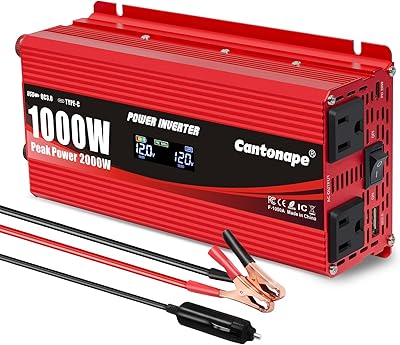
76%
82%
Power Output Reliability
91%
Ease of Setup
88%
LED Display & Diagnostics
74%
Build Quality
69%
Thermal Management
More
Cantonape 1000W Car Power Inverter
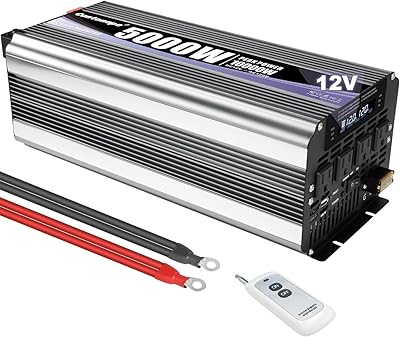
86%
88%
Performance
85%
Build Quality
91%
Ease of Use
83%
Portability
90%
Charging Capability
More
Cantonape MSW1500W-LED-US 5000W Power Inverter
86%
88%
Performance under Load
92%
Build Quality & Durability
85%
Ease of Setup
90%
Safety Features
89%
LCD Display Functionality
More
Kzreect Inverter-MK 220W Portable Power Inverter
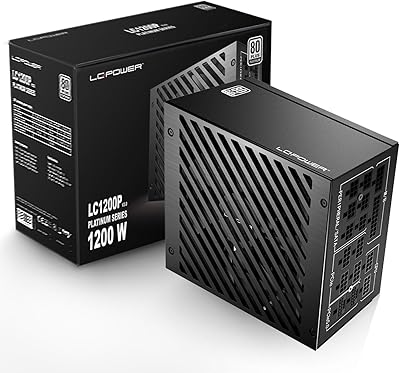
85%
94%
Portability and Size
89%
Charging Speed (USB-C & USB-A)
82%
Battery Compatibility
88%
Ease of Use
90%
Safety Features (Overload, Overcurrent)
More
LC-Power LC1200P 1200W Gaming PC Power Supply
85%
89%
Performance
91%
Energy Efficiency
85%
Cable Management
87%
Noise Level
88%
Reliability
More
be quiet! Pure Power 12 M 1200W Modular Power Supply
88%
95%
Noise Level Under Load
91%
Power Delivery Stability
87%
Build Quality
93%
Cable Management
94%
Compatibility with High-End GPUs
More
Tebrol 2000W Power Inverter
86%
88%
Performance & Power Output
90%
Ease of Use & Setup
85%
Portability & Size
75%
Cooling System & Noise
91%
Safety Features
More
ROARBATT 3000W Power Inverter
85%
91%
Value for Money
95%
Power Performance
88%
Build Quality
84%
Usability
90%
Cooling Efficiency
More
HONOURLIGHT 3000W Power Inverter
79%
88%
Value for Money
83%
Power Performance
91%
Ease of Setup
89%
LED Display Clarity
84%
Remote Control
More
Tebrol 5500W Power Inverter
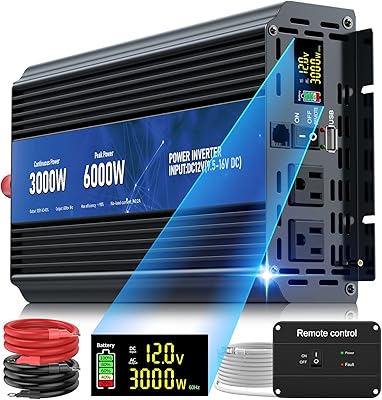
83%
88%
Performance
91%
Ease of Setup
85%
Build Quality
73%
Cooling System Efficiency
80%
Portability
More

FAQ

It depends on your specific CPAP model, but modified sine wave output is generally not recommended for CPAP machines. Some units will run fine, but others may produce noise, run less efficiently, or show error warnings. If your CPAP is essential medical equipment, the safer choice is a pure sine wave inverter.

Yes, for the vast majority of laptops this works without any issues. The modified sine wave output is compatible with standard laptop chargers, and the 1200W continuous capacity is well above what any laptop charger draws. If your laptop supports USB-C charging at 20W or below, you can also skip the AC outlet entirely and use the USB-C port directly.

No extra cables needed — two battery cables are included in the box, which is convenient since many competing units skip them. You connect the red cable to the positive terminal and the black to the negative, then run the cables to the inverter's input terminals. Just make sure the inverter is switched off before making any connections.

E-3 is the overtemperature fault code, which means the internal temperature got high enough to trigger the thermal protection. This usually happens if the unit is running near its capacity limit in a poorly ventilated spot or in direct sunlight. Let it cool down, improve the airflow around it, and restart — it should clear on its own once temperatures normalize.

It depends on the fridge. A compact 12V camping refrigerator or a small travel cooler that converts to AC typically draws 40 to 80 watts while running — well within range. A standard household mini-fridge can draw 80 to 150 watts continuously with startup surges up to 400 or 500W, which is also manageable. A full-size refrigerator is a different story and would likely exceed safe operating limits.

Under light loads the fan is barely noticeable or completely off. When you push the inverter toward its upper capacity — say, running a fan and charging a laptop simultaneously — the fan spins up and produces a noticeable hum. It is not aggressively loud, but in a quiet cab or sleeping environment it is definitely audible. Most daytime users report it does not bother them.

Yes, and the outlet spacing is designed specifically to allow this. Two standard large-plug adapters can sit in both outlets at the same time without the housings overlapping or blocking each other, which is a detail many budget inverters get wrong. Just make sure the combined wattage of both connected devices stays within the 1200W continuous limit.

Technically yes, but with an important caveat: the total wattage of everything connected through the strip still cannot exceed 1200W continuous. Plugging in a power strip does not expand the inverter's capacity — it just gives you more socket points. If you overload it, the protection circuits will shut it down.

The LCD display shows the input voltage in real time, which is the clearest indicator of battery health during use. A healthy 12V vehicle battery under load typically reads between 12.0V and 12.8V; if you see it dropping toward 11V or below, the under-voltage protection will trigger and shut the inverter off. Keeping an eye on that reading is the easiest way to avoid unexpectedly draining your battery.

The six protection layers — including overload and overtemperature shutoffs — provide a reasonable safety baseline, but leaving any inverter running unattended for extended periods carries some risk. If you plan to run something like a fan overnight in a van, make sure the unit has adequate ventilation, the connected device draw is well within the continuous watt limit, and your vehicle battery has enough reserve capacity to avoid a dead battery in the morning. Many users do this without issue, but it requires some planning.