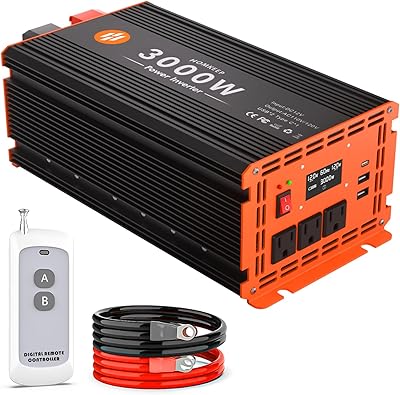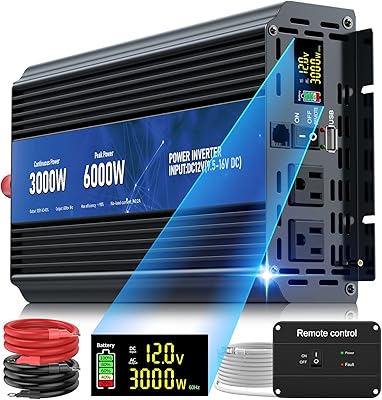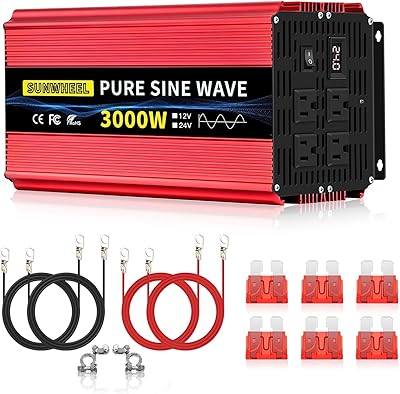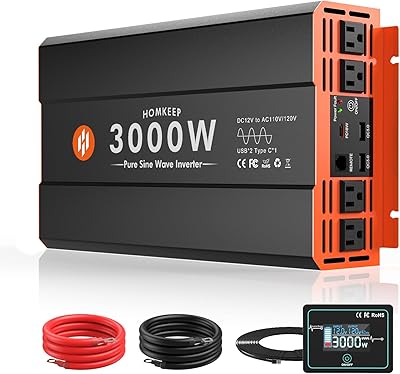
Overview

The EDECOA DPM30 3000W 24V Power Inverter sits in the mid-range of the mobile power market — not a bargain-bin unit, but not a premium pure sine wave inverter either. Before anything else, one thing needs to be clear: this 24V inverter requires a 24V battery system, not the 12V setup found in most passenger cars. That rules out a lot of buyers right there. It produces a modified sine wave, which works fine for most common appliances — coffee makers, fans, phone chargers, power tools — but can cause issues with sensitive audio gear or certain medical equipment. EDECOA is a Chinese brand that has carved out a solid niche in the value-focused inverter segment, and its 4.2-star average across more than 400 reviews suggests it is doing something right.

Features & Benefits

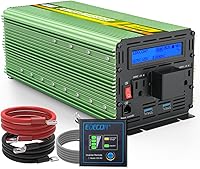
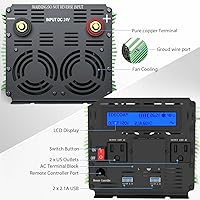
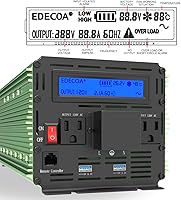
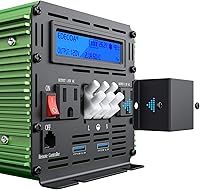
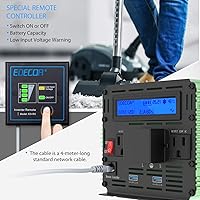
The headline spec is a 3000W continuous output with double that capacity reserved for short surge events — so motor-start draws from a refrigerator compressor or a circular saw won't trip the unit. The included remote controller is where this 24V inverter stands apart from cheaper alternatives. Rather than walking to the inverter each time you need to check on things, the LCD readout puts real-time battery voltage, load percentage, and temperature right in front of you. The fan doesn't spin constantly either — it activates based on thermal demand, keeping things quieter during light use. Two US-standard AC outlets, a comprehensive protection circuit, and a reasonably compact 8.3-pound chassis round out a spec sheet that punches above its price class.

Best For

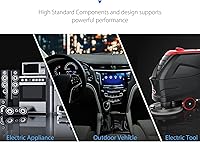
This modified sine wave inverter makes the most sense for people who already run a 24V battery setup — long-haul truckers drawing off a vehicle chassis battery, RV owners with a lithium or AGM house bank, and overlanders or contractors who need reliable AC power without hauling a generator. It handles everyday loads well: coffee makers, laptops, LED televisions, electric blankets, and standard power tools. Where it falls short is with sensitive electronics — variable-speed motor controllers, high-end audio amplifiers, or CPAP machines that call for pure sine wave input may not perform reliably. If your rig runs on 12V, this unit simply isn't the right fit.

User Feedback

Across its 431 ratings, the EDECOA 3000W unit earns consistent praise for reliable cold starts, a genuinely useful remote display, and build quality that feels appropriate for the price. The LCD readout gets particular credit — buyers describe it as a real step up from inverters that offer zero feedback. On the downside, fan noise at load draws repeated complaints; it can get loud, and some users find the activation threshold lower than expected. A handful of buyers also flagged unit failures after sustained heavy use, and the documentation around recommended cable gauge is reportedly vague — a real concern since undersized wiring affects both performance and safety. With 431 reviews, the patterns are worth taking seriously.

Pros

  • Delivers 3000W of continuous AC power with a 6000W surge ceiling for motor-start loads like refrigerators and power tools.
  • The included LCD remote controller gives real-time visibility into battery voltage, load level, and temperature without leaving your seat.
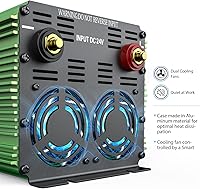
  • Intelligent fan control keeps noise minimal during light use, only spinning up when thermals actually demand it.
  • Compact and light enough at 8.3 pounds for permanent installs in tight truck cabs or RV compartments.
  • Two standard US AC outlets allow simultaneous device use without adapters or external extension complications.
  • Multi-layer protection against over-voltage, overload, and short-circuit adds genuine peace of mind during unattended operation.
  • This 24V inverter holds a 4.2-star average across 431 real-world buyer reviews — a credible signal at this price tier.
  • Reliable cold starts draw consistent praise from users running it in trucks and RVs over extended periods.

Cons

  • Strictly requires a 24V input — incompatible with the 12V systems most car and small-RV owners already have.
  • Modified sine wave output can interfere with sensitive electronics, medical devices, and high-end audio gear.
  • Fan noise at higher load levels draws repeated complaints and can be genuinely intrusive in quiet sleeping environments.
  • Cable gauge recommendations in the included documentation are reportedly vague, creating unnecessary guesswork during installation.
  • A subset of buyers reported unit failures after prolonged heavy use, raising legitimate questions about long-term durability.
  • After-sales support and warranty resolution from value-tier brands like EDECOA can be slower and less consistent than expected.
  • Only two AC outlets may feel limiting when running three or more devices simultaneously without adding a power strip.
  • The 431-review sample size, while meaningful, is not large enough to fully rule out reliability outliers in demanding use cases.

Ratings

The EDECOA DPM30 3000W 24V Power Inverter has been scored across 13 performance categories by our AI rating engine, which analyzed verified buyer reviews worldwide while actively filtering out incentivized, bot-generated, and spam submissions. Each score reflects real ownership patterns drawn from the full spectrum of user feedback — from enthusiastic five-star endorsements to critical long-term reliability reports. Both the genuine strengths and the recurring pain points of this 24V inverter are transparently factored into every category score below.

Value for Money
82%
18%
Truck drivers and RV owners consistently note that the EDECOA 3000W unit delivers more features per dollar than most comparable inverters at this price point. The LCD remote controller alone — something you typically pay extra for — is included as standard, which buyers across multiple forums cite as a genuine differentiator.
A few buyers feel the value proposition weakens if the unit fails outside the warranty window, especially given that after-sales support can be inconsistent. For buyers who factor in the cost of upgrading the included battery cables to a proper gauge, the total outlay edges higher than the sticker price suggests.
Build Quality
76%
24%
The chassis feels solid and purposeful for a unit in this price range — truckers who have bolted it under a bunk or inside a tool compartment report that it holds up well against road vibration and temperature swings. The external finish and connector quality are notably better than similarly priced competitors, according to multiple side-by-side comparisons from buyers.
A recurring theme in longer-term reviews is that units pushed hard — running near full capacity for hours daily — have shown failures after several months of sustained use. The warranty covers this on paper, but the support experience for resolving such claims has left some buyers frustrated.
Output Reliability
79%
21%
For everyday loads — charging laptops, running a coffee maker in a truck cab, or powering a small fan at a campsite — this modified sine wave inverter starts reliably and holds its output voltage steadily. Users report consistent performance across seasonal temperature variations, which matters for those using it year-round in vehicles exposed to heat and cold.
Reliability at or near the 3000W ceiling is less consistent. Some buyers who regularly run high-wattage tools or appliances for extended sessions have reported unexpected shutdowns or eventual unit failure, which suggests the 3000W rating is more of a ceiling than a comfortable cruise.
Surge Performance
84%
The 6000-watt peak surge capacity handles the startup spikes of refrigerator compressors, circular saws, and similar motor-driven equipment without tripping the protection circuit — a pain point that cheaper 3000W inverters fail on routinely. RV owners and contractors report that cold starts on demanding appliances go smoothly, which builds confidence for real-world mobile use.
Surge performance is rated for under 10 milliseconds, which is standard but worth understanding — sustained heavy starts that push beyond that window can still trigger a protective shutdown. Buyers running multiple motor-start loads simultaneously should plan their load sequencing carefully rather than assuming the surge headroom stacks.
Display & Remote
88%
The wired LCD remote consistently earns praise as one of the most practical features on this unit — long-haul drivers love being able to monitor battery voltage and load percentage from the cab without leaving their seat. The amount of information packed onto that display, including temperature and protection status, is genuinely above what most inverters in this price range offer.
A small number of users report that the remote display cable, while functional, feels thinner and less durable than the rest of the unit, raising some long-term reliability questions. The LCD readout can also be harder to read in direct sunlight or very dim environments, depending on viewing angle and ambient light conditions.
Noise Level
61%
39%
During light-load operation — charging phones, running LED lights, or powering a laptop — the fan often stays completely silent, which buyers using the unit overnight in an RV or truck sleeper cab particularly appreciate. The load-based activation means you only hear the cooling fan when the inverter is actually working hard.
At higher draws, the fan gets noticeably loud — loud enough that several users describe it as disruptive in a sleeping environment, and some RV owners report it waking travel companions. This is arguably the most consistently raised complaint across verified reviews and is worth taking seriously if quiet overnight operation matters to your setup.
Installation Ease
71%
29%
The compact dimensions and mounting holes make physical installation relatively straightforward, and the included hardware gets you up and running without needing specialized tools. Buyers with basic electrical knowledge report getting the unit wired and operational in under an hour.
The user manual provides limited guidance on cable sizing, which is a real problem given how critical proper wire gauge is for safe and efficient operation at this power level. Buyers without prior inverter installation experience may need to seek external resources to fill in the gaps the documentation leaves open.
Protection Features
83%
The multi-layer protection suite — covering over-voltage, under-voltage, overload, over-temperature, and short-circuit scenarios — gives buyers real confidence when leaving the inverter running unattended in a parked truck or overnight in an RV. Users report the protection circuitry trips cleanly and the unit recovers correctly after the fault condition is cleared.
While the protection system performs as described, the LCD alert notifications are brief and not always intuitive, leaving some users uncertain about which specific fault triggered a shutdown. A more descriptive fault code system would make troubleshooting faster, especially for buyers who are less experienced with power electronics.
Cooling Efficiency
73%
27%
The intelligent fan control design — where cooling only activates under thermal load — is a smart engineering choice that extends fan life and reduces unnecessary noise during the majority of real-world use cycles. RV users running the inverter through daylight hours at moderate loads report it stays cool and quiet without intervention.
Under sustained heavy loads, the fan's effectiveness has limits, and units installed in enclosed spaces without adequate airflow have shown thermal shutdown events. The manual's guidance on minimum ventilation clearance is minimal, which has led some buyers to install the unit in spots that inadvertently restrict airflow.
Cable Quality
57%
43%
The included battery cables are adequate for initial testing and light-load use, letting buyers verify the unit works correctly before committing to a permanent installation. Having cables included at all is better than what some competitors at this price tier offer.
Multiple buyers note that the included cables are not rated for sustained full-load use and should be replaced with properly sized welding cable before running high-wattage loads. Using undersized cables introduces voltage drop, heat buildup, and a genuine safety risk — a practical concern that has caused real problems in the field.
User Documentation
54%
46%
The manual covers the basics of getting the unit connected and powered on, and the remote controller layout is intuitive enough that most buyers can interpret the display readings without consulting the documentation repeatedly. Setup is logical enough for anyone who has worked with inverters before.
Cable sizing recommendations are conspicuously absent — a significant omission for a 3000W unit where getting the wiring wrong has real safety implications. The documentation also lacks guidance on optimal mounting orientation and ventilation requirements, leaving buyers to rely on forum advice and online resources to fill in the gaps.
Long-term Durability
67%
33%
Buyers who use this 24V inverter at moderate loads — well below the 3000W ceiling — report solid performance over periods of six months to a year without issues. For seasonal or occasional use, such as powering tools on a weekend work truck or running a camper van setup during summer trips, the durability picture is reasonably positive.
For buyers running this near capacity every day — think long-haul truckers powering a microwave, coffee maker, and television simultaneously for hours — durability becomes a genuine question mark. The subset of failure reports in the review pool skews toward heavy-duty commercial use, suggesting the unit is not ideally built for continuous near-maximum-rated operation.
Waveform Compatibility
69%
31%
For the vast majority of everyday appliances — coffee makers, fans, power tools, phone and laptop chargers, LED televisions — the modified sine wave output works without any noticeable issue. Buyers using this modified sine wave inverter to power typical truck or RV loads report no compatibility problems in real-world day-to-day use.
Buyers who need to run CPAP machines, high-end audio amplifiers, variable-speed power tools, or other electronics that specify pure sine wave input will find this inverter unsuitable. It is not a flaw in the design — modified sine wave is a deliberate choice at this price tier — but it is a firm incompatibility that some buyers discover after purchase rather than before.

Suitable for:

The EDECOA DPM30 3000W 24V Power Inverter is a strong match for anyone who already operates a 24V battery system and needs dependable AC power away from the grid. Long-haul truck drivers are perhaps the most natural fit — a vehicle running a 24V chassis battery can power a coffee maker, mini-fridge, or laptop without any additional infrastructure. RV owners and camper van builders with a 24V house bank will appreciate the 3000W continuous headroom, which comfortably handles multiple simultaneous loads like a microwave and a phone charger running at once. Overlanders and off-grid campers who want to run kitchen appliances or power tools without a noisy generator will find this unit capable and compact enough for semi-permanent installation. Contractors and tradespeople who need AC outlets on a 24V work truck also get a practical, cost-conscious alternative to hauling portable generators to job sites.

Not suitable for:

The EDECOA DPM30 3000W 24V Power Inverter is a firm pass for anyone whose vehicle or battery bank runs on 12V — which covers most passenger cars, many smaller RVs, and the vast majority of everyday consumer setups, so double-check your system voltage before ordering. The modified sine wave output is a second real consideration: while it handles resistive and most motor loads without issue, it can cause problems with high-end audio equipment, some variable-speed appliances, and medical devices that explicitly require a clean pure sine wave signal. Buyers planning to run a CPAP machine or precision lab equipment should look at dedicated pure sine wave inverters before committing here. Those who need around-the-clock heavy-duty reliability for commercial or critical applications may also want to weigh the edge-case failure reports in the user reviews carefully, especially given that warranty and after-sales support from value-tier brands can be inconsistent. Finally, buyers without basic electrical knowledge should be aware that the documentation on cable sizing is reportedly thin — undersized wiring is a safety risk and a performance killer that the manual may not adequately address.

Specifications

  • Input Voltage: Accepts 24V DC input only and is not compatible with 12V or 48V battery systems.
  • Output Voltage: Produces 110V/120V AC output compatible with standard US household appliances and devices.
  • Continuous Power: Sustains a continuous output of 3000 watts for steady-state appliance loads under normal operating conditions.
  • Peak Surge Power: Handles surge loads up to 6000 watts for under 10 milliseconds, providing headroom for motor-start spikes.
  • Waveform Type: Outputs a modified sine wave, suitable for most resistive and motor loads but not all sensitive electronics.
  • AC Outlets: Fitted with 2 standard NEMA 5-15R AC outlets for simultaneous connection of two devices.
  • Remote Display: Includes a wired LCD remote controller showing battery voltage, load level, temperature, fan status, output frequency, and protection alert indicators.
  • Protection Suite: Automatic safeguards cover over-voltage, under-voltage, overload, over-temperature, and short-circuit conditions with shutdown and indicator alerts.
  • Cooling System: Uses intelligent load-based fan control that activates cooling only when internal temperature thresholds are reached, reducing idle noise.
  • Output Frequency: Outputs AC power at 60 Hz, matching the standard US grid frequency for full appliance compatibility.
  • Dimensions: Measures 12.5 x 4.9 x 5.9 inches, compact enough for under-seat, compartment, or rack-style installation.
  • Weight: Weighs 8.3 pounds, making semi-permanent or permanent mounting feasible in most mobile applications.
  • Model Number: The manufacturer model designation for this unit is DPM30.
  • Box Contents: Package includes the inverter unit, battery connection cables, wired LCD remote controller, and a printed user manual.
  • Brand: Manufactured by EDECOA, a value-focused brand specializing in power conversion products for mobile and off-grid applications.

Related Reviews
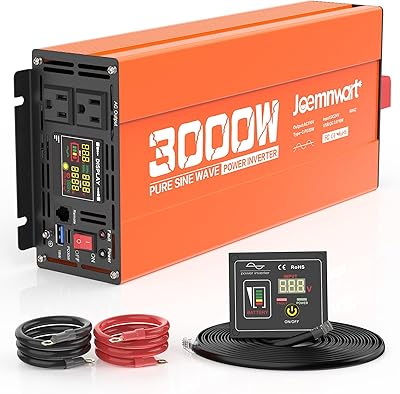
Joemnwart 3000W 24V Pure Sine Wave Inverter
78%
88%
Waveform Quality
74%
Power Output Accuracy
72%
Build Quality
83%
Value for Money
86%
Noise Level
More
Homkeep 3000W Power Inverter
86%
91%
Value for Money
88%
Performance
85%
Build Quality
93%
Ease of Use
89%
Energy Efficiency
More
ROARBATT 3000W Power Inverter
77%
83%
Build Quality
78%
Power Output Accuracy
86%
Value for Money
88%
Ease of Setup
91%
LCD Display
More
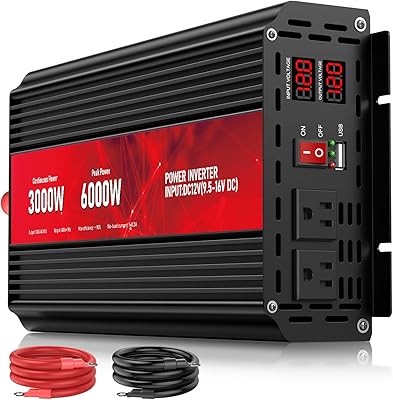
HONOURLIGHT 3000W Power Inverter
79%
88%
Value for Money
83%
Power Performance
91%
Ease of Setup
89%
LED Display Clarity
84%
Remote Control
More
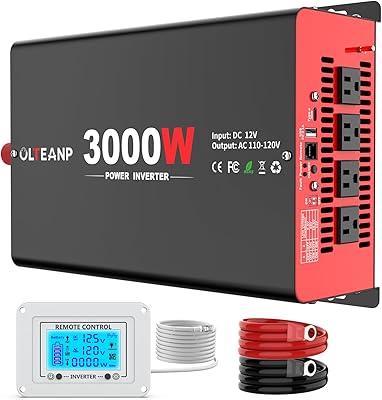
OLTEANP 3000W Power Inverter
87%
91%
Power Output
88%
Portability & Size
85%
Ease of Use
87%
Durability & Build Quality
92%
Safety Features
More
LVYUAN 5000W 24V Power Inverter
77%
88%
Power Output Reliability
82%
Installation & Setup
84%
LCD Display Usefulness
71%
Wireless Remote Performance
76%
Fan Noise & Thermal Management
More
OLTEANP TK-3 3000W Pure Sine Wave Inverter
78%
92%
Power Output Quality
88%
Lithium Battery Compatibility
74%
Build Quality
61%
Fan Noise
86%
LCD Display & Usability
More
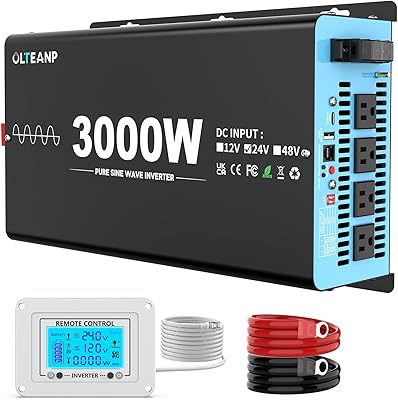
SUNWHEEL 3000W 24V Pure Sine Wave Inverter
78%
88%
Output Power Quality
83%
Value for Money
86%
Ease of Installation
81%
Surge Handling
79%
Noise Level
More
Homkeep 3000W Pure Sine Wave Power Inverter
88%
93%
Power Performance
88%
Ease of Use
90%
Build Quality
85%
Noise Level
91%
Safety Features
More
Ampinvt 5000W 24V Split Phase Power Inverter
72%
83%
Power Output Reliability
78%
Build Quality
86%
Pure Sine Wave Quality
81%
Battery Charger Performance
54%
Installation Experience
More

FAQ

No, it will not. This inverter is built exclusively for 24V DC input, which means it requires a 24V battery system — the kind found in heavy-duty trucks, large RVs with dual-battery configurations, or purpose-built off-grid rigs. Connecting it to a 12V battery simply will not work and could damage the unit. If your vehicle runs on 12V, you will need a different inverter rated for 12V input.

It depends on your specific machine. Many CPAP devices will run on a modified sine wave without issue, but models with integrated humidifiers or more complex variable-speed motors may not function correctly or could degrade over time. Before relying on this inverter for medical equipment, check your CPAP manual or contact the manufacturer directly to confirm modified sine wave compatibility.

At full 3000W load on a 24V system, you are drawing roughly 125 amps, so most experienced installers recommend 2 AWG welding or battery cable at a minimum, with 1/0 AWG being the safer choice for cable runs longer than two or three feet. Keep the run as short as possible and always fuse the positive cable close to the battery terminal. The cables included in the box are a starting point but may not be adequate for sustained full-load use — it is worth sizing up.

Yes, in most cases. A typical household refrigerator draws around 100 to 200 watts while running and may spike to 600 to 800 watts during compressor startup — well within the 6000-watt surge capacity of this unit. Just make sure your battery bank has enough capacity to sustain the load over several hours, since a refrigerator cycling on and off will drain batteries faster than many users expect.

At light loads, the fan often stays off entirely, which is one of the practical benefits of the load-based cooling design. Under heavy draws — running a power tool, microwave, or similar appliance — the fan kicks in and several owners have noted it can get noticeably loud. It is not a problem in an outdoor or work-truck setting, but if you plan to sleep near the inverter while running overnight loads, the fan noise at high demand is worth factoring in.

The unit will automatically shut down before any damage occurs. An overload or over-temperature condition triggers the protection circuit, and you will see an alert on the LCD remote. Once the fault clears and the unit cools down, you can restart it normally. This is a built-in safety feature, not a sign of a defective unit — though repeated overloading is worth avoiding for long-term reliability.

It depends on the gear. Basic speakers, Bluetooth devices, and simple amplifiers usually run without issue on a modified sine wave. Higher-end audio components — particularly those with sensitive linear power supplies or Class D amplification stages — may produce audible hum or behave inconsistently. If audio fidelity is a priority, a pure sine wave inverter is the more reliable choice for that use case.

Yes, as long as your solar setup uses a 24V battery bank. The inverter draws directly from the battery — it does not connect to solar panels directly. If your solar charge controller is charging a 24V battery bank, this 24V inverter can draw from that bank to supply your AC loads. Just make sure your solar input and battery capacity can keep pace with your average power consumption, or you will run the batteries down faster than the panels can replenish them.

The chassis has mounting holes, so you can bolt it to a flat surface directly. Choose a location with a few inches of clearance around the fan vents for adequate airflow — avoid fully enclosed spaces with no ventilation, as heat buildup will shorten the unit's lifespan and trigger thermal shutdowns. Keep the installation as close to your battery bank as practical to minimize cable length, reduce voltage drop, and lower the risk of heat buildup in the wiring.

For everyday moderate loads — a coffee maker, laptop, fans, or phone charging — user reports are generally positive, with consistent startup and stable output being common praise points. Reliability questions tend to surface around extended use at or near the full 3000-watt limit, where a meaningful subset of buyers have reported failures after several months of heavy-duty operation. EDECOA typically backs the unit with a one-year warranty, but experiences with their after-sales support have been mixed, so keep your purchase receipt and reach out to the seller promptly if any issues arise.