Overview

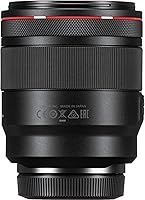
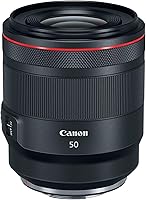
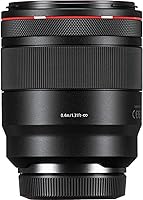
The Canon RF 50mm f/1.2L USM Lens arrived in 2018 as Canon's opening statement for the EOS R system — and it still defines what the RF mount is capable of. Built to L-series standards, it carries the kind of weather sealing, optical precision, and mechanical refinement that working professionals expect from a lens they'll rely on for years. That said, this is not a casual purchase. The price is significant, and it makes the most sense for photographers who shoot portraits, events, or low-light work regularly. EOS R shooters managing with adapted EF glass will notice a meaningful step up in responsiveness and rendering the moment they mount this fast fifty.
Features & Benefits

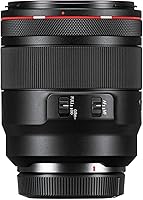
The f/1.2 aperture is the headline feature, but what it means in practice is the ability to shoot in near-darkness without reaching for flash, and to produce subject-background separation that makes a face pop cleanly off a busy scene. Optically, three aspherical elements combined with a UD element keep chromatic aberration tightly controlled even wide open — something many fast primes genuinely struggle with. The customizable control ring lets you dial in ISO or exposure compensation without pulling focus from the viewfinder, a small feature that adds up during fast-paced shooting. Close-focus capability down to 0.40m opens doors for tight environmental portraits, and the 77mm filter thread fits neatly into most professional kit bags.

Best For

The RF 50mm f/1.2 is purpose-built for photographers who need more from a 50mm than most lenses can offer. Portrait shooters will benefit most — the wide aperture and close-focus distance combine to create images with genuine depth and intimacy. Wedding and event photographers will appreciate how confidently it handles dim reception halls or candlelit ceremony spaces. Studio work is also a natural fit, as the fixed focal length encourages deliberate composition and the optical quality holds up under critical scrutiny at full resolution. On the video side, the clickless control ring enables smooth, quiet exposure pulls mid-take. If you shoot Canon RF and want one lens across multiple serious use cases, this L-series prime makes a strong case.

User Feedback

Owner sentiment around this fast fifty sits firmly in the enthusiastic range, and it's not hard to understand why — wide-open sharpness is repeatedly called out as exceeding expectations for an f/1.2 lens. Most owners report that autofocus is fast and reliable for stationary subjects, though tracking fast-moving subjects wide open earns more mixed opinions. The most consistent criticism is physical: at just over two pounds, extended handheld sessions become tiring and the lens feels noticeably bulky compared to smaller RF primes. Those who've used both this and the older EF 50mm f/1.2L tend to describe the RF version as a clear improvement. For casual users, competitors from Sony and Sigma may offer more practical trade-offs.

Pros

  • Wide-open sharpness at f/1.2 outperforms what most photographers expect from a fast prime.
  • Background rendering is smooth and natural, with pleasing specular highlights in low-light scenes.
  • The RF 50mm f/1.2 handles dim event venues with confidence, reducing reliance on flash entirely.
  • L-series weather sealing holds up reliably during light rain and dusty outdoor conditions.
  • The customizable control ring lets you adjust exposure or ISO without breaking your shooting rhythm.
  • A 0.40m minimum focus distance opens up close portrait and product work without switching lenses.
  • Chromatic aberration is well-controlled for an f/1.2 lens, even before in-camera correction is applied.
  • The 77mm filter thread fits most professional filter kits without requiring step-up rings.
  • Native RF mount communication delivers noticeably more consistent focus than adapted EF glass.
  • Owners who use it professionally report it holds its value and performs reliably over years of heavy use.

Cons

  • At just over two pounds, handheld fatigue becomes a real issue during long shooting days.
  • Tracking fast or erratic moving subjects wide open produces a higher miss rate than many users expect.
  • Focus breathing during close-distance video rack pulls is noticeable and may require post-correction.
  • Onion-ring bokeh in specular highlights can appear at very close focus distances under certain lighting conditions.
  • The control ring sits close enough to the focus ring that accidental adjustments happen during hurried handheld shooting.
  • Corner sharpness at f/1.2 lags behind center performance, which matters for edge-to-edge compositional precision.
  • The size and weight make it a poor fit for mirrorless shooters who prioritize a compact, travel-friendly kit.
  • High-quality 77mm filters are expensive, and budget options can introduce vignetting at wide apertures.
  • The investment is difficult to justify for photographers who rarely shoot below f/2.8 or in demanding light.
  • Hobbyist users may find competing options from Sigma or third-party makers offer a more practical price-to-performance ratio.

Ratings

The Canon RF 50mm f/1.2L USM Lens earns its reputation as one of the most talked-about primes in the RF lineup, and our AI-generated scores reflect exactly that — built by analyzing verified global buyer reviews while actively filtering out incentivized, bot-driven, and duplicate submissions. Every category below captures what real photographers praise and where they push back, with no scores inflated to flatter and no pain points buried.
Optical Sharpness
96%
Owners consistently describe sharpness at f/1.2 as something that genuinely surprises them — center resolution wide open is exceptional, and stopping down to f/2 or f/2.8 produces edge-to-edge clarity that holds up under pixel-peeping at high resolutions. Portrait shooters particularly appreciate how eyes render with striking micro-detail even in mixed light.
A small number of users note that extreme corner sharpness at f/1.2 lags slightly behind center performance, which is expected for this aperture class but worth knowing if your compositions regularly place subjects near the frame edges.
Bokeh & Background Rendering
94%
The background separation this fast fifty produces at f/1.2 is consistently described as smooth and painterly rather than harsh or busy. Wedding photographers in particular mention how well it handles string lights and candles in reception halls, rendering them as soft, round orbs that complement rather than distract from the subject.
At very close focus distances, some users observe mild onion-ring bokeh in specular highlights — a side effect of the aspherical elements. It rarely appears in typical portrait work, but it surfaces enough in controlled tests that discerning buyers should be aware.
Low-Light Performance
93%
The f/1.2 aperture gives photographers two to three extra stops of light compared to a standard kit lens, which translates directly to cleaner images at lower ISO settings in dim venues. Event shooters report confidently hand-holding in candlelit interiors where slower glass would have forced a tripod or unacceptable noise.
Wide-open low-light shooting demands precise focus discipline — at f/1.2, the depth of field is razor thin, and any focus error in a dim room is unforgiving. Photographers new to fast primes sometimes find the keeper rate drops until they adjust their shooting technique.
Autofocus Speed & Accuracy
81%
19%
On stationary or slow-moving subjects, the USM motor locks quickly and quietly — portrait and studio photographers describe it as near-instant in good light. The 12-pin communication system gives the lens a notable data exchange advantage over adapted EF glass, which shows up in more consistent exposure metering and focus confirmation.
Tracking fast or erratic subjects wide open is where opinions split. Some users find it reliable enough for active children or moving subjects at events; others report a higher miss rate compared to Canon's newer RF lenses with updated AF algorithms. It performs best in single-shot or slow continuous situations.
Build Quality & Weather Sealing
91%
The L-series designation carries real weight here. The barrel feels dense and precisely machined, with no play in the focus ring or control ring. Photographers who have shot in light rain or dusty outdoor conditions report confidence in the sealing, and the lens shows minimal wear even after years of professional use.
The robust construction is a direct contributor to the lens's weight, and a few users note that the size makes it feel front-heavy on smaller EOS R bodies like the RP. It is not something you sling over your shoulder for a casual street session.
Chromatic Aberration Control
88%
For a lens this fast, chromatic aberration is unusually well-managed. The UD element does measurable work in suppressing purple and green fringing along high-contrast edges, and most users report that in-camera correction handles what little remains. High-contrast portrait backdrops that reveal fringing in lesser lenses look clean here.
Lateral chromatic aberration can appear at the extreme corners wide open, particularly in scenes with strong backlit edges. It is easily corrected in post or through in-camera lens correction profiles, but photographers shooting JPEG-only without correction enabled may occasionally notice it.
Control Ring Usability
84%
The ability to assign exposure compensation, ISO, or aperture directly to the control ring is genuinely useful during fast-changing shoots. Videographers especially appreciate the clickless rotation, which allows smooth, silent exposure adjustments during a take without introducing audio artifacts.
The ring sits close to the focus ring, and a handful of users report accidentally nudging it during handheld shooting, particularly when gripping the lens firmly in a hurry. The accidental-turn issue is minor but shows up consistently enough in feedback to be worth noting.
Weight & Portability
58%
42%
For photographers who primarily shoot from a bag or tripod, the weight is a non-issue — the density of the build is simply the cost of this level of optical performance. Studio and event photographers working from fixed positions barely mention it as a concern.
At just over two pounds, this L-series prime is one of the heavier 50mm options on the market. Photographers shooting hand-held for three or more hours — think weddings or all-day documentary work — frequently flag arm and wrist fatigue as a real-world limitation that no amount of image quality can fully offset.
Minimum Focus Distance
82%
18%
A minimum focusing distance of 0.40m gives the RF 50mm f/1.2 genuine versatility beyond classic portrait distances. Food shooters, product photographers, and environmental portrait artists find they can get tighter than they expected without reaching for a macro lens, and the shallow depth of field at close range creates compelling isolation.
Photographers with a true macro workflow will still need a dedicated lens — the maximum magnification this reaches does not replace purpose-built close-up optics. At close distances, focus breathing is also noticeable during video pulls, which matters for videographers composing tight shots.
Value for Money
67%
33%
For photographers who depend on this focal length professionally — portrait studios, wedding teams, editorial shooters — the output quality and system integration justify the investment over a long working life. Owners who use it daily across years of paid work consistently describe it as earning its cost.
Casual or hobbyist shooters will find the price hard to rationalize when competing options from Sigma and Sony exist at lower price points with strong optical performance. The RF 50mm f/1.2 is a clear case where the investment rewards professionals proportionally more than enthusiasts.
Lens Flare & Ghosting Resistance
79%
21%
Under most shooting conditions, flare is controlled and non-intrusive. Canon's coatings handle typical backlit portrait scenarios — sun behind a subject, venue spotlights in frame — without producing disruptive artifacts, and many photographers use subtle flare creatively without it overwhelming the image.
Direct light sources at extreme angles can produce more pronounced ghosting than some users expect from an L-series optic. A few reviewers note that harsh artificial lighting in event halls catches the lens in ways that require minor reframing or post-processing to manage cleanly.
Video Suitability
83%
The combination of a clickless control ring, quiet USM focusing, and exceptional low-light rendering makes the RF 50mm f/1.2 a strong video option for EOS R-series users. Interview and narrative filmmakers working in run-and-gun or ambient light situations find it highly capable without the noise or abruptness of lesser lenses.
Focus breathing during close-distance rack focuses is noticeable and is the most common complaint from video users. It is manageable with careful focus pull technique but would require optical correction in post for productions with strict breathing standards.
Filter System Compatibility
86%
The 77mm filter thread is a professional standard size, meaning most photographers already own compatible polarizers, ND filters, and UV protectors from other lenses. This avoids the expense of a step-up ring system and makes this fast fifty easy to slot into an existing filter workflow.
High-quality 77mm circular polarizers and variable ND filters at this diameter are not cheap, and the large front element means budget filters can introduce vignetting wide open. Photographers new to this filter size should budget for quality glass rather than reaching for the lowest-cost option.
Upgrade Experience from EF Glass
89%
Photographers stepping up from the EF 50mm f/1.2L via adapter consistently describe the native RF version as meaningfully better — faster, more consistent autofocus, noticeably sharper corners, and more reliable wide-open rendering. For EOS R system owners still running adapted glass, this is the kind of upgrade that changes how they use their camera.
The improvement is real but not transformative for every use case. Photographers primarily shooting stopped-down in good light may find the EF version with an adapter sufficient and will need to weigh whether the optical and ergonomic gains justify the price difference on their specific shooting style.

Suitable for:

The Canon RF 50mm f/1.2L USM Lens was built for photographers who make their living with a camera in hand — and it shows in every aspect of its design. Portrait photographers will get the most out of it, particularly those who shoot in unpredictable light and need a lens that can hold its own in a dim reception hall just as convincingly as a bright outdoor session. Wedding photographers, in particular, tend to describe this fast fifty as the lens they reach for first and put down last during a full event day. Studio photographers who want maximum control over depth of field and subject isolation will also find it an ideal match — the close minimum focus distance adds flexibility that a standard 50mm cannot offer. Videographers shooting interviews or narrative content on EOS R-series bodies will appreciate the clickless control ring and the quiet USM motor, both of which make on-camera exposure adjustments practical and non-disruptive. If you are an EOS R shooter who has been running an adapted EF 50mm and wondering whether going native is worth it, the autofocus consistency and optical improvement here will answer that question quickly. This is a long-term investment lens — the kind you buy once and build a working style around.
Not suitable for:

The Canon RF 50mm f/1.2L USM Lens is a poor fit for photographers who want a versatile, lightweight walk-around prime for everyday use. At just over two pounds, it is not the kind of lens you carry comfortably on a city street for three hours or pack lightly into a travel bag — the size and weight are simply not suited to casual or spontaneous shooting. Hobbyist photographers who shoot primarily in good light and at moderate apertures will likely find the performance gap between this and a much less expensive option difficult to justify. Sports and wildlife photographers who need reliable continuous autofocus on fast-moving subjects will also run into limitations — the RF 50mm f/1.2 performs best when subjects are predictably placed, not darting unpredictably across the frame. Videographers with strict production standards around focus breathing will need to factor in post-correction workflows, as the breathing at close focus distances is noticeable during rack pulls. Budget-conscious buyers or those newer to the EOS R system who are still developing a shooting style would be better served starting with a lighter, more affordable RF prime and graduating to this L-series prime once their needs genuinely demand it.
Specifications

  • Lens Mount: Designed exclusively for Canon RF-mount bodies, including the EOS R, R5, R6, and R3 series.
  • Focal Length: Fixed 50mm focal length with no zoom capability, offering a field of view close to natural human vision on full-frame sensors.
  • Max Aperture: Maximum aperture of f/1.2 allows exceptional light gathering and extremely shallow depth of field control.
  • Min Aperture: Minimum aperture of f/16 for situations requiring maximum depth of field, such as landscape or architectural detail shots.
  • Lens Elements: Optical formula includes three aspherical elements and one Ultra-low Dispersion (UD) element for sharpness and aberration control.
  • Focus Distance: Minimum focusing distance of 0.40m (1.31 ft) enables close-up portrait and product compositions without a macro lens.
  • Filter Thread: 77mm front filter thread, compatible with standard professional circular polarizers, ND filters, and UV protectors.
  • Autofocus: Ring-type Ultrasonic Motor (USM) delivers fast, near-silent autofocus well-suited to both still photography and video production.
  • Control Ring: Customizable control ring can be assigned to aperture, ISO, or exposure compensation for direct adjustment during shooting.
  • Pin System: 12-pin communication interface enables high-speed, high-volume data exchange between lens and camera body for improved metering and focus accuracy.
  • Weight: Lens weighs approximately 950g (2.09 lbs), placing it among the heavier options in the RF prime lens lineup.
  • Dimensions: Physical dimensions measure 3.5 x 3.5 x 4.3 inches, resulting in a substantial but manageable barrel for professional use.
  • Lens Series: Part of Canon's L-series professional lineup, indicating compliance with Canon's highest standards for optical quality and weather resistance.
  • Weather Sealing: L-series construction includes dust and moisture resistance sealing, providing protection during outdoor and event shooting in light adverse conditions.
  • Model Number: Canon model number 2959C002 identifies this specific SKU for warranty registration, service requests, and compatibility verification.
  • Compatibility: Compatible exclusively with Canon EOS R-series full-frame mirrorless bodies; not natively compatible with EF or EF-S mount cameras without an adapter.
  • Image Stabilization: The lens itself does not include optical image stabilization; stabilization relies on in-body IS available on select EOS R-series bodies.
  • Hood Included: Ships with a dedicated lens hood designed to reduce flare and protect the front element during active shooting.

Related Reviews
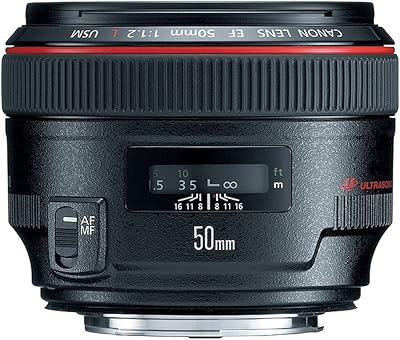
Canon EF 50mm f/1.2L USM
88%
94%
Image Quality
92%
Low-Light Performance
89%
Autofocus Speed
90%
Build Quality
91%
Bokeh Quality
More
Canon EF 50mm f/1.4 USM Camera Lens
80%
91%
Bokeh & Background Separation
88%
Low-Light Performance
84%
Autofocus Speed & Accuracy
63%
Sharpness Wide Open
78%
Build Quality & Feel
More
Canon EF 50mm f/1.8 STM Lens
79%
83%
Image Sharpness
88%
Bokeh & Background Separation
81%
Low-Light Performance
72%
Autofocus Speed & Accuracy
91%
Autofocus Noise
More
Canon EF 85mm f/1.8 USM Lens
86%
91%
Image Sharpness
93%
Bokeh Quality
88%
Autofocus Speed
94%
Autofocus Noise
86%
Low-Light Performance
More
Canon RF 50mm F1.8 STM Lens
74%
83%
Image Sharpness
78%
Bokeh Quality
76%
Autofocus Speed & Accuracy
81%
Low-Light Performance
61%
Build Quality & Durability
More
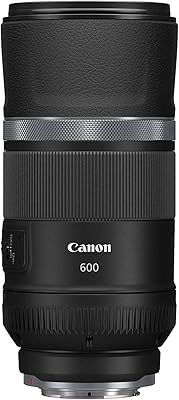
Canon RF 600mm f/11 IS STM Lens
71%
93%
Portability
91%
Value for Focal Length
82%
Image Sharpness
74%
Autofocus Performance
88%
Image Stabilization
More
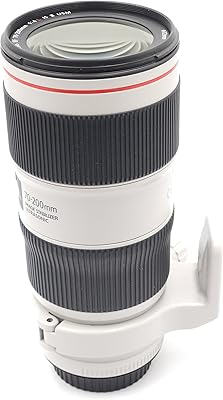
Canon EF 70-200mm f/4L IS II Lens
85%
94%
Optical Sharpness
91%
Image Stabilization
88%
Autofocus Performance
93%
Build Quality
89%
Portability & Weight
More
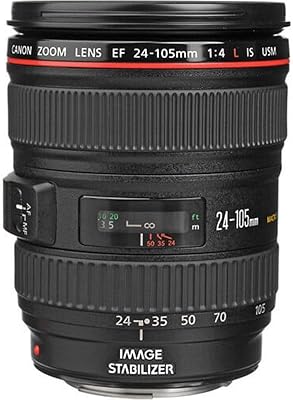
Canon EF 24-105mm f/4L IS USM Lens
76%
83%
Image Sharpness
89%
Autofocus Performance
78%
Image Stabilization
91%
Build Quality
88%
Focal Range Versatility
More
Canon RF 15-35mm F2.8 L IS Lens
85%
96%
Optical Sharpness
93%
Image Stabilization
91%
Autofocus Speed & Accuracy
94%
Build Quality & Weather Sealing
71%
Value for Money
More
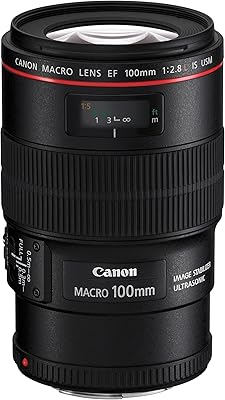
Canon EF 100mm f/2.8L IS USM Macro Lens
88%
96%
Image Stabilization
92%
Autofocus Speed & Accuracy
94%
Sharpness & Detail
91%
Build Quality & Durability
88%
Weather Resistance
More

FAQ

Yes, the RF 50mm f/1.2 is fully native on all Canon EOS R-series full-frame bodies, including the R5 and R6. You get complete autofocus, image stabilization coordination, and control ring functionality without any adapter.

No — this is an RF-mount lens and cannot be adapted to fit EF or EF-S mount DSLR bodies. The adapter relationship works the other way: EF lenses can be adapted to RF cameras, but RF lenses have no compatible adapter for older Canon DSLRs.

It is genuinely sharp wide open, which is one of the things owners consistently praise. Center sharpness at f/1.2 is excellent, and while the extreme corners improve further as you stop down to f/2 or f/2.8, most portrait and event work never demands corner-to-corner perfection anyway. You do not need to stop down to get usable results.

For moderately moving subjects in decent light, the autofocus is fast and dependable. Where it shows limitations is in tracking erratic, fast movement wide open — the razor-thin depth of field at f/1.2 means any slight focus error becomes visible, and continuous tracking in those situations can produce a higher rate of missed shots than newer RF lenses with updated AF systems. For portraits and events where subjects move predictably, it performs very well.

No, the lens itself does not include optical image stabilization. If you are shooting on an EOS R5 or R6, the body's in-body IS will coordinate with the lens for stabilized handheld shooting. On bodies without IBIS, like the original EOS R, you are relying entirely on technique for static shots.

Honestly, it is something you will feel. At just over two pounds, this fast fifty is significantly heavier than most 50mm primes, and photographers who carry it handheld for six or more hours consistently mention wrist and shoulder fatigue. Using a good camera strap and alternating with a lighter lens during lower-intensity parts of the day helps considerably.

For most photographers shooting on native EOS R bodies, yes — the RF version is noticeably better in autofocus consistency, corner sharpness, and overall wide-open rendering. The adapted EF version works, but it is not the same experience. If you shoot this focal length regularly and professionally, the native RF version earns its place.

You can assign it to aperture, ISO, shutter speed, or exposure compensation depending on your camera body settings. In practice, most photographers assign it to exposure compensation, which allows quick adjustments without taking your eye off the viewfinder. Videographers often use it for smooth aperture pulls. The one caveat is that it sits close to the focus ring, so accidental nudges can happen during fast handheld work.

Yes, a dedicated lens hood ships with the lens. It is worth using — it reduces flare in backlit situations and adds a meaningful degree of protection to the front element during active shooting. Given the size and investment of the lens, it makes sense to have it mounted by default.

For interview setups and scenes where the camera-to-subject distance stays relatively fixed, it performs very well. The USM motor is quiet enough for on-camera audio, and the clickless control ring makes exposure adjustments smooth. Focus breathing becomes a noticeable issue during close-distance rack focuses, where the image visibly shifts in framing as focus changes. For productions with strict standards, that will likely need correction in post.

Where to Buy

Full Compass Systems
In stock $2,599.00
SHI International
In stock $3,214.00
Onestop Digital
In stock $2,135.26
TriStateCamera.com
In stock $2,289.98
Willoughby's Photo Emporium
In stock $2,299.00
Deals All Year
In stock $2,398.99
Abe's of Maine
In stock $2,499.00